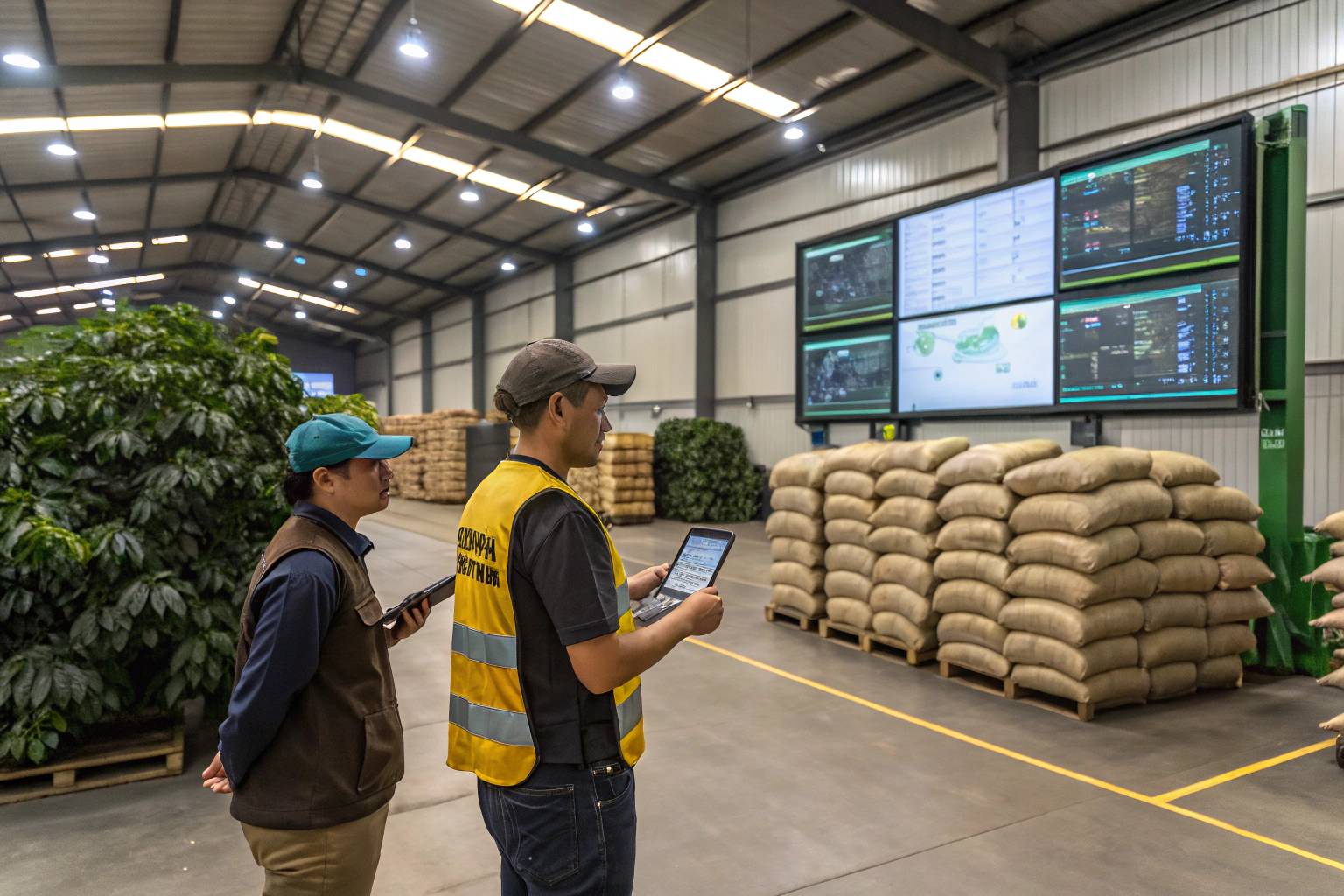
I stood on the highest block of our Baoshan farm a few months ago, looking down at terraces that did not exist when I started this business. The young Geisha trees we planted five years ago were heavy with their third harvest. Below them, a new block of drought-resistant Catimor hybrids was being planted by a crew that included the children of some of our original workers. The wet mill, which we have rebuilt twice, hummed in the valley below. I tried to imagine this same view in 2030. The trees will be taller. The climate will be warmer. The buyers we serve will be different, or at least they will want different things. And our business, if it survives and thrives, will have adapted in ways I cannot fully predict today. But I can see the outlines.
The coffee bean wholesale landscape in 2030 will be shaped by five converging forces: climate-driven shifts in where and how Arabica can be grown, which will elevate resilient origins like Yunnan and specific high-altitude regions; the maturation of AI-driven procurement, where predictive analytics and real-time traceability platforms replace much of the traditional sample-and-negotiate cycle; the regulatory requirement for verified sustainability data on every shipment, moving from voluntary certification to mandatory compliance; the fragmentation of the wholesale buyer base, as direct trade roasters, large retail chains, and e-commerce brands each demand different products, packaging, and partnership models; and the accelerated consolidation of production at scale, as only well-capitalized farms and exporter-processors with integrated logistics survive the margin compression that climate and regulation will intensify. The wholesale market of 2030 will be more transparent, more data-intensive, more regulated, and more concentrated than today.
This is not speculation pulled from industry reports. It is what I see from the ground, looking at our planting decisions, our buyer conversations, and the investments we are making now for harvests that are still five years away. Here is what I think the wholesale landscape will look like, broken down into the specific changes that will most affect how coffee is bought and sold.
How Will Climate Change Reshape Which Coffee Origins Dominate Wholesale by 2030?
I remember a conversation with an old Colombian coffee farmer at a conference in 2019. He told me his family had grown coffee on the same hillside for four generations. "My grandson will not," he said. "It is getting too hot. The rust is getting worse. He will grow avocados." That conversation has stayed with me. It is not an isolated story. It is a preview of the largest geographic redistribution of coffee production since the crop was first commercialized.
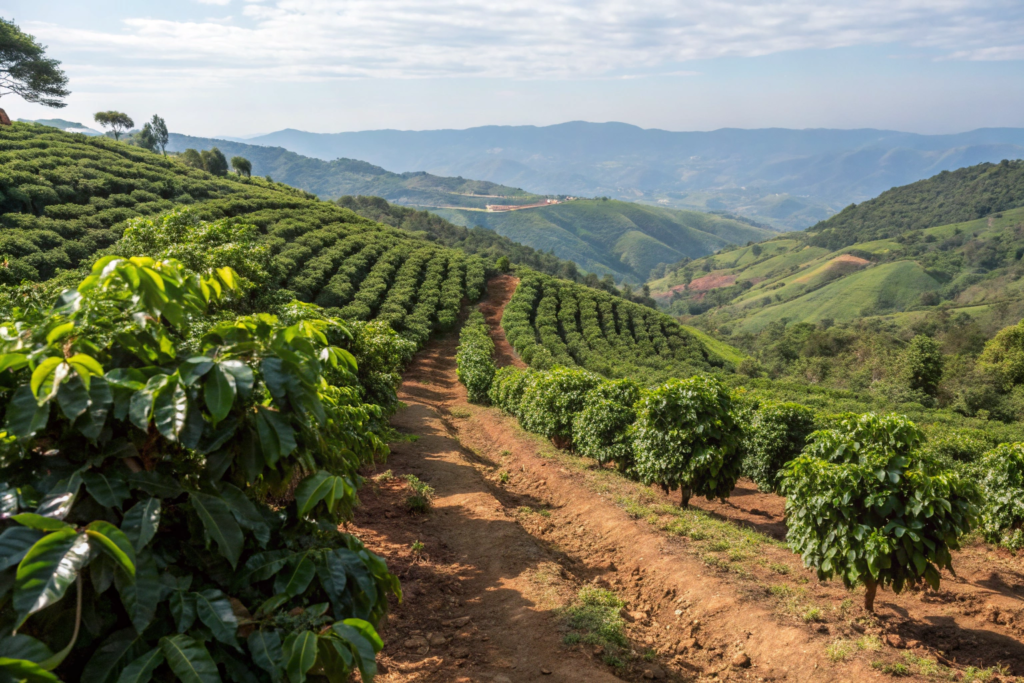
By 2030, the global map of viable Arabica production will have contracted and shifted. Lower-altitude regions in Brazil, Central America, and parts of East Africa that have historically dominated wholesale supply will face increasing temperature stress, reduced yields, and higher pest pressure. Higher-altitude regions, and regions at the latitudinal edges of the coffee belt, will gain relative advantage. Yunnan, at 25 degrees north with extensive land above 1,400 meters, is one of the regions that climate models project will remain suitable or improve in suitability for Arabica production through 2050. This does not mean Yunnan will replace Brazil in volume. It means that the wholesale buyer who built a supply chain around a specific low-altitude origin may need to rebuild it around a different origin, and origins like Yunnan will move from the periphery of specialty wholesale to the center.
I am making planting decisions today based on climate projections for 2040, not 2025. The Catimor hybrids going into our lower blocks are selected for heat tolerance and rust resistance. The Geisha and Bourbon lots are moving higher up the mountain, where the temperature will still be cool enough for slow ripening in two decades. This is not alarmism. It is agricultural planning with a time horizon that matches the life of a coffee tree. The World Coffee Research climate suitability projections provide the data that underpins these decisions, and the IPCC regional climate models for Southeast Asia give the macro-level projections for temperature and rainfall shifts in Yunnan.
Which specific climate variables are most threatening to current major coffee origins?
Rising minimum nighttime temperatures are the most insidious threat. Coffee quality depends on cool nights that slow cherry maturation and concentrate sugars. When nighttime temperatures rise, cherries ripen faster, sugars are less concentrated, and cup complexity declines. This is already measurable in some origins. Erratic rainfall, with longer dry seasons punctuated by intense downpours, disrupts flowering and cherry development. And increasing frequency of extreme events, frosts at high altitude, floods in low areas, and heatwaves, makes harvest volumes unpredictable year to year. An origin that has one bad year in five is manageable. An origin that has two bad years in three is not a viable wholesale supplier.
Why will Yunnan's latitude become a strategic advantage in a warming climate?
Yunnan's position at the northern edge of the global coffee belt means it has room to move up. As temperatures rise, the optimal altitude band for Arabica shifts upward. In an origin where the highest mountains are already planted in coffee, there is nowhere to go. In Yunnan, the coffee-growing zone currently ranges from 900 to 1,800 meters, and there is land above that which, though currently too cool for coffee, will become suitable as temperatures warm. This upward migration potential is a form of climate resilience that equatorial origins with lower maximum elevations simply do not have.
What Role Will AI and Automation Play in Wholesale Coffee Procurement by 2030?
I used to spend weeks every year traveling to trade shows, cupping hundreds of samples, and negotiating contracts face to face. I still do all of those things. But I now also use software that tracks our lot-level cupping scores across multiple harvests, correlates them with buyer preferences, and suggests which buyers are most likely to be interested in which lots before I ever send a sample. That is a primitive version of where procurement is heading.
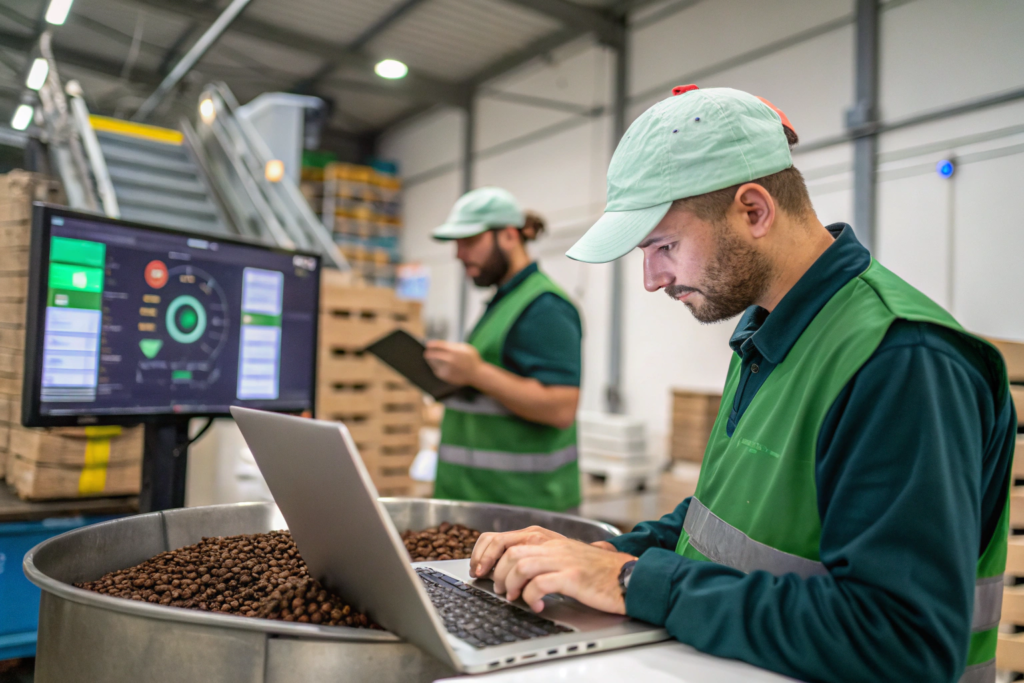
By 2030, AI will be integrated into wholesale coffee procurement at three levels. First, predictive sourcing: platforms that analyze historical quality data, buyer preferences, climate projections, and market pricing to recommend specific lots to specific buyers before the buyer has even defined their need. Second, automated quality verification: computer vision systems that grade green coffee defects faster and more consistently than human sorters, integrated into the procurement platform so that a buyer can view a verified defect count for a lot in real time. Third, dynamic contracting: smart contracts on blockchain platforms that automatically execute when pre-agreed conditions are met, such as a cupping score verified by a third-party lab or a shipment arriving within a temperature tolerance. The buyer of 2030 will spend less time on administrative tasks and more time on relationship management and strategic decisions. The transactional parts of procurement will be handled by systems that are faster and more consistent than humans.
I am not a technologist. I am a farmer who has seen what the right tools can do. The AI tools we use today are still crude. They save time. They reduce errors. They do not replace human judgment at the cupping table. But the trajectory is clear. The procurement professional of 2030 will work alongside AI the way a pilot works alongside an autopilot: the system handles the routine, and the human handles the exceptions and the relationships. The Cropster AI and sensory prediction research and the World Coffee Research machine learning and coffee quality projects are early indicators of where this technology is heading.
How will blockchain-based traceability change the wholesale buyer's due diligence process?
Blockchain traceability creates an immutable record of every transaction and transformation in the coffee's journey from farm to roastery. For the wholesale buyer, this means that instead of requesting and verifying paper certificates and audit reports from multiple sources, they can access a single, verified digital record that includes the GPS coordinates of the farm, the harvest date, the processing method, the cupping scores from each stage, the shipping documents, and the sustainability certifications. This reduces the due diligence burden from weeks to minutes. It also makes fraud, such as blending a premium lot with a lower-grade lot and selling it as the premium lot, far more difficult. The Blockchain for Coffee initiatives are already demonstrating this in pilot programs.
What procurement tasks will still require a human buyer in 2030?
Relationship building, strategic partnership negotiation, sensory evaluation of top-tier microlots, and the creative collaboration between roaster and producer on custom processing will remain human domains. AI can tell a buyer which lots match their quality and price parameters. It cannot visit a farm, share a meal with the producer, and develop the trust that leads to a first-refusal offer on an exceptional microlot. The technical and transactional parts of procurement will be automated. The human and strategic parts will become more valuable, not less.
How Will Sustainability Regulations Change the Documentation Required for Wholesale Shipments?
I used to send a commercial invoice, a packing list, and a bill of lading with most shipments. A few buyers wanted an organic certificate or a Rainforest Alliance certificate. That was it. Today, I am sending geolocation data for every farm block, due diligence declarations for deforestation-free compliance, carbon footprint assessments, and living income benchmarks. The documentation package for a single container is thicker than the coffee itself.
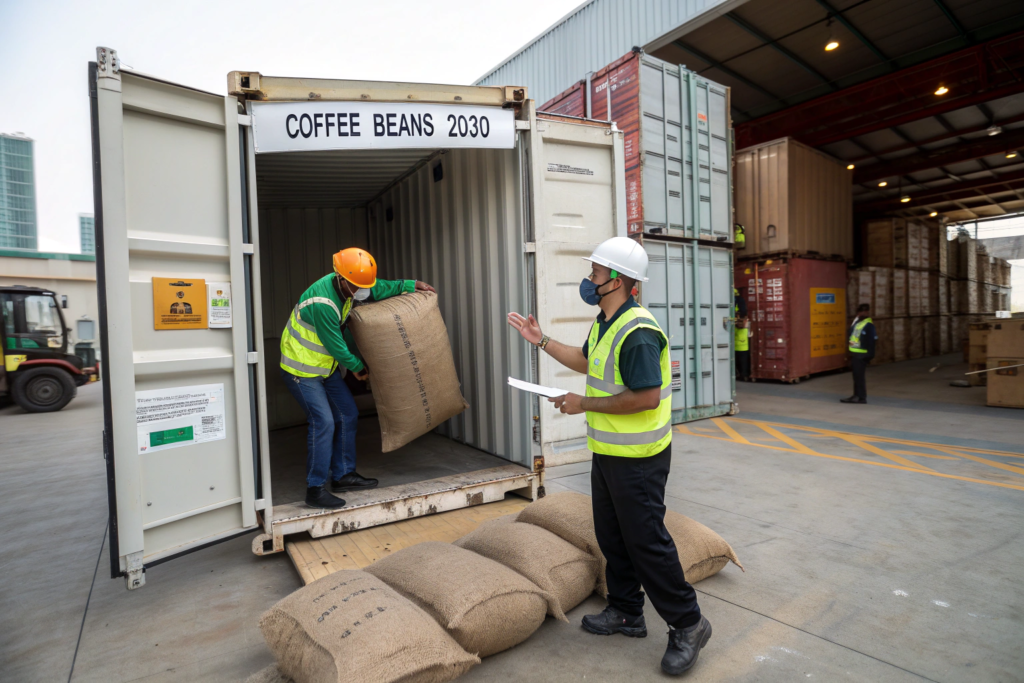
By 2030, mandatory sustainability documentation will be the baseline requirement for wholesale coffee shipments into every major importing market. The European Union's deforestation regulation, which takes full effect before 2030, is the template. Similar legislation is under development or discussion in the United States, the United Kingdom, and other major markets. A wholesale shipment in 2030 will require, at minimum: geolocation polygons for every farm plot, verified against satellite deforestation monitoring data; a due diligence statement attesting that the coffee is deforestation-free and legally produced; a carbon footprint declaration following a recognized methodology; and evidence of compliance with any applicable forced labor due diligence laws. Voluntary certifications like organic, Fair Trade, and Rainforest Alliance will still exist, but they will be layered on top of mandatory requirements, not substitutes for them.
I am investing now in the data systems to meet these requirements because I know they are coming. Every farm block on our Baoshan property is GPS-mapped. We have a deforestation monitoring protocol that compares our block boundaries against satellite imagery annually. We are building our carbon accounting capability. A supplier who is not doing these things by 2027 will be locked out of major markets by 2030. The European Commission's deforestation regulation implementation provides the legal text, and the World Resources Institute's deforestation monitoring tools are the practical resources that suppliers and buyers can use to prepare.
What is a geolocation polygon and why will every wholesale lot need one?
A geolocation polygon is a digital map of a farm plot's exact boundaries, defined by a set of GPS coordinates. A polygon is more precise than a single GPS point, which only shows the center of a plot. The EU deforestation regulation requires polygons for plots larger than a certain size. The polygon allows regulators and buyers to overlay the farm boundary onto historical satellite imagery and verify that no deforestation has occurred on that land after the cutoff date. For a wholesale buyer, collecting polygons from every supplier will be a significant administrative task. Suppliers who can provide them in a standardized digital format will have a competitive advantage.
How will carbon labeling affect wholesale purchasing decisions?
Carbon labeling, where a product carries a declaration of its carbon footprint per kilogram or per serving, is moving from niche sustainability marketing to mainstream retail expectation. For a wholesale buyer, this means they need carbon footprint data from their suppliers to calculate their own Scope 3 emissions and to populate their own product labels. A supplier who provides a verified carbon footprint per kilogram of green coffee saves the buyer the time and cost of commissioning their own assessment. By 2030, a supplier without carbon data may be at a pricing disadvantage, as buyers factor the cost of obtaining that data into their sourcing decisions.
Who Will Be the Dominant Buyers in the 2030 Wholesale Coffee Market?
The wholesale buyer landscape is already fragmenting. Ten years ago, our customer list was mostly importers and mid-sized specialty roasters. Today, it includes large retail chains sourcing private label programs, e-commerce subscription brands that have never operated a physical cafe, ready-to-drink cold brew manufacturers, and distributors serving the office coffee and hospitality channels. Each of these buyer types has different requirements, and the trend toward diversification is accelerating.
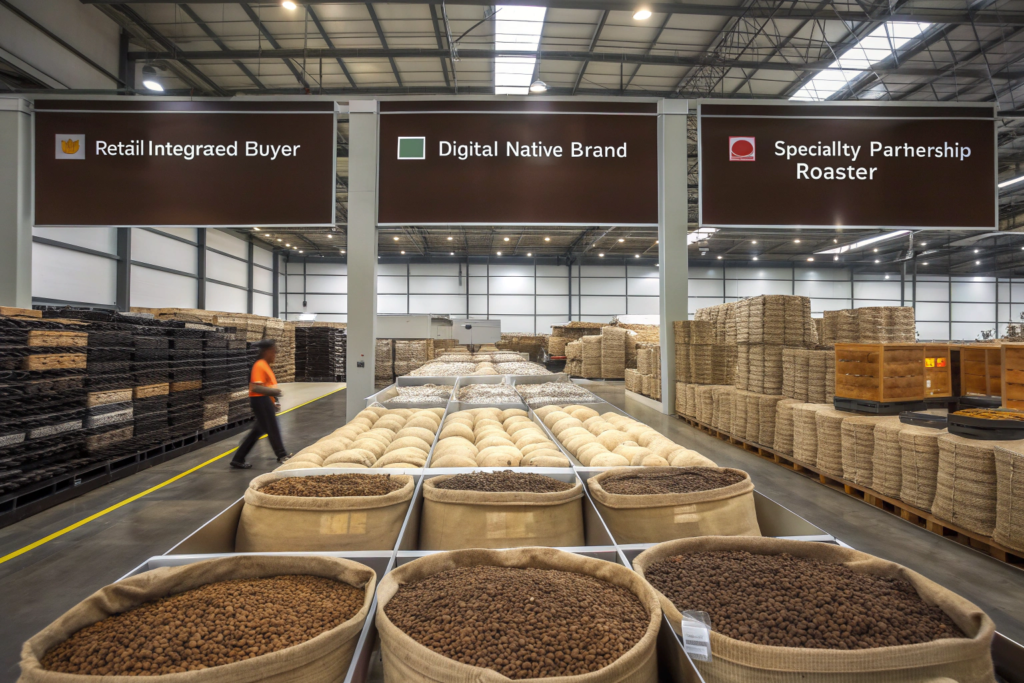
By 2030, the wholesale coffee market will be served by three dominant buyer categories, each with distinct procurement behaviors. The retail-integrated buyer, large grocery chains and multinational roaster-retailers, will demand the highest volume, the most rigorous compliance documentation, and the longest-term contracts, often with integrated private label packaging and logistics. The digital-native brand, e-commerce and subscription coffee companies, will demand smaller, more frequent shipments, extreme flexibility in packaging and product variety, and rich digital content, origin stories, and data, to feed their online marketing. The specialty partnership roaster, the direct-trade focused independent roaster, will demand the highest cup quality, the deepest relationships, and the most exclusive, traceable microlots. A supplier who tries to serve all three categories with the same approach will fail. The winners will be suppliers who build dedicated capabilities for each channel.
I already see this segmentation in our own client base. The conversation with a retail chain buyer is entirely different from the conversation with a specialty microroaster. Different pricing models, different packaging, different documentation, different relationship cadence. We are structuring our sales and production teams around these categories, not around geographic regions, because the buyer category matters more than the buyer's country. The National Coffee Association's market segmentation reports track the growth of different coffee consumption channels, and the Specialty Coffee Association's retail and e-commerce research provides data on the shifting buyer landscape.
How will direct-to-consumer coffee brands change wholesale procurement patterns?
Direct-to-consumer brands order differently than traditional wholesale buyers. They need faster turnaround on smaller volumes. They need more variety, often changing their single-origin offerings every few months to keep their subscription boxes interesting. They need rich digital content—photos, videos, farmer interviews—more urgently than they need the lowest FOB price. And they are more likely to collaborate on co-branded marketing that features the producer's name and story alongside their own brand. This is a different procurement model, and suppliers who adapt to it will capture a growing share of the specialty market.
What will happen to the traditional coffee importer in this new landscape?
The traditional importer model, buying large volumes, warehousing in-country, and selling from spot lists, will not disappear. But it will consolidate and specialize. Importers who add value through financing, logistics management, and sustainability compliance support will survive and thrive. Importers who simply buy and resell without adding a service layer that buyers cannot easily replicate will face pressure from direct trade and from technology platforms that connect buyers and suppliers without intermediation. The importer of 2030 will look more like a supply chain services provider and less like a commodity trader.
Conclusion
The coffee bean wholesale landscape of 2030 will be hotter, smarter, more regulated, and more segmented than today. Climate change will redraw the map of viable origins, and Yunnan will be one of the regions that benefits from this redistribution. AI and automation will handle the transactional elements of procurement, freeing human buyers to focus on relationships and strategy. Sustainability compliance will shift from voluntary to mandatory, and the documentation package will be as important as the cupping score. And the buyer base will continue to fragment into distinct categories, each requiring a tailored approach from suppliers.
If you are a coffee buyer thinking about your sourcing strategy for the next five to ten years, or a brand building a supply chain that needs to be resilient through 2030 and beyond, we are making the investments now to be ready for that future. Climate-resilient planting, digital traceability infrastructure, sustainability documentation systems, and dedicated capabilities for each buyer category. Contact Cathy Cai at cathy@beanofcoffee.com. She can share our long-term production outlook, our climate adaptation strategy, and how we are preparing to be a reliable wholesale partner not just for the next harvest, but for the next decade. The future is coming. We are planting for it.