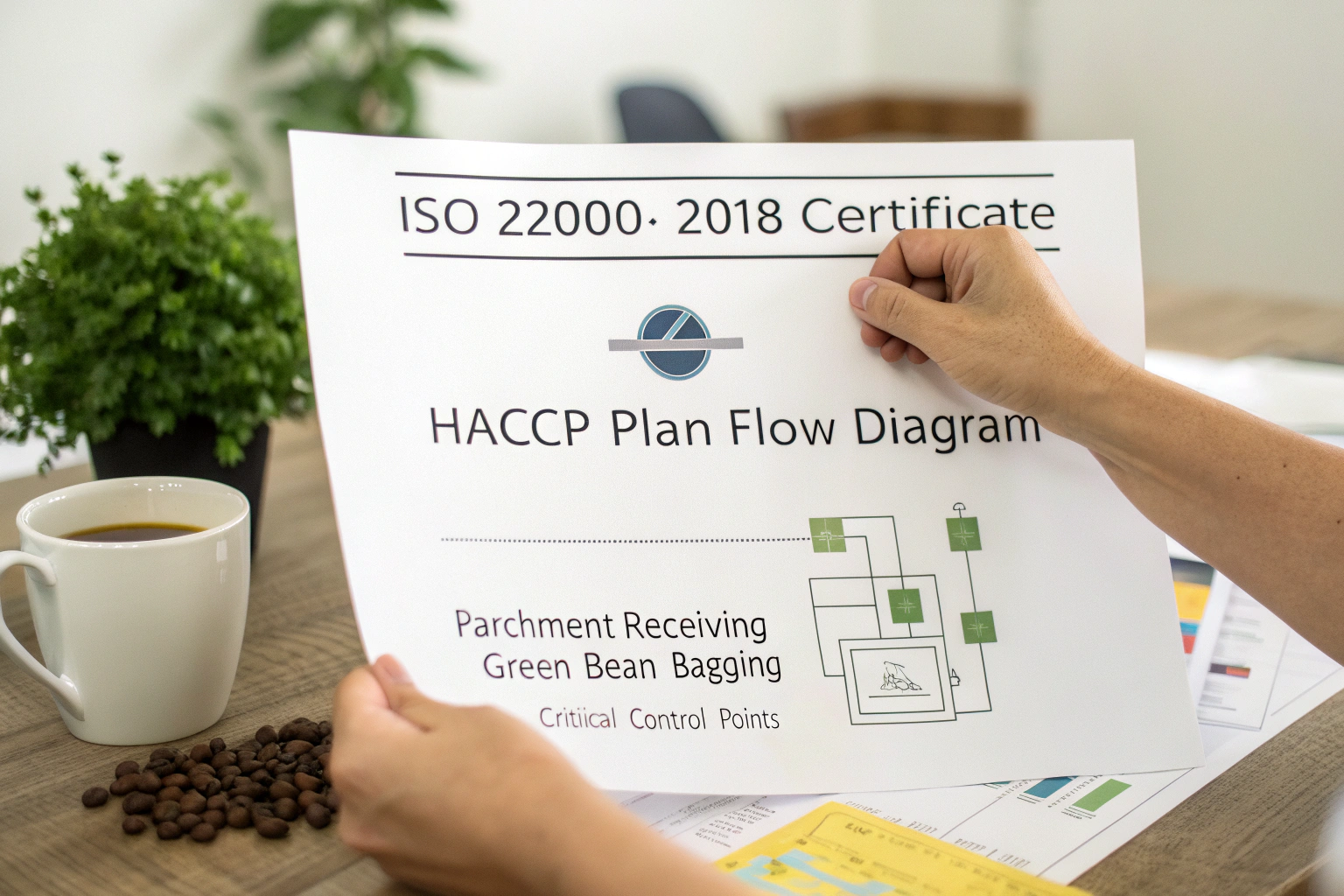
I remember a tense meeting with the quality director of a large European supermarket chain. He was reviewing our certifications, and he looked up from our file and asked, "You have a beautiful BRCGS score, and your organic certificates are in order. But tell me, how do you manage the system that connects all of these? How do I know your food safety is not just a series of good inspections, but a continuous, managed, and improving culture?" I didn't have to scramble for an answer. I was able to show him our ISO 22000 certificate and the integrated management system it mandates. It was the proof that our food safety was not a project, but a permanent, structured part of our business DNA. He visibly relaxed.
ISO 22000 is critically important for a coffee bean production facility because it provides a formally audited, internationally recognized framework that weaves a scientific HACCP plan into a complete Food Safety Management System (FSMS), transforming food safety from a set of isolated procedures into a continuous, managed, and self-improving culture that is embedded in every department and every decision.
It is the backbone of a trustworthy operation. Let me explain why this specific standard is a guarantee you should demand from your green coffee supplier. At Shanghai Fumao, ISO 22000 is a cornerstone of our Quality Control promise.
How Does ISO 22000 Integrate with a HACCP Plan to Create a Safety Culture?
A common misconception is that a HACCP plan and a certification like ISO 22000 are two separate or competing standards. In reality, they are partners. HACCP provides the scientific, hazard-focused engine. ISO 22000 provides the structured, management-level vehicle that carries that engine and ensures it is running correctly, day after day. One without the other is incomplete.
A HACCP plan identifies, scientifically, where and how a hazard must be controlled. The ISO 22000 Food Safety Management System provides the structured, audited framework of leadership, documented procedures, and resource management that ensures the entire organization is aligned and committed to making those controls a permanent, living reality.
This is the difference between a factory that has a HACCP plan on a shelf and a factory that has a HACCP culture, which is what ISO 22000 mandates and verifies.
What Is "Management Commitment" and Why Is It Audited?
In a factory without a formal FSMS, food safety is often the quality manager's job. If the manager is away or under pressure to ship a late order, safety corners can be cut. ISO 22000 makes this impossible by placing the ultimate responsibility for food safety squarely on the shoulders of top management, and then auditing their actions.
ISO 22000 explicitly requires demonstrable "management commitment." This is not a signed memo. It means the CEO and the senior leadership team must actively participate in regular FSMS reviews. The auditor will check meeting minutes to verify that Top Management is allocating the necessary resources—time, staff, and money—to maintain the safety system. This auditable requirement ensures that food safety is never an afterthought that can be overruled by a production deadline. It is the single most powerful clause in the standard, turning an often informal wish into an audited executive duty.
How Does the Standard Ensure the Entire Facility Communicates About Safety?
A safety system breaks down when critical information is trapped within one department. A lab technician discovers a new potential hazard, but the information never reaches the production manager. A maintenance worker fixes a machine, but the person cleaning it doesn't know. ISO 22000 is designed to specifically break down these silos and mandate a verifiable flow of information.
The standard has a specific set of requirements for both internal and external communication. It requires a documented procedure for how we share critical food safety information. For example, if a new EU regulation lowers the MRL for a specific pesticide, the standard's communication protocol mandates that our export documentation team is formally notified so that our invoices are updated before the next container ships. The annual audit verifies that this communication system is not just a policy, but a practiced and effective reality, with records to prove it.
What Specific ISO 22000 Rules Protect Your Coffee from Contamination?
The management commitment and the communication protocols are the invisible architecture of safety. But the ISO 22000 system also drives specific, rigorous, and tangible controls directly on the production floor. These are the documented procedures that physically prevent a contaminant from reaching your customer's cup. The standard ensures these controls are not just installed but are managed with audited discipline.
ISO 22000 drives specific product protections by requiring a formalized "Prerequisite Program" (PRP) that controls the general hygienic environment of the mill, and by managing specific physical hazard controls—like magnets, density sorters, and a validated metal detector—as rigorously audited "Operational PRPs" or full "Critical Control Points" (CCPs) with documented monitoring and corrective action logs.
This is the physical defense system that our ISO 22000 management system oversees and verifies.
How Are "Prerequisite Programs" (PRPs) More Than Just a Clean Floor?
The foundation of any food safety system is a clean and controlled environment. In the ISO 22000 framework, this foundation is formalized and documented through Prerequisite Programs (PRPs). These are not just a suggestion to "clean up." They are specific, auditable procedures.
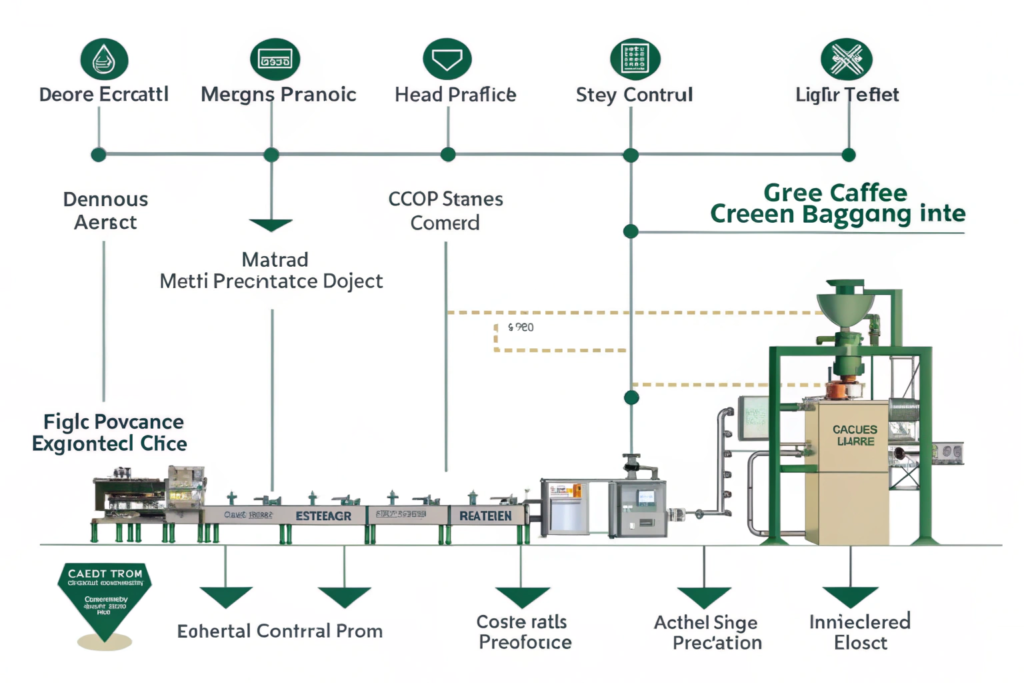
A PRP covers the basic environmental and operational conditions necessary for safe production. This includes things like a strict pest control program with a documented map of all bait stations and regular inspection logs. It includes an approved list of cleaning chemicals and a documented procedure for both routine and deep cleaning of all equipment, with a record of completion. And it includes a mandate that all maintenance lubricants used on the production floor are food-grade. Unlike a CCP which controls a specific hazard, a PRP creates the overall hygienic environment. The ISO 22000 auditor will physically walk the mill to verify these programs are effective, a process we describe in more detail in How to Verify a Supplier's HACCP Plan for Coffee Processing?.
What Happens If a Documented "Critical Limit" Is Exceeded?
A system is not tested when everything is going perfectly. It is tested when something goes wrong. A key advantage of an ISO 22000-certified system is that it demands a pre-written, documented response to a failure. There is no improvisation; there is a protocol.
For example, for our metal detector CCP, the "critical limit" is that it must detect and reject a certified 1.5mm stainless-steel test sphere every two hours. If the machine fails this check, the ISO 22000 system mandates that a pre-written corrective action is immediately triggered. The line is stopped, all product processed since the last successful check is formally quarantined and labeled, and it is only released after being re-run through a validated machine. This entire event, from the failure to the final resolution, is recorded on a formal corrective action log that is reviewed by both our management team and the external auditor. This audited discipline is what prevents a small failure from becoming a product recall.
How Does the ISO 22000 Audit Process Verify the System Is Working?
All the written plans and documented procedures are a promise. The only way to know if that promise is a reality is through an independent, external audit. The ISO 22000 certification is not a one-time award; it is a continuous cycle of external verification that the system is alive, healthy, and improving. The auditor's visit is the moment of truth.
The ISO 22000 audit verifies the system's effectiveness through a rigorous, multi-day, on-site examination that includes a detailed review of records, a physical walkthrough of the facility to match the documented process flow to reality, and interviews with personnel to verify a demonstrable food safety culture, all governed by the certifier's own ISO 17025 accreditation.
This is the process that transforms a supplier's claim into your verifiable guarantee. At Shanghai Fumao, we proudly share our audit results.
Why Is the Auditor's Physical Walkthrough a Critical Test?
A company can prepare a beautiful set of files that describe a perfect factory. But the ISO 22000 auditor's job is to verify that the written process flow diagram perfectly matches the physical reality of the production floor. This is the "walkthrough," and it is a critical test of the system's integrity.
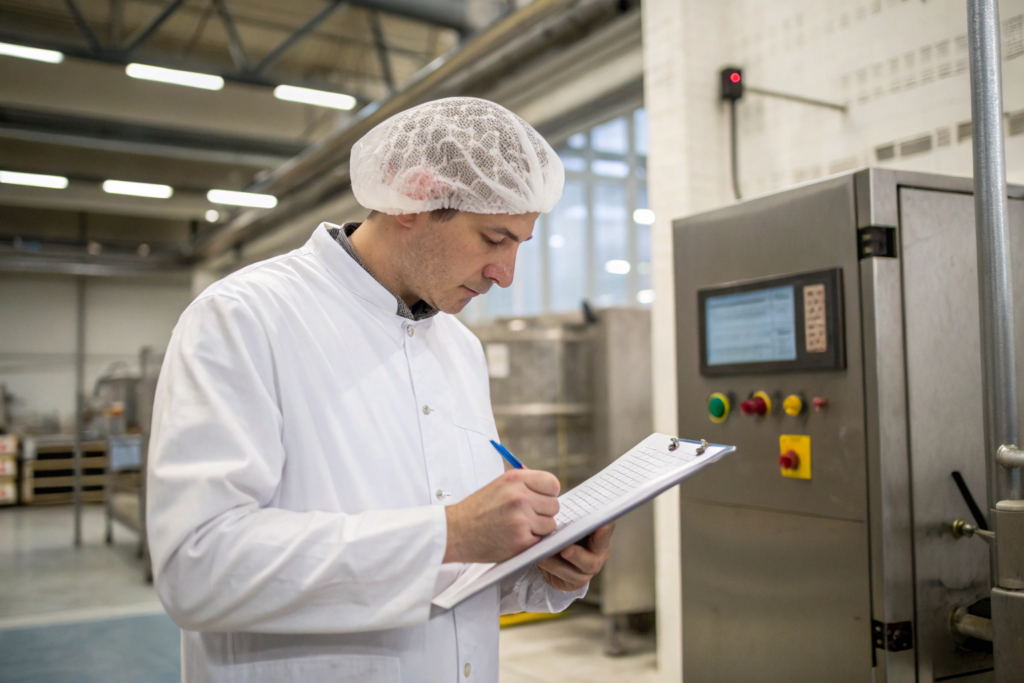
The auditor will take a copy of our HACCP plan's flow diagram and literally walk the entire production line, from the parchment receiving area to the final bagging station. They will have maintenance logs pulled for a specific huller. They will ask an operator to perform a live CCP check on the metal detector to demonstrate competence. They will pick an item at random from the Glass and Brittle Plastic Register and walk to that exact location to verify its condition matches the logbook. This physical audit is what separates a documented system from a real one. It is the proof that our ISO 22000 certificate is a statement of operational fact, not just a paperwork exercise.
How Does the Standard Drive a "Continuous Improvement" Feedback Loop?
A factory that is truly committed to food safety is never satisfied with the status quo. ISO 22000 is not a pass/fail standard where you can simply achieve certification and then relax. It is structurally designed to force a company to continuously improve its own system year after year.
The standard mandates a formal, documented "Management Review" at planned intervals, chaired by top management. In this meeting, we do not just review past performance. We analyze the results of our internal audits, the corrective actions taken, and the results of recent external audits. The meeting's output is a formal, documented decision on what will be improved in the coming year—whether it is investing in a new sieving technology to reduce a specific defect, or retraining a team on an updated cleaning protocol. This annual, audited feedback loop ensures that the safety system is a constantly evolving organism, not a static document. It is a key reason why an ISO 22000 certificate represents a commitment to getting better, all the time.
How Does ISO 22000 Complement Other Certifications Like BRCGS?
With the growing importance of standards like BRCGS, a buyer might reasonably ask, "If my supplier has BRCGS, do I still need to care about ISO 22000?" The answer is a definitive yes. They are not competitors; they are partners in a hierarchy of assurance. One provides the foundational management system, and the other provides the ultimate, unannounced verification of product safety culture.
ISO 22000 provides the essential, documented, and audited management system framework that organizes all food safety activities, acting as the non-negotiable foundation upon which a more rigorous, product-focused, and unannounced-audited standard like BRCGS is built.
A factory can have BRCGS without a standalone ISO 22000 certificate because the BRCGS standard itself requires a fully functional FSMS. However, when a supplier holds both, it signals an even deeper, long-term commitment to a structured, independently verified management approach. Our journey at Shanghai Fumao began with building and certifying our ISO 22000 FSMS. Holding this certification, which you can verify on our Certifications page, demonstrates the maturity and integration of our safety system.
Why Is the FSMS the Necessary Foundation for an Unannounced Audit Standard?
A factory that only prepares for a single, scheduled audit each year can cut corners for the other 364 days. The ISO 22000 system makes this impossible. It builds the internal discipline and systematic rigor that are prerequisites for passing the ultimate test: an unannounced audit by a standard like BRCGS.
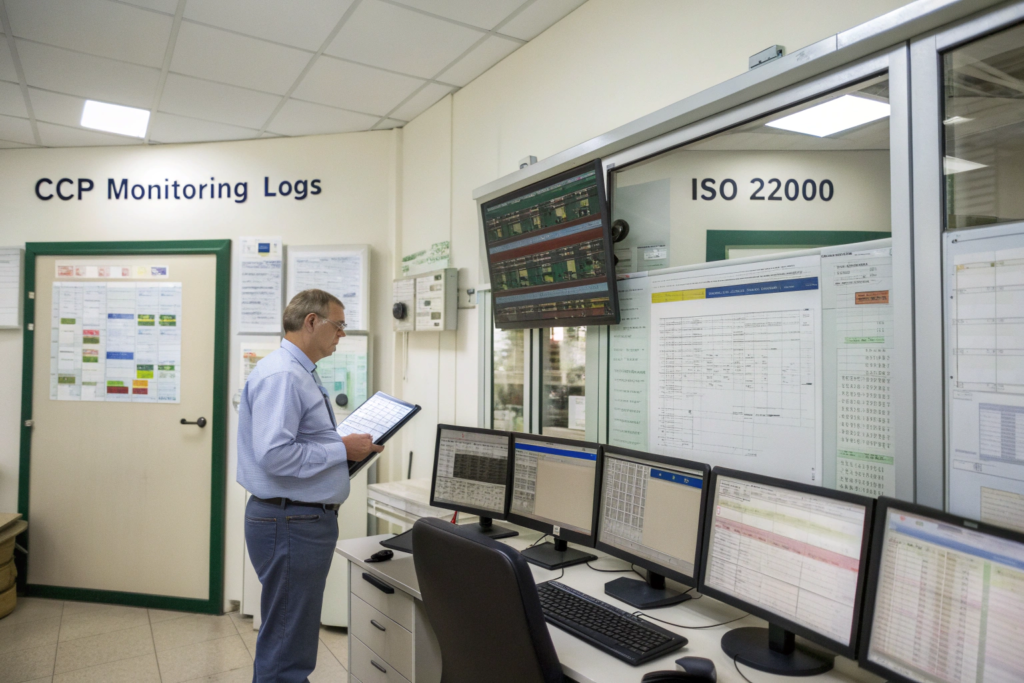
You cannot pass a random BRCGS audit by cramming the week before. An unannounced auditor will arrive and immediately ask to see the live CCP monitoring logs, which must be perfect that day, not the day before. This requires a management system like ISO 22000 that already mandates daily discipline, documented corrective actions, and a continuous improvement cycle. The FSMS is the practicing that makes the game-day performance possible. It is the internal structure that allows a factory to live in a permanent state of audit-readiness, which is the ultimate guarantee of supplier reliability.
How Does an ISO 22000 System Help a Supplier Adapt to New Regulations?
The only constant in food safety is change. A new EU regulation lowers a pesticide MRL, or a client requires a new allergen statement. A supplier without a robust management system will struggle to react. They will scramble with a chaotic, one-off fix. A supplier with an ISO 22000-certified FSMS has a built-in, systematic process for managing change.
The standard's specific requirements for a controlled "Documented Information" and "Management of Change" procedure are what allow us to adapt seamlessly. When a new regulation, such as the updated EU MRLs we discuss in What Are the New EU Pesticide MRLs for Coffee Beans in 2026?, comes into effect, it is fed into our management review meeting. Our system ensures that all relevant procedures, monitoring records, and supplier specifications are systematically updated, and that the changes are communicated to all relevant personnel. This guarantees that our food safety system is always current and compliant, protecting your brand from regulatory risk.
Conclusion
ISO 22000 is important for a coffee bean production facility because it is the formal, audited architecture that transforms food safety from a set of good intentions into a living, breathing, and continuously improving organizational culture. It integrates a scientific HACCP plan into a complete management system that is driven by demonstrable leadership commitment, verified by rigorous external audits, and designed to adapt to the ever-changing landscape of global regulations.
For you, the buyer, a partner with an ISO 22000-certified FSMS offers a deeper, more systematic layer of confidence. It is the proof that the supplier has not just a safety plan, but a safety culture—a managed, auditable, and permanent part of their business DNA.
At Shanghai Fumao, we built our reputation on this exact foundation. Our ISO 22000 FSMS is the engine that drives our quality, and it is an open book for our partners.
If you want to understand how our certified management system can provide a more reliable and secure supply chain for your business, we are ready to share our documentation. Email Cathy Cai. Ask for our "ISO 22000 Certificate and FSMS Overview." Contact Cathy at: cathy@beanofcoffee.com