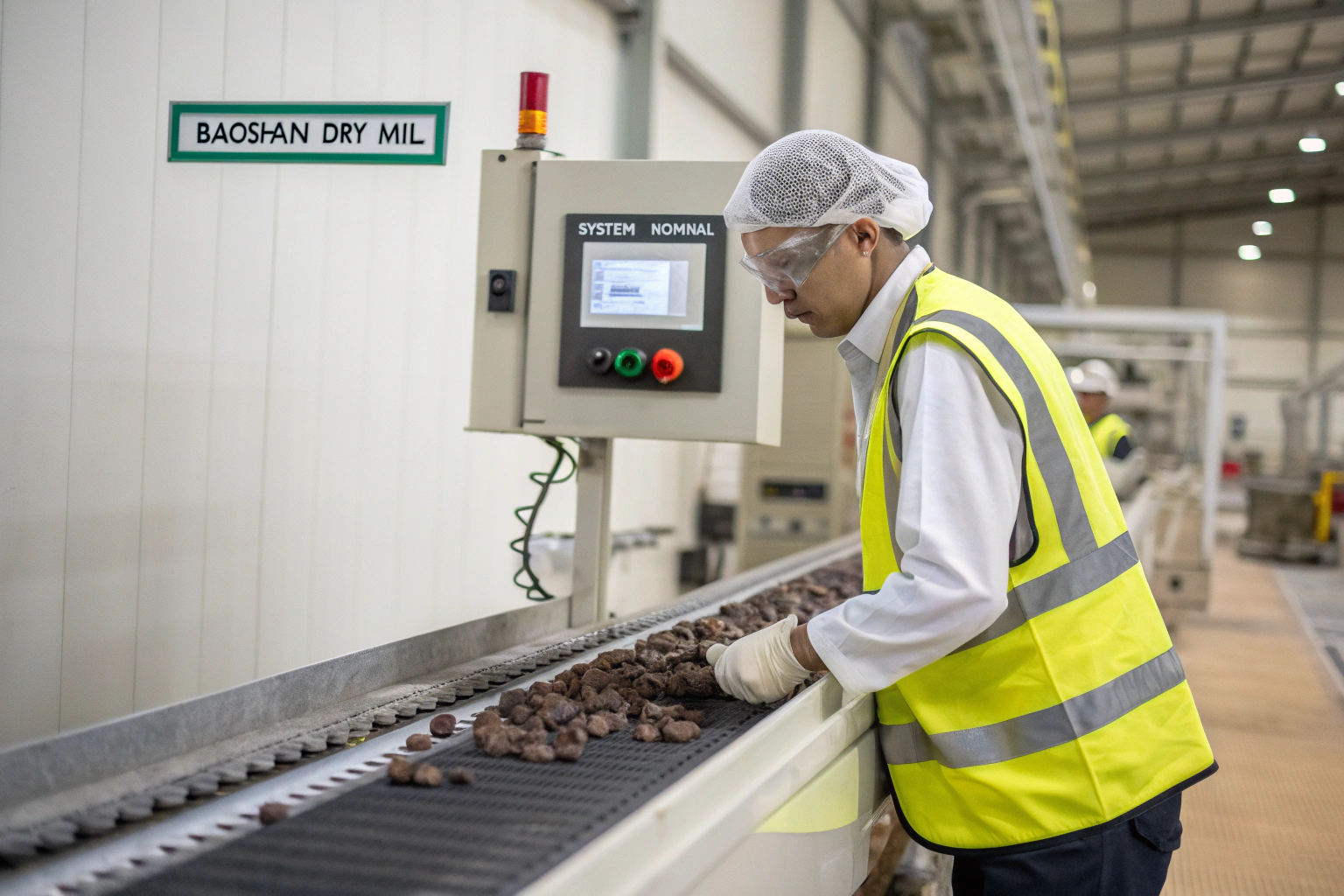
A few years ago, a major European client sent their technical director to audit our mill. He spent two hours walking the production floor with a flashlight and a checklist. He did not ask about cupping scores. He inspected our metal traps. He verified the calibration certificates on our test pieces. He checked our glass register and asked to see our staff locker rooms. At the end, he sat down, accepted a cup of coffee, and said, "Your product is good. But your safety system is exceptional. I can sell your coffee without a single worry." That was the moment I fully understood the commercial power of a world-class food safety program.
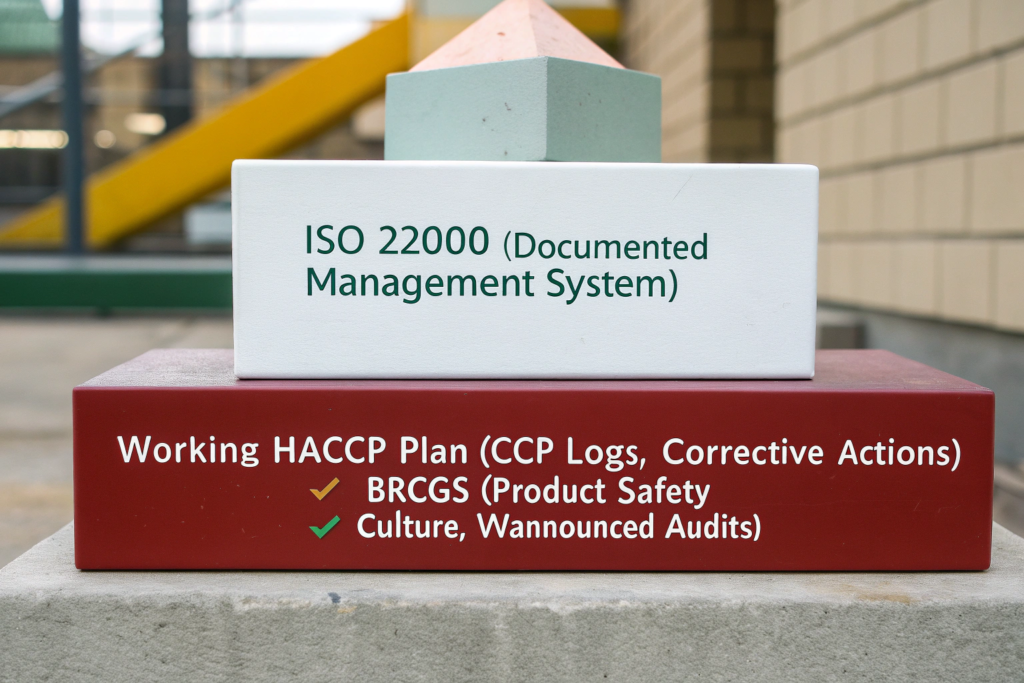
The safety standards that apply to coffee processing are a hierarchy of legal and voluntary frameworks, starting with mandatory national and international food safety laws, and rising to globally recognized, externally audited certifications like ISO 22000 for a foundational Food Safety Management System, and the GFSI-benchmarked BRCGS Global Standard, which mandates a rigorous, product-specific HACCP plan and an audited food safety culture.
These standards ensure your coffee is not just delicious, but legally safe from physical, chemical, and biological hazards. Let me explain this framework and what it means for your supply chain. At Shanghai Fumao, this is the foundation of our entire operation, as detailed on our Quality Control page.
What Is the Core Framework of a Food Safety Management System?
A single certificate on a wall is meaningless without a living, breathing system behind it. A true Food Safety Management System (FSMS) is a comprehensive, integrated framework that governs every aspect of our operation that could impact the safety of your coffee. It is a culture, not just a document.
The core framework of a food safety management system is built on the scientific foundation of a HACCP plan, which is then managed and continuously improved within a structured ISO 22000 framework, and ultimately verified as a product-safety-focused culture through the rigorous, unannounced audits of a GFSI-benchmarked standard like BRCGS.
This is the architecture of trust. It ensures that food safety is not an afterthought but is engineered into our processes and verified by independent third parties. This is the same rigorous approach we take to ensure the quality of our Grade 1 Arabica.
How Does a HACCP Plan Systematically Control Processing Hazards?
HACCP stands for Hazard Analysis and Critical Control Points. It is the scientific, preventive engine of the entire food safety system. Instead of just testing the final product and hoping it is safe, a HACCP plan forces you to analyze every single step of the process, identify where specific hazards could occur, and install a proactive control to prevent them.
A good way to understand this is to compare our wet and dry mills. A wet mill HACCP plan might focus on biological hazards, like ensuring the fermentation water is clean and the drying process prevents mold growth. In contrast, a dry mill HACCP plan, as we discuss in How to Verify a Supplier's HACCP Plan for Coffee Processing?, is overwhelmingly focused on physical hazards. The hulling process can introduce metal fragments. Our plan identifies the final metal detector before bagging as a Critical Control Point (CCP), with a specific, audited procedure for continuous monitoring and corrective action. This targeted, scientific approach is what makes a HACCP-based system so effective.
What Is the Critical Role of a "Glass and Brittle Plastic Register"?
This is one of the most famous and feared elements of a high-level food safety audit. It is a simple, painstaking, but powerfully effective tool to eliminate a specific physical hazard that can cause serious consumer injury.
The BRCGS standard requires a comprehensive register of every single piece of glass, hard brittle plastic, or ceramic on the entire production floor. Every pressure gauge, light fixture, and clock face is uniquely numbered and inspected at a defined frequency for cracks or chips. This rigorous system is primarily designed to prevent a physical contaminant, a tiny, transparent shard from a shattered gauge, from reaching a consumer. But it also has a profound effect on worker safety, as it proactively identifies and replaces a potential injury hazard before it can cause harm. It is a perfect example of how a well-designed food safety system protects everyone.
How Are Physical and Chemical Hazards Prevented in a Dry Mill?
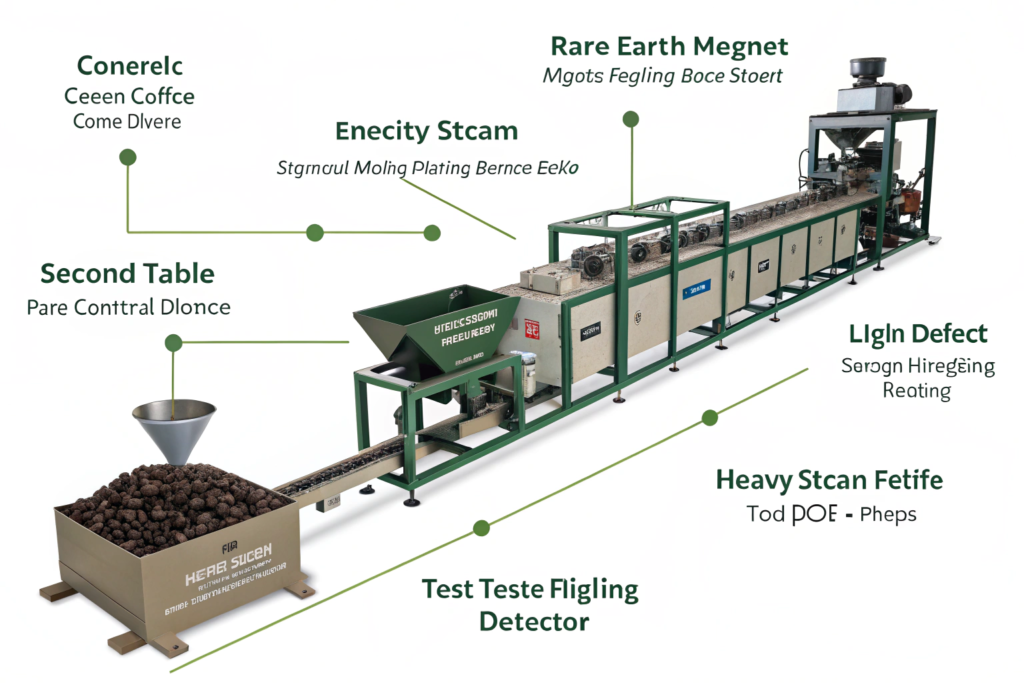
A quality coffee can be ruined by a single physical or chemical contaminant. In our dry mill, where the final processing of the green bean occurs, we have a multi-layered defense system specifically designed to address these risks. These are not theoretical controls; they are specific, auditable pieces of equipment with documented procedures.
Physical hazards like metal, stones, and glass are prevented through a multi-stage process of magnetic separation, density sorting, and a validated metal detector acting as a formal Critical Control Point, while chemical hazards are controlled through a strict non-toxic pest management program and the exclusive use of food-grade contact materials and lubricants.
This layered system ensures the coffee you receive is physically pure. It is a key part of our commitment at Shanghai Fumao.
How Does a Validated Metal Detector Act as a "Critical Control Point"?
The final metal detector before bagging is not just a piece of equipment; it is the most important gatekeeper in our dry mill. It functions as a formally designated Critical Control Point (CCP) within our HACCP plan.
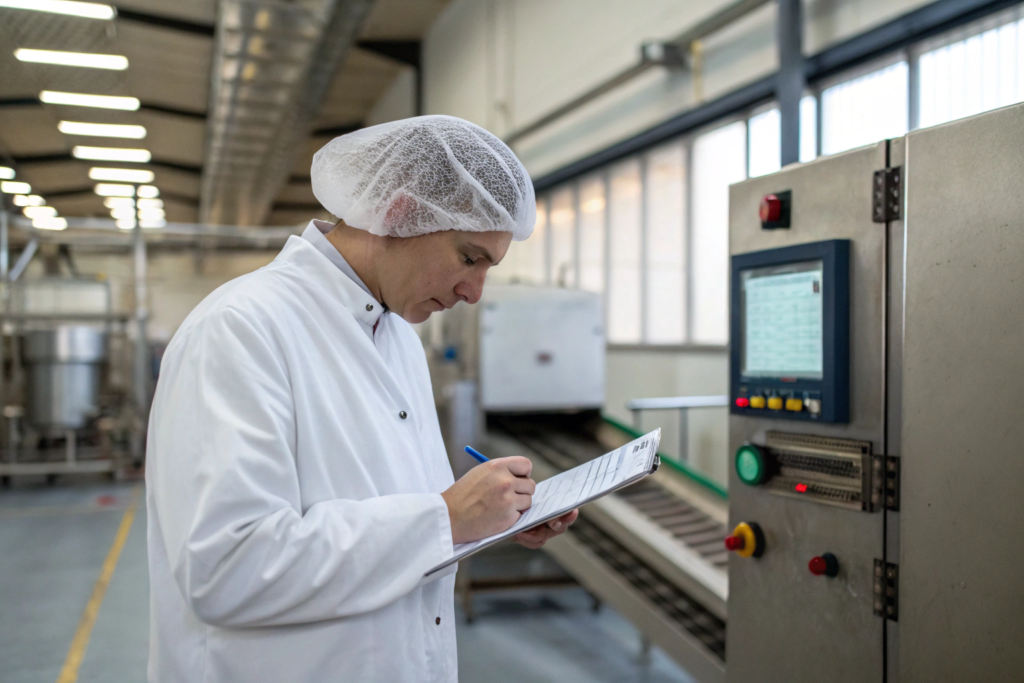
A CCP is managed with rigorous, audited discipline. A "critical limit" is established: the machine must detect and reject a certified stainless-steel test sphere of a specific diameter, for example, 1.5mm. Our operator performs a documented CCP check every two hours, passing the test piece through the detector and recording the pass/fail result. If the machine fails the check, a pre-written corrective action is immediately triggered: all coffee processed since the last successful check is quarantined and re-run through a validated machine. All of these actions are recorded on a CCP log. This is auditable proof that our physical hazard control is active and effective. This is what we mean by safety standards.
What Chemical Controls Are in Place for Pest Management and Equipment?
The safety of your coffee also means ensuring it is not contaminated by toxic chemicals. Our approach to pest management and equipment maintenance is designed to eliminate this risk.
Our Integrated Pest Management (IPM) program prioritizes non-chemical methods, like pheromone traps, rigorous sanitation, and facility sealing, to prevent pest infestations. If a chemical intervention is ever necessary, all pesticides used are approved, non-toxic, and applied strictly according to a documented procedure; we never fog or spray in areas where coffee is exposed. Additionally, all lubricants used on our processing machinery are food-grade and our equipment is designed for easy cleaning to prevent any cross-contact. These controls are a critical part of our internal and external audits.
How Is Food Safety Culture Verified by an External Audit?
All the written plans, HACCP documents, and checklists are a promise. The only way to know if that promise is a reality is through an independent, external audit. This is the ultimate verification that a food safety system is not just a document on a shelf, but a genuine living culture.
A food safety culture is verified by an external audit through a combination of a thorough daily document review, confidential worker interviews conducted without management present, and a detailed physical inspection of the facility's operational conditions, all performed on a random, unannounced date for the highest level of certification like BRCGS AA grade.
This type of audit tests the reality of the system. It is the gold standard of verification and the only way to have true confidence in a supplier. It's the same rigorous approach we discussed in How to Find a Coffee Supplier with BRCGS Food Safety Certification?.
What Does an "Unannounced Audit" Prove That a Scheduled One Doesn't?
A scheduled audit provides a snapshot of a factory on its best behavior. The company knows the date, cleans for a week, and makes sure all the paperwork is perfectly in order. It is a performance. An unannounced audit provides a "day-in-the-life" scan of what is really happening on a random Tuesday morning.
The BRCGS unannounced audit option, required for the highest AA grade, removes the ability to stage a performance. The auditor arrives to find the real conditions: the actual cleanliness of the floor, the genuine state of the CCP logs, and the unscripted behavior of the staff. This constant state of audit-readiness is what defines a mature food safety culture. It is the difference between knowing the rules and living them every day, a guarantee we are proud to offer our partners at Shanghai Fumao.
Why Are Confidential Worker Interviews a Critical Audit Tool?
The most revealing part of any audit does not happen on the production floor. It happens in a quiet side room. The true test of a company's ethical and safety culture is what its workers say when a manager is not in the room.
An auditor for a rigorous standard like BRCGS, Fairtrade, or Rainforest Alliance is trained to conduct private, confidential interviews with a random selection of employees. They will ask direct questions: "Can you show me how you do your metal detector check?" "What do you do if it fails?" "When was your last safety training?" "Do you feel safe at work?" A worker who has been genuinely trained and feels secure in their job will answer confidently and correctly. A worker who is afraid or has been told what to say will give a different answer. These confidential interviews are the single most powerful tool an auditor has to verify that the company's written policies are a lived reality for its people. They validate the entire system.
Conclusion
The safety standards that apply to coffee processing are a comprehensive, hierarchical system of legal mandates and voluntary, audited commitments. They begin with a scientific HACCP plan, are managed within an ISO 22000 framework, and achieve their highest, most trusted expression through a GFSI-benchmarked standard like BRCGS, which verifies the entire system through unannounced, worker-verified audits.
For you, the buyer, this framework is the difference between a supplier's promise and an independently verified guarantee. A supplier who has invested in this rigorous, audited system is one who takes their responsibility to your brand's safety as seriously as you do.
At Shanghai Fumao, our BRCGS AA-rated certification is the ultimate proof of our food safety culture. It is not just a document on a wall; it is the daily, unannounced, verified reality of our operation.
If you are qualifying a new supplier, or if you simply want the peace of mind that comes with an unannounced-audit-grade partner, I invite you to review our certification. Email Cathy Cai. Ask for our "BRCGS Certificate and Latest Audit Summary." Contact Cathy at: cathy@beanofcoffee.com