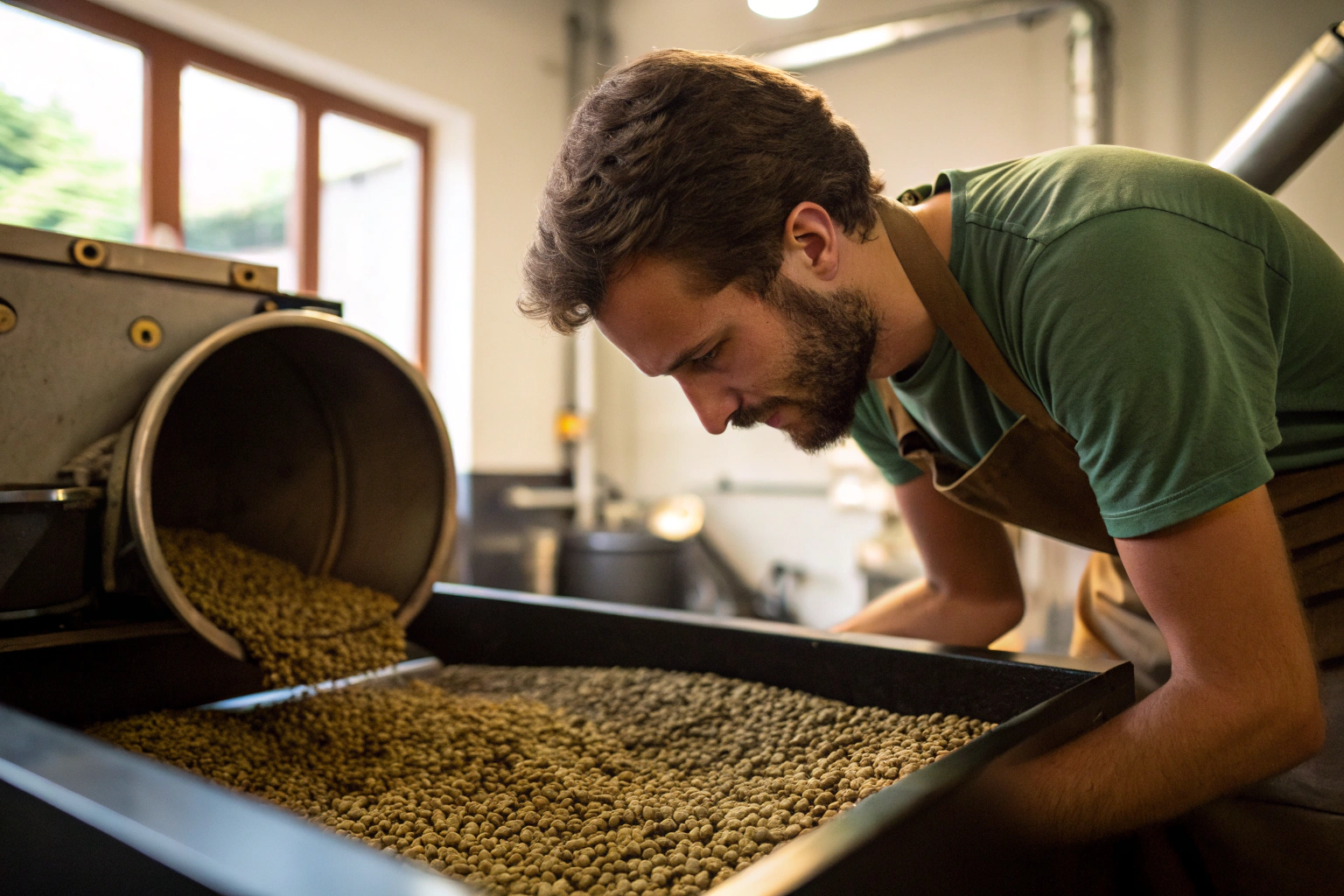
I run BeanofCoffee, a coffee exporter in Yunnan, China. We own more than 10,000 acres in Baoshan City. We sell Catimor, Arabica, and Robusta. We ship to North America, Europe, and Australia. Buyers like Ron ask me about price, quality, and shipping. Ron is 44. He owns a company in America. He cares about price and timeliness. He roasts every day. He wants beans that behave well in the roaster. One day he asked me a simple question. He asked why so many roasters talk about screen size 17/18. It sounds like a small detail. It is not. Screen size affects roast consistency, flavor, and cost. So let me explain why 17/18 is the sweet spot for many roasters.
The screen size 17/18 is the sweet spot for many roasters because it balances bean size, uniformity, roast consistency, and price. A 17/18 screen means most beans pass through a 17/64-inch screen but stay on an 18/64-inch screen. That is roughly 6.75 mm to 7.14 mm. Beans in this range are large enough to roast evenly. They are small enough to be affordable. They are common enough to be reliable. So roasters get a consistent product without paying a huge premium.
So, what does this mean for you? It means you should not ignore screen size. It affects your roast. It affects your blend. It affects your margin. At BeanofCoffee, we measure screen size for every lot. We share the data with buyers. That habit saves time and money. Let me show you why 17/18 matters.
What Does Screen Size 17/18 Mean for Coffee?
Screen size is a grading tool. It uses metal screens with holes of different sizes. The holes are measured in 64ths of an inch. A 17 screen has holes of 17/64 inch. An 18 screen has holes of 18/64 inch. When you shake beans through the screens, they separate by size. The beans that stay on top of the 17 screen are larger. The beans that fall through are smaller. A 17/18 grade means most beans are in that range. It is a common grade for specialty coffee.
Screen size 17/18 means the coffee has been graded so that most beans are between 17/64 and 18/64 of an inch. This is a large bean size. It is bigger than 15/16 and smaller than 19/20. The grade is popular because it gives roasters a uniform lot. Uniform beans roast more evenly. Even roasting creates a cleaner cup. So 17/18 is often seen as a quality signal.
Another way to look at this is to compare it to shoe sizes. You do not want a box with sizes 8, 10, and 12 mixed together. You want a box with size 10. Coffee works the same way. Uniform size means uniform roast. So 17/18 is a useful standard.
How Is Screen Size Measured in Coffee?
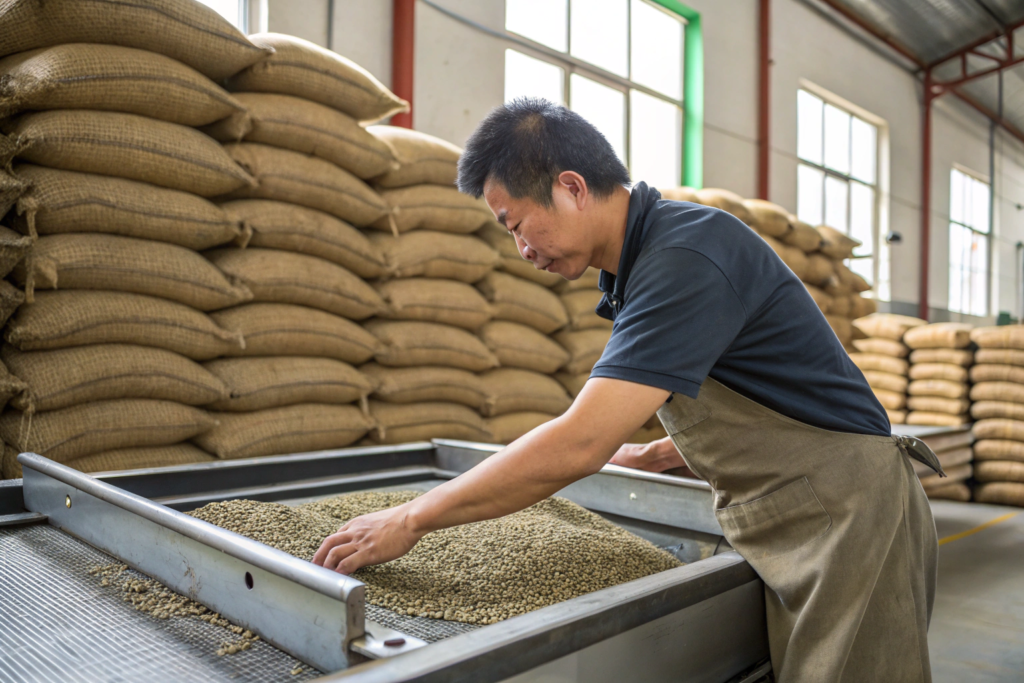
You measure screen size with a set of sieves. You put a sample of green coffee on the top screen. You shake the stack. The beans separate. You weigh what stays on each screen. Then you calculate the percentage. The Specialty Coffee Association explains grading standards. The Coffee Review shares cupping and grading information. I use these when we train our QC team. The goal is to know the distribution. A lot with 80% on the 17 screen is a 17/18 lot. A lot with 40% on the 17 screen is a lower grade. So measure it. Then label it. That is how you avoid confusion.
I also tell buyers to ask for the screen size distribution. A supplier who knows the number is a supplier who controls quality. A supplier who does not may surprise you. So ask for the percentage. Then check the sample.
Why Does 17/18 Matter for Roasters?
It matters because roast consistency depends on bean size. Small beans roast faster. Large beans roast slower. If you mix them, some beans burn while others stay underdeveloped. That creates an uneven cup. It also creates waste. The Perfect Daily Grind explains how bean size affects roasting. The Daily Coffee News covers roasting and quality trends. I use these when we talk to roasters. A 17/18 lot gives the roaster a narrow size range. That makes the roast easier to control. Easy control means better flavor. Better flavor means happier customers. So 17/18 matters.
For Ron, this means he can roast a 17/18 lot with confidence. He does not have to sort beans. He does not have to adjust the profile for outliers. He just roasts. That saves time. It also saves money. So he prefers 17/18. So do many roasters.
Why Do Roasters Prefer 17/18 Screen Size?
Roasters have choices. They can buy 15/16. They can buy 18/19. They can buy 17/18. Many choose 17/18. Why? Because it hits a sweet spot. It is large enough to impress. It is small enough to afford. It is available enough to rely on. I have seen roasters switch from 18/19 to 17/18. They saved money. They lost very little quality. That trade-off is attractive.
Roasters prefer 17/18 because it offers a balance of quality, price, and availability. Larger beans like 18/19 can cost more and may be harder to find. Smaller beans like 15/16 can be cheaper but may roast less evenly. The 17/18 grade is common in many origins. It gives roasters a consistent supply. It also gives them a consistent roast. So it becomes a default choice.
Another way to look at this is to compare it to a mid-size car. It is not the fastest. It is not the cheapest. But it is reliable and practical. That is why 17/18 wins. It is the practical choice for many roasters.
What Are the Benefits of Larger Beans?
Larger beans have some benefits. They often have more density. Density can mean more flavor. They also look better in the bag. Customers notice big beans. Big beans can signal quality. The Roast Magazine shares roasting and green coffee guides. The Barista Hustle shares coffee science and brewing information. I use these when we evaluate our lots. A larger bean is not always better. But it can be a sign of good farming and processing. So roasters like it. So do buyers.
I also tell buyers to cup the coffee. A large bean can still taste bad. A small bean can taste great. So do not judge by size alone. Use size as one data point. Then cup the coffee. That is the only real test.
Are 17/18 Beans Harder to Find?
They are not hard to find. They are common in many origins. Brazil, Colombia, Ethiopia, and Yunnan all produce 17/18 lots. But the supply varies by season. A bad harvest can reduce the amount. A good harvest can increase it. The International Coffee Organization tracks production and trade. The National Coffee Association shares market data. I use these when we plan our supply. A common grade is easier to buy. That reliability is a benefit. So roasters like it. So do exporters.
For Ron, this means he can find 17/18 from many suppliers. He can compare prices. He can compare quality. He can build a backup plan. That flexibility reduces risk. So he prefers 17/18. So should you.
How Does Screen Size Affect Roast and Flavor?
Screen size affects roast and flavor in a direct way. Heat moves through the bean. A large bean takes longer to heat through. A small bean heats faster. If you mix sizes, you get uneven development. That creates off-flavors. It also creates a flat cup. So size matters. It is not just a cosmetic grade.
Screen size affects roast and flavor because it changes how heat moves through the bean. Uniform large beans roast evenly. Uneven beans roast unevenly. Even roasting produces sweetness, clarity, and balance. Uneven roasting produces bitterness, sourness, and a muddy cup. So the screen size 17/18 helps roasters achieve a consistent roast. That consistency shows in the cup.
So, what does this mean for you? It means you should ask for the screen size distribution. It means you should test the roast. It means you should cup the result. At BeanofCoffee, we roast samples of every lot. We cup them. We share the results. That is how we help buyers choose. That is how we build trust.
Why Does Uniform Size Matter in Roasting?
Uniform size matters because it makes the roast repeatable. A repeatable roast is a profitable roast. You can use the same profile. You can get the same result. You can train your team. You can promise your customers. The Coffee Institute shares quality and roasting education. The World Coffee Research shares variety and quality data. I use these when we train our roasters. A uniform lot is a gift. It makes the job easier. So 17/18 is a gift. It is a practical gift. So roasters appreciate it.
I also tell buyers to check the roast curve. A uniform lot will show a smooth curve. An uneven lot will show a bumpy curve. The curve tells the story. So check it. Then cup it. That is how you know.
How Does Screen Size Change Extraction?
Screen size changes extraction because it changes the surface area. A smaller bean has more surface area per gram. A larger bean has less. That affects how water moves through the coffee. It affects the grind setting. It affects the brew time. The Intertek coffee page shows testing services for coffee. The SGS coffee inspection page shows inspection and quality services. I use these when we prepare our lots. A 17/18 lot grinds more consistently. That makes extraction more predictable. Predictable extraction means better taste. So 17/18 helps baristas. So it helps cafes.
For Ron, this means his customers get a better cup. They come back. They buy more. That is the business case for 17/18. So do not ignore it. Use it.
How to Verify Screen Size in Your Coffee Supply?
Verification is the key. A supplier can claim 17/18. But you must check. I have seen suppliers label a lot as 17/18 when it was really 15/16. That is a mistake. Or it is a trick. Either way, the buyer loses. So verify. Do not trust the label. Trust the test.
You verify screen size by asking for a sample, running your own screen test, and checking the distribution. You should also write the screen size into the contract. And you should use a third-party inspection for large orders. A simple test takes minutes. A wrong lot takes weeks to fix. So test first. Then buy.
So, what should you do? Ask for a pre-shipment sample. Run the test. Compare the results. If the results match, buy. If they do not, ask why. A good supplier will explain. A weak supplier will avoid. So ask. Then decide.

What Tools Do You Need to Check Screen Size?
You need a set of grading sieves. You need a scale. You need a sample of green coffee. You need a notebook. The Trade.gov site offers export and import guidance. The CBP page explains U.S. customs entry. I use these when we prepare our export files. A simple set of sieves costs little. It saves a lot. So buy a set. Then use it. That is how you protect your margin.
I also tell buyers to keep a record. Write down the date, the lot number, and the distribution. Then compare with the next lot. A record helps you see patterns. It also helps you fix problems. So keep a record. Then use it.
How Do You Write Screen Size into a Contract?
You write screen size into a contract by stating the minimum percentage on the 17 screen and the maximum percentage on the 15 screen. For example, you can say "at least 80% on screen 17, no more than 5% through screen 15." The FDA prior notice page explains food import rules. The International Chamber of Commerce publishes trade rules and model contracts. I use these when we draft contracts. A clear clause protects both sides. It also sets a standard. So write it. Then sign it. Then check it. That is how you get what you pay for.
For Ron, this means he can reject a lot that does not match. He can ask for a replacement. He can ask for a discount. That clarity saves arguments. It also saves money. So put it in the contract. Then relax. You have a system. You have a standard. You have a partner.
Conclusion
Screen size 17/18 is the sweet spot for many roasters because it balances size, uniformity, roast consistency, and price. It gives roasters a reliable product. It gives buyers a consistent cup. It gives everyone a fair deal. You should not ignore it. You should ask for the distribution. You should test the sample. You should write it into the contract. You should cup the coffee. If you do these things, you can trust your supply. You can protect your brand. You can keep your customers happy. So choose 17/18. Then verify it. Then enjoy the cup.
At BeanofCoffee, we measure screen size for every lot. We own more than 10,000 acres in Baoshan City, Yunnan. We export Catimor, Arabica, and Robusta. We work with large buyers, brand owners, distributors, and trading companies. We share screen size data, moisture readings, and cupping scores. If you want a supplier who delivers the right screen size, please contact Cathy Cai at cathy@beanofcoffee.com. She will help you with samples, pricing, specifications, and shipping plans. You can also visit BeanofCoffee to learn more. Let us find your sweet spot together.