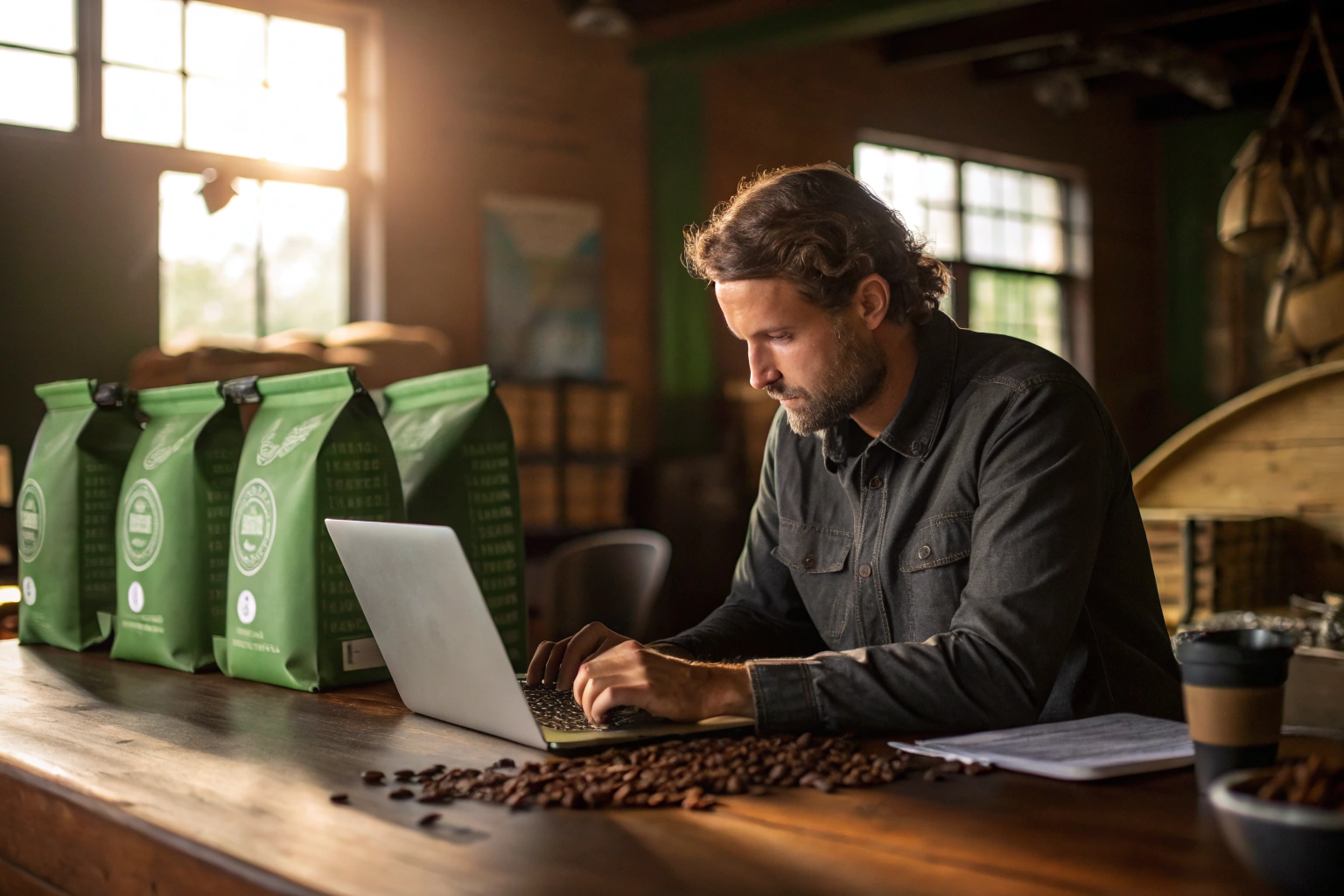
I run BeanofCoffee, a coffee exporter in Yunnan, China. We own more than 10,000 acres in Baoshan City. We sell Catimor, Arabica, and Robusta. We ship to North America, Europe, and Australia. Buyers like Ron ask me about price, quality, and shipping. But they also ask me something else. They ask how to make their brand stand out. Ron is 44. He owns a company in America. He sells roasted coffee online and to cafes. He has a good product. But his About Us page is weak. It reads like a resume. It does not make anyone feel anything. So he asked me how to fix it. That question is worth answering.
A captivating About Us page for a coffee brand tells a real story, shows real people, explains why the brand exists, and gives the reader a reason to care. It should include your origin, your mission, your process, your team, and a clear call to action. It should be written in plain language. It should be honest. It should be visual. It should not be a list of awards or a wall of text. The best About Us pages make the reader feel like they know you. That feeling turns a visitor into a customer.
So, what does this mean for you? It means your About Us page is not a formality. It is a sales tool. It is a trust builder. It is a story. If you write it well, it works for you 24 hours a day. If you write it poorly, it drives people away. At BeanofCoffee, we rewrote our own About Us page three times. The third version worked. Let me show you how to write one that works for your coffee brand.
Why Does Your About Us Page Matter for Coffee Sales?
Most visitors do not read your About Us page first. They read it after they see your product. They read it when they are deciding whether to trust you. That is the moment that matters. Ron told me he checks the About Us page before he buys from any new supplier. He wants to know who he is dealing with. He wants to know if the story is real. He wants to know if the values match his own. If the page is empty or generic, he leaves. If the page is real, he stays.
Your About Us page matters for coffee sales because it answers the buyer's most important question: can I trust you? Coffee is a product people care about. They want to know where it comes from. They want to know who grew it. They want to know how it was roasted. They want to know what the brand stands for. A good About Us page answers those questions. It builds trust. It reduces risk. It makes the buyer feel good about the purchase. That feeling drives sales.
Another way to look at this is to compare your About Us page to a handshake. A handshake is not the whole relationship. But it is the first physical contact. It tells you something about the other person. A firm handshake builds confidence. A weak handshake creates doubt. Your About Us page is your digital handshake. Make it firm. Make it warm. Make it real.
What Do Coffee Buyers Look for on About Us Pages?
Coffee buyers look for several things. They look for the origin story. They look for the people behind the brand. They look for the roasting process. They look for the values. They look for proof. Proof can be a photo, a certificate, a farm name, or a customer review. The Specialty Coffee Association shares research on what consumers value in coffee brands. The National Coffee Association provides consumer trend data. I use these when we write our own content. A buyer wants to feel connected. A buyer wants to feel informed. A buyer wants to feel confident. Your About Us page should deliver all three.
I also tell brand owners to ask their customers what they want to know. A simple email survey can reveal the top questions. Then answer those questions on the page. That is how you make the page useful. That is how you make it convert.
How Does Trust Affect Coffee Purchase Decisions?
Trust affects coffee purchase decisions more than most people think. Coffee is not a commodity like salt. It is a product with a story. People pay more for coffee they trust. They pay more for coffee they feel good about. A study from the Journal of Consumer Research shows that trust reduces perceived risk. Lower risk means higher willingness to buy. That is why a strong About Us page can increase conversion. It is not just words. It is psychology.
I have seen this in our own business. When we added real farm photos and a real story to our website, our inquiry rate went up. Buyers mentioned the story in their first email. They said they felt like they knew us. That feeling led to orders. So do not skip the story. It is not decoration. It is a sales tool.
What Story Should a Coffee Brand Tell?
Every brand has a story. Some stories are dramatic. Some are simple. The best stories are true. I have seen brands invent a fake farm story. It always comes out. The internet is too good at finding the truth. So tell the truth. Your truth may be simple. Maybe you started in a garage. Maybe you learned to roast from your grandmother. Maybe you fell in love with a single origin. That is enough. Simple truth beats fancy fiction.
A coffee brand should tell a story about origin, purpose, and people. The origin story explains where the coffee comes from. The purpose story explains why the brand exists. The people story introduces the team and the farmers. These three parts create a complete picture. The story should be written in first person. It should be specific. It should include details. Details make a story real. A generic story is forgettable. A specific story is memorable.
So, what should you do? Write down three stories. The first time you tasted great coffee. The first time you visited a farm. The first time you sold a bag. Then pick the one that fits your brand. Then write it in plain language. Then read it out loud. If it sounds like you, keep it. If it sounds like a press release, rewrite it.
How Do You Find Your Brand's Origin Story?
You find your origin story by looking back. When did you start? Why did you start? What problem were you trying to solve? Who helped you? What did you learn? The StoryBrand framework explains how to structure a brand story. The Harvard Business Review shares research on storytelling in business. I use these when I help brands write their pages. A good origin story has a hero, a challenge, and a change. The hero is you or your customer. The challenge is the problem. The change is the solution. That structure works for coffee. So use it.
I also tell brands to include a failure. A story with only success feels fake. A story with a failure feels real. Maybe your first roast was terrible. Maybe your first shipment was late. Maybe you lost a big customer. Share that. Then share what you learned. That vulnerability builds trust. Trust builds loyalty. So do not hide the hard parts. They make the story better.
Why Do Specific Details Make a Story Believable?
Specific details make a story believable because they show you were there. Anyone can say "we care about quality." Not everyone can say "we rejected 200 pounds of coffee because the moisture was 13.5%." The second sentence is specific. It is believable. The International Coffee Organization shares data on quality standards. The Perfect Daily Grind shares practical coffee stories. I use these when we write our own content. A specific detail is a proof point. It tells the reader that you know what you are talking about. So use details. Use numbers. Use names. Use places.
For Ron, this means he should write about the first farm he visited. He should name the farmer. He should describe the cup. He should share the moisture number. These details make his brand real. They also make his coffee worth more. So use them.
How Do You Show Trust on Your About Us Page?
Trust is not a claim. It is a feeling. You cannot say "trust us" and expect people to trust you. You must show them why. I have seen brands list every certification on their About Us page. That helps. But it is not enough. Trust comes from consistency. It comes from transparency. It comes from proof. Your About Us page should show proof. It should show your process. It should show your team. It should show your results. That is how you earn trust.
You show trust on your About Us page by including photos, names, certifications, and proof points. Show your roastery. Show your cupping lab. Show your team. Show your farm partners. Include your certificates. Include your quality scores. Include your customer reviews. Include your contact information. A page with no faces and no proof feels empty. A page with real people and real documents feels solid. That solidity builds confidence.
So, what should you do? Audit your page. Does it have a photo of your team? Does it have a photo of your roastery? Does it have a certification? Does it have a review? If not, add them. A photo is worth a thousand words. A certificate is worth a thousand claims. So use them.
What Photos and Proof Should You Include?
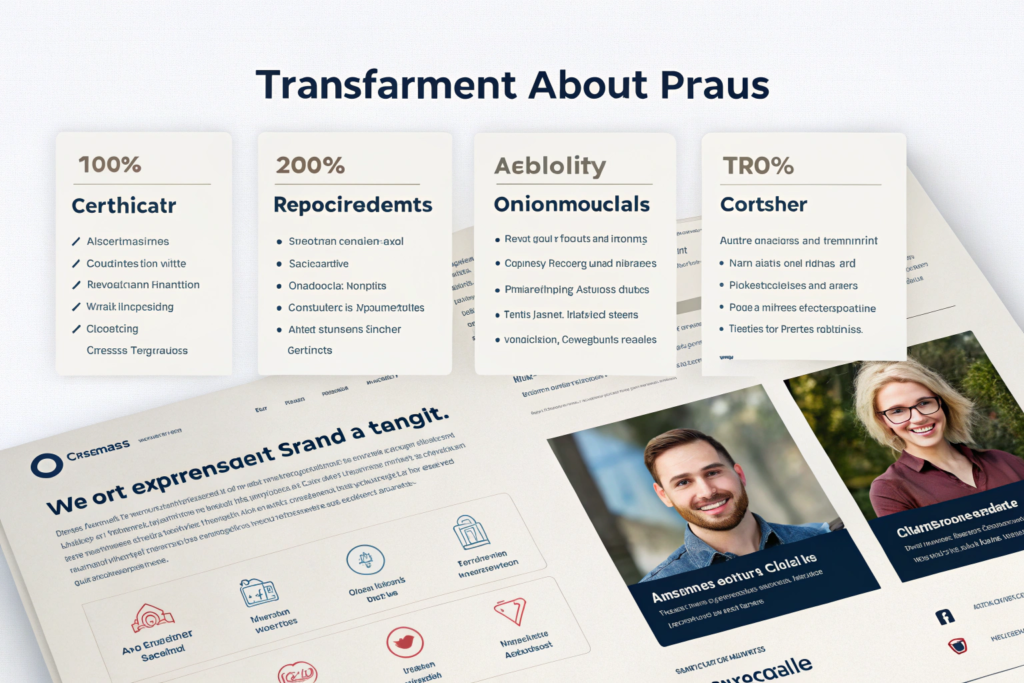
You should include photos of your team, your roastery, your cupping sessions, your farm partners, and your packaging. You should include your organic certificate, your Fairtrade certificate, or your quality score. You should include a customer testimonial. The Rainforest Alliance explains certification standards. The Fairtrade website explains fair trade certification. I use these when we prepare our own proof. A photo of a real person doing real work is powerful. A certificate with a real number is powerful. Both together are very powerful. So include both.
I also tell brands to include a video. A short video tour of the roastery can do more than a page of text. A video of a farm visit can do more than a brochure. So make a video. Then embed it. Then watch the trust grow.
Why Does Transparency About Sourcing Matter?
Transparency about sourcing matters because buyers care about where their coffee comes from. They want to know the farm. They want to know the region. They want to know the price. They want to know the conditions. The Global Coffee Platform shares sustainable sourcing practices. The Coffee Quality Institute shares quality and traceability standards. I use these when we build our own supply chain. A transparent brand is a trusted brand. A trusted brand can charge more. A trusted brand can keep customers. So be transparent. It pays.
For Ron, this means he should list his farm partners on his About Us page. He should share their names. He should share their regions. He should share their stories. That transparency differentiates his brand. It also builds a connection. A connection leads to repeat sales. So be transparent. Then watch your business grow.
What Mistakes Ruin a Coffee About Us Page?
I have read hundreds of About Us pages. Most of them are bad. They are bad for the same reasons. They are too long. They are too vague. They are too self-centered. They talk about the brand instead of the customer. They list awards no one cares about. They use jargon no one understands. They have no photos. They have no call to action. These mistakes kill conversion. They turn a warm visitor into a cold one. So avoid them.
Common mistakes that ruin a coffee About Us page include writing a wall of text, using generic language, focusing only on the brand, skipping photos, ignoring the customer, hiding contact information, and failing to include a call to action. A good page is short, clear, visual, and customer-focused. It answers the reader's questions. It gives the reader a next step. It feels human. If your page feels like a corporate brochure, rewrite it. If it feels like a conversation, keep it.
So, what should you do? Read your page out loud. Does it sound like a person? Does it answer the reader's questions? Does it have a clear next step? If not, fix it. A simple rewrite can make a big difference. So rewrite it. Then test it. Then improve it.

Why Is a Wall of Text a Conversion Killer?
A wall of text is a conversion killer because people do not read on the web. They scan. They look for headings. They look for bullet points. They look for photos. A wall of text has none of these. It feels like work. The Nielsen Norman Group shares research on how people read online. The HubSpot shares practical marketing and conversion tips. I use these when we write our own pages. A good page uses short paragraphs. It uses subheadings. It uses images. It makes reading easy. Easy reading leads to action. Hard reading leads to leaving. So break up your text. Then watch your conversion improve.
I also tell brands to use bullet points. A bullet point is easy to scan. It is easy to remember. It is easy to act on. So use them. Then use them again.
How Do You Avoid Generic Brand Language?
You avoid generic brand language by being specific. Do not say "we are passionate about coffee." Everyone says that. Say "we roast every batch on Tuesdays and cup it on Wednesdays." That is specific. That is real. The Copyblogger shares copywriting tips for small businesses. The American Marketing Association shares marketing research and best practices. I use these when we write our own content. Specific language stands out. Generic language blends in. You want to stand out. So be specific. Then be specific again.
For Ron, this means he should delete every sentence that could apply to any brand. Then write sentences that only apply to his brand. That is how he finds his voice. That is how he finds his customers. So do the same. Then watch your page come alive.
Conclusion
Writing a captivating About Us page for a coffee brand is not about being fancy. It is about being real. Tell your origin story. Explain your purpose. Introduce your people. Show your proof. Be specific. Be visual. Be clear. Avoid walls of text. Avoid generic language. Avoid hiding your contact information. Give the reader a reason to care. Give the reader a next step. If you do these things, your About Us page will build trust. It will drive sales. It will turn visitors into customers. It will turn customers into fans. That is the power of a good story. That is the power of a good About Us page.
At BeanofCoffee, we help coffee brands tell better stories. We own more than 10,000 acres in Baoshan City, Yunnan. We export Catimor, Arabica, and Robusta. We work with large buyers, brand owners, distributors, and trading companies. We can share farm photos, farmer stories, quality data, and traceability records. If you want to write a better About Us page for your coffee brand, please contact Cathy Cai at cathy@beanofcoffee.com. She will help you with samples, pricing, specifications, and story materials. You can also visit BeanofCoffee to learn more. Let us build a better coffee brand together.