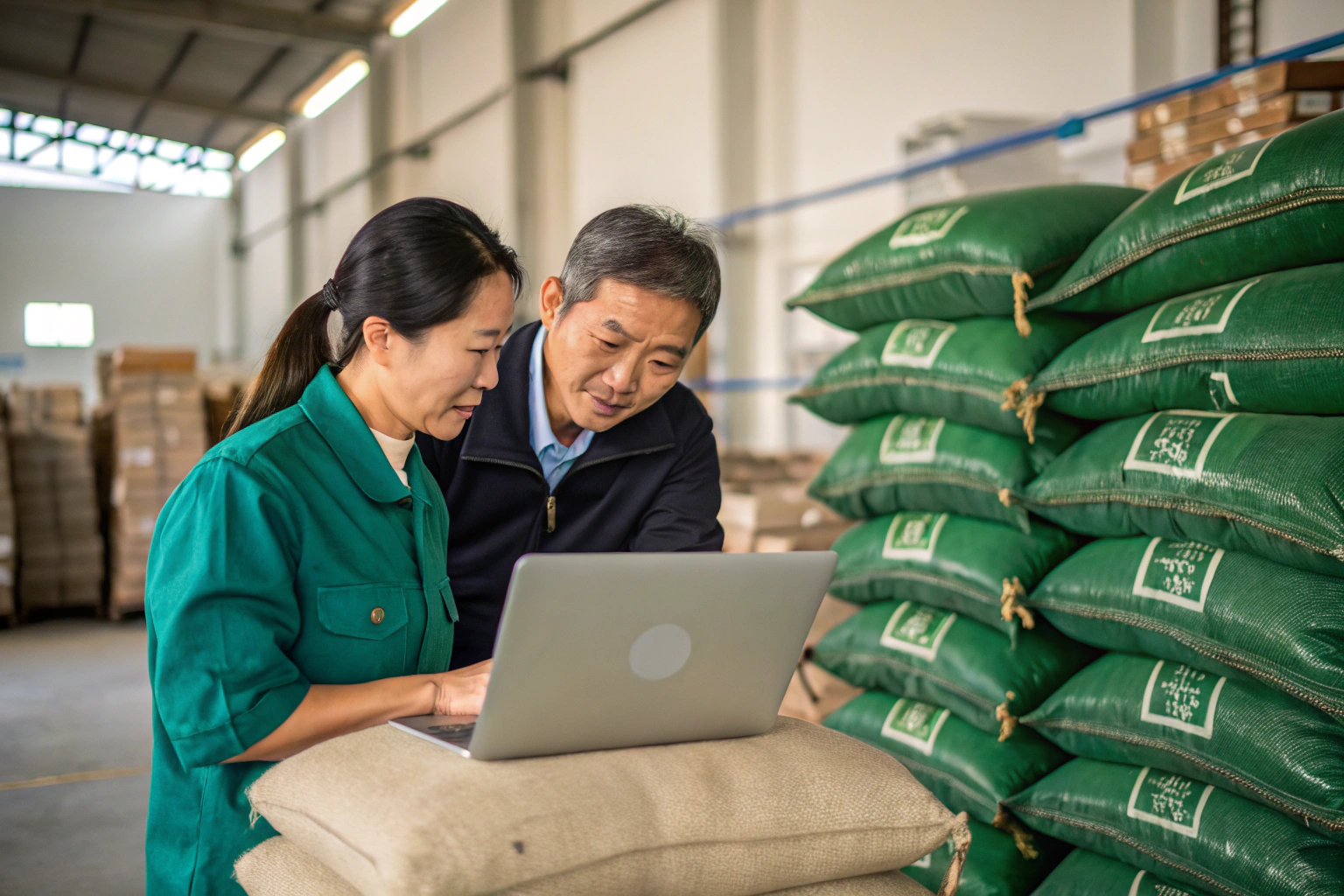
I run BeanofCoffee, a coffee exporter in Yunnan, China. We own more than 10,000 acres in Baoshan City. We sell Catimor, Arabica, and Robusta. We ship to North America, Europe, and Australia. Buyers like Ron ask me about price, quality, and shipping. But when they sell into the EU, they ask a harder question. They ask about organic rules. Ron is 44. He owns a company in America. He cares about price and timeliness. He also cares about compliance. One wrong certificate can stop a container. One missing document can lose a customer. So let me explain the new EU organic standards for coffee importers.
The new EU organic standards for coffee importers are built around Regulation (EU) 2018/848. It has applied since 1 January 2022. The import transition ended on 1 January 2025. Now organic imports into the EU must meet EU rules through recognised control bodies, a Certificate of Inspection in TRACES NT, group certification rules, and full traceability. The old equivalence system is gone. So importers must check the control body, the certificate, the label, and the records before the coffee ships.
So, what does this mean for you? It means organic coffee is not just a farming claim. It is a document chain. It starts at the farm. It moves through the mill. It reaches the exporter. It enters TRACES. It arrives at the EU border. Then it reaches the buyer. If one link is weak, the whole chain fails. At BeanofCoffee, we prepare organic files early. We do not wait for the port. That habit saves time and money.
Why Did the EU Change Its Organic Import Rules?
The EU changed its rules because the old system was fragmented. Different countries had different deals. Different control bodies had different standards. Importers faced confusion. Farmers faced confusion. Consumers faced doubt. The EU wanted one clear rulebook. It also wanted stronger traceability. It wanted to protect the organic logo. So it replaced the old equivalence approach with a conformity approach. That change is big. It affects every organic coffee shipment.
The EU changed its organic import rules to create one coherent system under Regulation (EU) 2018/848. The old system relied on equivalence, where third-country rules were accepted as roughly equal. The new system requires compliance with EU rules or equivalent rules under a trade agreement. It also requires recognised control bodies, a Certificate of Inspection in TRACES NT, and stronger traceability. The transition to the new system ended on 1 January 2025. So importers must now follow the new rules for every organic coffee consignment.
Another way to look at this is to compare it to a passport. The old system accepted many different travel papers. The new system wants one standard passport. That passport is the Certificate of Inspection. Without it, the coffee cannot travel as organic. So the change is not cosmetic. It is structural.
What Is Regulation (EU) 2018/848?
Regulation (EU) 2018/848 is the main EU organic regulation. It covers production, labelling, controls, and imports. It replaced the older Regulation (EC) 834/2007. You can read the full text on EUR-Lex. The European Commission also explains the import rules on its organic imports page. I use these sources when we prepare our own organic files. The regulation sets the rules for coffee farms, mills, exporters, importers, and control bodies. It also sets the rules for group certification and labelling. If you import organic coffee, you must know this regulation. It is the foundation.
The regulation applies to all operators in the organic chain. That includes the farmer, the processor, the exporter, the importer, and the retailer. Each operator must be certified or covered by a recognised control body. Each operator must keep records. Each operator must allow inspections. The rules are strict. But they are clear. So read them. Then follow them.
How Does the New Import System Differ from the Old One?
The new import system differs in three main ways. First, it replaces equivalence with conformity. Second, it requires recognised control bodies under Article 46. Third, it requires a Certificate of Inspection in TRACES NT for every consignment. The European Commission explains the shift on its organic imports page. IFOAM Organics International also shares updates on global organic rules. I use these when we explain the change to buyers. The old system accepted many different national rules. The new system wants one EU standard. That means more paperwork. But it also means more trust.
For coffee, this matters because coffee often moves through many hands. A small farmer may sell to a cooperative. The cooperative may sell to a mill. The mill may sell to an exporter. Each handoff needs a record. The new system checks those records. So build the records early. Then ship.
What Documents Do Coffee Importers Need Under the New Rules?
Documents are the heart of the new system. You cannot ship organic coffee into the EU without the right papers. I have seen a container held because one certificate was not validated. I have seen a buyer lose a sale because the COI was late. So treat documents as part of the product. Not as an afterthought. The main document is the Certificate of Inspection. It must be in TRACES NT. It must be validated. Then the coffee can enter as organic.
Coffee importers need a Certificate of Inspection in TRACES NT, a valid organic certificate for the exporter or operator, a control body recognised by the EU, transport documents, commercial invoice, packing list, bill of lading, and records that prove traceability. The COI is the key document. It must be issued by the control body in the third country and validated by the EU border authority. Without a valid COI, the coffee cannot be marketed as organic in the EU.
So, what should you do? Ask your supplier for the COI draft before shipping. Check the control body name. Check the EU recognition. Check the product description. Check the net weight. Then check it again. A small mistake can cause a big delay. So check early.
What Is a Certificate of Inspection (COI)?
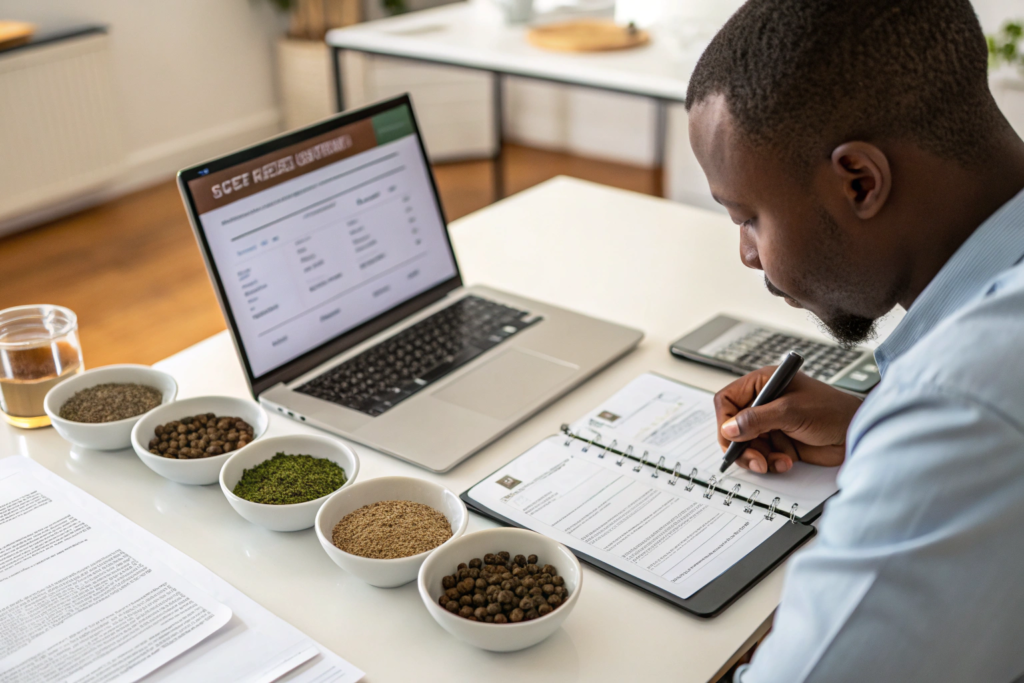
A Certificate of Inspection is the official document for organic imports into the EU. It is issued in TRACES NT. You can find the system at TRACES NT. The FiBL also shares organic import guidance. I use these when we prepare our organic coffee files. The COI identifies the product, the origin, the control body, the exporter, the importer, and the quantity. It also confirms that the consignment meets the EU organic rules. The border authority validates the COI. Then the coffee can be released as organic.
The COI is not a simple form. It is a legal document. If the information is wrong, the shipment may be rejected. If the COI is missing, the coffee may lose its organic status. So check every field. Then check it again. That is the only safe way.
How Do You Register in TRACES NT?
You register in TRACES NT through the European Commission portal. Your importer or representative must have an account. The Organic Trade Association and Organic Europe share practical guidance on organic trade and compliance. I use these when we help buyers understand the system. The importer enters the COI in TRACES. The control body in the third country issues the COI. The border authority validates it. Then the goods can move. The process is digital. But it still needs human checks. So train your team. Then use it.
Do not wait until the container arrives. Start the COI early. A delay in TRACES can delay the whole shipment. So start early. Then follow up. That is how you avoid a hold.
How Do Group Certification and Traceability Work for Coffee?
Group certification is important for coffee. Many coffee farms are small. A single small farm cannot afford its own certification. So the EU allows groups of operators to be certified together. This is a big deal for Yunnan. It lets smallholders join the organic market. But it also requires an internal control system. The group must inspect its own members. It must keep records. It must correct problems. Then the control body certifies the group. That is how small farms can export organic coffee.
Group certification and traceability work for coffee by allowing smallholder groups to be certified as one unit with an internal control system. Each member must follow the organic rules. The group must keep records for every member. The group must run internal inspections. The control body then audits the group. Traceability records must link each bag to the group and the farm. This system helps small farmers access the EU market. But it also requires strong records and honest internal checks.
So, what should you do? If you buy from a group, ask for the internal control system records. Ask for the member list. Ask for the inspection reports. Ask for the traceability file. A strong group has these. A weak group does not. So check. Then decide.
Can Smallholder Groups Get Certified Together?
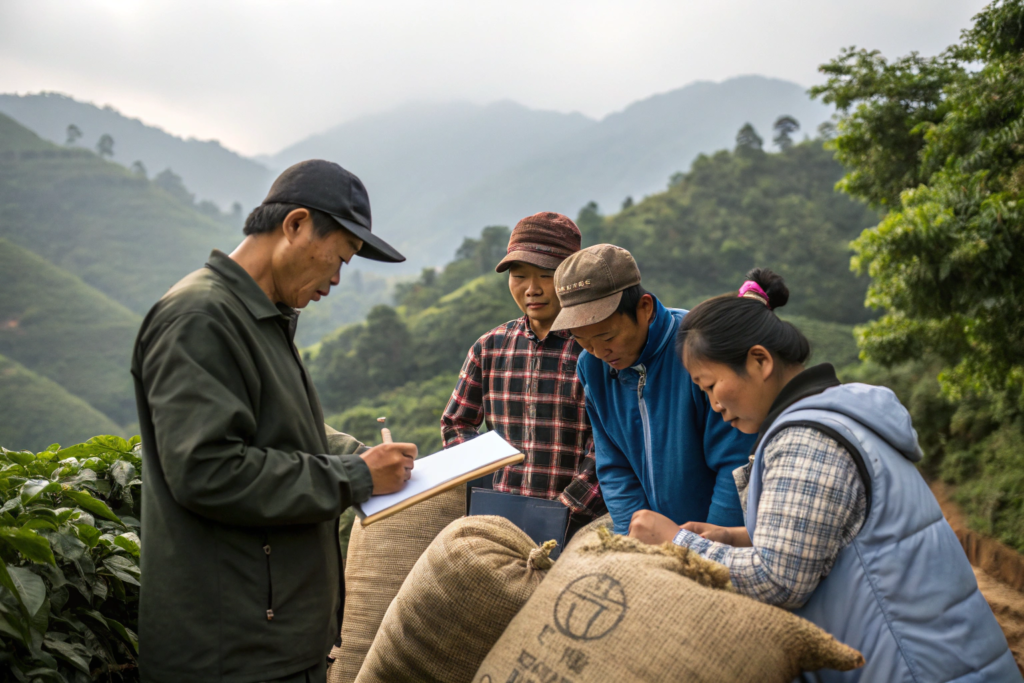
Yes, smallholder groups can get certified together. The rules allow a group of operators to be certified if they meet the requirements. The Fairtrade and Rainforest Alliance programs also support group certification and smallholder development. I use these when we work with farmer groups in Baoshan. A group must have an internal control system. It must have a central office. It must keep records for each member. It must train its members. It must run internal inspections. Then the control body audits the group. If the group passes, the members can sell organic coffee. This is a powerful tool for small farms. It is also a big responsibility.
For buyers, this means you can source organic coffee from smallholders. But you must check the group. A good group is transparent. A weak group is not. So ask for the records. Then verify them.
What Traceability Records Must Importers Keep?
Importers must keep traceability records that link the imported coffee to the certified operator and the COI. The SGS organic certification and Intertek organic certification pages show how third-party verification works. I use these when we prepare our export files. The records should include the COI number, the control body, the operator name, the product description, the quantity, the lot number, the invoice, the packing list, and the transport documents. The importer must keep these records for the required period. They must be available for inspection. If a question comes later, the importer can prove the origin and the organic status. That proof protects the buyer. It also protects the brand.
So, build a file for every shipment. Keep it digital. Keep it backed up. Then you can answer any question. That is how you stay compliant.
How Can Coffee Importers Stay Compliant and Avoid Delays?
Compliance is not a one-time task. It is a habit. You must check every shipment. You must check every label. You must check every certificate. You must train your team. You must follow the rules. I have seen importers who do this well. They rarely have delays. I have also seen importers who cut corners. They pay for it later. So build the habit. Then keep it.
Coffee importers can stay compliant by checking the control body, the COI, the label, and the traceability records before shipping. They should also register in TRACES NT, train their team, work with a customs broker who knows organic rules, and keep records for every consignment. They should review the EU organic rules every year. Rules change. So should your process. A simple checklist can prevent most delays. A good broker can catch problems early. A strong relationship with the supplier can fix problems fast.
So, what should you do? Build a compliance checklist. Use it for every shipment. Then review it every quarter. That is how you stay ahead. That is how you avoid surprises.
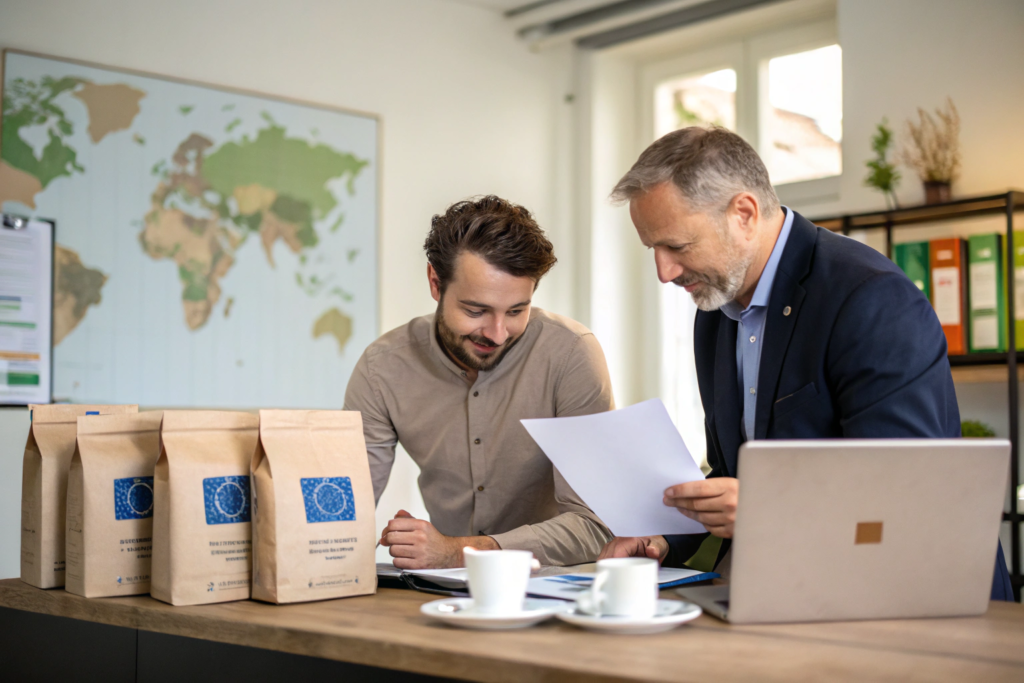
What Labeling Rules Apply to Organic Coffee?
Labeling rules for organic coffee include the EU organic logo, the code number of the control body, and the origin of the agricultural raw materials. The European Commission explains organic farming and labelling on its organic farming page. The Global Coffee Platform also shares sustainability and sourcing guidance. I use these when we prepare our own labels. For coffee from China, the label often says "non-EU agriculture." If the coffee is roasted and packed in the EU, the rules may differ. So check the specific case. Do not guess. Then print the label. Then check it again.
A wrong label can cause a rejection. A missing logo can lose the organic claim. So treat labeling as a compliance step. Not as a design step. Then you will be safe.
What Are the Biggest Compliance Risks?
The biggest compliance risks are a non-recognised control body, a missing or late COI, wrong labels, weak traceability, and group certification failures. The International Coffee Organization tracks trade and quality issues. The Daily Coffee News and Perfect Daily Grind cover compliance and market trends. I use these when we train our team. A non-recognised control body is a hard stop. A missing COI is a hard stop. A weak traceability file is a risk. A group failure can affect many smallholders. So check these first. Then check the rest. That is how you protect your supply.
For Ron, this means he should ask for the control body name before he orders. He should check the EU list. He should check the COI early. Then he can relax. That is how you import organic coffee without delays. That is how you build a stable supply.
Conclusion
The new EU organic standards for coffee importers are strict. They are built on Regulation (EU) 2018/848. They require recognised control bodies, a Certificate of Inspection in TRACES NT, group certification rules, traceability records, and correct labels. The old equivalence system is gone. The new system is digital, documented, and checked. It takes more work. But it also creates more trust. If you prepare early, you can avoid delays. If you check the documents, you can protect your margin. If you work with a serious supplier, you can build a stable organic coffee supply.
At BeanofCoffee, we take EU organic rules seriously. We own more than 10,000 acres in Baoshan City, Yunnan. We export Catimor, Arabica, and Robusta. We work with large buyers, brand owners, distributors, and trading companies. We can help prepare COI files, traceability records, and organic certificates. If you want to import organic coffee into the EU, please contact Cathy Cai at cathy@beanofcoffee.com. She will help you with samples, pricing, specifications, and compliance documents. You can also visit BeanofCoffee to learn more. Let us build a compliant and trusted coffee supply together.