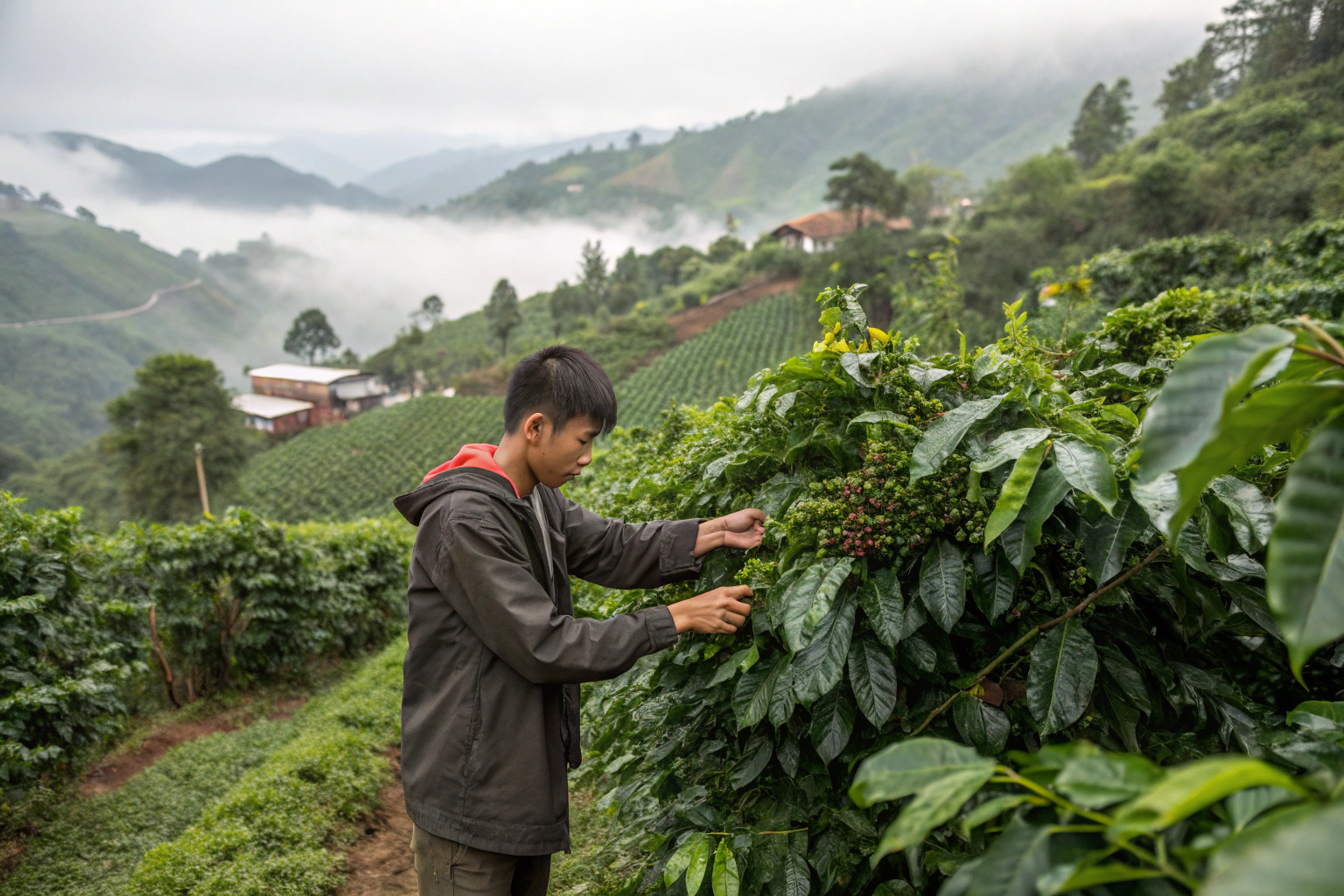
I run BeanofCoffee, a coffee exporter in Yunnan, China. We own more than 10,000 acres in Baoshan City. We sell Catimor, Arabica, and Robusta. We ship to North America, Europe, and Australia. I talk to farmers every week. Many are older. Their children went to the city. They do not want to come back. That is a problem. If young people leave, who will grow the coffee? Who will pick the cherries? Who will improve the quality? That question keeps me up at night. It should keep buyers up too. Because a supply chain without young farmers is a supply chain without a future.
Younger farmers in Yunnan are embracing specialty coffee because it pays better, rewards skill, connects them to global buyers, and gives them a reason to stay on the land. Specialty coffee is not just a product. It is a path. It lets a young farmer use a phone, a moisture meter, and a cupping score to earn more than a commodity farmer. It lets them tell their story to buyers in America, Europe, and Australia. It turns farming into a business. That is why they are choosing it.
So, what does this mean for you? It means the future of Yunnan coffee depends on these young farmers. It also means buyers have a role. If you pay for quality, you encourage quality. If you ask for traceability, you encourage traceability. If you build long-term relationships, you keep young people in coffee. That is good for them. It is also good for you. Let me explain why young farmers are moving to specialty coffee, and what it means for your supply.
Why Do Young Farmers Love Specialty Coffee?
I have met young farmers in Baoshan who used to sell cherries to a middleman. They did not know where the coffee went. They did not know the price. They just took what they were given. Then they learned about specialty coffee. They learned about cupping. They learned about lot numbers. They learned about direct buyers. It changed how they saw farming. They stopped seeing themselves as laborers. They started seeing themselves as producers. That shift is powerful.
Young farmers love specialty coffee because it values quality over quantity. A well-processed micro-lot can earn two or three times the commodity price. It also gives them control. They can choose the variety. They can control the fermentation. They can build a brand. They can talk to buyers directly. Specialty coffee respects their skill. That respect is a big reason they stay.
Another way to look at this is to compare commodity coffee to a raw material. You sell it by the ton. No one asks your name. Specialty coffee is different. It is a product with a story. The farmer is part of that story. Young people want to be part of something. Specialty coffee gives them that.
How Does Quality Pay More Than Volume?
Quality pays more because the buyer is not just buying caffeine. The buyer is buying flavor. A coffee that scores 84 or higher can sell for a premium. A coffee that scores 78 sells for less. The Specialty Coffee Association explains how cupping scores work. The Coffee Quality Institute trains cuppers and graders around the world. I use these standards when we evaluate our own lots. A young farmer who learns to pick only ripe cherries, control fermentation, and dry slowly can raise the score. That higher score becomes higher income. It also becomes pride. That pride keeps them farming.
I tell buyers to ask for the cupping score. If a supplier cannot provide one, that is a warning. A supplier who measures quality is a supplier who can improve it. So ask. Then pay for it. That is how you keep young farmers in coffee.
Why Do Young Farmers Use Social Media for Coffee?
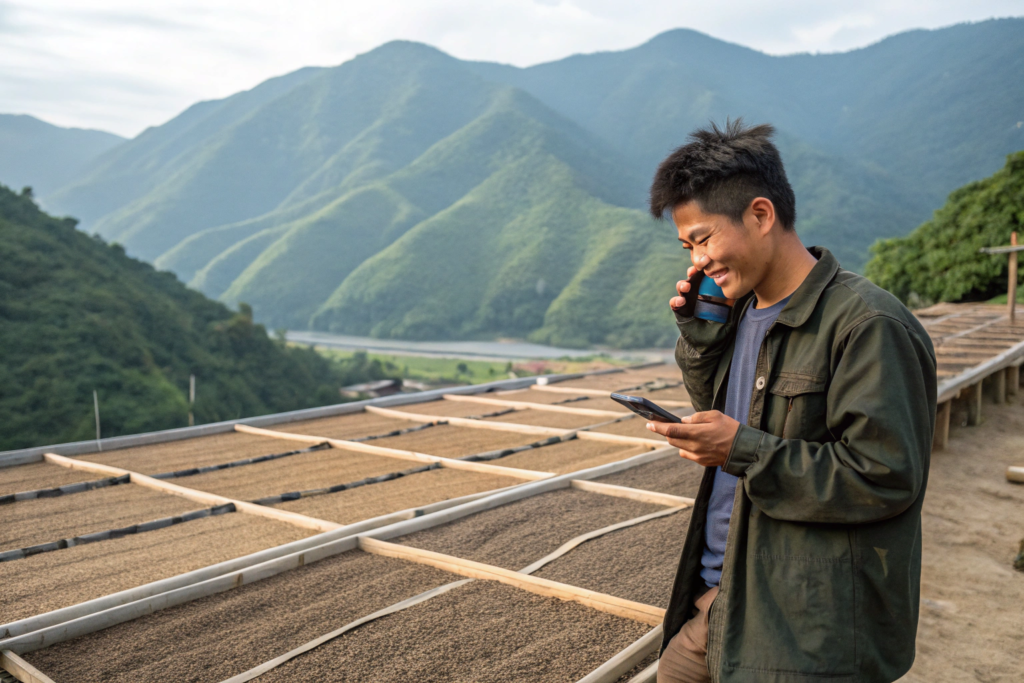
Young farmers use social media because it lets them tell their story directly. They post photos of the harvest. They show the drying beds. They explain the process. They connect with roasters and buyers. The Daily Coffee News covers how social media changes coffee marketing. The Perfect Daily Grind shares stories of young producers using digital tools. I have seen a farmer in Yunnan get a direct message from a roaster in Oregon. That would not happen ten years ago. Now it happens every season. Social media gives young farmers a voice. A voice gives them power. Power gives them a future.
For buyers, this is an opportunity. You can find new lots before they hit the market. You can build a relationship early. You can also verify the story. A farmer who posts daily is a farmer who is transparent. That transparency is valuable. So follow them. Then reach out. Then buy.
How Does Specialty Coffee Raise Farm Income?
Money is the bottom line. Young farmers are not stupid. They will not stay in coffee if they cannot make a living. They see their friends in the city earning cash every month. They see the hard work on the farm. They see the risk. So specialty coffee must pay better. If it does, they stay. If it does not, they leave. That is the simple truth. I have seen it both ways. The farms that pay well keep their young people. The farms that do not, lose them.
Specialty coffee raises farm income through higher prices, better yields, less waste, direct sales, and longer relationships. A specialty lot can earn a premium of 30% to 100% over commodity coffee. A farmer who learns to process correctly can also reduce defects. Fewer defects mean more sellable coffee. Direct sales cut out middlemen. Longer relationships reduce price swings. Together, these changes can double a family's income. That is why young farmers are interested.
So, what should you do? If you want a stable supply, pay a fair price. Do not squeeze the farmer. A squeezed farmer leaves. A fair farmer stays. That is not charity. It is supply chain security. So think long term. Then pay for quality.
| Income Source | Commodity Coffee | Specialty Coffee |
|---|---|---|
| Price per pound | $1.80 | $2.80 to $4.00 |
| Defect rate | High | Low |
| Buyer relationship | Middleman | Direct |
| Price stability | Low | Higher |
| Future in farming | Weak | Strong |
This table is simple. But it shows why young farmers choose specialty. The numbers matter. So do the relationships.
Can Micro-Lots Earn a Premium?
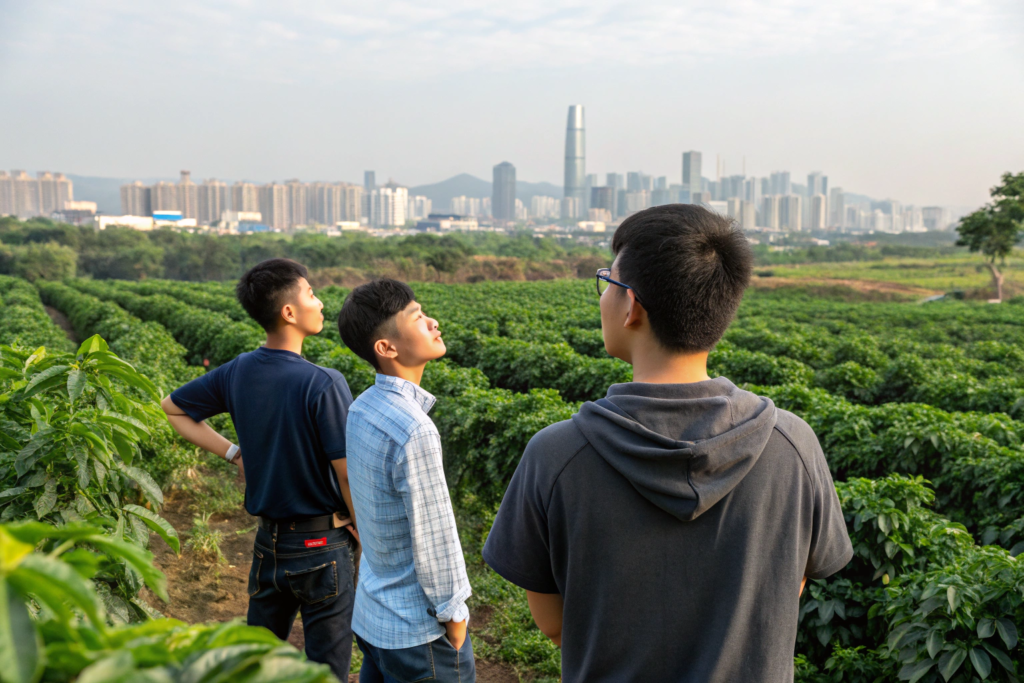
Yes, micro-lots can earn a premium. A micro-lot is a small, separated batch of high-quality coffee. It may come from one plot, one variety, or one processing method. A roaster may pay 50% to 200% more for a great micro-lot. The World Coffee Research shares variety and quality data that help farmers improve. The Fairtrade website explains how fair prices and premiums work. I have seen a young farmer in Baoshan sell a 300 kg micro-lot for twice the normal price. That one lot paid for his daughter's school fees. That is real impact. That is why micro-lots matter.
Micro-lots also teach young farmers. They learn to separate. They learn to track. They learn to cup. These skills stay with them. They improve the whole farm. So even a small micro-lot has a big effect. So encourage them. Then buy them.
How Do Direct Buyer Relationships Help?
Direct buyer relationships help by cutting out middlemen and building trust. When a farmer sells to a middleman, the price is often low and the feedback is zero. When a farmer sells to a roaster directly, the price can be higher and the feedback is real. The Global Coffee Platform shares sustainable sourcing practices. The Rainforest Alliance explains how certification and direct trade support farmers. I use these when I train our team. A direct relationship also helps the buyer. The buyer gets traceability. The buyer gets a story. The buyer gets a partner. Both sides win. So build direct relationships. Then keep them.
For Ron, this means he should visit Yunnan if he can. He should meet the farmers. He should cup the coffee with them. That visit builds trust. Trust builds loyalty. Loyalty builds a stable supply. So plan a trip. Then go. You will not regret it.
What Support Do Young Coffee Farmers Need?
Young farmers have energy. They have ideas. They have phones. But they do not have everything. They need training. They need money. They need equipment. They need land. They need market access. They need policy support. Without these, their energy goes to waste. I have seen a young farmer with a great plan fail because he could not get a loan. I have seen another succeed because he got training and a small grant. The difference was support. So support matters.
Young coffee farmers need training, finance, equipment, land security, market access, and policy support. Training helps them improve quality. Finance helps them buy seedlings, build drying beds, and survive the harvest gap. Equipment like moisture meters and pulpers improves efficiency. Land security gives them a reason to invest. Market access connects them to buyers. Policy support protects them from unfair rules. These six things are the foundation. Without them, specialty coffee is just a dream.
So, what should you do? If you are a buyer, you can support them by paying on time. You can support them by giving feedback. You can support them by signing longer contracts. These actions cost little. They mean a lot. They keep young farmers in coffee. So do them.
What Training Helps Young Coffee Farmers?
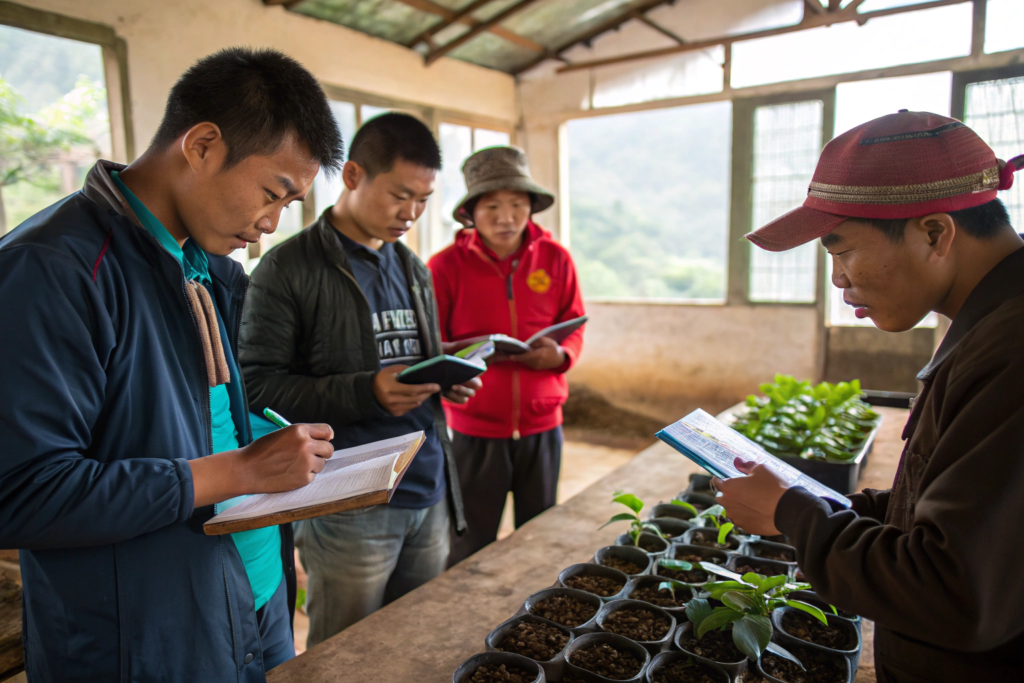
Training helps young farmers in several areas. Cupping. Processing. Moisture control. Financial management. Marketing. The Roast Magazine shares practical roasting and quality guides. The Barista Hustle shares brewing and coffee business education. I use these when we design our own training. A young farmer who can cup his own coffee can improve it. A young farmer who can read a moisture meter can prevent mold. A young farmer who can manage cash can survive the off-season. These skills are not taught in school. They must be taught on the farm. So teach them. Then watch them grow.
I also tell buyers to ask about training. A supplier who trains farmers is a supplier who invests in the future. A supplier who does not may lose their supply. So ask. Then support.
How Can Exporters Support Young Farmers?
Exporters can support young farmers by providing training, sharing market data, paying fair prices, and signing long-term contracts. The Trade.gov site offers export and import guidance. The Alibaba platform connects farmers and exporters with global buyers. I use these when we plan our own partnerships. At BeanofCoffee, we sign multi-year agreements with young farmer groups. We agree on volume and quality. We agree on a price range. We share cupping feedback. That feedback helps them improve. That improvement helps us sell. It is a cycle. A good cycle. So build it. Then keep it.
For buyers, this means you should ask your supplier what they do for young farmers. A supplier with a training program is a supplier with a future. A supplier without one is a risk. So ask. Then decide.
Can Young Farmers Lead Yunnan Coffee's Future?
Yes, they can. But it will not happen by itself. They need support. They need market access. They need fair prices. They need policies that help them. They also need to overcome climate change, leaf rust, water scarcity, and price swings. These are big problems. But young farmers have advantages. They are educated. They are connected. They are willing to try new things. They are not stuck in old ways. That gives me hope. I have seen it in Baoshan. The young farmers who embrace specialty coffee are building a better future.
Young farmers can lead Yunnan coffee's future if they get training, finance, land security, and market access. They are already leading in some areas. They are planting resistant varieties. They are testing new processing methods. They are using social media to sell directly. They are forming cooperatives. They are demanding better prices. They are also fighting climate change with shade trees and water-saving methods. They are not waiting for help. They are building it. With the right support, they can transform the whole region.
So, what does this mean for you? It means you should not see young farmers as a risk. See them as an opportunity. A young farmer who learns specialty coffee is a long-term supplier. A young farmer with a direct relationship is a loyal partner. So invest in them. Then benefit from them. That is the smart path.
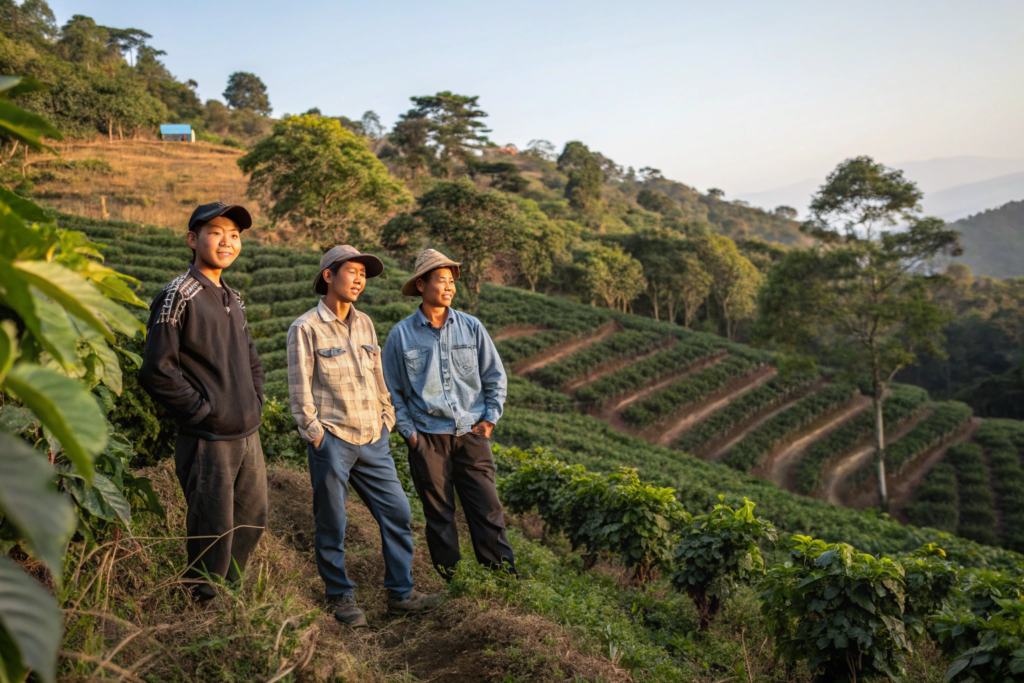
How Do Young Farmers Fight Climate Change?
Young farmers fight climate change with shade trees, water-saving methods, resistant varieties, and better soil management. The FAO Land & Water shares global water and agriculture data. The World Wildlife Fund coffee page explains coffee and climate risks. I use these when we plan our own farm strategy. A young farmer is more likely to try a new shade system. A young farmer is more likely to test a new pulper. A young farmer is more likely to record water use. That willingness to adapt is a strength. It is exactly what coffee needs now. So support it. Then scale it.
I also tell buyers to ask about climate adaptation. A supplier with a climate plan is a supplier with a future. A supplier without one may struggle. So ask. Then support.
Why Is Traceability Key for Young Farmers?
Traceability is key because it proves origin, quality, and story. A young farmer who can trace a lot from tree to bag can sell it for more. A buyer who can verify the trace can trust the supplier. The SGS coffee inspection page shows how third parties verify quality and origin. The Intertek coffee page shows testing services that support traceability. I use these when we prepare our export files. Traceability is not just a label. It is a system. Young farmers are good at systems. They use apps. They use phones. They use spreadsheets. That makes traceability easier. So teach them. Then buy from them. That is how you build a transparent supply.
For Ron, this means he can prove his origin claim. He can tell his customers the farmer's name. He can show the lot number. That story sells. That story builds loyalty. So ask for traceability. Then pay for it. That is how you support young farmers and get better coffee.
Conclusion
Younger farmers in Yunnan are embracing specialty coffee because it pays better, respects their skill, connects them to global buyers, and gives them a future. They need training, finance, equipment, land security, and market access. They are already fighting climate change, improving quality, and building traceability. But they cannot do it alone. Buyers have a role. Exporters have a role. Governments have a role. If we support them, they will lead Yunnan coffee into the future. If we ignore them, the supply will shrink. The choice is ours. I choose to support them. I hope you do too.
At BeanofCoffee, we work with young farmers in Baoshan City, Yunnan. We own more than 10,000 acres. We export Catimor, Arabica, and Robusta. We work with large buyers, brand owners, distributors, and trading companies. We share training, cupping feedback, and market data with our farmer partners. If you want to support young coffee farmers and get great coffee, please contact Cathy Cai at cathy@beanofcoffee.com. She will help you with samples, pricing, specifications, and shipping plans. You can also visit BeanofCoffee to learn more. Let us build a better coffee future together.