You run a commercial roasting operation. You're not chasing 90-point Geishas for a subscription box. You need workhorse coffee. You need beans that arrive on time, roast evenly, taste consistent bag after bag, and don't blow up your cost of goods sold. You've heard the buzz about Yunnan. But buzz doesn't pay the bills. You need to know: Can this origin actually perform in a high-volume, margin-sensitive commercial environment? Or is it just another specialty novelty that can't scale?
Yunnan coffee beans are not only suitable for commercial roasters—they are increasingly becoming a strategic asset for them. The combination of a clean, chocolate-forward cup profile with heavy body, exceptional roast consistency due to high bean density and advanced sorting, reliable large-volume availability from vertically integrated farms, and a landed cost advantage over comparable origins makes Yunnan an ideal base component for commercial blends and a reliable single-origin offering for the value-conscious specialty segment.
I'm not speaking theoretically. I'm speaking from experience. At Shanghai Fumao, we ship containers to commercial roasters across North America, Europe, and Australia. These are roasters who can't afford to have their core blend change flavor from month to month. Let me walk you through exactly why Yunnan works for them, and why it might work for you.
How Consistent Is the Roast Profile of Yunnan Catimor Batch to Batch?
For a commercial roaster, the worst thing is a bean that behaves unpredictably. You set your profile for a 12-minute roast. One batch is perfect. The next batch, from the same pallet, is scorched on the outside and underdeveloped on the inside. That's a consistency problem. And it's usually a green coffee problem.
Yunnan Catimor offers exceptional batch-to-batch roast consistency due to two inherent characteristics: high bean density from high-altitude growing regions, and uniform screen size and moisture content achieved through modern dry milling. Dense, uniform beans absorb and transfer heat predictably. They don't have the hollow, low-density "floaters" that scorch easily, nor the variable moisture pockets that cause uneven development. This predictability allows commercial roasters to lock in a profile and run it with minimal adjustments, saving time and reducing waste.
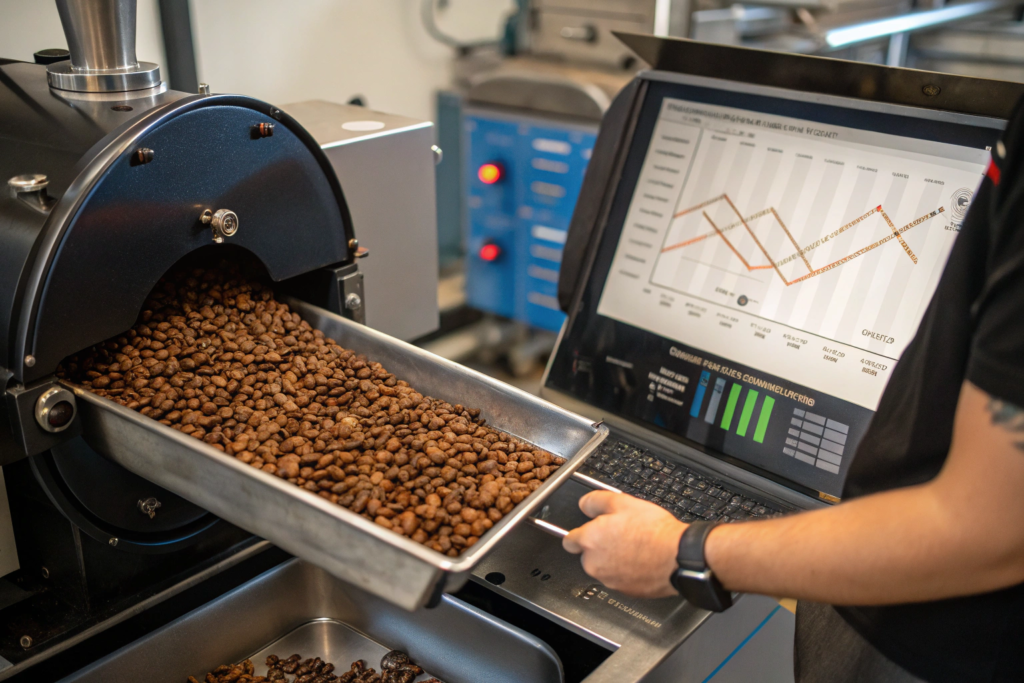
Why Does High Bean Density Matter for a Commercial Drum Roaster?
A dense bean has thermal momentum. It can take a higher charge temperature without scorching. It carries heat through the drying phase and into first crack with stability.
Our Yunnan Catimor, grown at 1,400 meters in Baoshan, is a Strictly Hard Bean (SHB). It's dense. This density means it responds well to the kind of high-airflow, high-heat transfer environment of a large commercial roaster. It doesn't "crash" during first crack. It doesn't tip or face. The result is a roasted bean with an even interior and exterior color. This translates directly to a consistent flavor in the cup and a consistent extraction in the cafe. You don't need to tweak the grind setting every morning because the roast development is all over the place. At Shanghai Fumao, we measure the density of every export lot. It's a key quality parameter. You can learn more about the relationship between green bean density and roasting performance in technical papers from the Roasters Guild.
How Does Uniform Screen Size and Moisture Prevent Roast Defects?
Imagine a roast batch with a mix of large, medium, and small beans. The small beans will roast faster. They'll be overdeveloped (baked or burnt) by the time the large beans are properly developed.
This is the "screen size problem." Yunnan coffee, processed through modern dry mills, has a very tight screen size distribution. A lot graded as "Screen 18" will have over 90% of the beans retained on an 18/64-inch screen. The beans are uniform in size. Additionally, the moisture content is carefully controlled and stabilized between 10.5% and 11.5%. Uniform size plus uniform moisture equals uniform heat absorption. This is the holy grail for a commercial roaster. It means you can set your profile and trust that every bean in the drum will react in a similar way. It eliminates the "roast to the middle" compromise that sacrifices quality for consistency.
What Is the Flavor Profile of Yunnan Coffee and How Does It Function in a Commercial Blend?
Commercial roasting is about building reliable, crowd-pleasing flavor profiles. You're not trying to challenge the consumer. You're trying to delight them, consistently, at a price point they can afford. Yunnan's flavor profile is uniquely suited to this task.
The classic washed Yunnan Arabica profile is characterized by notes of dark chocolate, toasted almond, and brown sugar, anchored by a heavy, syrupy body and low acidity. This profile is an ideal "base note" for commercial blends. It provides depth, sweetness, and mouthfeel without introducing the sharp, fruity, or fermented notes that can polarize consumers or clash with other blend components. It is a team player. It makes other coffees in the blend taste better by providing a solid, delicious foundation.
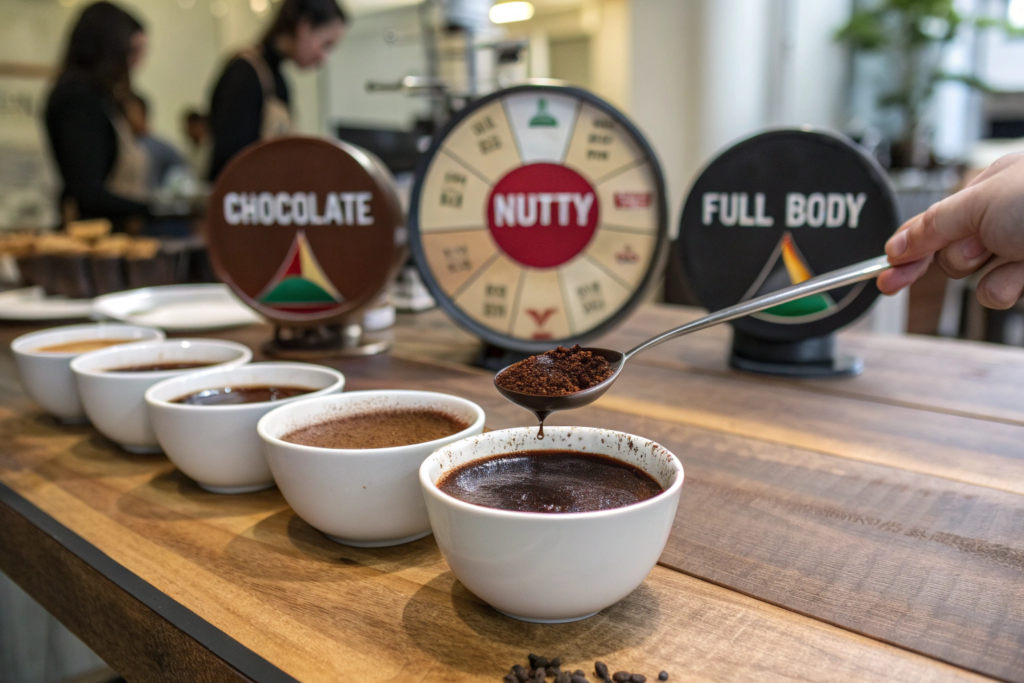
Is Yunnan Coffee a "Blender" or a "Signature" Component?
It can be both. But its superpower is as a blender. Think of it as the bass player in a band. It's not the flashy lead guitar. It's the foundation that holds everything together and makes the whole song feel good.
In a classic espresso blend, you might have a bright, fruity component (like an Ethiopian Natural) and a heavy, chocolatey base. Yunnan is that base. It tames the acidity of the brighter coffee, adds body to the shot, and contributes a familiar, comforting sweetness. Many of our commercial clients use Yunnan as 30-50% of their core espresso blend. It provides the backbone. It's also excellent as a 100% component for a value-oriented single-origin offering or a cold brew program. Its clean finish and heavy body make for a great cold brew that doesn't get watery or sour. At Shanghai Fumao, we work with roasters to dial in the specific Yunnan lot that best complements their existing blend architecture.
How Does the Low Acidity of Yunnan Coffee Benefit Milk-Based Drinks?
The vast majority of coffee consumed in North America is in milk. Lattes. Cappuccinos. Flat whites. In milk, high-acidity coffees can taste sour, thin, and "cheesy."
Yunnan's naturally low, malic acidity is a huge advantage in milk. The chocolate and nut notes cut through the milk fat. The heavy body gives the drink a creamy, luxurious mouthfeel. The coffee doesn't fight the milk. It partners with it. This is why Yunnan is so popular for espresso blends. It produces a "comfort food" style of coffee beverage that has broad, mainstream appeal. It's the kind of coffee that a customer orders every day and never gets tired of. For a commercial roaster serving cafes, this reliability in the cup is gold.
Can Yunnan Farms Consistently Supply the Volume a Commercial Roaster Needs?
A great sample is one thing. A reliable supply of 10, 20, or 50 containers a year is another thing entirely. Commercial roasters need volume. They need a partner who can deliver the same quality, at scale, year after year.
Yunnan is uniquely positioned to supply commercial volumes due to the scale of its farming operations. Unlike many origins characterized by fragmented smallholder plots, Yunnan has a significant number of large, vertically integrated estates and well-organized cooperatives. This structure allows for the aggregation of large, homogenous lots that meet the volume and consistency requirements of commercial roasters. A single estate can offer hundreds or thousands of bags of the same grade and profile.
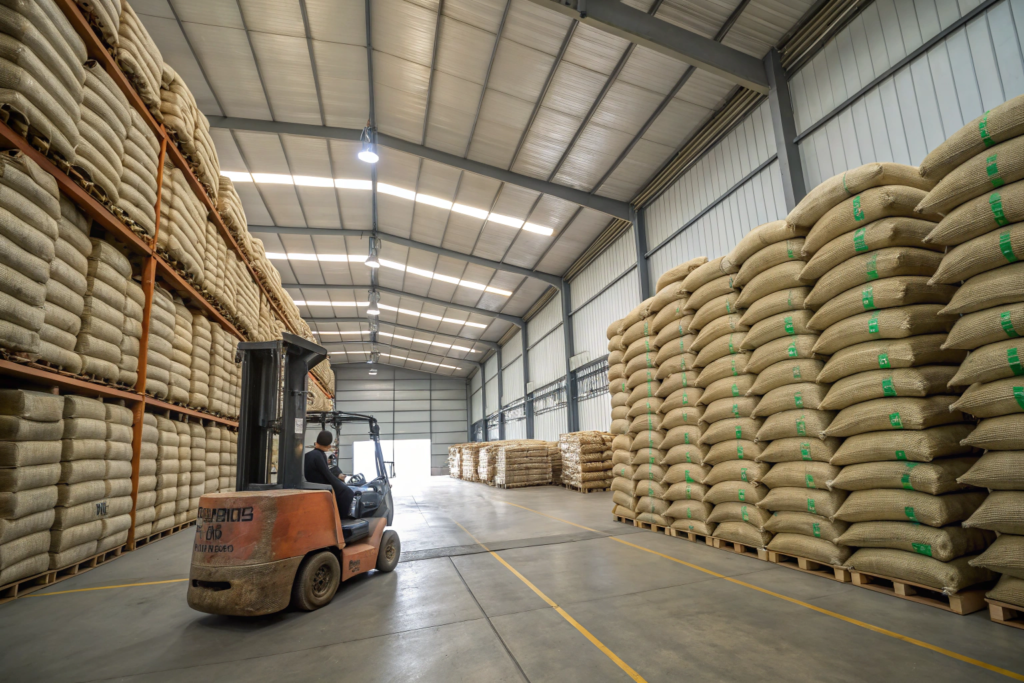
How Does Vertical Integration Enable Large, Homogenous Lots?
A smallholder farmer with one hectare produces a tiny, unique lot. To fill a container, a trader must buy from hundreds of these farmers. The resulting container is a patchwork quilt of different qualities.
This is the opposite of what a commercial roaster wants. They want a consistent, predictable product. Vertical integration solves this. Shanghai Fumao controls 10,000 acres. We can pick, process, and mill coffee from a single, large block. This creates a homogenous lot of significant size. We can offer a commercial roaster multiple containers of coffee that cupping score within half a point of each other. This consistency of supply is incredibly valuable. It means the roaster can lock in their blend profile for a year, knowing the Yunnan component will not change. This level of control is difficult to achieve in origins dominated by smallholders.
What Is the Annual Exportable Volume of Specialty-Grade Yunnan Coffee?
Yunnan produces a significant and growing volume of coffee. While much of the lower-grade production is absorbed by the domestic market, the exportable volume of Specialty Grade (80+ points) coffee is substantial and increasing.
The exact figures fluctuate with the harvest, but Yunnan is now a recognized player in the global supply of washed Arabica. It's not Brazil in terms of sheer tonnage. But it offers a volume of quality coffee that is more than sufficient for all but the very largest multinational roasters. For a regional commercial roaster in North America, the volume available from Yunnan is well-matched to their needs. They can source their entire base component from a single, reliable origin without worrying about running out. This availability, combined with the logistical reliability of Chinese ports, makes Yunnan a secure, long-term sourcing option.
How Does the Landed Price of Yunnan Compare to Other Commercial Grade Arabicas?
At the end of the day, the decision comes down to the spreadsheet. The coffee can be great, but if it doesn't fit the cost model, it's not a viable option for a commercial roaster. So, where does Yunnan land?
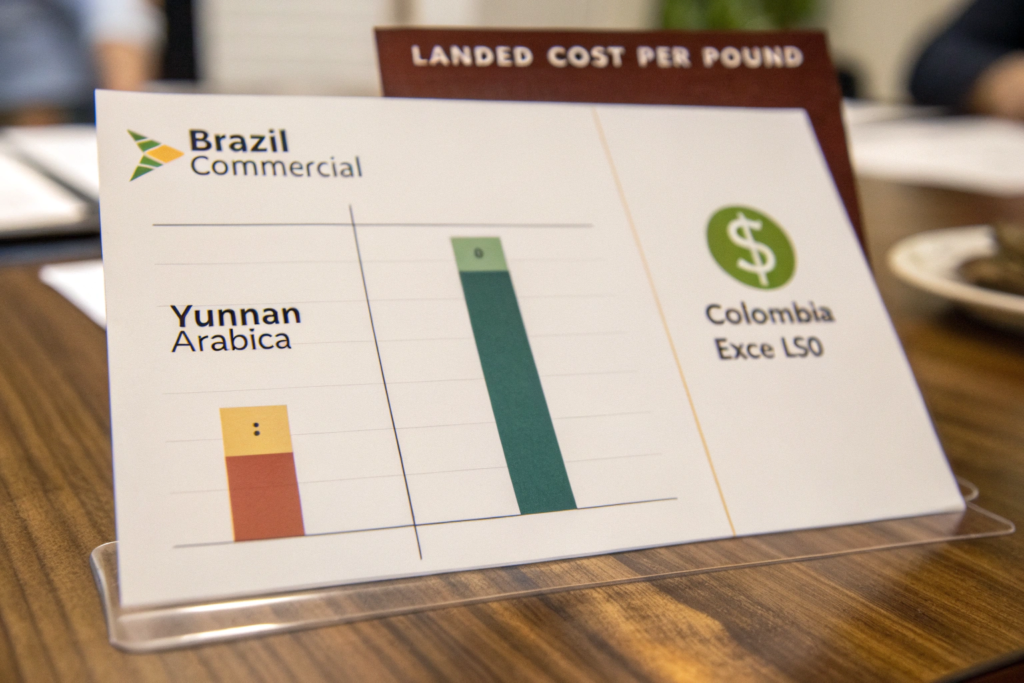
The landed price of Specialty Grade Yunnan Arabica is highly competitive, typically positioning itself between lower-priced Brazilian commercial grades and higher-priced Colombian Excelso. It offers a quality profile closer to Colombian standards at a price point that is significantly more attractive. When factoring in the consistency, the logistics reliability, and the blend functionality, Yunnan presents a compelling value proposition for commercial roasters seeking to manage costs without sacrificing cup quality.
Is Yunnan a Replacement for Brazilian Base or an Upgrade from It?
This is a key question for many roasters. Brazilian coffee is the classic, low-cost base for commercial blends. It's known for being soft, nutty, and cheap.
Yunnan is not as cheap as the cheapest Brazilian. But it offers a cleaner cup and a heavier body. Many roasters are using Yunnan to upgrade their base component. They replace a portion of their Brazilian base with Yunnan. The cost increases slightly, but the cup quality and body improve noticeably. The blend becomes more distinctive and "premium" tasting, allowing the roaster to justify a slightly higher wholesale price or simply build stronger customer loyalty. It's a strategic move: spend a little more on the green, create a much better product. You can compare the relative differentials of these origins through market reports from the International Coffee Organization.
Does the Logistics Reliability Translate into Real Cost Savings?
Yes. A cheaper FOB price is meaningless if the coffee arrives late and you have to buy expensive spot market coffee to cover your production, or if you lose a wholesale account due to a stock-out.
The predictability of shipping from Shanghai to the U.S. West Coast has real financial value. It allows for tighter inventory management. You don't need to hold as much safety stock. Your cash is not tied up in weeks of extra inventory sitting in a warehouse. You can run a leaner, more efficient operation. When you calculate the total cost of ownership—including the cost of capital, the risk of stock-outs, and the administrative burden—the Yunnan equation becomes even more favorable. The reliability is a form of cost saving. At Shanghai Fumao, we understand that our value proposition is not just the price on the invoice. It's the entire experience, from contract to cup.
Conclusion
Yunnan coffee is not just suitable for commercial roasters. It's an origin that seems almost purpose-built for their needs. It offers the roast consistency of a high-density SHB bean. It provides a versatile, crowd-pleasing flavor profile that functions beautifully as a blend base. It delivers the volume and supply consistency that commercial operations require. And it does all of this at a landed cost that makes strategic and financial sense in a volatile global market.
If you're a commercial roaster looking to build a more resilient, consistent, and cost-effective supply chain, Yunnan deserves a serious look. It's not a niche curiosity anymore. It's a mainstream tool for building a better coffee business.
If you'd like to discuss volume pricing, review detailed cupping data, or arrange for a full container sample, I'm ready to help. My email is cathy@beanofcoffee.com.