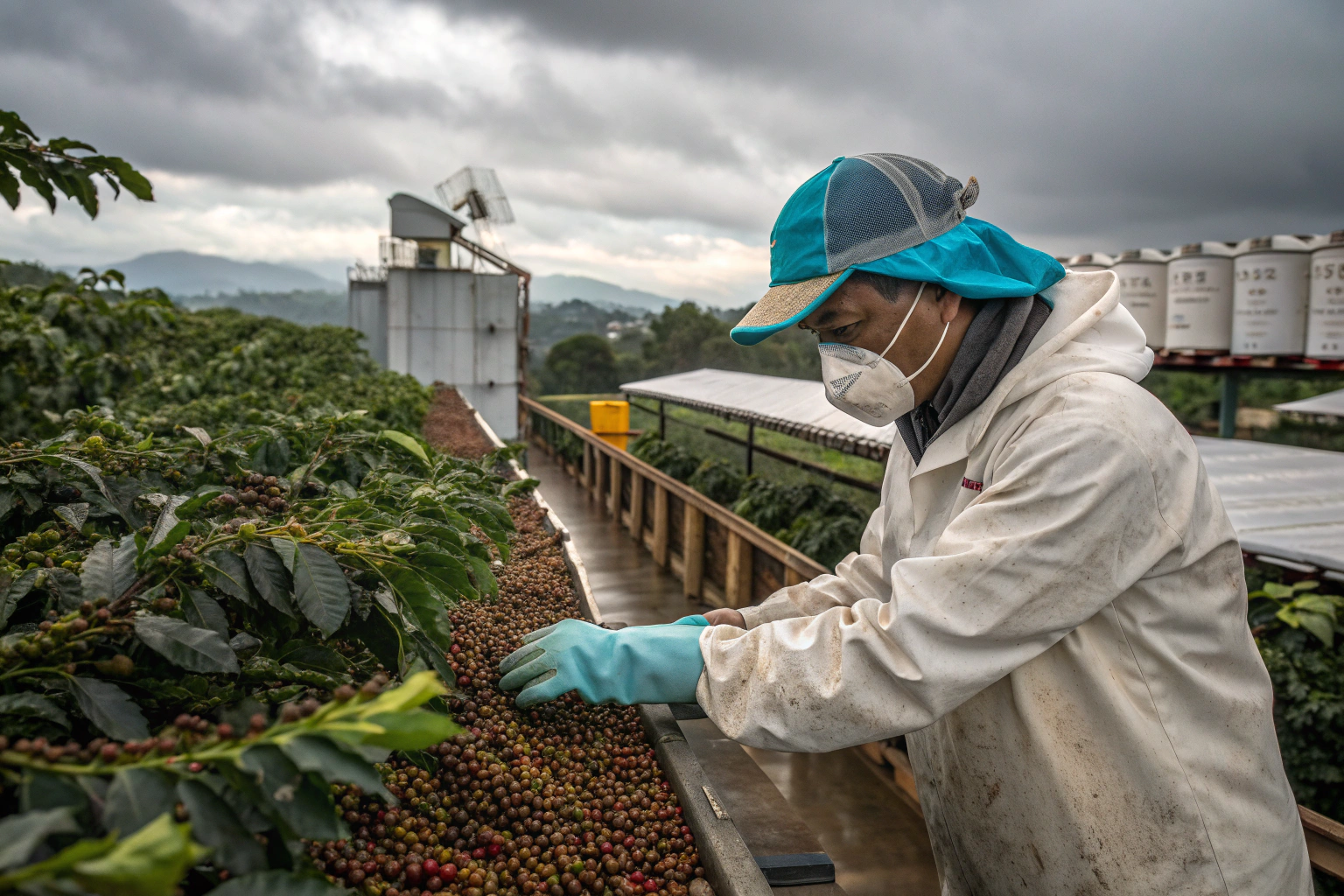
When you source coffee, you worry about consistency. You might have faced batches that looked great on paper—big beans, nice screen size—but the cup tasted flat. Or worse, you saw mold, discoloration, or ferment. You checked the certifications, the shipping logs, everything. It all seemed fine. So what went wrong? Honestly, a lot of the time, the problem isn't in the processing mill or the container. It starts way earlier, in the weather patterns weeks before the harvest. And for a buyer like Ron, who is staring at tariff costs and freight schedules, a bad-quality shipment isn't just a headache—it’s a money-losing disaster.
Rainfall is the single biggest natural factor controlling coffee harvest quality in Yunnan. Too much rain just before picking triggers fungal growth, cracks cherries, and washes away sugars. Too little rain, and beans shrivel, losing density and flavor. For our 10,000 acres in Baoshan, managing this natural rhythm is what makes or breaks the export season. You get a reliable, safe product only when a farm respects this delicate balance.
So, how exactly does that happen? And what can you, as a buyer, look for to protect yourself from weather-damaged lots? I want to walk you through it. I am the owner of BeanofCoffee, and I’ve spent years staring at rain clouds over our farms. Let me show you what we’ve learned.
How Do Rainy Seasons Impact Coffee Bean Density in Baoshan?
You look at a sample and see large beans. Most people stop there. But size isn’t density. A bean can be big and light, like a balloon. You roast it, and the heat doesn’t penetrate right. The roast turns out uneven. This happens a lot when Yunnan has a super wet monsoon.
Heavy rainy seasons in Baoshan lower coffee bean density by flooding cells with water. The bean expands but doesn’t build hard matter. Later, when it dries, you’re left with a puffy, fragile bean that shatters in the grinder and roasts unevenly. We use strict density grading to separate these out, ensuring our BeanofCoffee Arabica exports always meet the heavy-bean standard required by North American roasters.
Another way to look at this is the "sink test" we do right after harvest. It’s simple but tells you a lot.
What Happens When Cherries Get Too Much Water During Maturation?
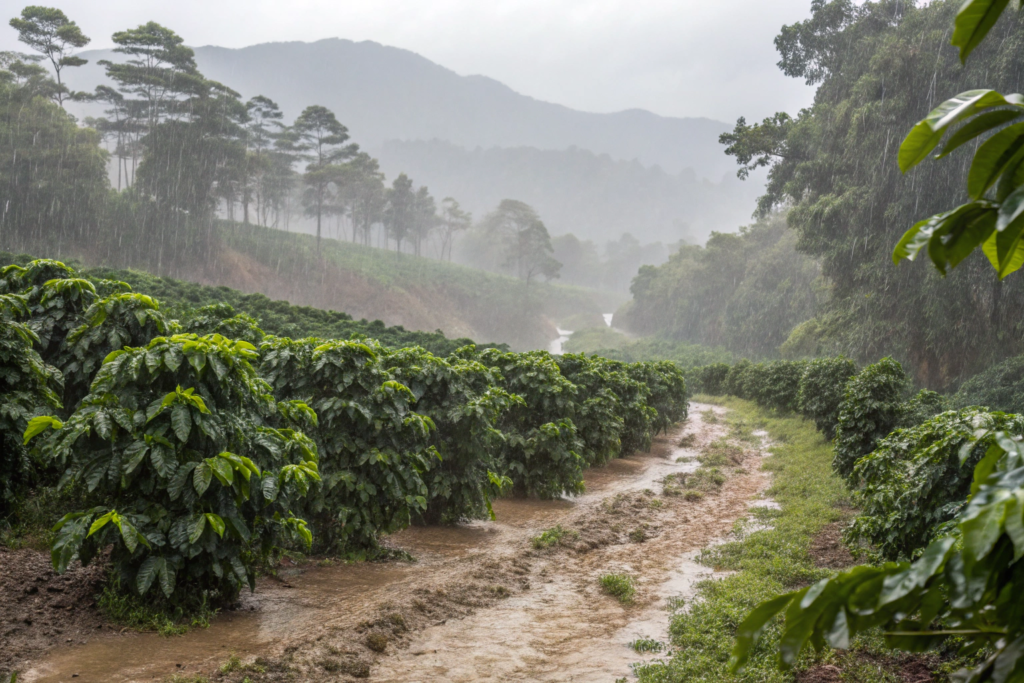
Here is a scene from July. The monsoon hits the Gaoligong Mountains hard. Our Catimor cherries are in their late maturation. The rain keeps coming for two weeks straight. The cherry pulp soaks it up. It’s like a sponge. The sugar content inside the mucilage gets diluted. You might see bigger cherries, yes. But inside, the bean is fighting to form solid cellulose. When we process these cherries later—using the washed method—a lot of them float. Floaters are, nine times out of ten, low-density defects. They taste papery when cupped. We skim them off. In a year with 2000mm of rain, the floater rate can spike to 15%. In a normal year, it’s below 5%. That’s a direct hit to yield. For a company that only wants premium export-grade lots from our BeanofCoffee supply, we have to absorb that loss. We don’t ship those floaters to Ron. They go to the local market. So one practical tip for a buyer is to ask for the density grading report. A number over 700 g/L for Arabica is what you want.
Why Is Water Stress Sometimes Good for Bean Hardness?
Now, flip it around. A little bit of stress is not a bad thing. I’m talking about a mild dry spell right after the flowering. When the tree gets a bit thirsty, it stops putting energy into leaves. It pushes all its reserves into the seed. The seed becomes denser, harder. We measure this with a hardness tester. Beans from a drier slope on our plantation consistently score 10% higher on the hardness scale. This matters for your roasting. Hard beans take heat better. They don’t scorch. You get a cleaner first crack. I remember a lot from 2019. Rain was scarce in April. Harvest was October. The beans were small, like peaberry size, but they were rocks. Cupping score jumped 2 points just from mouthfeel and acidity. So when I hear a buyer worry solely about drought hurting yield, I understand. But for quality? A controlled dry spell can be a hidden gift. It’s all about balance.
How Do Dry Spells Before Picking Affect Yunnan Coffee Acidity?
Acidity is the sparkle in coffee. For Yunnan Arabica, we talk about malic acid, that apple-like crispness. But that sparkle is fragile. It relies on slow cherry ripening. The worst enemy of slow ripening? A sudden heatwave and drought right before the harvest team goes out.
A dry spell right before harvest speeds up ripening too fast. Sugars don't develop fully. The complex acids break down into simpler, duller compounds. You end up with a flat cup, a boring acidity. At BeanofCoffee, we combat this with shaded agroforestry and irrigation on our Baoshan plots. These tools slow down the ripening process, protecting that signature Yunnan acidity for your brand.
Think of it this way. The cherry is a chemical factory. It needs time and water to work.
Can You Predict Acidity Loss From a Pre-Harvest Drought?
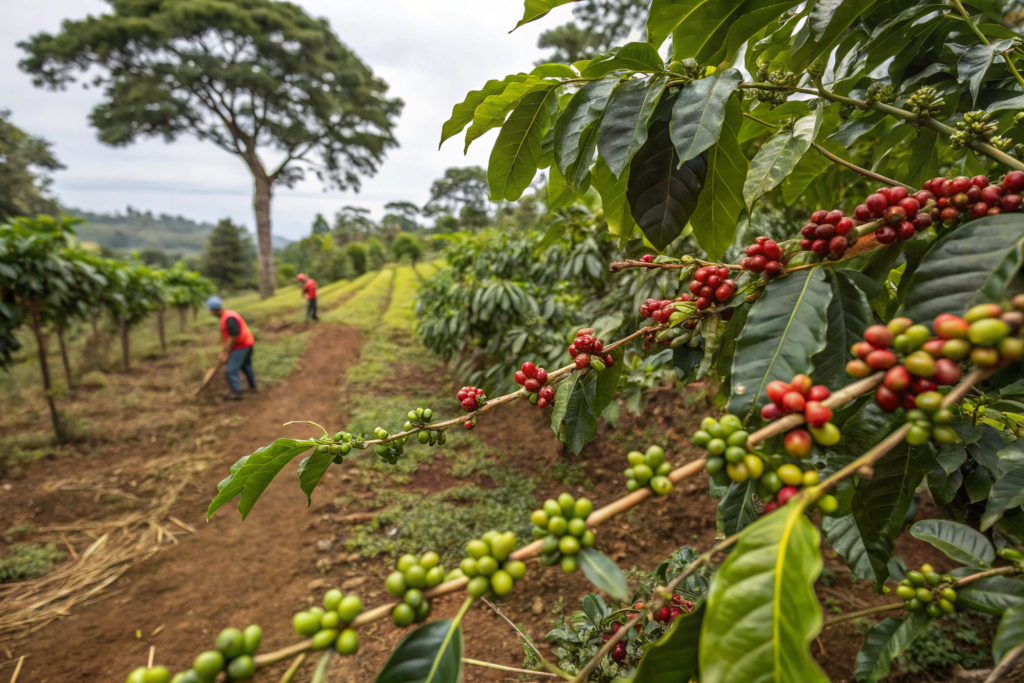
You can’t see acidity loss in a green bean photo. But you can trace it. We keep weather loggers in every block. If the temperature stays above 30°C for ten days with no rain in September, I already know the acidity will dip. The tree goes into survival mode. It starts consuming the organic acids stored in the seed. It’s a biological fact. Malic acid and citric acid drop by 15-20%. The pH of the green bean rises. For a client who is buying a bright, high-acid coffee to blend with a chocolatey Brazil, this is a disaster. The blend falls apart. So, what do we do? We segregate lots from lower elevations first. They suffer more. Our high-altitude plots, those above 1500 meters, they stay cooler. The drought effect is milder. We dry-mill these lots separately and label them "High Acuity Lots." You should ask your supplier for the harvest date and the weather log for the last 30 days. It’s not a common request, but it tells you everything. It’s one of those details that separates a real grower like us from a middleman.
How Does Irrigation Stabilize Acid Development?
We used to rely solely on the sky. Farming that way is a gamble. Three years ago, we put drip irrigation into 500 acres of our prime Arabica field. It wasn’t cheap. It cost a lot upfront. But now, if we have a 20-day dry spell in August, we can give each tree exactly 3 liters of water a day at the root zone. The tree doesn’t panic. The cherry’s maturation clock stays on track. The acid complex in the bean stays intact. It’s like keeping a battery charged. The result in the cup is clear. You get a lively citrus note that lasts on the tongue. I have a roaster client in Melbourne who specifically asked for "rain-free" clean cups. After we started using irrigation, his orders doubled. Because the taste was consistent, season after season. It removed the weather variable. So for a big buyer like Ron, who needs a standard product for his brand, knowing the farm uses irrigation is a massive trust signal. It is a sign of safe, stable supply. You remove the surprise of weather risk. You know?
How Does Excessive Moisture Lead to Defects Like Mold in Green Beans?
Mold. Ochratoxin A. These are scary words in our business. A container of coffee can be rejected at port if it fails the mold test. And the worst part? The mold often starts not in the container, but on the tree, or in the first 12 hours after picking. Moisture is the match that lights the fire.
Excessive moisture is the root cause of mold defects. When rain pounds ripening cherries, they crack. Wild yeast and aspergillus bacteria enter immediately through the skin. If we don't dry these cherries fast enough on raised beds, the mold blooms. For our wholesale export clients, we fight this with two rules: strict cherry sorting and controlled mechanical drying. This guarantees a clean, safe bean free from ferment defects.
Don’t get me wrong. You can’t just blame the rain. It’s about how you react to it.
What Is the Link Between Wet Harvest Conditions and Ochratoxin A?
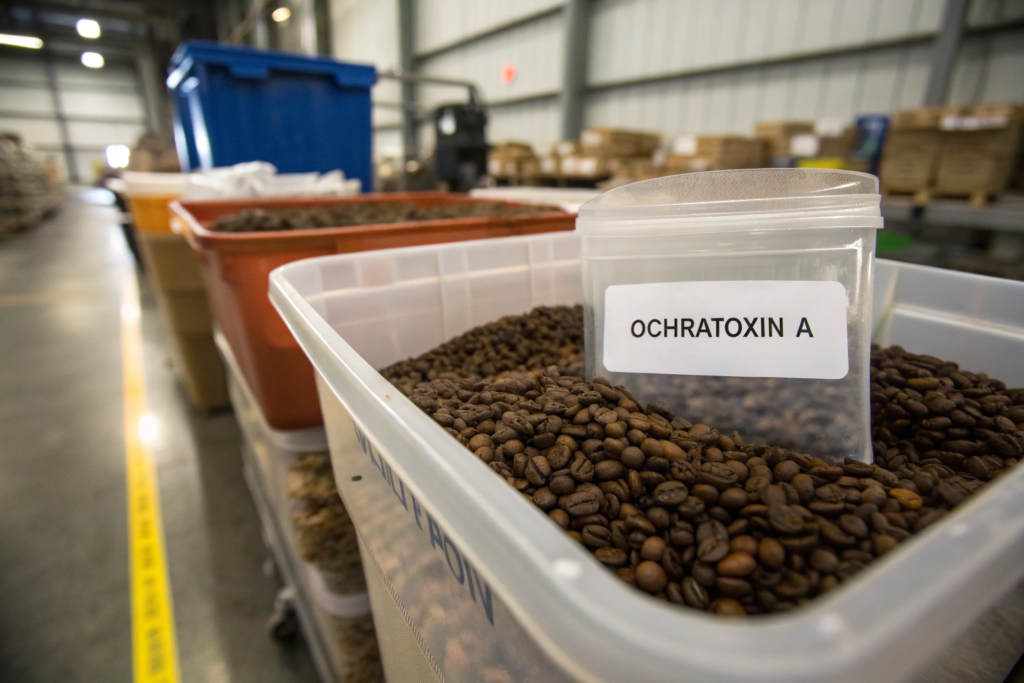
Here is a rough statistic. In a rainy harvest, our cherry sorting team rejects 3 times more cherries at the flotation tank. Why? Because many cherries have micro-cracks from water absorption. You can see them with a magnifying glass. The skin looks like a dry riverbed. Inside those cracks, bacteria start feasting. In warm, wet weather, the fungus Aspergillus ochraceus grows fast. It’s the one that makes Ochratoxin A. The EU has tight limits on this—5 parts per billion. Japan is even stricter sometimes. If a lot gets flagged, it’s dead stock. It gets sent back or destroyed. For us, as an exporter, that's a total financial loss plus a reputation hit. So we invested in a mechanical dryer. It’s a huge drum that uses warm air, not just the sun. We can get the moisture from 50% down to 12% in 24 hours. This speed kills the mold’s window of opportunity. Sun drying might take 7 days. In those 7 days of wet, overcast weather, mold breeds. We do not gamble with this. Our Robusta and Catimor lots are dried to a steady 11.5% moisture. That’s the sweet spot—dry enough to be safe, moist enough to not crack in transit.
How Does Proper Cherry Sorting Mitigate the Risk of Ferment?
I often walk the sorting lines during a heavy rain day. The process is slow, manual, and crucial. We have a group of women who pick through the wet parchment. They look for cherries that don’t have the right color. A cherry that stayed too long in a puddle will be a bit brown, a bit soft. That’s the start of ferment. You might think, "just wash it off." Wrong. The ferment taste soaks into the bean and locks in. It tastes like vinegar or rotten fruit. It ruins the entire bag. So sorting is the only answer. We sort twice. Once in the water channel and once by hand on the belt. This is why our price might be 5 cents higher per pound than a random factory farm. You are paying for the human eyes that save the batch. For a client concerned about quality control and safety, this is the core of the matter. Our quality is not a slogan; it’s the action of pulling out a defective cherry one by one, in the rain.
How Can Buyers Verify that Weather Didn’t Ruin a Yunnan Coffee Lot?
You are thousands of miles away. I get it. You can't just pop over to Baoshan for a farm visit every week. So how do you trust that the coffee you’re ordering—based on a small sample—matches the container? You need evidence. You need tools. Ron, the buyer who worries about timeliness and safety, he doesn’t have time for sweet talk. He wants hard facts.
Buyers can verify weather impact by requesting a pre-shipment water activity test, a density report, and a full cupping score breakdown. You should also ask for the lot-specific rainfall data from the last 30 days before harvest. A transparent farm like BeanofCoffee supplies all this. It removes the guesswork and ensures the efficiency you need before paying for freight across the Pacific.
This is not just about trust. It’s about logistics. Bad coffee gums up your supply chain.
What Certifications Best Prove a Rain-Safe Supply Chain?
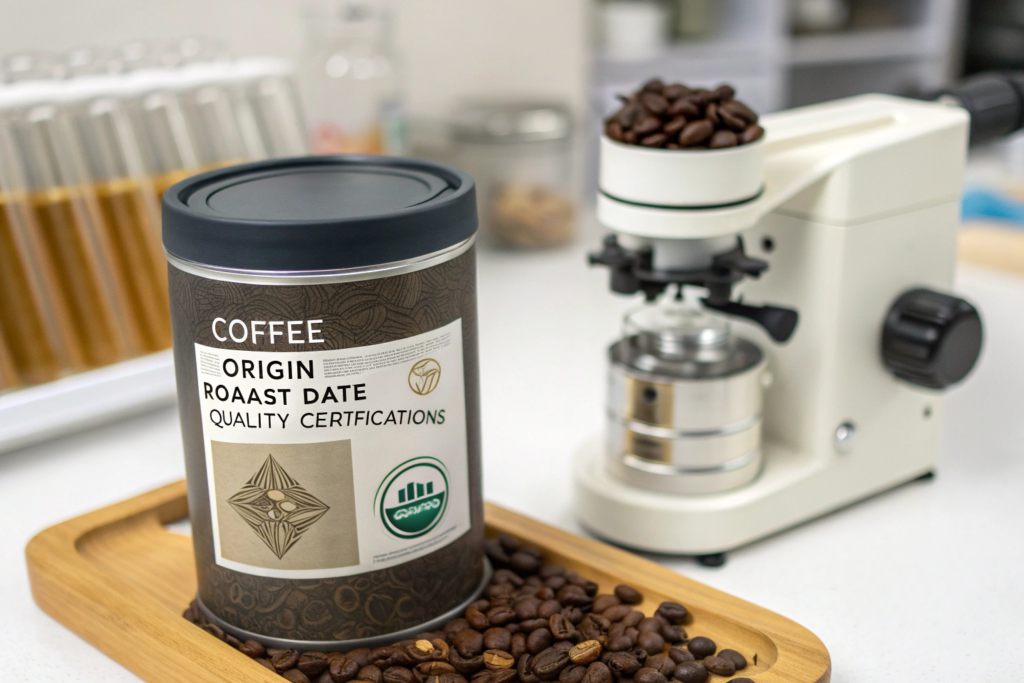
Certifications are a start. But not all certificates are equal. A generic organic cert doesn’t tell you about rain. The one I always point buyers to is the Rainforest Alliance certification. It has a specific focus on climate-smart agriculture. It checks if a farm has a water management plan. We also have ISO 22000 for food safety. This forces us to log our drying temperatures and moisture readings. If you are a brand owner, you can audit these logs. Another key one is a third-party lab report from an agency like SGS or Bureau Veritas. We run these on every export lot. It tests for mold, moisture content, and physical defects. There’s a number called Water Activity. It measures the "free" water that microbes can use. You want a Water Activity number below 0.53. Above that, mold can still grow even if the beans feel dry. These are not just fancy tests. They are insurance for your brand. When the container hits Long Beach port, if there’s a dispute, the SGS certificate settles it. So, push your supplier to provide fresh, lot-specific lab reports. Not just a company profile.
How Does Cupping Reveal Past Weather Stress?
A weather problem leaves a fingerprint on the flavor. You just need to know what to taste for. When I train buyers, I tell them to look for two things. One, a "hollow" body. It feels empty on the tongue, like diluted juice. That screams drought. The bean didn’t fill out. Two, a "fermenty" sour note that tastes like overripe pineapple or wine gone bad. That screams too much rain. A clean Yunnan Arabica should have a sugar-browning sweetness, like caramel, and a crisp malic acidity. On our cupping table, any cup that shows a weather defect gets separated. I don’t care if it looks perfect green. We roast a sample, crush the crust, and smell. It’s a fast, cheap test. You can do it too. Ask the supplier to send a 200-gram sample, roast it light, and cup it yourself. Or better, ask for a video of their cupping session. If they hesitate, that’s a red flag. At BeanofCoffee, we cup every single day during harvest. It’s the final truth-teller. A spectrometer can measure bean color. A scale can measure weight. But the tongue measures the weather.
Conclusion
You can see it now. Rain isn’t just background noise for a coffee farmer. It is the scriptwriter for the whole harvest drama. Too much of it, at the wrong time, ruins density, promotes mold, kills acidity, and leaves you with a flat, fermented, and risky product. Too little, and the beans become hollow and boring. The difference between a great Yunnan lot and a bad one often comes down to three specific weather windows: the post-flowering stress, the maturation soak, and the pre-harvest dry spell. A farm that masters the management of this water cycle—using shade, irrigation, quick drying, and ruthless sorting—doesn't just grow coffee. It builds security. It builds a stable ingredient for your brand.
If you are tired of efficiency problems, tariff risks on defective batches, and inconsistent quality, you need a partner who controls the weather variable on the ground. At BeanofCoffee, we are not just trading beans. We are growing them on 10,000 acres in Baoshan, monitoring every raindrop and every cherry. You get direct access to the producer. No hidden middlemen. No guessing games about quality. Let’s build a reliable, safe pipeline for your business.
Contact me, Cathy Cai, directly at cathy@beanofcoffee.com. Tell me about your sourcing needs. I will walk you through the weather data, the certifications, and the current cupping scores for your next shipment. Let’s make your supply chain bulletproof against the rain.