A few years ago, an Italian espresso blender visited my cupping lab. He had been buying Sumatra Mandheling for twenty years. "I love the body," he said. "But I never understood why the beans look so ugly. Why are they dark and swollen? Why do they smell like wet earth?"
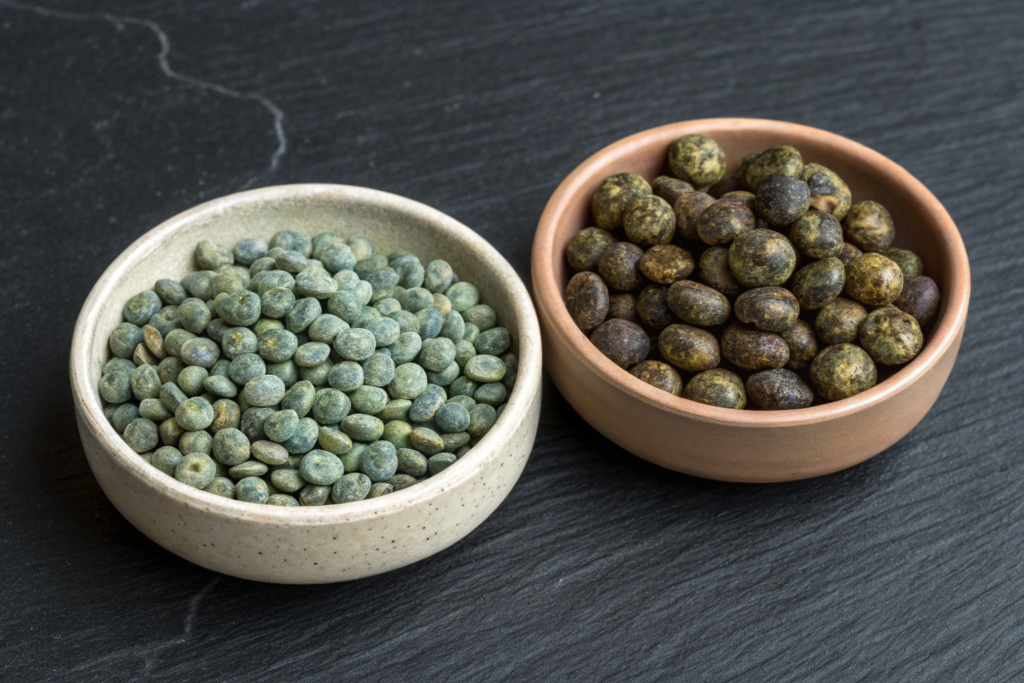
I pulled out two green coffee samples. One was our washed Yunnan Catimor—blue-green, hard, clean, uniform. The other was a top-grade Sumatra Mandheling—dark green, mottled, soft, irregular. "Same species," I told him. "Both Arabica. The difference is what happened after the cherry was picked. One was washed and dried slowly in parchment. The other was pulped, washed, stripped naked while still wet, and then dried as a bare bean. That one change explains everything—the look, the smell, the body, the earthy taste you love."
Wet hulling differs from washed processing in the timing of hulling: washed coffee dries slowly in protective parchment to 11 percent moisture before hulling, while wet hulled coffee is stripped of parchment while the bean is still wet and soft at 30 to 40 percent moisture, then dried as a naked bean, which creates dramatically different physical and sensory characteristics.
This single processing difference is why Sumatra tastes like Sumatra and why washed Yunnan tastes clean and chocolatey. Let me walk you through every step so you understand exactly what happens in each method and why it matters for your buying decisions.
What Are the Step-by-Step Stages of Each Processing Method?
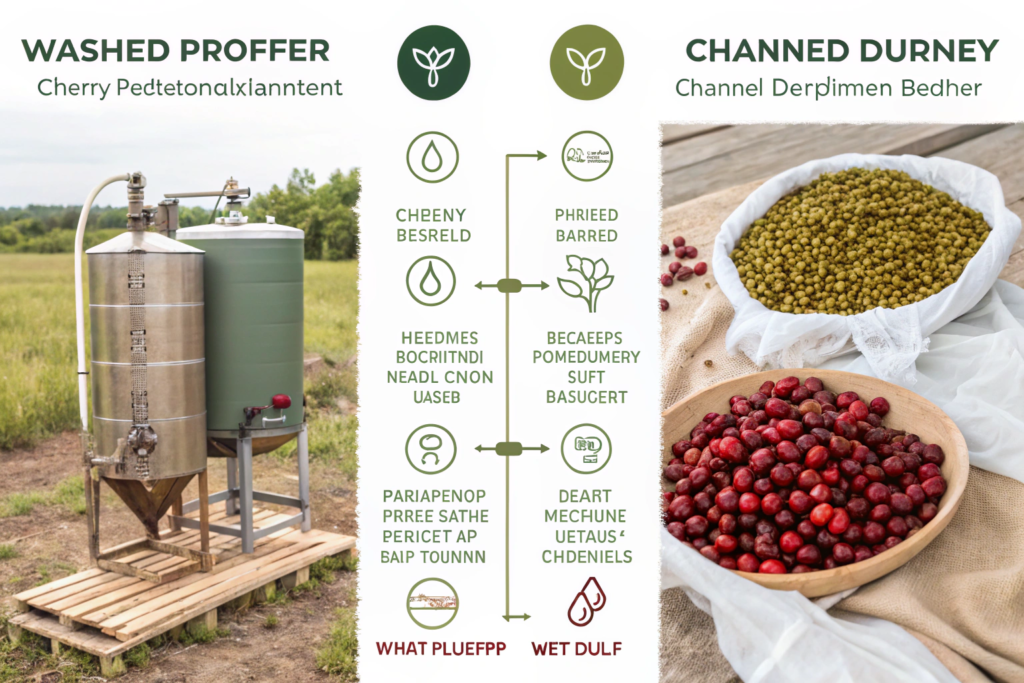
The first two steps are identical. Both washed and wet hulled coffee start with picking ripe cherries and depulping them to remove the skin and some of the mucilage. The beans, still coated in sticky mucilage and encased in their parchment shells, are ready for fermentation.
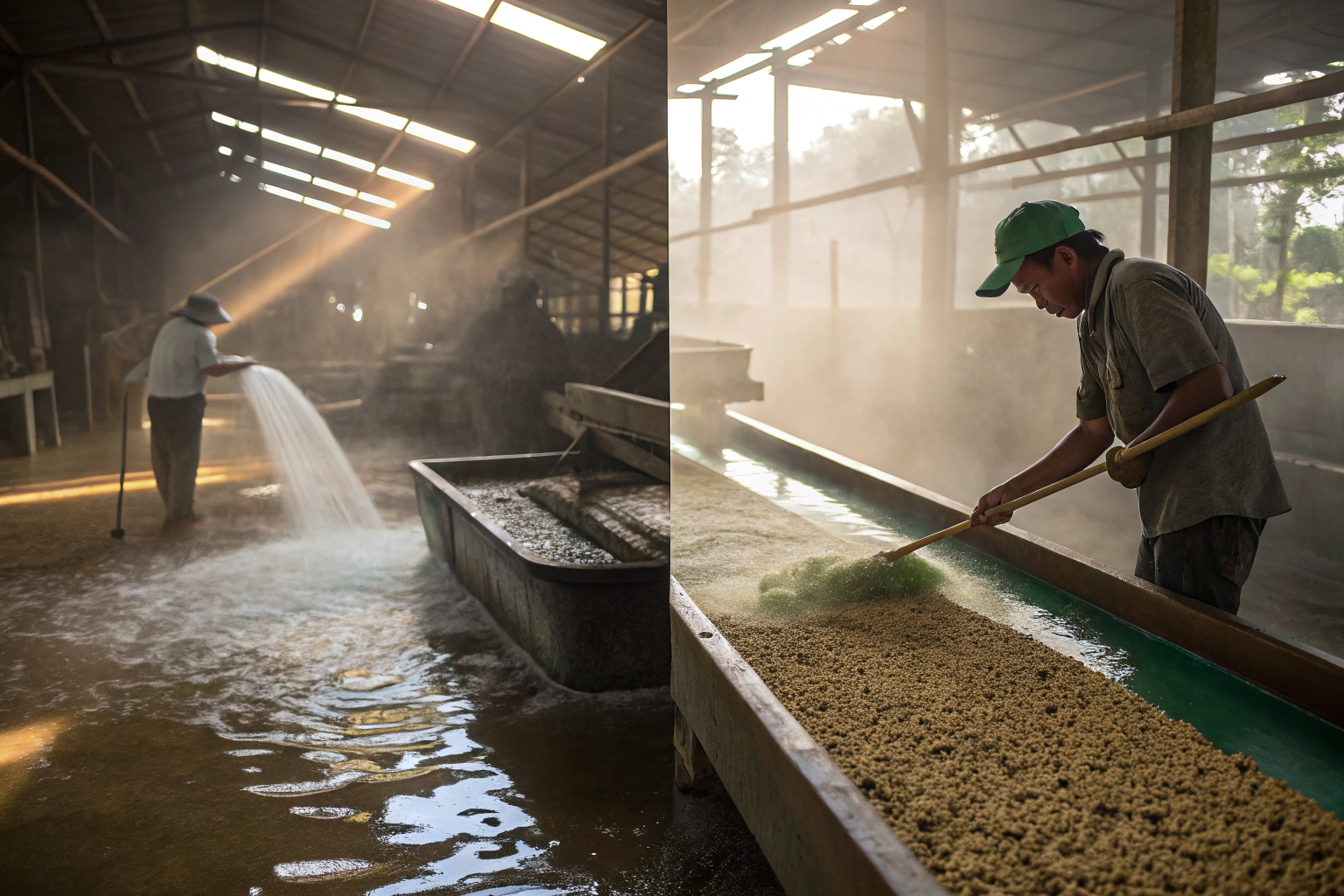
At this point, the paths diverge sharply. In washed processing, the pulped beans go into a fermentation tank with water. Natural enzymes and microbes break down the remaining mucilage over twelve to thirty-six hours. The beans are then washed in clean water channels to remove the loosened mucilage completely. What emerges is clean parchment coffee, still in its protective parchment shell, with a moisture content around 50 to 55 percent.
The parchment coffee is spread on raised drying beds or patios. It dries slowly over seven to fifteen days, depending on the weather, until the moisture content drops to 10.5 to 12 percent. During this entire time, the bean is protected by the parchment shell. The shell moderates the drying rate. It shields the bean from direct sun, from rain, from physical damage, and from microbial contamination. Only after the coffee is fully dry is it hulled—the parchment removed mechanically—and prepared for export.
In wet hulled processing, the timeline is compressed dramatically. The pulped beans receive only a brief fermentation or sometimes just an overnight soak. The mucilage is not fully removed. The beans, still in parchment but with residual mucilage, are dried only partially—usually just one to three days—until the moisture content drops to around 30 to 40 percent. The parchment is still soft. The bean inside is still swollen and wet.
The critical difference is that wet hulling removes the parchment shell when the bean is still at 30 to 40 percent moisture, whereas washed processing keeps the parchment on until the bean is fully dry at 11 percent moisture, fundamentally altering the drying environment and microbial exposure of the final green bean.
At this point, the wet hulling machine—a simple mechanical huller—strips the soft, wet parchment off the bean. The bean emerges naked, swollen, and vulnerable. It is then spread out to dry as a bare bean, directly exposed to the air, the sun, and whatever is on the drying surface. This final drying phase takes another three to five days. The naked bean absorbs ambient moisture and any microorganisms present. The color darkens. The flavor transforms.
How Does Fermentation Time Differ Between the Two Methods?
Fermentation is where washed coffee develops its clean, transparent character. Wet hulled coffee largely skips this step, which is why it tastes so different.
In a typical washed process in Yunnan, we ferment the pulped beans for eighteen to twenty-four hours in clean water. The tank temperature stays around 18 to 22 degrees Celsius. During this time, pectin-eating enzymes and naturally occurring yeasts break down the mucilage layer completely. The process is controlled. We monitor the fermentation by feel—when the parchment no longer feels slimy and the beans feel gritty when rubbed together, fermentation is complete. The mucilage is then washed away entirely in the washing channels.
In wet hulled processing, the fermentation is minimal. Often there is no separate fermentation step at all. The pulped beans might sit overnight in a basket or sack, with the natural enzymes doing some work. Or they might be soaked briefly and then immediately spread for the initial drying. The mucilage is never fully removed before hulling. Residual mucilage sugars remain on the parchment and, after hulling, on the naked bean surface. These residual sugars become food for microorganisms during the final naked drying phase. This microbial activity is what creates the earthy, spicy, sometimes funky notes characteristic of wet hulled coffee.
A detail often missed: the fermentation temperature matters enormously. Washed fermentation at 18 degrees Celsius produces clean, fruity notes. The same fermentation at 30 degrees produces harsh, vinegary notes. In Sumatra, the ambient temperature is consistently warm and humid. Even the brief fermentation that occurs during wet hulling happens at a higher temperature than a controlled washed fermentation in a cooler climate. This temperature difference contributes to the distinct flavor profile. For more technical details on fermentation management, the Specialty Coffee Association offers processing courses that cover time and temperature variables in depth.
Why Is Drying Speed So Critical in Both Methods?
Drying is not just about removing water. It is about controlling the rate of water removal to preserve bean integrity and guide flavor development. Too fast, and the bean case-hardens—the outside dries and hardens while moisture remains trapped inside. Too slow, and mold develops.
In washed processing, the parchment shell moderates the drying rate naturally. Even in direct sun, the moisture inside the bean must travel through the parchment layer before evaporating. This creates a slow, steady drying curve. We spread the parchment in thin layers on raised beds and turn it every few hours. The drying takes ten to fifteen days in Baoshan's dry season. The slow pace allows the bean to shrink evenly. The cell structure remains intact. The color stays uniform blue-green.
In wet hulled processing, the naked bean dries much faster. There is no parchment to slow evaporation. The bean surface is directly exposed. Drying can complete in three to five days. This rapid drying has consequences. The bean shrinks more quickly. The cell structure can develop micro-fractures. The rapid water loss can trap some compounds inside while others evaporate unevenly. The result is a bean with lower density, a softer texture, and a more porous structure.
The rapid drying also affects the cup. Some of the volatile aromatics that contribute to bright, floral notes in washed coffee are lost during the rapid naked drying. Other compounds, including those produced by surface microbial activity, are concentrated. The cup shifts from bright and clean to deep and earthy. For more on drying science, World Coffee Research has published processing guides that include optimal drying rates and their impact on final cup quality.
How Does Wet Hulling Transform Bean Appearance and Density?
You can identify a wet hulled coffee by sight alone. The beans look fundamentally different from washed coffee, and this appearance is a direct result of the process.
Washed Arabica beans are uniform in color—a deep blue-green or jade green. The surface is smooth and clean. The center cut is tight and pale. The beans feel hard and dense when you handle them. They rattle against each other with a high-pitched ping. The density, as measured by a density meter, typically falls between 700 and 750 grams per liter for high-grown lots.
Wet hulled Arabica beans are darker—ranging from dark green to almost brownish-green. The color is mottled, with patches of different shades. The surface is slightly rough and dull, not shiny and smooth. The center cut is often darker, sometimes with a brownish residue. The beans feel softer and lighter. They make a duller sound when handled. The density is lower, typically 620 to 680 grams per liter.
Wet hulling transforms the physical bean into a softer, darker, more porous, and lower-density product because the naked bean dries too rapidly and unevenly without the protective parchment shell, causing cell structure damage and color changes that washed processing avoids entirely.
This density difference matters enormously for roasting. A washed high-grown bean requires more thermal energy and a longer development time. A wet hulled bean, being softer and less dense, absorbs heat faster. The roast profile must be adjusted. If you roast a wet hulled Sumatra with the same profile as a washed Yunnan Catimor, the Sumatra will race through development and likely scorch on the outside while the inside remains underdeveloped. The resulting cup will taste roasty, smoky, and hollow.
Why Are Wet Hulled Beans So Much Darker in Color?
The dark, mottled color is not a defect. It is a direct chemical and physical consequence of naked drying.
In washed processing, the bean dries inside its parchment shell. The shell protects the bean from direct contact with oxygen and light. The chlorophyll in the bean degrades slowly and evenly. The bean retains a uniform blue-green color.
In wet hulled processing, the naked bean is exposed to oxygen and light during the final drying phase. The chlorophyll degrades rapidly and unevenly. Oxidation reactions occur on the bean surface. The sugars and residual mucilage on the naked bean surface undergo Maillard-like browning reactions, even at ambient temperatures. The bean darkens. The color becomes mottled because the drying is not perfectly uniform across every bean and every surface.
The foxing or mottling that some buyers mistake for age or defect is actually a sign of authentic wet hulled processing. A Sumatra Mandheling that looks perfectly uniform and blue-green has likely been processed differently or artificially dried. The dark color is part of the variety's signature. It correlates with the earthy, spicy flavor that Sumatra buyers seek.
How Does Density Affect Roast Profiles for Wet Hulled Coffee?
The lower density of wet hulled beans changes everything about how they behave in the drum.
A soft, low-density bean absorbs heat faster. The moisture inside the bean turns to steam more quickly. First crack arrives earlier and is often less energetic—more of a soft rustling than a sharp popping. The development time between first crack and drop must be managed carefully. Too long a development time on a soft bean produces baked, flat flavors. Too short, and the bean is underdeveloped and grassy.
I recommend roasters drop the charge temperature by ten to fifteen degrees Celsius for wet hulled coffee compared to their standard washed Arabica profile. Use a gentler heat application during the drying phase. Expect first crack to happen one to two minutes earlier than usual. Shorten the development time ratio to 10 to 12 percent, compared to 14 to 16 percent for a dense washed coffee.
The target roast degree for wet hulled coffee is typically darker than for washed Arabica. The earthy, spicy notes develop fully at medium-dark to dark roast levels—Agtron 45 to 55 whole bean. A light roast on a wet hulled Sumatra often tastes underdeveloped, vegetal, and sour. The body, which is the main attraction of wet hulled coffee, does not fully express until the roast pushes into the early stages of second crack. For more roast profiling guidance, Cropster provides tools and community forums where roasters share specific profiles for wet hulled lots.
What Impact Does Wet Hulling Have on Cup Profile and Shelf Life?
The cup difference between washed and wet hulled coffee is extreme. They do not taste like different origins of the same product. They taste like different products entirely.
A washed Yunnan Catimor from 1,500 meters cups with notes of dark chocolate, roasted almond, mild citrus acidity, and a clean, quick finish. The body is medium to heavy. The aftertaste is sweet and clean. The coffee tastes balanced, approachable, and consistent. It is a coffee you can drink every morning without fatigue.
A wet hulled Sumatra Mandheling cups with notes of fresh earth, cedar wood, clove, tobacco, and dark cocoa. The acidity is almost absent. The body is massive, syrupy, and coating. The aftertaste is long and savory, with a lingering earthy sweetness. The coffee tastes wild, complex, and challenging. Some people adore it. Others find it strange and overwhelming. There is no middle ground.
Wet hulled coffee develops a uniquely heavy body, near-zero acidity, and complex earthy-spicy notes that washed coffee does not have, but it also ages and fades much faster, losing its distinctive character within six to nine months compared to the twelve-plus months of stable quality in properly stored washed coffee.
The rapid flavor evolution continues after export. Wet hulled coffee does not age gracefully. The porous, soft bean structure absorbs moisture and oxygen from the air. The volatile aromatics that create the earthy-spice character dissipate. After six months, a wet hulled Sumatra can taste flat, baggy, and stale. After nine months, it is a shadow of its former self. Washed coffee stored properly in GrainPro bags can hold quality for twelve to eighteen months. This shelf life difference affects inventory management for importers and roasters.

Why Does Wet Hulled Coffee Fade Faster in Storage?
The answer lies in the bean's physical structure. The naked drying process creates micro-fractures in the cell walls. The bean is more porous. There are more pathways for oxygen and moisture to enter.
The residual lipids on the bean surface—left over from the incomplete mucilage removal and the naked drying—are directly exposed to air. Lipids oxidize over time. Oxidized lipids taste stale, cardboard-like, and flat. In washed coffee, the lipids are protected inside the intact cell structure and beneath the removed parchment layer. They oxidize more slowly.
The volatile aromatic compounds that create the distinctive wet hulled flavor are also more exposed. They evaporate or degrade faster. The earthy-spice character that defines a fresh Sumatra fades within months. What remains is a heavy-bodied but flavorless coffee.
I advise roasters to buy wet hulled coffee in smaller, more frequent shipments. Do not stock a year's supply. Buy enough for three to six months of use. Store it in GrainPro bags in a cool, dry warehouse. Rotate inventory strictly. Use it while it is fresh and vibrant. For more on green coffee storage science, the Coffee Quality Institute provides resources on post-harvest handling and shelf-life optimization.
Can Wet Hulled Coffee Achieve Specialty Grade Status?
Yes, but it requires a different cupping framework. A wet hulled coffee evaluated against the same sensory expectations as a washed Ethiopia will score lower. The earthy, low-acid profile is the opposite of what the specialty cupping form was originally designed to reward.
However, the specialty coffee industry has matured. Cuppers now understand that processing method creates different flavor categories, not just different quality levels. A clean, well-processed wet hulled Sumatra that is free of mold, free of harsh ferment, and expressive of its earthy-spice character can score in the 82 to 85 point range. This is solid specialty grade.
The key is cleanliness. Poorly processed wet hulled coffee tastes musty, moldy, and rotten. This is a defect, not a feature. Properly processed wet hulled coffee tastes earthy and spicy, but clean. The distinction is the same as between a washed coffee with clean acidity and one with sour, vinegary over-fermentation. Processing quality matters regardless of method.
I have cupped wet hulled lots from Aceh that scored 85 with notes of "cedar, clove, dark chocolate, clean earthy finish, heavy syrupy body." Those lots command premium prices from traditional espresso roasters who understand their value. For more on grading standards, the Green Coffee Association provides defect and grading handbooks used in the specialty trade.
How Can Roasters Combine Wet Hulled and Washed Beans Effectively?
This is where understanding the difference between washed and wet hulled processing becomes commercially powerful. The two methods produce beans with complementary, not competing, characteristics. A skilled blender uses both to build a complete espresso profile.
The washed Catimor provides the clean, chocolatey foundation. It is the reliable, consistent component that anchors the blend. The wet hulled Sumatra adds the wild, earthy-spicy top note and the massive body. It is the character component that makes the blend memorable. Together, they create an espresso with a deep chocolate base, layered earthy-spice complexity, and a heavy, coating mouthfeel that lasts through the last sip of a latte.
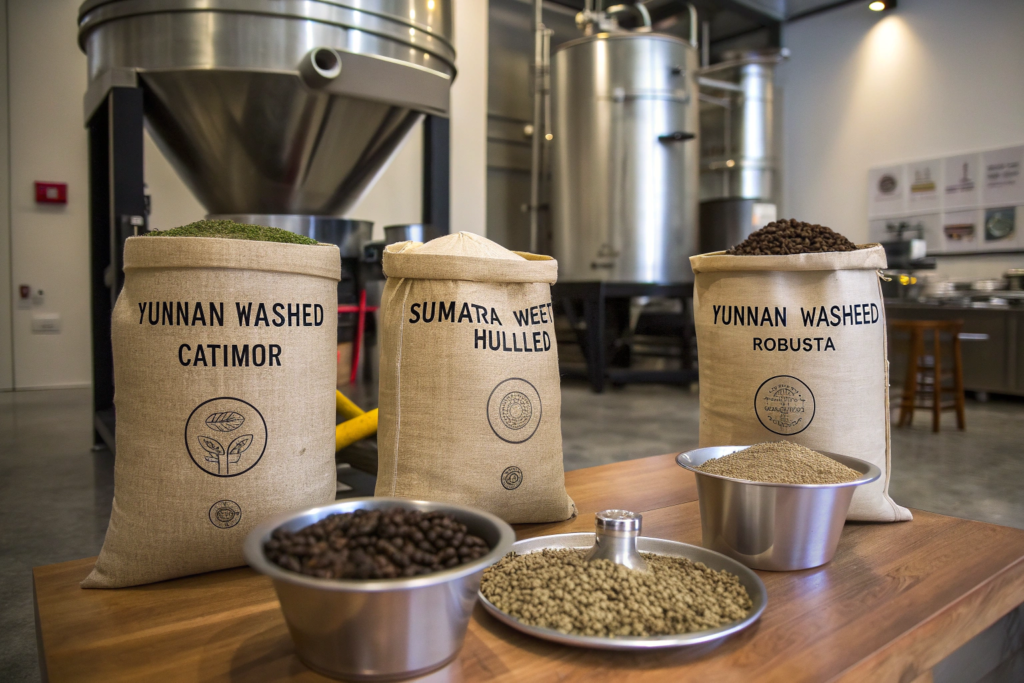
The most effective Asian espresso blends pair a washed Yunnan Catimor base at 50 to 60 percent with a wet hulled Sumatra or Sulawesi component at 20 to 30 percent, leveraging the washed coffee's clean chocolate structure and the wet hulled coffee's earthy body to create a balanced, complex shot.
A small percentage of high-grown washed Robusta—10 to 15 percent—adds crema persistence and caffeine intensity without introducing defects. The washed Robusta's clean grain note integrates better with the washed Catimor than a wet hulled Robusta would. The whole blend works together because each component plays a specific role and none overwhelms the others.
What Roast Strategies Work for Mixed-Process Blends?
Roasting a blend with both washed and wet hulled components presents a challenge. The beans have different densities, different moisture contents, and different optimal roast profiles.
The best approach is to roast each component separately to its ideal profile, then blend the roasted beans. This is called post-roast blending. The washed Catimor gets a medium-dark profile optimized for chocolate sweetness and body. The wet hulled Sumatra gets a slightly darker profile to fully develop its earthy-spice notes. The Robusta gets a medium-dark profile that emphasizes crema without introducing harsh bitterness.
Post-roast blending gives maximum control over the final cup. Each component is roasted perfectly for what it is. The blend ratio can be adjusted easily without changing roast profiles. The downside is that it requires running three separate batches, which increases production time.
Some roasters prefer pre-roast blending—mixing the green beans and roasting them together. This is simpler and faster but requires compromises. The roast profile cannot be optimal for all components simultaneously. The wet hulled beans, being softer, will roast faster than the washed beans. The result is often acceptable but not as refined as post-roast blending.
I recommend post-roast blending for premium espresso blends where quality is the primary concern. Pre-roast blending works for higher-volume, more affordable blends where production efficiency matters more. Test both approaches and cup the results. Your palate will tell you which is right for your brand. For more on blending strategies, Perfect Daily Grind has published articles on pre-roast versus post-roast blending approaches used by specialty roasters.
How Should You Source Consistent Wet Hulled Coffee from Indonesia?
Consistency is the challenge with wet hulled coffee. The processing method, by its nature, introduces more variability than washed processing. The final cup depends on the initial drying weather, the hulling timing, the final drying conditions, and the cleanliness of the drying surfaces.
To source consistent wet hulled lots, work with an importer who has a direct relationship with a specific collector or mill in Sumatra or Sulawesi. The best lots come from collectors who buy cherry from a defined group of farmers and process it to a consistent standard. Generic "Sumatra Mandheling" bought on description alone will vary wildly lot to lot.
Cup every arrival before committing. Do not assume this year's lot will taste like last year's. The sensory profile of wet hulled coffee shifts more season to season than washed coffee. A pre-shipment sample is non-negotiable.
Build a relationship with the supplier. When you find a wet hulled lot that performs perfectly in your blend, book it. Secure the volume. Ask the supplier to set aside a similar lot from the same collector for the next harvest. Consistency in wet hulled sourcing comes from relationships, not from spot buying.
The Shanghai Fumao team can coordinate sourcing of Indonesian wet hulled components alongside our Yunnan washed base and Robusta. We cup every lot we source and provide detailed cupping notes so you know exactly what you are adding to your blend.
Conclusion
Wet hulling and washed processing are not just different methods. They create different products. Washed coffee, dried slowly in its protective parchment, becomes clean, bright, and balanced. Wet hulled coffee, stripped naked while still wet and dried as a bare bean, becomes dark, earthy, heavy-bodied, and spicy. Both have value. Both have a place in a serious espresso program.
Understanding the difference allows you to buy better, roast better, and blend better. You can identify a wet hulled bean by its dark mottled color and soft texture. You can predict its lower density and adjust your roast profile accordingly. You can pair it with a clean washed base and a crema-enhancing Robusta to build an espresso blend that has depth, complexity, and body.
The key is sourcing each component from a supplier who understands the processing method and can deliver consistency. Wet hulled coffee fades faster, so buy it fresh and use it quickly. Washed coffee holds quality longer, so it makes a reliable base. Manage your inventory with these different shelf lives in mind.
If you are building or refining an Asian espresso blend and want to taste the difference between washed Yunnan Catimor and wet hulled Indonesian Arabica side by side, contact Cathy Cai at BeanofCoffee. She can arrange sample kits with both processing types, along with cupping notes, roast recommendations, and suggested blend ratios. She also handles sourcing coordination for Indonesian wet hulled lots alongside our Yunnan components. Her email is cathy@beanofcoffee.com. She responds quickly and will help you find the right components for your blend.