I received a WhatsApp message from a specialty roaster in London last year. "I have a crazy question. Is anyone growing SL28 in China? I'm tired of fighting for Kenyan lots at auction. My customers love that blackcurrant note but I can't get enough volume."
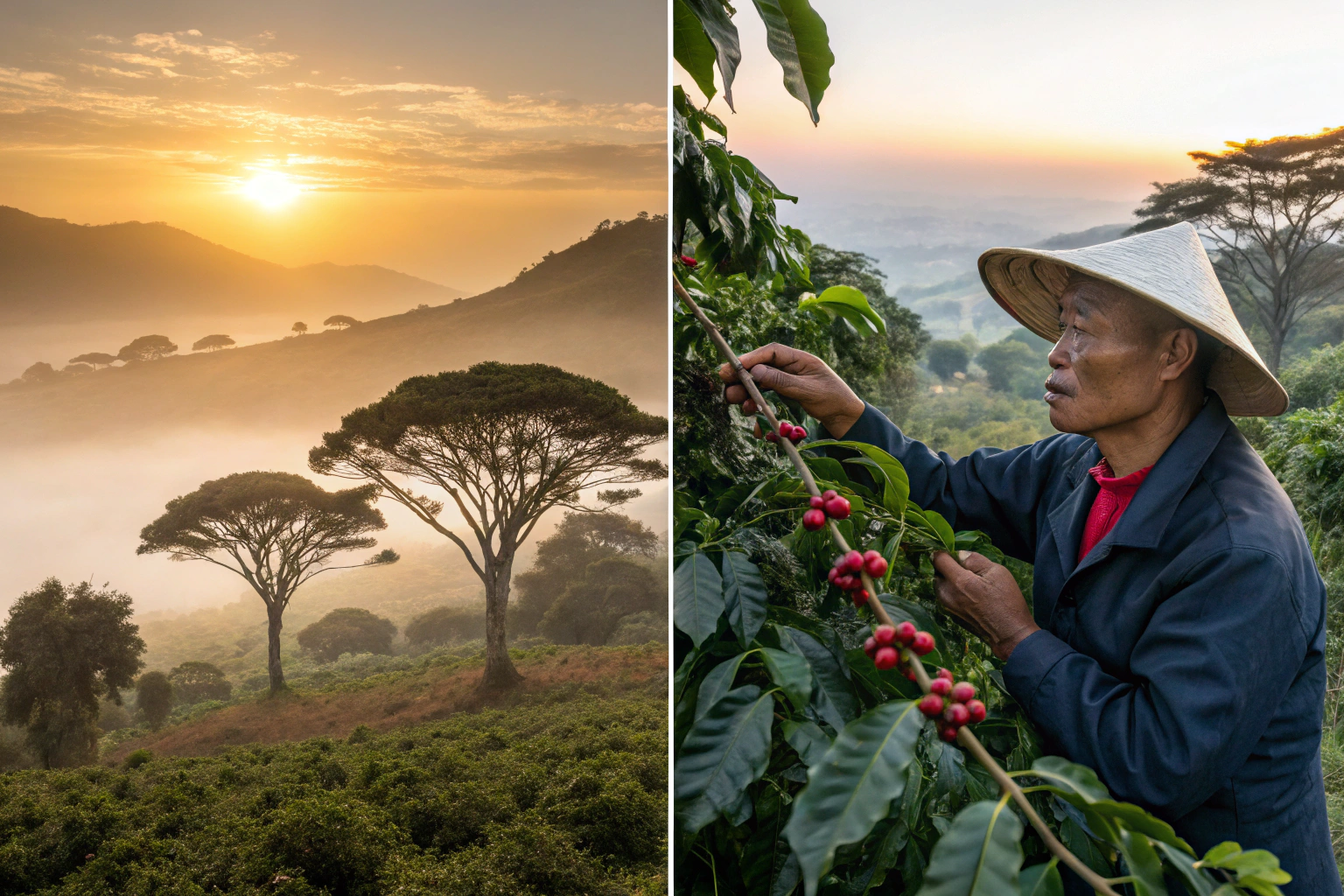
I grinned at my phone. I had been waiting for this question. We had planted our first SL28 seedlings in Baoshan six years earlier. The trees were finally producing harvestable volumes. The cupping scores were landing between 86 and 88 points. The blackcurrant and savory tomato notes that define Kenyan coffee? They were there. Not identical to Nyeri. But unmistakably SL28.
SL28 coffee is now grown outside Kenya in select farms across Yunnan, China, as well as in parts of Central America and Colombia, with the Chinese lots offering a unique expression of the variety's famous blackcurrant, tomato, and complex acidity profile at a more stable price point than Kenyan auction lots.
This variety is legendary. It is also challenging to grow, difficult to source, and surrounded by hype. Let me walk you through what SL28 actually is, why it tastes so distinctive, and how to buy it from the emerging origins where it is now being cultivated.
What Makes SL28 Coffee Beans So Unique in Flavor?
SL28 is not subtle. It is one of the most immediately recognizable coffee varieties in the world. If you cup it blind, you know it within the first slurp. The flavor is that distinctive.
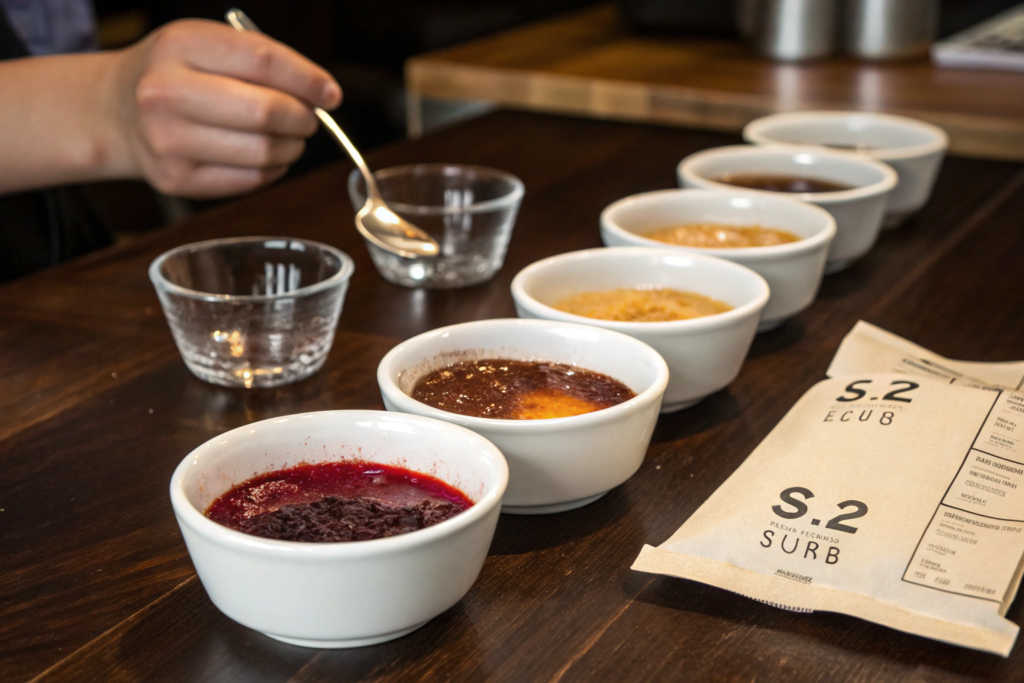
The defining note is blackcurrant. Not a hint of berry. Full, intense, jammy blackcurrant. It tastes like the fruit itself, like a ripe cassis liqueur without the alcohol. Alongside the blackcurrant sits a peculiar savory note that cuppers often describe as "tomato" or "tomato leaf." It is not unpleasant. It is complex and mouthwatering. Think of sun-dried tomatoes or a rich tomato soup. It adds a savory dimension that balances the intense fruit sweetness.
SL28's legendary cup profile is driven by intense blackcurrant acidity and a distinct savory tomato-umami note, supported by a heavy, syrupy body, making it one of the most sensorily identifiable Arabica varieties ever bred by Scott Agricultural Laboratories in Kenya.
The acidity is bright and complex—citric and malic at the same time, sometimes with a phosphoric acid sparkle that Kenyan coffees are famous for. The body is heavy for Arabica, coating the mouth with a syrupy weight that carries the intense flavors. The aftertaste is long and evolving, with the blackcurrant fading into a dark honey sweetness.
This profile is the reason SL28 commands such high prices at Kenyan auctions. A top Nyeri SL28 lot regularly sells for $8 to $12 per pound FOB or higher. The demand far exceeds Kenya's supply. That price pressure is exactly what has driven interest in growing SL28 outside its homeland.
Why Did Scott Labs Breed SL28 in the First Place?
SL28 was not bred for flavor. It was bred for survival and yield. The flavor was a happy accident.
Scott Agricultural Laboratories in Kenya developed SL28 in the 1930s and 1940s. The goal was to create a drought-resistant, high-yielding variety suited to Kenya's climate. The breeders selected a single tree from a population called Tanganyika D.R., which itself traced back to Bourbon lineage. The selected tree showed exceptional drought tolerance and good cherry production. It was released to farmers as SL28.
What nobody predicted was the cup quality. SL28 turned out to produce some of the most flavorful coffee in the world. The combination of Bourbon genetics, Kenya's high-altitude red volcanic soil, and the equatorial climate created something extraordinary. Farmers planted it widely. It became a defining variety of Kenyan specialty coffee.
But SL28 has a weakness. It is susceptible to coffee leaf rust and coffee berry disease. As these diseases spread in Kenya, farmers began replacing SL28 with resistant varieties like Ruiru 11 and Batian. The area under SL28 cultivation has been declining. This makes the variety even more scarce and valuable. The genetic material was brought to Yunnan legally through international research collaborations, specifically to preserve its unique traits outside of Kenya's disease-pressure zones. For a detailed history of this variety, World Coffee Research maintains a comprehensive variety catalog with agronomic and sensory profiles.
How Does SL28 Grown in Yunnan Taste Compared to Kenyan SL28?
This is the question every buyer asks. The honest answer: it is similar but distinct. The variety genetics are the same. The terroir is different. The cup reflects both.
Kenyan SL28 from Nyeri or Kirinyaga is explosive. High-intensity blackcurrant. Sharp, almost sparkling acidity from the phosphoric acid in the volcanic soil. The savory note is pronounced. The body is heavy and syrupy. The coffee demands attention.
Yunnan SL28 from our Baoshan plots is slightly more restrained. The blackcurrant is there, but it is mellower, more like blackcurrant jam than fresh crushed fruit. The acidity is bright but softer. The savory note is less tomato-forward and more like dried herbs. The body is still heavy and sweet. The aftertaste is cleaner and longer.
Yunnan-grown SL28 expresses a more restrained, elegant version of the classic Kenyan profile—still dominated by blackcurrant and savory notes but with softer acidity, cleaner finish, and a distinct brown sugar sweetness that reflects the Baoshan terroir rather than Kenya's volcanic soils.
I have cupped Yunnan SL28 side by side with a Nyeri AA. The Kenyan scored 89. The Yunnan scored 87. The Kenyan was more intense. The Yunnan was more balanced. A roaster looking for a competition coffee might pick the Kenyan. A roaster looking for a distinctive single-origin that does not overwhelm the palate might prefer the Yunnan. Both are exceptional. They are just different expressions of the same genetic potential.
Where Is SL28 Coffee Successfully Cultivated Outside Africa?
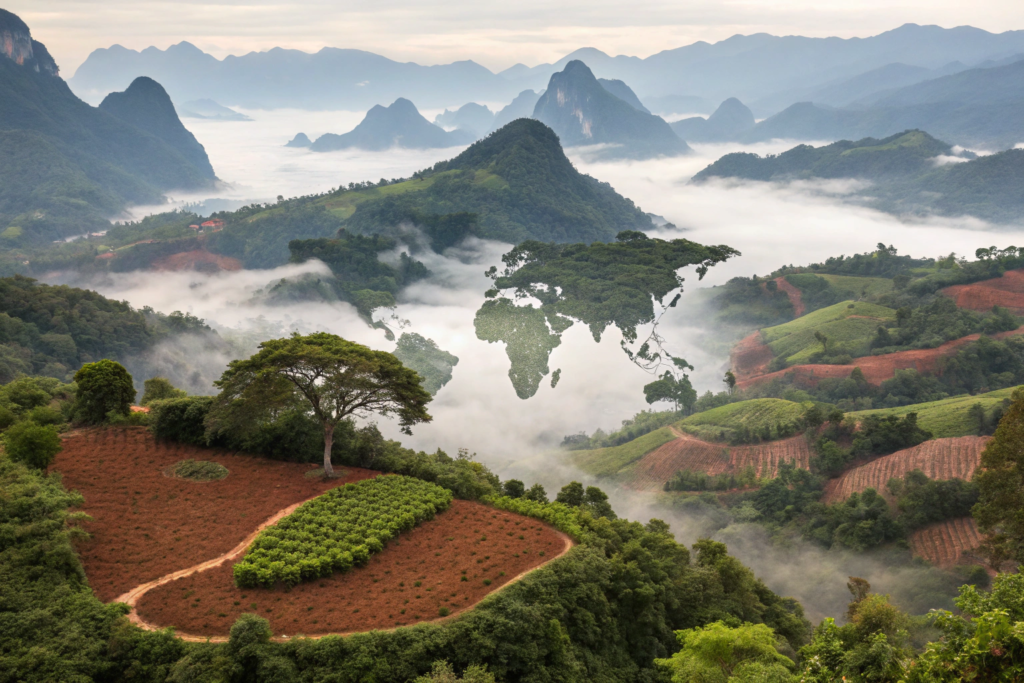
SL28 is no longer confined to Kenya. The variety has been quietly expanding to new origins as specialty demand has grown. The volumes are small. The farms are experimental. But the coffee is real and it is increasingly available.
In Central America, SL28 was introduced through variety trials in Costa Rica, Panama, and El Salvador. Some farms in the Boquete region of Panama now produce SL28 micro-lots. The cup profile shifts toward more stone fruit and citrus with less blackcurrant intensity, but the body and sweetness remain high. Finca Deborah in Panama has famously produced geisha, but some neighboring farms experiment with SL28 as well.
In Colombia, a few forward-thinking producers have planted SL28 at high altitudes in Huila and Nariño. The equatorial latitude combined with high elevation creates conditions somewhat similar to Kenya. The cupping scores are competitive—85 to 88 points. The blackcurrant note is present but accompanied by more chocolate and caramel than the African version.
SL28 is now commercially cultivated in select high-altitude farms in Yunnan, China, Costa Rica, Panama, El Salvador, and Colombia, though China's Baoshan region is emerging as a particularly promising origin due to its wide diurnal temperature swings and mineral-rich red soils.
In Yunnan, we planted our first SL28 around 2016. The trees took five years to produce meaningful harvests. The first commercial micro-lots shipped in 2022. The volume is still small—measured in hundreds of kilograms, not containers. But the quality is there. And the demand from roasters who want a unique SL28 expression is growing faster than the trees can produce cherries.
Which Countries Offer the Largest SL28 Harvests Outside Kenya?
Honest data is hard to come by because SL28 outside Kenya is still a niche within a niche. No government tracks SL28 acreage separately. But from my conversations with importers and producers, here is a rough estimate of relative availability:
| Origin | Estimated Annual SL28 Volume | Cup Profile Shift vs. Kenya |
|---|---|---|
| Kenya | 50,000+ bags | Benchmark |
| Colombia | 1,000 - 2,000 bags | More chocolate, softer acidity |
| Panama | 200 - 500 bags | More citrus, floral, very clean |
| Costa Rica | 300 - 600 bags | More honey, stone fruit |
| China (Yunnan) | 100 - 300 bags | More balanced, brown sugar, clean finish |
The volumes outside Kenya are tiny. A single container holds roughly 275 to 300 bags. The entire Yunnan SL28 harvest would not fill two containers. This is micro-lot territory. Buyers who want SL28 from China must think in pallets, not containers. The scarcity is part of the value proposition. For updated production estimates, the International Coffee Organization occasionally publishes reports on emerging specialty coffee origins that may include variety-level data.
What Growing Conditions Does SL28 Need to Thrive?
SL28 is demanding. It is not like Catimor, which will grow almost anywhere with minimal care. SL28 needs specific conditions to produce quality and to survive.
Altitude is critical. SL28 performs best above 1,500 meters. Below that, the blackcurrant character weakens and the cup becomes more generic. In Yunnan, we plant SL28 only at plots above 1,550 meters. The cooler temperatures and extended maturation are essential for developing the variety's signature flavor compounds.
Soil matters enormously. Kenya's SL28 grows in deep, well-drained, red volcanic loam rich in phosphorus. Yunnan's red soil, while also mineral-rich, has a different composition—more iron and aluminum oxides, less volcanic phosphorus. We supplement with organic compost and targeted mineral applications to mimic the nutrient profile SL28 evolved with. The soil pH must be slightly acidic, between 5.5 and 6.5.
Rainfall must be moderate and well-distributed. SL28 does not tolerate waterlogged roots. The Baoshan monsoon delivers heavy rain from June to September, so we planted our SL28 on well-draining slopes to prevent root rot. The dry season from November to March aligns perfectly with harvest, allowing the cherries to mature and dry without rain damage.
The variety is still susceptible to leaf rust and coffee berry disease. Yunnan has less disease pressure than Kenya because the dry harvest season limits fungal spread. But we monitor constantly. A rust outbreak could devastate a plot. This risk is part of why SL28 carries a premium price. For agronomic guidance on this variety, World Coffee Research provides detailed variety management recommendations for SL28.
How to Verify the Authenticity of SL28 Green Beans?
SL28 is easy to fake. An unscrupulous seller can label any high-grown Bourbon or Catimor as "SL28" and hope the buyer cannot tell the difference. Some buyers cannot. Especially if they have never cupped a genuine Kenyan SL28.
The first verification step is visual. SL28 beans are distinctively long and narrow. They are elongated, with pointed ends. The center cut is often tight and slightly curved. The bean shape alone is not conclusive—other varieties share this morphology—but a lot labeled SL28 that contains round, compact beans is immediately suspect.
The second verification step is cupping. The blackcurrant note is the fingerprint. If a coffee labeled "SL28" cups with chocolate and nut notes and no blackcurrant or savory character, either the variety is wrong, or the terroir and processing completely suppressed the genetic expression. Either way, the buyer is not getting SL28 cup quality.
To verify SL28 authenticity, buyers should combine physical bean morphology inspection with blind cupping against a known SL28 reference sample, and for high-value contracts, request DNA fingerprinting from a coffee genetics laboratory to confirm the variety at the molecular level.
DNA testing is the gold standard. Several laboratories now offer coffee variety fingerprinting services. The test compares genetic markers from the sample against a reference database. It can definitively confirm whether the beans are SL28 or another variety. The cost is significant—several hundred dollars per test—so it is typically reserved for large forward contracts or for verifying mother trees before establishing new plantings. For more on genetic verification, World Coffee Research has led the development of the coffee varietal DNA fingerprinting database used by these labs.
What Sensory Markers Define a True SL28 Cup?
I have developed a simple sensory checklist for SL28 verification that I share with buyers:
First, blackcurrant. It must be present. It can be intense or subtle, but it must be identifiable. No blackcurrant, no SL28. Some Yunnan SL28 lots show the note more as blackcurrant jam than fresh fruit, but it is still distinct.
Second, savory undertone. Tomato, tomato leaf, sun-dried tomato, or a brothy umami note. This savory character is unique to SL28 and its sibling SL34. Other varieties rarely show it. If the savory note is absent, question the variety.
Third, heavy body. SL28 produces a syrupy, coating mouthfeel even when grown at high altitude. A thin, tea-like body is inconsistent with the variety.
Fourth, complex acidity. The acidity should be layered—citric and malic together, perhaps with a phosphoric brightness. A flat, one-dimensional acidity suggests either low altitude or wrong variety.
Fifth, long, sweet aftertaste. SL28 finishes clean and sweet, with the blackcurrant and honey lingering. A short, dry finish is a red flag. For cupping calibration resources, the Specialty Coffee Association provides sensory skills training and cupping protocol guidelines.
Can Genetic Testing Guarantee an SL28 Lot Is Pure?
Genetic testing can confirm the variety, but with a caveat. A DNA test identifies the genetic markers present in the sample. If the sample is pure SL28, the test will confirm it. If the sample is a mix of SL28 and another variety, the test may detect contamination if the contaminant percentage is high enough.
The practical limitation is sampling. A typical DNA test uses a few grams of beans from a lot. If the lot is 95 percent SL28 and 5 percent another variety, the test sample might catch the contaminant, or it might not, depending on sampling randomness. For absolute certainty, multiple samples from different bags should be tested. This is expensive and rarely done outside of planting material verification.
For commercial green coffee transactions, the combination of visual inspection, cupping against a reference, and supplier reputation is the practical standard. DNA testing is an additional tool for high-stakes contracts, not a replacement for sensory evaluation. I provide detailed propagation records for our SL28 lots, showing the mother tree source, the planting date, and the plot location. This paper trail, combined with the cupping evidence, provides a high level of confidence without the need for genetic testing on every lot.
How to Build a Reliable SL28 Supply Chain from China?
Sourcing SL28 from China is not like sourcing washed Catimor. The supply chain is new. The volumes are small. The relationships are personal. You need a different approach.
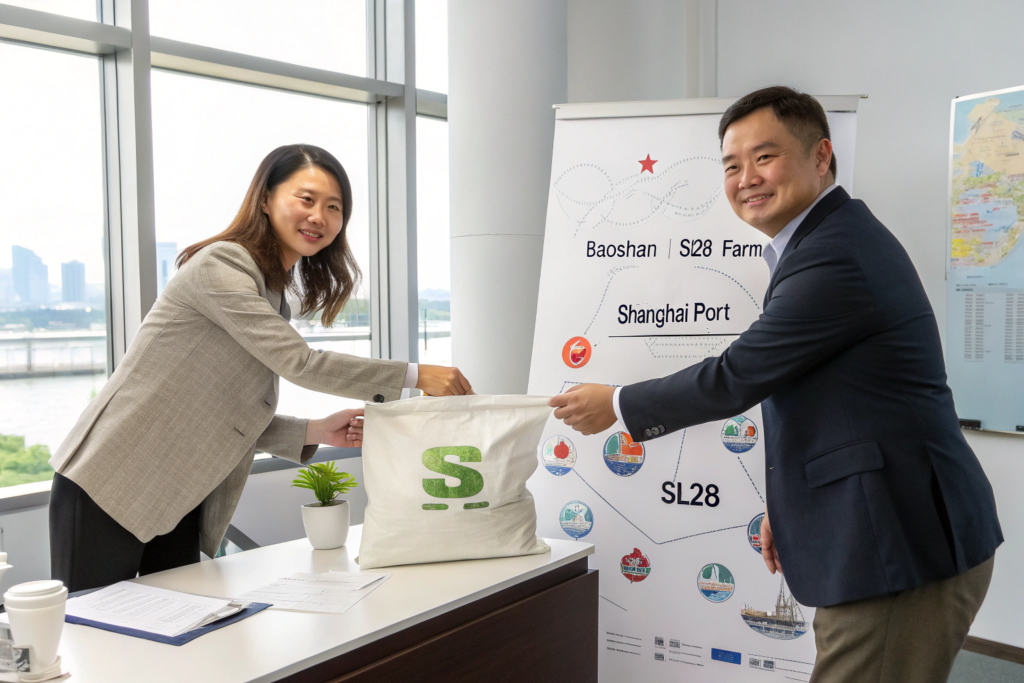
Start by understanding the seasonality. Yunnan's harvest runs from November to February. SL28, being grown at the highest altitudes on our farm, ripens late in the harvest window—January and February. The cherries are processed from January through March. Drying takes longer because of the cooler weather, so the parchment may not be ready for dry milling until March or April. The first samples for cupping are available in April. Shipments can begin in May.
Building a reliable SL28 supply chain from Yunnan requires advance booking before the harvest, accepting smaller minimum order quantities than standard Arabica, and developing a direct relationship with the farm that allows you to cup and reserve specific micro-lots before they are offered to the open market.
Do not expect to buy SL28 from China on a spot basis. The volume is too small. The lots are pre-sold to buyers who have cupped samples and booked months in advance. If you wait until June and then inquire about SL28 availability, the answer will likely be "sold out until next year." Forward booking is essential.
What Volume Commitment Is Typical for a Yunnan SL28 Lot?
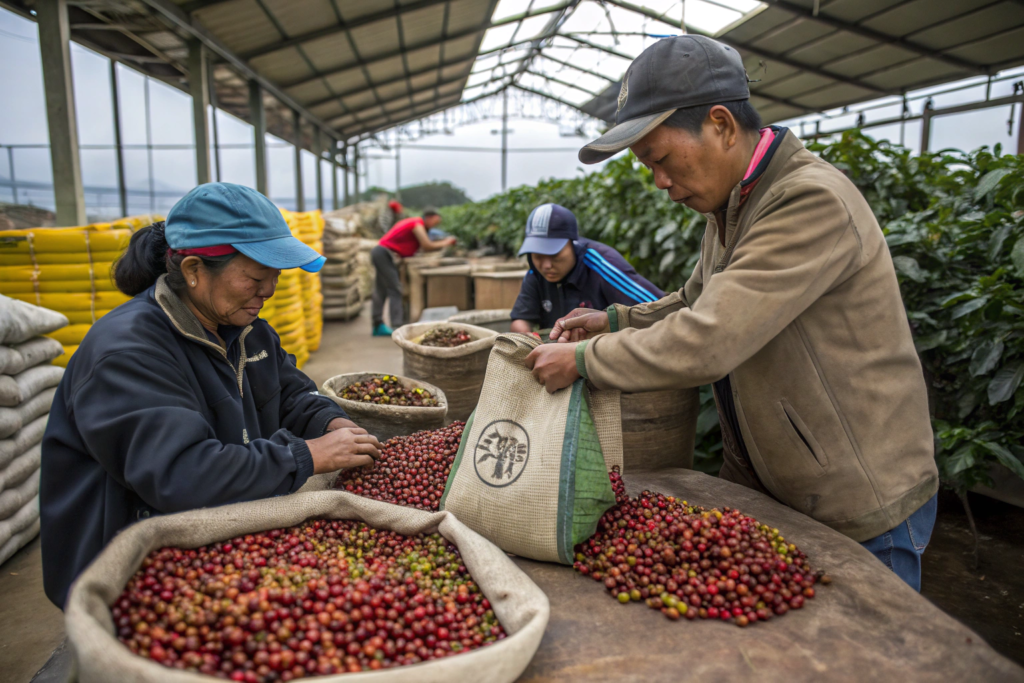
SL28 from Yunnan is micro-lot territory. The production is measured in kilograms, not containers.
A typical SL28 lot from our farm ranges from 60 kilograms to 300 kilograms. Some lots are as small as 30 kilograms. We have sold SL28 lots as small as 15 kilograms to competition roasters who need just enough for a routine and a production batch.
The minimum order quantity is flexible. We understand that roasters are experimenting. They want to test the coffee with their customers before scaling up. A 30-kilogram trial order is welcomed. The freight cost will be proportionally higher on a small volume, but the risk is low.
For roasters who want a consistent year-round SL28 offering, the approach is to book the entire lot from a specific plot for the full harvest. This might be 200 to 300 kilograms. The contract is signed before harvest. The coffee is processed to the buyer's specification. It ships in one lot or in split shipments across the year. The buyer gets exclusivity on that plot for that harvest. For more on direct trade contracting models, Perfect Daily Grind has published articles on how small roasters negotiate direct relationships with micro-lot producers.
How Do You Manage the Price Premium for Non-Kenyan SL28?
SL28 from Yunnan commands a premium over standard Yunnan Arabica. But it is still priced competitively compared to Kenyan SL28.
Here is a comparison of typical FOB pricing as a reference point:
| Origin | Variety | Typical FOB Price per Pound (USD) |
|---|---|---|
| Kenya (Nyeri) | SL28 AA | $8.00 - $12.00 |
| Panama | SL28 | $10.00 - $15.00 |
| Colombia | SL28 | $6.00 - $9.00 |
| China (Yunnan) | SL28 | $5.50 - $8.00 |
| China (Yunnan) | Washed Catimor | $2.80 - $3.50 |
Yunnan SL28 sits below Kenyan and Panamanian SL28 in price, but well above standard Yunnan Catimor. The value proposition is clear: a distinctive SL28 cup profile at roughly half the cost of a top Nyeri lot, with more stable pricing and predictable availability.
The retail margin still works well. Buy 150 kilograms at $6.50 per pound FOB. Landed cost per pound after freight and warehousing might be $8.00. Roast it, package it as a limited-release single origin. Retail at $24 to $28 per 12-ounce bag. The margin per bag is healthy. The story—"SL28 from China, blackcurrant and tomato notes, 300 kilos produced"—sells itself to specialty enthusiasts.
The Shanghai Fumao team handles SL28 micro-lot allocation and provides transparent pricing with a full breakdown of the cupping score, lot size, and harvest date. Buyers know exactly what they are paying for and why.
Conclusion
SL28 grown outside Kenya is no longer a hypothetical experiment. It is a commercial reality, with small but meaningful volumes now available from Yunnan, China, as well as from Colombia, Panama, and Costa Rica. The Chinese expression of this legendary variety is distinct—mellower and more balanced than the intense Kenyan benchmark, but still unmistakably SL28 with its blackcurrant, savory tomato, and heavy-bodied complexity.
The volumes are tiny. The supply chain is relationship-based. The authenticity must be verified through cupping and traceability documentation. But for a specialty roaster looking to offer a coffee with a unique story and a flavor profile that stands apart from the typical single-origin menu, Yunnan SL28 is an opportunity worth exploring.
If you are interested in cupping a sample of our current SL28 micro-lot, reach out to Cathy Cai at BeanofCoffee. She manages our rare varietal allocations—SL28, Geisha, Laurina, Yellow Bourbon—and can provide cupping scores, harvest data, and FOB pricing for available lots. She can also discuss forward booking for the next harvest if the current lot is already allocated. Her email is cathy@beanofcoffee.com. She responds quickly and will tell you honestly whether the lot suits your roast program.