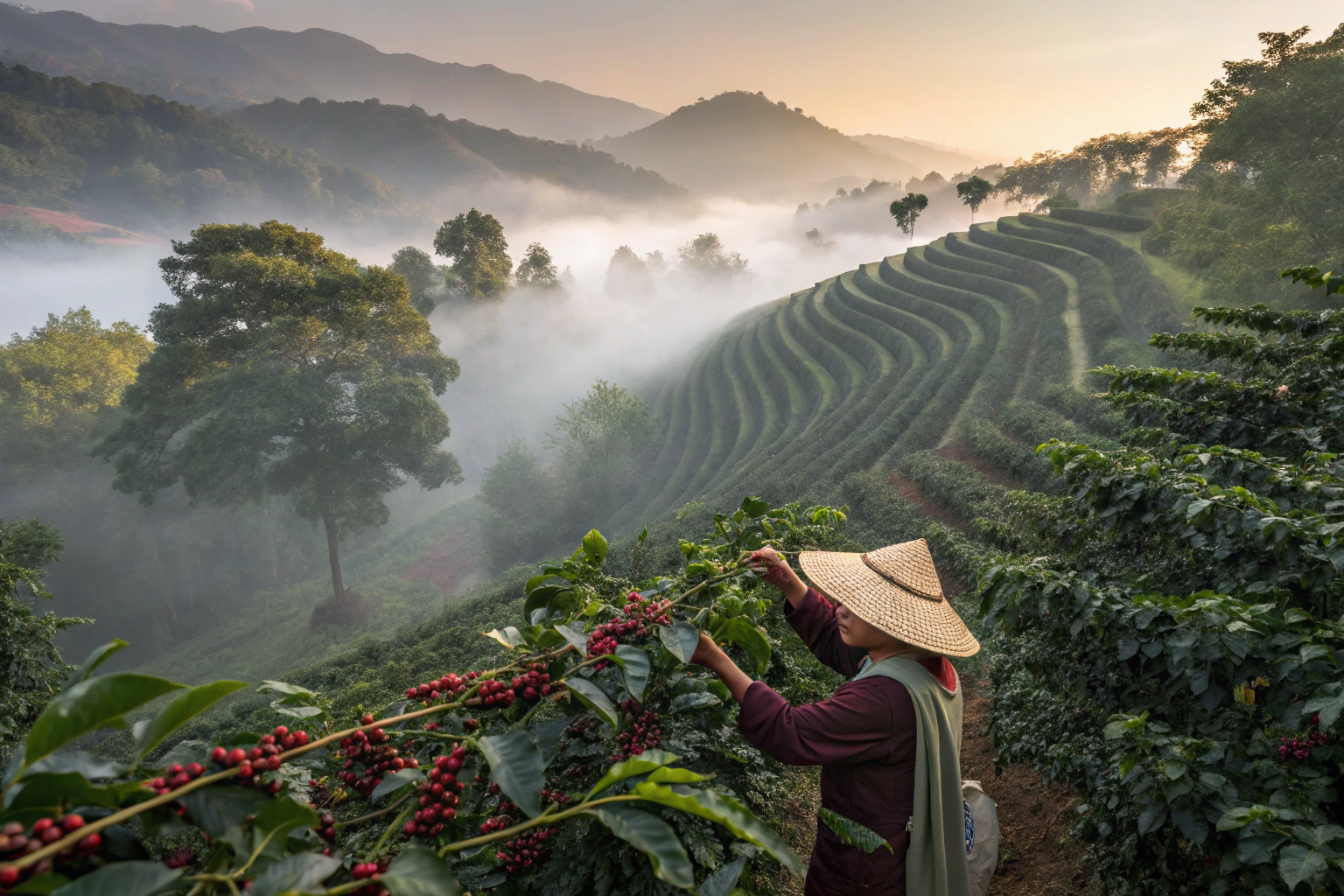
I grew up in Baoshan. My grandfather was one of the first farmers in our village to plant coffee. Back then, people thought he was crazy. “Tea is what grows here,” they said. “Why coffee?” But he saw something in the land. The altitude. The soil. The mist that rolls in every morning. He planted a few acres of Arabica. And slowly, the coffee grew. Now, our family owns over 10,000 acres. Baoshan is known as one of China’s premier coffee regions. And honestly? I think we’re just getting started.
So, how is coffee grown in Baoshan, Yunnan? It’s grown in the mountains, between 1,000 and 1,600 meters above sea level. The climate is perfect—warm days, cool nights, distinct wet and dry seasons. Most farms use shade-grown methods, with native trees protecting the coffee from too much sun. Harvest is manual. Pickers go through the fields multiple times, selecting only the ripest cherries. Then the processing begins. It’s traditional, patient work. And it produces coffee with a unique character—bright, clean, with a smooth body and notes of stone fruit and chocolate.
Let me take you through how we grow coffee in Baoshan. I’ll explain the geography, the farming methods, the harvest, and the processing. This isn’t just a story. It’s the foundation of every bean we export.
Why Is Baoshan’s Geography Ideal for Growing Coffee?
Baoshan, nestled in the rugged embrace of western Yunnan, lies tantalizingly close to the mist-shrouded border with Myanmar. It is a land where towering, emerald-green mountains claw at the sky, their peaks often veiled in ethereal morning mists, and meandering rivers—glistening like silver threads—carve through fertile valleys, their waters singing softly as they wind their way to distant horizons.
This dramatic interplay of steep, sun-dappled slopes and life-giving waterways has forged an environment of unparalleled richness and balance. The air here hums with the earthy scent of damp soil and blooming wildflowers, while the gentle rustle of leaves and the distant trill of exotic birds create a symphony of nature.
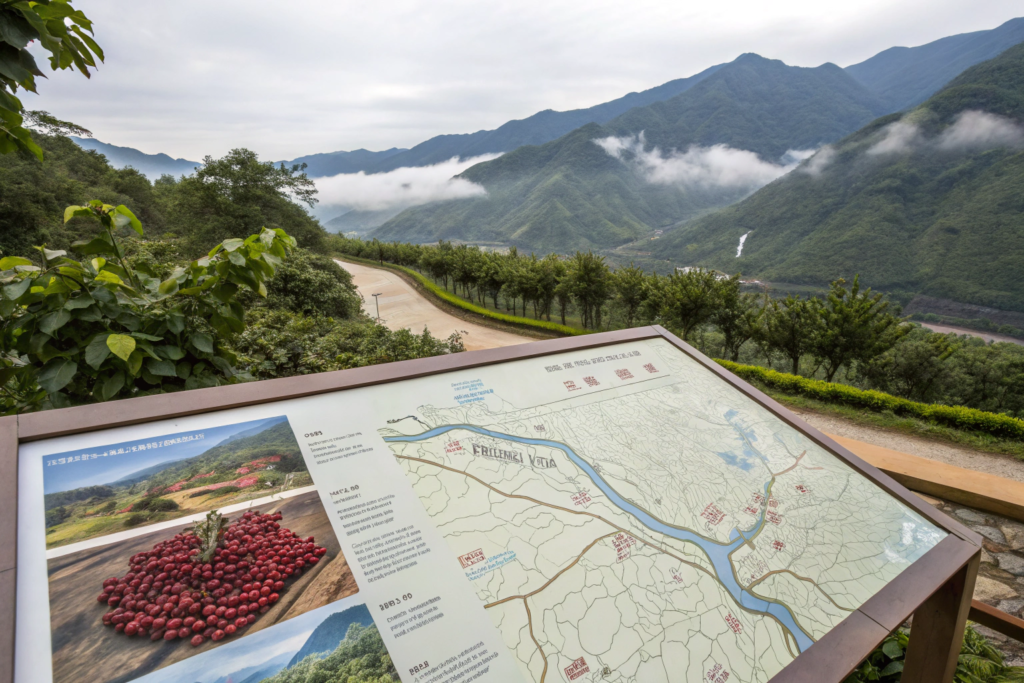
What altitude and climate make Baoshan special?
Coffee grows best at altitude. Our farms are between 1,000 and 1,600 meters above sea level. That’s the sweet spot for Arabica. High enough that the beans develop slowly, concentrating sugars and acids. Low enough that temperatures stay mild.
The climate is defined by the monsoon. We have a distinct wet season from May to October. That’s when the coffee trees flower and the cherries develop. Then we have a dry, cool season from November to April. That’s harvest time.
The temperature difference between day and night is significant. Warm days help the cherries ripen. Cool nights slow down the process, giving the beans more time to develop complex flavors. That diurnal temperature variation is one of the reasons Yunnan coffee has such a clean, bright profile.
My grandfather always said the mist is what makes Baoshan coffee special. In the mornings, fog rolls up from the valleys. It covers the farms. It keeps the trees cool. It gives the cherries a slow, steady development. You can’t replicate that.
What soil conditions support coffee in Baoshan?
The soil here is volcanic in origin, rich in minerals. It drains well, which is important. Coffee trees don’t like wet feet. They need water, but they need it to move through the soil, not sit there.
We use a lot of organic matter. Pruned branches go back into the soil. Coffee pulp from processing gets composted. We plant cover crops between the rows to prevent erosion and add nutrients. It’s not just about what we take from the land. It’s about what we give back.
One of our buyers in Europe asked me once why our coffee has such a clean finish. I told him it starts with the soil. Clean soil gives you clean coffee.
How Do We Plant and Shade Coffee in Baoshan?
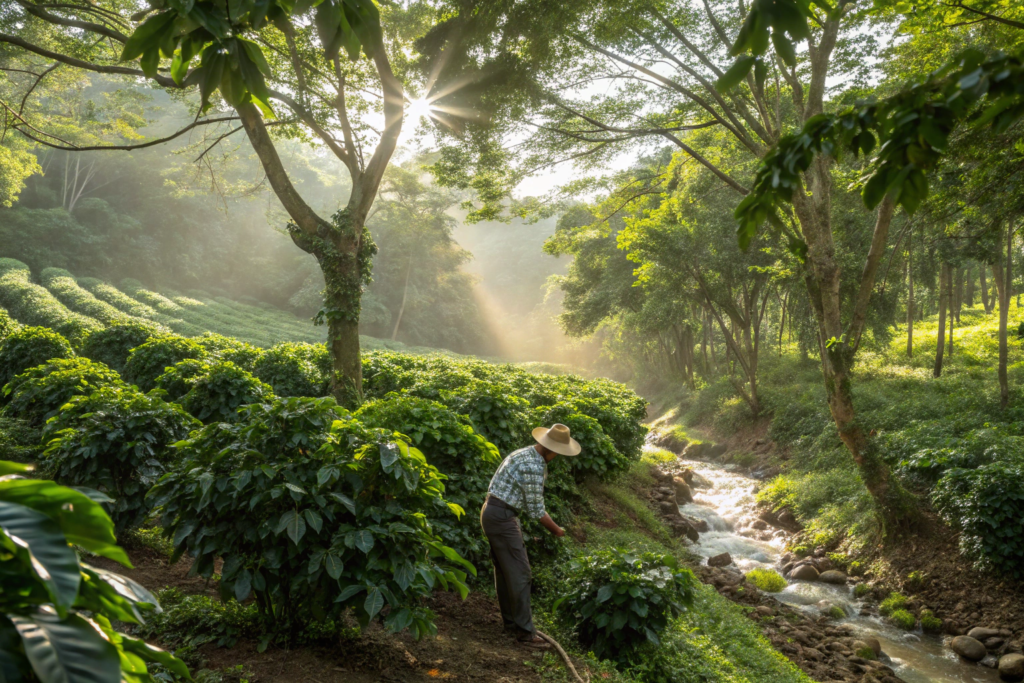
When people see our farms for the first time, they’re surprised. They expect neat, open rows of coffee trees, their trunks standing rigid and uniform under the sun, a landscape tamed and ordered by human hands. Instead, they see a forest—a lush, breathing tapestry where coffee plants weave through towering shade trees, their leaves rustling softly in the breeze like whispered secrets. Sunlight filters through the canopy in dappled gold, painting the forest floor with shifting patterns, while the air hums with the buzz of bees and the distant trill of tropical birds.
The scent of damp earth mingles with the sweet, earthy aroma of ripening coffee cherries, creating an intoxicating perfume that wraps around visitors like a warm embrace. That’s intentional. We’ve nurtured this wild, untamed beauty not to confound, but to honor the natural rhythm of growth. Here, coffee doesn’t just thrive—it dances, rooted in the rich, loamy soil and sheltered by the ancient giants above. It’s a living testament to the idea that harmony between cultivation and nature isn’t just possible; it’s profoundly delicious.
Why do we grow coffee under shade?
Shade is traditional in Baoshan. We grow native trees alongside the coffee. Albizia. Fruit trees. Indigenous species. They provide shade, which protects the coffee from too much direct sun.
Shade-grown coffee ripens more slowly. The cherries have more time to develop. The beans come out denser, sweeter, and more complex.
The shade trees also create habitat. Birds nest in them. Insects thrive. It’s a complete ecosystem. We don’t need as many pesticides because the natural predators keep pests in check.
One year, a buyer from Australia visited during harvest. He walked through our shade trees and said, “This doesn’t feel like a farm. It feels like a forest.” I told him that’s the point.
What coffee varieties do we grow in Baoshan?
We grow three main varieties.
Arabica is our specialty. Typica and Bourbon varieties. They’re classic. They produce clean, bright coffee with floral and fruit notes. These grow at the highest elevations on our farms.
Catimor is more robust. It’s a hybrid that resists disease better. It grows well at slightly lower elevations. The flavor is heavier, with chocolate and nut notes. It’s excellent for espresso blends.
Robusta we grow in smaller quantities. It’s for buyers who want body and crema. It grows at lower elevations, on the warmer parts of our land.
Each variety gets its own microclimate. We match the variety to the land. Typica on the high, cool slopes. Catimor on the mid-level hills. Robusta in the warmer valleys. That’s how we get the best out of each bean.
How Is Coffee Harvested in Baoshan?
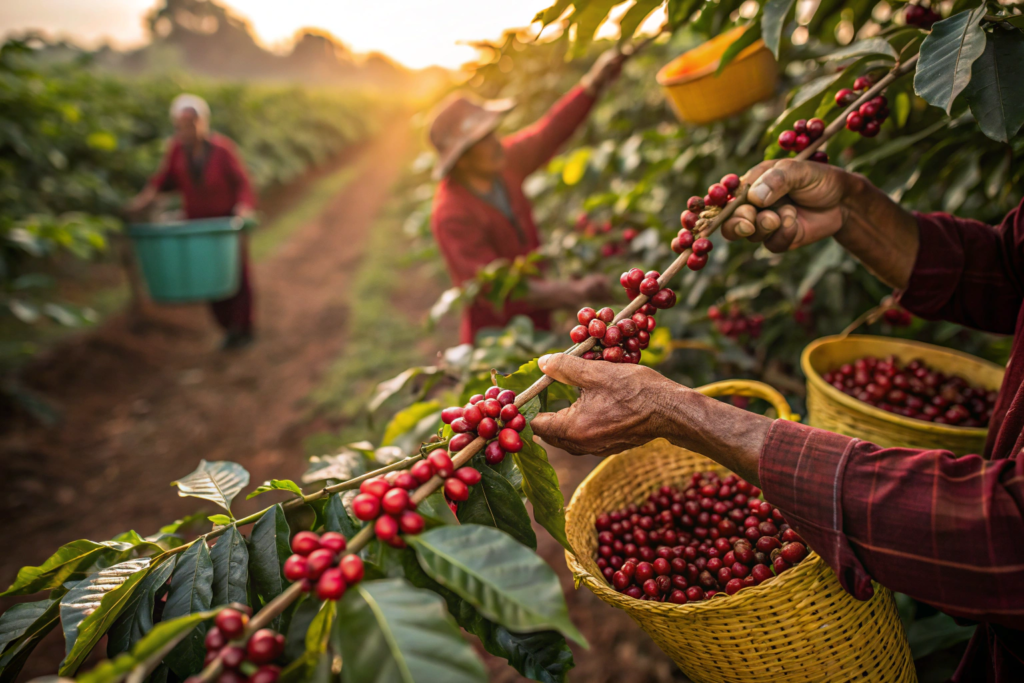
Harvest in Baoshan is manual. It always has been. And that’s not going to change. The air hums with the rhythm of human hands, fingers deftly plucking ripe fruit from gnarled branches, their movements a dance honed by generations. Machines can’t do what our pickers do. They can’t feel the subtle give of a perfectly matured mango, its skin yielding just so under gentle pressure, or the delicate touch needed to cradle a fragile lychee without bruising its tender flesh.
Why do we hand-pick coffee?
Coffee cherries don’t ripen all at once. On the same branch, you’ll find green cherries, red cherries, and sometimes overripe ones. Machine harvesting strips everything. You get unripe cherries that taste sour and overripe cherries that taste fermented.
Our pickers go through the fields multiple times. They pick only the cherries that are fully ripe. Bright red. Firm. Sweet.
I remember walking with one of our veteran pickers. She’s been with us for over 15 years. She can look at a branch and instantly see which cherries are ready. Her fingers move fast. She fills a basket in an hour. That skill can’t be replaced.
Manual picking costs more. It takes more time. But it gives us better coffee. And for our buyers, that’s worth it.
When is harvest season in Baoshan?
Harvest runs from November to March. That’s the dry season. The weather is cool and sunny. Perfect for picking.
Peak harvest is usually December and January. That’s when the farms are busiest. Everyone is in the fields. The wet mills are running non-stop.
By March, the last cherries come in. Then the processing begins. The green beans rest. And we start planning for the next season.
How Do We Process Coffee After Harvest?
Processing is where the coffee transforms from cherry to bean, a delicate alchemical dance that breathes life into the raw fruit and shapes the soul of its future cup. How we do it—whether gently submerged in water, left to sunbathe on parchment, or swaddled in its own sticky flesh—affects everything about the final flavor, from the first bright sip that dances on the tongue to the lingering warmth that wraps around the heart.
It is here, in this critical phase, that the coffee’s character is forged: the sweetness that lingers like a whispered secret, the acidity that sparkles like sunlight on a dewy morning, the body that feels rich and velvety, as if wrapped in a soft blanket. Each method carries its own story, its own touch, infusing the bean with unique nuances that will later unfold in the aroma of freshly ground coffee, the steam curling from a warm mug, and the symphony of tastes that make every cup a distinct, memorable experience.
What processing methods do we use?
We use two main methods.
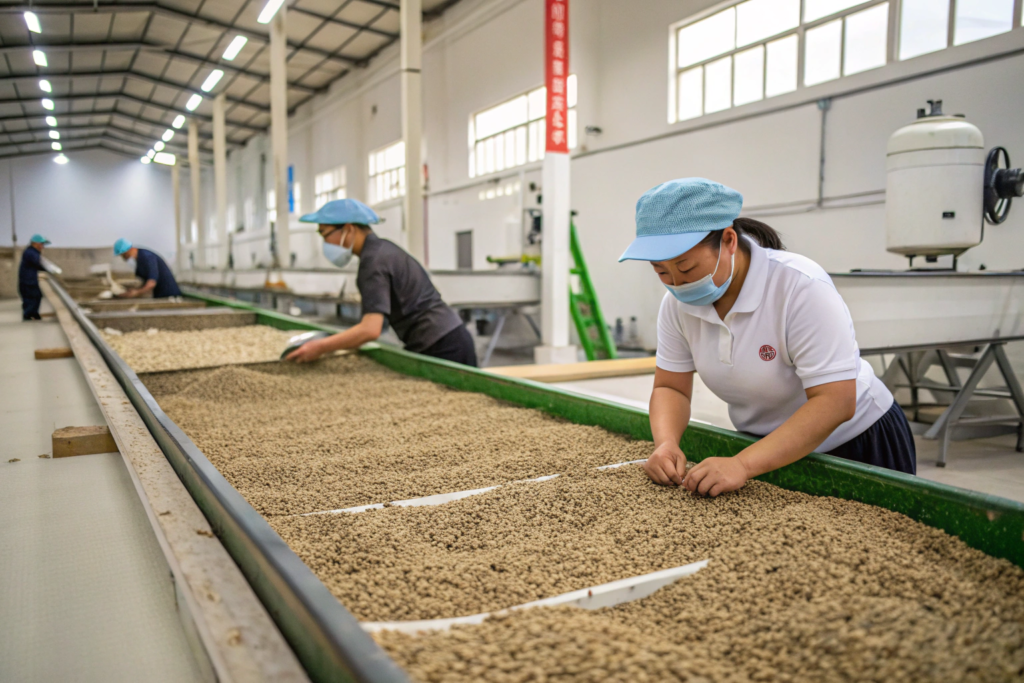
Washed processing is for our Arabica. The cherries go into a pulper that removes the skin and fruit. Then the beans ferment in water tanks for 24 to 48 hours. That breaks down the remaining mucilage. Then we wash them clean. The beans are spread on raised beds to dry in the sun.
Washed coffee is clean. The flavors are bright and distinct. You taste the origin, not the processing.
Natural processing is for some of our Catimor. The whole cherries are spread on drying beds. They dry for two to three weeks, turning regularly. The fruit dries around the bean, transferring sugars and flavors.
Natural coffee is heavier. Fruity. Sometimes wine-like. It takes more skill to do well because you have to avoid over-fermentation.
We also do honey processing for small specialty lots. That’s somewhere in between. Some mucilage is left on the bean during drying. It adds sweetness and body.
How do we ensure quality during processing?
Quality starts at the wet mill. We float the cherries first. The ones that sink are ripe. The ones that float are discarded.
During drying, we monitor moisture content constantly. We use digital meters. We turn the beans regularly to ensure even drying.
After drying, the beans rest in parchment for 30 to 60 days. That stabilizes the moisture. Then they go to the dry mill for hulling, grading, and sorting.
Every lot is cupped. We taste it. We grade it. We only export coffee that meets our standards. If it doesn’t, we don’t sell it. Simple as that.
Conclusion
Growing coffee in Baoshan is a mix of tradition and patience. We work with the land, not against it. We hand-pick our cherries. We process them carefully. We let them rest. And at the end, we cup every lot to make sure it’s right.
This is how my grandfather grew coffee. This is how we grow it now. And this is how we’ll grow it in the future. Because quality isn’t something you can rush.
At Shanghai Fumao, we control everything from the soil to the shipment. That’s what our 10,000 acres give us. Scale. Control. Consistency. And the freedom to do things the right way. If you want to taste what that produces, let’s talk. We have fresh crop available now. Samples are ready.
Reach out to Cathy Cai. She can set up a cupping and walk you through our current lots. Her email is: cathy@beanofcoffee.com.