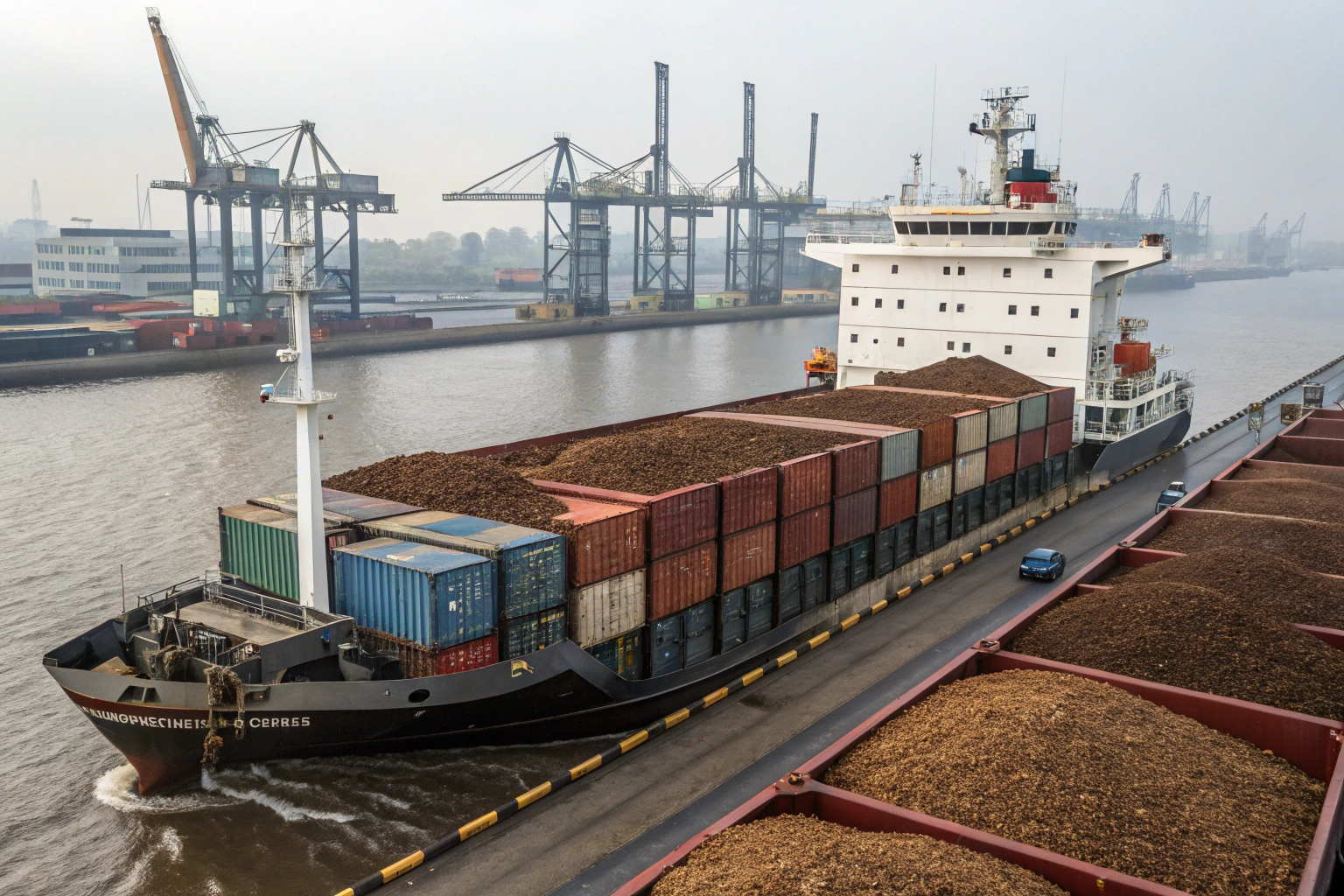
A roaster in Hamburg emailed me last month in a panic. His Colombian shipment had been delayed by three weeks due to port strikes. He was running out of his house blend base. He asked me, "If I order a container from you today, when will it actually be on my roastery floor?" I gave him the timeline, and he was surprised. Not because it was slow. Because it was faster and more predictable than the route he'd been relying on for years. The pain he felt—uncertainty, stockouts, frantic replanning—is one of the main reasons European roasters are adding Chinese coffee to their sourcing mix.
Coffee bean shipping from China to Europe typically takes 28 to 35 days door-to-door from a Yunnan mill to a major European port like Hamburg, Rotterdam, or Antwerp. The ocean transit itself is 22 to 28 days, plus 2-3 days for inland trucking in China, 2-4 days for European port clearance and final delivery. With rail freight options, the total transit can drop to 18-22 days.
The timeline is competitive with, and often more reliable than, routes from East Africa or South America. China's port infrastructure, dense shipping schedules, and streamlined customs procedures create a supply chain that runs on predictable rhythms. I ship containers from our 10,000-acre farm in Baoshan, Yunnan to European roasters every month. I know the timeline because I track every vessel, every handoff, every customs clearance. Let me walk you through the exact journey, mode by mode, so you can plan your inventory with confidence.
What Are the Main Shipping Routes from China to Europe?
There isn't one route. There are three viable options for moving green coffee from China to Europe, and each has a different time, cost, and risk profile. Understanding these options lets you choose the one that best matches your inventory needs and budget.
The three main shipping routes from China to Europe are: ocean freight via the Suez Canal (22-28 days transit, lowest cost), ocean freight around the Cape of Good Hope (30-38 days transit, used when Suez is disrupted), and rail freight via the China-Europe Railway Express (12-16 days transit, higher cost). Ocean freight dominates for coffee because coffee is heavy, shelf-stable, and not time-critical enough to justify rail premiums in most cases.
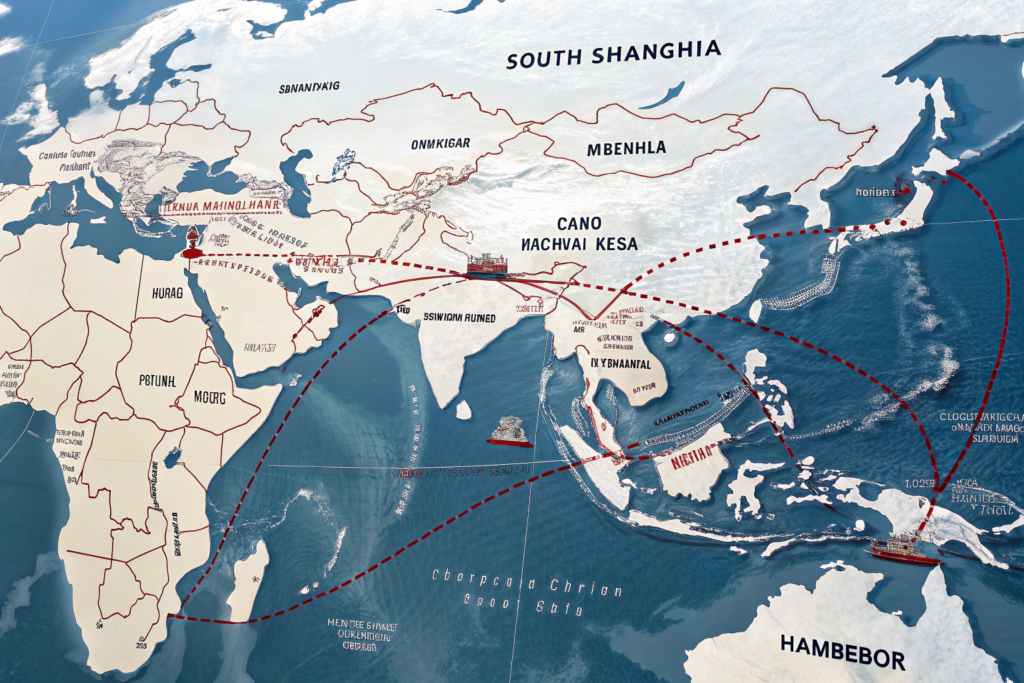
The standard Suez route is the workhorse. Vessels depart from Shanghai, Ningbo, or Shenzhen, sail through the South China Sea, cross the Indian Ocean, pass through the Red Sea, transit the Suez Canal, enter the Mediterranean, and call at major European ports. For northern Europe—Hamburg, Rotterdam, Antwerp—the vessel continues around the Iberian Peninsula into the English Channel and North Sea. This is the route I use for 90% of our European shipments. The Cape of Good Hope route is the alternative when the Red Sea and Suez Canal are disrupted—which has been the case for extended periods in 2024-2026 due to geopolitical tensions. Vessels sailing from China to Europe divert south around the tip of Africa, adding 7-14 days to the transit. Freight rates also increase due to the longer distance and the tighter vessel supply. This route is currently common, and I factor it into my planning when quoting lead times to European buyers. The rail route is the speed play. Trains depart from Chinese cities like Chongqing, Xi'an, or Zhengzhou, cross Kazakhstan, Russia, Belarus, and enter Europe through Poland, reaching Duisburg or Hamburg in under two weeks. The cost is about 2-3 times ocean freight, and capacity is limited. For coffee, rail is used when a roaster has a genuine emergency and needs a partial load fast. I've done it once for a client who lost a container. It works, but it's not the standard.
How Does the Suez Canal Route Work for Coffee Shipments?
The Suez Canal is the critical chokepoint. It connects the Red Sea to the Mediterranean, shaving thousands of miles off the alternative route around Africa. When it's operating normally, it's the fastest and cheapest path from Asia to Europe.
A typical Suez route coffee shipment from our farm looks like this: The container is loaded at our Baoshan mill and trucked 2-3 days to Shenzhen port. The vessel departs Shenzhen and sails 5-7 days to Singapore for the first transit stop. From Singapore, it crosses the Indian Ocean in 7-10 days, passing near Sri Lanka and into the Arabian Sea. The vessel enters the Red Sea through the Bab el-Mandeb strait—the other critical chokepoint—and sails north for 2-3 days to the Suez Canal entrance at Port Said. The canal transit itself takes about 12-16 hours. The vessel enters the Mediterranean. For a Rotterdam-bound shipment, the vessel sails 4-5 days across the Mediterranean, passes Gibraltar, and enters the Atlantic. Then it's 2-3 days up the English Channel to Rotterdam or Hamburg. Total ocean transit from Shenzhen to Rotterdam: approximately 22-26 days. Add 2-3 days for Chinese inland trucking and 3-5 days for European port clearance and final delivery, and the door-to-door timeline is roughly 28-34 days. This route works because the Suez Canal is designed for high-volume traffic. Vessels pass through in convoys. The schedule is predictable. The risk, of course, is geopolitical disruption. The Bab el-Mandeb strait and the Red Sea have been volatile zones in recent years. When security deteriorates, vessels re-route around the Cape, adding time and cost. I monitor these conditions weekly and adjust my shipping plans accordingly. The Suez Canal Authority transit schedules provide official transit times and convoy schedules.
What Is the Alternative Cape of Good Hope Route?
When the Suez route is disrupted, the global shipping network pivots to the Cape of Good Hope. This is the old route—the one ships used before the Suez Canal was built in 1869. It's longer, more expensive, but always available as a fallback.
The Cape route diverges from the Suez route after the Indian Ocean crossing. Instead of turning north into the Red Sea, the vessel continues south along the east coast of Africa, rounds the southern tip of South Africa, and then sails north along the west coast of Africa into the Atlantic. From there, it follows the same path to European ports. This diversion adds approximately 3,500 to 4,000 nautical miles to the journey, depending on the exact origin and destination ports. The additional transit time is 7-14 days. A Shenzhen-to-Rotterdam sailing that normally takes 24 days on the Suez route can take 34-38 days on the Cape route. The cost impact is significant. Longer transit means more fuel burned, more crew time, and fewer voyages per vessel per year. The shipping lines pass these costs through as higher freight rates and surcharges. A container that might cost $2,500 on the Suez route could cost $3,500-$4,500 on the Cape route. For coffee, which is a relatively low-value-per-kilo commodity, this freight premium can meaningfully impact the landed cost. However, the Cape route is reliable. There are no chokepoints. No canals. No narrow straits. The weather can be rough around the Cape—it's famously stormy—but modern container vessels handle it. The route adds time and cost, but it doesn't add uncertainty about whether the container will arrive. At BeanofCoffee, I quote European shipping timelines based on the currently active route. When the Suez is open and safe, I quote 28-34 days door-to-door. When the Cape route is active, I quote 35-42 days. Transparency about which route is being used and why is part of the service.
How Does Sea Freight Transit Time Compare to Rail and Air Options?
Sea freight is the default for coffee. It's slow but cheap. For a product with a shelf life measured in months or years, speed isn't usually worth paying extra for. But there are situations where rail or even air freight makes sense, and understanding the trade-offs helps you make the right call.
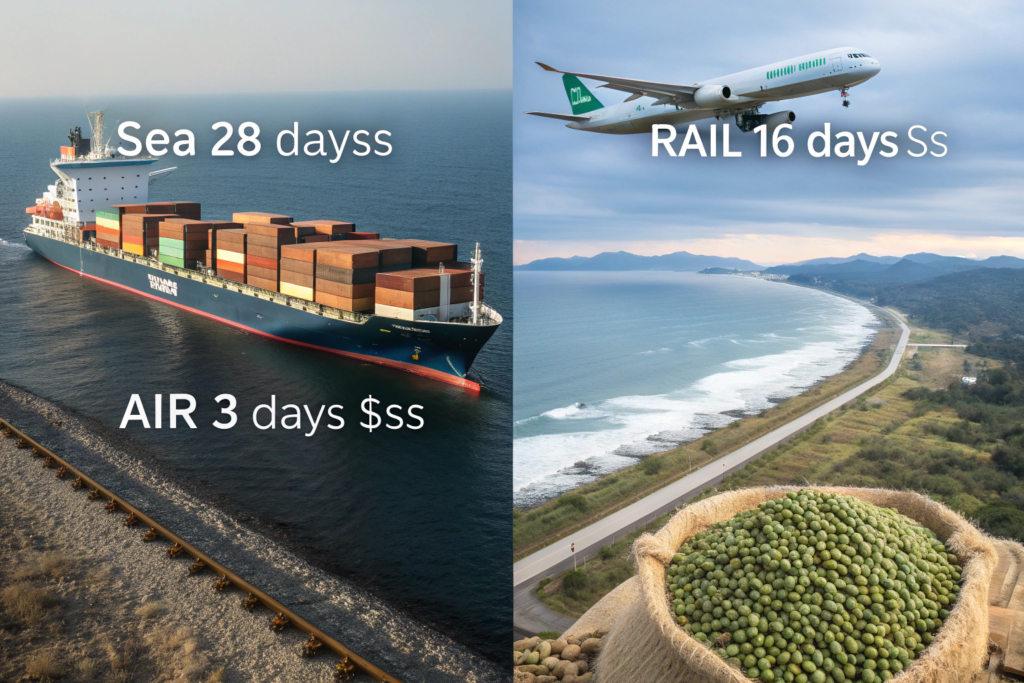
Sea freight from China to Europe takes 28-42 days door-to-door and costs roughly $0.08-$0.15 per pound of coffee. Rail freight takes 18-22 days and costs roughly $0.25-$0.40 per pound. Air freight takes 3-5 days and costs $1.00-$2.00 per pound. For routine coffee shipments, sea freight is the only economically viable option. Rail is for emergencies and small, high-value lots. Air is for samples, competition coffees, and genuine crises.
Let's put real numbers on these modes for a standard 20-foot container holding roughly 19,000 kilos (42,000 pounds) of green coffee. Sea freight on the Suez route: $2,800-$3,800 total, or $0.07-$0.09 per pound. Cape route: $3,500-$5,000 total, or $0.08-$0.12 per pound. Rail freight on the China-Europe Express: $6,000-$9,000 for a container, or $0.14-$0.21 per pound. But rail rarely ships full containers of coffee—capacity is tight and priority goes to higher-value goods like electronics. A partial rail shipment would cost more per kilo. Air freight: $20,000-$40,000 for the equivalent volume, or $0.50-$1.00 per pound. At that price, air is only viable for small sample shipments—a few kilos for cupping—or for a single bag of a competition-winning microlot that justifies the cost. I've shipped air freight samples to European buyers hundreds of times. It's routine. But a full container by air? I've never done it. The economics don't work for green coffee. The practical decision for a European roaster is: plan ahead and use sea freight. Build a 4-6 week lead time into your inventory planning. If you have an emergency, rail is a possible fallback for a partial load. Air is for samples only. The Freightos international freight rate calculator provides real-time comparisons of sea, rail, and air rates between specific port pairs.
When Does Rail Freight Make Sense for Coffee Shipments?
Rail freight is the middle child—faster than sea, cheaper than air, but not quite fitting the standard coffee supply chain. It's a niche solution for specific situations, and understanding those situations helps you know when to deploy it.
The China-Europe Railway Express is a network of rail routes connecting Chinese manufacturing hubs to European logistics centers. Trains run from cities like Chongqing, Xi'an, Chengdu, and Zhengzhou to destinations like Duisburg (Germany), Hamburg (Germany), and Malaszewicze (Poland). The transit time is 12-16 days from terminal to terminal, plus 2-3 days for Chinese trucking and 2-3 days for European trucking. Total door-to-door: 18-22 days. That's roughly 10-15 days faster than sea freight on the Suez route, and 15-20 days faster than the Cape route. The cost is about 2-3 times sea freight. Rail makes sense for coffee in three scenarios. First, an emergency restock. You miscalculated your inventory and you're going to run out. A rail shipment buys you two weeks compared to sea freight. It's expensive, but running out of coffee is more expensive. Second, a small, high-value microlot. If you bought 20 bags of an 88-point Yunnan microlot at a premium price, the freight cost per pound is spread over a high-value product. The math can work. Third, a first trial order. A European roaster testing Chinese coffee for the first time might order a few pallets by rail to get the coffee faster and start cupping and blending sooner. But for regular, container-volume coffee supply, sea freight is the standard. The cost savings are too significant to ignore, and green coffee is shelf-stable enough to tolerate the longer transit. At BeanofCoffee, I offer rail as an option to buyers who need it, but I always recommend sea freight for routine orders.
How to Ship Green Coffee Samples Quickly to Europe?
Samples are the exception to the "sea freight only" rule. When you're evaluating a new coffee, you need a sample fast—not in 35 days. You need it in a week. That's where air courier services come in.
We ship green coffee samples to European buyers via international courier services: DHL, FedEx, UPS. A 1-2 kilo sample package, properly sealed in a GrainPro bag inside a cardboard box, costs $30-$60 to ship and arrives in 3-5 business days. The package is labeled as "Green coffee beans, unroasted, for quality evaluation. No commercial value." This avoids customs duty complications. Samples under a certain value threshold enter duty-free as promotional materials. The key is proper packaging. Green coffee needs to be sealed in an airtight bag—GrainPro or vacuum-sealed—to prevent moisture absorption during the flight. The outer box should be sturdy enough to survive courier handling. I include a cupping report, a moisture reading, and a lot traceability document in the package. For larger sample quantities—say, 20 kilos for blend testing—air freight on a small pallet works. The cost is higher, but for a serious buyer committing to a container, it's a worthwhile investment. I've had buyers who ordered a 10-kilo sample by air, cupped it, roasted it, tested it in their blend, and then placed a container order—all within three weeks. That speed of evaluation would be impossible with sea freight samples. The DHL express shipping calculator can give you real-time quotes for sample shipments from China to your specific European city.
What Factors Can Delay Your Coffee Shipment?
Shipping is not a perfectly predictable machine. Delays happen. The difference between a stressful delay and a manageable one is whether you anticipated the possibility and built a buffer. Most delays are caused by a handful of recurring factors that you can plan for.
The main factors that delay coffee shipments from China to Europe are: port congestion at major Chinese or European hubs, Suez Canal disruptions or Red Sea security incidents, customs inspection holds at the destination port, vessel schedule changes (blank sailings or route adjustments), and seasonal weather events like typhoons in the South China Sea or winter storms in the North Sea. Most delays add 3-10 days; severe disruptions can add 2-4 weeks.
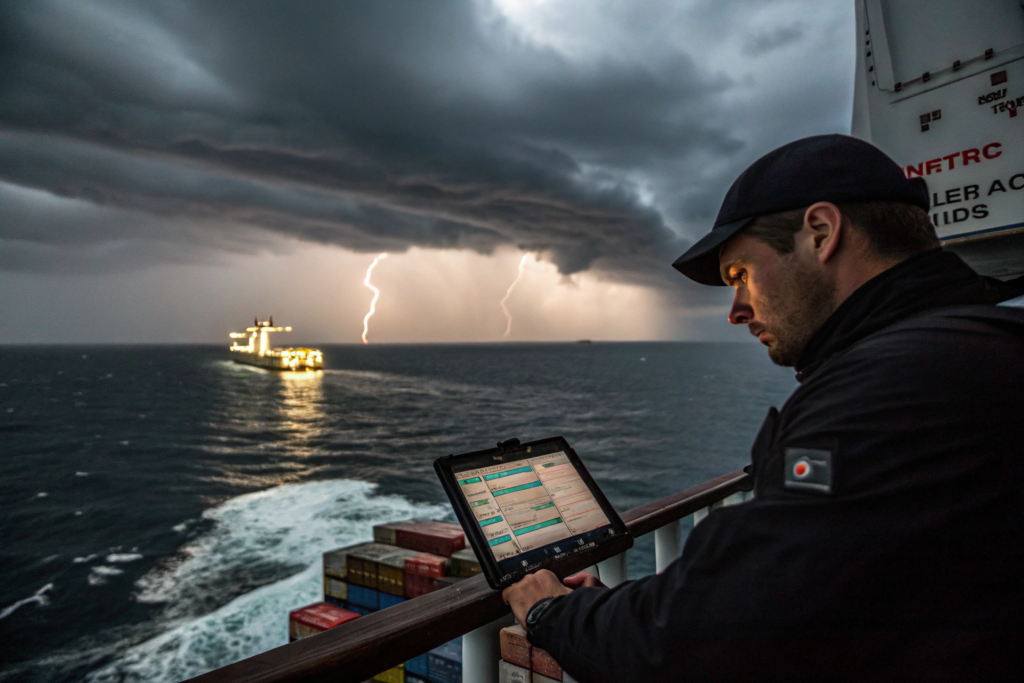
Port congestion is the most common culprit. Major ports like Shanghai, Rotterdam, and Hamburg handle enormous volumes. When vessels bunch up—multiple ships arriving at once due to earlier delays—the port's capacity is overwhelmed. Containers sit on the dock waiting for a berth. Waiting for a crane. Waiting for customs. A 2-3 day congestion delay is routine. A week-long delay is not unusual during peak shipping seasons. Suez Canal disruptions are the most impactful single factor. When the canal is blocked—as happened famously in 2021 with the Ever Given—or when security threats force vessels to divert around the Cape, the entire global shipping schedule shifts. Transit times stretch. Vessels arrive late, miss their berth windows, and cause cascading delays downstream. I've seen containers delayed by three weeks due to a Suez disruption, even though the coffee was loaded and the vessel was sailing—it just sailed a lot further. Customs inspections are unpredictable but manageable. European customs authorities randomly select containers for physical inspection. The inspection itself takes 1-3 days. The delay comes if the paperwork has errors—a missing phytosanitary certificate, an incorrect HS code, an incomplete organic certification. Proper documentation prevents most customs delays. At BeanofCoffee, I provide a complete, pre-checked document package for every shipment. The MarineTraffic vessel tracking shows real-time vessel positions and port congestion levels.
How to Build a Realistic Inventory Buffer for Your Roastery?
The antidote to shipping uncertainty is inventory buffer. You can't control the Suez Canal, but you can control how much green coffee you hold in your warehouse. A well-sized buffer means a two-week shipping delay is an annoyance, not a catastrophe.
The buffer calculation is simple: determine your average weekly green coffee consumption, then decide how many weeks of buffer you need. If you roast 1,000 kilos per week and you want a four-week buffer, you hold 4,000 kilos in inventory at all times. The buffer size depends on the lead time variability of your supply chain. For a predictable origin with a 30-day lead time, a 2-3 week buffer might be enough. For a less predictable origin, a 4-6 week buffer is safer. For Chinese coffee shipped by sea, I recommend a 3-4 week buffer. The lead time is 28-35 days, and the variability is usually plus or minus 7-10 days. A four-week buffer covers the majority of delays. Place your next order when your inventory drops to the reorder point: lead time demand plus buffer. If you use 1,000 kilos a week and have a 5-week lead time plus 4-week buffer, reorder when inventory hits 9,000 kilos. This is basic inventory management, but I'm surprised how many roasters run on 2-week buffers and then panic when a container is delayed. The cost of holding extra green coffee—a bit of warehouse space and some tied-up cash—is far lower than the cost of shutting down the roaster because you're out of beans. At BeanofCoffee, I work with buyers to plan a shipment schedule that matches their consumption rate and buffer needs. I'd rather ship three smaller containers on a regular cadence than one giant container that runs out unpredictably.
What Documentation Errors Cause Customs Delays?
Customs delays are the most frustrating because they're entirely preventable. They happen not because of bad luck, but because of bad paperwork. And they happen at the worst moment—when the coffee is already in Europe, sitting in a warehouse, accruing storage fees.
The most common documentation errors are: incorrect HS code classification, missing or expired phytosanitary certificate, mismatch between the commercial invoice and the bill of lading, missing organic or Fair Trade certificate for certified coffee, and incomplete FDA or EU organic import pre-notification. For coffee, the HS code is 0901.11 for green, unroasted, non-decaffeinated coffee. If the broker accidentally uses the roasted coffee code (0901.21), the duty rate and documentation requirements change, triggering a hold. The phytosanitary certificate must be issued by the Chinese plant protection authority (GACC) and must be dated within the validity window. An expired phyto is automatically rejected. The commercial invoice, packing list, and bill of lading must all agree on the consignee name, the product description, the quantity, and the container number. A mismatch—even a typo—triggers a manual review. For certified coffee, the organic certificate must be valid and must match the lot. A lot shipped under an expired certificate loses its organic status at the border. For EU organic imports, the Certificate of Inspection (COI) must be filed in the TRACES system before the shipment arrives. Missing the COI filing deadline means the coffee can't enter as organic. I've seen every one of these errors happen to other suppliers. It's why I provide a complete, pre-verified document package to the buyer and their broker before the vessel sails. The EU TRACES system is the portal for organic import documentation. Your broker needs to be registered and active in the system.
How to Track Your Coffee Shipment in Real Time?
The days of radio silence between "container shipped" and "container arrived" are over. Modern shipping lines, freight forwarders, and digital platforms provide real-time tracking data. As a buyer, you should never be in the dark about where your coffee is. You should know its position, its ETA, and any delays as they happen, not after they've already cost you time.
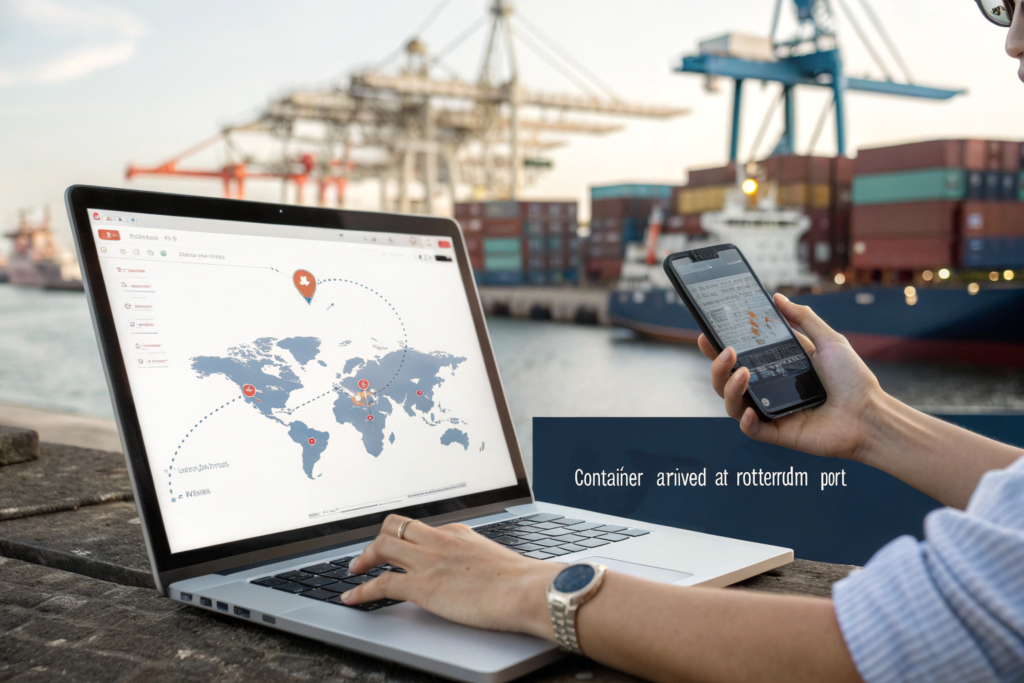
Real-time coffee shipment tracking is available through three main channels: the shipping line's own container tracking portal (using your container number), your freight forwarder's tracking dashboard, and third-party vessel tracking services like MarineTraffic or VesselFinder. You should receive automatic milestone notifications: container loaded, vessel departed, transshipment port arrivals, destination port arrival, customs cleared, and container available for pickup.
When I ship a container from China to Europe, I provide the buyer with the container number and the vessel name within 24 hours of departure. The container number is the master key—a unique alphanumeric code (like MSCU1234567) that identifies your specific container. Enter that number on the shipping line's website—Maersk, MSC, CMA CGM, COSCO, whichever line is carrying the container—and you'll see the current status: "Loaded on vessel," "In transit," "Discharged at port," "Customs hold," "Available for delivery." The vessel name allows you to track the ship itself on services like MarineTraffic. You can see the ship's current position on a live map, its speed, its heading, and its estimated arrival time at the next port. This is useful for understanding whether a storm or a port congestion delay is affecting your container. Your freight forwarder should also provide a consolidated tracking portal with automated email or SMS notifications at each milestone. At BeanofCoffee, I send weekly status updates to buyers during transit, plus immediate notifications if the ETA changes. You shouldn't have to chase me for information. You should have it proactively.
What Information Should Your Supplier Provide at Each Stage?
A professional supplier doesn't just ship the coffee and go silent. They provide a structured flow of information at each stage of the journey, giving you the data you need to manage your inventory, your production schedule, and your own customer commitments.
The information milestones I provide to every buyer are: At loading: a container loading report with photos of the stuffed container, the seal number, and the container number. This confirms the coffee is in the box and the box is sealed. At vessel departure: the bill of lading draft, the commercial invoice, the packing list, the phytosanitary certificate, and any certification documents. This package is the legal documentation for customs clearance. The vessel name, voyage number, and estimated departure date. Within 24 hours of departure: confirmation that the vessel has sailed and the actual departure date. The current ETA at the destination port. Weekly during transit: a status update with the vessel's current position and any ETA changes. At destination port arrival: notification that the vessel has arrived and the container has been discharged. At customs clearance: notification that the container has cleared customs and is available for pickup, or notification of any inspection holds. This information flow turns a black-box process into a transparent one. You can plan your roasting schedule around the actual ETA, not a guess. You can inform your customers about upcoming blend availability. You can manage your warehouse space. The Maersk container tracking portal is one example of how major shipping lines provide real-time container visibility.
How to Handle a Delayed or Stuck Shipment?
Even with perfect tracking, delays happen. The question is not whether you'll ever face a delay—you will. The question is what you do when it happens. A delayed container is a problem. A delayed container that you don't know about until you're out of coffee is a crisis.
When you receive a delay notification—whether from your tracking system or from your supplier—the first step is to assess the impact. How long is the delay? Is it 3 days or 3 weeks? The answer determines your response. A 3-5 day delay is usually absorbable if you have a reasonable inventory buffer. You push your roast schedule back a few days. You might need to adjust your production, but you won't run out. A 2-3 week delay is a serious problem that requires active management. The options are: First, stretch your existing green inventory. Reduce your roast-to-order volume. Temporarily substitute a different component in your blend if you have a compatible coffee in stock. Second, expedite an alternative supply. If you have another origin's coffee on order, can that container be routed faster? Third, emergency air or rail freight. If you're going to run out, a partial air freight shipment of a few thousand kilos can bridge the gap. It's expensive, but running out is more expensive. Fourth, communicate with your supplier. A good supplier will help solve the problem—offering to send an emergency sample shipment by air, adjusting the next container's schedule, or providing a credit for the delay if it was their fault. The worst thing you can do is panic silently and hope the container magically appears. Delays don't resolve on their own. They require action. At BeanofCoffee, if a container is delayed, I'm on the phone with the shipping line, the forwarder, and the buyer, working out a solution. A supplier's value is most visible during problems, not during smooth sailings.
Conclusion
Shipping coffee from China to Europe is a predictable process with a known timeline: 28-35 days door-to-door by ocean freight on the Suez route, or 35-42 days on the alternative Cape route. Rail freight can cut the transit to 18-22 days for emergencies and small lots. The factors that cause delays—port congestion, canal disruptions, customs holds—are foreseeable and manageable with proper documentation and a well-sized inventory buffer. A 3-4 week green coffee buffer at your roastery absorbs the majority of shipping variability and prevents stockouts. Real-time tracking through the shipping line's portal and your supplier's milestone updates eliminates the anxiety of not knowing where your coffee is.
At BeanofCoffee, we ship containers from our Baoshan farm to European ports on a regular schedule. We provide complete documentation, proactive tracking updates, and direct communication when issues arise. Our logistics team manages the Chinese-side trucking, export clearance, and container loading. Your European broker handles the import side, with the document package we provide.
If you want a specific transit time estimate for your European port, or if you want to discuss a shipping schedule that matches your consumption rate, contact my export director, Cathy Cai. She can provide a detailed timeline and a landed cost quote for your specific destination. Email her at: cathy@beanofcoffee.com.