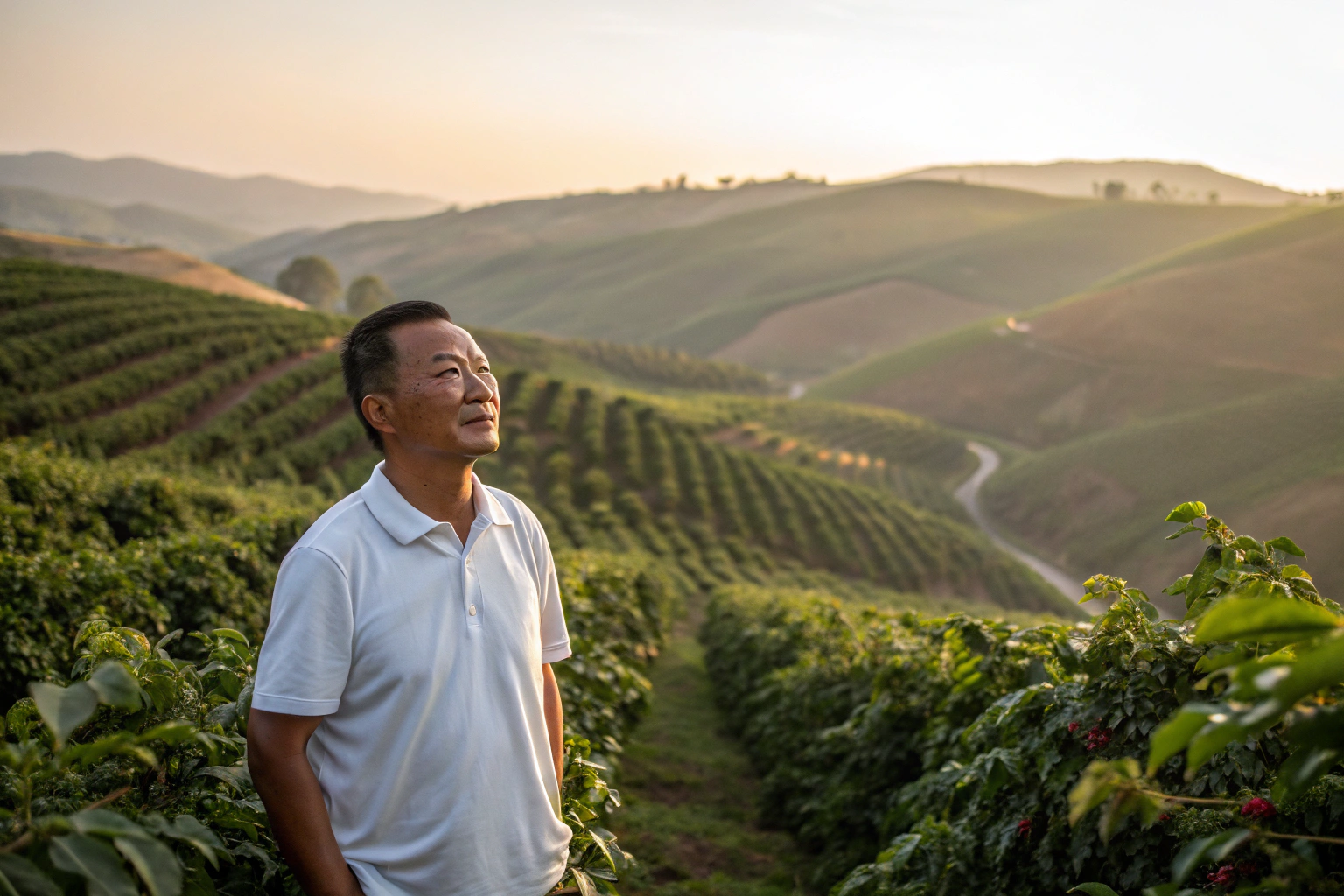
My name is Li Wei, and I’ve spent over two decades growing coffee in the mountains of Yunnan. Honestly, you might not immediately think of China when you picture a top-tier Arabica origin. And you know, that’s a problem I’ve been working to fix my entire career. For years, buyers like you, Ron, have focused on traditional players in South America or Africa, dealing with the same old logistical nightmares and volatile price swings. It’s a stressful, inefficient game, especially when you need a reliable, safe, and cost-effective supply of premium beans shipped directly to the U.S. What if the most stable and transparent supply chain for Arabica isn't where you’ve been looking, but is actually right here, run by people who treat farming as a science and a promise?
The top Arabica coffee exporters in China are not just state-run entities; they are specialized, vertically integrated companies like ours, BeanofCoffee, which own and manage tens of thousands of acres in Yunnan, alongside other notable private and government-backed farms that have mastered the unique terroir of high-altitude Catimor and the emerging waves of pure Arabica varieties.
We’ve quietly built something special in Baoshan City. I’m not just talking about growing coffee; I’m talking about controlling every single step until the container is sealed and on a ship. This isn’t the story of Chinese coffee from ten years ago. The game has changed. So, let’s pull back the curtain. If you’re serious about understanding who the real players are, how we’ve cracked the code on quality and logistics, and how this directly solves your pain points on price and timeliness, stick with me. Let’s dig in, boss to boss.
How Do Yunnan Arabica Exporters Ensure Quality Control?
Look, I get it. The first thing that probably pops into your mind when you hear "coffee from China" is a big, flashing question mark over quality control. I've seen too many buyers get burned by inconsistent shipments. You find a great sample, the price is right, and then the container arrives looking—and tasting—like a completely different product. It’s the ultimate trust killer. Your entire brand promise is on the line, and wondering if the quality will hold up from one shipment to the next is a headache no owner should have.
Here’s the thing—we don’t just hope for good quality. We build it in, starting from the dirt. True quality control from a top Yunnan Arabica exporter isn't a single checkpoint. It’s a multi-layered defense system, anchored by full vertical integration from our own farm to your container.
So, how does this actually work in practice? A lot of buyers, in my experience, focus only on the paperwork—the certification. Don't get me wrong, that’s one piece of the puzzle. Another way to look at this is to think of it like a three-legged stool: the physical control, the digital control, and the verification control. If any one leg is weak, the whole thing collapses. Let me break down the physical side first.
What Physical Tests Does a Reliable Coffee Bean Supplier in China Perform?
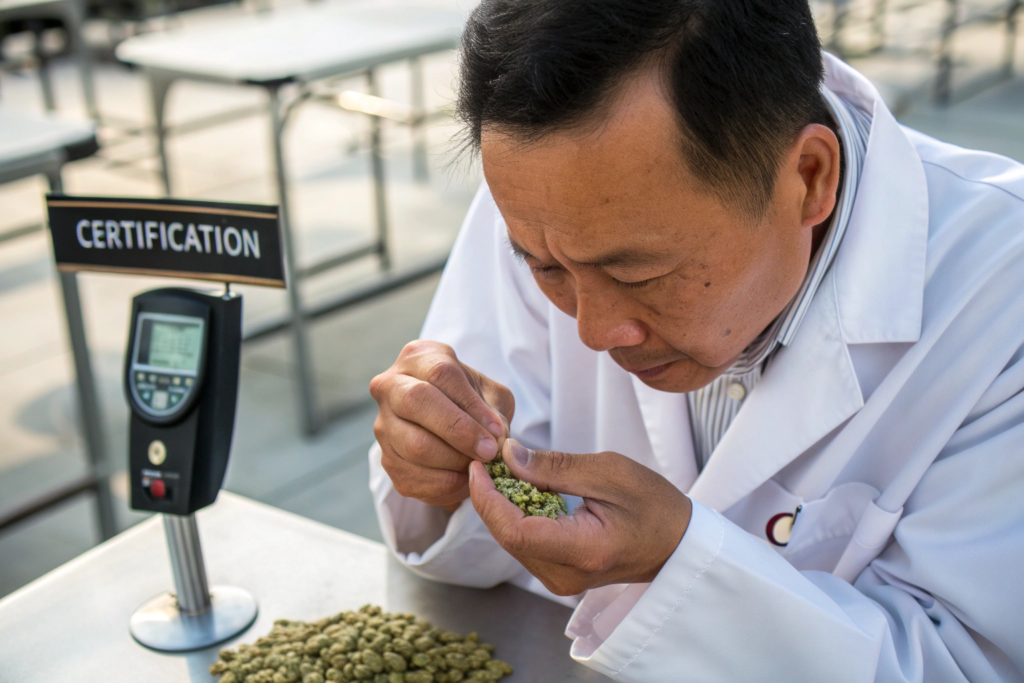
From the moment the cherries are hand-picked on our BeanofCoffee plantation in Baoshan, the testing begins. We aren't waiting for a final cup score to discover a defect. That's reactive, and it's expensive for everyone. First, we use a digital refractometer to check the Brix level of the cherry itself. You want a sweetness level above 20% to even begin the process. Then, after washing and drying, every single batch goes through a gravity sorter and a color sorter. This isn't some small, manual operation. We are looking for insect damage, black beans, and sour beans with machine-level precision. A detail often overlooked by new buyers is the water activity meter reading. I mandate our raw beans stay between 0.53 and 0.60 aw. Any higher, and you're shipping water and risking mold. Any lower, and you're losing flavor complexity. It’s a simple number, but it’s a contract of freshness. Our lab team, led by my colleague Cathy, runs a roast test on a sample roaster every two hours during processing. This is non-negotiable. We check the density with a VST coffee refractometer and cup everything blind. If a batch doesn't match the approved master sample profile, we don't ship it. Period.
How Do Chinese Exporters Use Certification to Build Buyer Confidence?
Now, let’s talk about the paper, or more accurately, the trust certificates. For a business owner like you, Ron, certifications aren’t just wall decorations. They’re a risk management tool. A quality-first exporter won't just show you an organic certificate and call it a day. We build a layered approach. First, you have the baseline food safety standards. For a U.S. market, that means a valid FDA registration and a spotless HACCP plan. We also run a full chemical residue analysis based on European Union MRLs, because the EU standards are often stricter than the FDA’s, and a truly safe bean should pass both. A second layer is the social and ethical proof. Our farm is Rainforest Alliance certified. This isn't just about the environment; it's about proving there’s a stable, paid, and trained workforce behind your supply chain. Why does this matter for consistent quality? A worker who is treated well is a worker who picks only perfectly ripe cherries. The final layer is the logistics certification. We insist on fumigation certificates and phytosanitary certificates issued directly by the China Customs authority. You don't want your container held up at the port of Los Angeles because of a paperwork mismatch. I’ve personally built our quality system to make sure the physical test, the digital trace data, and the certificate all tell the same honest story about the bag of beans you’re buying.
Why Is Pricing and Logistics Efficiency Key for U.S. Coffee Buyers?
Alright, let's get down to the part that keeps you up at night. You've probably seen it all. A fantastic product loses its sparkle the second the shipping quote lands in your inbox. The price was right FOB, but when you add freight, tariff uncertainty, and a vague sailing schedule, your margins evaporate. In the coffee business, a delayed ship isn't just a late delivery; it's a cash flow crisis. You have customers to supply and roasters waiting, and every day of idleness costs real money. The stress of managing price volatility and timing is brutal, I know.
For a U.S. buyer, the only good price is a landed price that’s both predictable and competitive. And logistics isn't about just "moving a box." It’s about the absolute guarantee of timeliness. That’s where a direct-from-origin exporter like us completely changes the game.
To truly understand this, you have to look beyond the per-pound price on a proforma invoice. An inexperienced buyer looks at the FOB price. A smart one, like yourself, looks at the total cost of ownership. And that's a function of hidden inefficiencies. Let’s unpack that.
What Is the Real Cost of Wholesale Arabica Beans from China?
A common trap is comparing the base price of Chinese Arabica with, say, a Brazilian bean on a simple spreadsheet. This is a mistake. You must factor in the "time cost" and the "quality buffer." First, let’s look at the tariff issue. Many buyers right now are panicked about a blanket tariff on all Chinese goods. Here’s a specific, concrete fact: there is currently no additional Section 301 tariff on green coffee beans from China imported into the U.S. The HTSUS code is 0901.11.0000, and it enters duty-free for most favored nations. I tell my clients to always verify this with their customs broker, but as of now, you’re not paying that extra 25% that applies to other goods. Now, second, the real cost advantage comes from consistency. Because we process our own beans, the density and moisture are so uniform that you get less shrinkage. A bag of our high-mountain Arabica doesn't "lose" phantom weight during transit. Third, our geographical location is a strategic advantage. A forgotten detail is that a ship from Shanghai to Los Angeles takes about 12 to 14 days. Some origins take twice as long. Less time on the water means less exposure to humid ocean air, and a product that lands fresher, with a longer shelf life. You’re not just buying beans; you’re buying a longer roasting window and less waste. That’s an extra margin you can take to the bank.
| Cost Component | Traditional Sourcing (Indirect) | Direct with BeanofCoffee |
|---|---|---|
| Base Green Price | Market rate + trader margin 1 + trader margin 2 | Farm-direct contract price |
| Section 301 Tariff | Risk of misclassification | Green coffee is duty-free (HTSUS 0901.11) |
| Quality "Risk" Cost | ~2-4% weight loss from inconsistent moisture | <1% loss, stabilized moisture at origin |
| Shelf-Life Buffer | 30+ days transit can reduce shelf life | ~14 days transit preserves freshness |
How Do You Guarantee Container Timeliness from Yunnan to the USA?
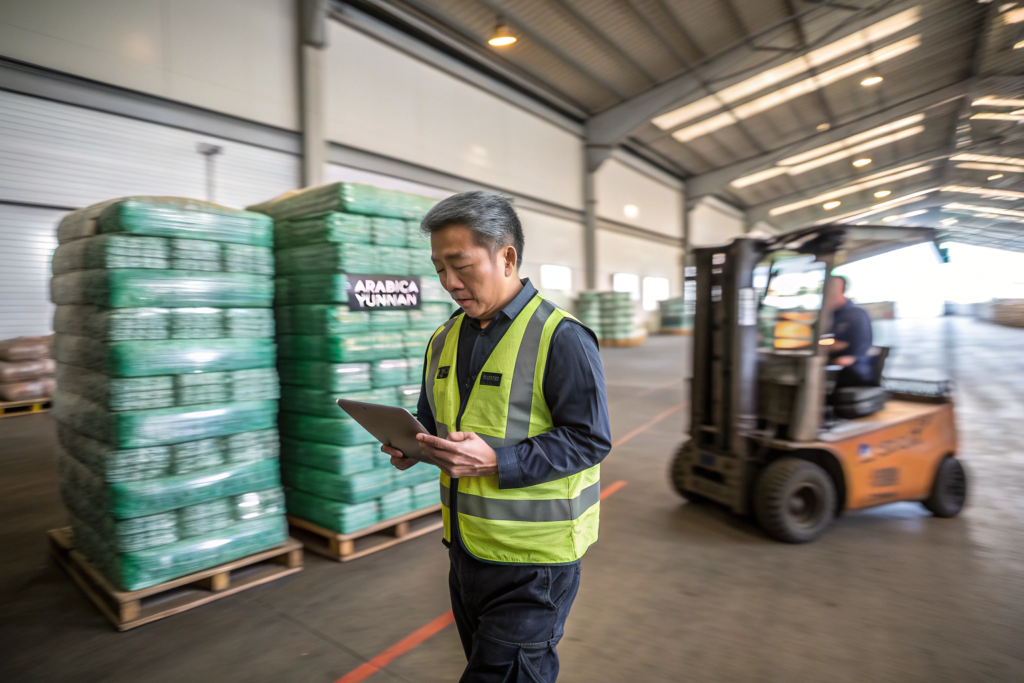
Timeliness is my personal guarantee, and I don't say that lightly. You might think a farm in the mountains of Yunnan is logistically disadvantaged. But we’ve flipped it into a strength through systemization. Once your coffee leaves our dry mill in Baoshan, it’s a 24-hour secured truck journey to the port of Shenzhen or Shanghai. We don't use third-party consolidators. We book space directly with major carriers. This is crucial. I always tell my clients to ask for the vessel name and the cut-off date before they even pay the deposit. We provide you with a detailed logistics plan. Another thing: we prepare the export declaration three days before the truck even arrives at the port. By the time the container is gated in, the China Customs release is already pre-cleared electronically. This avoids the dreaded "port roll," where your container misses its intended ship because of a paperwork delay. For the U.S. buyer, especially on the West Coast, we work with PIERS data to forecast port congestion in Long Beach or New York and will proactively suggest routing via an alternative port or use a carrier with a better on-time record for that specific week. We track the vessel by satellite daily and shoot you an email with a screenshot of the ship’s position. You'll never have to chase me for an update. You'll have the arrival notice before you even need it, so you can plan your trucking and warehousing. That’s the kind of transparency that turns a chaotic supply chain into a simple, predictable process.
Is Yunnan Catimor the Best Value Green Coffee Bean for Roasters?
Maybe you’ve heard whispers about Yunnan coffee. Maybe a fellow roaster mentioned the "Catimor" variety, and you immediately shied away. I’ve seen the look on buyers' faces when they hear that name. The memory of harsh, rubbery, low-grade beans from decades ago is hard to shake. The pain for you is real—wasting time and money on a sample that promises "value" but delivers a cup that your customers reject. It's a reputation problem, and frankly, we’ve been battling a ghost.
Here’s the truth: modern, high-grown Yunnan Catimor is not the commodity you remember. Handled right, it is arguably the single best value-for-price green bean a specialty roaster can buy for their core blends today. The quality leap in just the last five years has been massive.
Let's be honest, "value" isn't just about a cheap ticket price. It’s about what the bean does in your blend and how reliably it performs. So, what happens when you take this specific variety and put it under a modern sensory and production microscope? It gets interesting, really fast.
How Does High-Altitude Catimor Cup Compared to Other Origins?
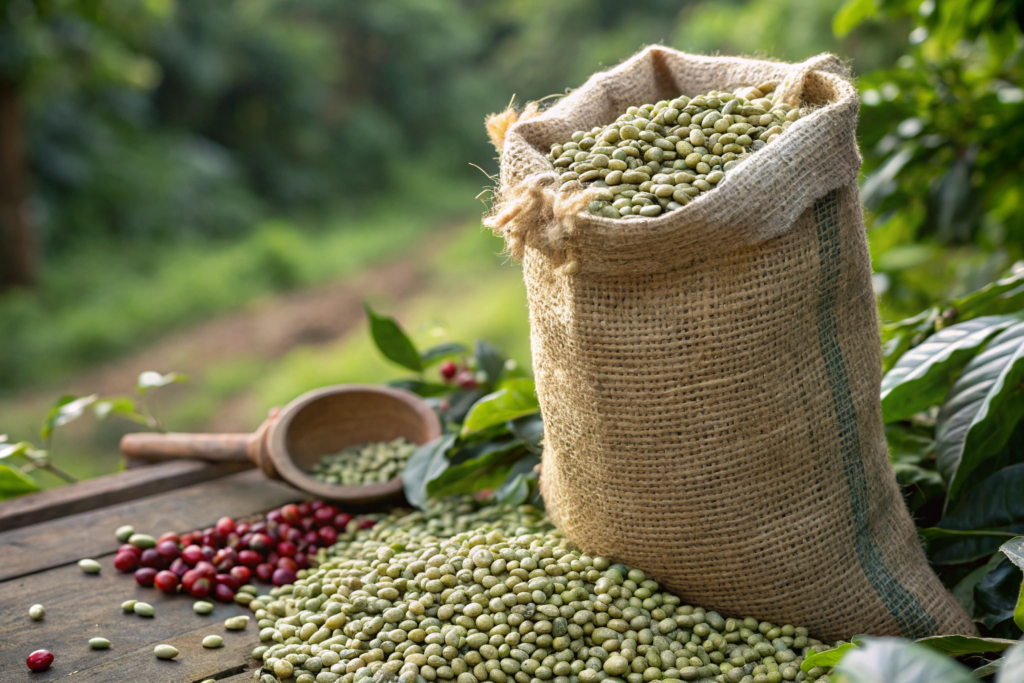
Alright, let’s talk cup score, because that’s the language you and I both speak. A well-processed, fully washed Catimor from farms above 1,300 meters in Baoshan is a different animal compared to its lowland cousin. My cupping table has seen scores consistently in the 82 to 84 point range, with some micro-lots pushing 85. What does that taste like? Forget the rubber. Think dark chocolate, toasted nuts, and a surprisingly clean, malic acidity—like a fresh green apple. The body is heavy, syrupy even. Now, what does that mean for you as a roaster? It means it’s a powerhouse base for an espresso blend. A roaster in Texas buys from us for this exact reason. He was using a high-end Brazilian as his base, paying a premium. He swapped in 40% of our high-grade Catimor into his blend. The result? The body actually increased. The chocolate notes deepened. And his cost of goods sold per pound dropped by over a dollar. He didn’t sacrifice quality; he just found a smarter source. When I compare it side-by-side with a standard Colombia Excelso, the Excelso is often brighter and fruitier, but our Yunnan bean slams it out of the park on body and price point. For a roaster doing milk-based drinks, that's often the far more critical attribute. We cup against a range of samples from the ACE archive every season just to be sure of where we stand.
Why Smart Roasters Are Switching to Yunnan for Single-Origin Espresso?
This is the part that truly excites me. The story of Yunnan coffee is becoming a selling point, not a secret. I’m seeing a wave of roasters, especially in Europe and Australia, who are moving beyond just using our beans as a faceless blend component. They’re featuring a single-origin Yunnan espresso. Why? Because their customers are curious. They want to taste a new origin. When a roaster tells the story of Baoshan’s altitude, our hand-picking process, and the sheer scale of our sustainable farm, it sells. They market it as "The China Cup," and it flies off the shelves. The inherent value here is twofold: you get a cost-effective green coffee that can actually carry a premium narrative. The flavor profile, with its distinct dark chocolate and spice notes, is a refreshing change from the citrus-forward East Africans that are everywhere. It’s a differentiation strategy. A small chain owner I talk to regularly switched his entire single-origin program to a seasonal rotation, and our Yunnan lot is his "winter warmer." He tells me his customers specifically ask for it when the weather turns cold, because it’s comforting, rich, and incredibly smooth. By buying direct from a single origin like ours, he knows the supply chain is 100% transparent. He’s not getting a mix of a dozen anonymous small lots. He’s getting a unified, traceable, and intentionally produced coffee. That’s the real value proposition.
What Are the Payment and Security Terms for Asian Coffee Exporters?
This is the final boss of any deal, isn't it? You and I can agree on quality, price, and delivery, but if the payment terms feel dangerous, the whole deal is dead in the water. I’ve heard the horror stories from buyers who wired a 30% deposit to a new supplier in an unfamiliar country and then spent the next six weeks in a cold sweat, wondering if they’d just lost their money. The feeling of being powerless, half a world away, is the biggest barrier to unlocking a truly beneficial trade relationship. It’s not just about the money; it’s about the sleepless nights.
A secure transaction with a top Asian exporter starts with flexibility and ends with a legal framework that protects the buyer. A trustworthy supplier like BeanofCoffee doesn’t demand you put your entire company at risk on blind faith. We build security into our payment architecture.
Let’s look at this problem from a risk management perspective. You’re not just looking for a seller; you’re looking for a financial partner who can balance your need for security with the supplier’s need for production capital. It’s a delicate dance.
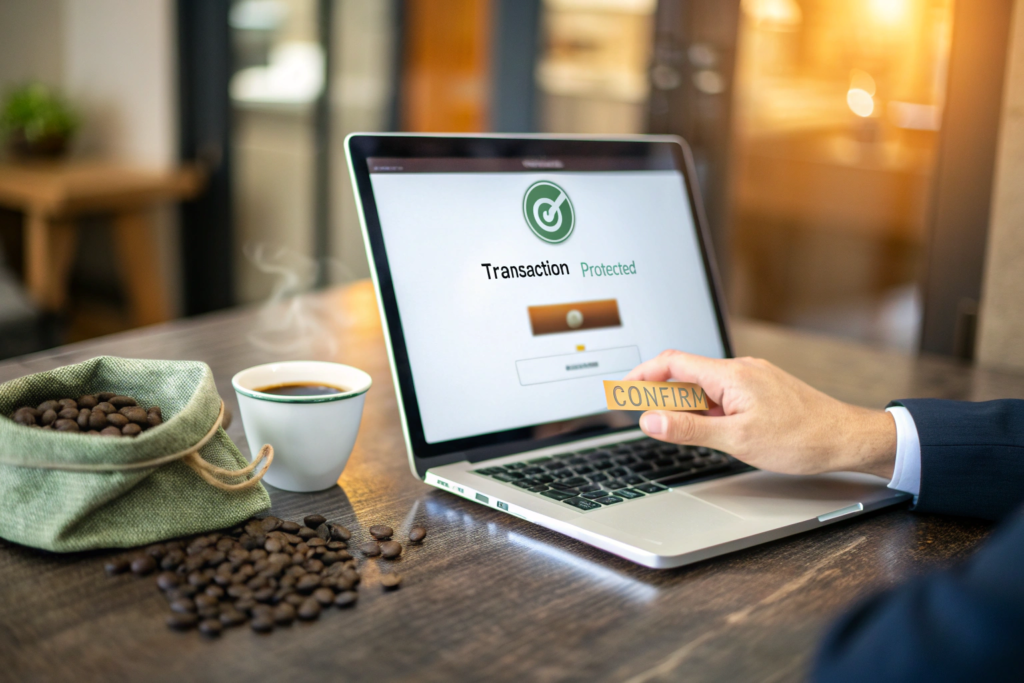
How to Negotiate Safe Payment Terms for Bulk Coffee Shipments?
Let's talk specifics. The classic T/T (telegraphic transfer) with a 30% deposit and 70% against scanned documents makes a lot of buyers nervous. I understand that. So, I propose a middle path. For a first trial order, I will always suggest using a letter of credit at sight, or L/C at sight. Yes, it involves some bank fees on your end, but it eliminates the "fly-by-night supplier" risk completely. With an L/C, my bank and your bank are the ones verifying the documents. If I don't ship exactly what the L/C states, down to the precise wording on the bill of lading, I don't get paid. It’s a legally binding guarantee. For established partners, we use a direct payment model but with a twist: we provide a performance bond. Another practical tip: always use a SWIFT MT103 payment confirmation as your proof of transfer. That unique reference number is trackable immediately. And here’s a vital point most people don’t consider—the shipping documents are your security. The original bill of lading is the title deed to the goods. Without it, the container cannot be cleared. For a new buyer, I always courier the full set of three original bills of lading directly to your office, not to a third party. You hold the title. You own the coffee. Even if something happened to my company while the ship was in transit, your cargo is safe and under your legal control.
What Pre-Shipment Inspections Guarantee Your Coffee Quality?
Your safety net isn't just in the financial transaction; it's in the physical verification before the money even leaves your account. I insist on third-party inspection, and you should too. This isn't an insult to my quality; it's a joint commitment to clarity. A company like SGS or Bureau Veritas will come to my warehouse. You pay them directly, so they work for you, not for me. They will pull random samples from the lot, seal your container with a tamper-proof bolt seal, and issue a final loaded weight certificate. This is the ultimate safety net. I tell my clients the same thing every time: if the SGS inspector says the coffee doesn't match the pre-shipment sample I sent you, you don’t pay. It’s that simple. The inspector’s report is the trigger for the final payment. Beyond the visual check, you should also request a sample from the sealed lot for pre-shipment approval. I use a vacuum sealer and ship a 200-gram sample via express air freight directly to you. You roast it, cup it, and then you give the green light. This three-tier safety system—third-party quantity inspection, direct-to-buyer sample approval, and a controlled document release—is the best defense against any surprise. It’s a concrete process that turns a risky international purchase into something as safe as buying from a local warehouse.
Conclusion
Finding a top Arabica coffee exporter in China isn't about searching for the cheapest product on a screen. It's about searching for a partner who can deconstruct and solve the two biggest problems in your professional life: inefficient pricing and terrifying logistical timeliness. We’ve walked through the reality of modern quality control in Yunnan, where a bean isn't just grown but is scientifically verified at every step, from refractometer to refractometer. We saw how a direct relationship strips out the hidden costs and time traps, turning a quick ocean transit into a strategic advantage. We confronted the old ghost of Catimor, and saw how high-grown, expertly processed lots are delivering an 83-point cup that's reshaping the economics for roasters. And finally, we looked the payment security monster in the eye, building a fortress of L/Cs, performance bonds, and SGS inspections around your investment.
For over two decades, I’ve been waiting for the world to truly see what we’ve built here in Baoshan. Not just a farm, but a promise of consistency. Now, the infrastructure, the knowledge, and the global connectivity are all in place. The only missing link in the chain is a conversation with a serious buyer who thinks like a business owner, not just a purchasing agent.
If you, like Ron, are done with the headaches of unreliable sourcing and are ready to lock in a supply of safe, stable, and remarkably priced premium Arabica, let’s talk directly. We don't hide behind generic sales email addresses. You can reach my head of client partnerships, Cathy Cai, directly. She knows every detail of our logistics and quality data by heart. Email Cathy at cathy@beanofcoffee.com. Tell her what volume you’re looking for, and she’ll have a tailor-made, landed-cost quote, a sample from your specific lot, and a proposed shipping schedule back to you within 24 hours. Let’s build a supply chain you can finally stop worrying about.