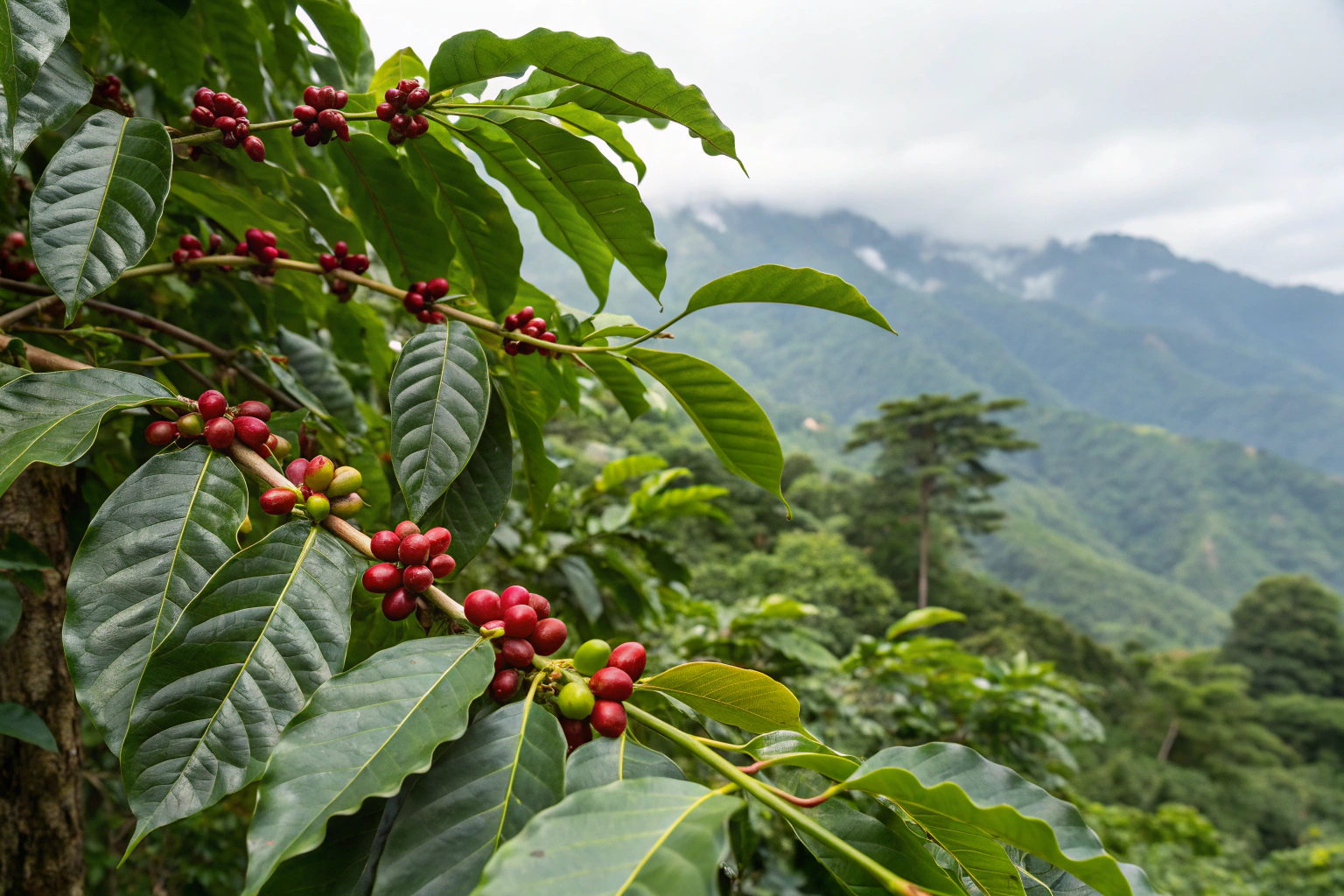
I was cupping a new lot at our Baoshan lab last month. A visiting roaster from Melbourne took a sip, put down his spoon, and said, "This is Catimor? I thought Catimor tasted like rubber and peanut skins." He'd been avoiding the varietal for years because of a bad experience with a low-grown, poorly processed lot from another origin. The coffee in his cup—our high-altitude, washed Catimor—tasted like green apple, brown sugar, and black tea. Clean. Sweet. Complex. His bias dissolved in one cupping session. That's the Catimor story in a nutshell: a varietal with a bad reputation that, when grown and processed right, can produce genuinely excellent specialty coffee.
Catimor is a hybrid coffee varietal, a cross between Caturra (an Arabica mutation) and Timor Hybrid (a natural Arabica-Robusta cross). It was developed for disease resistance, specifically against coffee leaf rust. Its taste depends heavily on altitude and processing: low-grown Catimor can be earthy, vegetal, and harsh, while high-altitude, carefully processed Catimor produces a clean cup with malic acidity, brown sugar sweetness, tea-like body, and stone fruit notes.
Why does this matter for your buying decisions? Because Catimor is the dominant varietal in Yunnan, China—the origin I farm on 10,000 acres in Baoshan. If you're considering Chinese Arabica for your blends or single-origin offerings, you're considering Catimor. Understanding the varietal—its genetics, its potential, its pitfalls, and its flavor range—is essential to knowing what you're buying. Let me walk you through everything I've learned growing this plant for over a decade.
What Is the Genetic Background of Catimor Coffee?
Catimor didn't evolve naturally. It was deliberately bred by plant scientists to solve a specific problem. Understanding its parentage explains everything about its strengths and its weaknesses in the cup.
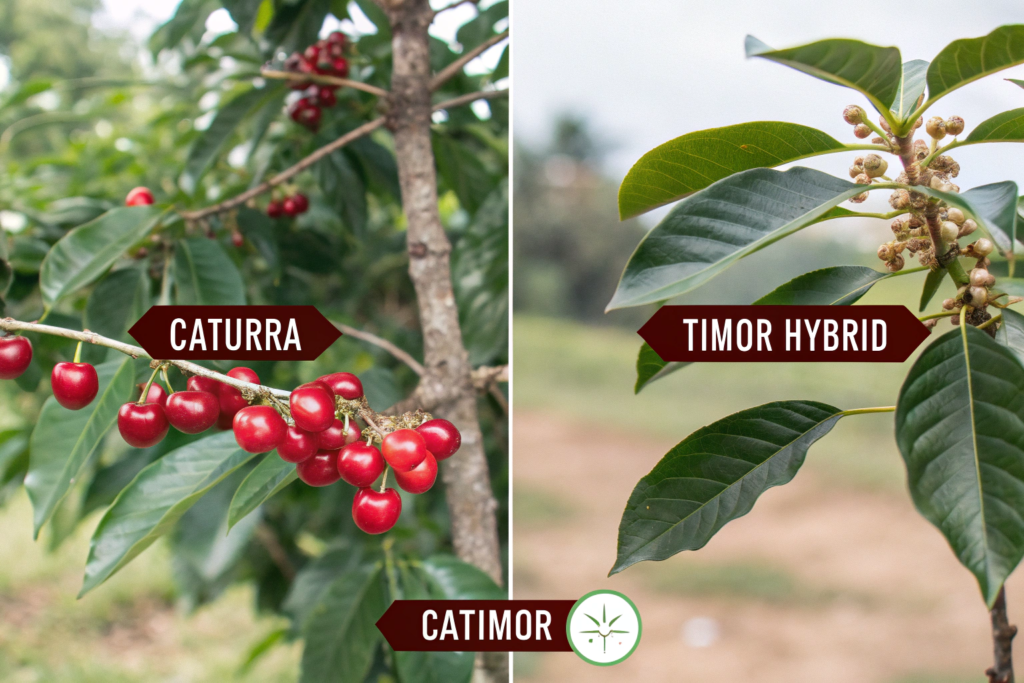
Catimor is a man-made hybrid created by crossing Caturra, a natural dwarf mutation of Bourbon Arabica known for high yield and good cup quality, with Timor Hybrid, a spontaneous cross between Arabica and Robusta that carries strong resistance to coffee leaf rust. The breeding goal was to combine Caturra's compact size and cup quality with Timor's disease resistance. The result is a high-yielding, rust-resistant varietal that can express either excellent or poor cup quality depending on growing conditions.
Let's break down the parents. Caturra is a natural mutation of Bourbon, discovered in Brazil in the early 20th century. It's a dwarf plant—short internodes, compact canopy—which means you can plant more trees per hectare and pick cherries more easily. It yields well and cups well, with the classic Bourbon sweetness and balanced acidity. Its weakness? It's highly susceptible to coffee leaf rust, a fungal disease that can devastate unprotected plantations. Timor Hybrid is the wildcard parent. It's a natural cross between Arabica and Robusta that occurred on the island of Timor in Southeast Asia. Robusta genes gave it powerful resistance to leaf rust and berry borer. Arabica genes gave it some cup potential. But the Robusta influence is noticeable: Timor Hybrid can carry vegetal, earthy, and astringent flavor notes if not carefully selected. Catimor combines these two. The first Catimor crosses were developed in Portugal at the Coffee Rust Research Center (CIFC) in the 1950s and 1960s. Seeds were distributed worldwide to countries struggling with rust epidemics. Yunnan received Catimor in the 1990s, and it became the backbone of China's coffee industry precisely because it could survive the humid, rust-prone conditions of southern Yunnan. The genetic trade-off is this: Catimor carries the Robusta-derived rust resistance from Timor, but it also carries the potential for Robusta-derived off-flavors. Whether those off-flavors express depends on how and where it's grown. At BeanofCoffee, our Catimor selections—specifically the P3 and P4 subtypes—have been selected over multiple generations for cup quality, not just yield. We've essentially bred the harshness out while keeping the disease resistance.
Why Was Catimor Developed and Distributed Globally?
Coffee leaf rust (Hemileia vastatrix) is the most destructive disease in coffee agriculture. It's a fungus that attacks the leaves, causing them to drop. A severely infected tree can't photosynthesize. It starves. Entire harvests can be lost. The 2012-2013 rust epidemic in Central America caused over a billion dollars in damage and pushed many smallholders out of coffee farming entirely.
Catimor was the plant breeders' answer to this crisis. The logic was straightforward: cross a good-tasting but rust-susceptible Arabica (Caturra) with a rust-resistant hybrid (Timor). Select the offspring that carry the resistance genes. Distribute those seeds globally. The program worked. Catimor plantings expanded rapidly in the 1970s through 1990s, particularly in countries with severe rust pressure: Indonesia, India, Vietnam, and China. Catimor-derived varietals like Colombia (developed by Cenicafe in Colombia) and Castillo became the backbone of national replanting programs. The trade-off—potential cup quality issues—was considered acceptable against the certainty of rust devastation. A farm with Catimor might produce 80-point coffee. A farm wiped out by rust produces zero coffee. The math was compelling. Over time, however, specialty coffee buyers became suspicious of Catimor. They associated it with the harsh, vegetal cups they tasted from low-grown, poorly processed lots. The varietal's reputation suffered, even as better selections and better growing practices were improving the cup quality. Today, the conversation is changing. High-altitude Catimor from Yunnan, Colombia, and select other origins is winning blind cuppings and forcing a reappraisal. The rust resistance that made Catimor a survival tool is now also an environmental and economic advantage—fewer fungicide sprays, lower input costs, more sustainable farming. The World Coffee Research varietal catalog documents the breeding history and global distribution of Catimor and its descendants.
How Does Catimor Differ from Pure Arabica Varietals Like Bourbon and Typica?
The difference is genetic, and it expresses in the field and in the cup. Bourbon and Typica are the foundational Arabica varietals—the "heirloom" varieties from which most specialty selections descend. They are pure Arabica, with no Robusta introgression. Catimor is an interspecific hybrid with detectable Robusta DNA.
In the field, Catimor trees are compact and high-yielding, similar to Caturra. They can be planted at high density. The cherries ripen evenly. The leaves are thicker and darker than pure Arabica, reflecting the Timor heritage. The most obvious difference is rust resistance: a Catimor tree planted next to an infected Bourbon tree will stay green while the Bourbon defoliates. In the cup, the difference is variable. A well-grown, high-altitude Catimor can be difficult to distinguish from a pure Arabica in blind cupping—the Robusta-derived off-flavors don't automatically express. A poorly grown, low-altitude Catimor will taste distinctly inferior to a Bourbon grown in the same conditions. The vegetal, earthy, and astringent notes come from specific chemical compounds—higher levels of chlorogenic acids and lower levels of certain lipids—that are more pronounced in Catimor when the plant is stressed or when cherries are picked underripe. The genetic potential for quality is there. It just requires more careful management to unlock. Pure Arabica varietals like Bourbon are more forgiving at moderate altitudes. Catimor demands high altitude and meticulous processing to shine. At 1,500 meters in Baoshan, with selective picking, controlled fermentation, and proper drying, our Catimor cups alongside good Bourbon lots. The genetic difference is real, but it's not destiny. Management matters as much as genetics. The SCA sensory lexicon can help you identify the specific flavor attributes that distinguish different varietals.
What Does High-Altitude Catimor Taste Like?
Taste is the ultimate test. All the genetic background and breeding history mean nothing if the cup isn't good. And the cup is good—when Catimor is grown at altitude and processed to specialty standards, it produces a distinctive, enjoyable, and genuinely complex flavor profile.
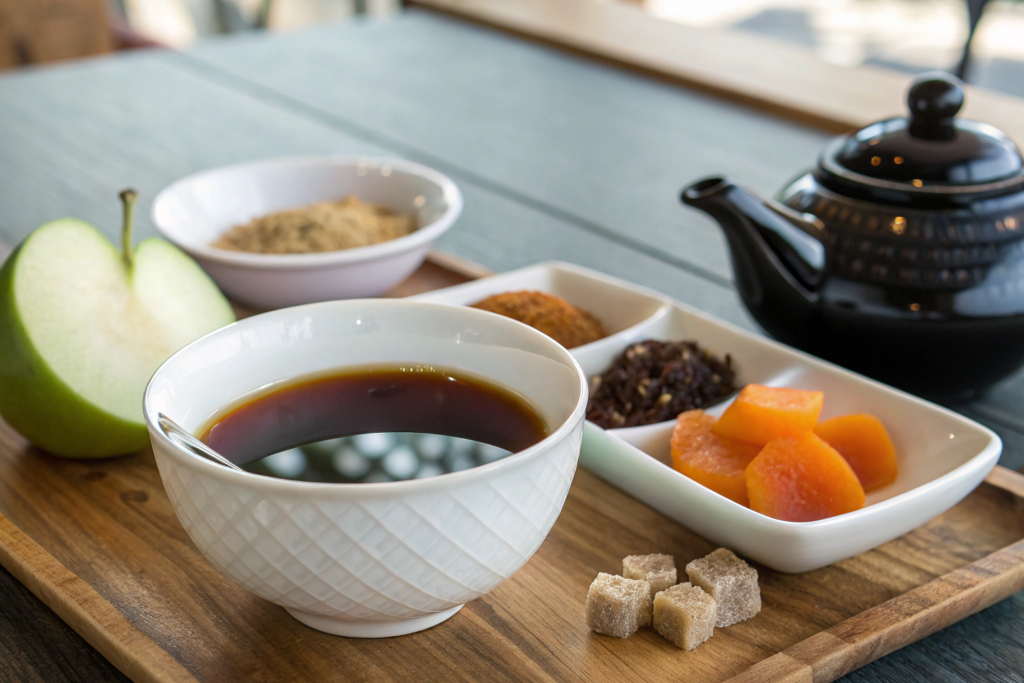
High-altitude Catimor (grown above 1,400 meters) typically expresses a clean, balanced cup with pronounced malic acidity reminiscent of green apple or fresh pear. The sweetness is brown sugar and caramel. The body is medium to full with a silky, tea-like texture—a signature of well-processed Yunnan Catimor. The finish is clean and sweet, sometimes with subtle stone fruit notes like apricot or plum. It lacks the vegetal, earthy, or rubbery notes that plague low-grown Catimor.
The flavor profile is not a copy of any other origin. It's not trying to be Colombian or Guatemalan. It has its own identity. The malic acidity is the defining feature—it's bright without being sharp, fruity without being citrusy. It reminds me of biting into a crisp Asian pear. The tea-like body is the second distinctive trait. There's an almost oolong-like texture that lingers on the palate, smooth and slightly drying in a pleasant way. I've had cuppers describe it as "elegant" and "structured." The brown sugar sweetness anchors the cup. It's not a fruity, berry-like sweetness. It's deeper, more caramelized. In a medium roast, it comes forward as a warm, comforting sweetness that works beautifully in milk-based drinks. The finish is clean. No off-notes. No lingering bitterness. The coffee fades gracefully, leaving a subtle sweetness. This cleanliness is the result of careful processing—selective picking of ripe cherries only, controlled fermentation, proper washing, and careful drying on raised beds. At BeanofCoffee, we cup every day lot. If a lot shows any vegetal or earthy notes, it's downgraded to commercial grade. Only the clean, sweet, balanced lots go into our specialty export program.
What Are the Dominant Flavor Notes by Roast Level?
Roast level transforms Catimor's flavor expression. The same lot can taste dramatically different at a light roast versus a medium-dark roast. Understanding this roast-flavor relationship helps you choose the right profile for your intended use.
At a light roast (City to City+), the malic acidity is front and center. You'll get green apple, fresh pear, maybe a hint of white grape. The body is lighter, tea-like, delicate. The sweetness is more like raw sugar than caramel. This roast is ideal for single-origin pour-overs where you want to showcase the origin character. The coffee is bright, refreshing, and complex. At a medium roast (Full City), the acidity mellows and integrates. The apple notes soften into baked apple or apple pie filling. The sugar caramelizes, bringing forward brown sugar and caramel sweetness. The body fills out, becoming creamier and more substantial. This is the sweet spot for espresso blends—enough acidity to cut through milk, enough sweetness to balance the roast, enough body to carry the shot. At a medium-dark roast (Full City+ to Vienna), the acidity recedes further. The dominant notes are dark caramel, cocoa, and roasted nuts. The tea-like body becomes a smooth, heavy mouthfeel. The origin character is less distinct, but the coffee provides a clean, chocolatey base for a dark roast blend. Catimor takes dark roasting well—it doesn't develop the ashy, carbonized notes that some high-acid coffees do when pushed. At a very dark roast (French), the varietal character is mostly lost. The coffee tastes like roast. I don't recommend this for specialty Catimor—you're paying for origin quality and then roasting it out. Save the dark roast for lower-grade lots. The SCA roast color classification can help you standardize your roast levels when evaluating Catimor.
How Does Catimor Cup Against Other Common Varietals?
Blind cupping is where bias goes to die. I've set up dozens of blind panels comparing our Yunnan Catimor against Caturra, Bourbon, Typica, and Castillo from various origins. The results are instructive.
Against a Colombian Caturra of the same altitude and processing, our Catimor often scores within 0.5-1.0 point. The Catimor is slightly brighter in acidity, slightly less creamy in body. The Caturra is rounder, more chocolate-forward. Neither is clearly superior. They're different expressions of the same quality tier. Against a Guatemalan Bourbon, the Bourbon typically has more complexity—floral notes, spice notes, layered sweetness—that the Catimor doesn't match. A great Bourbon is a great coffee. Catimor at its best is excellent, but it rarely hits the 88-90 point range that elite Bourbon lots can achieve. Against a Brazilian Mundo Novo or Catuai, our Catimor is generally more acidic and more structured. The Brazilian coffees are softer, more chocolate-nutty, less bright. For a blend, they complement each other well—the Brazilian for body and chocolate, the Catimor for acidity and structure. Against a Colombian Castillo (which is also a Catimor-derived varietal), the comparison is close. Both are rust-resistant hybrids with similar cup potential. The terroir difference—Yunnan versus Colombian Andes—expresses more than the varietal difference. The Coffee Quality Institute cupping protocols provide the standardized methodology for these comparisons. Blind cupping with multiple tasters is the only reliable way to assess varietal differences.
What Growing Conditions Produce the Best Catimor?
Catimor's flavor is not fixed by its genetics. It's a potential that is either unlocked or ruined by the growing environment and farm management. The difference between a mediocre Catimor and a great one is almost entirely a function of where and how it's grown.
The best Catimor is produced at altitudes above 1,400 meters, in well-drained volcanic or laterite soils, with distinct wet and dry seasons that allow for clean harvesting and drying. The ideal temperature range is 15-24°C with cool nights that slow cherry maturation. Full sun cultivation produces higher yields but lower cup quality; shade-grown or partially shaded Catimor develops more complex sugars and acids. Selective hand-picking of only ripe cherries (Brix above 18) is essential.
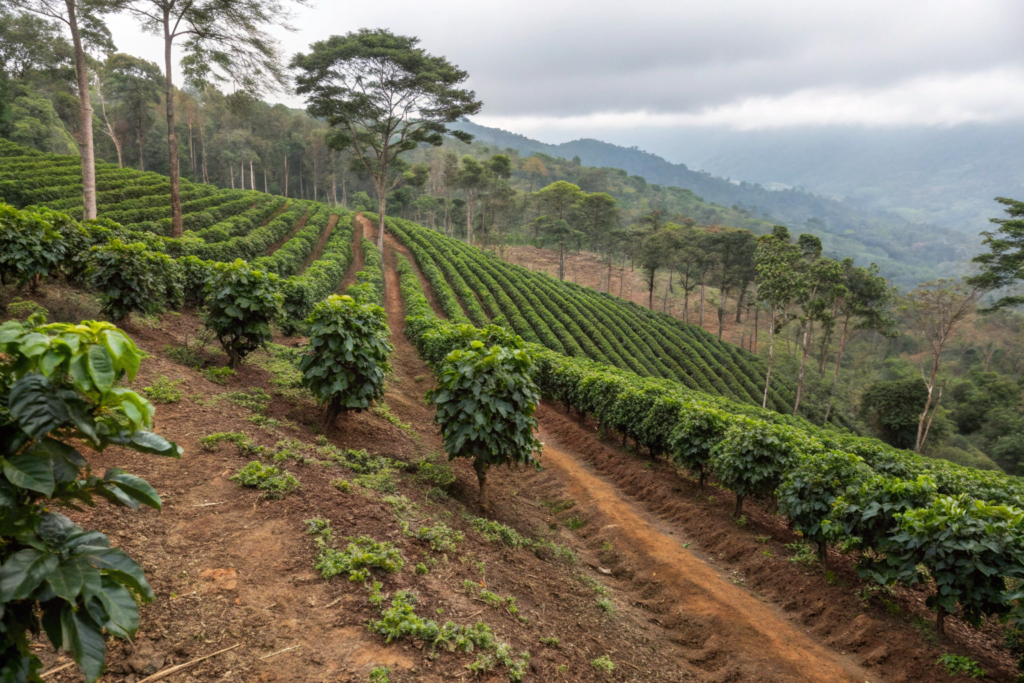
Altitude is the single most important variable. Below 1,200 meters, Catimor tends to be flat, earthy, and vegetal. The cherries mature too quickly. The bean doesn't accumulate enough sugar or organic acids. Above 1,400 meters, the cooler temperatures slow down maturation. The bean spends more time on the tree, absorbing nutrients and developing complex flavor precursors. Our farm in Baoshan sits at 1,400-1,600 meters. The diurnal temperature swing—warm days, cold nights—stresses the plant in a productive way, concentrating sugars and acids in the cherry. Soil matters too. The red laterite soils of Yunnan are rich in iron and slightly acidic, which contributes to the malic acidity in the cup. Good drainage is essential—Catimor roots don't like sitting in water. The dry season in Yunnan (November to March) coincides with harvest, which is ideal. Dry weather during picking and processing prevents mold and allows for clean sun-drying. Shade is a debated topic. Catimor, with its Timor heritage, is often grown in full sun. It tolerates it. But I've found that partial shade—about 20-30% canopy cover from native trees—improves cup quality. The cherries mature more slowly under shade, developing more sugar. The trade-off is slightly lower yield. For specialty-grade Catimor, the quality gain justifies the yield loss. At BeanofCoffee, our specialty blocks are partially shaded. Our commercial-grade blocks are full sun.
Why Does Altitude Matter So Much for Catimor Quality?
Altitude is not just a number on a mountain. It's a proxy for temperature, specifically the difference between daytime highs and nighttime lows. That temperature differential is what drives flavor development in coffee cherries.
At low altitude (below 1,000 meters), night temperatures are warm. The coffee cherry's metabolism continues at a high rate through the night. The bean fills quickly but simply—lots of starch, not much sugar, few volatile aromatic compounds. The result is a hollow, flat, sometimes earthy cup. At high altitude (above 1,400 meters), night temperatures drop significantly—often into the low teens Celsius or even single digits. The cherry's metabolism slows to a crawl. The maturation period extends from 6-7 months to 8-9 months. During those extra months, the bean accumulates sugars instead of just starches. It develops higher concentrations of organic acids—malic, citric, tartaric—that give the cup its brightness and complexity. It produces more volatile aromatic compounds, the precursors to the floral and fruity notes that survive roasting. For Catimor specifically, altitude acts as a genetic filter. The Timor-derived genes that code for harsh, vegetal compounds are downregulated under cool-night conditions. The Arabica-derived genes that code for sugars and pleasant acids are upregulated. It's as if the high altitude turns down the Robusta influence and turns up the Bourbon influence. This isn't speculation. It's observable in the cup. The same Catimor selection planted at 1,000 meters and 1,500 meters on the same farm will produce noticeably different cup quality. The high-altitude lot will be brighter, sweeter, and cleaner. The low-altitude lot will be duller, earthier, and harsher. The World Coffee Research altitude studies document this relationship across multiple varietals and origins.
How Does Processing Method Affect Catimor's Flavor Profile?
Processing is where the farmer makes or breaks the cup. Even perfectly grown Catimor cherries can be ruined by bad processing. Conversely, competent processing can elevate decent cherries into a good cup. The three main processing methods—washed, natural, and honey—produce dramatically different Catimor profiles.
Washed processing is the standard for Yunnan Catimor and produces the cleanest expression of the varietal. The cherries are pulped, fermented in water tanks for 12-36 hours to remove the mucilage, washed, and dried. The result is a transparent cup where the acidity and sweetness of the bean itself shine. Washed Catimor from our farm expresses green apple, brown sugar, and black tea. Clean. Structured. Easy to identify on a cupping table. Natural processing leaves the cherry intact. The whole fruit dries on raised beds for 15-25 days. The bean absorbs sugars and fruit compounds from the drying cherry. Natural Catimor is a different animal entirely. The acidity is muted. The body is heavier, almost syrupy. The flavor notes shift toward dried fruits—raisin, dried mango, fermented berries. There's often a winey, slightly funky note that some cuppers love and others find distracting. Natural Catimor is riskier to produce because the thick mucilage can mold if the drying isn't perfectly managed. Honey processing is the middle ground. The skin is removed, but the mucilage is left on the parchment during drying. The result is a cup between washed and natural—more body and sweetness than washed, more clarity and acidity than natural. Honey Catimor from our farm has a creamy mouthfeel and notes of caramelized fruit. For specialty blends, washed Catimor is the most versatile. It integrates cleanly without adding processing-related flavors that might clash with other components. For a single-origin offering, natural or honey Catimor can be a more distinctive, conversation-starting coffee. The CQI processing guide details the technical requirements and flavor outcomes of each processing method.
How to Use Catimor in Your Coffee Program?
Catimor is not a one-note coffee. It can play multiple roles in a roaster's portfolio, from the star of a single-origin offering to the quiet workhorse of a house blend. The key is matching the right Catimor lot to the right application.
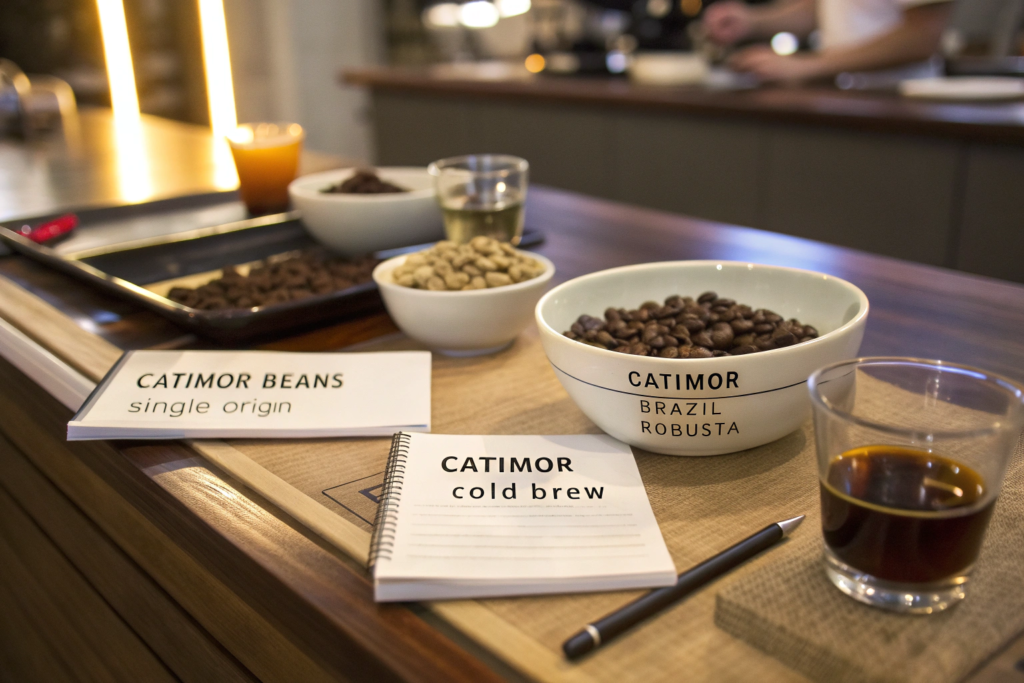
Catimor can be used as a bright, clean single-origin pour-over at light roasts, as the structural backbone of an espresso blend at medium roasts, as a cold brew base due to its clean finish and tea-like body, and as a value component in commercial blends where it adds acidity and sweetness without introducing defects. The specific lot selection—grade, roast level, and processing method—determines which application is optimal.
For a single-origin feature, select a high-grade washed Catimor (86+ points, Grade 1, Screen 17/18). Roast it light to medium-light. Brew it as a pour-over or drip. The marketing story is compelling: "From the tea mountains of Yunnan, China, this high-altitude Arabica challenges everything you thought you knew about Chinese coffee." The cup quality backs up the story. For an espresso blend base, use a washed Catimor at 84-85 points. Roast it medium. It will contribute acidity, structure, and a clean finish to the blend, balancing heavier components like Brazilian natural or adding lift to a dark-roasted Robusta component. For cold brew, Catimor's tea-like body and clean finish are ideal. Cold brewing extracts minimal bitterness and highlights the natural sweetness. A washed Catimor cold brew tastes refreshing, slightly fruity, and very easy to drink. It's a premium cold brew option that costs less than using a single-origin Colombian or Ethiopian. For a commercial blend, use an 83-84 point Catimor as a cost-effective acidity component. It replaces more expensive Central American coffees without introducing the earthy or baggy defects of cheap Robusta. At BeanofCoffee, I help buyers select the right Catimor lot for their specific application. The same farm can produce multiple grades and profiles, each suited to a different use.
What Roast Profile Unlocks Catimor's Best Attributes?
Catimor has a specific density and chemical composition that responds well to certain roast approaches and poorly to others. Understanding these characteristics helps you avoid common roasting mistakes.
Catimor beans from high altitude are dense—denser than Brazilian Arabica, similar to or slightly denser than Colombian. This density means they need a higher charge temperature and absorb heat differently. The roast should start with sufficient thermal energy to penetrate the bean. A low charge temperature on a dense Catimor will result in an underdeveloped, grassy cup. The drying phase should be patient. Don't rush the yellowing with high gas. Give the bean time to release moisture evenly. A 5-6 minute drying phase is typical for a 10-12 minute roast. The Maillard phase—the browning stage between yellowing and first crack—is where Catimor develops its sweetness. Extend this phase slightly. A rushed Maillard phase produces a vegetal, underdeveloped cup even if the final roast color looks right. I aim for 3-4 minutes in Maillard for a medium roast. First crack on Catimor is typically slightly later than on a lower-density coffee, and it's more vigorous. After first crack, the development time depends on your target profile. For a light roast showcasing acidity: 60-90 seconds of development after the end of first crack. For a balanced medium roast: 90-120 seconds. For an espresso roast: 120-150 seconds. Avoid dropping too early. An under-roasted Catimor will have a raw, grassy note that's unpleasant. Avoid baking it—a long, low-heat roast that stretches beyond 14-15 minutes will flatten the acidity and produce a dull, papery cup. The sweet spot is a well-paced 10-13 minute roast with a defined crack and adequate development. The Roasters Guild training materials provide detailed guidance on profiling dense, high-grown coffees.
How to Introduce Catimor to Customers Without the Stigma?
The word "Catimor" is not a selling point for most consumers. It sounds technical, unfamiliar, and, to those who've heard negative things, suspect. The origin—Yunnan, China—can also trigger skepticism from customers who associate Chinese products with low quality. Your marketing strategy needs to overcome these biases.
The most effective approach is to lead with flavor and story, not varietal name. On the bag, feature the origin: "Yunnan, China" or "Baoshan, Yunnan." Feature the flavor notes: "Green Apple, Brown Sugar, Black Tea." Feature the farm story: "Grown at 1,500 meters in the ancient tea mountains of southern China." Don't put "Catimor" on the front of the bag. It's not a consumer-facing term. If you want to be transparent about varietal for educated customers, put it in the back-label description: "Varietal: Catimor, a rust-resistant hybrid grown at high altitude for exceptional cup quality." Frame it positively as a choice, not a compromise. For the China origin stigma, the best antidote is a blind tasting. Host a cupping or a tasting event. Serve the Yunnan coffee alongside a Colombian and a Guatemalan without labels. Ask customers which they prefer. When the Yunnan wins or places, reveal the origin. The "wow" moment converts skepticism into advocacy. That customer will tell their friends, "I tried this Chinese coffee and it was actually amazing." For wholesale accounts, provide samples and data. Cup scores, roast profiles, blend ratios. Let the coffee speak for itself before you mention the origin. Once they like the coffee, the origin becomes an interesting story, not a risk factor. The SCA consumer research on origin perception shows that consumer attitudes toward non-traditional origins are shifting rapidly, especially among younger demographics who value discovery and uniqueness over tradition.
Conclusion
Catimor is a varietal defined by its potential rather than its reputation. Genetically, it's a pragmatic hybrid—Arabica cup quality crossed with Robusta disease resistance, bred to survive rust epidemics. That genetic background gives it the capacity for both harsh, vegetal flavors and clean, sweet, complex cups. The difference is growing conditions and processing. High-altitude Catimor from Yunnan, grown above 1,400 meters on our Baoshan farm, picked selectively at peak ripeness, washed carefully, and dried on raised beds, produces a coffee that cups at 84-87 points with malic acidity, brown sugar sweetness, and a distinctive tea-like body. It outperforms many pure Arabica lots from lower altitudes or less careful processing. For a roaster, Catimor is a versatile tool: a bright single-origin at light roasts, a structural blend component at medium roasts, a clean cold brew base, and a cost-effective acidity driver for commercial blends. The stigma attached to the name is a decade out of date, and the roasters who look past it are finding exceptional value.
At BeanofCoffee, we've spent years selecting, growing, and processing Catimor to specialty standards on our 10,000-acre farm. We offer washed Catimor at multiple grade levels, from 83-point Estate Blend to 87-point microlots. All are traceable to specific terraces, Q-graded, and shipped direct.
If you want to taste what high-altitude Catimor can do, contact my export director, Cathy Cai. She'll send you a sample kit with our current lots, including washed, natural, and honey-processed Catimor. Cup them blind against your current components and decide for yourself. Email her at: cathy@beanofcoffee.com.