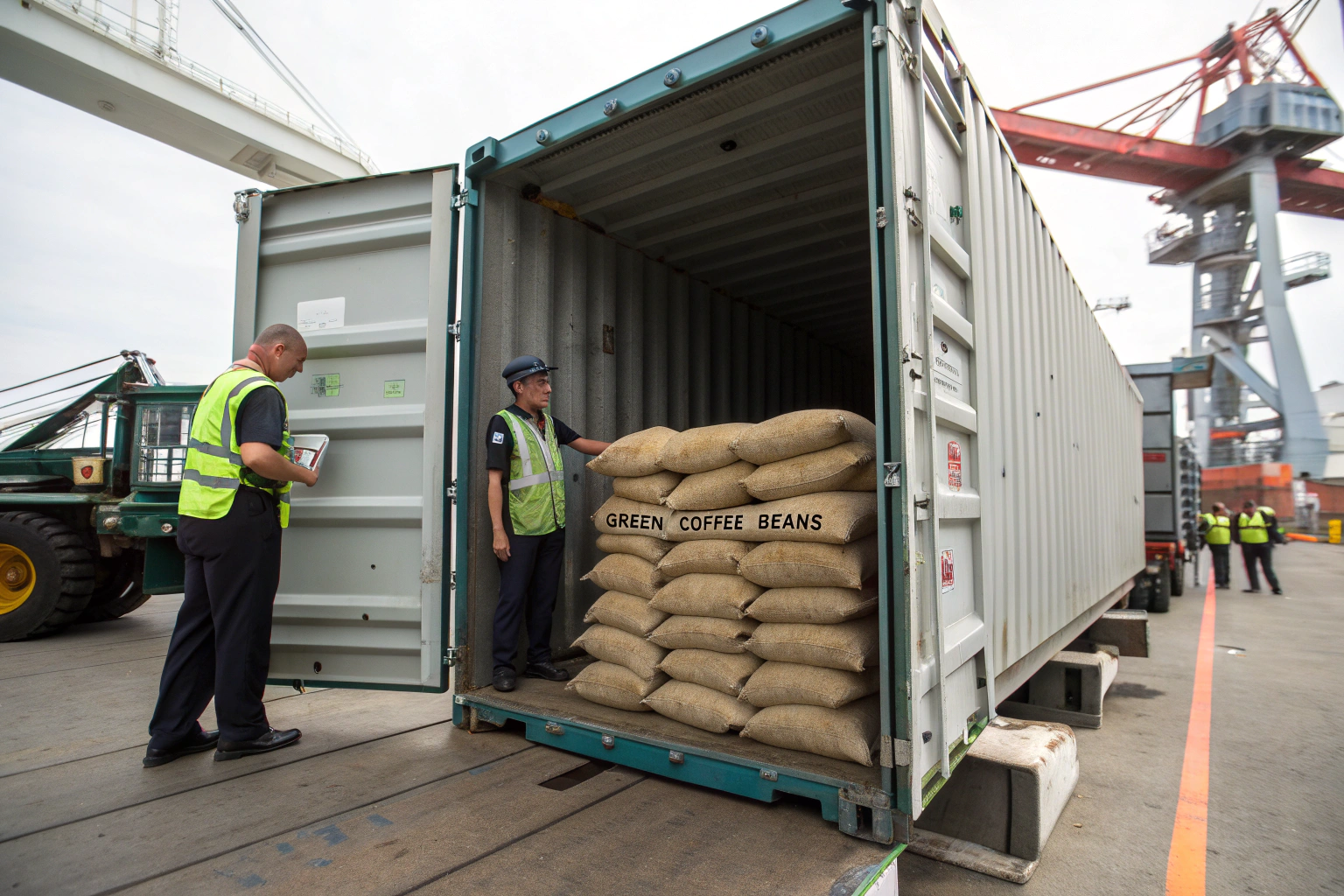
Ron called me two weeks ago, frustrated. He'd just received a container of green coffee at his warehouse in Houston. The customs broker sent him the final entry summary, and there it was—a line item for duties he wasn't expecting. His previous three containers from another origin had cleared duty-free. This one got hit with a 7.5% tariff because the coffee was classified differently. He didn't know why. He just knew it cost him an extra $8,000 he hadn't budgeted for. The pain of unexpected tariffs is sharp. It's a margin eraser. It turns a carefully costed blend into a loss leader overnight.
Most green coffee imports into the United States and the European Union enter duty-free or at very low rates, provided the coffee is unroasted, non-decaffeinated, and correctly classified under HS code 0901.11. Tariff costs arise from three main sources: incorrect HS code classification by the customs broker, importing roasted or processed coffee instead of green, and country-specific trade disputes that temporarily impose additional duties on certain origins. Avoiding tariffs is mostly about correct classification, origin selection, and documentation.
The good news is that green coffee is one of the most tariff-advantaged agricultural commodities in global trade. Neither the US nor the EU produces significant quantities of coffee domestically. There are no domestic coffee industries to protect with tariffs. The result is a trade policy that generally welcomes green coffee with open arms—zero or near-zero duties. But "generally" is not "always," and the exceptions can be costly if you don't know them. I export coffee from our 10,000-acre farm in Baoshan, Yunnan to the US, Europe, and Australia. I've navigated the tariff landscape for every major destination. Let me walk you through exactly how tariffs work for coffee, where the traps are, and how to structure your imports to minimize or eliminate duty costs entirely.
What Is the Current Tariff Rate for Green Coffee Beans in the US and EU?
The baseline rule for green coffee is simple: it's duty-free. But the rule has nuances, and "green coffee" is not one single category. The specific classification determines the actual rate. Getting the classification right is the difference between zero duty and an unexpected bill.
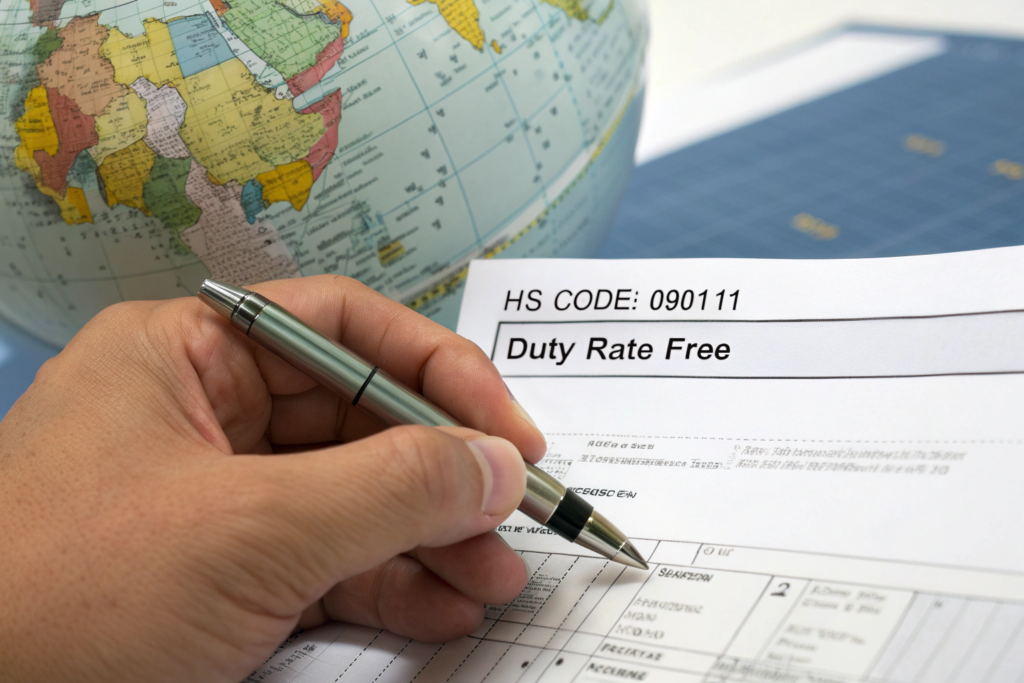
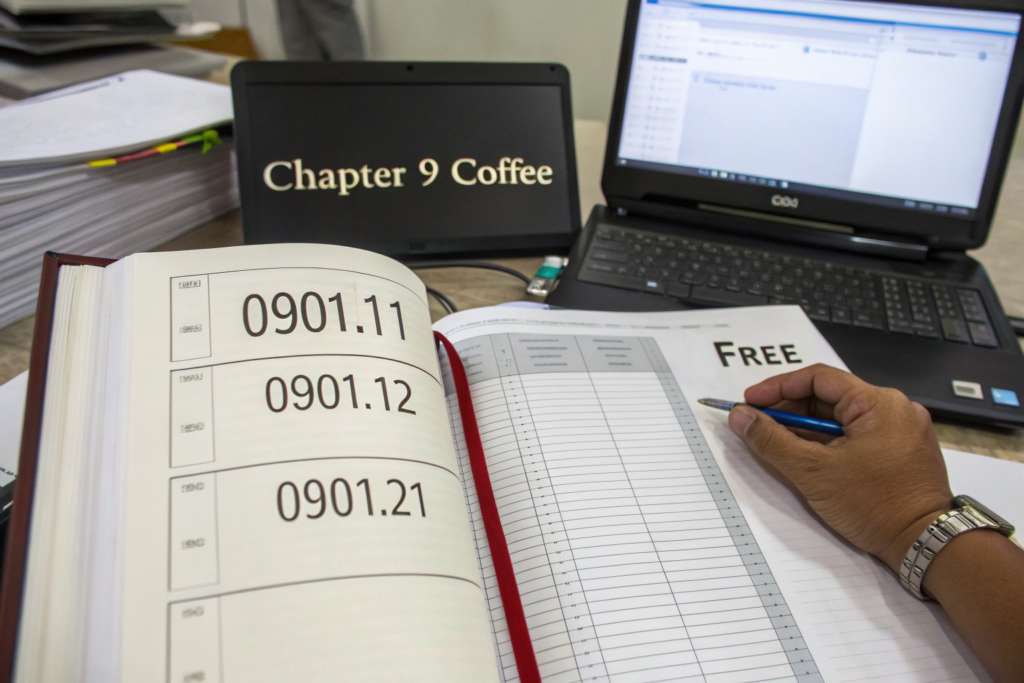
In the United States, green coffee beans (unroasted, non-decaffeinated) classified under Harmonized System code 0901.11 are imported duty-free. In the European Union, green coffee under the same HS code also enters duty-free from all origins. Roasted coffee (0901.21) and decaffeinated coffee (0901.12) have different duty treatment and may incur tariffs. Chinese-origin green coffee currently enjoys the same zero-duty access as coffee from any other origin under standard WTO Most-Favored-Nation rates.
Let's break this down by destination. For the US, the Harmonized Tariff Schedule is maintained by the US International Trade Commission. Chapter 9 covers coffee. HS 0901.11 is "Coffee, not roasted, not decaffeinated." The "General" column of duty for this code is "Free." That applies to imports from all countries with normal trade relations, which includes China. There is no additional Section 301 tariff on green coffee from China. Those tariffs targeted specific industrial goods and consumer products—coffee was not on the list. For the EU, the TARIC (Integrated Tariff of the European Communities) database shows the same classification and the same result. HS 0901.11 imports from all non-preferential countries enter at 0% duty. The EU does have some preferential agreements with specific coffee-producing countries—ACP countries under Economic Partnership Agreements, for example—but those agreements don't lower the coffee tariff because it's already zero. The benefit of those agreements is on roasted and processed coffee, not green. The key takeaway: if your green coffee is correctly classified as HS 0901.11, and it's truly unroasted and non-decaffeinated, you should pay zero import duty in both the US and EU. If you're paying duty, something is wrong. At BeanofCoffee, every shipment goes out with the correct HS code on the commercial invoice, the packing list, and the bill of lading. We make sure the classification is unambiguous.
Are There Any Hidden Tariffs or Fees on Chinese Coffee?
The fear of hidden China-specific tariffs is understandable. The US-China trade tensions of the past several years have imposed additional duties on thousands of product categories. Roasters who import coffee equipment, ceramic mugs, or packaging from China may have encountered these tariffs directly. It's natural to worry that coffee beans might be caught in the crossfire.
Green coffee from China is not subject to Section 301 additional duties. The USTR tariff lists, which run to hundreds of pages, do not include HS code 0901.11 or any subcategory of green coffee. Coffee was deliberately excluded from the tariff actions, likely because it's a tropical agricultural product that the US does not produce in commercial quantities. Imposing a tariff on Chinese coffee would not protect any US industry—it would simply raise costs for US roasters and consumers. So, the Section 301 issue is a non-factor for green coffee. However, there are other fees that can feel like tariffs but are technically different. The Merchandise Processing Fee (MPF) is a CBP charge on all formal entries. It's a percentage of the entered value with a minimum and maximum cap. It's not a duty, but it shows up on the customs bill. Port maintenance fees, harbor maintenance fees, and customs broker fees are also separate from duty. These are costs of importing, not tariffs. The distinction matters because you can't avoid them the way you can avoid a misclassification duty. There's also the possibility of antidumping or countervailing duties. These are country-and-product-specific penalties imposed when the US Department of Commerce finds that a country is selling a product below fair market value or subsidizing exports. There are no such duties on Chinese green coffee. The USTR Section 301 tariff lists are public. You can search them by HS code to confirm that green coffee is not included.
How Do Tariffs Differ Between Green, Roasted, and Decaffeinated Coffee?
The processing state of the coffee changes the tariff classification and, potentially, the duty rate. Green coffee is duty-free. Once you roast it, decaffeinate it, or otherwise process it, the tariff situation changes. Understanding these lines helps you structure your imports to minimize costs.
Roasted coffee is classified under HS 0901.21. In the US, roasted coffee from most origins is also duty-free. The "General" rate for HS 0901.21 is "Free." So, if you're importing roasted coffee from China, the base tariff is still zero. However, roasted coffee is a processed food product, not a raw agricultural commodity. It may be subject to different FDA requirements, labeling regulations, and possibly state-level taxes that don't apply to green coffee. In the EU, roasted coffee (HS 0901.21) is generally subject to a duty of 7.5% for non-preferential origins, though there are zero-duty quotas for certain origins. The EU policy treats roasted coffee as a value-added product worth protecting with a moderate tariff. Decaffeinated coffee is classified under HS 0901.12, regardless of whether it's roasted or not. In the US, decaffeinated green coffee is duty-free. In the EU, decaffeinated coffee has varying rates depending on whether it's roasted and the origin. The lesson: import green coffee whenever possible. Do your roasting and any post-processing in your home country. You'll avoid the roasted coffee duties that some markets impose and you'll have fresher coffee. At BeanofCoffee, we export only green coffee—unroasted, non-decaffeinated. Our buyers handle the roasting in their own facilities. This is the most tariff-efficient model.
How to Ensure Correct HS Code Classification to Avoid Unnecessary Duties?
The HS code is the DNA of your shipment. It tells customs exactly what the product is, and from that classification, the duty rate is automatically applied. A wrong code means a wrong duty rate—and it's always more, not less. The good news is that classification for green coffee is straightforward if you know the rules.
Green coffee beans correctly classified as HS 0901.11 must be unroasted, non-decaffeinated, and in whole bean form. The classification is independent of varietal (Arabica or Robusta), origin (China, Colombia, Brazil), and certification status (organic, Fair Trade). The most common misclassification errors are: using the roasted code (0901.21) for green coffee, using the decaf code (0901.12) for regular coffee, or using a generic "coffee" code that triggers manual review.
The first line of defense is your commercial invoice. The product description on the invoice should match the HS code exactly. If the invoice says "Green Coffee Beans" and the code is 0901.11, the customs officer can verify the match instantly. If the invoice says "Coffee" and the code is 0901.11, the vague description might trigger a manual review. I always provide a detailed product description on our invoices: "Green Unroasted Arabica Coffee Beans, Washed, Grade 1, HS Code 0901.11." This leaves no ambiguity. The second line of defense is your customs broker. Brokers make mistakes. They handle dozens of product categories. Coffee may not be their specialty. Always review the entry summary before it's filed. Look at the HS code field. It should say 0901.11. If it says 0901.21 or 0901.12, flag it immediately. Ask the broker to correct it. The entry hasn't been filed yet—it's fixable. The third line of defense is the physical product. The coffee must actually be unroasted and non-decaffeinated to qualify for the zero-duty code. Customs can and does inspect shipments. If they find roasted beans in a container declared as green, you have a problem. The misclassification will be treated as an error at best, fraud at worst. Don't cut corners. At BeanofCoffee, we pack only green coffee, we label it clearly, and we provide the correct HS code on every document. Our buyers' brokers rarely have issues because the paperwork is clean from the start.
What Are the Most Common HS Code Errors for Coffee Importers?
I've seen a handful of classification errors repeat across different buyers, different brokers, different ports. They're almost always the same mistakes. Knowing them in advance means you can check for them and prevent them.
Error one: using the roasted coffee code 0901.21 for green coffee. This happens when a broker unfamiliar with coffee sees "coffee" on the invoice and defaults to the most common coffee code. Roasted coffee has higher documentation requirements and, in some jurisdictions, attracts a duty. Using this code for green coffee is simply wrong and will cost you money or delays. Error two: using a generic "coffee extract or essence" code (2101.11 or 2101.12). These codes are for instant coffee, coffee concentrates, and coffee flavorings. They have completely different duty rates and regulatory requirements. A green coffee bean should never be classified under Chapter 21. Error three: misclassifying decaffeinated green coffee as regular green coffee. Decaf green coffee is HS 0901.12, not 0901.11. If you're importing decaf green, you must use the decaf code. The duty is still free in the US, but the classification must be accurate for FDA tracking. Error four: using a country-specific sub-code that triggers additional scrutiny. The US HTS extends to 10 digits. The 10-digit code adds detail about origin and product type. A broker unfamiliar with coffee might select a code that flags the shipment for additional agricultural inspection. The correct approach is to use the most specific code that accurately describes the product. For green Arabica coffee from China, that's typically 0901.11.00.25 or a similar sub-code. Your broker should confirm the exact 10-digit code for your specific origin and varietal. The USITC HTS search tool allows you to look up the full 10-digit code for any product.
How to Work with Your Customs Broker to Prevent Tariff Issues?
Your broker is your legal representative at the border. They file the entry, pay the duties, and interface with CBP on your behalf. A good broker saves you money. A careless broker costs you money. Managing the broker relationship is a skill that pays for itself many times over.
The first step is to select a broker with food import experience, ideally coffee experience. Ask directly: "How many coffee containers have you cleared in the past year?" A broker who clears hundreds of coffee containers will know the HS codes, the FDA requirements, and the common pitfalls. A broker who clears mostly textiles or electronics will have a learning curve at your expense. The second step is to provide complete and accurate documentation. I send every buyer a document package that includes the commercial invoice, packing list, bill of lading, phytosanitary certificate, and any certification documents. The invoice includes the correct HS code, the detailed product description, the value, the weight, and the container number. The packing list matches the invoice. The bill of lading matches both. When the broker receives a clean, consistent document package, the likelihood of a filing error drops dramatically. The third step is to review the entry summary before it's filed. Ask your broker to send you a draft of the CBP Form 7501 entry summary. Check the HS code. Check the value. Check the importer of record number. Check the duty rate. A 30-second review can catch a $10,000 error. Once the entry is filed, corrections are possible but messy—they require a Post-Summary Correction or a protest. Better to catch the error before filing. The fourth step is to build a relationship with your broker. Don't treat them as a vendor. Treat them as a partner. Explain your business. Share your sourcing plans. A broker who knows you import green coffee regularly will set up templates and processes that reduce errors over time. The NCBFAA broker directory can help you find a licensed customs broker with the right specialization.
Can You Legally Reduce or Eliminate Tariffs Through Free Trade Agreements?
Free Trade Agreements are one of the most powerful tools for reducing import duties—for products that have duties to reduce. For green coffee, the situation is unique. Because the baseline duty is already zero in most major markets, FTAs are generally not necessary for green coffee. But there are exceptions, edge cases, and forward-looking considerations worth understanding.
For green coffee imported into the US and EU, Free Trade Agreements provide no additional tariff benefit because the Most-Favored-Nation (MFN) rate is already zero. FTAs become relevant if you import roasted or processed coffee, if you import from an origin subject to MFN duties (rare for green coffee), or if future trade policies change the baseline rates. For Chinese green coffee, current MFN rates apply with zero duty, and no FTA is needed.
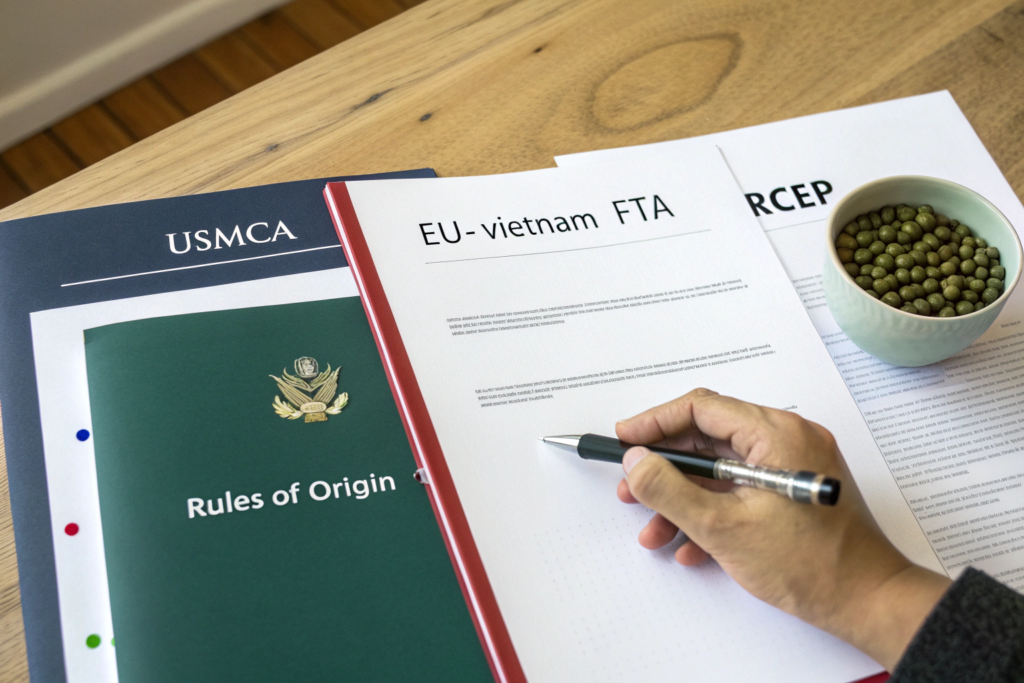
The logic is simple. An FTA reduces or eliminates duties for qualifying goods from partner countries. If the duty is already zero for all countries under MFN, the FTA has nothing to reduce. You can't go below zero. So, for a US roaster importing green coffee from China, Colombia, Brazil, or Vietnam, the duty is zero regardless of whether the US has an FTA with that country. The zero rate is universal under MFN. However, FTAs matter in two specific scenarios. First, if you're importing roasted coffee into the EU, where the MFN rate is 7.5%. An FTA between the EU and the origin country could reduce or eliminate that 7.5% duty. For example, the EU-Vietnam FTA phases out duties on Vietnamese roasted coffee over time. If you're sourcing roasted coffee from a country with an FTA, the duty savings can be significant. Second, if future trade policy changes the baseline rates. Trade policy is political. A future US administration could theoretically impose a general tariff on all coffee imports, or a specific tariff on a particular origin. In that scenario, an FTA could provide a duty exemption that MFN no longer offers. This is speculative but worth monitoring. For now, the practical reality is that green coffee is duty-free worldwide under standard MFN rates, and FTAs are not a factor in your sourcing decisions. The WTO tariff database shows the MFN and preferential rates for every country and product.
Does China Have Any Trade Agreements That Benefit Coffee Exporters?
China is a member of several regional trade agreements, but their impact on coffee exports is limited because the destination markets already offer zero duty on green coffee under MFN. The agreements don't create additional benefits where no duty exists.
The most significant agreement involving China is RCEP—the Regional Comprehensive Economic Partnership—which includes China, Japan, South Korea, Australia, New Zealand, and the ten ASEAN countries. RCEP reduces tariffs on thousands of products among member countries. For Chinese green coffee exported to Japan or South Korea under RCEP, there may be tariff reductions compared to MFN rates. Japan's MFN duty on green coffee is already low or zero, so the impact is small, but it exists on paper. For Australia and New Zealand, green coffee duty is already zero. RCEP doesn't change that. The ASEAN-China Free Trade Area (ACFTA) is another relevant agreement. It covers trade between China and Southeast Asian countries. For coffee exported from China to ASEAN, ACFTA can provide tariff reductions if the destination country charges duty on green coffee. But most ASEAN countries are coffee producers themselves, so imports from China are not a major trade flow. The bottom line: for Chinese green coffee exports to the US and EU—the largest markets—no trade agreement is necessary because MFN rates are zero. The agreements are nice to have as a backstop against future tariff changes, but they don't provide current financial benefits. At BeanofCoffee, we ship to the US and EU under standard MFN terms. Our buyers don't file FTA certificates of origin because they're not required for duty-free entry.
What Documentation Proves Origin for Duty-Free Entry?
Even though green coffee enters duty-free without an FTA, customs authorities still care about origin. The origin affects statistical tracking, FDA prior notice requirements, and phytosanitary inspection protocols. Certain documents establish origin and must be included in your import package.
The primary origin document for coffee is the phytosanitary certificate. It's issued by the national plant protection authority of the exporting country—in China's case, the General Administration of Customs (GACC). The phyto certificate states the country of origin, the product, the quantity, and certifies that it's free of specified pests. It's an official government document, and it carries legal weight. The commercial invoice also states the origin, usually in the product description: "Green Unroasted Arabica Coffee Beans, Product of China." The bill of lading may indicate the port of loading and the origin. For green coffee, a formal Certificate of Origin (COO) is generally not required for duty-free entry under MFN in the US or EU. Some buyers request a COO for their own records or for marketing purposes, and we can provide one upon request. A COO is a separate document, typically issued by a chamber of commerce or a government trade office, that certifies the goods are wholly obtained or substantially transformed in the stated country. For USDA Organic or EU Organic certified coffee, the organic certificate also serves as an origin document. The certifier's database links the certificate to the specific farm and exporter. If your coffee is certified organic, the organic certificate provides a second layer of origin verification beyond the phyto. The USDA organic integrity database links organic certificates to specific operations and locations.
How to Structure Your Import to Minimize All Duties and Fees?
Import costs go beyond tariffs. Even when duty is zero, there are processing fees, broker fees, port charges, and logistics costs. Structuring your import to minimize the total cost of getting coffee from farm to roastery is a holistic exercise. The tariff is just one line item—and it should be zero for green coffee.
To minimize all import costs, import green coffee only (not roasted or processed), use the correct HS code 0901.11 on all documents, ship in full container loads to reduce per-unit freight and fees, use CIF terms to consolidate logistics costs, and work with an experienced food-and-coffee customs broker who files correctly the first time. The tariff line should read zero. The other fees are manageable and predictable with proper planning.
Let's walk through the cost structure of a typical green coffee import from China to the US. Assume a 20-foot container with 19,000 kilos of green coffee, FOB value $60,000. The ocean freight adds $3,000-4,000. Marine insurance adds $200-300. Customs broker fee: $150-300 per entry. Merchandise Processing Fee: 0.3464% of entered value, capped at around $600. Harbor Maintenance Fee: 0.125% of entered value. Port terminal charges: $400-600. Domestic trucking to your roastery: variable by distance. The total non-coffee costs are $4,500-6,500. On a per-pound basis, that's roughly $0.10-$0.15. These are the real import costs. The duty line, if correctly classified, is zero. The way to minimize the total is to ship efficiently. A full container load (FCL) has a much lower per-unit freight cost than a less-than-container load (LCL). If you're importing a few pallets at a time by LCL, the freight and handling costs can double. Consolidate your orders. Plan ahead. Order in full containers. Use CIF terms with your supplier. CIF means the supplier pays the freight and insurance to your destination port. You get one price per pound delivered. You don't manage the shipping yourself. This consolidates costs and simplifies your accounting. At BeanofCoffee, we offer CIF to all major US and European ports. Our buyers get a single price quote that includes the coffee, the freight, and the insurance. They handle customs clearance and domestic trucking. That's a clean cost structure with no surprises.
How to Calculate Your Total Landed Cost Accurately?
The landed cost is the total cost of the coffee when it's sitting on your roastery floor, ready to roast. It includes the coffee itself, plus every logistics and regulatory cost incurred along the way. Accurate landed cost calculation is essential for pricing your roasted coffee and managing your margins.
Here's a simple landed cost template. Line one: FOB price per pound. This is what you pay the supplier for the coffee, loaded onto the ship. Line two: ocean freight per pound. Total freight cost divided by total pounds in the container. Line three: marine insurance per pound. Typically 0.5% of the FOB value. Line four: customs broker fee per pound. Total broker fee divided by total pounds. Line five: Merchandise Processing Fee per pound. 0.3464% of entered value, divided by pounds. Line six: Harbor Maintenance Fee per pound. 0.125% of entered value. Line seven: port terminal charges per pound. Line eight: domestic trucking per pound. Total trucking cost divided by total pounds. Add lines one through eight. That's your landed cost per pound. Tariff is line nine—but it should be zero. If you're using CIF terms, lines two and three (freight and insurance) are included in the CIF price. Your formula simplifies to: CIF price plus broker, MPF, HMF, port fees, and trucking. Let's plug in some realistic numbers. CIF price: $3.20/lb. Broker: $200 per entry on 42,000 lbs = $0.005/lb. MPF: 0.3464% of $134,400 CIF value = $466, capped at $600, divided by 42,000 = $0.011/lb. HMF: 0.125% of $134,400 = $168, divided by 42,000 = $0.004/lb. Port fees: $500, divided by 42,000 = $0.012/lb. Trucking: $1,200, divided by 42,000 = $0.029/lb. Total landed cost: $3.20 + $0.005 + $0.011 + $0.004 + $0.012 + $0.029 = $3.26/lb. The non-coffee costs added $0.06/lb. The tariff added zero. That's the power of correct classification and full-container shipping. The SCA green coffee pricing guide includes landed cost calculators and templates.
What Payment Terms Help Minimize Financial Risk on Imports?
Payment terms don't directly affect tariffs, but they affect your total financial exposure on an import transaction. The right payment terms protect your cash flow and reduce the risk of paying duties or fees on coffee that hasn't arrived or doesn't meet spec.
The standard payment structure for Chinese coffee exports is Telegraphic Transfer with a 30/70 split. You pay 30% of the invoice value as a deposit when you place the order. This commits the coffee to you and initiates processing. You pay the remaining 70% when the coffee is loaded onto the vessel and the supplier sends you a scanned copy of the bill of lading. At that point, the coffee is on the ship and you have proof. This structure limits your exposure. You're not paying 100% upfront for coffee that hasn't been produced yet. The 30% deposit is your commitment. The 70% balance is paid only when the coffee is shipped. For first-time transactions, Alibaba Trade Assurance or a Letter of Credit at sight provide additional security. Trade Assurance holds your payment in escrow and releases it to the supplier only when you confirm the shipment details. A Letter of Credit is a bank guarantee: the supplier gets paid when they present compliant shipping documents to the bank. Both options add cost—Trade Assurance has a platform fee, L/Cs have bank fees—but they eliminate the risk of paying for coffee that never ships. The payment terms also affect your import value declaration. The CBP entry summary requires you to declare the "entered value," which is generally the transaction value—the price you actually paid for the goods. If you paid a deposit and a balance, the total of those two payments is the entered value. Keep records of all payments. The invoice should match the total paid. Discrepancies between the invoice, the payment record, and the entry summary can trigger a CBP audit. The ICC Incoterms and payment guides explain the relationship between contract terms, payment terms, and import documentation.
Conclusion
Avoiding tariff costs on green coffee imports is mostly about doing the basics correctly. The Harmonized System code for green, unroasted, non-decaffeinated coffee is 0901.11, and the duty rate under US and EU Most-Favored-Nation tariff schedules is zero. There are no China-specific additional duties on green coffee. There are no hidden tariffs—only processing fees, port charges, and logistics costs that are part of every import regardless of origin. The traps that catch unprepared importers are misclassification by the broker, importing roasted or decaffeinated coffee instead of green, and failing to review the entry summary before it's filed. All of these are preventable with attention to documentation and a good broker relationship.
At BeanofCoffee, we ship green coffee exclusively, classified correctly as HS 0901.11 on every document. We provide a complete, consistent document package that makes our buyers' customs clearance straightforward. And we ship CIF to most major ports, so our buyers get a single landed price with the tariff line guaranteed at zero.
If you want to discuss import costs, documentation, or shipping terms for a specific port, contact my export director, Cathy Cai. She can provide a detailed landed cost estimate with the tariff component clearly shown as zero. Email her at: cathy@beanofcoffee.com.