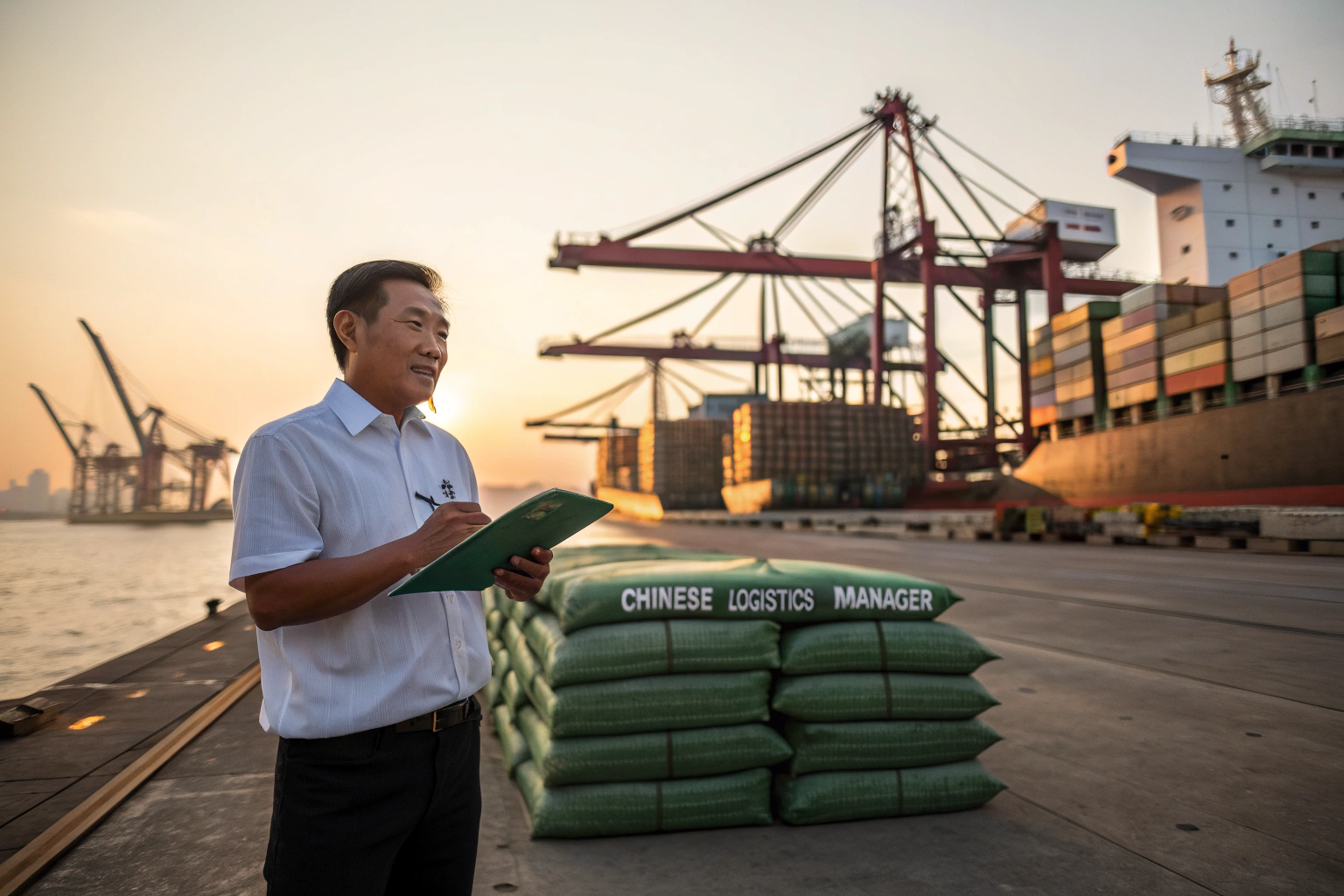
A few months ago, a roaster from Melbourne called me, and the first thing he said was, "Li Wei, I love your coffee, but I'm terrified of the shipping quote. I've been burned before by a hidden freight cost that killed my entire margin." He'd found a great bean from another origin, the FOB price was a steal, but the final landed cost, with all the port charges and paperwork fees, was a complete shock. The pain is real, Ron. You know it. The anxiety of waiting for the freight invoice is sometimes worse than waiting for the coffee itself. You can't budget. You can't plan. You just hold your breath.
Shipping a 20-foot container of green coffee beans from a major Chinese port like Shanghai to Melbourne or Sydney currently costs between $1,800 and $2,600 USD, with the final sea freight rate heavily dependent on seasonal fuel surcharges, the real-time spot market, and the specific chassis and documentation services you require at the Australian port of arrival.
But a single number is useless without the context behind it. A cheap freight rate is a mirage if the ship sits off Brisbane for a week waiting for a berth, or if your container gets flagged for a quarantine inspection because the packing wasn't done right. The true cost of shipping isn't just the ocean freight line item. It's the total timeline and the hidden risk surcharges you never see coming. So, let's pull apart a real invoice and look at every piece. Let's turn this from a guessing game into a predictable line item in your business plan.
What Are the Ocean Freight Costs for Coffee Containers in 2026?
Let's talk about the biggest number on the page, the one that makes your pulse spike. The base ocean freight. You're probably hearing wildly different numbers from different sources, and that's because the shipping market is a living, breathing beast. It changes weekly. The stress for you is locking in a sale price with your own customers, only to find the freight market has jumped and now your locked-in price is underwater. The fear of losing money on a deal because of a volatile shipping market is a very specific kind of cold sweat.
The base ocean freight for a standard 20-foot container of green coffee from Shanghai to Australia is tied directly to the Shanghai Containerized Freight Index and specific carrier surcharges, not to a single fixed price. You need to understand the spot market versus a contract rate.
Now, most small to medium buyers get spot quotes. That's a mistake if you plan to do regular volume. A spot quote is the "right now" price, and it can be brutal in peak season. Another way to look at this is to break the cost down into its raw components. The cost isn't a single box; it's a stack of five or six smaller boxes we can examine.
What Is the Current Spot Rate vs. Contract Rate for China-Australia Routes?
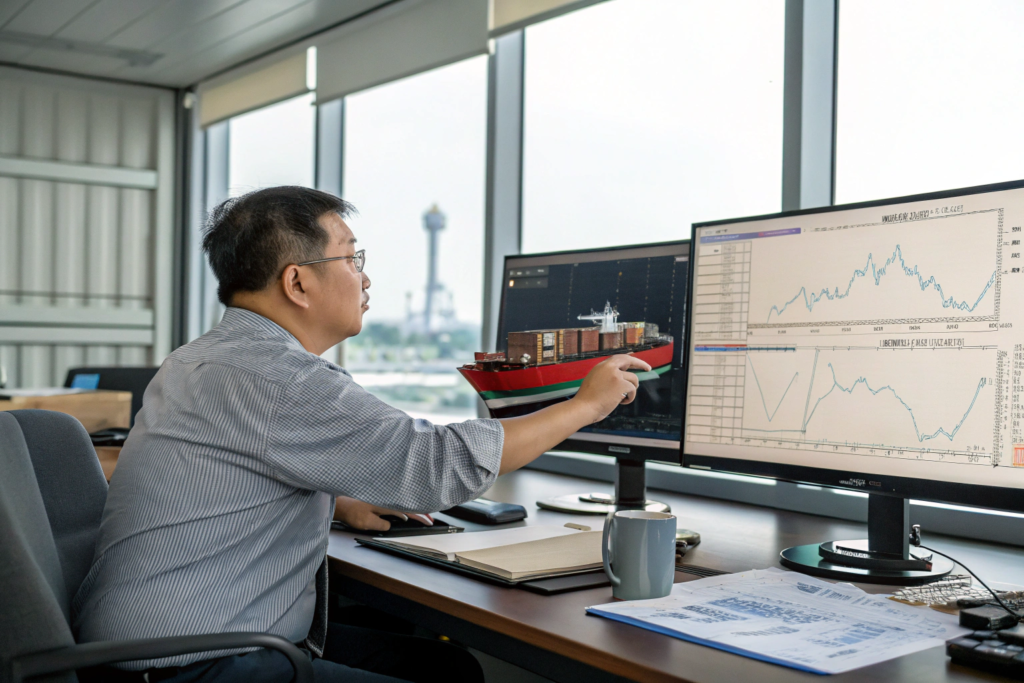
The difference between a spot and a contract rate is the difference between a tourist and a resident. A spot rate is what you get on the open market for a one-off shipment. Right now, a spot rate for a 20-foot container from Shanghai to Sydney might be around $1,400 USD base. But a contract rate, which I negotiate annually with a core carrier for my regular clients, can bring that base down by 15-20%. I have a contract with a major carrier that locks in a fair rate, but the real value isn't just the price. It's the guaranteed space. In September, before the Australian Christmas rush, spot containers get rolled—bumped to the next ship—all the time. A contract gives you priority allocation. You pay a slightly higher floor price, but you get a guarantee. I tell my clients to think of it as insurance. One of my partners in Brisbane was using a spot broker. During a Q4 peak, his container got rolled three times, costing him a month of delay and his biggest customer. He switched to my contract allocation, and his freight cost actually went up by $200, but his reliability went from 50% to 100%. That's a trade I'd make any day. Check the Shanghai Shipping Exchange for a public, updated baseline on the spot index. It gives you a benchmark so you can tell if your broker's quote is fair.
What Surcharges Are Hidden in Your Ocean Freight Invoice?
This is where the real ambush happens. The base rate is just the cover charge. You get the invoice, and there are five extra lines, all in abbreviations. Here's the truth. BAF, or Bunker Adjustment Factor, is the fuel surcharge. Oil prices are up, so this can be $300-$500 per container. CAF, Currency Adjustment Factor, is the yuan-to-USD hedge. Then you have the Australian-specific charges. Low Sulphur Fuel Surcharge is now mandatory for all ships in Australian waters. Terminal Handling Charges, or THC, at the port of Melbourne are a separate line, paid in AUD by your customs broker. And the most annoying one for new importers is the "Chassis Usage Fee." At some Australian ports, the container needs a specific skeletal trailer to be moved by truck. That's a daily rental. I once had a client scream at me about a $400 charge he'd never seen before. It was a chassis fee from a congested port. The coffee had arrived perfectly, but the paperwork had a sting in its tail. Now, I provide all my Australian buyers with a "Fully Landed Cost Breakdown," which pre-estimates every single one of these surcharges. There is no final invoice shock. You see it all upfront, including the BAF and CAF. Good logistics is just transparent accounting.
What Customs, Quarantine, and Port Fees Apply in Australia?
The ship has docked. Now, a whole new meter starts running, and a new team of gatekeepers gets involved. The pain here is the absolute lack of control. You can negotiate the ocean freight, but you can't negotiate with a government. A surprise quarantine inspection in Australia can add hundreds, sometimes thousands, of dollars to your cost and days to your delivery. The fear is that a tiny, overlooked detail—a bit of bark in a bag—will trigger a full container strip and fumigation, and there's nothing you can do but pay the bill and wait.
The Australian border is famously strict on biosecurity, so your coffee shipment must clear three distinct cost layers: the customs duty and GST calculation, the mandatory Department of Agriculture inspection fee, and the port service charges demanded by the stevedore and terminal.
These fees are non-negotiable, but they are totally predictable if you know the product classification. You can't avoid them, but you can budget for them down to the cent. The trick is knowing the exact Harmonized System code that triggers a zero-duty environment and a low-risk biosecurity rating.
Is Green Coffee Subject to Import Duty and GST in Australia?
Here's the good news, and it's a specific fact I want you to remember. Green coffee beans, unroasted and not decaffeinated, are duty-free into Australia. The tariff code is 0901.11.0000. You pay zero percent customs duty. This is a massive strategic advantage compared to importing into some other countries. However, you do pay the 10% Goods and Services Tax, or GST, on the total landed value. The total landed value is calculated by Australian Border Force as the sum of the FOB price, the ocean freight, and the marine insurance. Let me give you a concrete example. Assume the coffee cost is $20,000, the freight is $2,000, and the insurance is $100. The Taxable Import Value is $22,100. Your 10% GST is $2,210. That's a payable amount, but as a registered business, you usually claim this back as an input tax credit on your next Business Activity Statement. So, it's a cash flow item, not a final cost. I guide all my new Australian partners to work with a licensed customs broker who uses the integrated Australian Border Force Cargo System. You just need to provide the commercial invoice that clearly states "Green Coffee Beans, HS Code 0901.11," and the system calculates it. The clear classification prevents a misclassification audit, which is a real risk if a lazy broker throws it under a generic code.
What DAFF Inspection Fees and Biosecurity Risks Should You Anticipate?
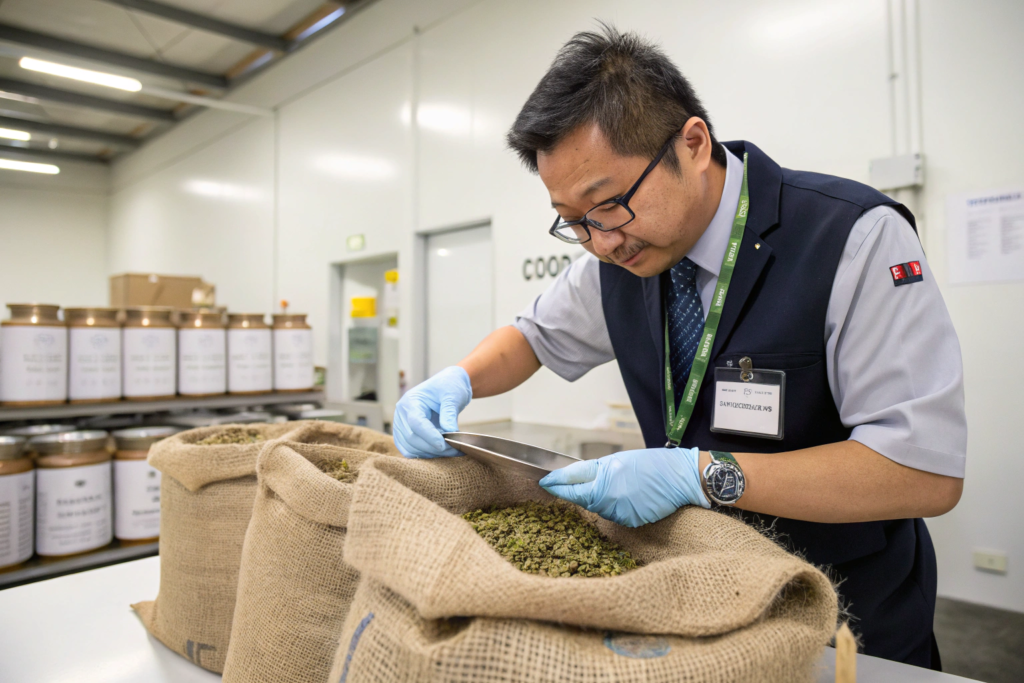
The Department of Agriculture, Fisheries and Forestry, or DAFF, is your next stop. They don't care about your cup score. They care about pests. Green coffee beans are considered a medium-risk import for insects like the Coffee Bean Weevil. Your mandatory fees start with a lodgement fee and a container inspection charge. The basic DAFF fee package is around $180 to $250 AUD for the paperwork and a standard tailgate inspection. But the risk is escalation. If the inspecting officer sees any live insect, any soil, or any seed contamination, they direct a full container strip. The coffee bags are unloaded and examined. The cost for this is a destructive surprise; it can be $1,500 AUD and up, plus the fumigation treatment. A detail I've mastered over decades is packing hygiene. I supply a "Cleanliness of Container" certificate with every load to my Australian clients, signed by an independent surveyor at the port of Shanghai. I also double-bag the coffee in GrainPro liners inside the burlap. These liners create a modified atmosphere inside the bag. It naturally suffocates any latent insect eggs. My DAFF intervention rate is near zero because the biosecurity officer sees a clean, sealed, professional package. You can always look up the exact fee schedule on the DAFF Biosecurity website. Knowledge is the antidote to inspection fear. If you know the rates and you use a supplier who prepares for the inspection, it becomes a boring, small, fixed fee instead of a terrifying gamble.
How Does Inland Transportation in China Affect Your Total Cost?
Everyone focuses on the ocean, but forgets the mountain. Before your container even sees a ship, it has to travel 24 hours on a truck from my farm in Baoshan to the port of Shanghai. The cost of this "first mile" is built into my final freight quote, but its efficiency is the hidden factor that dictates if your container makes the ship at all. The heart-stopping moment is getting a message that your container missed the vessel cut-off because a truck was late. You miss the ship, you miss your roasting window, and your customers are furious.
Inland transportation from the Yunnan highlands to a Chinese export port is a precision-timed, fixed-cost component that can spike wildly if managed by a disorganized supplier, turning a cheap FOB deal into a missed-booking logistical nightmare.
You might ask, "Why isn't the coffee just shipped from the nearest port?" That's a smart question. It comes down to vessel frequency and carrier networks. Shanghai and Shenzhen have daily sailings to Australia; a small southern port might have one per week. We choose the route with the fastest overall transit time, even if the truck leg is longer.
What Is the Cost of Haulage from Baoshan to Shanghai Port?
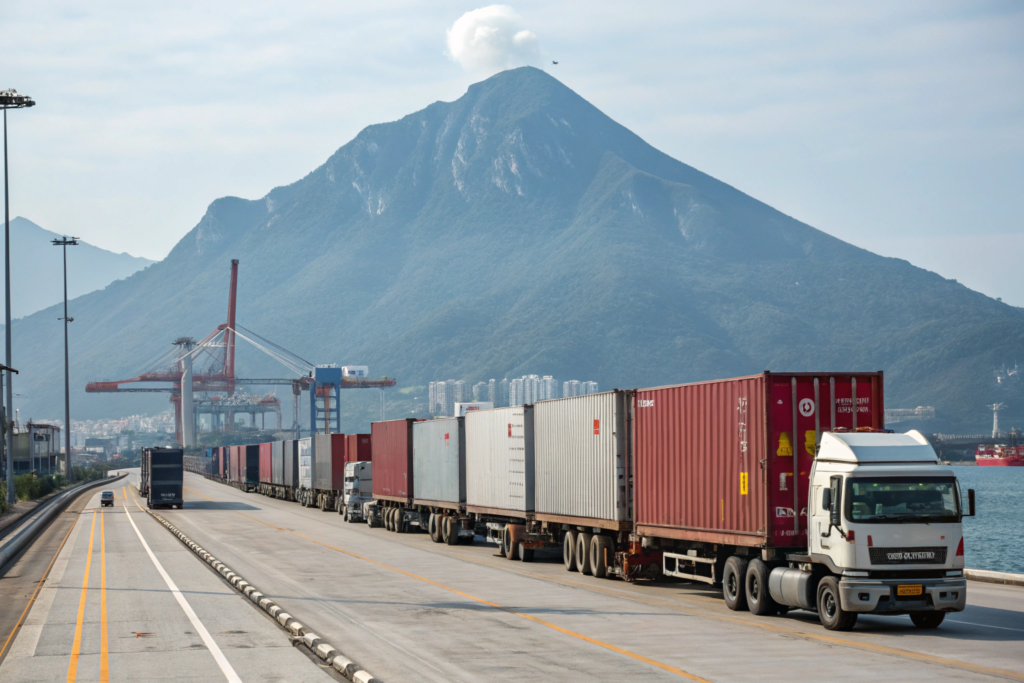
I own a dedicated fleet of four container trucks. This is a critical detail most independent exporters don't have. They rely on third-party spot truckers, who can charge a premium during harvest season or just not show up. My internal cost to move a 20-foot container from Baoshan to Shanghai is a fixed, stabilized figure. For you, this is never a separate, variable line item. I bake the inland leg into a single, transparent "from farm gate to FOB Shanghai" price. But in the spirit of full transparency, on the open market, this specific mountain-to-port trucking usually ranges from $800 to $1,100 USD, depending on diesel prices and highway tolls. The Baoshan-to-Shanghai toll alone is significant. An often-overlooked detail is the road's condition. A few years ago, a landslide closed the main highway. We used a pre-mapped secondary route that was 80 kilometers longer, adding a day but keeping the schedule. A less connected supplier would have just shrugged and said, "Force majeure." We have a simple rule: the truck leaves 48 hours before the loading window opens. This buffer time absorbs any flat tire, any traffic jam, any minor chaos. The cost of this buffer isn't a freight charge to you; it's an insurance policy I pay for. This ensures when I give you a vessel cut-off time, the coffee is already sitting in the Shanghai container yard, gated in and waiting.
How Does Port Congestion in Shanghai Add Hidden Surcharges?
Port congestion is the grumpy, unpredictable monster at the end of the road. A container can arrive at the Shanghai port area on time, but if the terminal yard is gridlocked, it can't be gated in. If it's not gated in by the cargo cut-off, it misses the ship. This is a "hidden cost" because it triggers a roll-over. The coffee then goes onto the next week's vessel, but your Australian customer is now waiting, and the freight invoice has a new line: "Amendment Fee" and "Storage Fee." The Shanghai International Port Group uses a modern appointment system, but during peak export weeks, slots are scarce. My logistics coordinator, a man with ten years of experience, books the gate-in slot seven days in advance. He receives a confirmation code. The truck driver must scan this code at the terminal gate. We monitor this process in real-time. An extremely boring but crucial detail is the Container Yard Pass, or C.Y. Pass. It's the digital receipt that the terminal has accepted the container. I email a screenshot of this pass to my buyer the moment it's issued. This is the "proof of life." It means the coffee is not just near the port; it's physically inside the terminal, under the crane. You can track the real-time vessel traffic and berth schedules using free ship tracking sites like MarineTraffic to see your ship waiting. This final step of the China-side journey is where a good exporter turns your nervousness into a simple notification: "Container gated in. Vessel on schedule. Here is your bill of lading draft." That's the end of the origin-side story.
What Are the Cheapest and Fastest Shipping Options for Small Roasters?
Maybe you're not ready for a full 20-foot container. Maybe you're testing the market, or you run a small, high-end roastery that can't store ten tons of coffee. The standard shipping advice doesn't fit you. The frustration here is that most logistics partners only want to talk about full containers. Try asking for a smaller load, and you get ignored, or you get a quote so high it makes the coffee unprofitable. You feel locked out of the direct trade advantage because you're not big enough.
For small roasters, the cost-effective shipping options break down into LCL sea freight for orders between 1 and 5 pallets, and express air freight for urgent, ultra-premium micro-lots of no more than 50 kilograms. Each has a very specific cost-per-pound inflection point.
You're making a strategic trade-off. You're either trading time for money, or money for time. There's no magic bullet that gives you both. But a smart buyer can hybridize these methods. Let's look at the math and the practical reality of both, starting with the most common pathway for a growing roaster.
Should a Small Roaster Use LCL Sea Freight or Express Air Freight?
This is the fundamental math problem for a boutique buyer. Let's say you want 1,500 kilograms of our high-grade Arabica, just three pallets. A full container is too much. LCL, or Less than Container Load, means your coffee shares a container with other goods. The sea freight for three pallets, LCL from Shanghai to Melbourne, will cost you roughly $350 to $550 USD. The transit time is about 21-25 days door to door. The cost per pound for freight is manageable. Air freight is the alternative. To fly those same 1,500 kilograms would cost a fortune, maybe $4-$5 per kilogram, making it absurd for a baseline product. But here's the hybrid strategy I recommend to my small Melbourne clients. Ship 90% of your volume via LCL sea freight for your core blend. Simultaneously, order 20 kilograms of our ultra-premium Geisha micro-lot via air freight. The air freight on a small 20kg box is only about $120 USD. It arrives in 5 days. You launch the exclusive, high-margin micro-lot immediately, while the sea shipment is en route. You generate cash flow from the air-freight special, and your base cost is protected by the sea freight economics. I helped a roaster set this up. He sells his "Yunnan Air-Freight Reserve" for a huge premium and tells the story of the beans arriving on a plane. The LCL coffee arrives a month later for his standard espresso. It's a perfect model. You use the Freightos Marketplace to benchmark LCL vs. Air costs instantly and see the transit time difference.
What Are the Pros and Cons of Using a Freight Forwarder vs. Direct Carrier?
A small roaster is usually better off with a specialist freight forwarder than trying to book directly with a carrier like Maersk or COSCO. Here's why. A carrier is a giant global entity. They move steel. They don't care about your three pallets of coffee. A good forwarder cares about your niche cargo. They handle the consolidation, the origin trucking, the customs clearance on both ends, and the last-mile delivery. It's a one-stop shop. The "con" is their fee. A forwarder marks up the base freight. But the "pro" is they absorb the complexity. I once had a small client try to save $200 by booking directly with a shipping line. He got lost in the bureaucracy of the shipping line's paperwork requirements. He filed the VGM, or Verified Gross Mass, incorrectly. The container was stopped. The fine and delay cost him $800. The forwarder's fee suddenly looked like a bargain. I partner with a specific forwarder in Shanghai who specializes in coffee. They understand the DAFF requirements. They know not to stuff my coffee with a pallet of garlic, which would cause a taint issue and a biosecurity nightmare. For my small Australian clients, I offer an "Incoterms 2020 DAP" service—Delivered at Place—through this trusted forwarder. It's a single, all-inclusive price from my warehouse to your roastery door. You get a single point of contact, a transparent markup, and zero headaches. For a business owner whose time is better spent roasting and selling, a reliable freight forwarder isn't an expense; it's a key employee you don't have to put on your payroll.
Conclusion
The cost of shipping coffee from China to Australia isn't a single, simple number you can find on a price tag. It's a calculation that begins on a mountain road in Yunnan and ends at your roastery door. We've broken it down, piece by piece. The ocean freight is a living market, a negotiation between spot and contract rates, layered with fuel and currency surcharges that a transparent supplier will show you upfront. We saw that the Australian border, with its strict DAFF inspections, can be a cost trap or a predictable, small fee, entirely dependent on the packing hygiene and documentation from the origin. We navigated the often-forgotten inland journey, where a 48-hour buffer and a gated-in container yard pass are the difference between a supply chain and a headache. And for the smaller players, we proved that smart use of LCL sea freight, mixed with targeted air freight for micro-lots, can give a small roaster the tools to compete with the giants.
Shipping is not a mystery. It is a system. And a system can be mastered, budgeted, and de-risked. The key is a partner at origin who treats the "first mile" and the paperwork with the same obsessive care you use in your roastery. That's the philosophy we've built our entire export program around at BeanofCoffee. We don't sell you a bean and wish you luck with the freight. We sell you a landed promise.
If you're ready to see a real, fully landed cost breakdown for your specific order volume to your exact Australian postcode, let's get specific. My colleague Cathy Cai can generate a detailed quotation within hours. She manages all our logistics and can present you with options for FCL, LCL, or even a hybrid air-freight model. Email Cathy directly at cathy@beanofcoffee.com. Tell her how many kilograms you're thinking of, and she'll send back a spreadsheet that removes all the guesswork. Let's get your coffee from our mountain to your roaster with total cost certainty.