I'll be brutally honest with you. I once nearly lost $45,000. A new supplier—not in coffee, this was years ago in a different business—insisted on a 100% upfront wire transfer. The product looked great in photos. The communication was fast. I sent the money. Three months of silence followed. No product. No refund. Just a ghost. That specific, sickening feeling of helplessness, watching your working capital vanish into a foreign bank account with zero recourse, is a pain I will never forget. As a coffee importer, you're not just risking money; you're risking your reputation with your own customers who are waiting for that container.
The best payment method for coffee importers is not a single option, but a staged, risk-calibrated strategy that begins with a secure Irrevocable Letter of Credit for new relationships, transitions to a balanced 30/70 Telegraphic Transfer against scanned documents for established partners, and eventually evolves into flexible Open Account terms, all while utilizing a third-party inspection as the trigger for the final payment release.
You see, "best" depends entirely on one thing: the depth of trust you've built with your supplier. And trust isn't a feeling; it's a documented history of performance. A method that's smart for your first container is slow and expensive for your tenth. My job, as the person on the other side of the table at BeanofCoffee, is to guide you to the method that protects your cash while keeping the coffee moving. Let's walk through this financial journey, from the first cautious handshake to the smooth, predictable flow of a long-term partnership.
Is a Letter of Credit the Safest Option for First-Time Coffee Buyers?
The first transaction with a new supplier is the scariest. You've cupped the sample. The price is right. But the thought of wiring thousands of dollars to a company in a different country, with a different legal system, can make your hand hover over the "send" button. The fear isn't just about fraud. It's about a gray-area scenario: the supplier ships something, but it's a lower grade, a smaller quantity, or it's late. You have no leverage. The money is already gone.
For a first-time coffee buyer, an Irrevocable Letter of Credit, or L/C, is the absolute safest financial instrument because it shifts the transaction guarantee from the supplier's promise to two international banks, ensuring you only pay when the strict, exact terms of the credit are met with compliant shipping documents.
However, safety has a price, and it's a cumbersome process. A lot of new importers get intimidated by the banking jargon and the strict compliance rules. But let me demystify it. An L/C is really just a conditional promise. Your bank says to my bank: "We will pay you exactly on this date, but only if you present these five specific documents, with zero errors."

What Documents Are Required for a Coffee L/C to Be Honored?
The power of an L/C is in the documentary precision. The bank doesn't check the coffee's taste. They check if the paperwork conforms to the letter of the law. Here's exactly what my team prepares for an L/C. The core document is the Full Set of Clean On Board Ocean Bills of Lading. "Clean" means the shipping line acknowledges the container was received in good order with no damage noted. The commercial invoice must describe the goods with the exact wording from the L/C—down to the comma. If the L/C says "Yunnan Arabica Green Coffee Beans, Grade 1, Crop 2025," that's exactly what the invoice must say. Not "Grade One," not "2025 Crop." A single discrepancy, and the bank will refuse to pay. Next is the Packing List, detailing the number of bags and weight. Then, the Certificate of Origin, which I obtain from the China Council for the Promotion of International Trade. Finally, the Inspection Certificate, which is your trigger. I advise you to specify in the L/C that the final inspection certificate must be issued by a named third-party, like SGS, and countersigned by you, the buyer. This means the bank cannot release the money until a physical SGS report exists. One detail most first-timers overlook is the "Latest Shipment Date." I saw an L/C once where the buyer's bank had an internal holiday they forgot about. The documents arrived a day "late" per the bank's clock. The issuing bank had to ask the buyer for a waiver to still pay. It was a stressful two days. Always build a 48-hour buffer into your document presentation deadlines. The documentation rules are governed by the ICC's Uniform Customs and Practice for Documentary Credits, UCP 600, which is the global rulebook every trade banker knows.
How Much Does a Letter of Credit Cost Compared to the Risk?
An L/C is an expensive insurance policy. The costs eat into your margin, and you need to budget for them. Typically, a coffee L/C involves an issuance fee from your bank, around 0.5% to 1.5% of the transaction value. There's an amendment fee if you have to change a date. There's a discrepancy fee if I make a typo. There are courier fees and SWIFT message fees. On a $50,000 container, an L/C might cost you $500 to $800 in total bank charges. Now, compare that to the risk. A $50,000 loss is catastrophic for a small roaster. A $750 fee is the cost of a secure trial run. It's a no-brainer for a first shipment. But for a fifth shipment, that $750 becomes dead weight. That's why an L/C is a "first-date" method. A banker I work closely with once told me a story about a coffee importer who used L/Cs for every single transaction for ten years. He calculated the importer had spent over $60,000 in bank fees over the decade. That money could have bought a new sample roaster, a truck, or a very nice family vacation. The risk protection was absolute, but the cumulative cost was a quiet, steady drain. My recommendation is to use it for one to two trial containers to establish a performance history. Once the supplier has proven they can ship on time and match the sample, it's time to graduate to a more cost-effective, trust-based method that unlocks better cash flow for both sides.
How Does a 30/70 T/T Payment Structure Protect Both Sides?
Once a relationship has moved past the trial stage, you need a payment method that balances speed and mutual risk. An L/C is slow and rigid. A 100% advance payment is foolish for you. A 100% open account is risky for me. The classic tension in coffee trade is the importer's fear of paying for an empty container versus the exporter's fear of shipping a full container to someone who then refuses to pay.
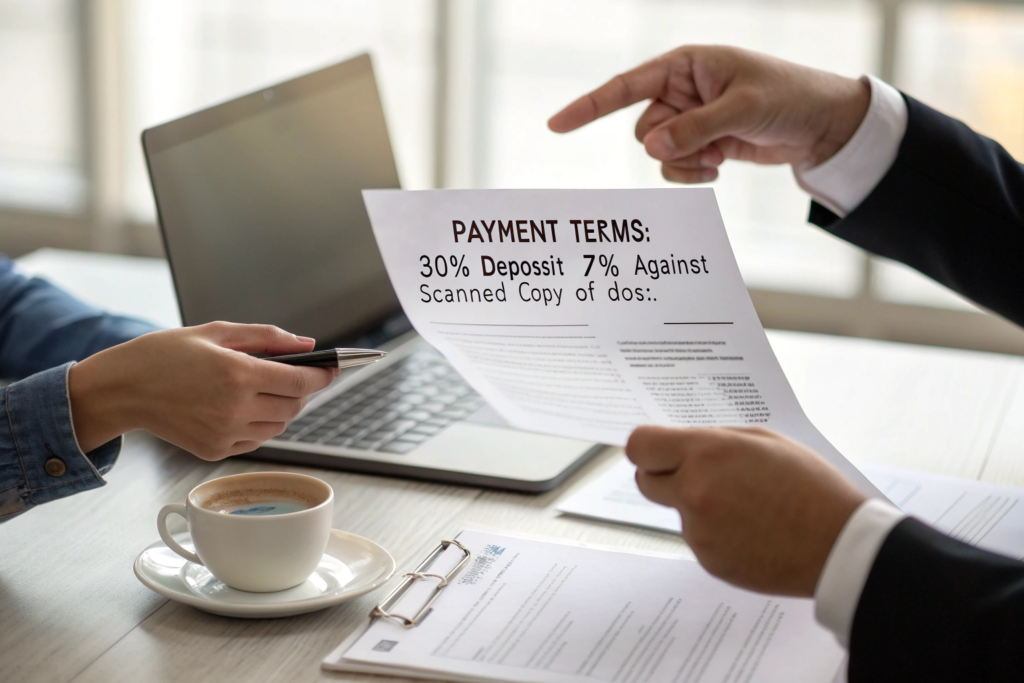
The 30/70 Telegraphic Transfer, or T/T, structure is the practical compromise that has become the industry standard for established coffee trade relationships. It provides the exporter the working capital to release the product and gives the importer the ultimate leverage of withholding the 70% balance until the shipping documents are verified.
This is the stage where the relationship shifts from a legal straitjacket to a handshake with a safety net. It works because it aligns incentives. I have a vested interest in shipping perfect coffee, because my 70% payment depends on it. You have a vested interest in approving the documents quickly, because you want your coffee. Let's look at how this flows in practice and where the remaining risks lie.
What Are the Exact Steps in a 30% Deposit, 70% Against Docs Payment?
The process is beautifully simple, and that's its strength. Step one: you and I sign the sales contract, specifying the 30/70 terms. Step two: you wire 30% of the total invoice value to my company's bank account. I use this deposit to mobilize the internal logistics—the trucking, the port charges, and the booking fee for the vessel. This is your commitment capital. Step three: I ship the container. The coffee is loaded, the vessel sails. Step four: within 24 hours of sailing, my logistics team scans the key documents. This is the "scanned docs" trigger. The package includes the Bill of Lading copy, the commercial invoice, the packing list, and the Certificate of Origin. Step five: I email this PDF package to you. Step six: you review the documents. You can track the vessel online using the bill of lading number. You can see the container is on the water, heading your way. Step seven: you initiate the 70% balance wire transfer. Upon receipt of the cleared funds, I immediately courier the full set of original documents to your office via DHL or FedEx. You need these originals to clear customs. An often-overlooked detail is the "scanned copy" should always include the front and back of the original Bill of Lading. A seasoned buyer knows to check that the port of discharge is correct and the cargo description isn't vague. One of my U.S. buyers always does a quick check against the Container Tracking website using the container number on the bill of lading to confirm the vessel is genuinely moving. It's a 30-second sanity check that confirms the documents aren't just fabricated.
Where Is the Risk in a T/T Payment and How Can You Mitigate It?
The 30/70 model shifts the risk profile. The buyer's main residual risk is that the shipped coffee doesn't match the approved pre-shipment sample. This is the "black box" problem. The documents look perfect, but the beans inside the sealed container are different. This is where the inspection certificate becomes non-negotiable. I insist that my new T/T partners use a third-party container stuffing inspection, even if we've moved away from the L/C. The SGS or Bureau Veritas inspector comes to my warehouse, they pull a representative sample from the lot, they watch the container being stuffed, and they seal the container with a tamper-proof bolt. The inspector then issues a final report. The 70% payment is then explicitly tied to the receipt of both the scanned documents and the third-party inspection report. If the SGS report isn't clean, you don't pay the balance. This is a concrete safeguard. Another risk is the foreign exchange fluctuation. A sudden swing in the Dollar-Yuan rate between the 30% and 70% payment can create a small gain or loss for you. I mitigate this by fixing the exchange rate in the proforma invoice for a short window, usually 30 days. This gives you price certainty. The final safeguard is the banking detail verification. Always call your supplier using a known phone number to verbally confirm the bank account details before sending the 70% payment. Business Email Compromise scams are real, where a hacked email sends you a false invoice with a criminal's bank details. A two-minute phone call can prevent a total loss. I openly welcome this verification call from all my clients.
When Should You Switch to Open Account Payment Terms?
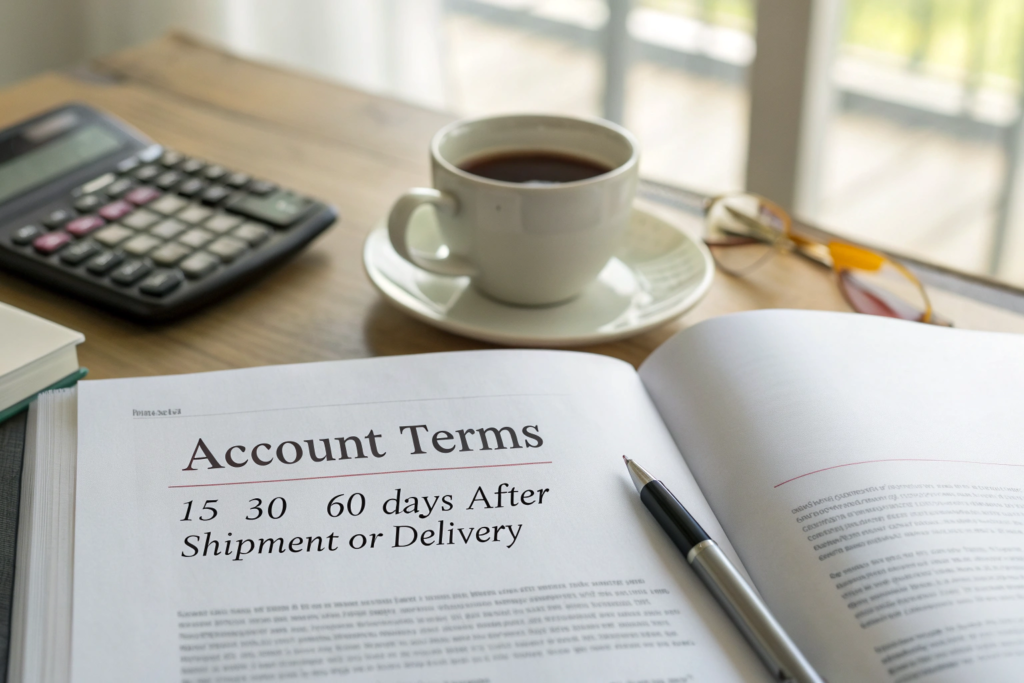
Open Account terms. This is the summit of a trading relationship. It means I ship the coffee to you, and you pay me 15, 30, or even 60 days after the vessel sails, or after you receive the goods. You're essentially buying on credit. The appeal for you is massive: maximum cash flow flexibility. You can receive, roast, package, and even sell a good portion of the coffee before your payment to me is due. The barrier to this is the deep, almost gut-level fear on the supplier's side. I'm extending unsecured credit across an ocean. The pain I've seen other exporters suffer is the slow, agonizing debt collection from a once-good buyer who ran into a temporary cash crunch and started dodging calls.
You switch to Open Account terms not when you ask for them, but when your supplier voluntarily offers them to you, based on an unblemished, multi-year history of flawless, on-time T/T payments and a demonstrated deep understanding of the coffee market's mutual pressures.
This is not a payment method for a transactional buyer. It's a strategic partnership tool. It means I've looked at your business, your payment history, and your market reputation, and I've concluded that extending you credit is a safer investment than holding onto the coffee. Let's talk about how you get there and how you negotiate the specific trigger for payment.
How Do You Build the Trust to Qualify for Open Account Terms?
Trust for open account terms isn't asked for; it's methodically demonstrated. You build it by being predictably boring over a long period. Here's my internal checklist. A buyer qualifies when they have executed at least six consecutive T/T shipments over 18-24 months with zero payment delays. Not "almost zero," zero. When the 70% balance has always arrived within the agreed three banking days. A second factor is communication hygiene. A trustworthy buyer doesn't go silent. They proactively send their cupping feedback. They inform me of their upcoming seasonal volume changes. One of my long-term Australian partners always, without fail, sends a "Happy Chinese New Year" message and asks about my family. It's a small human detail, but it signals a relationship beyond a purchase order number. I offered him open account terms after three years. He hadn't even asked. The third factor is financial transparency. I never demand your full books, but a buyer who is open about their growth—"We just opened our third cafe, and our wholesale accounts are up 30%"—tells me they are a growing, healthy business. A concrete example: a roaster in Canada shared a local news article about his company winning a regional business award. That kind of public validation is powerful. The final piece is the visit. A buyer who has personally flown to my farm in Baoshan, who has sat on my porch and drunk baijiu with me, is in a different category of trust. They are no longer an email address. They are a guest in my home. Credit terms with them feel like helping a friend, not risking a write-off. Tools like Dun & Bradstreet business credit reports can formalize this, but honestly, in specialty coffee, personal history and direct performance history weigh far more.
What Are the Typical Net Payment Periods in the Coffee Trade?
Once open account terms are active, the "Net" period defines the cash flow. The most common starting point is Net 15 from the Bill of Lading date, or Net 30 from the arrival date. There's a key difference. Net 15 from B/L date means you pay me two weeks after the ship sails. The coffee might still be on the water. This gives me faster access to capital. Net 30 from arrival means you pay a month after the container is physically delivered to your warehouse. This is a massive cash flow benefit for you, as you've likely already roasted and sold some of the coffee. I typically start with Net 15 from B/L and, after another year of perfect payments, I'll extend to Net 30 from arrival. Some very large, blue-chip commercial roasters can command Net 60 or even Net 90, but that's not common for direct trade specialty. I once had a buyer ask for Net 60 upfront on a second container. It told me he was more focused on his own cash flow than on a fair partnership. I politely declined. The payment period should reflect the financial partnership. For a seasonal harvest, I offer a special "pre-harvest" financing open account. You commit to a volume in February, I ship in November, and you pay in January. This helps you lock in a fixed price with no upfront capital, and it helps me finance the harvest labor. It's a co-investment model. The payment period isn't a weapon to use against your supplier; it's a joint cash flow management tool. When both sides use it to plan ahead, it's the final, highest form of a professional coffee partnership.
How Can You Avoid Common Payment Scams in Coffee Importing?
We have to talk about the dark side of international payments. Because the scammers are getting incredibly good. They study our email chains, they know the shipping schedules, and they strike at the exact moment the final payment is due. The pain here is the most brutal of all. You wire the 70% balance to what you believe is your trusted supplier's bank account. Then, the real supplier emails you asking when you'll pay. The money is gone, transferred to an untraceable offshore account, and your real coffee is still sitting at the port, unpaid for. It's a devastating, relationship-destroying, business-killing loss.
Avoiding payment scams in coffee importing requires a paranoid but simple multi-channel verification protocol, primarily a mandatory verbal phone confirmation of all bank account details with a known, trusted individual immediately before any wire transfer, combined with robust email hygiene to spot domain spoofing.
This isn't about not trusting your supplier. This is about not trusting the criminal infrastructure that sits invisibly between your email and your supplier's email. I have a very specific, slightly obsessive protocol that I demand all my clients follow. It has saved at least two of them from disaster. Let me share the exact steps.

What Is a BEC Scam and How Does It Target Coffee Importers?
Business Email Compromise, or BEC, is the technical term for this nightmare. A criminal gains access to either your email system or, more commonly, your supplier's email. They don't announce themselves. They sit silently, reading all your correspondence for weeks. They watch you negotiate the price, discuss the shipping date, and agree on the 30/70 T/T terms. Then, at the precise moment the "Final Invoice with Wire Instructions" is due, they strike. They send you an email that looks exactly like it's from me. The logo is perfect. The signature is perfect. The tone is perfect. The email might say, "Dear Ron, as discussed, here is the final invoice. Please note our primary bank account is under audit, so please use this alternative account for the balance payment. Regards, Li Wei." The bank account is in a completely different country. The invoice looks real. You're busy, you want to pay quickly to get your documents, so you wire the money. The real invoice from the real me arrives a day later, and the horror sinks in. The FBI's Internet Crime Complaint Center, IC3, has detailed reports on how BEC attacks target commodity trades. The sheer psychological manipulation is what makes it so effective. The criminal uses the context of a known, trusted relationship to bypass your rational defenses.
How Can a Simple Voice Verification Call Save Your Money?
The single, unbreakable, non-negotiable countermeasure to a BEC scam is a voice verification call. It's an ancient technology that defeats the most sophisticated email hack. My payment instructions are written into my sales contract in a locked PDF. But even that isn't enough. My inviolable rule for every single client, especially on the first few transactions, is this: before you send any wire, pick up the phone and call me, or my finance manager, at a phone number you received during our initial introduction, not from the current email chain. A video call on WeChat or WhatsApp is even better. You read the bank account number, the SWIFT code, and the beneficiary name from the email you received. I confirm on the live call if it's correct. This five-minute call is your $50,000 insurance policy. I insist on it. I once had a client in Texas who received a very convincing spoofed email. He was about to hit "send" on a $32,000 wire. He remembered my rule. He called me. I heard the account details and immediately said, "Stop. That's not my account. Do not send the money." The relief in his voice was physical. He'd almost lost his operating capital. The protocol is simple, but it requires discipline. Use a known phone number. Speak to a known voice. Confirm the digits one by one. This human check, this one phone call, makes your coffee payment safe. It's the final, crucial step in any payment method, whether L/C, T/T, or Open Account. Never, ever skip the voice check.
Conclusion
The best payment method for a coffee importer is not a fixed destination. It's a journey that mirrors the growth of trust and the depth of your partnership with your supplier. We started at the safest, most formal end of the spectrum, with the Irrevocable Letter of Credit, a banking fortress that protects a first-time buyer from financial loss but comes with a cost in fees and rigidity. We moved to the pragmatic, balanced middle ground of the 30/70 T/T, the industry workhorse that aligns incentives by tying the bulk of the payment to a verified shipment and a third-party inspection. We climbed to the summit of the trading relationship with Open Account terms, where past performance unlocks genuine cash flow flexibility, a privilege earned through years of flawless behavior. And throughout every step, we acknowledged the ever-present shadow of the BEC scam, a threat defeated not by complex software, but by the simple, ancient, and unbreakable discipline of a human voice verification phone call.
The right payment method at the wrong time is a mistake. A too-trusting approach can expose you. A too-paranoid approach can suffocate a perfectly good deal with unnecessary costs. The wisdom is in knowing where you are on the relationship timeline, and using the instrument that fits that stage.
At BeanofCoffee, we don't push a one-size-fits-all payment policy. We start where you're comfortable and let the method evolve naturally with our shared history. We've guided first-time buyers through their first L/C, and we celebrate when we graduate a long-term partner to simple, handshake-confirmed net terms. It's a process built on transparency and a genuine desire to build a supply chain that's financially safe for everyone involved.
If you're trying to figure out the right payment structure for your first container, or if you're ready to discuss graduating your terms, let's have a direct conversation. My colleague Cathy Cai is the person who can walk you through the specific payment options, provide our standard bank details for a voice verification protocol call, and tailor a payment schedule that matches your cash flow needs and the size of your order. Reach out to her at cathy@beanofcoffee.com. Tell her about your typical purchasing cycle, and she'll work with you to build a payment plan that lets you sleep soundly at night.