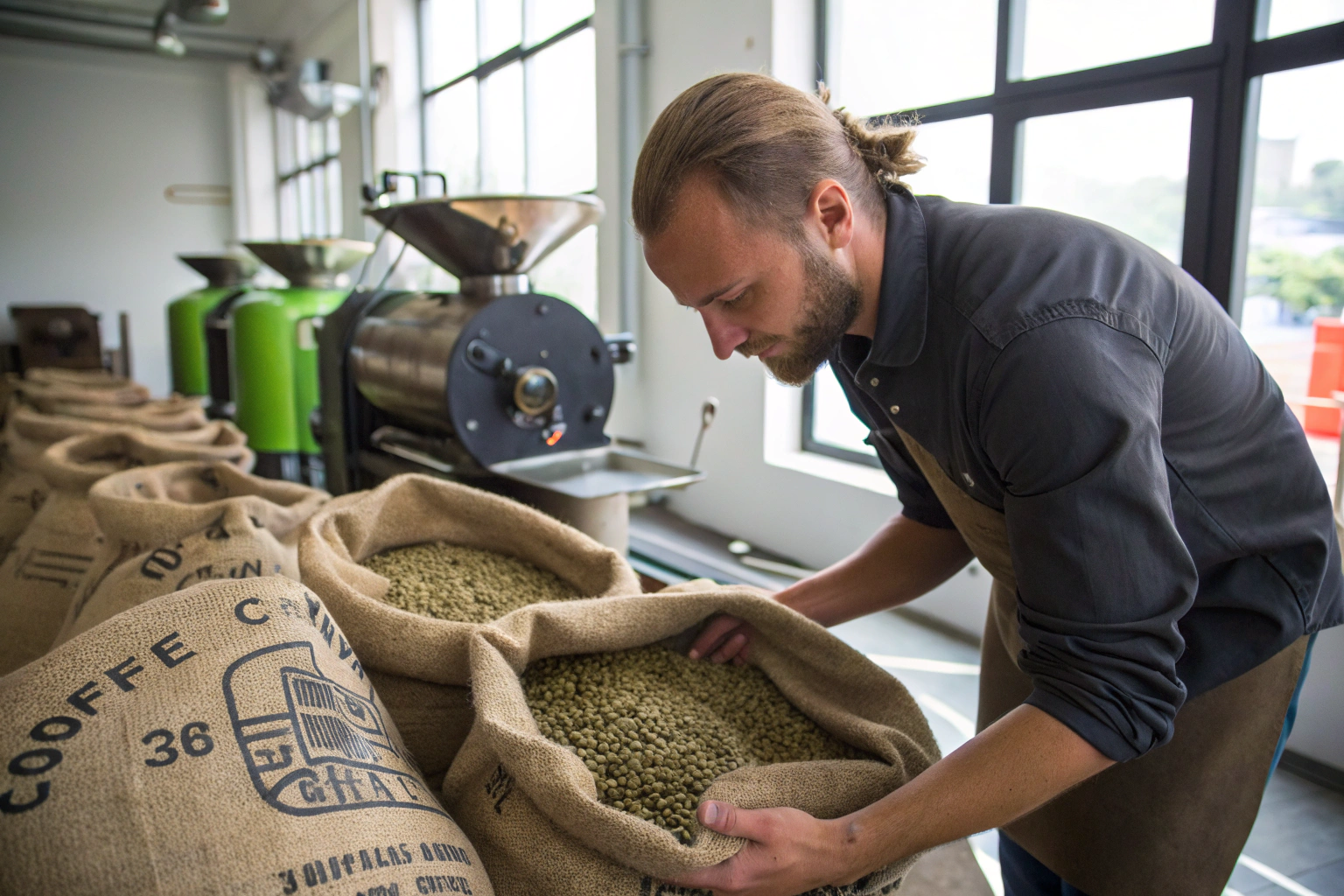
I remember sitting across from a buyer named Ron at a trade show in Seattle last year. He was direct. He looked me in the eye and said his biggest headaches were price fluctuations and late shipments. He runs a distribution company in America. He needs things to work. He needs his coffee to arrive on time and at a cost that makes sense. If something goes wrong, he loses money. He told me he was tired of suppliers who promised the world but delivered inconsistency.
Single-origin Arabica gives roasters like Ron a clear story to sell, a traceable supply chain they can trust, and a flavor profile that stands out in a crowded market. It is not just a product. It is a competitive advantage.
Think about it. When you buy a blended coffee from an anonymous source, you are buying a generic commodity. When you buy a single-origin Arabica from a known estate, you are buying an experience. You know exactly which mountain it came from. You know the variety. You know the people who grew it. That matters to modern consumers. And it matters to your bottom line.
What Is the True Flavor Advantage of Single-Origin Arabica Beans?
People often ask me, "Is single-origin really that different from a blend?" The answer is yes. And the difference is not subtle. It slaps you in the face. A blend is designed to taste the same, year after year, by mixing cheap beans from different places. A single-origin Arabica is a snapshot of a specific harvest from a specific place. Its flavor is alive. It changes slightly with the seasons, just like wine.
The flavor advantage of single-origin Arabica is its distinct, uncompromised taste profile that reflects the unique terroir of a specific farm. You taste the altitude, the soil, and the varietal in every cup. There is no hiding behind other beans.
You know, another way to look at this is to think about fruit. A fruit punch tastes generic. A fresh peach from a single orchard tastes specific. That is what roasters pay a premium for. They want their customers to taste the dark chocolate notes from our high-altitude Catimor in Baoshan, or the bright acidity of a washed process. In a market saturated with average coffee, that specific taste is your only shield against commoditization.
How Does Soil and Climate Shape Arabica Flavor Complexity?
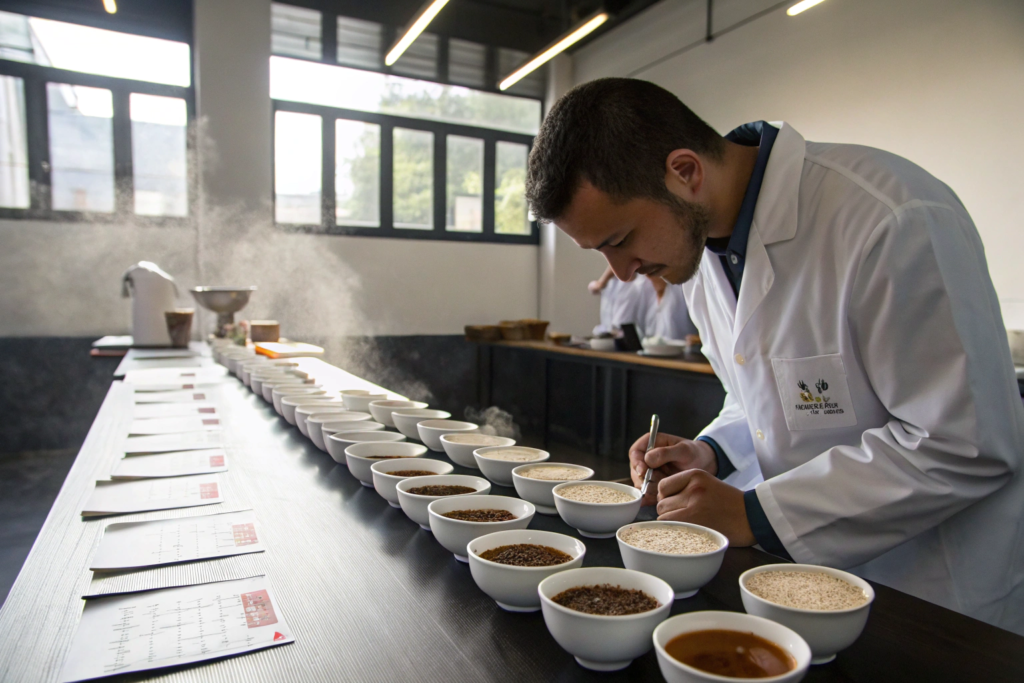
Our plantation sits in Baoshan City, Yunnan. The elevation ranges from 1,200 to 1,600 meters. The soil is red volcanic earth, rich in minerals. The temperature drops at night and stays mild during the day. This puts stress on the coffee cherry. Honestly, that stress is good. It forces the bean to concentrate its sugars. A bean grown in flat, humid lowlands never develops this intensity. You can taste the difference. One is flat and woody. The other is sweet and complex.
The varietal matters too. Take our Catimor. It has a bad reputation with some old-school buyers who remember the early hybrids. But up here, in our specific microclimate, Catimor produces a cup with deep cocoa notes and a hint of stone fruit. It does not taste like a typical Indonesian Catimor. That is the soil and climate talking. An often overlooked detail is the harvest timing. We only pick fully red cherries. If you rush, you get astringency. If you wait, you get perfection. It’s that simple.
Why Do Roasting Profiles Unlock Hidden Notes in Single-Origin?
A buyer once told me he bought a generic Brazilian Arabica for espresso. It was fine. But it was boring. When he switched to our single-origin, his roaster had to completely rethink the temperature curve. Single-origin beans are dense. High-grown beans are hard. You need a higher charge temperature to crack the bean open and develop the sweetness. If you roast it like a soft, low-grown bean, you end up with grassy soup.
So, what does this mean? It means the roaster becomes an artist, not just a factory worker. With a single origin, you can play. You can drop the batch right at the first crack for a bright filter profile. Or you can stretch the Maillard phase long and slow for a heavy-bodied espresso. You cannot do this easily with a blend because the different bean densities roast unevenly. With our single-origin Baoshan Arabica, the uniformity of the screen size makes the roaster’s job predictable. That predictability lets them nail the exact flavor note they want to highlight every single time.
How Can Single-Origin Arabica Strengthen a Coffee Brand’s Identity?
Remember Ron from the trade show? He didn’t just ask about price. He asked about the story. His customers are cafes in Portland and Austin. Those baristas are not just selling caffeine. They are selling a narrative. A blend from "somewhere" doesn’t cut it for them.
A single-origin Arabica strengthens a brand’s identity by providing authenticity, a compelling farm-to-cup narrative, and a premium positioning that justifies a higher retail price. It turns a commodity into a luxury good.
The packaging tells the story. When a customer holds a bag that says "Single Origin – Baoshan, Yunnan," they immediately perceive higher value. It suggests exclusivity. It suggests that someone like me, the farm owner, cared enough to keep these beans separate from the mass-market stuff. You are no longer competing on the supermarket shelf against Folgers. You are playing in the specialty league.
Can Farm Transparency Become a Marketing Asset?
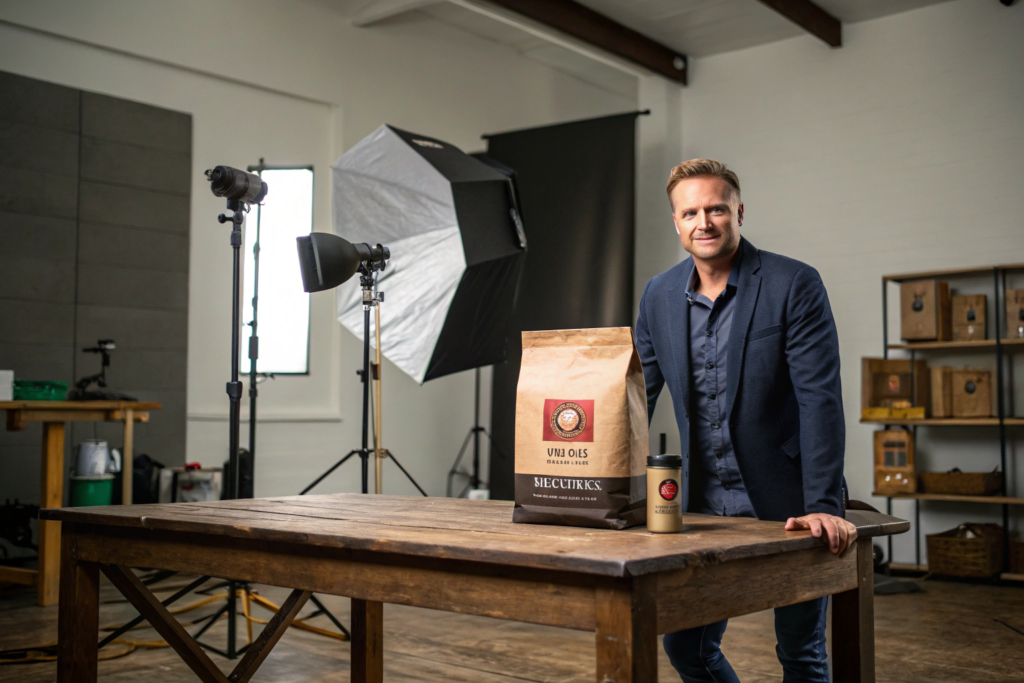
In my 20 years of business, I’ve learned one thing: trust is hard to build and easy to break. We list our GPS coordinates on the bag. We show pictures of our picking crew. Why? Because a distributor in Europe told me his customers worry about ethics. They want to know if the farmer is paid fairly.
We solve that problem by opening our doors digitally. Using the track-and-trace tag on our shipment, you can see the route from Baoshan to the port. That transparency is a massive marketing asset. A cafe can print a little card next to the menu: "Today’s espresso is grown by Mr. Yang on a 1,500m mountain." Honestly, that little piece of paper sells more lattes than any billboard. It gives the barista a conversation starter and the customer a warm feeling.
How Does Storytelling Differentiate Premium Arabica in a Saturated Market?
The coffee market is noisy. Everyone says they are "premium." The word has lost its meaning. But a specific story cuts through the noise. We do not just sell Catimor beans. We sell the story of the fog rolling into the Gaoligong Mountains at dawn. You know, that heavy mist that slows down the ripening of the cherry.
An often overlooked detail is the fermentation process. We use clean mountain water from a natural spring to wash the beans. It’s a small detail, but roasters who visit us, they see the spring. They can taste the purity. I advise my buyers: don’t just market the bean. Market the mountain. Market the water. Market the family. When you buy from BeanofCoffee, you are not buying a product SKU. You are buying a piece of Yunnan’s history. That emotional connection makes your coffee hard to drop, even if a competitor offers a 10-cent discount.
What Are the Financial Risks and Rewards of Buying Direct-Origin Containers?
Let’s talk about money. Ron’s biggest concern. Shipping a full container of green beans from China to America is not a small transaction. You are looking at tying up maybe 50, 60, 70 thousand dollars of working capital. If the price drops 5 cents a pound during transit, your profit margin evaporates. That is the risk. It keeps buyers awake at night.
The financial reward of buying direct-origin containers lies in cutting out middlemen to secure lower per-pound costs, while the risk involves volatile tariffs, shipping delays, and cash flow management. You need a supplier who acts like a partner, not a salesperson.
When you buy from a trader in Europe, you are paying a markup for them to hold the stock. When you buy direct from our farm via BeanofCoffee, you are paying the origin price. The per-pound savings often cover the entire shipping cost. But you have to be brave. You have to trust the guy on the other side of the ocean to execute properly.

How Do Tariffs and Sailing Schedules Impact Landed Costs?
Tariffs are a moving target. One day you have a 2% duty, the next day you read the news and it’s a different story. We navigate this by classifying goods accurately under the harmonized system code. We provide all the origin certificates required by U.S. Customs. But here is a thing people forget: the shipping schedule has a hidden cost.
If the vessel is delayed by a week at the port of Shanghai, your landed cost doesn't just stop. You are paying for storage. You are missing your sales window. Your roasting schedule gets messed up. We mitigate this by booking slots with reliable carriers, even if their freight rate is slightly higher. A cheap freight line that loses your container for three weeks destroys your budget. A common mistake is focusing on the per-pound FOB price and ignoring the "soft costs" of demurrage and detention.
| Cost Factor | Spot Market Buying | Direct Contract Farming |
|---|---|---|
| FOB Price per lb | Volatile, driven by C-market futures | Fixed annual contract, 5-10% below spot average |
| Shipping Reliability | Relies on freight forwarder spot quotes | Guaranteed space with annual carrier agreements |
| Tariff Handling | Buyer's agent responsibility | Seller provides full documentation for zero/low duty claims |
| Quality Control | Sample-based, risk of outturn variation | Pre-shipment sample approval, strict SGS inspection |
| Cash Flow | Immediate payment, high pressure | Flexible term negotiation, 30% deposit to secure harvest |
I always tell buyers to look at the total acquisition cost. Don’t be penny wise and pound foolish. Saving 10 cents on freight but losing 20 cents on quality or delay is a bad trade.
Is Forward Contracting the Safest Payment Method for Quality Assurance?
Some buyers want to pay only after the coffee lands in Oakland. I understand why. They want to inspect the quality first. But that puts 100% of the risk on me, the farmer. That is not a partnership. That is gambling. I prefer a forward contract. We sign it six months before harvest. The price is fixed. The quality parameters are fixed. The buyer pays a deposit to secure the crop.
This method secures your supply. If the C-market price spikes, you are protected because we locked in your price months ago. If the market crashes, well, you are paying a bit more. But, honestly, in the specialty coffee world, the C-market price is just background noise. We are selling quality, not bulk commodity. The contract forces both sides to honor the grade. If I ship you a container that doesn’t match the pre-shipment sample, you reject it. Fair enough. That safety net, plus the payment terms, makes direct trade viable. It keeps our relationship honest. At BeanofCoffee, we live by these contracts. Our word is our bond.
How Can You Ensure Quality and Safety When Buying from Overseas?
Buying from Asia still scares some roasters. They worry about mold, defects, or chemical residues. Fair enough. You are 7,000 miles away. If the container smells like a damp basement when it arrives, you are stuck with 300 bags of garbage. I’ve seen it happen to competitors. That is why safety is not just a checklist for me; it’s my survival. If I ship one bad batch, my name is mud.
You ensure quality and safety by demanding third-party inspection certificates, understanding your supplier’s drying and storage protocols, and requesting a pre-shipment sample that seals the deal before the container leaves port.
We air-dry our parchment on raised African beds. This is slower than machine drying, but it prevents the musty "baggy" taste. A detail a lot of buyers skip? Looking at the storage warehouse photos. If the green coffee is stored on a damp floor without pallets, run. We store ours in a climate-controlled space with strict inventory rotation. First in, first out.
What Certifications Do Roasters Actually Need for Bulk Imports?
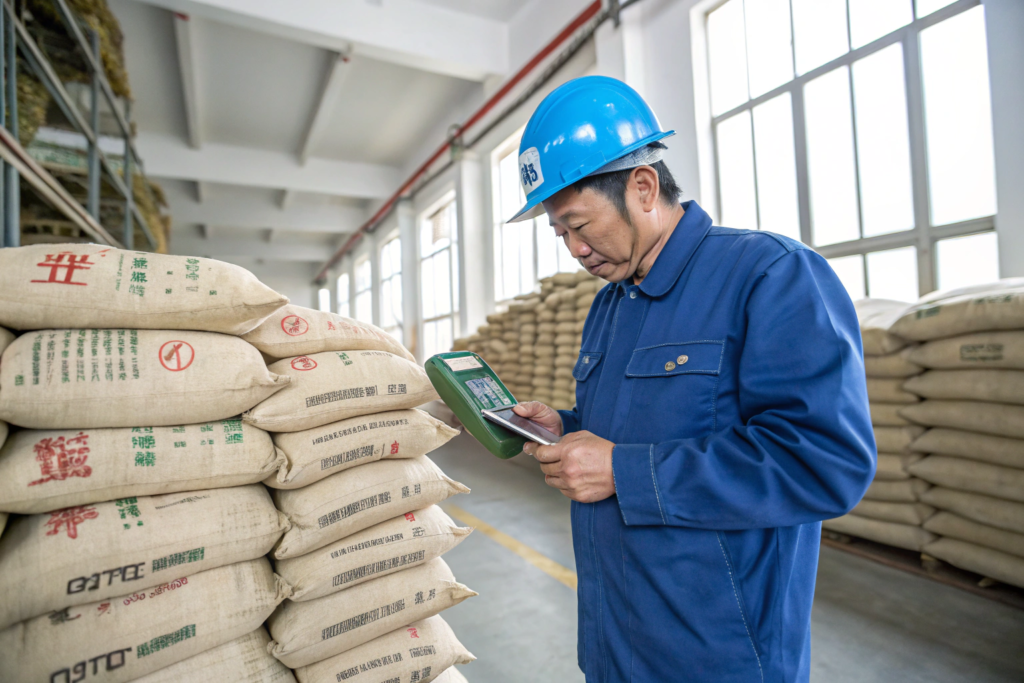
Certifications can be confusing. Some are marketing tools. Some are legal requirements. For America, you need the organic seal if you market it as organic. We have the USDA organic certification for a section of our estate. For Europe, you need the EU equivalent. But don’t just ask for the paper. Ask for the transaction certificate number. Verify it online.
Beyond the logo, I always advise buyers to ask for a fumigation certificate and a phytosanitary certificate. These are non-negotiable for clearing customs. Without them, your beans sit baking on the dock. If you are a big buyer concerned about food safety, you need a supplier with a Hazard Analysis Critical Control Point plan. This is basically a map of every danger point in the processing chain and how we control it. From metal fragments during milling to moisture levels during bagging. You want to see a clean, clinical mill, not a dirt floor. This focus on safety is what makes our export team reliable.
How Do Pre-Shipment Samples Protect Your Order?
The pre-shipment sample is your last line of defense. You know, this is a non-negotiable rule I enforce myself. Two weeks before we stuff the container, we air-express a kilo sample to your roastery. You roast it. You cup it. You sign off.
Once you sign off, we stuff the exact batch that the sample came from into the container. We do not swap it. If the sample scores an 84, you get an 84. If it tastes good, the container tastes good. This removes the guesswork. I remember a buyer who tried to skip this step to save time. He said, "Just ship it." The container arrived, and he swore it wasn't the same coffee he approved months earlier. It was. He just misremembered the profile. A physical, signed-off sample avoids that lawsuit. It creates a binding sensory agreement. It’s the smartest thing you can do to sleep well at night.
Conclusion
So, we come back to Ron. The direct buyer in America. The guy who cares about price and timeliness more than anything. Does single-origin Arabica work for him? Absolutely. It’s not just about the romantic notion of a small farm. It is about control. Single origin gives you a locked-down supply chain. It eliminates the variable quality of blends. It gives your brand a sharp edge. It justifies a better price point for you. And if you manage the shipping, the tariffs, and the quality checks right, it can be cheaper than buying from a middleman.
The key is picking a supplier who is not just a farmer, but a logistics expert too.
If you are looking to secure a stable, high-quality supply of single-origin Arabica from Yunnan, China, I invite you to reach out to us. We have the acres, the experience, and the certificates to prove it. Let’s talk about your specific needs—from pricing to sailing schedules. You can contact our export director, Cathy Cai, directly at cathy@beanofcoffee.com. She usually replies within a few hours. Let’s build a supply chain that actually works for you.