I got a WhatsApp message last week that stopped me cold. It was from a roaster in Texas I used to supply years ago. He was panicking. His Brazilian contract expired, and he needed a container fast. But the spot price he got was 40% higher than his 2025 budget. He said, "Is this the new normal, or am I being ripped off?" That's the anxiety I'm seeing everywhere. You lock in a price, you book a vessel, and then the market shifts underneath you. It feels like you can't plan your roastery's future anymore.
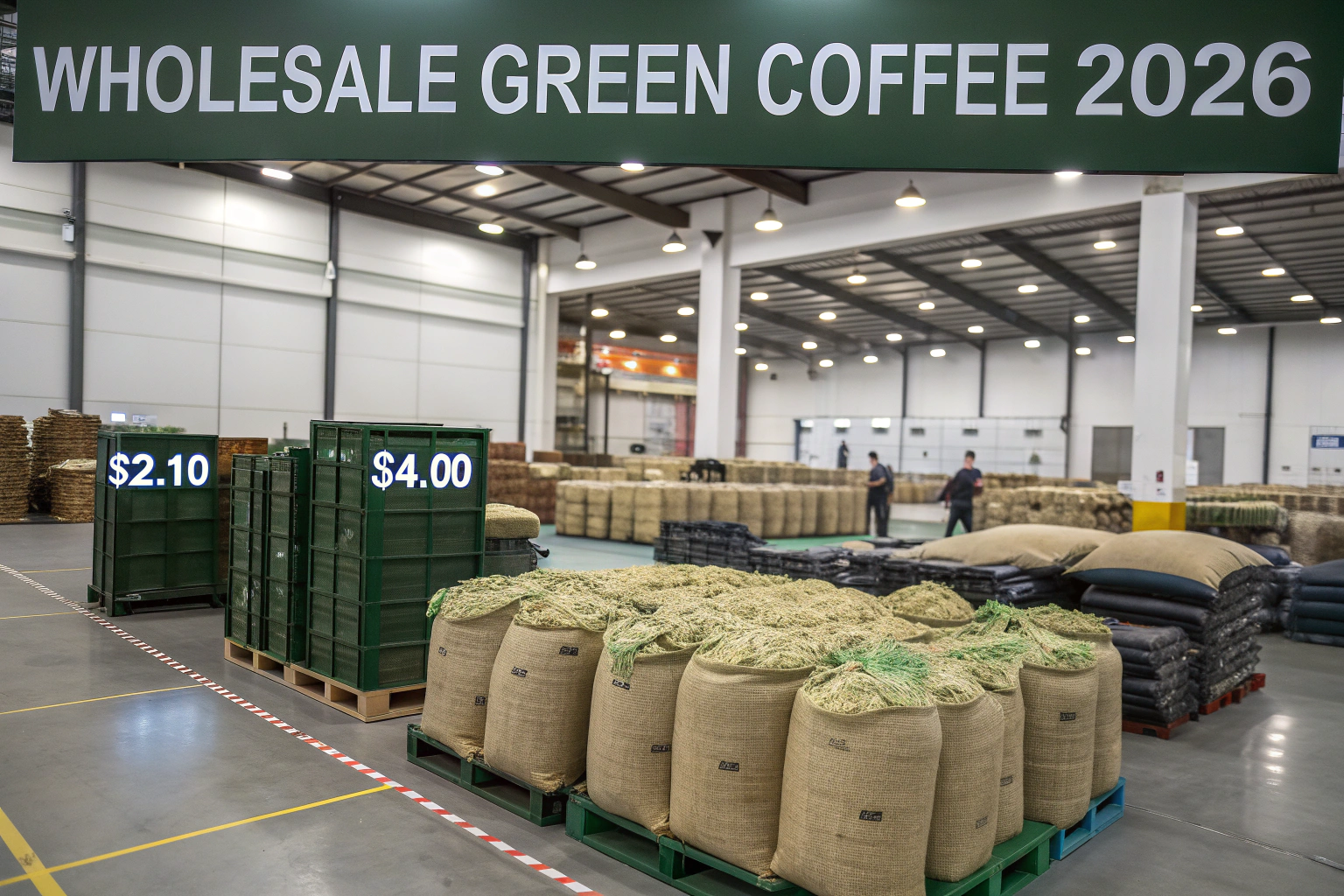
Wholesale green coffee in 2026 is trading within a volatile range, but for direct-origin Arabica, the FOB price typically sits between $2.10 and $4.00 per pound, depending heavily on origin, freight costs, and geopolitical trade winds. Smart buyers are pivoting to fixed-price contracts with vertically integrated farms to bypass speculative commodity spikes.
So, what does this really mean? It means the old way of buying—just floating on the C-market—is broken. You need stability. I own over 10,000 acres of coffee in Baoshan, Yunnan. And I'm telling you, right now is the moment when owning the land and controlling the processing makes the difference between profit and loss for my clients. The cost to produce the cherry went up. Labor in China is more expensive. But the middlemen are what kill you. By cutting them out entirely, we keep our FOB offers shockingly competitive. Let's unpack the numbers so you can budget properly.
What Factors Are Driving Up the C-Price in 2026?
The C-price, the benchmark for Arabica on the ICE exchange, has been a rollercoaster. Honestly, I stopped checking it daily because it just gives me a headache. But you need to know the "why" behind the digits. It's not just speculation by funds anymore. There are real, physical things happening in the soil and on the water that are propping these prices up.
The 2026 C-price is driven up by a structural supply deficit, particularly from Brazil and Vietnam, combined with surging global demand. Added to this are shipping disruptions on the Red Sea route, sky-high fertilizer costs linked to energy prices, and speculative buying by investment funds hedging against inflation.
Look, I'm a farmer first. And my cost to produce a kilo of green bean has risen roughly 18% since 2022. Why? Potassium-based fertilizer tripled in price during the supply chain crunch, and it never fully came back down. Then you've got climate. Brazil, the big swing producer, had a severe drought followed by a frost scare last year. The trees there are stressed. When Brazil sneezes, the world catches a cold. Their exports drop, and suddenly everyone looks to other origins—like ours in China—which pushes our baseline up. It's simple math, really.
How Does the Global Supply Deficit Impact Your Budget?
When the total export volume is lower than the total consumption, prices don't just rise; they "kangaroo"—they jump erratically. Vietnam's Robusta crop had a bad run too. Usually, if Arabica gets too pricey, roasters blend in more cheap Robusta. But in 2026, Robusta is historically expensive. That escape hatch is sealed shut.
This forces a tough conversation. If you're a mid-size roaster, you can't just absorb a 30% raw material hike. You either raise your bag price or shrink the bag size. I saw a brand in Seattle do exactly that—switching from a 12oz bag to a 10oz bag, keeping the retail price fixed. It's a smart move, but it confused their customers. Another way to look at this is the buffer stock. Major industry bodies like the ICO report that global ending stocks are at critically low levels. When warehouses are empty, there's no cushion. If I have a bad harvest in Yunnan due to an unexpected cold snap, I can't just "buy replacement beans" easily anymore. The scarcity is baked in. Large buyers are now hedging by acquiring future crop contracts 12 months out. If you're buying quarter-by-quarter, you're fighting for scraps.
Why Are Logistics and Energy Costs Sticking So High?
I remember when a container from Shanghai to Long Beach cost $3,000. Those days are a distant memory. Now, even the "cheap" rate is twice that, and the volatility is wild. A big reason for this in 2026 is the continued re-routing of vessels away from the Suez Canal. The longer transit time around Africa eats up capacity. Fewer available boxes mean higher rates.
It gets even more specific. For coffee, we need clean, food-grade containers. No residue, no weird smells. These specialized boxes cost more. Plus, bunker fuel prices haven't exactly collapsed. The energy overhead is real. When I give a CFR quote to a client in Texas, I have to pad the logistics line a bit because I can't afford to quote you a rate today and lose money if the fuel surcharge adjusts next week. Tariff costs are another beast. With ongoing trade tensions, the duty rates on goods from China can shift quickly. For a while, we were holding our breath. But it turns out, green coffee remains a de-minimis item in many tariff lists because the US simply doesn't grow enough of its own. We work with a broker who specializes in FDA clearance to ensure the port logistics cost is the only number you see, with no hidden customs surprises.
How to Find the Best Green Coffee Suppliers from China?
Finding a supplier in China used to mean navigating a maze of fake profiles on B2B sites. You know the type—they list a price for "Blue Mountain" that's impossibly low, and when you ask for a sample, they send a mix of black beans and rocks. It wastes your time and damages your trust in the whole country's output.
The best suppliers from China are verified, plantation-owning exporters with direct shipping lines and a transparent digital footprint. You find them through live video verification, checking FDA registration numbers, and demanding traceable lot-specific pre-shipment samples from Yunnan's high-altitude zones.
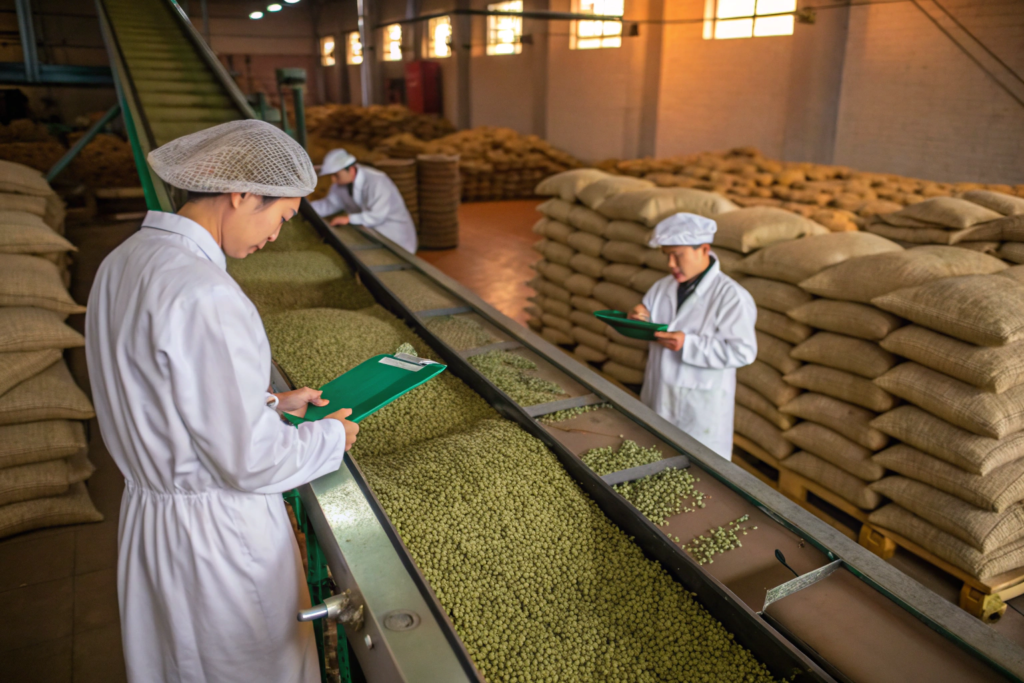
Why Yunnan? Because that's where the altitude is. The Arabica plant needs stress—cold nights, bright mornings, mineral-rich soil. The Gaoligong Mountains in Baoshan provide exactly that. A supplier in a lowland city like Ningbo or Guangzhou is almost definitely a middleman. They don't own the beans. They just own a warehouse. At BeanofCoffee, I always tell potential buyers: "Look at the leaves behind me when we video call. Do you see the mountains? Do you see the drying patios?" That's the first step of quality control—visual proof of life.
Can You Trust B2B Platforms Like Alibaba for Coffee Sourcing?
Absolutely, but with a laser focus. Alibaba is a tool, just like a harvester. If you don't know how to use it, you'll break the machine. The trick on Alibaba in 2026 is to ignore the "Gold Supplier" badge as your sole filter. Those can be rented. Instead, look for the specific certifications uploaded directly to the profile. Look for the Physical Factory Verification badge—it usually involves a third-party auditor actually visiting the location.
I have a friend who sources tea, and he taught me a neat trick: ask for a live video tour of the cupping lab and ask them to cup their latest lot right there on the call. If they hesitate, if the "lab" looks like a dusty shelf in a back office, that's your red flag. When you search for Yunnan coffee beans wholesale, don't just sort by price. Sort by "Supplier Transaction Level" and "Response Rate." A high response rate means someone is actually managing the logistics. For payment, insist on Trade Assurance. It holds the supplier accountable for the sailing schedule. If my team promises a ship date of May 10th on Alibaba and we miss it, the system refunds you. That security is exactly what Ron, that confident owner from Texas, needed to finally trust an overseas shipment without meeting me first.
What Direct Sourcing Models Bypass the Middlemen?
The term "Direct Trade" gets thrown around like a marketing slogan. But legally and logistically, what does it mean? It means you have a contract with the entity that holds the export license for the farm. Not a trader, not a consolidation warehouse. The transaction is "Field to Roastery."
This model offers massive security. If a quality issue arises, you aren't chasing a ghost trader who blames the farmer. You call me, the farmer. I fix it, or I don't. It's that simple. There is another model we offer that is quietly gaining traction in 2026: "Exclusive Lot Funding." A larger distributor pays an upfront fee in November (pre-harvest) to secure 100% of the harvest from a specific block of our plantation. They get the first right of refusal and a locked-in discount of about 10-15% below eventual spot market. In return, they assume some weather risk. We've been doing this with a major specialty coffee association member in Australia, and it's transformed their pricing stability. They know the exact volume coming, and they don't care what the C-price does. This is the polar opposite of the inefficient pricing Ron was so frustrated by. It's total visibility.
What Is the Price Difference Between Arabica, Robusta, and Catimor?
Mix-ups between species cost money. I've seen a buyer pay an Arabica premium for a bag that was 20% Robusta filler. It happens more often than you think. The price gaps in 2026 are wider than they used to be, driven by the shortage in the Robusta market I mentioned earlier. You need to know what these beans look like, taste like, and cost, so you know exactly what you're bidding on.
Currently, high-grade Robusta is hovering around $2.50/lb, commercial Arabica around $3.20/lb, and specialty Catimor around $2.80/lb FOB. This is a historic anomaly: Robusta has almost closed the gap with Arabica, making Catimor—the high-yield, disease-resistant hybrid—the smartest economic sweet spot for quality and volume.
Catimor gets a bad rap sometimes from purists. And I admit, a badly grown Catimor can have a weird, earthy, peanut-skin note. But here in Baoshan, at 1,500 meters? It's magic. It has the body of a high-end Robusta but the clean, crisp apple acidity of an Arabica. Because the plant is resistant to coffee leaf rust, we don't need to drench it in fungicide. Lower input cost for us means a lower price for you. If you're a roaster blending a house espresso, swapping your expensive Guatemalan Arabica with our high-altitude Catimor can save you $0.70 a pound without shrinking the flavor.
How to Read a Cupping Score vs. Price Sheet?
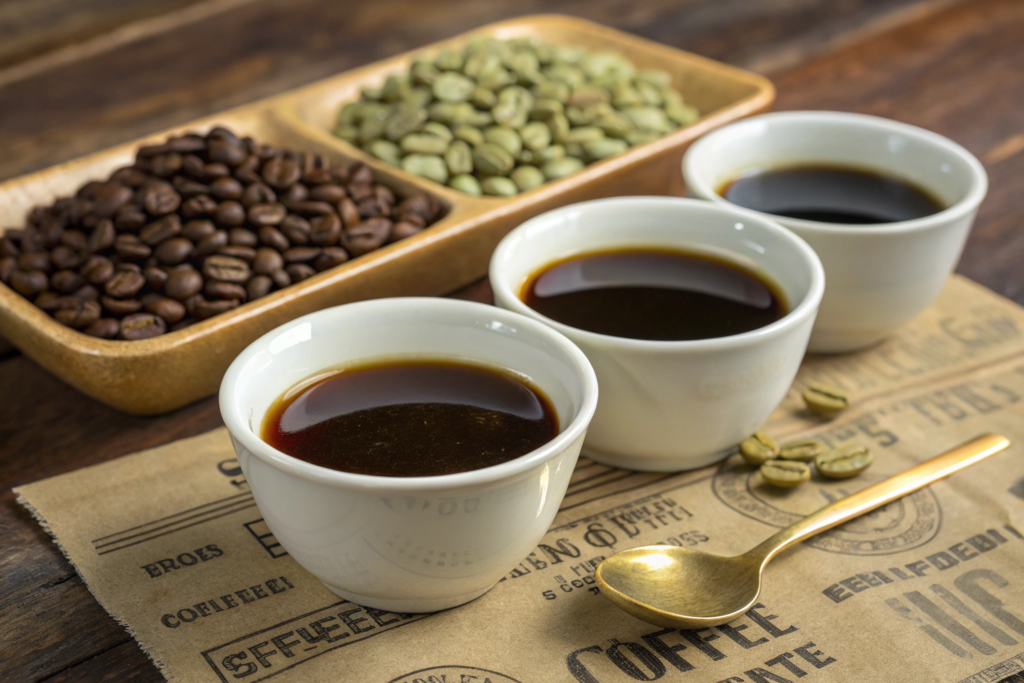
A cup score of 80 vs 85 doesn't sound like much. But in dollars, it's a cliff. The SCAA protocol is strict. An 80-84.99 is "Very Good"—your standard, clean commercial coffee. An 85-89.99 is "Excellent"—specialty grade with distinct characteristics. The jump from 84.5 to 85 is where the price can leap by 30-40% because you're suddenly selling a luxury good.
But here is the nuance. The scoring system has biases. A fruity, fermented "anaerobic" Catimor might score 86 points right now because the market loves funky flavors. A perfectly washed, clean classic profile might score an 83. Is the 86 objectively "better" coffee? Sometimes it's just trendier. I cup with the CQI Q Grader system in mind, but I always ask my clients: "What does your customer want?" If your cafe is a truck stop where people add cream and sugar, that complex, funky 86-point coffee is going to taste weird and clash with the milk. You don't need to pay the premium score price if your customer just wants a smooth, chocolatey, non-bitter brew. The raw cupping sheet doesn't know your customer. You do.
Why Is Robusta Suddenly So Expensive This Year?
This is the real shocker of 2026. Robusta, the "inferior" bean, is turning heads. The main reason is the supply crash in Vietnam, the world's number one producer. They had a terrible weather run—too wet for flowering, then too dry for the cherry fill. Their output dropped about 20%. That's millions of bags missing from the global supply chain.
Big instant coffee factories (think Nescafe, Folgers) will buy almost any brown bean that is clean. When they scramble for volume, they suck up the Robusta supply, dragging the price up. Suddenly, a roaster who used 15% Robusta in their blend to cut costs can't afford that cheap filler anymore. They are trapped. The positive side effect of this? It elevates Catimor. Because Catimor offers the thickness and caffeine punch that blends need, but with cleaner cup quality than bottom-tier Robusta. If you look at the import data from the International Coffee Organization, you'll see the anomaly. The arbitrage (price gap) has massively compressed. So, if you're paying $2.50 for a rough Robusta, why not pay $2.80 for a smooth, high-grown Catimor that doesn't taste like burnt tires? That's the logic savvy buyers are bringing to my export desk right now.
How to Secure a Stable Coffee Supply Contract in a Volatile Market?
Volatility isn't a bug; it's a feature of the 2026 market. If you're trying to time the market bottom, you're gambling, not running a business. I've seen company owners like Ron freeze up, waiting for a 10-cent drop, only to see the price jump 50 cents the next month because a hedge fund went long on soft commodities. The goal isn't to get the cheapest price ever. The goal is to secure a price that lets you sleep at night.
A stable supply contract in 2026 requires a fixed differential strategy: you lock in the premium (differential) over the C-market with a producer, and if the C-market drops, you get that discount. If it rises, you're protected by a cap. Combine this with multi-modal logistics clauses to avoid port congestion penalties.
The old-school method was "price-fix-to-be." The buyer leaves the price open, floating on the market until a few weeks before shipment. In a stable market, that's fine. In 2026? That's financial suicide. I never recommend it anymore. Instead, we write a contract where the base price is the ICE future minus a "farm loyalty discount," capped at an upper safety limit. It's a bit complex, but it means I share the risk with you. If my production cost drops (unlikely, but maybe fuel gets cheaper), I pass some savings on. If costs explode, I absorb a portion so you don't default on the contract.
What Are the Best Incoterms for Coffee Imports from China?
Stop just saying "FOB." There are nuances that save hundreds. FOB (Free On Board) means I, the seller, get the container onto the ship in Shanghai. Once it clicks onto the deck, the risk is yours. If the ship sinks tomorrow, that's your insurance problem. For most of my US buyers, I steer them toward FCA (Free Carrier). Why?
With FCA, I deliver the sealed container to your nominated carrier at the terminal. The transfer of risk happens earlier, but it clarifies who pays the terminal handling charges. Sometimes, these charges are buried in a mystery box. Then there is DAP (Delivered at Place). This is the "lazy" option for you. I pay for everything until the truck backs up to your roastery door. But honestly, I don't like doing DAP to the US because I don't know your local trucking network; I'd just be marking up the cost of a local trucker I found on Google. You can probably hire a truck cheaper than I can. We often settle on CIF (Cost, Insurance, Freight) as the sweet spot. I control the ocean freight, I buy the insurance, and I deliver the container safely to your nominated port like Long Beach. Once customs clears, it's yours to pick up. Check the latest chamber of commerce Incoterms 2026 rules to see the exact risk split, but don't let a lawyer force you into the wrong term just because it's "standard." Pick the term that matches your insurance policy.
How to Build a Long-Term Partnership Beyond the Transaction?
A contract is paper. A partnership is a safety net. The strongest supply chains in coffee aren't strictly transactional; they're relational. When a frost hits Brazil and everyone rushes to buy Chinese Catimor, my contract holders get allocated their volume first. The spot buyers might get told "sorry, sold out."
How do you get that VIP status? It's not just about volume. It's about information sharing. Send your supplier your monthly sales reports. I know it sounds like revealing secrets, but if I know you are growing 20% year-on-year, I will reserve the extra acreage for you. I won't sell that specific micro-lot to someone else. Communication cadence is huge. If you're a BeanofCoffee partner, we don't just talk when the Bill of Lading is late. We talk during the flowering season. I send photos of the cherry development. This transparency removes fear. It turns a scary international purchase into a scheduled commodity delivery, similar to buying local agricultural goods, just with a longer boat ride. That's the security and quality promise we make. Reliable, stable, and safe.
Conclusion
The cost of wholesale coffee in 2026 isn't just a number on a spreadsheet; it's a moving target shaped by logistics nightmares, global deficits, and a changing climate. We covered the startling rise of Robusta, the hidden value of Catimor as the smart buyer's alternative, and how the C-price is being weaponized against roasters who don't have a fixed plan. The core takeaway? You cannot afford to be a passive buyer. You must align with a farmer who controls the dirt, the processing, and the sailing schedule.
That's the foundation of what we do at BeanofCoffee. We don't trade coffee. We grow it, mill it, and ship it from our own base in Baoshan. It's the only way to cut through the noise and deliver on the promise of a good price with true reliability.
If you're tired of juggling inefficient pricing and unstable sailing schedules, let's talk specifics. I can connect you directly with my export director, Cathy Cai. She can walk you through the exact shipping costs to your port, the timing, and how we handle FDA certification. Reach out to her at: cathy@beanofcoffee.com.