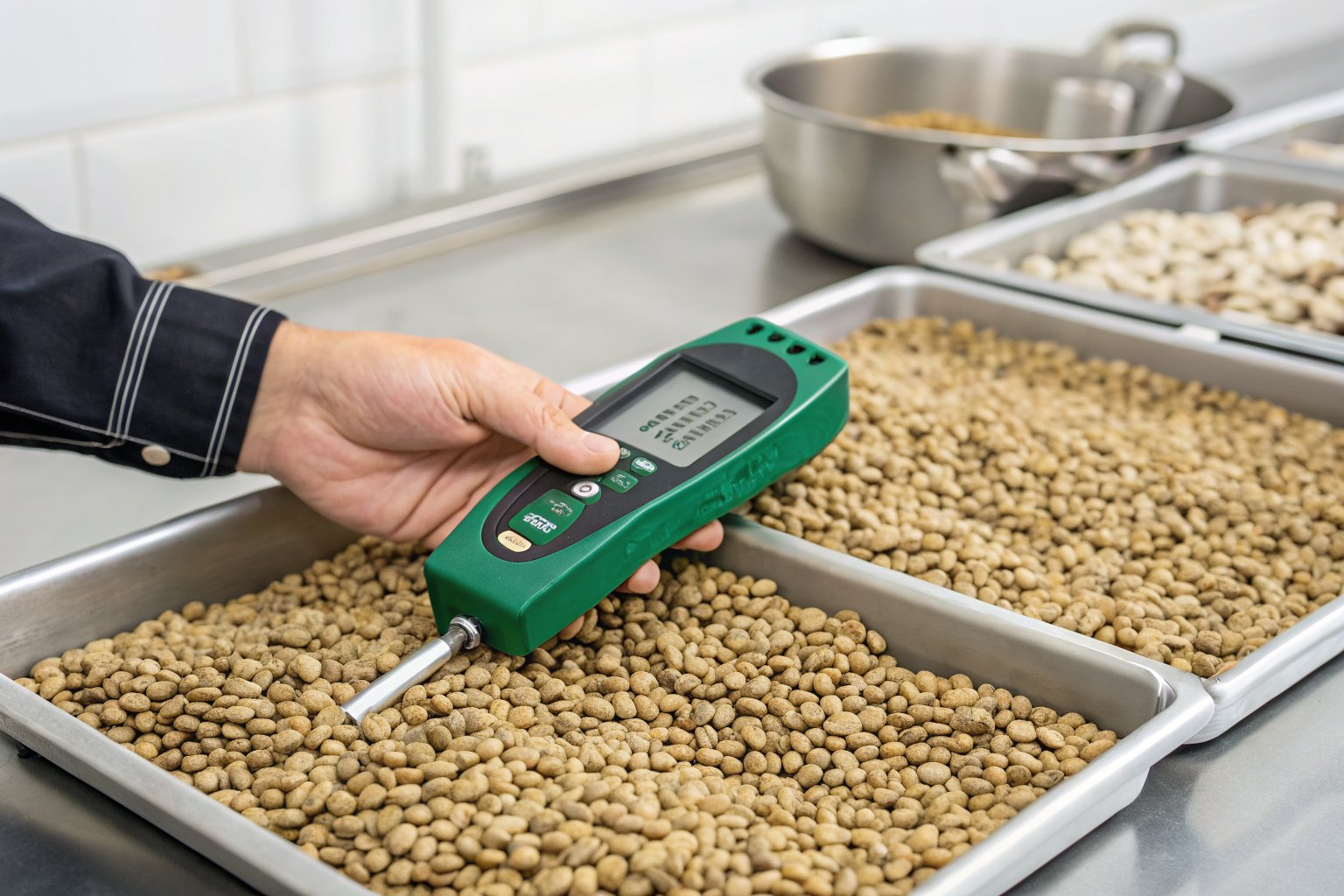
Last month, a buyer from Texas called me frustrated. He had rejected an entire container of green coffee because his moisture meter read 13.2 percent — above his 12.5 percent cutoff. I asked him when he last calibrated his meter. Long silence. "I think... six months ago?" he said. We sent the beans to a lab. The actual moisture was 11.8 percent — perfectly fine. That misreading cost him weeks of delay, hundreds in demurrage fees, and nearly lost him a customer. Moisture meter calibration is one of those boring maintenance tasks that can save you thousands of dollars. Let me walk you through how often you really need to do it.
Why Does Moisture Meter Accuracy Matter for Coffee Bean Quality?
Here's a fact that experienced buyers know but newcomers often learn the hard way: moisture content determines everything about how a coffee bean is priced, stored, and roasted. If your meter is off by even 0.5 percent, you could pay the wrong price, store beans at the wrong humidity, or roast a batch that comes out uneven. A properly calibrated meter is not optional equipment — it is the foundation of quality control.
How Does Moisture Content Affect Green Coffee Pricing?
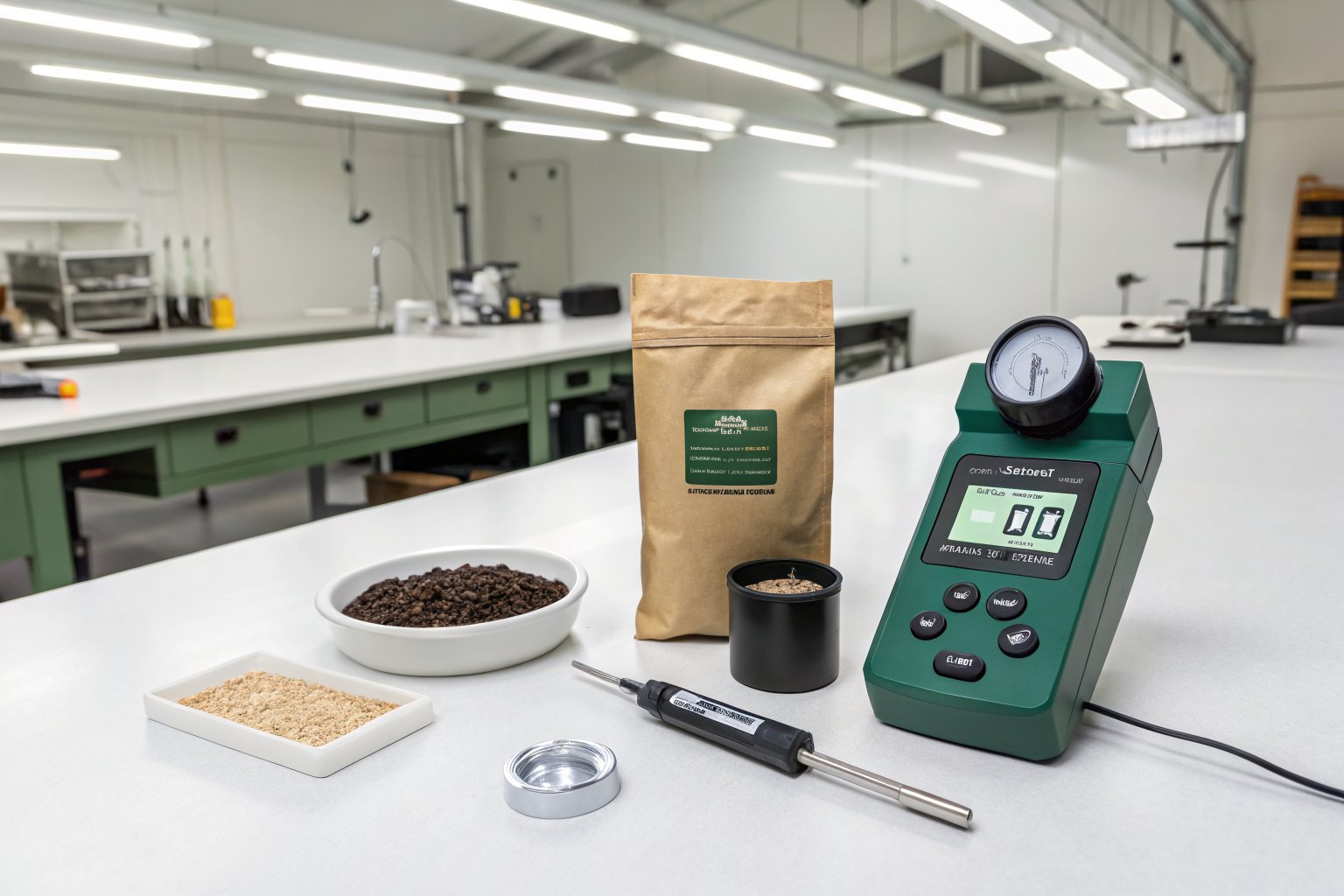
In the wholesale coffee trade, price is tied directly to moisture content. A container of green coffee at 11 percent moisture weighs more than the same beans at 9.5 percent — the water weight adds up. Most contracts specify a target moisture range, typically 10 to 12 percent for Arabica. A meter that reads 0.3 percent high could cause you to reject a perfectly good lot, or worse, accept one that is too dry and will deteriorate in storage. According to the Green Coffee Association's moisture standards, each 0.5 percent deviation from the agreed moisture level can shift the contract value by 1 to 2 dollars per bag. On a full container of 320 bags, that is a 320 to 640 dollar error — just from one misreading. Regular calibration eliminates this risk entirely. I have seen buyers at Shanghai Fumao catch a 0.4 percent discrepancy during a routine inspection and save 500 dollars on a single shipment. That is the real value of a calibrated meter.
What Storage Risks Come from Inaccurate Moisture Readings?
Coffee stored at the wrong moisture level degrades fast. Beans above 12.5 percent moisture are at high risk for mold and mycotoxin development, especially Ochratoxin A. Beans below 10 percent lose flavor compounds and become brittle, causing more breakage during hulling. If your meter is off, you might store beans thinking they are safe when they are actually crossing the danger threshold. The Coffee Quality Institute's storage guidelines recommend keeping green coffee between 10.5 and 12.0 percent moisture for long-term storage. Without a calibrated meter, you are flying blind. That 500-bag lot in your warehouse could be silently deteriorating while your meter tells you everything is fine. At Shanghai Fumao, we calibrate every meter before each new crop season to ensure our export beans stay within spec from warehouse to container.
How Often Should Coffee Professionals Calibrate Their Moisture Meter?
The answer depends on how often you use the meter and what conditions it is stored in. But there is a general rule that most industry experts agree on: calibrate before every major testing session and at least once per month during active buying seasons.
What Is the Recommended Calibration Frequency for Daily Use?
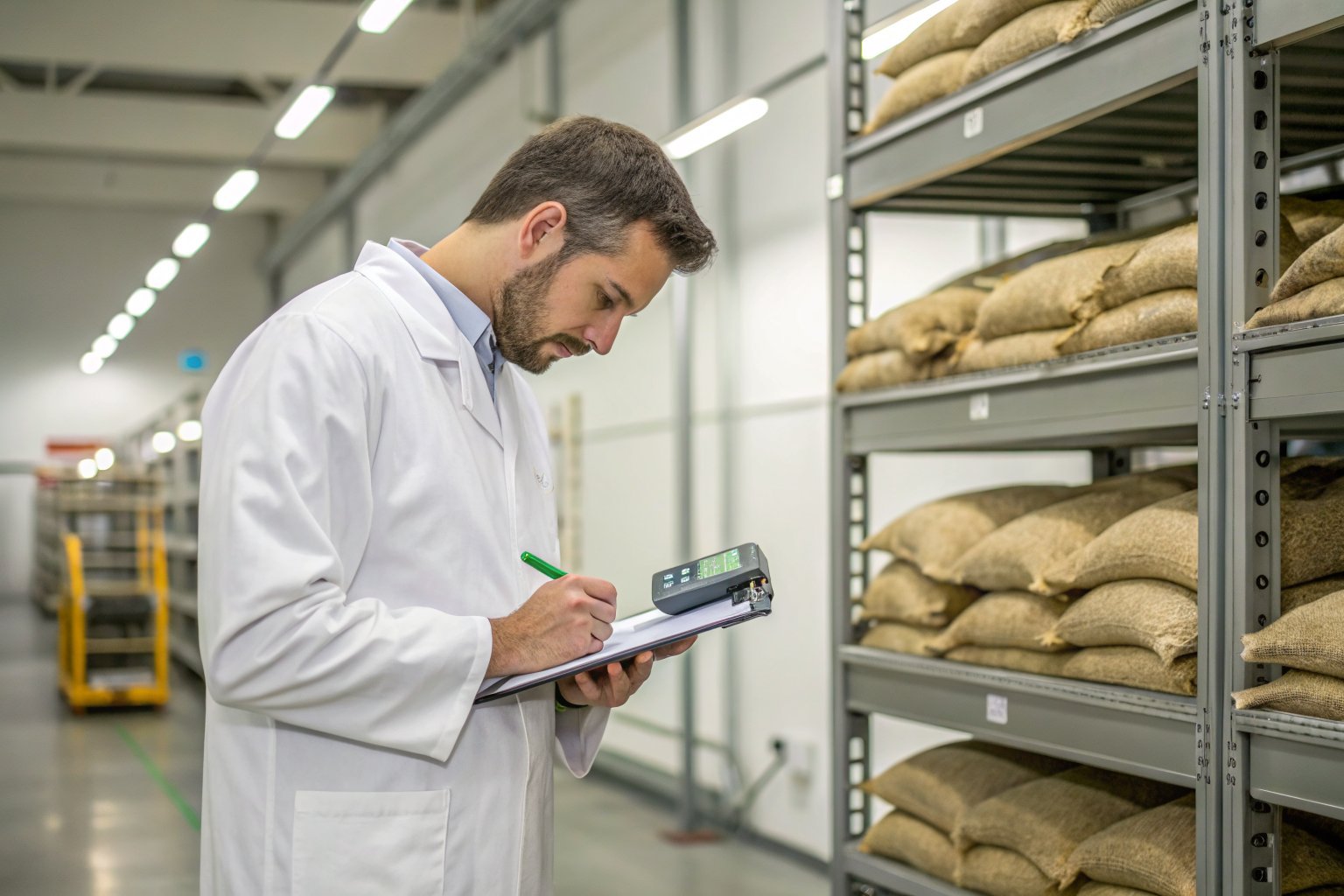
For coffee buyers, roasters, and quality control teams who test beans daily, the standard is to calibrate every morning before the first reading. This takes less than two minutes — you insert the probe into a known reference sample and adjust until the reading matches. The Specialty Coffee Association's equipment maintenance protocols state that daily calibration is the minimum standard for facilities handling more than 10,000 pounds of green coffee per week. I know a QC manager in Portland who missed a daily calibration just once, on a Monday morning. His meter had drifted 0.6 percent over the weekend due to temperature changes in the warehouse. He tested forty bags before realizing the error. Each bag had to be re-tested. That cost him three hours and delayed a shipment. Daily calibration is cheap insurance against that kind of waste.
Does Calibration Frequency Change Based on Meter Type?
Not all moisture meters are the same. Capacitance-based meters are more stable and can go 2 to 4 weeks between calibrations. Resistance-based meters, which are more common in the coffee industry, drift faster and should be calibrated before each use. Pin-type meters are particularly sensitive to temperature shifts. The International Coffee Organization's technical bulletin on moisture measurement notes that handheld resistance meters commonly used in the field should be calibrated at the start of each testing day, and re-calibrated whenever the ambient temperature changes by more than 5 degrees Celsius. If you move your meter from an air-conditioned office to a warm warehouse, that is a recalibration event. Most QC teams I work with keep a calibration log and check it weekly. If a meter has drifted more than 0.2 percent since the last calibration, it gets serviced immediately.
What Is the Proper Way to Calibrate a Coffee Moisture Meter?
Calibration sounds technical, but it is a straightforward process that any warehouse worker can learn in five minutes. The key is having a reliable reference sample and following the correct sequence.
What Equipment Do You Need for Accurate Calibration?
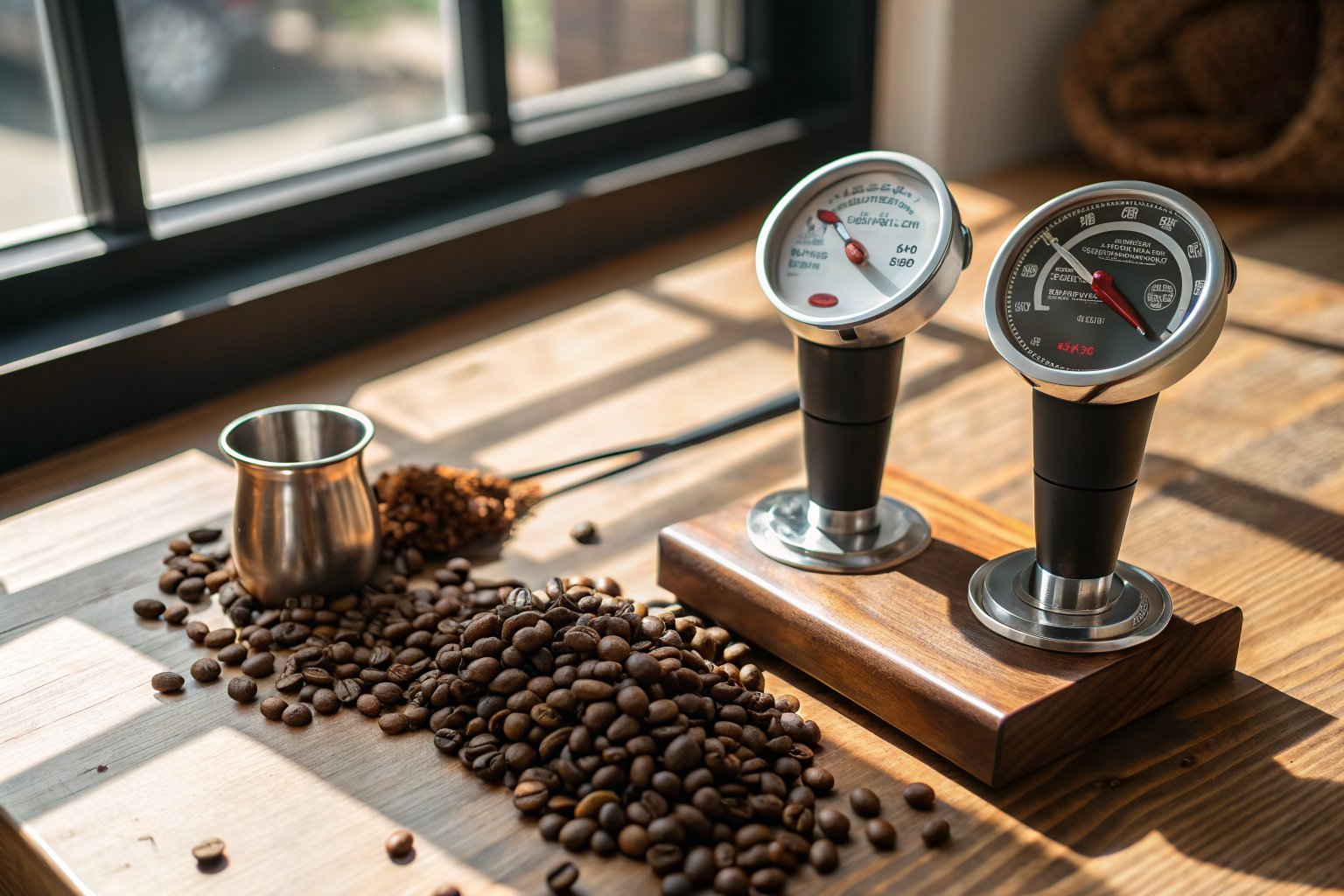
To calibrate a moisture meter properly, you need three things: a certified reference sample with a known moisture value, a clean probe, and a stable environment. The reference sample should be a sealed container of green coffee whose moisture content has been verified by a lab oven test, which is the gold standard for moisture measurement. Never use a sample that has been opened for more than 30 minutes — exposure to ambient humidity changes its moisture content. The American Society of Agricultural and Biological Engineers' standard S358.2 specifies that moisture reference samples must be stored in airtight containers at 20 to 25 degrees Celsius. Many coffee labs use a two-point calibration: one sample at 10.0 percent moisture and a second at 12.0 percent, covering the typical range for green coffee. This gives you confidence that the meter reads correctly across the full spectrum of beans you will test.
What Is the Step-by-Step Calibration Procedure?
Start by cleaning the probe with a dry cloth to remove any oil or residue from previous tests. Insert the probe into the reference sample at the same depth you use for regular testing — usually 2 to 3 centimeters. Wait for the reading to stabilize, which takes 5 to 10 seconds. If the reading does not match the reference value, adjust using the calibration screw or digital offset, depending on your meter model. Repeat until the meter reads within 0.1 percent of the reference. Test a second reference sample at a different moisture level. If both readings are within tolerance, your meter is calibrated. If not, the meter may need factory servicing. The Coffee Roasters Guild's calibration guide recommends logging each calibration with the date, reference values, actual readings, and adjustments made. This log becomes your audit trail when disputes arise with suppliers. At Shanghai Fumao, we keep calibration logs for every meter and share them with buyers upon request — it builds trust in our quality claims.
What Common Mistakes Cause Moisture Meter Drift?
Even experienced coffee buyers make calibration mistakes. The most common one is trusting a meter that has been sitting in a hot car or a cold warehouse over the weekend. Temperature shock is the number one cause of meter drift.
How Does Temperature Fluctuation Affect Meter Accuracy?
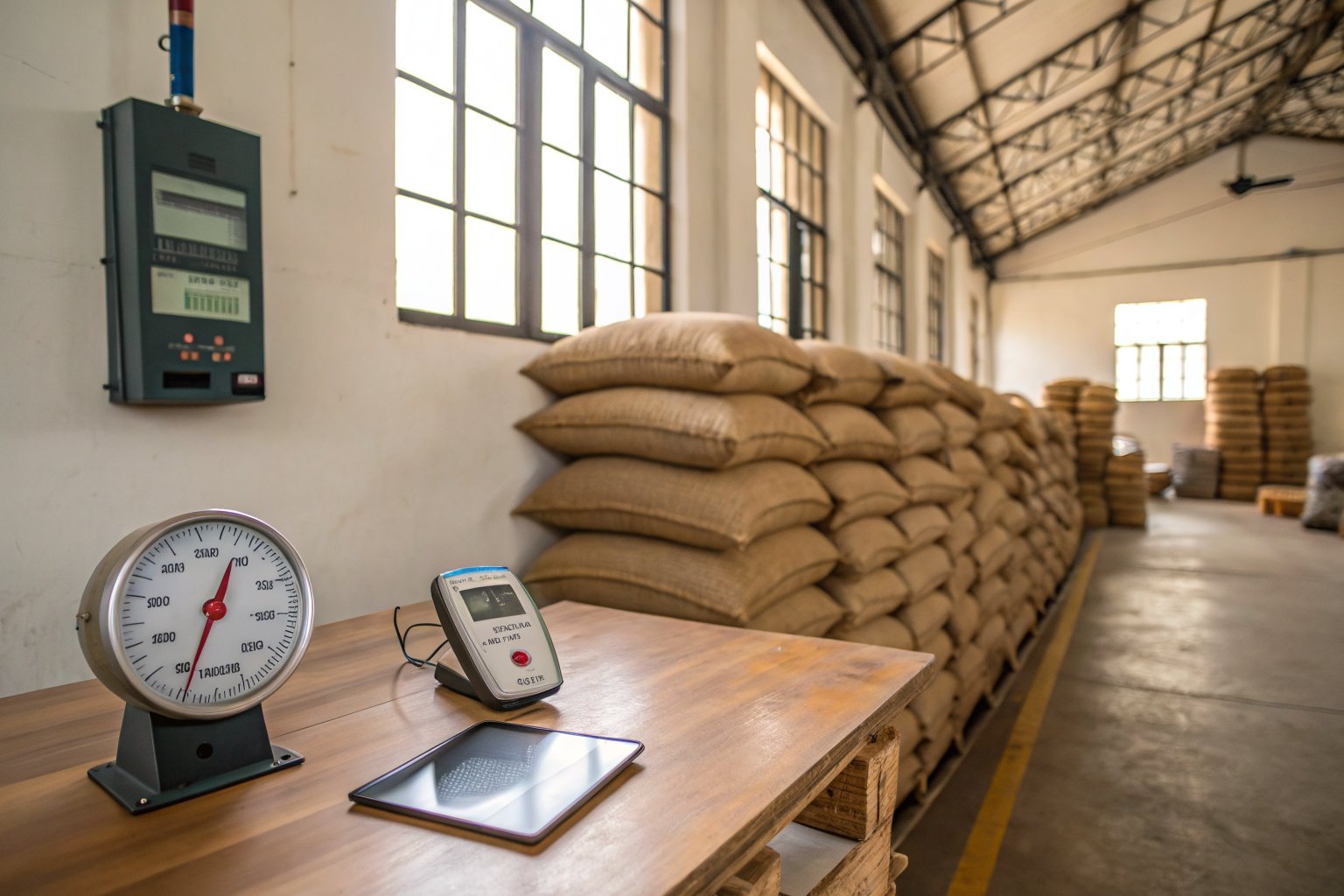
Moisture meters measure electrical resistance or capacitance, both of which change with temperature. A meter calibrated at 22 degrees Celsius can read 0.3 to 0.5 percent different at 32 degrees Celsius. That is enough to change a buying decision. If you keep your meter in your truck, the interior temperature on a summer afternoon can exceed 50 degrees Celsius. By the time you pull it out to test a container, the internal components have drifted significantly. The United States Department of Agriculture's coffee grading guidelines recommend allowing the meter to acclimate to the testing environment for at least 30 minutes before use. Never calibrate or test immediately after moving the meter between environments with a temperature difference of more than 10 degrees Celsius. Many professional buyers carry two meters — one that stays in the office for reference and one that travels — and they cross-check them weekly.
What Other Factors Cause Unexpected Meter Drift?
Coffee bean density affects moisture readings. Dense high-grown Arabica beans conduct electricity differently than lower-density Robusta. If you calibrate your meter on one bean type and test another, the reading will be off. Always calibrate using a reference sample of the same bean type you are testing. Bean temperature matters too. Beans straight from a container that has been sitting in the sun will read higher moisture than the same beans after they cool down. Bean size and surface condition also play a role. Cracked or broken beans expose the endosperm, which dries faster and can cause a localized low reading. The Coffee Quality Institute's cupping handbook recommends sieving the sample to remove fines and broken beans before testing, then calibrating on whole, intact beans only. Following these steps eliminates 90 percent of the variables that cause drift between calibrations.
Conclusion
Calibrating your moisture meter is not a once-a-year chore. It is a daily discipline that protects your coffee buying decisions from expensive errors. The right frequency is simple: calibrate before every testing session, keep a calibration log, and re-calibrate whenever the temperature changes by more than 5 degrees Celsius. Use certified reference samples, let your meter acclimate to the testing environment, and always match the reference bean type to the beans you are testing. These habits take two minutes per day and save you thousands per year in avoided quality disputes. If you are buying green coffee from Asia, you need a supplier who understands these standards. At BeanofCoffee, every export lot is tested with calibrated equipment and documented with moisture readings you can trust. We want you to receive exactly what you pay for — nothing less. Contact Person: Cathy Cai Email: cathy@beanofcoffee.com