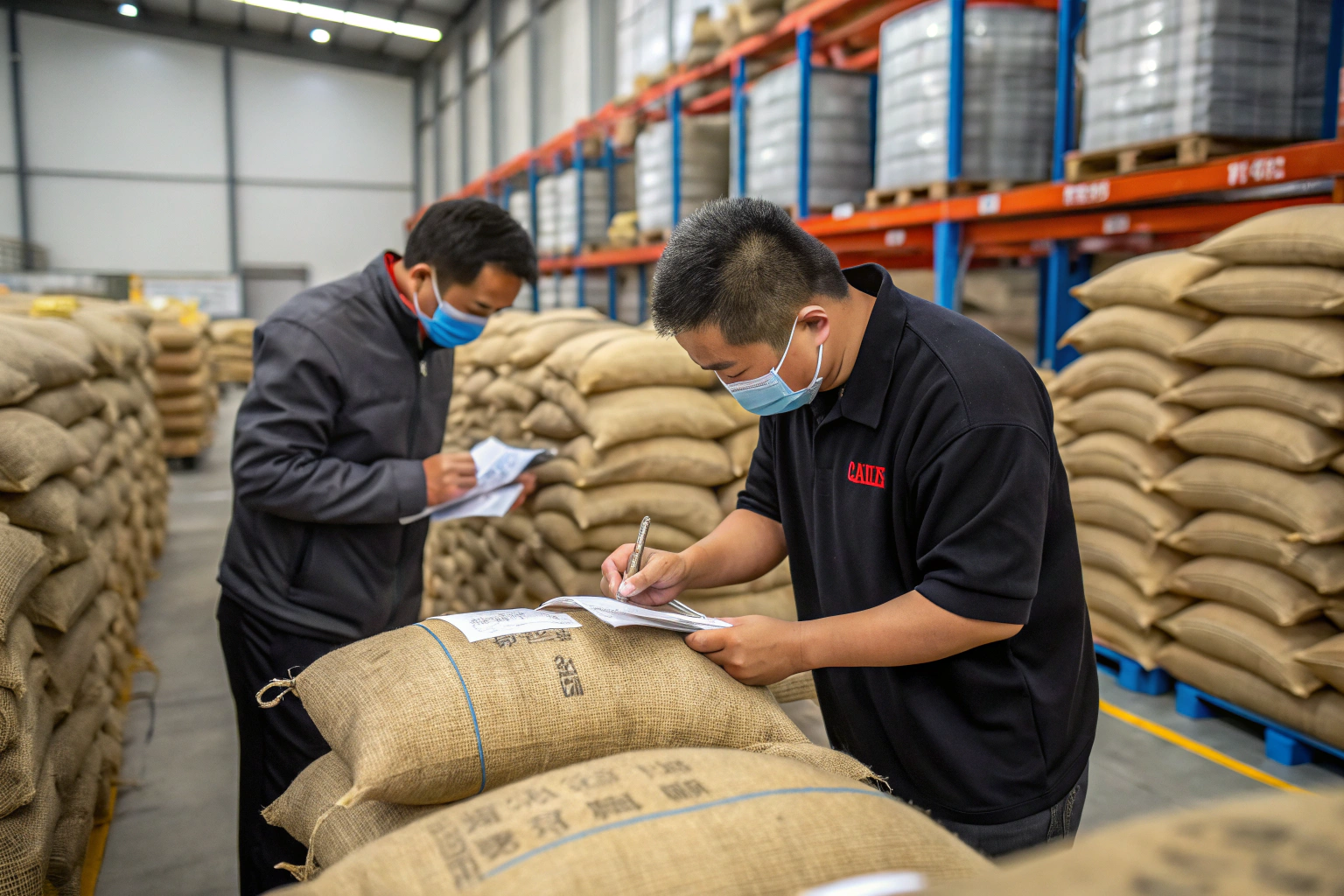
I'll be honest with you. The pre-shipment inspection is the moment I still get nervous, even after all these years. It's the final exam. The coffee has been grown, harvested, processed, milled, sorted, and bagged. It's sitting in the warehouse, ready to be stuffed into a container. And now, a sample is about to be pulled, roasted, and cupped. If it passes, the container leaves, the invoice is issued, and the deal is complete. If it fails, everything stops. The container is un-booked. The coffee is re-sorted or rejected. My reputation takes a hit. This is why I never, ever skip this step. And why you, as a buyer, should never let a supplier ship without one.
Arranging a pre-shipment coffee quality inspection means establishing a documented, verifiable process that confirms the coffee loaded into the container exactly matches the approved sample and the contract specifications. This involves three core steps: pulling a representative sample from the actual bags destined for shipment, conducting a full physical and sensory analysis against the agreed standards, and sealing a reference sample that both parties retain for dispute resolution. The inspection is not a formality. It is the final, legally binding quality gate.
This is the moment where trust meets verification. A good supplier will insist on this process. A bad supplier will try to rush through it or skip it entirely. I want to walk you through exactly how a proper pre-shipment inspection works, from my side as the exporter and from your side as the buyer. Because when that container door closes and the seal goes on, there's no turning back.
What Are the Key Steps in a Pre-Shipment Inspection?
A proper pre-shipment inspection is not a quick glance. It's a disciplined, step-by-step protocol. If you rush it, you miss things. And the things you miss will be discovered by your buyer, in their lab, under their lights, and the conversation that follows will be very uncomfortable.
The key steps in a pre-shipment inspection are: verification of lot identity against the contract, systematic sampling from a statistically significant number of bags, physical green grading for defects and screen size, moisture and water activity measurement, sample roasting to an agreed profile, sensory cupping by at least two calibrated tasters, and finally, the sealing of a 500-gram reference sample for both the exporter and the buyer. Each step must be documented with a date, a time, and the name of the person performing it.
How Do You Verify Lot Identity First?
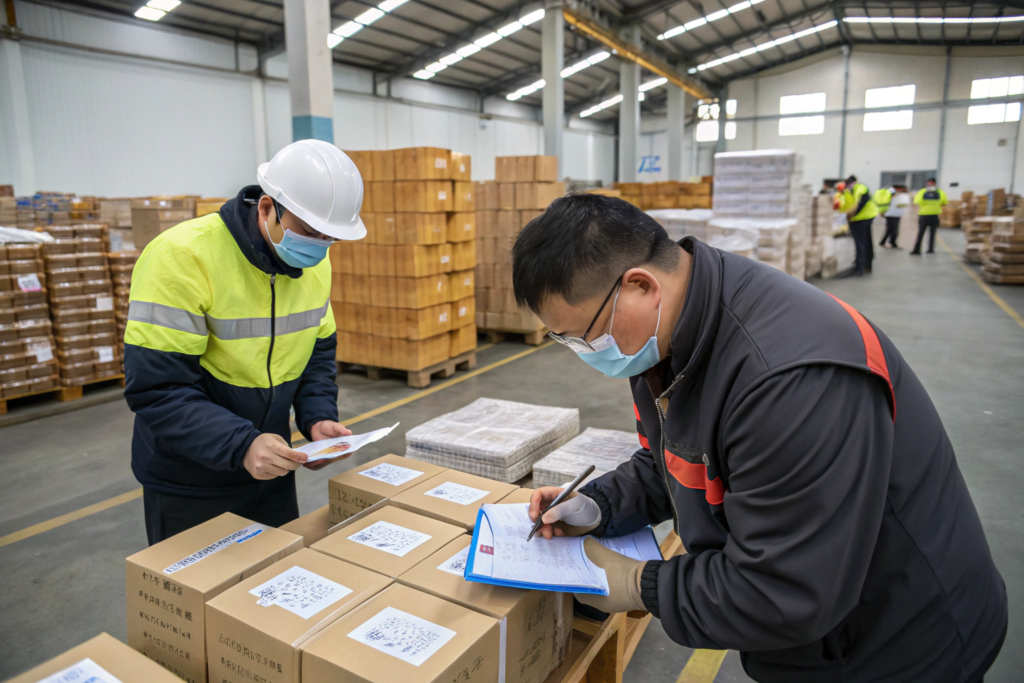
Before you pull a single sample, you must confirm you are inspecting the right coffee. It sounds obvious, but in a busy warehouse with hundreds of pallets, mistakes happen.
You take the contract. You find the lot number. Then you walk to the pallets and physically check the tags on the bags. The lot number on the tag must match the lot number on the contract exactly. Not "similar." Exactly.
I also check the bag count and the total weight against the packing list. If the contract says 320 bags of 60 kilos, there must be 320 bags, and the total gross weight on the warehouse scale must match. Any discrepancy here is a red flag. It means the warehouse management is sloppy, and sloppy management leads to quality errors.
What Is the Correct Sampling Procedure?
This is the most technically critical step. A bad sample produces a meaningless result. If you only take beans from the top bags on the front pallet, you are not inspecting the lot. You are inspecting the easiest-to-reach bags.
The Green Coffee Association recommends sampling from at least 50% of the bags in a lot, using a bag trier. A bag trier is a long, hollow, pointed tube. You insert it into the side of the jute bag, twist, and withdraw a core sample from the center of the bag.
You take cores from the top, middle, and bottom of the pallet. You take cores from the front and the back. You combine all these cores into a composite sample. This composite is what you analyze. It represents the average of the entire lot. We sample at least 20 bags for a single pallet lot, and at least 50 bags for a full container lot. The SCA sampling protocols provide detailed guidance on this.
Why Is Third-Party Inspection Important for Remote Buyers?
Not every buyer can fly to Yunnan to watch me pull samples. I understand that. Plane tickets are expensive. Time is limited. And honestly, even if you could visit, would you know what to look for? Would you know if my moisture meter was calibrated correctly? A third-party inspector provides a professional, independent answer to that problem.
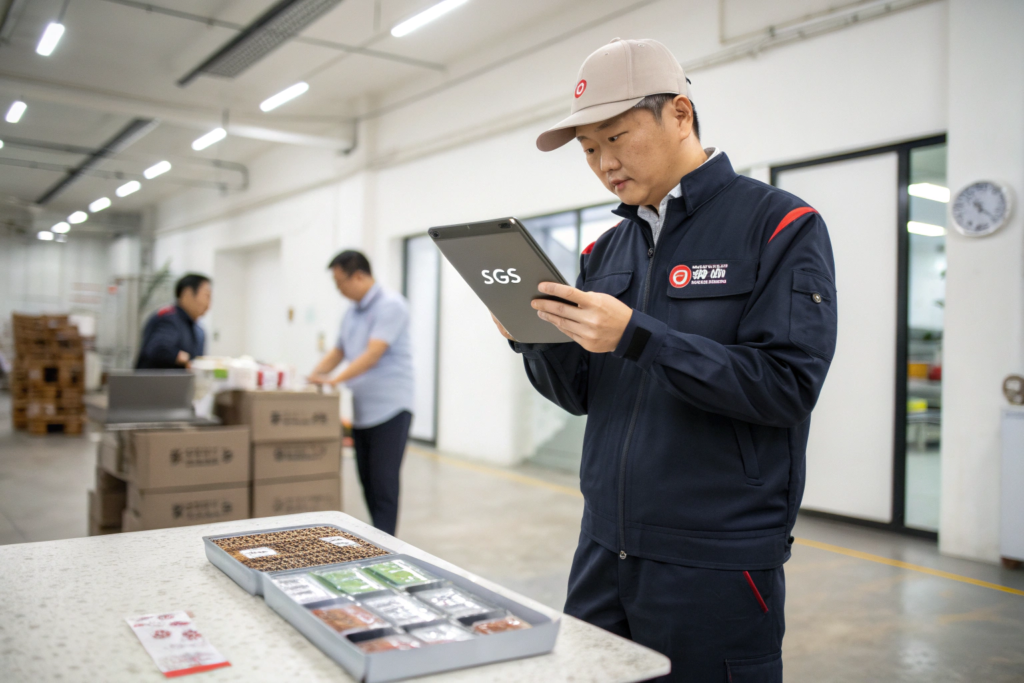
Third-party inspection is essential for remote buyers because it removes the conflict of interest inherent in a supplier inspecting their own coffee. A professional inspection company like SGS, Bureau Veritas, or Cotecna acts as the buyer's independent agent. They send a trained inspector to the warehouse. They supervise the sampling. They perform the analysis using their own calibrated equipment. They issue a sealed report directly to the buyer. This report is legally defensible and can be used to trigger payment or to reject the lot.
What Do Third-Party Inspectors Actually Check?
A comprehensive third-party inspection, often called a "Full Outturn Inspection," covers everything.
The inspector checks the physical condition of the warehouse and the bags. Are the bags clean? Is there any evidence of water damage or pest infestation? They verify the bag marks and the lot numbers against the contract.
Then they supervise the sampling. They ensure that the bags are selected randomly, that the trier is used correctly, and that the composite sample is representative. They seal a portion of the sample in a tamper-proof bag and send it to the buyer.
They also perform on-site tests. Moisture content. Water activity. Screen size analysis. Defect count. Some inspectors even carry a portable sample roaster and a cupping kit. They cup the coffee on the spot and provide a preliminary sensory assessment.
The inspector's report is a snapshot of the truth. It costs money—maybe $500 to $1,000 per inspection—but for a $50,000 container, it's a trivial insurance premium. Companies like SGS and Bureau Veritas have agricultural inspection divisions that specialize in coffee.
How Do You Instruct a Third-Party Inspector?
When you, as a buyer, hire an inspector, you give them a clear, written scope of work. Don't just say, "Check the coffee." Be specific.
Tell them: "Please inspect Container #XYZ, Lot #ABC, 320 bags of washed Yunnan Arabica. Verify the bag marks match the packing list. Supervise the pulling of a 2kg composite sample from 50 randomly selected bags using a standard bag trier. Perform on-site moisture analysis using an oven-drying reference method. Perform a green grading using SCA standards. Vacuum-seal 500 grams and courier it to my office. Email the preliminary report within 24 hours."
This level of detail leaves no room for ambiguity. The inspector knows exactly what you expect. The supplier knows the inspection is rigorous. The whole process becomes transparent.
How Can Technology Improve the Inspection Process?
The fundamentals of coffee inspection haven't changed in a hundred years. You still need a human eye to spot a sour bean. You still need a human palate to taste a phenolic defect. But technology is making the process faster, more transparent, and harder to falsify.
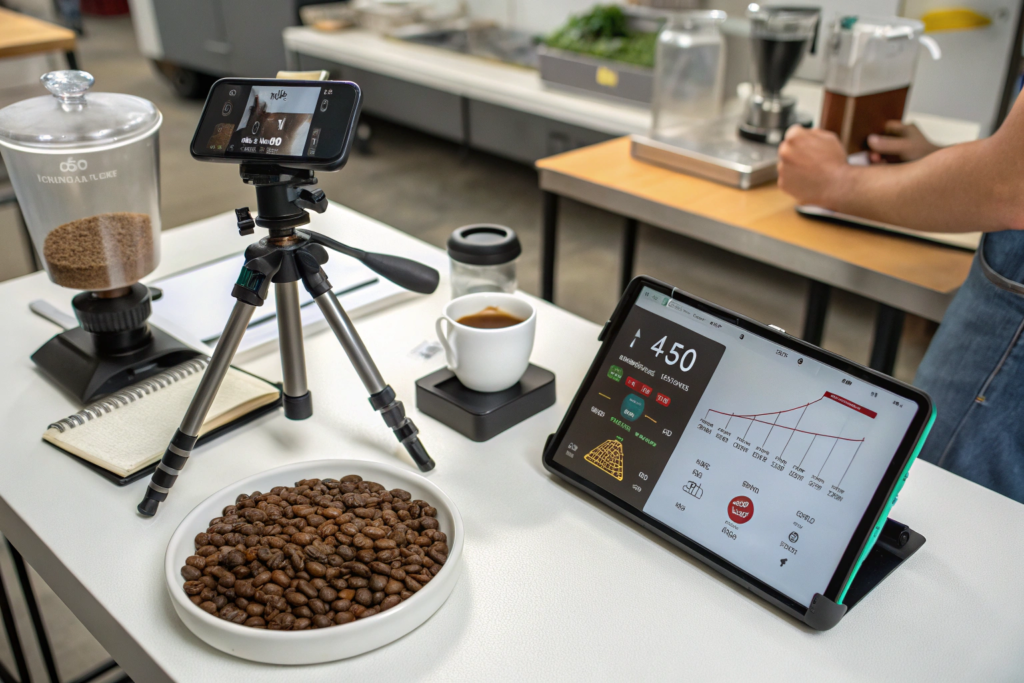
Technology improves the pre-shipment inspection process by enabling real-time data sharing, live video verification, and digital documentation. A supplier can now use a calibrated digital moisture meter that logs readings to the cloud, creating an unalterable record. A buyer can attend the inspection via live video call, watching the sampling and cupping in real time. Digital photos of every defect mat, screen tray, and roast sample can be timestamped and uploaded to a shared platform. This digital trail doesn't replace the physical sample, but it augments it with speed and transparency.
What Is Live Video Inspection?
Live video inspection is exactly what it sounds like. I set up a phone on a tripod in the warehouse. The buyer, sitting in their office in Los Angeles or London, connects via Zoom or WeChat. They watch the sampling. They ask questions. "Zoom in on that bag. Show me the tag. What's the moisture reading on that meter?"
This is not a substitute for a third-party inspection. The buyer can't taste the coffee through a screen. But it's a powerful supplement. It builds trust. It proves that the coffee exists, that the bags are real, and that the inspection is actually happening.
I offer live video inspections to all my buyers. If they can't come to Yunnan, Yunnan comes to them. It takes 30 minutes. It costs nothing. And it transforms a transactional email exchange into a shared, human moment of quality verification.
How Do Digital Grading Logs Improve Traceability?
Paper logs get lost. They get coffee spilled on them. They get filed in a cabinet and never seen again. Digital logs, stored in the cloud, are searchable, shareable, and permanent.
We use a simple system. Every pre-shipment inspection is assigned a unique ID. The moisture readings, the defect count, the screen analysis, the roast profile, the cupping scores—all of it is entered into a spreadsheet and saved as a PDF. That PDF is emailed to the buyer along with photos of the inspection.
If a dispute arises six months later, we can pull up the digital log instantly. We can see exactly who did the inspection, when they did it, and what the numbers were. This level of documentation is expected in specialty coffee now. It's a hallmark of a professional, transparent supplier.
What Documentation Should Accompany a Shipment?
The inspection is complete. The coffee is loaded. The container is sealed. Now the paperwork must be perfect. The physical coffee can be flawless, but if the documents are wrong, the shipment will be delayed, held, or rejected at the destination port.
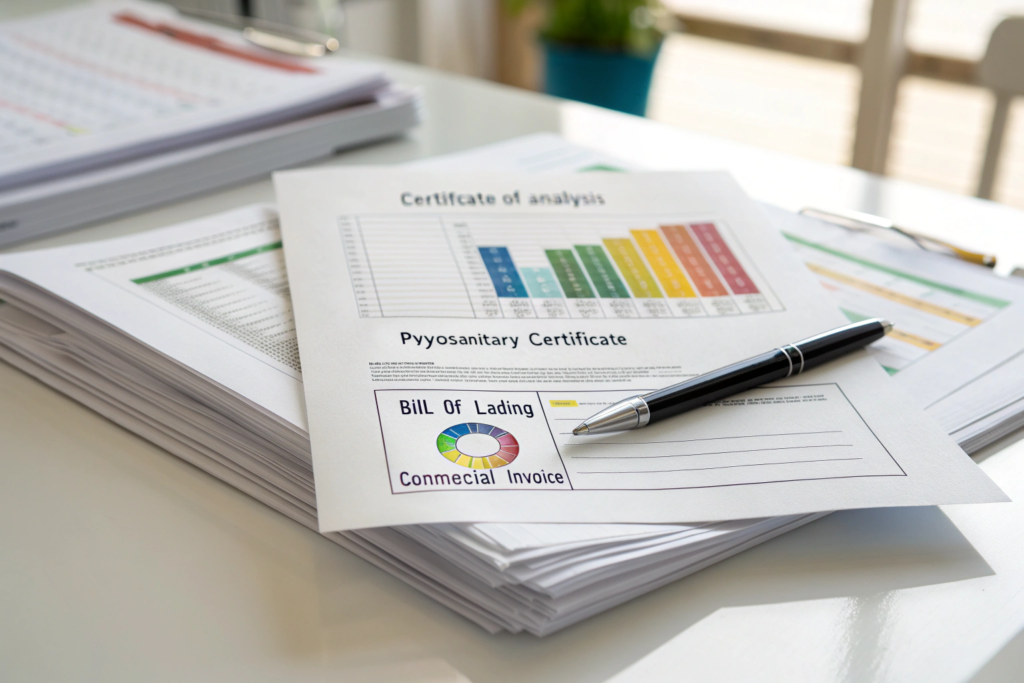
The essential documentation that must accompany a green coffee shipment includes: the Commercial Invoice, the Packing List, the Bill of Lading, the Pre-Shipment Inspection Report, a Certificate of Analysis, a Phytosanitary Certificate, a Fumigation Certificate if applicable, and a Certificate of Origin. For shipments to the EU, a Deforestation Due Diligence Statement with geolocation data is now mandatory. Each document tells a specific part of the story, and the story must be consistent across all of them.
What Is a Certificate of Analysis?
The Certificate of Analysis, or COA, is the scientific summary of the pre-shipment inspection. It is the single most important quality document.
A proper COA includes the lot number, the sample date, the analysis date, and the method used. It reports the moisture content, the water activity, the screen size distribution, and the defect count broken down by category. If pesticide testing was performed, the results and the lab's accreditation details are included.
This document is the exporter's formal declaration: "This is the quality we shipped." If the buyer's own analysis upon arrival shows a significant deviation, the COA becomes the basis for a quality dispute. Without a COA, the buyer has no benchmark.
How Do You Ensure Document Consistency?
The most common customs problem is not a missing document. It's mismatched data. The lot number on the COA doesn't match the lot number on the Bill of Lading. The weight on the Packing List doesn't match the weight on the Phytosanitary Certificate. The container number on the Fumigation Certificate has a typo.
A single discrepancy can trigger a manual inspection, a hold, and demurrage charges. The exporter must check and cross-check every number. Every. Single. One.
We use a checklist. Before releasing the documents to the bank or the buyer, we verify that every document shares the same: exporter name and address, importer name and address, lot number, container number, seal number, gross weight, net weight, and number of bags. It's tedious, but it's the difference between a seamless clearance and a week-long delay.
Conclusion
The pre-shipment inspection is the final, definitive statement of quality. It's the moment where promises meet proof. For the exporter, it's the test that validates months of hard work. For the buyer, it's the evidence that their investment is safe. It should never be skipped, rushed, or delegated to someone who doesn't understand its gravity.
A good inspection is transparent. It's documented. It's verifiable. It involves real sampling, real analysis, and real cupping. It leaves a paper trail that can withstand scrutiny. Whether it's performed by the supplier, a third-party inspector, or via live video, the goal is the same: no surprises when the container doors open at the destination.
We treat every pre-shipment inspection as if we are the buyer. Because we've been the buyer before, and we know the anxiety of waiting for a container to arrive from across the ocean. The best cure for that anxiety is a clean sample, a detailed report, and a sealed reference bag sitting on your desk.
If you're preparing to ship a container or planning to order from a new supplier, let's discuss what a proper pre-shipment inspection should include. We can share our standard inspection protocol, a sample COA, and a video of our process.
Reach out to Cathy Cai. She coordinates all our pre-shipment inspections and can help you set up a third-party inspection or schedule a live video session for your order.
Email: cathy@beanofcoffee.com. Let's check every bean before it sails.