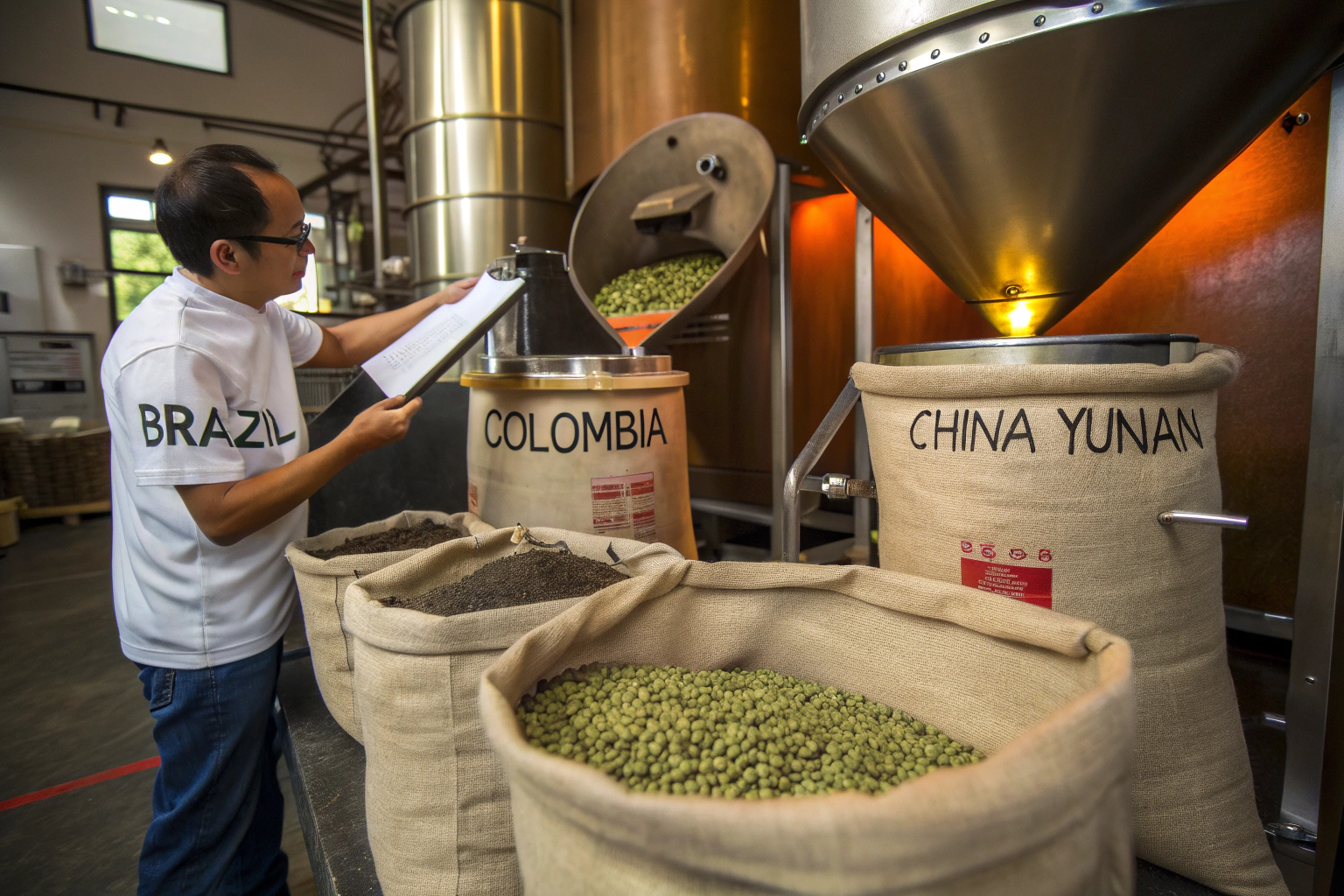
A few years ago, I got an unusual call from a distributor in Chicago. He said, "I don't want your best coffee. I don't want the 86-point micro-lot. What do you have that's clean, consistent, and cheap enough to be 30% of my espresso blend without ruining it?" I almost felt insulted. I was proud of my top lots. But then I understood. He wasn't looking for a star. He was looking for a team player. A supporting actor that made the lead look better. That's when I realized: the biggest opportunity for Chinese Arabica in the US market isn't the single-origin shelf. It's the blend.
US distributors prefer Chinese Arabica for blends because it delivers a rare combination of three critical attributes: a clean, neutral base profile that doesn't clash with louder origins, a competitive FOB price that lowers the overall blended cost, and consistent physical quality with good bean size uniformity and low defect counts. In a blend, Chinese Arabica acts as the "mortar" between the "bricks" of more expensive, more aggressively flavored coffees. It fills the gaps, smooths the edges, and brings the cost per pound down without introducing the earthy, harsh notes that often plague cheap filler beans from other Asian origins.
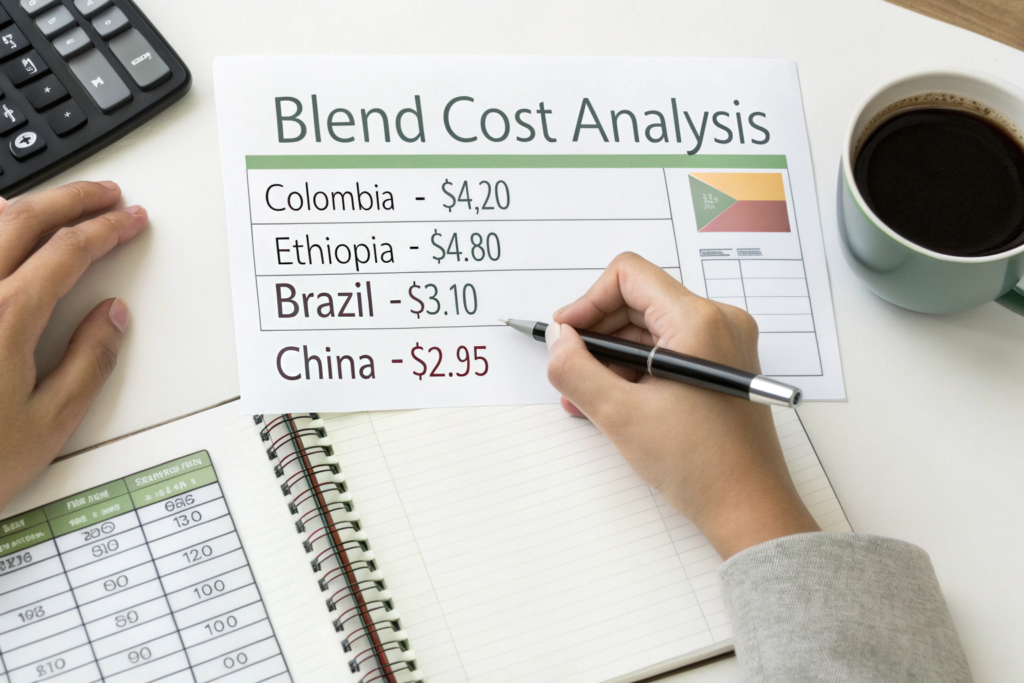
A blend is a puzzle. The roaster is trying to create a specific taste profile, a specific body, and a specific price point, all at the same time. They need components that are reliable, predictable, and compatible. A wild, funky natural Ethiopian might be the 10% accent note. A heavy, chocolatey Colombian might be the 40% base. But the remaining 30-40% needs to be something that doesn't fight for attention. It needs to provide volume, body, and sweetness without screaming. That's where Yunnan Arabica shines. Let me break down why distributors like Ron are increasingly looking to China for their blending needs.
What Makes Chinese Arabica a Good "Base Note" for Blends?
A blend needs a foundation. Something that anchors the flavor, provides body, and doesn't distract. In the wine world, they talk about the "backbone" of a blend. In coffee, it's the base note. It's the canvas on which the other flavors are painted. Brazil has traditionally occupied this role. But Chinese Arabica is increasingly competing for it, and in some cases, winning.
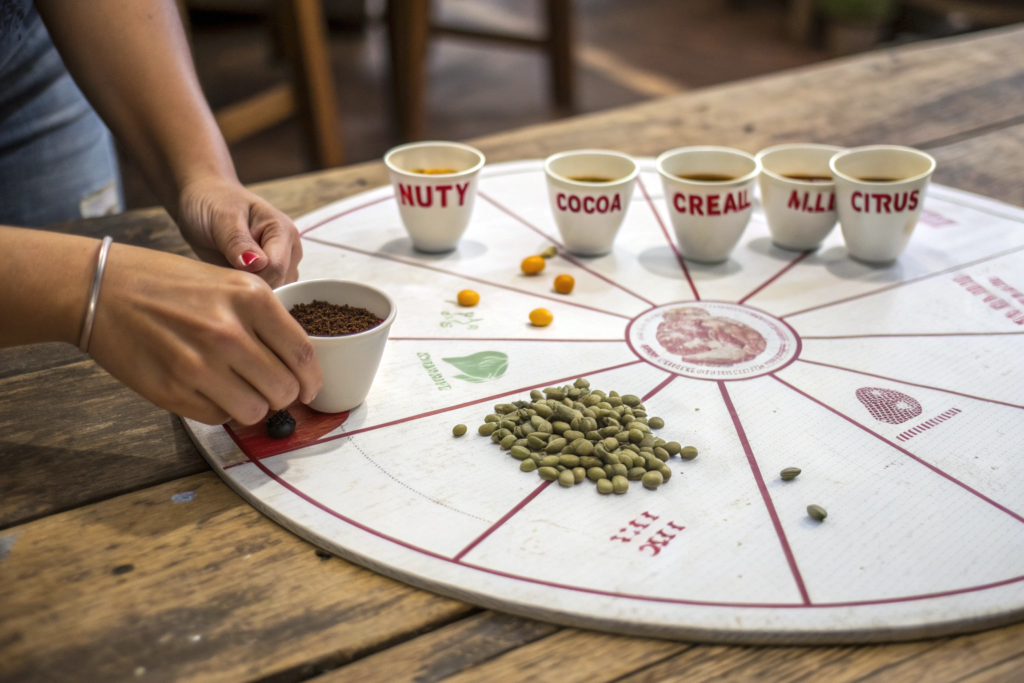
Chinese Arabica makes an excellent base note for blends because of its inherently mild, clean, and sweet cup profile. Washed Arabica from Yunnan typically cups with notes of milk chocolate, roasted nuts, brown sugar, and a subtle malty grain character. The acidity is low to medium, never sharp or piercing. The body is medium, smooth, and slightly creamy. This profile does not dominate a blend; it supports. It provides a smooth, sweet foundation that allows more expensive, brighter coffees to shine without being muddied by earthy or fermented off-notes.
How Does the Flavor Profile Compare to a Brazilian Base?
Brazilian coffee is the traditional base for many US blends. It's known for low acidity, chocolate and nut notes, and a heavy body. It's comfortable. It's familiar.
Chinese washed Arabica shares many of these attributes—the chocolate, the nuts, the low acidity—but it brings something extra. A cleaner finish. Brazilian coffees, especially natural processed ones, can have a slightly rustic, peanut-skin, earthy note. Some consumers like it. Some don't notice it. But in a delicate blend, it can be a limiting factor.
Yunnan washed Arabica is often cleaner. The aftertaste is shorter and crisper. It doesn't linger with any muddiness. This makes it a more transparent base note. A blender can add a bright, fruity Ethiopian and the Ethiopian's delicate jasmine notes won't be obscured by the base. The base just provides sweetness and body, then gets out of the way.
Why Is "Low Acidity" a Desirable Blending Trait?
Acidity is the sharp, tangy, sometimes sour sensation in coffee. It can be beautiful—think of the citrus brightness in a Kenyan. But in a blend designed for the mass market, especially a blend destined for milk-based drinks or cold brew, too much acidity is a liability.
High acidity curdles in milk. It tastes sour and thin, not bright and complex. For a cafe selling 500 lattes a day, the espresso blend must be compatible with milk. A low-acid base like Yunnan Arabica provides the solution. It adds body and coffee flavor without adding sharpness.
Cold brew is another massive market in the US. Cold brewing suppresses acidity naturally. But a coffee that is already low in acid, like a Chinese Arabica, produces a cold brew that is exceptionally smooth and chocolatey. No bitter edge. No sour aftertaste. Just clean, sweet coffee flavor. Many US distributors are specifically sourcing low-acid components for their cold brew programs.
How Does Price Stability Influence Blending Decisions?
A blend is a product. It has a target retail price. The roaster needs to hit that price consistently, month after month, year after year. If one component of the blend suddenly jumps in price, the roaster either absorbs the loss—eating into already thin margins—or raises the retail price and risks losing customers. Both are painful.
Chinese Arabica offers US distributors a price stability advantage that is increasingly rare in the volatile coffee market. The Yunnan harvest is reliable, the local production costs are relatively stable, and the FOB pricing is not directly tied to the New York C-market in the same way that Brazilian or Colombian prices are. This allows a blender to lock in a base component at a predictable cost for the entire season, protecting their overall blend margin from the wild swings of the commodities market.
Why Isn't Chinese Arabica as Tied to the C-Market?
The C-market is the global futures price for Arabica. It's set in New York. It's influenced by Brazilian weather, hedge fund speculation, and currency fluctuations. It's a roller coaster.
Chinese Arabica is somewhat decoupled from this. The domestic Chinese coffee market is growing so fast that a significant portion of Yunnan's production is consumed locally. Starbucks, Luckin, and a dozen domestic chains are buying huge volumes. This internal demand creates a price floor.
Furthermore, Chinese coffee is not a major volume on the ICE exchange. It's not a futures contract. Prices are negotiated directly between buyers and sellers. While the C-market sets a global sentiment, the actual FOB price for Yunnan coffee is influenced more by local harvest conditions, local labor costs, and the balance of supply and demand within China. This relative independence is a gift to blenders. It means that a contract for Yunnan coffee signed in November is likely to remain stable through the spring, even if a drought in Brazil sends the C-market into a frenzy.
How Does This Help a Distributor's Annual Budgeting?
A distributor like Ron hates surprises. He needs to quote a price to his roaster clients that is valid for a season. If his Colombian component spikes 20% mid-season, he's in trouble.
By using a stable Chinese Arabica as the 30-40% base, he reduces the overall volatility of his blend cost. If the blend has three components, and two are volatile but one is rock-solid, the total cost is more stable. It's a risk management strategy.
He can also forward contract with a supplier like BeanofCoffee at a fixed price for 12 months. We're willing to do this because our own cost structure is predictable. We know our labor costs. We know our fertilizer costs. We can commit to a fixed FOB price with confidence. This allows the distributor to print his wholesale price sheet without a contingency buffer for green coffee price spikes.
What Logistical Advantages Does Chinese Origin Offer?
Logistics is the unglamorous backbone of the coffee trade. A beautiful coffee that arrives late is a liability. A cheap coffee that takes 45 days to arrive ties up working capital. Speed and reliability matter as much as cup quality.
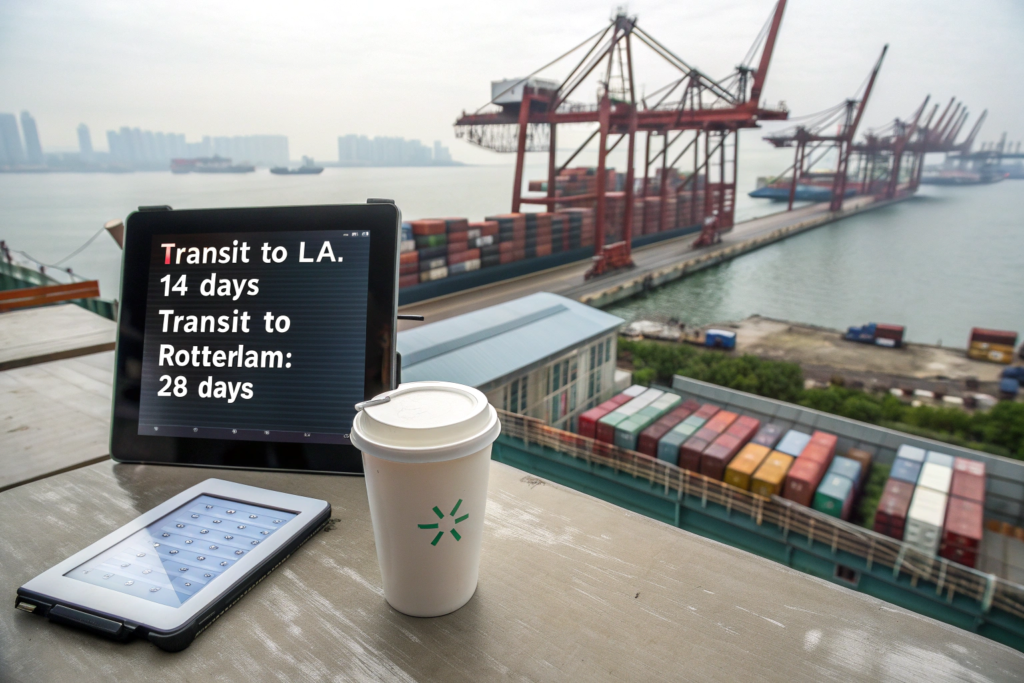
Chinese Arabica offers distinct logistical advantages for US distributors, primarily shorter transit times from major Chinese ports to the US West Coast, more frequent vessel sailings, and a well-developed container infrastructure. A container from Shanghai to Los Angeles typically takes 14 to 18 days, compared to 30 to 35 days from Santos, Brazil. This speed reduces the importer's cash conversion cycle—the time between paying for the coffee and selling it. It also means fresher coffee arrives at the roastery.
How Does Transit Time Affect Freshness and Storage?
Green coffee is a living product. It ages. It fades. Every day in transit is a day of flavor loss. A container sitting on a ship for 35 days loses more volatile aromatics than one that arrives in 14 days.
For a blender, freshness of the components matters. The base note might be subtle, but a stale base note tastes papery and flat. A fresh Chinese Arabica component contributes a lively sweetness that an aged Brazilian cannot.
Faster transit also means the distributor can hold less inventory. They can order more frequently and keep their warehouse lean. Instead of buying four months of Brazilian stock to cover the long voyage, they can buy two months of Chinese stock and reorder. This reduces storage costs and the risk of the coffee going past-crop in the warehouse.
Are US Buyers Looking to Diversify Their Logistics Risk?
Absolutely. The last few years have taught everyone a brutal lesson about concentration risk. A drought in the Panama Canal. A potential strike at US East Coast ports. A geopolitical crisis in the Red Sea affecting global shipping.
Distributors who relied entirely on South American origins, shipped through the Panama Canal to the Gulf or East Coast, found themselves dangerously exposed. The canal restricted transits. Shipping rates spiked. Schedules collapsed.
Chinese origin offers a diversification play. It enters through West Coast ports, often Long Beach or Oakland. It doesn't touch the Panama Canal. It's a completely different supply chain artery. For a large distributor, splitting their sourcing between South America and Asia is a hedge against regional logistical crises. It's supply chain resilience.
How Does Physical Bean Quality Enhance Blend Performance?
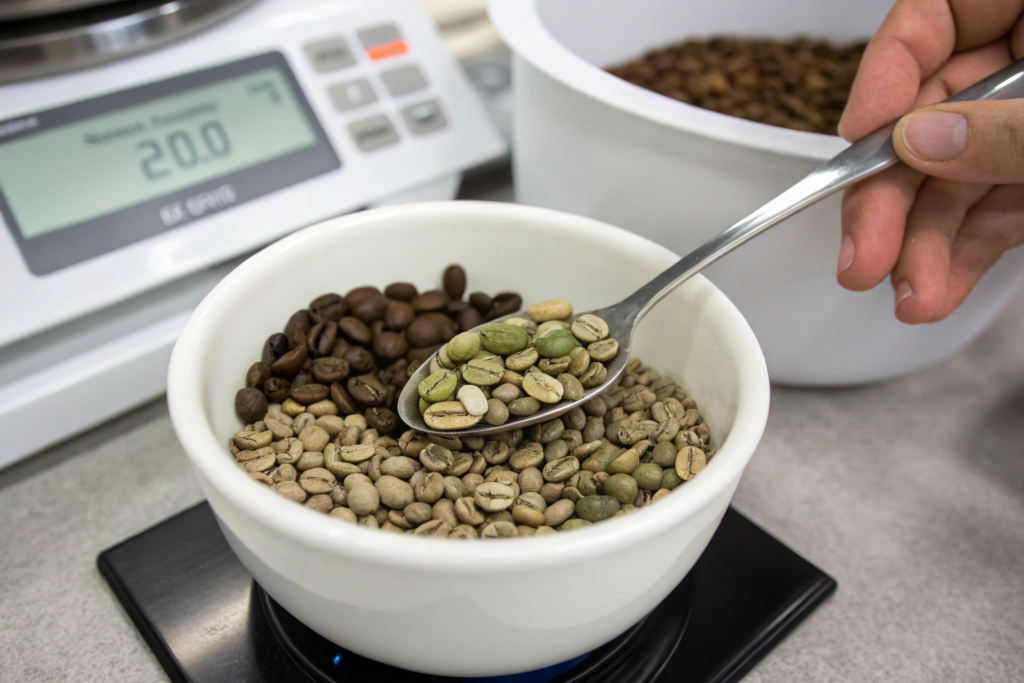
A blend is not just a mixture of flavors. It's a mixture of physical materials. Beans of different densities, sizes, and moisture contents will roast differently in the same drum. A bad physical blend roasts unevenly, creating a muddied flavor with both under-developed and scorched notes.
Chinese Arabica provides excellent physical quality for blending, characterized by high bean density, good screen size uniformity, and stable moisture content. Grown at 1,200 to 1,800 meters in Yunnan, the beans are dense and hard, meaning they conduct heat efficiently and roast evenly. The screen size is typically 16 and above, which matches well with other specialty-grade blending components. The moisture content is consistently delivered at 11-12%, matching industry standards. This physical compatibility means the Chinese component roasts in harmony with the Colombian and Ethiopian components, not against them.
Why Does Bean Density Matter for Roast Uniformity?
Density is a function of altitude. High-altitude beans grow slowly. They are harder, denser, and more compact. Low-altitude beans are softer and less dense.
When you put beans of very different densities into a roaster, the heat penetrates them at different rates. The soft, low-density beans roast faster. The hard, high-density beans roast slower. The result is an uneven roast, even if the roast master does everything right.
Chinese Arabica from Yunnan is high-grown. It's dense. It matches the density profile of high-grown Central American coffees quite well. A blender can pair it with a Guatemalan or a Colombian without worrying about a density mismatch causing roast defects.
What About Defect Counts and Clean Cup?
A blend is only as clean as its dirtiest component. If the base note has a high defect count—broken beans, insect damage, sour beans—those defects will contaminate the entire roast batch.
Chinese Arabica, when sourced from a quality-focused exporter, has very low defect counts. Our specialty-grade lots at BeanofCoffee are hand-sorted and mechanically sorted to remove virtually all primary and secondary defects. The result is a clean, stable component.
This cleanliness is critical for large-scale blending. A distributor blending dozens of containers a year cannot afford to have a batch ruined by a single moldy bean in the base component. The consistency of well-processed Yunnan Arabica reduces this risk to near zero. The Green Coffee Association grading standards emphasize the importance of a clean cup as a baseline for any component.
Conclusion
The US coffee market is maturing. It's no longer just about the single-origin star. It's about the well-crafted blend that delivers consistent quality, day after day, at a price that keeps the business healthy. Chinese Arabica has found its role in this ecosystem. It's not always the headliner. But it's the reliable, versatile, and cost-effective band member that makes the whole performance better.
Distributors like Ron are looking for an edge. They're looking for a component that simplifies their logistics, stabilizes their costs, and cleans up their cup. They're looking for a partner who can deliver container after container of uniform, clean, sweet Arabica without drama. That's what Yunnan offers.
The Chinese coffee industry has invested heavily in quality over the last decade. The results are in the cup. And increasingly, that cup is a blend, served in a cafe in Chicago or a diner in Texas, where no one knows the coffee is from China. They just know it tastes good.
If you're a US distributor looking for a reliable blending component—or if you're curious about how our washed Arabica performs in a blend against a Brazilian or a Colombian—let's talk. We can send you a sample specifically selected for blending evaluation.
To request a blending sample, discuss FOB pricing, or review our physical grading specs and cupping profiles, reach out to Cathy Cai.
Email: cathy@beanofcoffee.com. Let's build your next blend together.