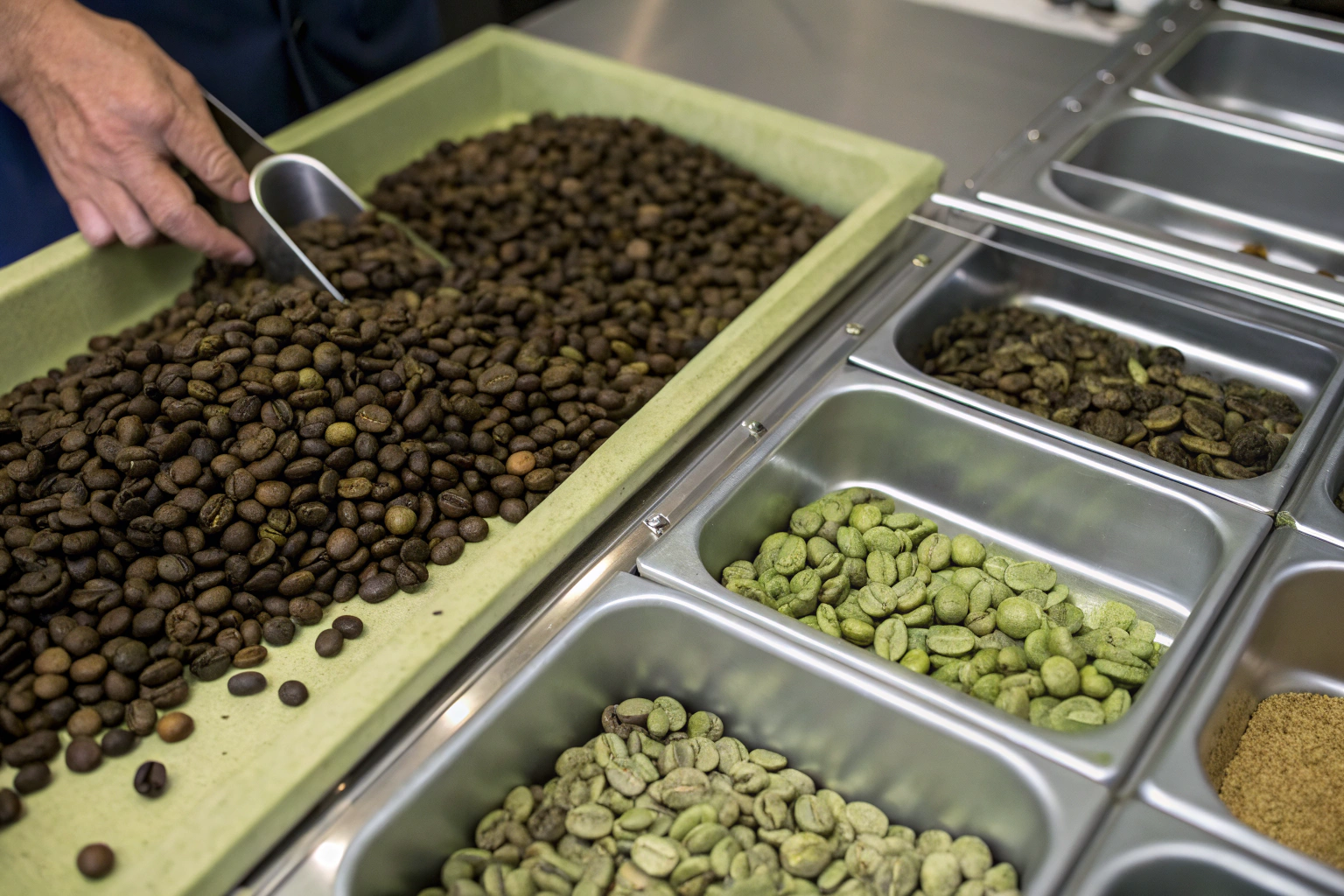
I once lost a shipment to a grading dispute. The buyer was a mid-sized roaster from Italy. He cupped the pre-shipment sample and loved it. He signed off. But when the container arrived in Genoa, his quality manager pulled a sample and ran a screen analysis. The report came back: 18% below screen 16. The contract specified "Screen 16 minimum, 90% above." The lot was technically out of spec. He demanded a 12% discount. I had no leg to stand on. My own grading report was sloppy. I had used a cheap, dented screen set and eyeballed the results. That discount wiped out my margin on the entire container. The problem wasn't the coffee. The problem was my grading system—and my choice of who supplied it.
Choosing the right coffee grading system supplier means finding a partner who provides precision-engineered, internationally calibrated equipment, not just cheap steel trays. The supplier must offer screens that conform to ISO 4150 or SCA standards, a moisture meter with traceable calibration, a sample roaster that matches your client's profile, and—critically—after-sales support and calibration services. This is not a one-time purchase. It is an investment in your legal and commercial defense. A grading report from a poorly calibrated system is worse than no report at all; it creates false confidence that can lead to costly disputes.
The grading system is your truth-teller. It tells you what you actually have, not what you hope you have. If you're a producer like me, it tells you which lots are specialty and which are commercial. If you're a buyer, it tells you whether the shipment matches the promise. The wrong system will lie to you. The right system will pay for itself in avoided disputes and consistent quality. Let me walk you through what matters.
What Are the Essential Components of a Grading Lab?
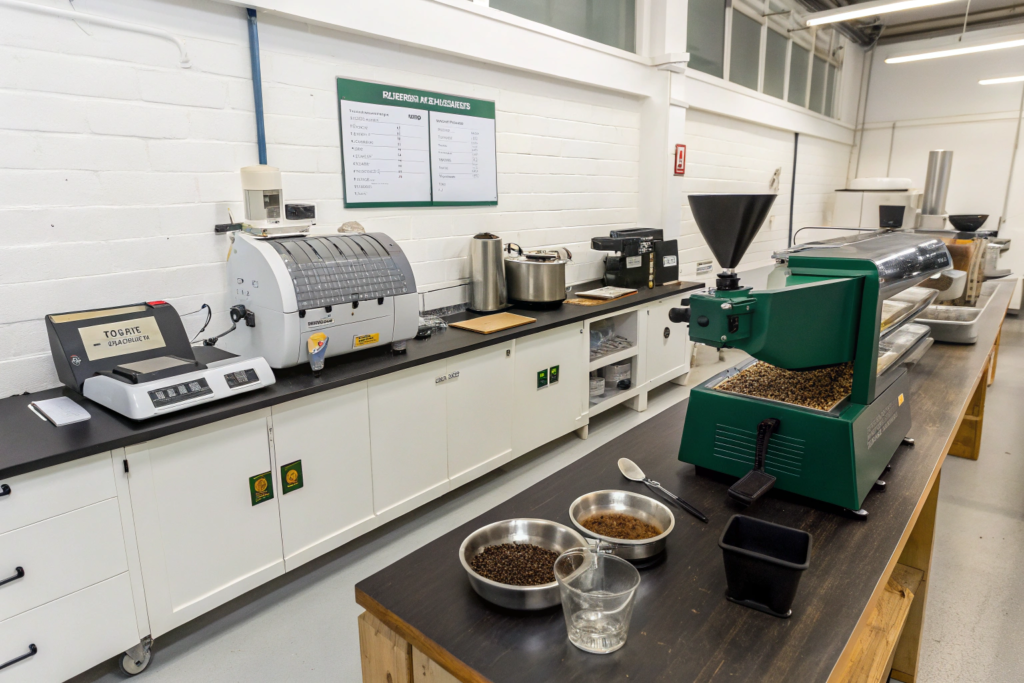
A grading lab is not just a room with a table. It's a system. Every piece of equipment must work together to produce a complete, defensible quality report. If one component is missing or out of calibration, the whole analysis is compromised.
The essential components of a functional coffee grading lab are: a set of SCA-standard grading screens for size analysis, a calibrated moisture meter for water content, a water activity meter for stability prediction, a gram scale accurate to 0.1 grams, a defect evaluation mat, a sample roaster for cupping preparation, and cupping equipment for sensory analysis. These tools collectively answer four questions: What is the physical quality? What is the chemical stability? What is the roast potential? What is the sensory experience?
Why Are Grading Screens the Foundation?
Grading screens are perforated metal trays with precise, round holes. They come in different sizes, measured in 1/64ths of an inch. Screen 18, Screen 16, Screen 14, and so on. You stack them, pour in a 350-gram sample, shake, and each screen retains beans of a specific size range.
Screen size is the most basic physical quality parameter. Specialty contracts often specify a minimum screen size—"Screen 16, 90% above" is common. Larger beans are generally associated with higher density, more complex flavor development, and higher market value.
Cheap screens are inaccurate. The holes are not perfectly round. They're stamped from thin, flimsy metal that warps over time. The result is a grading report that says "90% above screen 16" when the reality might be 80%. That 10% gap is a contract dispute waiting to happen. The Specialty Coffee Association publishes the official screen size standards that reputable suppliers must follow.
What Role Does a Water Activity Meter Play?
Moisture content tells you how much water is in the bean. Water activity tells you what that water is doing. It measures the free, unbound water available for biological reactions.
Two beans can both have 11.5% moisture content. But one might have a water activity of 0.55 aw, which is perfectly stable. The other might have 0.68 aw, which is in the danger zone for mold growth and flavor degradation.
A water activity meter is a more sophisticated tool than a basic moisture meter. It's also more expensive. But for long-haul export shipments, it's the better predictor of shelf life. I use both. The moisture meter is for daily process control. The water activity meter is for final pre-shipment clearance.
How Can You Verify the Accuracy of Grading Equipment?
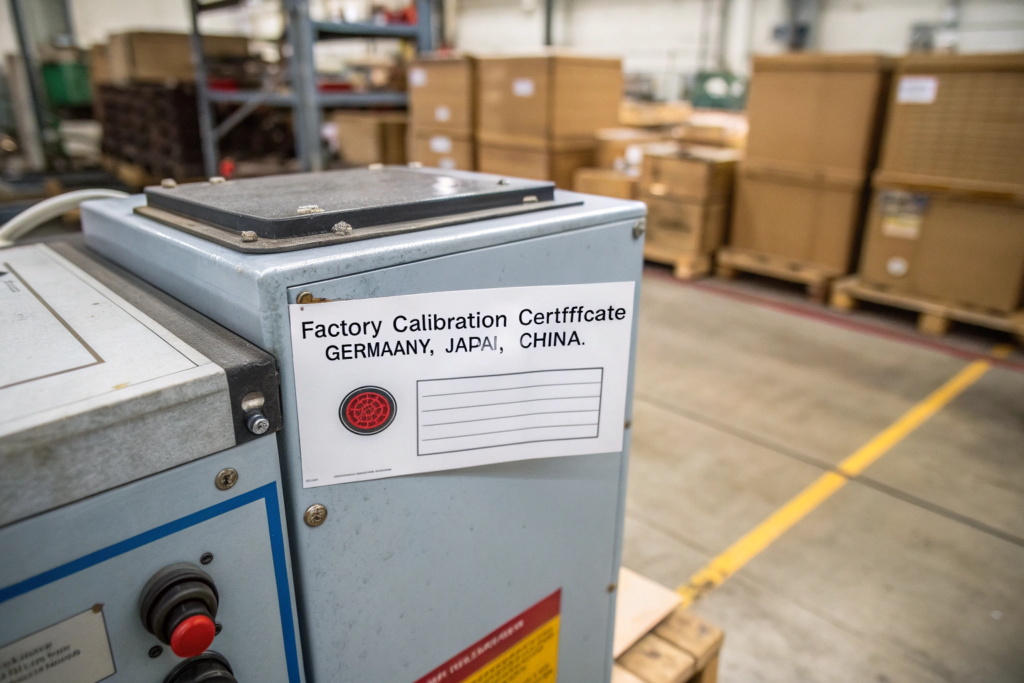
Don't trust the sticker. Every piece of equipment comes with a factory calibration certificate. It says the machine was accurate when it left the factory. That was in Germany, or Japan, or maybe a different province in China. It traveled. It got bumped. It got hot. It got cold. The calibration drifted.
You verify the accuracy of grading equipment through a regular, documented calibration protocol using traceable reference standards. For scales, you use certified calibration weights. For moisture meters, you cross-check against the oven-drying reference method at least monthly. For grading screens, you physically measure the hole diameters with calibrated pin gauges. For sample roasters, you run a control coffee with a known profile and compare the results. The key word is "traceable." Your calibration standards must themselves be calibrated against a national or international standard, creating an unbroken chain of accuracy.
How Often Should Moisture Meters Be Calibrated?
I calibrate my moisture meters every week during harvest season. At minimum, before every major export lot is processed.
The calibration method depends on the meter type. Capacitance meters are sensitive to bean density and temperature. They need to be calibrated with a reference sample of the same coffee variety at a known moisture level. The reference moisture level is determined by the oven-drying method: weigh a sample, dry it in a laboratory oven at 105°C for 16 hours, and weigh it again. The weight loss is the true moisture content.
This is slow. It's not practical for daily use. But it's the only legally defensible reference. I keep a small lab oven specifically for this purpose. Every Monday, I dry a reference sample, check the meter against it, and log the deviation. If the meter is off by more than 0.3%, I adjust it or send it for servicing.
What Is the Oven-Drying Reference Method?
The oven-drying method is the gold standard for moisture measurement. It is defined by the International Organization for Standardization in ISO 6673. It is the method that customs laboratories and arbitration panels use.
You take a representative sample of green coffee. You weigh it precisely. You place it in a ventilated oven at 105°C. You leave it for 16 hours. You cool it in a desiccator so it doesn't absorb moisture from the air. You weigh it again. The percentage of weight lost is the moisture content.
Every other moisture measurement device—the pin meters, the capacitance meters, the halogen analyzers—is a secondary method. It must be calibrated against the oven-drying reference to be considered accurate. A grading system supplier who doesn't mention the oven-drying method is not serious about accuracy.
What Defines a Specialty Grade Versus a Commercial Grade?
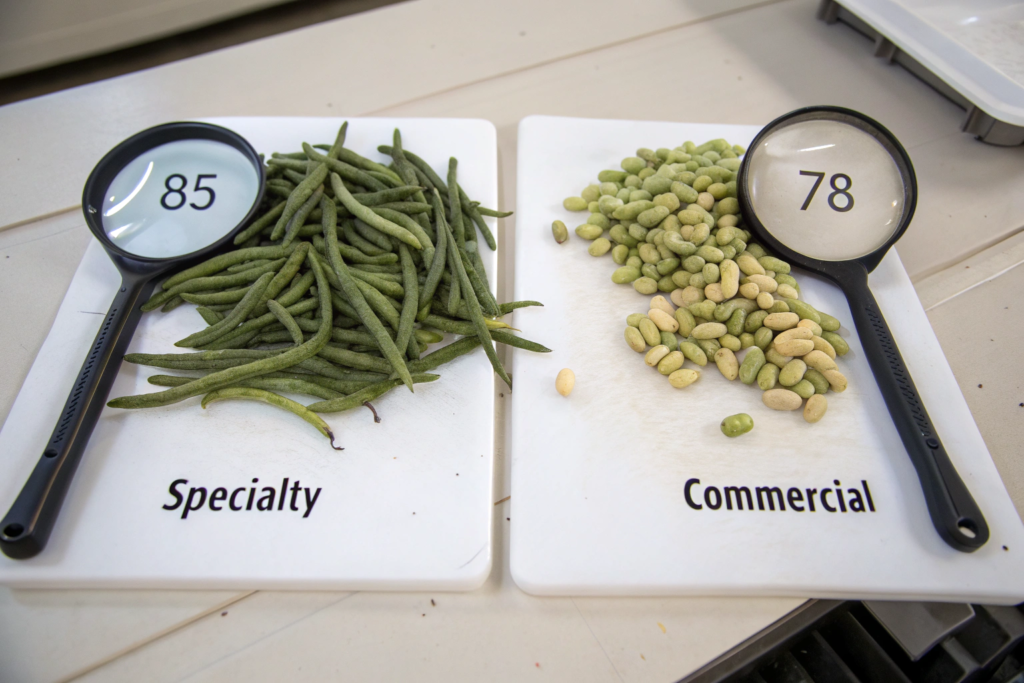
The word "specialty" is not a marketing term. It has a precise, technical definition. It is defined by a cupping score of 80 points or above on the SCA scale, and it is contingent on a physical grading that reveals zero primary defects and a limited number of secondary defects.
Specialty grade coffee is defined by two interconnected standards: a physical green grading that allows zero Category 1 defects and no more than five Category 2 defects in a 350-gram sample, and a sensory cupping score of 80 or above. Commercial grade, or "commodity" coffee, is everything that fails the specialty threshold. The distinction is not subjective. It is a pass/fail test based on an internationally recognized protocol.
What Is the SCA Green Grading Protocol?
The SCA Green Arabica Grading System is the rulebook. It categorizes defects into two groups.
Category 1, or primary, defects are the deal-breakers. A full black bean. A full sour bean. A large stone or stick. One Category 1 defect disqualifies the lot from specialty status. You can have 99.9% perfect beans, but one black bean in the sample, and it's over. The lot is below specialty.
Category 2, or secondary, defects are cumulative. These include partial black beans, partial sour beans, insect-damaged beans, broken beans, shells, and parchment pieces. The SCA allows up to five full secondary defect points. Different defects count as different fractions. For example, three insect-damaged beans equal one full secondary defect point. Five broken beans equal one point.
The grading process is systematic. You spread 350 grams on a black mat under good light. You pick out every defect with tweezers. You sort them into piles. You count them. You tally the score. If the score is zero for Category 1 and five or fewer for Category 2, the lot passes the physical grade. Then it goes to the cupping table.
How Does the Cupping Score Relate to the Physical Grade?
The physical grade is the gatekeeper. The cupping score is the decider.
A lot can pass the physical grade—zero primary defects, minimal secondary defects—and still cup at 78 points. It's clean, but it's boring. It's flat. It lacks sweetness, acidity, or complexity. It's a well-processed commercial coffee, not a specialty coffee.
Conversely, a lot can have incredible flavor potential but fail the physical grade because of a few insect-damaged beans. It cups at 86, but it has three full insect holes, which is one Category 2 defect too many. It is still not specialty. This is heartbreaking, but it's the rule.
The two grades are complementary. The physical grade ensures the coffee is clean and well-processed. The cupping score evaluates the sensory experience. A true specialty coffee must pass both. The SCA cupping protocol is the global standard for this evaluation.
Why Does After-Sales Support Matter for Grading Equipment?
Equipment breaks. It's not a question of if, but when. A moisture meter drops. A sample roaster's heating element burns out. A screen set gets dented. When it happens, and it will happen right before a big contract needs to be shipped, the quality of your supplier's after-sales support becomes the most important thing in the world.
After-sales support for grading equipment is critical because downtime in quality control creates immediate commercial risk. Without a functioning moisture meter, you cannot certify your coffee for export. Without a sample roaster, you cannot prepare cupping samples for buyer approval. A supplier who offers fast remote diagnostics, a local service partner, and a loaner equipment program is worth paying a premium for. The purchase price of the equipment is a one-time cost. The cost of being unable to ship for two weeks is a recurring nightmare.
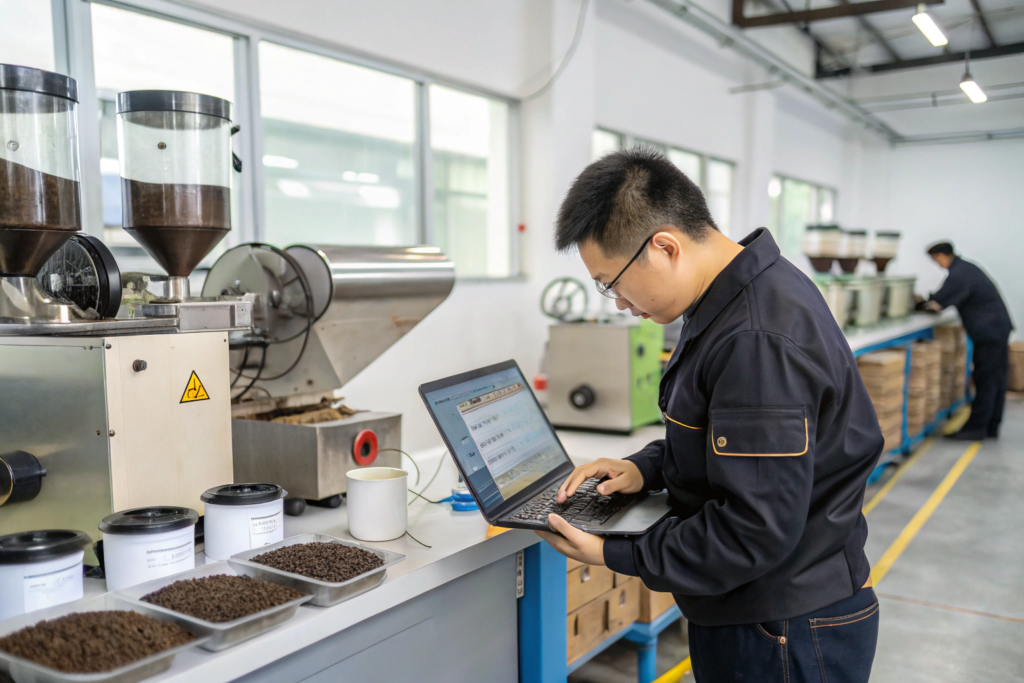
What Questions Should You Ask Before Buying?
Before you sign the purchase order, interview the supplier about their service model.
Ask these specific questions: What is the warranty period, and what does it cover? Is there a local service technician within one day's travel of my facility? What is the typical turnaround time for a repair? Do you offer a loaner unit while mine is being serviced? How do I access remote technical support, and what are the hours?
A supplier who hesitates on these questions is a supplier who will disappear after the invoice is paid. A good supplier will have clear, documented answers. They will say, "Our nearest technician is in Kunming. We offer a 48-hour on-site response. We have a loaner program. Here is the service contract."
I learned this the hard way with a cheap sample roaster I bought early on. The drum motor failed. I called the supplier. The number was disconnected. I ended up roasting cupping samples in a frying pan for two weeks while I sourced a replacement part from a different company. It was absurd. The money I saved on the initial purchase was lost ten times over in stress and lost credibility.
How Do You Ensure Long-Term Calibration Stability?
A grading system is only as good as its last calibration. The supplier's role doesn't end at delivery. It extends into the operational life of the equipment.
A premium supplier will offer an annual calibration service. They will send a technician to your lab, or you send the equipment back to their facility. They will check every screen hole, every scale weight, every moisture sensor. They will issue a new calibration certificate.
This certificate is not just for your peace of mind. It's a legal document. If a buyer disputes your grading report, your defense is the calibration certificate. If you can show that your equipment was calibrated by an ISO 17025 accredited laboratory within the last 12 months, your data carries weight. If you can't, it's just your word against theirs.
We work with a supplier who provides this annual service. The cost is maybe $500 per year. It's the cheapest insurance policy I've ever bought. I sleep better knowing my reports are defensible.
Conclusion
Choosing a grading system supplier is not like buying a bag of rice. It's not a commodity decision. It's a partnership decision. You are choosing the company that will provide the instruments of truth for your entire quality control program. The screens, the scales, the meters, and the roaster are the foundation upon which your reputation for consistency is built.
Choose based on accuracy, not price. Choose based on calibration support, not a glossy brochure. Choose a supplier who answers the phone when the heating element fails. Because it will fail. And on that day, the extra money you spent on a reliable partner will feel like the best investment you ever made.
We've been through the cheap equipment phase. We've learned the lessons. Now we use a fully equipped, annually calibrated grading lab from a supplier we trust. It's part of the quality promise we make to every buyer.
If you're interested in seeing the grading reports our system produces—and the calibration certificates that back them up—I'm happy to share samples. Transparency extends to the tools we use.
For sample grading reports, calibration certificates, or to discuss our quality control protocols in detail, reach out to Cathy Cai.
Email: cathy@beanofcoffee.com. The truth is in the numbers, and the numbers come from the tools.