I almost lost my biggest European account last year. A roaster in Berlin had been buying our washed Arabica for three years. Solid relationship. Consistent orders. Then, out of nowhere, he sent me an email that made my stomach drop. The subject line was: "New EU Regulation - Urgent Action Required." His compliance team was demanding documentation I had never even heard of. Geolocation data for every plot. Satellite imagery. A deforestation risk assessment. If I couldn't provide it within 60 days, he would be legally prohibited from buying my coffee. Not because my coffee was bad. Not because my price was too high. But because the rules of the game had changed while I wasn't looking. I scrambled. I hired a consultant. I got the data. I kept the account. But it was a wake-up call. Europe is not the same market it was two years ago.
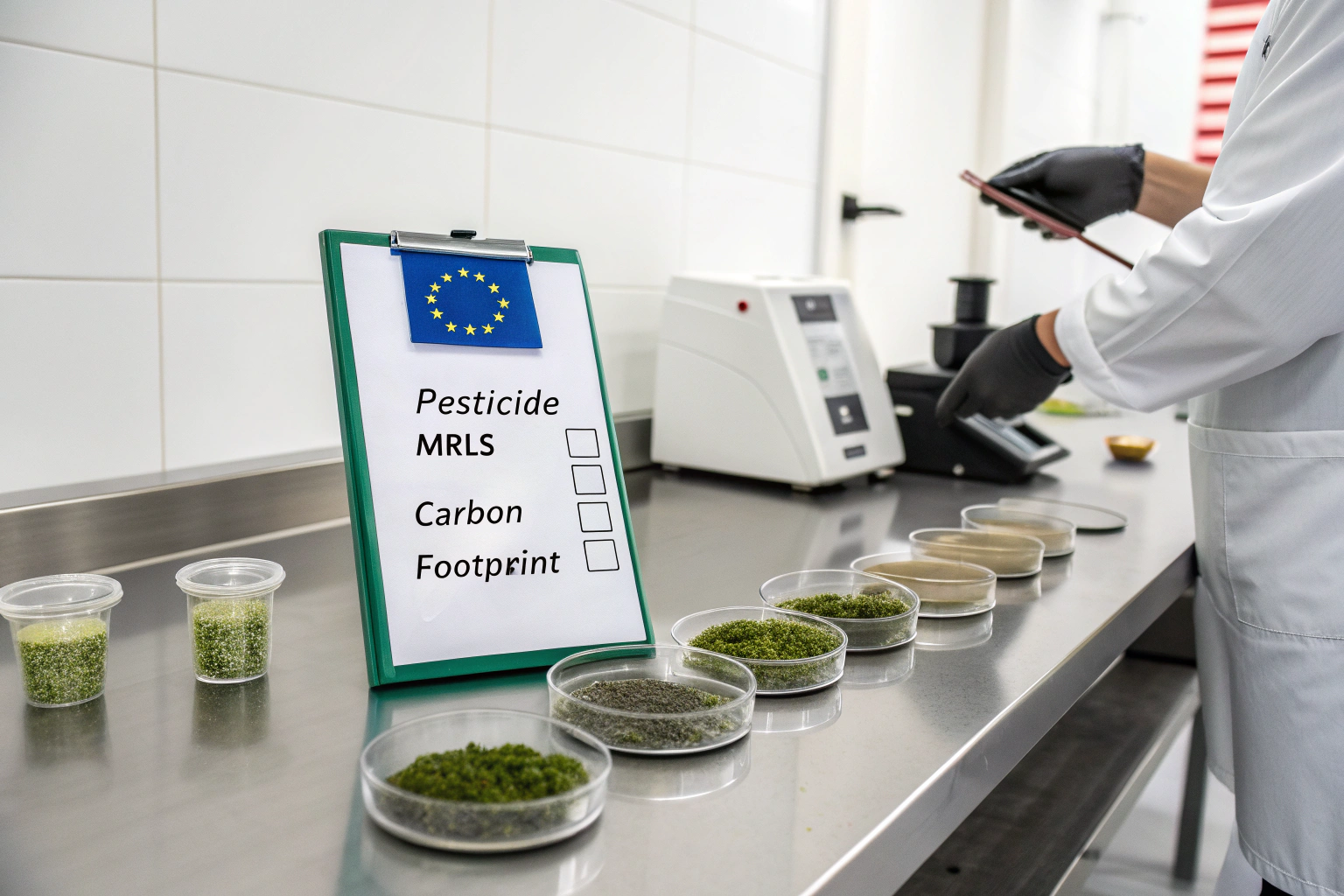
The European coffee standards evolving in 2026 are defined by a new regulatory triad: the EU Deforestation Regulation, the updated Maximum Residue Limits for pesticides, and the incoming Corporate Sustainability Due Diligence Directive. Together, these regulations are transforming coffee from a relatively unregulated agricultural commodity into a highly scrutinized, compliance-heavy product. To sell coffee into Europe now, an exporter must prove not just quality, but legality. You must prove your farm did not cause deforestation. You must prove your pesticide use meets the world's strictest limits. And soon, you must prove your entire supply chain respects human rights and environmental standards.
These are not optional suggestions. They are legal requirements with real teeth. Fines. Bans. Destroyed reputations. For a buyer like Ron, who values security and reliability, understanding these standards is not a bureaucratic chore. It's the difference between a supplier who can deliver and a supplier who will be turned away at the port. Let me walk you through exactly what has changed and what it means for sourcing coffee from China.
What Is the EU Deforestation Regulation and How Does It Impact Coffee?
The EU Deforestation Regulation, or EUDR, is the single biggest regulatory shock to hit the coffee industry in decades. It came into full effect for large companies at the end of 2024, and by mid-2025, it's applying to smaller operators too. It fundamentally changes what it means to import coffee into Europe.
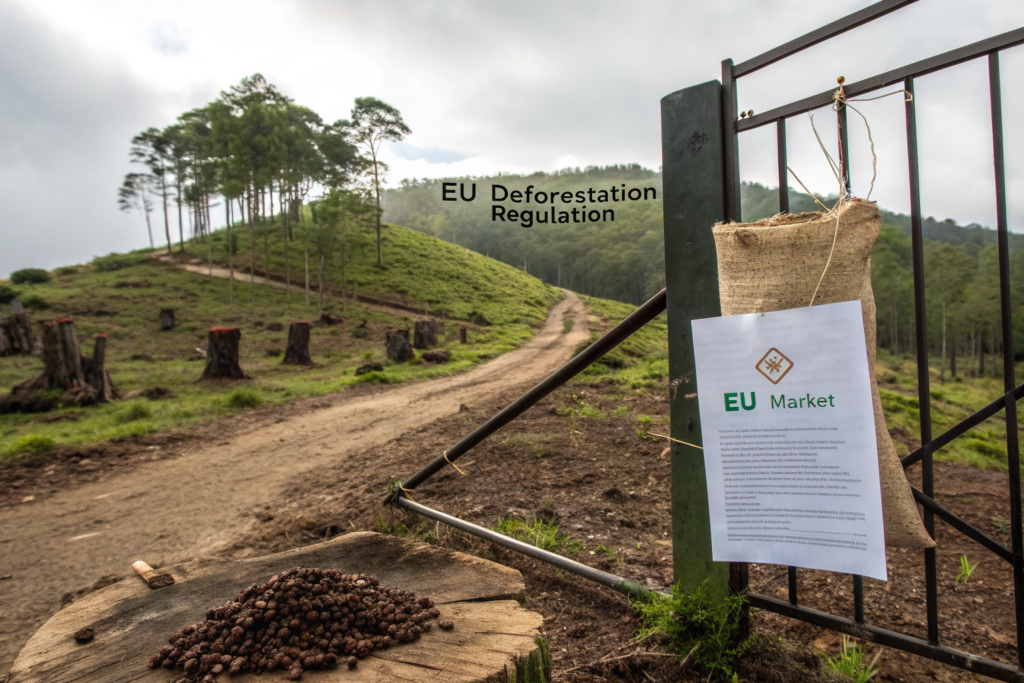
The EU Deforestation Regulation prohibits the importation of coffee and other commodities into the European Union if they were grown on land that was deforested after December 31, 2020. It requires every coffee exporter to provide a due diligence statement that includes precise geolocation coordinates for every plot of land where the coffee was grown. The importer must then verify, using satellite imagery and risk assessment tools, that the land was free of forest on the cutoff date. Coffee without this geolocation data is illegal. It cannot enter the EU market, period.
What Does Geolocation Mean in Practical Terms?
Geolocation sounds technical. It is. But the principle is simple. You must draw a digital polygon on a map around every farm plot that contributed to a shipment.
For a single-estate coffee like ours at BeanofCoffee, this is manageable. We have 10,000 acres. We have GPS devices. We walk the boundaries of each lot, record the coordinates, and upload the polygon file. It's work, but it's doable.
For a trader who buys from 500 smallholder farmers, each with a tiny half-hectare plot, it's a logistical nightmare. Walking every boundary, recording every polygon, and verifying every plot against historical satellite images is expensive and time-consuming. This is why many industry analysts predict that EUDR will accelerate consolidation. Large, organized farms with digital records will have a compliance advantage over fragmented smallholder supply chains.
The key date is December 31, 2020. If a tree was standing on your plot on that date, and you cut it down to plant coffee in 2021, that coffee is permanently banned from the EU. The European Commission's EUDR page provides full technical guidance.
How Is the Industry Adapting to This Requirement?
Adaptation is happening fast, driven by necessity. The entire supply chain is digitizing.
New platforms are emerging that integrate satellite monitoring with supply chain management. Companies like Satelligence and Trade in Space offer services that automatically check a plot's polygon against historical forest cover data and generate a risk score. Coffee traders are embedding these tools into their procurement processes.
In Yunnan, we are fortunate. Most of our coffee was planted on agricultural land that was cleared decades ago, long before the 2020 cutoff. Our deforestation risk is low. But we still had to create the digital records. We hired a local GIS technician to map every one of our plots. We uploaded the polygons. We generated the due diligence statements. It was a significant upfront cost, but now it's a competitive asset. A European buyer can buy from us with confidence because our compliance paperwork is complete.
How Are Pesticide MRLs Tightening for Imported Green Coffee?
Europe has always been strict about pesticides. But in 2025 and 2026, the definition of "strict" has been rewritten. The European Food Safety Authority is systematically reviewing and lowering the Maximum Residue Limits for many chemicals commonly used in coffee farming. What was acceptable last year is now a violation.
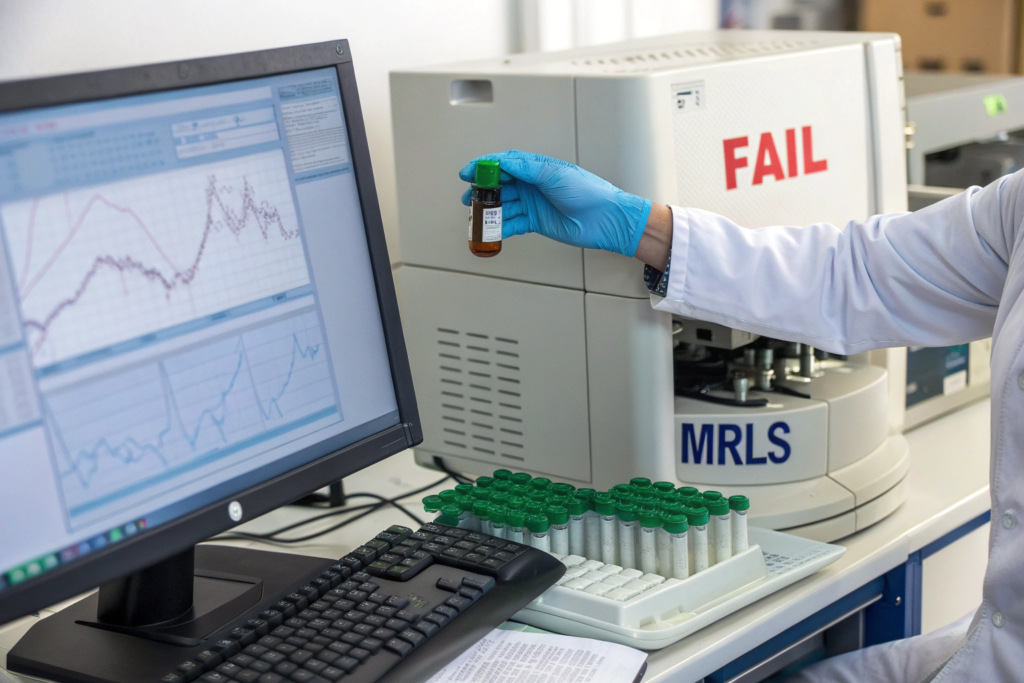
The Maximum Residue Limits for pesticides in green coffee imported into the EU are tightening significantly. EFSA is phasing out approvals for several older agrochemicals and dramatically reducing the allowable trace amounts of others. The most impactful change for coffee is the reduction of the MRL for glyphosate to near-zero, and the de-registration of chlorpyrifos and endosulfan. Green coffee shipments are now routinely tested at the port of entry. A single container that exceeds an MRL can be seized, destroyed, or re-exported at the importer's expense.
Which Substances Are Under the Most Scrutiny?
The hit list is long, but a few names stand out for coffee producers.
Glyphosate is the big one. It's a broad-spectrum herbicide used for weed control between coffee rows. The EU has not banned it outright, but the political pressure is immense, and the allowed residue on imported food is being reduced to the limit of analytical detection. If a farmer sprays glyphosate near the coffee trees, trace amounts can drift onto the cherries and show up in a lab test.
Chlorpyrifos is an insecticide that is already banned in the EU. Its MRL is set at the default limit of detection, 0.01 mg/kg. Any detectable amount is a violation. Endosulfan is another insecticide that is globally banned under the Stockholm Convention but still used illegally in some regions. The EU tests for it rigorously.
For a Chinese exporter, this is a manageable challenge. We control our own farming practices on our own land. We use integrated pest management, not prophylactic spraying. Our lots are tested by an accredited lab in Kunming before shipment. We share the lab report with the buyer. The EU Pesticides Database is the authoritative source for current MRLs.
How Can a Buyer Verify a Supplier's Compliance?
A buyer cannot simply trust a supplier's word. Testing is essential.
Every contract I sign with a European buyer includes a clause specifying the required MRL compliance and the right of the buyer to conduct independent testing upon arrival. Many buyers will pull a sample from the container at the port and send it to a lab like Eurofins or SGS before accepting the goods.
A proactive supplier will provide a pre-shipment Certificate of Analysis from an ISO 17025 accredited lab. This certificate lists the tested substances and the detected levels. It gives the buyer confidence that the coffee is clean before it leaves China.
Organic certification is another layer of protection. An organic certificate from an EU-recognized certifier like Ecocert guarantees that no synthetic pesticides were used. It doesn't eliminate the risk of environmental contamination, but it significantly reduces it. We offer both conventionally grown and organically certified lots.
What Sustainability Reporting Will European Buyers Demand?
The EUDR and MRLs are about legality. But the Corporate Sustainability Due Diligence Directive, or CSDDD, is about something broader: accountability. It requires large companies operating in the EU to identify, prevent, and mitigate adverse human rights and environmental impacts in their supply chains. This directive is phasing in over the next few years, and its effects are already being felt in procurement departments.
European coffee buyers in 2026 will increasingly demand sustainability data that goes beyond simple certification logos. They will need to report on the carbon footprint of their coffee, the living income status of the farmers who grew it, and the specific human rights due diligence conducted in their supply chain. This is driven by the CSDDD, which makes large companies legally liable for forced labor, child labor, and environmental destruction in their supply chains, even if it occurs deep in the tiers of suppliers they don't directly control.

How Is Carbon Footprint Calculated for Green Coffee?
Carbon accounting for coffee is complex but increasingly standardized. It involves calculating the greenhouse gas emissions from every stage: fertilizer production and application on the farm, energy use at the wet and dry mill, transportation to the port, ocean freight, and inland transport at the destination.
The biggest share of coffee's carbon footprint usually comes from the farm—specifically, nitrogen fertilizer—and from the brewing process at the consumer end. But the transportation is not negligible. Ocean freight is relatively efficient per kilo, but a long voyage still burns fuel.
For a buyer, choosing a supplier who can provide a carbon footprint estimate is becoming a competitive advantage. Shorter shipping routes, like from China to Europe, have a lower transport footprint than shipping from South America. We are working with a consultancy to model our farm's carbon balance. We're not yet carbon neutral, but we have the data, and data is the first step to reduction.
What Is a Living Income Benchmark?
The concept of a "living income" is replacing the older, vaguer idea of a "fair price." A living income is the net annual income required for a household in a particular place to afford a decent standard of living. It includes food, water, housing, education, healthcare, and a small margin for emergencies.
Organizations like the Living Income Community of Practice have developed benchmarks for various coffee-growing regions, including parts of Yunnan. European buyers are starting to ask: "What is the living income benchmark for your region, and what percentage of it do your farm workers actually earn?"
This is a difficult question. It requires transparency about wages that many producers are not comfortable with. But it's the direction the industry is moving. We've calculated our pickers' effective daily wage against the local benchmark. We're not at 100% yet, but we're above the local agricultural average, and we have a plan to close the gap. Sharing that plan, honestly and transparently, is what European buyers want to see.
How Can Chinese Exporters Align with the New European Standards?
The gap between a traditional Chinese coffee farm and the new European requirements is real. It's a gap of data, of documentation, and of mindset. But it's not unbridgeable. I've spent the last two years building the bridge. It's been hard work, but it's also been the best investment I've ever made.
Chinese exporters can align with the new European standards by treating compliance not as a cost but as a core business function. This requires four concrete steps: digitizing all farm records and geolocation data, partnering with an ISO 17025 accredited lab for regular pesticide residue testing, initiating a carbon footprint assessment of the entire production cycle, and developing a transparent labor and human rights policy that can satisfy the CSDDD requirements. Exporters who do this will gain a significant competitive advantage, as European buyers will increasingly filter suppliers based on compliance readiness.
What Are the First Steps for a Chinese Exporter?
The absolute first step is geolocation. Without the polygon maps, you cannot sell into the EU. Period. This is the gatekeeper.
The second step is testing. Find an accredited lab. Test your soil, your water, and your green beans. Know your pesticide profile. If you find a problem, you can fix it before it becomes a rejected shipment.
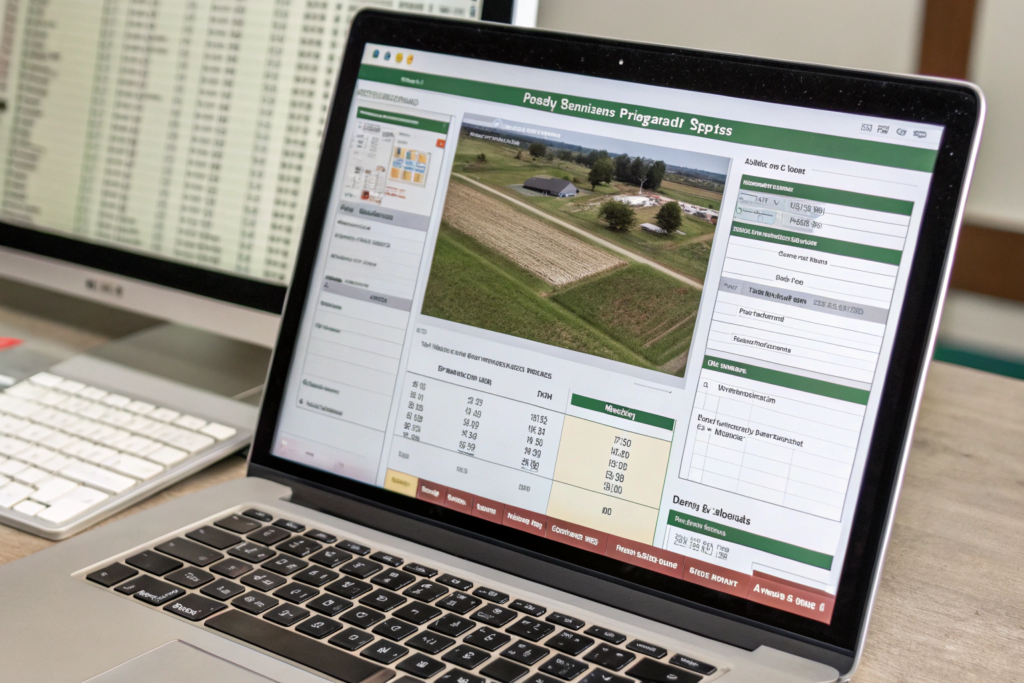
The third step is documentation. You need a document management system. Every lot must have a digital file that includes the farm plot data, the harvest records, the processing log, the moisture readings, the defect count, the pesticide lab report, and the due diligence statement. This file must be ready to send to the buyer on demand.
The fourth step is mindset. You have to stop seeing regulations as a burden and start seeing them as a market access tool. A compliant exporter is a trusted exporter. At BeanofCoffee, our EU compliance file is now a key part of our sales pitch. We show it to every new European inquiry. It says: "We understand your market. We've done the work. You can buy from us with confidence."
How Does This Affect the Competitive Landscape?
The new standards are creating a divide. On one side are the compliant, digitized, transparent exporters. They have higher upfront costs, but they have guaranteed access to the premium European market. On the other side are the traditional, paper-based, opaque exporters. They will be priced out of Europe and forced to sell into less regulated markets at lower prices.
This divide is an opportunity for buyers like Ron. A buyer who identifies and partners with a compliant supplier now locks in a reliable source for the long term. They don't have to worry about their supplier being suddenly cut off by a regulatory change. They can focus on growing their business while their competitors scramble to find compliant coffee.
The alignment process also builds trust. When a supplier shares their geolocation data, their pesticide reports, and their labor policies, they are sharing their vulnerabilities. They are saying, "Inspect me." That level of openness is the foundation of a deep, resilient commercial relationship.
Conclusion
The European coffee market in 2026 is a market of gates. The EUDR gate. The MRL gate. The CSDDD gate. Each gate requires a different key—a polygon map, a clean lab test, a sustainability report. The gates are not going away. They are only going to get higher and more numerous.
For a European buyer, this regulatory complexity is a headache. But it's also a filter. It filters out the suppliers who can't or won't do the work. It leaves a smaller pool of compliant, professional, transparent exporters. And for a buyer who finds those exporters, the reward is security, reliability, and a supply chain that can withstand the scrutiny of the law and the consumer.
We've made the choice to be on the right side of that filter. We've invested in the maps, the labs, the audits, and the reports. We did it not just because we had to, but because we believe it's the future of coffee. A future where quality is measured not just in the cup, but in the data behind the bean.
If you're a European buyer looking for a Chinese coffee supplier who is fully aligned with the evolving EU standards, let's talk. I can send you our compliance package: our EUDR due diligence statement, our pesticide residue testing protocol, and our sustainability roadmap.
Reach out to Cathy Cai. She manages our European accounts and can provide all the technical documentation you need to satisfy your compliance team.
Email: cathy@beanofcoffee.com. Buy with confidence. The paperwork is ready.