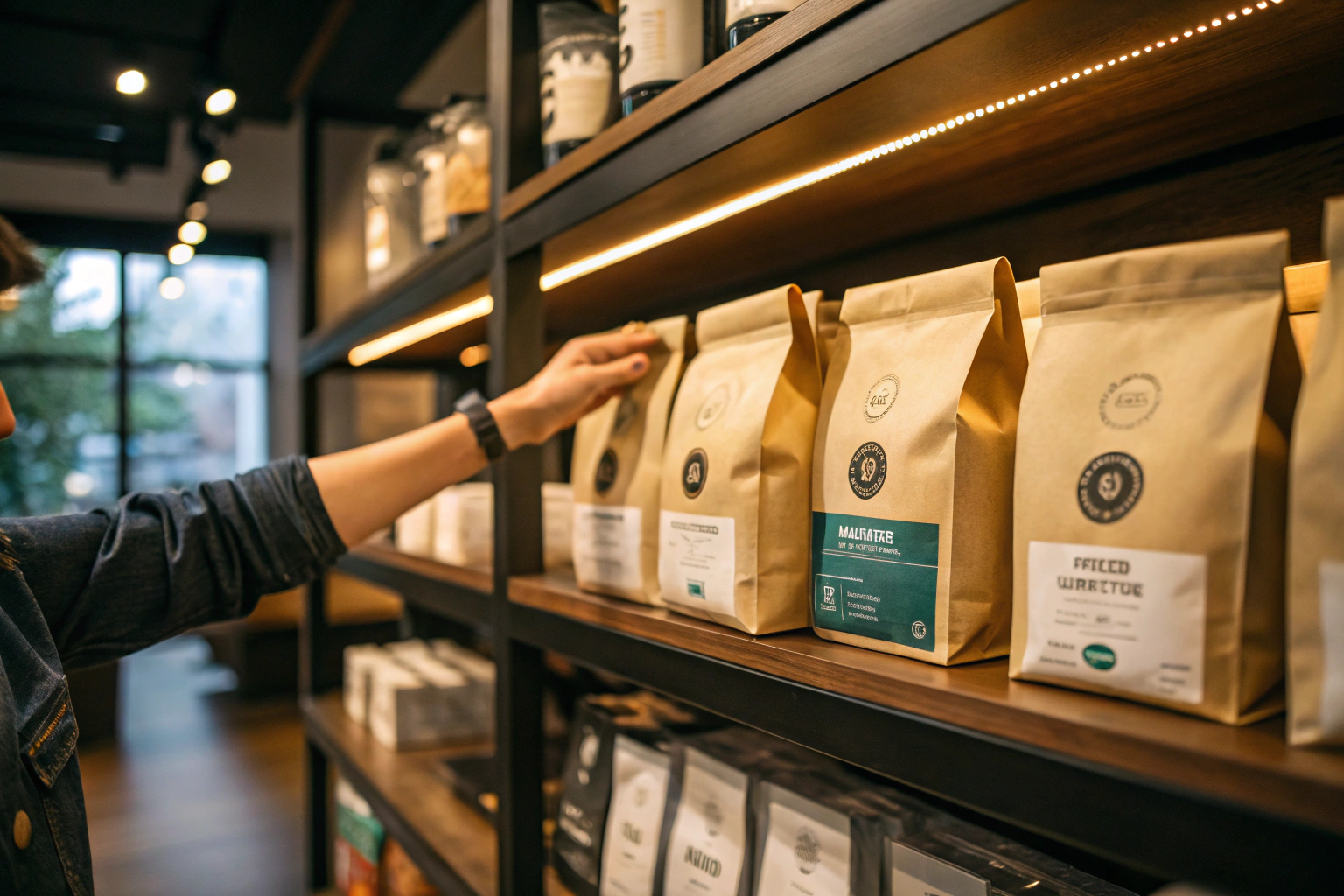
A few years ago, a roaster in Portland told me something that stuck. He said, "My customers don't just buy coffee anymore. They buy alignment. They want the coffee in their cup to match the values on their sleeve." At the time, I thought he was being a bit romantic. But he was right. I saw his sales numbers. The certified lots—Fair Trade, Organic, Rainforest Alliance—moved faster and at better margins than the uncertified ones. Same cupping score. Same farm. But that little seal on the bag changed the conversation entirely.
Certifications like Fair Trade matter for your brand because they function as a pre-built trust bridge between your product and a skeptical consumer. In a market flooded with vague claims of "ethical sourcing" and "direct trade," a recognized, third-party-audited certification provides verifiable proof that your brand's promises are real. This translates directly into shelf appeal, customer loyalty, and the ability to command a premium price in a competitive category.
For a buyer importing from us at BeanofCoffee, the certification isn't just a sticker on the bag. It's a strategic tool. Let me walk through exactly how it works, from the farm gate to the retail shelf.
What Do Certification Labels Actually Signal to Your Customers?
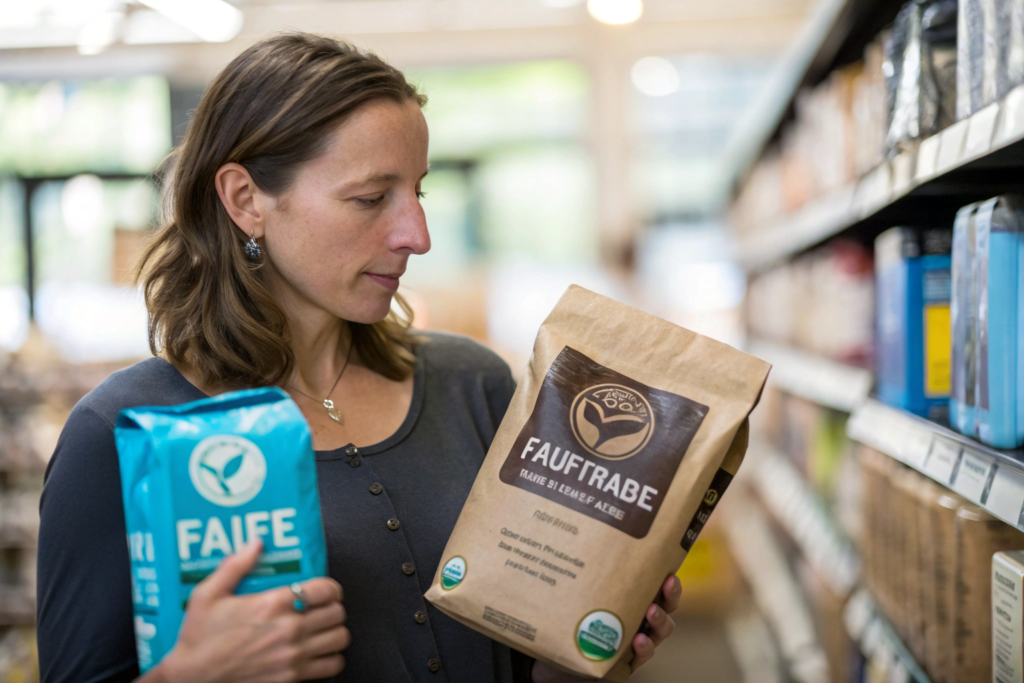
Walk into any specialty grocery store in the US or Australia and look at the coffee shelf. The bags are beautiful. The origin stories are poetic. The design is premium. But here's what I've noticed: in a sea of beautiful bags, the ones with a certification seal stand out. Not because the design is better. Because the seal shortcuts a decision. It tells a story in a split second that a paragraph of text cannot.
Certification labels signal third-party verification, not self-declared goodness. When a consumer sees a Fair Trade or Organic seal, they subconsciously understand that an independent organization has audited the supply chain. This bypasses the skepticism that greets a brand's own marketing claims. The label communicates safety, ethics, and quality assurance in a single graphic element that requires no reading and no trust in the brand's own copywriting.
Why Do Consumers Trust a Seal More Than a Brand's Own Story?
Brands tell stories. It's what they do. And honestly, some of those stories are beautiful. I've written a few myself for our Yunnan lots. But the modern consumer has been burned. They've seen the headlines. "Ethically sourced" on the bag, but exploitation in the supply chain. A brand's own promise is only as good as the brand's own honesty. And that's a lot to ask a stranger in a grocery store.
A certification seal solves this credibility gap. It's not the brand vouching for itself. It's a neutral third party with a published standard and an audit trail. Fair Trade International, Rainforest Alliance, the Organic certifiers—these organizations have reputations to protect. Their seal is their business. If they slap it on a product that doesn't meet the standard, the scandal damages them, not just the coffee brand. That shared risk makes the seal more trustworthy.
I see this from the farm side. Our Fair Trade audit isn't a quick phone call. An inspector visits Baoshan. They walk the fields. They check payroll records. They interview workers, privately, without me in the room. They verify that the Fair Trade premium money actually went to the community projects the cooperative voted on. That rigor is what the consumer is buying. A story without an audit is just a story. A story with an audit is a fact.
How Does Certification Reduce the Mental Load for Ethical Buyers?
Making an ethical purchase is exhausting. If a consumer genuinely cares about farmer welfare, environmental impact, and quality, they face a wall of information. Every bag has different claims. Every brand has a different sourcing model. The cognitive load of comparing them all is heavy. Most people, honestly, give up and grab the familiar brand.
This is where certification does its best work. It collapses a complex ethical calculus into a simple heuristic. See the seal? Yes? Done. The mental work is over. The consumer can feel good about the purchase without spending 20 minutes researching the supply chain. It's not laziness. It's efficiency. The certification label is the TL;DR of ethical coffee.
For your brand, this means the seal removes a barrier to purchase. A customer who might have hesitated, picked up your bag, read the back, put it down, and walked away? The seal catches them. It answers the unasked question before they even formulate it. That's conversion rate territory. Real business impact. Not just warm feelings.
How Does a Fair Trade Certification Directly Impact Coffee Farmers?
I've been on both sides of the certification question. I run a large plantation. We're certified. But I also work with smallholder groups around Baoshan, and for them, Fair Trade is not an abstract marketing concept. It's a water tank. It's a school fee. It's a buffer against a bad harvest. The premium money from Fair Trade doesn't go into some corporate fund. It lands in a community bank account, and real people vote on how to spend it.
Fair Trade certification impacts farmers through two core mechanisms: a guaranteed minimum price that acts as a safety net when the C market crashes, and a social premium—an additional sum per pound sold—that is invested democratically in community projects. Beyond the money, the certification process itself builds organizational capacity, financial literacy, and bargaining power that farmers retain regardless of the market cycle.
What Does the Fair Trade Minimum Price Actually Protect Against?
The C market is cruel. I've talked about this before. When the price of Arabica futures crashes below the cost of production—which it does, periodically—commodity farmers are ruined. They rip out coffee trees and plant something else. Or they abandon the farm and migrate to a city. The supply chain loses quality producers who might never return.
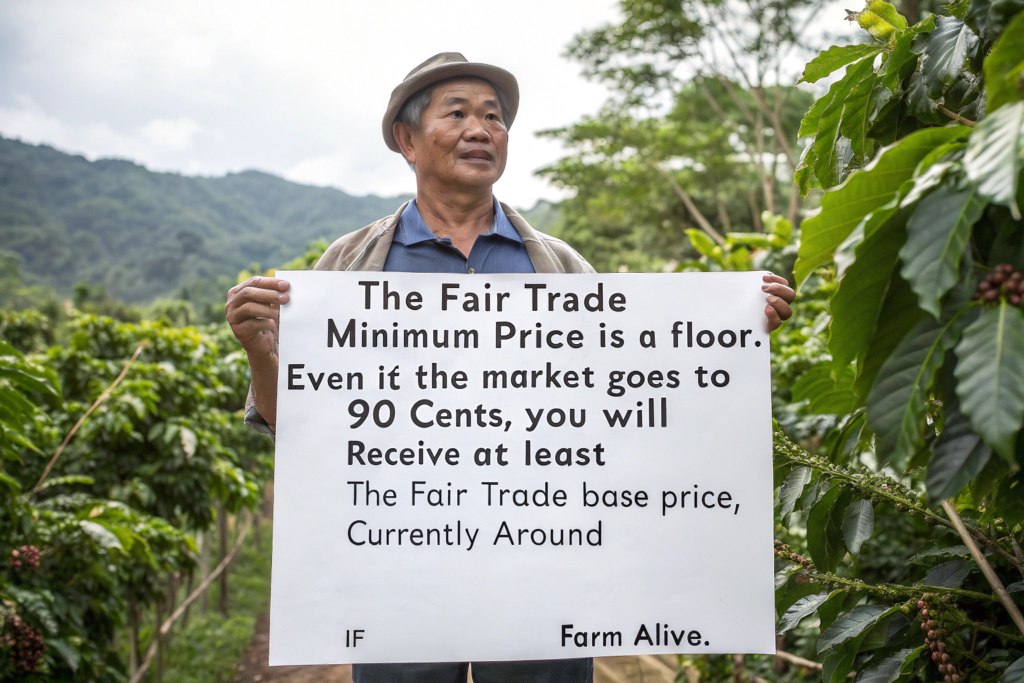
The Fair Trade minimum price is a floor. It says: even if the market goes to 90 cents, you will receive at least the Fair Trade base price, currently around $1.40 for washed Arabica, plus the organic differential if applicable, plus the social premium. It's not a fortune. But it keeps the farm alive. It keeps the family fed. It keeps the next generation interested in coffee.
I've seen this work in a real crisis. In a low-price year, a smallholder group I work with was still able to harvest, process, and deliver high-quality cherry. Their neighbors, selling to a local middleman at the market price, left cherries unpicked on the tree because it wasn't worth the labor. The Fair Trade group maintained their trees, maintained their quality, and when the market rebounded, they were ready with excellent coffee. The neighbors had to spend a year rehabilitating neglected farms. That's the invisible competitive advantage certification provides.
How Are Fair Trade Premium Funds Actually Used by Communities?
This part often surprises buyers. The premium is not a handout divided among farmers as cash. It's a collective investment fund. Each cooperative votes democratically on how to spend it. And the decisions they make are often not what an outsider would predict.
Some communities invest in productivity—a new wet mill, a drying patio roof, a truck to transport cherry to the processing station. These are business decisions that improve quality and efficiency. Other communities invest in health—a clinic, a clean water system, health insurance premiums for members. Some invest in education—scholarships for farmers' children, a computer lab for the village school. I've even seen a group fund a small pension for elder members who could no longer work the fields.
The common thread is agency. The farmers decide. Not the exporter. Not the buyer. Not the certifier. This self-determination is the deepest impact of Fair Trade. It teaches a community that they are business owners, not just raw material suppliers. For a brand buying this coffee, the story isn't "we helped poor farmers." The story is "we partnered with a community that is investing in its own future." The distinction matters. It's more respectful. And it's more true.
Which Certification Is Right for Your Specific Brand Strategy?
Not all certifications are created equal. And not every certification fits every brand. I've had buyers call me asking for "the certified one" as if it's a single thing. It's not. Fair Trade, Organic, Rainforest Alliance, UTZ (now part of Rainforest Alliance), Bird Friendly, Direct Trade (which isn't actually a certification)—each carries a different message and reaches a different consumer. Choosing wrong is a waste of the premium you'll pay for certified beans.
The right certification for your brand depends on your target consumer's primary concern. Fair Trade signals social justice and farmer welfare. Organic signals personal health and environmental purity. Rainforest Alliance signals biodiversity and climate responsibility. A brand focused on deep environmental storytelling may find Organic or Bird Friendly more aligned. A brand built on human connection and equity will get more mileage from Fair Trade. The smartest brands layer complementary certifications—Fair Trade and Organic together, for example—to capture multiple consumer motivations in a single product.
When Does Fair Trade Give You a Stronger Market Position Than Organic?
Fair Trade and Organic are often bundled. But they sell different things. Organic is about what's not in the cup—no synthetic pesticides, no chemical fertilizers. It's a personal health promise and an environmental one. Fair Trade is about who grew the coffee and whether they were treated fairly. It's a social justice promise.
If your brand's identity is built around people—around farmer stories, around community impact, around dignity in the supply chain—Fair Trade is the stronger play. A Fair Trade seal on a bag of our single-origin Yunnan Arabica tells a human story. It says the hands that picked this cherry were paid fairly. It says the community had a voice. For a roaster targeting socially conscious millennials or Gen Z consumers, this resonates deeply.
Organic, on the other hand, sometimes reduces the farmer to an absence—a farmer who didn't spray chemicals. That's valuable, but it's less emotionally rich. If I'm a brand owner choosing between the two on a limited budget, I ask: what's my core narrative? Is my customer more worried about what goes into their body, or what happens to the people who grew the product? The answer guides the certification choice.
Can Multiple Certifications Work Together Without Confusing Customers?
Yes, but there's a law of diminishing returns. Two strong, complementary certifications—like Fair Trade and Organic—reinforce each other. They tell a complete story: the coffee is clean and the farmer was treated fairly. That's a powerful, simple message. The bag carries two small seals, not a paragraph of text. The consumer absorbs it instantly.
Three certifications, though, can become visual noise. Fair Trade, Organic, and Rainforest Alliance together might start to look like the brand is collecting seals rather than telling a story. The consumer stops seeing them. The seals become wallpaper. I've seen this on some crowded European retail shelves. The bag looks like a NASCAR jacket.
My advice to buyers sourcing from BeanofCoffee is to pick a lead certification and maybe one complementary one. Know your customer. Test the shelf impact. The certifications are tools for your brand, not the brand itself. They should support your story, not replace it. A bag of our Fair Trade and Organic certified Catimor tells a clean, compelling story. Adding a third seal rarely improves the narrative. It just clutters the design.
What Is the ROI of Certification for Your Coffee Business?
Let's talk about money. Because I know certification costs. The premium on certified green coffee from our farm is real—usually an extra $0.20 to $0.50 per pound, depending on the certifications layered. As a buyer, you're paying that premium upfront. The question is: do you get it back? My experience, watching dozens of roasters sell certified coffee, is that the return on investment comes from three directions: price, velocity, and loyalty. Together, they usually more than cover the cost.
The ROI of certification for a coffee business is measurable in three dimensions. First, premium pricing: consumers consistently pay 10% to 25% more for certified coffee, more than offsetting the green premium. Second, sales velocity: certified products often turn faster on shelf, reducing inventory holding costs. Third, customer retention: buyers of certified coffee show stronger brand loyalty, reducing churn and marketing acquisition costs over time.
How Much Price Premium Can a Certified Label Command?
The data varies by market, but the pattern is clear. In the US and Europe, consumers are willing to pay more for certified coffee. A Fair Trade certified bag of specialty coffee can command a retail price 15% to 25% higher than a comparable uncertified bag. For a roaster selling a 12-ounce bag at $14, certification can push that to $16 or $17. Over thousands of bags, that adds up fast.
The green coffee premium I charge for certified beans is, say, $0.30 per pound. That's about $0.04 per retail bag. The roaster charges $2 more at retail. The math is not complicated. The certification more than pays for itself at the point of sale. The key is that the brand must actually tell the certification story. The seal alone does some work. The seal plus a sentence on the bag about the community premium funded by this coffee does a lot more. The brand that treats certification as a feature on a spec sheet leaves money on the table.
Does Certification Reduce Customer Churn and Build Loyalty?
This is the less obvious ROI, but in some ways it's the more valuable one. Acquiring a new customer is expensive—marketing, samples, discounts, shelf placement fees. Keeping an existing customer is cheap. And certified coffee has a retention advantage.
A customer who buys your Fair Trade certified Yunnan single-origin is making a values-based purchase. They're not just buying caffeine. They're buying an identity statement. That emotional connection is sticky. They're less likely to switch to a competitor's uncertified product over a $1 price difference because the purchase isn't purely price-driven. It's value-driven.
I've watched roasters who built their brand around a certified supply chain develop almost cult-like followings. Customers write emails thanking them for sourcing ethically. They post photos of the bag on social media. They become unpaid ambassadors. That organic word-of-mouth is marketing gold. It lowers the cost of acquiring the next customer. The certification seal acts as a signal that attracts the kind of customer who stays, who pays full price, and who tells friends. That long-term customer lifetime value is the real return.
Conclusion
Certifications like Fair Trade are not magic. They won't fix a bad coffee or a weak brand. But what they do—reliably, consistently, across markets—is solve the trust problem. They take your brand's ethical promise and anchor it to an external standard that consumers recognize and respect. For farmers, they provide a genuine safety net and a voice in their own development. For your brand, they unlock premium pricing, faster shelf turnover, and a loyalty that price-based competition can't easily erode.
At BeanofCoffee, we've invested years in building and maintaining our certifications because we see them as infrastructure for partnership. They let our buyers tell a verified story, not just a hopeful one. If you're exploring how certified Yunnan coffee could differentiate your brand, or if you want to understand the real costs and premiums involved, reach out to Cathy Cai at cathy@beanofcoffee.com. She can walk you through our available certified lots—Fair Trade, Organic, Rainforest Alliance—and help you figure out which seal, or combination, fits your brand's story best. Let's build a supply chain your customers can believe in.