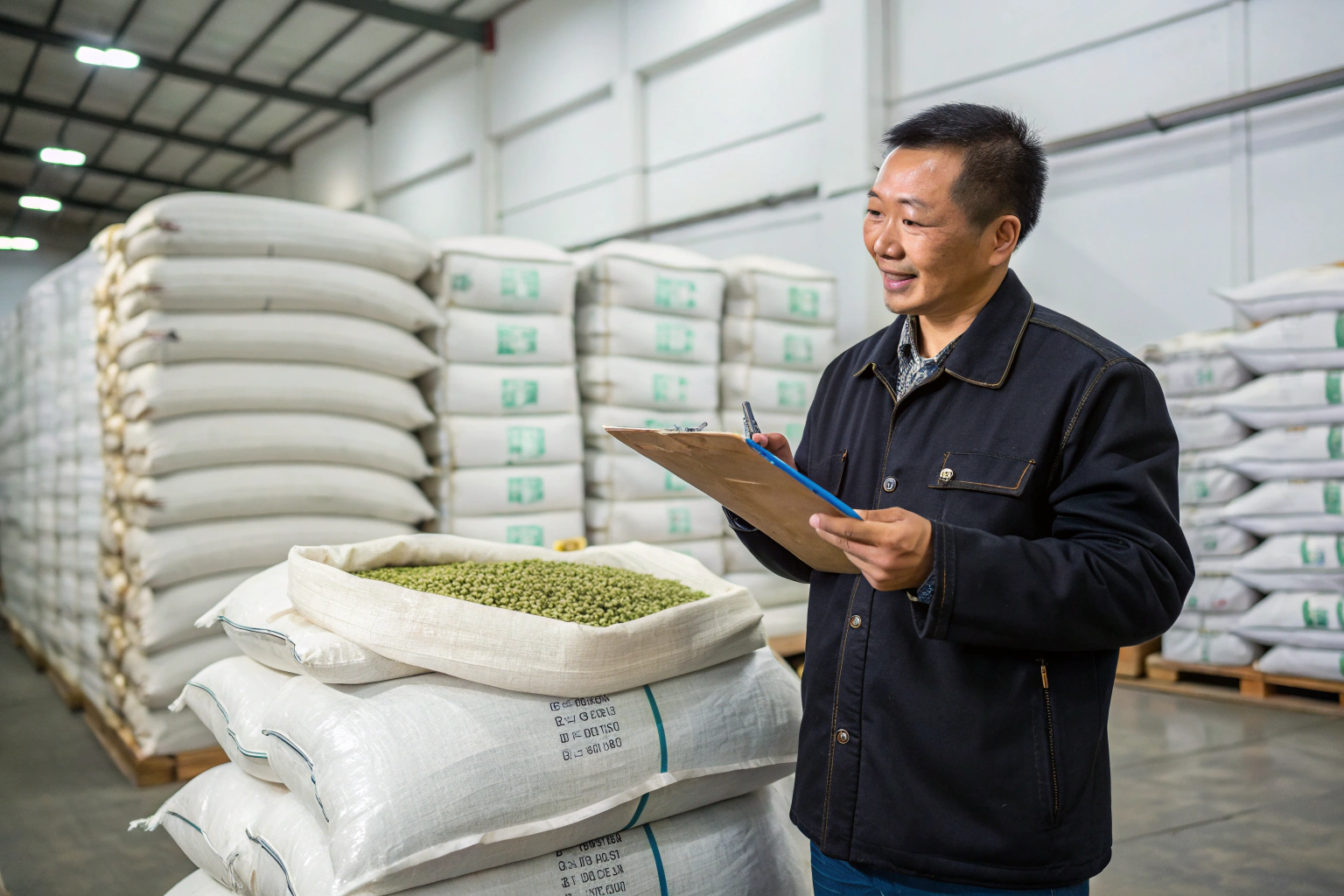
I once received an email from a buyer in Texas that I'll never forget. He wrote: "I've been burned by three exporters in the last two years. Late shipments. Inconsistent quality. One guy just stopped replying after the deposit cleared. How do I know you're any different?" The email was direct. Almost rude. But honestly? He had every right to be skeptical. This industry is full of people who can talk coffee but can't ship it. Spotting a real professional among the amateurs is a survival skill for importers. And I'm going to give you the checklist I wish every buyer had before they signed a contract.
A professional coffee exporter distinguishes themselves in the first interaction—not by fancy marketing, but by technical fluency, logistical precision, and radical transparency. They answer a cupping score question with a lot number. They answer a shipping question with a vessel schedule and a buffer plan. They volunteer their quality control failures along with their successes because they understand that trust is built on honesty, not perfection. Spotting one is about looking past the sales pitch and into the operational details they're eager to share.
I run BeanofCoffee from our base in Baoshan, with 10,000 acres of our own farms and a network of smallholders. I've been on both sides of the vetting process. Here's what separates the real exporters from the pretenders.
What Are the First Signals of a Reliable Green Coffee Exporter?
The first email, the first WhatsApp message, the first booth visit at a trade show—these initial moments are packed with signals. Most buyers focus on the price. That's natural. But price tells you almost nothing about professionalism. A cheap offer can come from a serious exporter clearing old inventory, or from a middleman who has never seen the beans they're selling. I look for different clues entirely.
The first signals of a reliable exporter are response quality and specificity. A professional responds with precise answers to technical questions, not marketing language. They include lot numbers, harvest dates, cupping scores with the cupping date, and realistic shipping windows. They ask about your business needs before talking about their product. And they never, ever make promises that defy the laws of logistics or agriculture.

How Fast Should a Professional Exporter Respond to Your Inquiry?
Speed matters, but not in the way most people think. An instant reply at 3 AM my time might feel impressive. But what does it actually signal? It might signal desperation, or that the person answering has no authority and is just forwarding messages to someone else.
A professional responds within one business day. Maybe two if they're traveling or in the middle of harvest. The timing is less important than the content. A reply that took 24 hours but includes a direct answer to every question, a cupping report attachment, and a proposed shipping window is far more valuable than an instant "Yes, we can do that, let's talk price."
I'll let you in on a small thing I do. If a buyer asks a technical question I can't answer from memory—say, the exact water activity of a specific lot from last November—I don't guess. I tell them: "Let me pull the QC report from the warehouse. I'll get back to you in two hours." And then I do it. That discipline—the refusal to bluff—is something I look for in other exporters, and something I hope buyers see in me. A professional knows their limits and closes information gaps fast, not with smooth talk.
What Questions Should a Good Exporter Ask You First?
A bad exporter asks one question: "How many bags do you need?" A good exporter asks a dozen questions before they quote anything. They're qualifying you as much as you're qualifying them. And that's a good sign. It means they care about fit, not just a quick sale.
I always start with these: What's your roasting style? Light, medium, dark? What flavor profile does your customer base prefer? What's your typical green bean budget per pound? Have you imported from China before, or are you new to our origin? What's your storage setup like? Climate-controlled or ambient?
These questions aren't small talk. They tell me if our Catimor is right for your roaster, or if you'd be happier with a different lot. They tell me if you need hand-holding through Chinese export documentation, or if you've done this route a dozen times. A professional exporter is thinking about the entire transaction, from my warehouse to your roaster. That thinking starts with questions, not answers. If an exporter asks you nothing and jumps straight to a price quote, be careful. They're selling a commodity transaction. Not a supply partnership.
What Documentation and Traceability Proof Should You Demand?
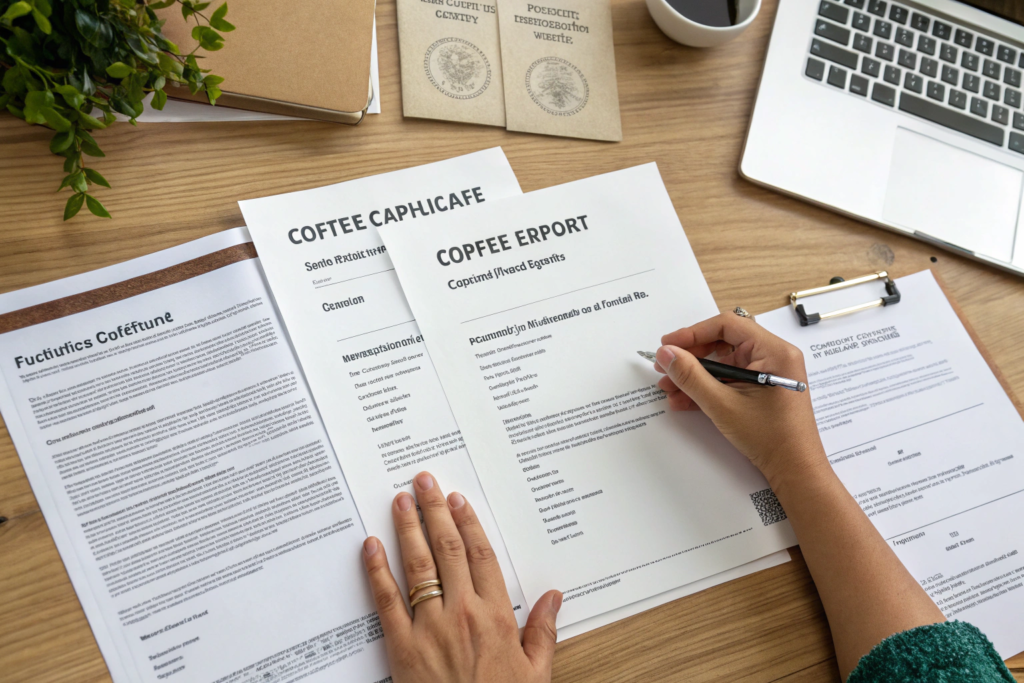
Paper is boring until it's missing. Then it becomes the most important thing in the world. I've seen containers held at US customs for two weeks because a phytosanitary certificate had a minor discrepancy. The coffee was fine. The paperwork was not. A professional exporter treats documentation not as an afterthought, but as a core part of the product. The beans and the paperwork ship together, or they don't ship at all.
The documentation package from a professional exporter should include, at minimum, a detailed offer sheet with lot-specific cupping data, a certificate of origin, a phytosanitary certificate, a fumigation certificate if required, and a clean bill of lading. Beyond these standard documents, a truly professional exporter proactively offers traceability records—GPS coordinates of the farm, harvest dates, processing method details, and QC reports from the dry mill.
Why Does a Detailed Offer Sheet Reveal Everything?
The offer sheet is the exporter's calling card. In one or two pages, it should tell you almost everything you need to know for an initial decision. A professional offer sheet is dense with data. An amateur one is full of adjectives.
Here's what I include on every offer sheet from BeanofCoffee. The lot reference number. The varietal and processing method. The harvest date. The screen size. The moisture content and water activity. The cupping score, the cupping date, and the name of the cupper who scored it. The volume available. The FOB price per pound. The estimated transit time to major ports. The certifications applicable to the lot.
A vague offer sheet that says "High Quality Yunnan Arabica, 85+ points, good for espresso" tells you the exporter either doesn't know their product or doesn't think you care about details. Neither is acceptable. Demand specifics. If the cupping score is 85, ask for the breakdown—fragrance, aroma, acidity, body, balance, aftertaste. A professional has that breakdown. They have cupping notes that describe the coffee, not just a number. "Red apple, brown sugar, clean finish" tells you more than "85 points." The words and the number together are what you need.
How Can Traceability Records Protect You From Fraud?
Fraud in coffee is more common than the industry likes to admit. Lots get swapped. Certifications get borrowed. A beautiful sample arrives in the mail, and the container that follows is a different coffee entirely. Traceability is the antidote.
A traceable lot has a paper trail that connects the beans in your warehouse to a specific farm, a specific harvest, and a specific processing batch. I assign lot codes that track the coffee from the day the cherry is delivered to our wet mill. That code follows through parchment drying, hulling, grading, and bagging. When I send a pre-shipment sample, the lot code is on the bag and in the email. When the container arrives, the lot code is on the bill of lading.
Ask your exporter: "Can you show me the lot code system? Can I trace this coffee back to a specific farm and harvest date?" A professional says yes immediately and walks you through it. An amateur gets vague. "It's from Yunnan, you know, the good region." That's not traceability. That's a guess. I've had buyers who initially didn't ask about traceability. But once they understood how it protects them, they never went back to buying blind lots.
What Logistics Red Flags Expose an Inexperienced Shipper?
Coffee is a physical product. It travels on trucks, sits in port warehouses, crosses oceans in metal boxes. An exporter who can't manage logistics is an exporter who can't deliver. And logistics failures don't just mean late coffee. They mean demurrage charges, quality degradation, and broken trust. Spotting logistics competence early can save you thousands of dollars and weeks of stress.
Logistics red flags include vague shipping timelines, unfamiliarity with incoterms, inability to explain their freight forwarding choices, and reluctance to share the vessel name and booking confirmation once the container is loaded. A professional exporter speaks about shipping with the same precision they use for cupping notes—specific dates, specific routes, specific contingency plans for common disruption points like port congestion or customs clearance.

Why Should You Ask About Their Buffer Time Strategy?
Buffer time is the gap between when the coffee is promised and when it actually needs to be ready. An exporter without buffer time is an exporter who ships late the moment anything goes wrong. And in international logistics, something always goes wrong.
My standard practice is a 7-to-10-day buffer. If I promise a client their container will depart Shanghai on March 15th, I plan for the coffee to be at the port, cleared and ready, by March 5th. That buffer absorbs the delays that are routine in this business: a truck breakdown on the mountain road from Baoshan, a one-day delay in fumigation, a customs officer asking for an extra document.
Ask your exporter directly: "What's your buffer window for this shipment? What happens if the truck is late to the port?" Listen to the answer. A professional describes their buffer strategy in detail. They talk about it like insurance—a cost they willingly bear to protect the delivery promise. An inexperienced shipper says, "Don't worry, it'll be on time," and doesn't have a plan for when it isn't. That's not confidence. That's magical thinking.
What Specific Shipping Routes Should They Know for Your Market?
A professional exporter knows more than just the price of a container. They know the routes. They know which carriers have the best schedule reliability for the West Coast versus the East Coast. They know where the common transshipment hubs are—Singapore, Busan, Shanghai—and how delays at those hubs cascade.
For a buyer in Los Angeles, I might recommend a direct call from Shanghai with a reliable carrier, even if the freight cost is slightly higher, because the transit time is predictable. For a buyer in Houston, we might route through a different channel. A professional explains these choices. They don't just say "we'll ship it and it'll take about a month." They say "I recommend carrier X. Their on-time performance on this route is 92%. Transit time is 22 days to Long Beach. Here's the vessel schedule for next month."
This level of detail demonstrates that the exporter has moved real containers before, not just samples. It demonstrates that they have relationships with freight forwarders and understand the difference between a reliable shipping partner and a cheap one. I've learned these things over years of trial and error. An exporter who already knows them has done the work. Trust that.
How Can a Sample Evaluation Confirm an Exporter's Quality Claims?
The sample is the moment of truth. Everything before it—the emails, the offer sheet, the logistics talk—is preamble. The sample is the coffee itself, speaking directly to your palate. A professional exporter sends samples that are representative, well-packaged, and accompanied by full documentation. An amateur sends pretty beans in a ziplock bag with a handwritten note.
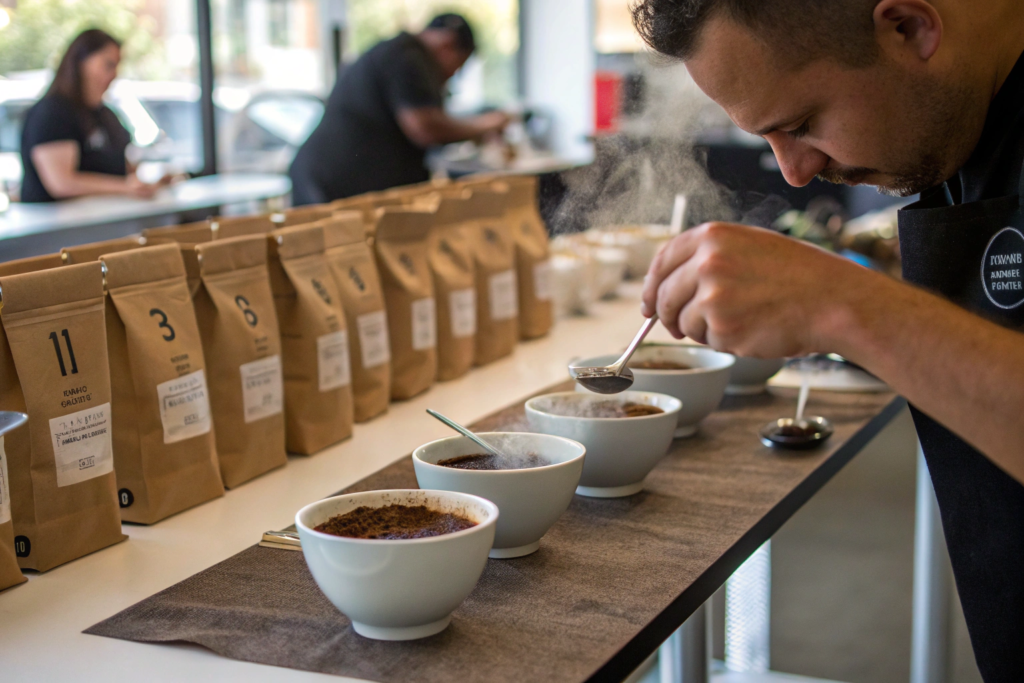
Sample evaluation is the buyer's ultimate verification tool. A professional exporter sends a pre-shipment sample drawn from the exact lot that will fill your container, not a curated "show sample" from a different batch. The sample arrives in a sealed, labeled bag with the lot code, roast date, and cupping notes. The exporter encourages you to cup it independently and compare notes. They treat the sample as a joint quality checkpoint, not a sales gimmick.
What's the Difference Between a Show Sample and a Pre-Shipment Sample?
A show sample is a sales tool. It's the best beans from the best day of harvest, hand-picked and perfectly processed. It's not fraudulent, exactly, but it's not representative. A pre-shipment sample is pulled from the bags that are about to go into the container. It's what you're actually buying.
A professional exporter makes this distinction clear. They label the pre-shipment sample with the exact lot number and the date it was drawn. They encourage you to cup it and approve it before the container ships. They are not afraid of this comparison because their production quality matches their show quality.
I've heard horror stories. A buyer receives a stunning sample, places a $40,000 order, and the arriving coffee is two grades lower. The exporter claims "natural variation." It's not variation. It's bait and switch. The way to protect yourself is to demand the pre-shipment sample and cup it against the original show sample. If the exporter hesitates or makes excuses, walk away. A professional wants you to approve the pre-shipment sample because it protects them too. It's evidence that the coffee was good when it left their warehouse.
How Should You Document and Compare Samples From Multiple Exporters?
If you're sourcing from several potential suppliers—and you should be—you need a system. Cupping five samples from memory is unreliable. The palate gets tired. Bias creeps in.
I recommend a blind cupping protocol. Have someone else on your team code the samples so you don't know which is which. Use the SCA cupping form or a consistent internal score sheet. Score each attribute—fragrance, aroma, acidity, body, balance, aftertaste, uniformity, clean cup, sweetness. Take notes. Descriptive notes, not just numbers.
After the blind cupping, unblind the samples and compare your notes to the exporter's provided cupping notes. A professional exporter's notes will be in the same ballpark. Not identical—cupping is subjective—but directionally aligned. If they call it "bright citrus acidity" and you taste dull, flat, no acidity, something is off. Either the sample degraded, your palate was off that day, or the exporter is inflating their scores. Do it again. A second cupping settles most disagreements. A professional doesn't argue about your palate. They offer to send another sample or discuss the discrepancy openly.
Conclusion
Spotting a professional coffee exporter is not about finding someone who says all the right things. It's about finding someone who does the right things—responds with specifics, asks about your business before quoting a price, sends fully documented pre-shipment samples, and talks about shipping routes and buffer times like they're part of the quality equation. Because they are. Coffee quality doesn't end at the cupping table. It ends when the container arrives at your roastery in good condition, on time, and matches the sample you approved.
At BeanofCoffee, I try to be the exporter I'd want to buy from. That means transparency on traceability, honesty about what's possible, and a logistics plan that accounts for reality, not just hope. If you're in the market for Yunnan Arabica, Catimor, or Robusta and want to work with a team that treats your container like it's our own, reach out to Cathy Cai at cathy@beanofcoffee.com. Ask her the hard questions. She's ready. We'd rather earn your trust through evidence than win a quick order with a cheap price. That's the kind of partnership that lasts.