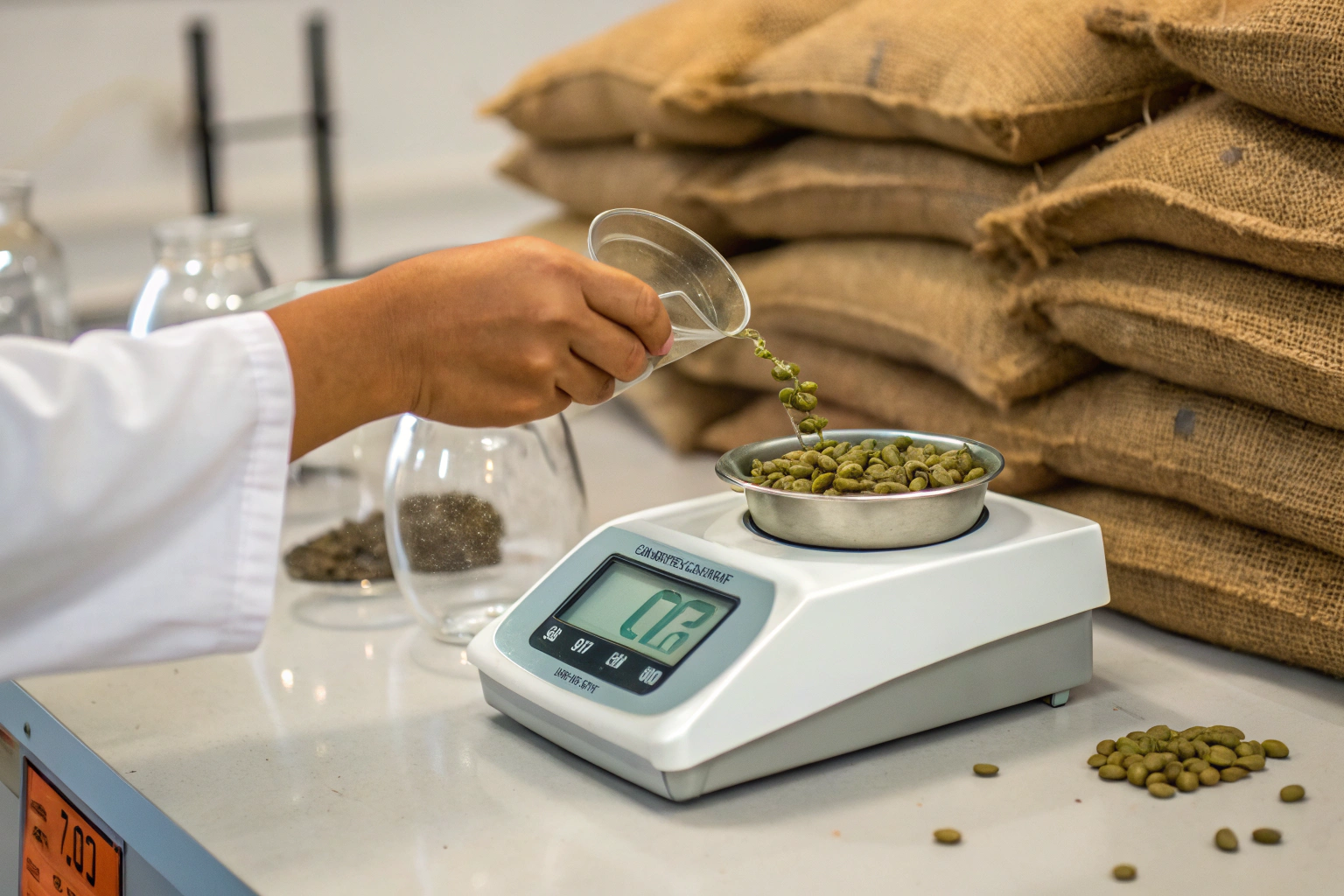
I used to think moisture content was the only number that mattered. You dry the beans to 11%, you bag them, you ship them. Simple. Then a container of our washed Arabica arrived in Hamburg with a complaint. The moisture content was 11.2%—perfectly within spec. But the cupping notes came back with "flat, papery, hints of fermentation." I was confused. The moisture was right. What went wrong? That's when I learned about water activity. Moisture content tells you how much water is in the bean. Water activity tells you what that water is actually doing. And that distinction changed everything about how I store and ship coffee.
The best water activity level for green coffee beans is between 0.53 and 0.60 aW. This range is the sweet spot where mold and bacteria cannot grow, the bean's chemical stability is optimized, and the volatile flavor compounds are preserved. Staying within this window is more important for long-term quality than hitting an exact moisture percentage, because water activity measures the biologically active water—not just the total water weight.
If you're buying containers of green coffee and storing them for months, this number matters more than you might think. Let me walk through why, and how to use it in practice.
What Exactly Is Water Activity and How Is It Different From Moisture Content?
Moisture content and water activity are cousins, not twins. They're related but they tell you different things. A sponge full of water and a jar of honey can have the same moisture content. But the water in the sponge is free and available—squeeze it and it comes out. The water in the honey is bound up with sugars. It's not available to microbes. Coffee is more like the honey than the sponge. Or at least, it should be.
Water activity (aW) measures the free, unbound water in a substance that is available for microbial growth and chemical reactions. Moisture content measures total water weight as a percentage of the bean's mass. Two coffee lots can have identical moisture content at 11% but very different water activity levels—one safe and stable, the other at risk of mold—because the water is bound differently within the bean's cellular structure.
Why Doesn't a Good Moisture Reading Guarantee Safe Coffee?
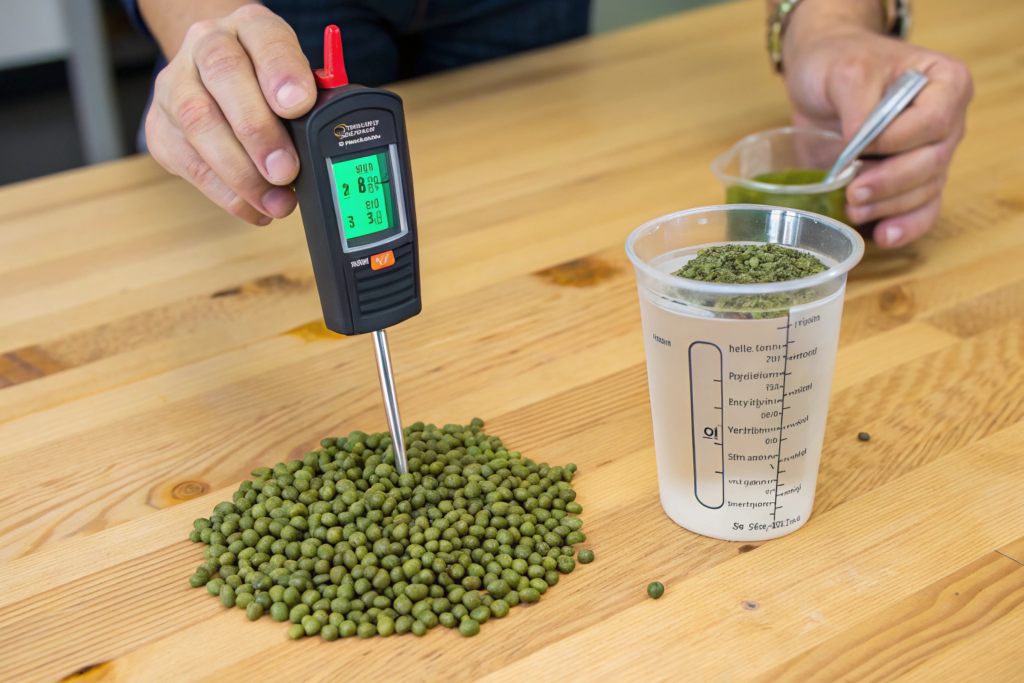
I've seen this in my own warehouse. Two pallets of Catimor, same harvest, same drying patio, same moisture meter reading of 10.8%. One pallet stored beautifully for eight months. The other developed a faint mustiness in just four. The difference? Water activity.
Moisture content is a blunt instrument. It counts all the water molecules, but doesn't distinguish between water that is chemically bound to proteins and carbohydrates inside the bean, and water that is loose and mobile. Loose water is the dangerous kind. It's the water that fungi and bacteria can access. A bean with high water activity but moderate moisture content is a time bomb. The total water isn't alarming, but the available water is an open invitation to mold spores.
This is why I stopped relying on moisture content alone for our specialty lots. A moisture meter might tell me the beans are dry enough to ship. The water activity meter tells me if they'll still be clean and stable when they arrive in a warehouse in Texas two months later. The first number satisfies the contract spec. The second number actually protects the investment.
How Does Drying Method Affect the Final Water Activity Value?
The way you dry coffee doesn't just remove water. It changes the relationship between the bean and the water that remains. This is something I learned by comparing our patio-dried lots with our mechanically dried lots.
Slow, patient sun-drying on raised beds gives the water inside the bean time to migrate evenly from the center to the surface. The bean dries uniformly. The final water activity tends to be stable and predictable, with very little variation from bean to bean within the batch. It's a gentle process that doesn't shock the cellular structure.
Mechanical drying, if done too fast or at too high a temperature, can case-harden the bean. The outside dries quickly and traps moisture inside. The moisture meter reads 11% because it's measuring the surface or a ground sample average. But the core of the bean has higher water activity. Over weeks of storage, that internal moisture equilibrates outward, and the water activity of the whole lot slowly rises. I've measured aW creeping from 0.55 to 0.62 over two months in a lot that was dried too aggressively. By the time it reached the cupping table, the damage was done.
For buyers, this means asking your supplier not just for the moisture spec, but for the water activity reading and the drying method used. A slow-dried, patio-dried lot with an aW of 0.56 is a fundamentally safer purchase than a flash-dried lot with the same moisture number.
What Is the Ideal Water Activity Range for Green Coffee?
Numbers without context are just digits on a screen. So let's put the water activity range into context. I've spent years correlating what I see on the meter with what I taste in the cup and what I find in the warehouse. The patterns are clear. There's a window where coffee is not just safe, but alive and stable. Above that window, you're gambling. Below it, you're losing something precious.
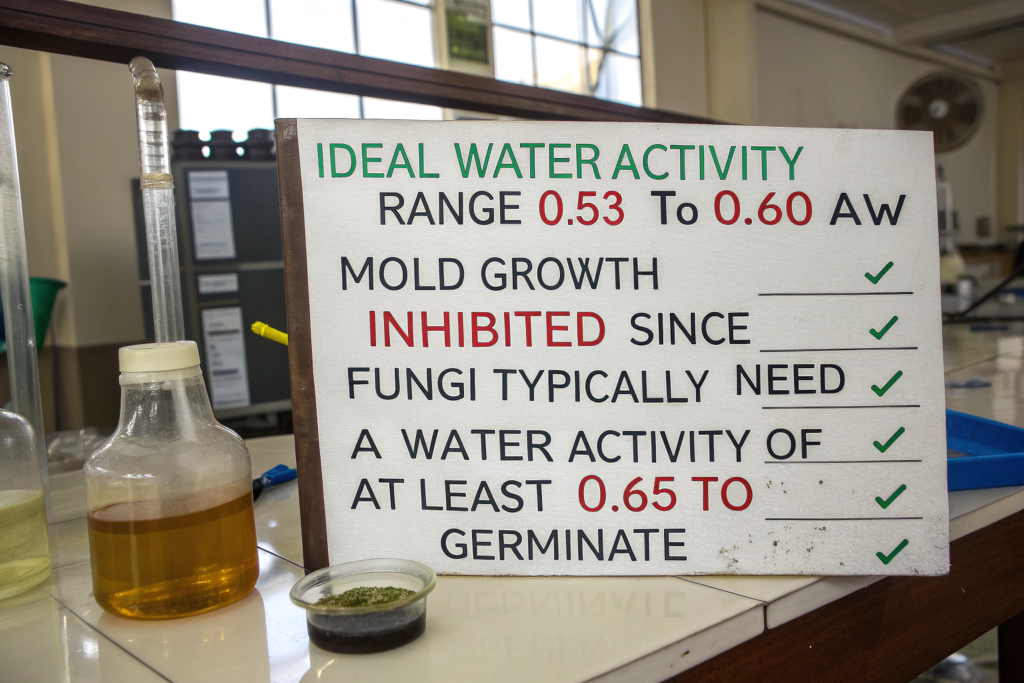
The ideal water activity range for green coffee is 0.53 to 0.60 aW. At this level, mold growth is inhibited because fungi generally require a water activity of at least 0.65 to germinate. Chemical reactions that degrade flavor, such as lipid oxidation, are also slowed. Below 0.53 aW, the bean can become excessively brittle and lose volatile aromatic compounds too rapidly, leading to a flat, faded cup.
What Happens When Water Activity Exceeds 0.65?
Crossing 0.65 aW is crossing a biological line. At that threshold, the water in the bean is mobile enough that dormant mold spores can wake up and start feeding. Aspergillus and Penicillium species—the common storage molds—don't need a wet bean. They just need a bean with water activity above their minimum requirement.
I've dealt with this. A container delayed at a humid port for three weeks. The warehouse crew didn't check the water activity on arrival, just the moisture content. The beans were at 12% moisture—slightly high but not alarming. The water activity, though, had climbed to 0.68. Four weeks later, the cupping showed the telltale musty, earthy notes. The coffee wasn't visibly moldy. But the damage was done at a microscopic level. The lot was devalued from specialty to commercial grade. That's a financial hit of thousands of dollars.
Above 0.70 aW, the risk accelerates. Bacteria can start to compete. Off-flavors multiply. The bean becomes a biological battleground. For a buyer storing coffee for more than a few weeks, 0.65 is a hard ceiling. Don't get close to it. Aim for the middle of the safe zone, not the edge.
Does Too-Low Water Activity Damage the Cup Profile?
The other direction matters too. I used to think drier was always better. If 0.60 was safe, 0.45 must be safer, right? Wrong. Coffee is a living product. It needs some residual water to hold its chemical structure together.
When water activity drops too low—below 0.50 or so—the bean's cellular membranes can become brittle. The volatile aromatic compounds that give our Yunnan Arabica its floral and fruity notes are more likely to escape. The bean ages faster in a sensory sense, even though it's biologically dead and no mold will ever touch it. I've cupped over-dried lots that were technically flawless—zero defects, perfect green color—but tasted hollow. The body was thin. The acidity was sharp and one-dimensional. It was coffee, but it had lost its soul.
This is a particular risk with beans destined for long-term storage in very dry climates. A warehouse in Arizona in summer can have ambient relative humidity below 20%. The beans will slowly desiccate. The water activity creeps down month by month. After a year, the coffee is safe but faded. The ideal range is a band, not a single point. Think of it like a thermostat. You don't want the house freezing or boiling. You want a comfortable, stable middle.
How Can You Measure and Monitor Water Activity in Your Supply Chain?
Knowing the ideal range is one thing. Actually measuring it throughout your supply chain is another. I've had to build this into our workflow step by step. It's not complicated, but it requires consistency and the right tool. A moisture meter costs $50. A water activity meter costs $500 to $1,500. That price difference tells you something about the value of the data. For a buyer handling container-load volumes, the meter pays for itself the first time it prevents a mold claim.
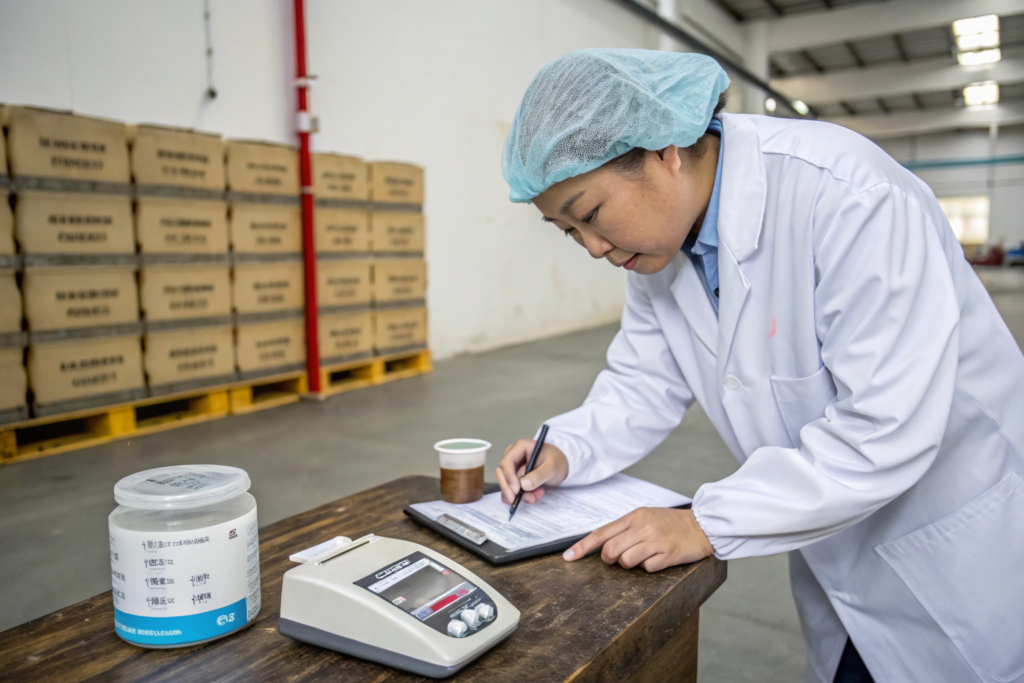
Measuring water activity in green coffee requires a dedicated water activity meter, not a moisture meter. These instruments use either a chilled-mirror dewpoint sensor or a capacitance sensor to measure the equilibrium relative humidity of the air around a sealed coffee sample. For reliable results, the sample must be at a stable temperature, the meter must be calibrated regularly, and readings should be logged over time to detect trends before they become problems.
Which Type of Water Activity Meter Works Best for Coffee?
There are two main technologies on the market: chilled-mirror dewpoint sensors and capacitance-based sensors. I've used both. For coffee, I prefer the chilled-mirror type. They're more expensive—think $1,000 and up for a benchtop unit from a reputable brand—but they're more accurate in the range we care about.
Chilled-mirror meters work by sealing a coffee sample in a small chamber. The meter cools a tiny mirror until condensation forms. It precisely measures the temperature at which that happens, and calculates the water activity from that dewpoint. It's physics. It's elegant. And it's repeatable, which is what you need when you're comparing readings from a warehouse in Baoshan with a QC lab in Melbourne.
Capacitance meters are cheaper and faster, but they can drift over time and need more frequent calibration with salt standards. For a buyer checking incoming containers, a good capacitance meter is fine—if you calibrate it every session. Whatever meter you choose, the key is to use the same model, the same procedure, every time. Consistency of method is as important as the accuracy of the device. I tell my team: don't chase a perfect number. Chase a consistent one that you can track over months.
How Often Should You Test Water Activity During Storage?
Testing only at intake is not enough. I test at three critical points: after drying and before bagging at origin, upon arrival at the destination warehouse, and then monthly during storage. Each test point serves a different purpose.
The origin test is the baseline. It tells me the coffee left our farm in the safe zone. The arrival test tells me if anything happened during transit—a container sitting on a hot dock for too long, a humidity spike in the ship's hold. If the arrival aW is significantly different from the origin aW, I know to investigate the logistics chain.
The monthly storage test is about trend detection. I'm not looking for a single alarming number. I'm looking for movement. If a lot measured 0.55 at intake, 0.56 after one month, and 0.58 after two months, that's a trend. Something is causing the water activity to creep up. Maybe it's a leaking roof, maybe it's seasonal humidity, maybe the pallet is too close to an exterior wall. The trend gives me time to act—move the pallet, improve ventilation, turn the stock—before the number hits 0.65. A single, isolated reading of 0.62 might be a measurement error. Three readings trending toward 0.62 is a problem that needs a solution.
How Does Water Activity Impact the Coffee Contract and Claims Process?
This is where the number on the meter becomes a real-world business tool. A water activity reading can be the difference between a smooth contract fulfillment and a bitter dispute. I've been on both sides of that dispute, and I've learned that clarity upfront prevents conflict later. Most standard green coffee contracts specify moisture content, defect count, and sometimes screen size. Water activity is rarely in the default template. It should be.
Including water activity specifications in a green coffee contract protects both buyer and seller by providing an objective, measurable quality parameter that directly predicts storage stability. If a lot arrives with an aW above the agreed threshold, the cause can be investigated—was it improperly dried at origin, or did it gain moisture during transit? Clear contract terms shift the conversation from blame to resolution.
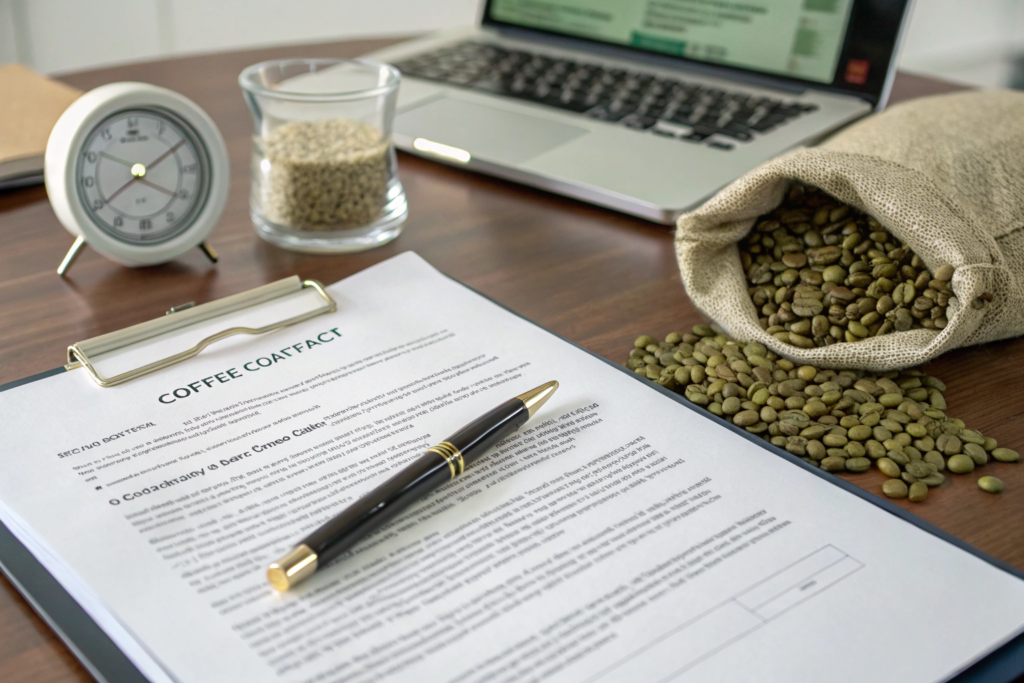
Should You Include a Water Activity Clause in Your Coffee Contract?
Yes. Without hesitation. I started adding a simple water activity clause to our export contracts about three years ago, after the Hamburg incident I mentioned earlier. The clause is straightforward: the coffee at the time of loading shall have a water activity between 0.53 and 0.60 aW, as measured by a calibrated chilled-mirror meter. The reading is documented and shared with the buyer before the container ships.
This does two things. First, it gives the buyer confidence. They know the coffee left our warehouse in the safe zone. If it arrives with elevated aW, the problem is almost certainly in the transit or their own storage—not in our drying. Second, it protects me as the seller. If a buyer claims the coffee was defective upon arrival, I can point to the origin reading. The conversation shifts from "you sent bad coffee" to "let's figure out where the moisture ingress happened."
The clause doesn't have to be adversarial. It's a shared reference point. For a buyer building a long-term sourcing relationship, it's a signal that the supplier understands quality at a deeper level than just meeting the minimum spec. It's a mark of a producer who thinks about what happens to the coffee after it leaves the farm.
How Do You Resolve a Dispute Based on Water Activity Readings?
Disputes happen. Even with good contracts and good intentions. Two meters can give slightly different readings. A sample drawn from the top of a pallet might differ from a sample from the center. The key is to have an agreed protocol before the dispute arises.
My standard procedure is this. If the buyer's arrival reading is outside the contracted range, we first verify calibration. Both parties calibrate their meters using the same saturated salt standards—usually sodium chloride for the 0.75 aW reference point. If the meters agree on the calibration standard, we move to sampling. We agree on a joint sampling method: draw samples from at least five different bags from different parts of the container, combine them, and take three readings from the composite sample. Average the three readings.
If the averaged arrival aW is still above 0.60, we investigate. Was the container seal broken? Was there a known delay at a humid transshipment port? If the transit was clean, I'll usually offer a price adjustment or a return, depending on the severity. But here's the thing—since I started testing and documenting aW at origin, I haven't had a single dispute. Not one. The transparency prevents the argument from ever starting. The buyer sees the origin data, trusts the process, and checks their own storage conditions instead of immediately blaming the producer.
Conclusion
Water activity is the quiet, invisible metric that separates coffee that ages gracefully from coffee that quietly rots. It's not as intuitive as moisture content, and the meter costs more. But for anyone handling large volumes of green beans—whether you're drying them on a patio in Baoshan or storing them in a warehouse in California—it's the number that actually predicts what will happen to your coffee over time. Stay between 0.53 and 0.60 aW, and you're in the safe zone. Drift above 0.65, and you're inviting biology to the party. Drop below 0.50, and your flavor is slowly walking out the door.
At BeanofCoffee, we've made water activity a core part of our quality program. Every specialty lot we ship comes with an aW certificate, not just a moisture reading. It's one more way we try to give our buyers the confidence that what leaves our farm will arrive in their warehouse in the same condition. If you want to learn more about how we manage this, or if you're reviewing your own storage protocols and want to compare notes, reach out to Cathy Cai at cathy@beanofcoffee.com. She can share our spec sheets and walk you through our testing process. Good coffee deserves good science. And good science means you cup what you paid for.