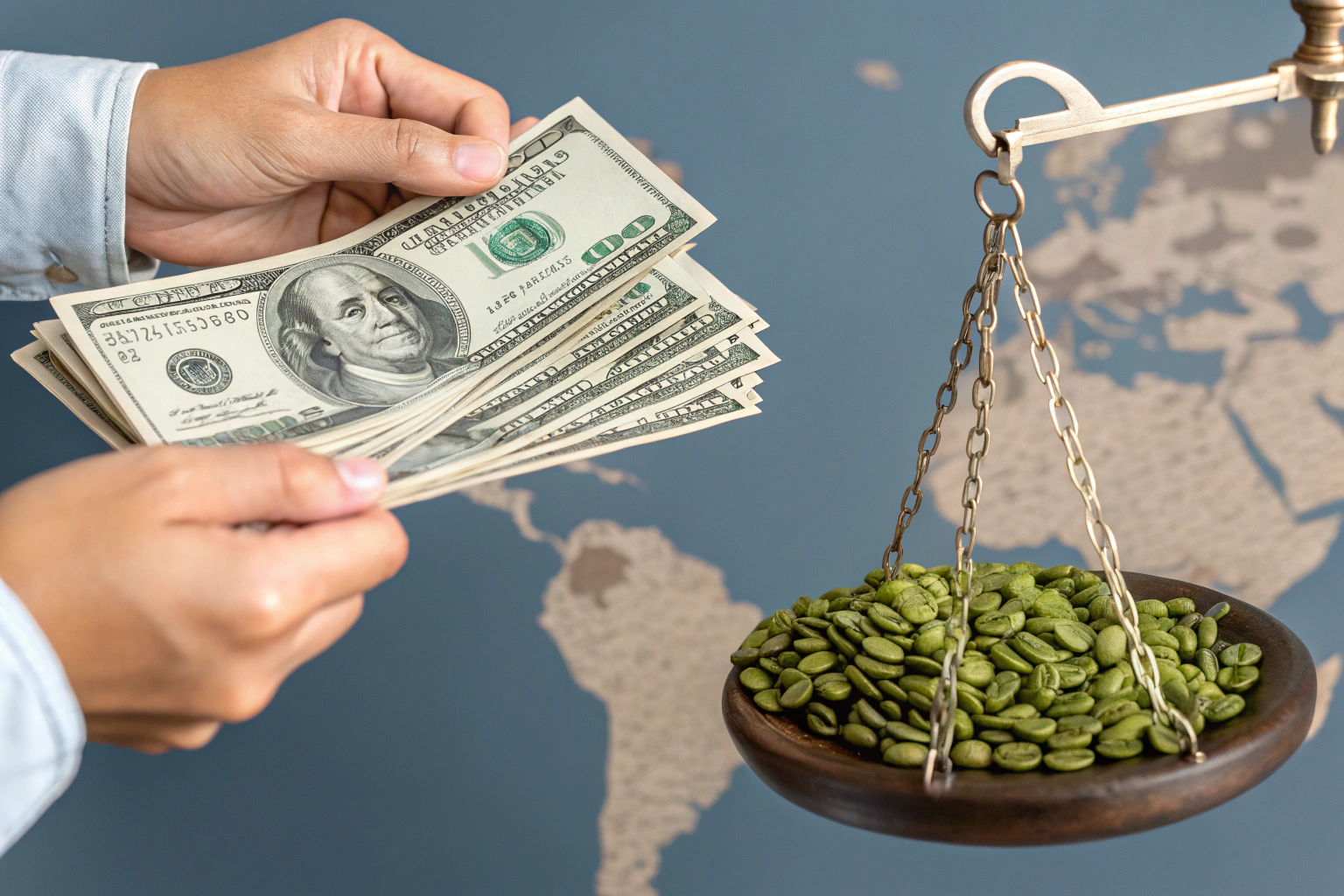
In 2022, I closed a deal with a roaster in Chicago. We agreed on a price of $3.80 per pound for a premium washed Arabica lot. By the time the payment cleared—six weeks later—the exchange rate between the dollar and the yuan had shifted by nearly 4%. I didn't notice it at first. Then my accountant called. That shift had quietly erased over $7,000 from our margin. Gone. Not because the coffee was bad. Not because the buyer negotiated hard. Just because of a currency move that happened while we were sleeping. That's when I stopped treating foreign exchange as a background detail and started treating it as a real business risk.
Minimizing currency risk in coffee import deals requires a proactive strategy that combines forward contracts, multi-currency pricing clauses, natural hedging through balanced cash flows, and timing discipline. The goal is not to speculate on currency movements and win, but to neutralize their impact so that both the buyer and the seller can focus on coffee quality and long-term partnership instead of exchange rate anxiety.
I'm a coffee farmer, not a forex trader. I don't have a Bloomberg terminal in my office in Baoshan. But I've learned enough to protect my business, and I've helped buyers protect theirs. Let me walk through the practical tools that actually work—not the theoretical finance textbook stuff.
What Is Currency Risk in International Coffee Trade?
A lot of buyers I talk to think currency risk is just "the price went up." It's not that simple. Currency risk is the gap between what you thought you'd pay and what you actually pay, created entirely by the movement of one currency against another. In coffee, most international trade is priced in US dollars. I sell in dollars. But I pay my pickers in yuan. You, the buyer, might earn revenue in US dollars, Canadian dollars, or euros. Somewhere in that chain, money has to cross a border, and a bank has to convert it. That moment of conversion is where the risk lives.
Currency risk, also called exchange rate risk, is the financial uncertainty created when a coffee contract is priced in one currency but the buyer or seller's operating costs and revenues are in another. A strengthening or weakening of either currency between the contract signing date and the payment settlement date can significantly alter the real cost or revenue of that transaction.

How Does a Stronger US Dollar Actually Hurt Coffee Exporters?
This one confuses people. A buyer might think, "The dollar is strong! That's good for everyone, right?" Not for me. When the US dollar strengthens against the Chinese yuan, the dollars I receive from you convert into fewer yuan. My costs—labor, fertilizer, diesel, packaging—are all in yuan. They don't change just because the dollar moved. So my margin gets compressed from the other side.
I remember a period in early 2024 when the dollar was particularly strong against the yuan. A container I sold for $85,000 converted to about 610,000 yuan at the time of contract. By the time the payment arrived, the exchange rate had moved, and I received only 595,000 yuan. That 15,000 yuan difference? That's roughly the monthly salary for three of my full-time workers. Gone. Not to a competitor. Not to a cost increase. Just to a currency fluctuation I didn't hedge.
For you, the importer, a strong dollar is initially favorable—your purchasing power goes up. But here's the hidden risk. If the dollar is volatile, I, as your supplier, might be forced to raise my dollar price to protect my yuan margin. Or I might refuse to hold a quoted price for more than 48 hours. The instability hurts both sides of the table eventually.
Why Don't Fixed Coffee Contracts Solve the Problem Completely?
You might think, "Just sign a fixed-price contract and the problem goes away." The price is locked. What's left to worry about? The problem is that a fixed price fixes the number of dollars. It doesn't fix the value of those dollars.
If you're a Canadian roaster and you sign a fixed-price contract with me in USD for $40,000, you're still exposed. Your revenue is in Canadian dollars. If the Canadian dollar weakens against the US dollar between the contract and the payment date, your cost in CAD goes up. The fixed USD price didn't protect you. It just hid the risk behind a number that felt stable.
Same for a European buyer paying in euros. A fixed USD price is only truly fixed if your own currency is also USD. Everyone else is still on the rollercoaster. Recognizing this is the first step. A fixed price is not a currency hedge. It's a price hedge. You need a separate strategy for the currency layer. Otherwise, you're just hoping the exchange rate moves in your favor. And hope is not a treasury policy.
What Are the Most Effective Hedging Tools for Coffee Importers?
So, we know the problem. Now, the tools. Hedging sounds complicated—something for big banks and hedge funds. But some of the most useful tools are quite straightforward. I use them. My buyers use them. They're not about making a profit on currency. They're about locking in a known outcome so you can sleep.
The most effective and accessible hedging tools for coffee importers are forward contracts with their bank, multi-currency accounts that allow strategic holding and conversion, and natural hedging through matching revenue and cost currencies. For larger volumes, currency options provide insurance-like protection against extreme moves without locking in an unfavorable rate.
How Can a Simple Forward Contract Lock Your Coffee Cost?
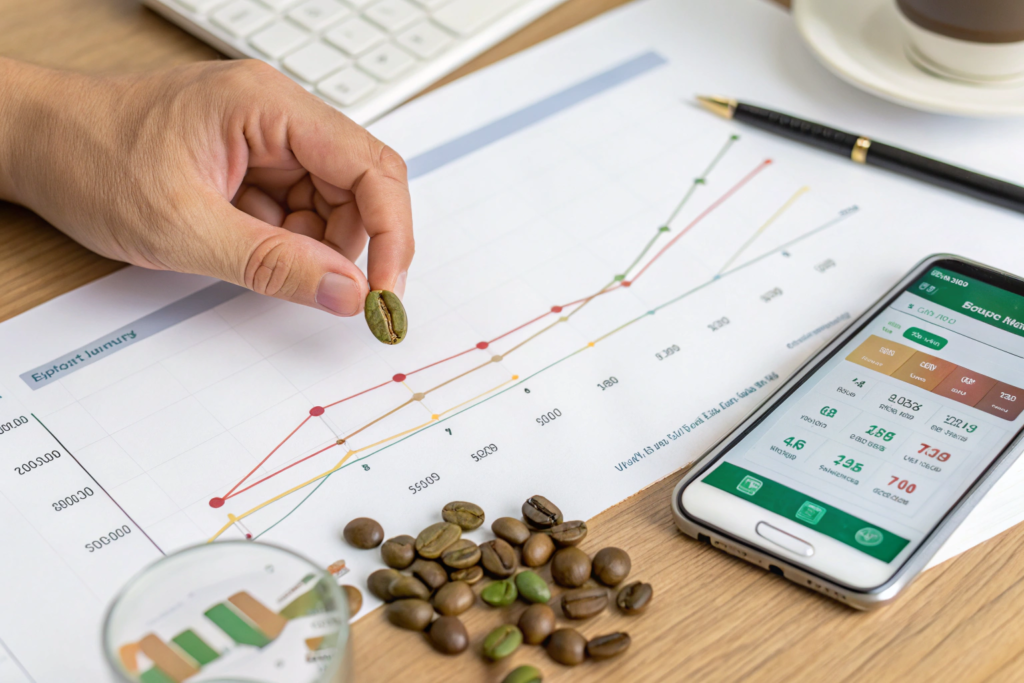
A forward contract is the easiest tool to understand. You agree with your bank today on an exchange rate for a transaction that will happen in the future. Let's say you need to pay me $50,000 in three months. Your bank quotes you a forward rate to buy those dollars with your local currency. That rate is locked. It doesn't matter what the market does next week or next month. You know your exact cost today.
I've had buyers in Europe use this effectively. A roaster in Hamburg told me he books a forward contract the same day he signs the coffee contract with me. The coffee price is fixed. The currency cost is fixed. His landed cost is now fully predictable. He can set his wholesale price for the season without any exchange rate surprises lurking.
The cost of a forward contract is usually built into the rate the bank offers. It's not a separate fee. The bank looks at the interest rate difference between the two currencies and adjusts the forward rate accordingly. For stable currency pairs, this adjustment is small. The peace of mind is large. One caveat: you're committed. If the market moves in your favor after you lock, you don't benefit. But that's the trade-off. Certainty over potential upside.
When Are Multi-Currency Accounts a Smarter Choice Than Hedging?
A multi-currency account isn't a hedge in the traditional sense. It's a flexibility tool. Many international banks now let you hold balances in multiple currencies—USD, EUR, GBP, CNY—within a single account structure. This is powerful for a coffee importer.
Here's the strategy. When the exchange rate is favorable, you convert your local currency into USD and just let it sit in your USD sub-account. You're pre-funding your coffee purchases at a good rate. When it's time to pay me, you send the wire from your USD account. No last-minute conversion panic. No bad rate on the settlement day.
I do this from the exporter side too. I maintain a USD account. When buyers pay me, the dollars arrive and sit there. I don't convert everything to yuan immediately. I watch the rate, and I convert in chunks when the dollar is strong against the yuan. It's a simple form of timing. It requires discipline—you can't get greedy and wait for a perfect rate that never comes. But over a year of transactions, this approach usually beats converting every payment blindly on the day it arrives. For a smaller importer without access to complex derivatives, a multi-currency account is the most practical first step.
How Should Buyers and Sellers Share Currency Risk Fairly?
Currency risk, left unmanaged, becomes a silent source of tension. One side wins. The other loses. Over time, that's toxic. I've had to have honest, sometimes uncomfortable conversations with buyers about sharing this risk. The goal isn't to dump the risk on one party. It's to split it in a way that keeps both of us whole and motivated to continue the partnership.
Fair sharing of currency risk involves contract clauses that define a neutral exchange rate range. Within that range, the agreed price holds. Outside that range, the difference is split 50/50 or according to a pre-agreed formula. This approach prevents windfalls for one side and catastrophic losses for the other, maintaining relationship equity over multiple contract cycles.

What Is a Currency Adjustment Clause and How Does It Work?
A currency adjustment clause is a paragraph in the sales contract that says, essentially, "We agree on this price based on this exchange rate. If the rate moves beyond X%, we'll rebalance." It's a safety valve, not a renegotiation.
Here's a real example from a contract I wrote with a UK buyer. Our base contract price was set assuming an exchange rate of 0.80 GBP to 1 USD. We added a clause: if the rate moved more than 3% in either direction between signing and payment, we'd split the difference. The pound weakened to 0.76—a 5% move. I received fewer dollars' worth of value than I'd budgeted, but the buyer's cost in GBP had gone up too. The clause triggered. We met in the middle. My invoice got a small adjustment upward, and his landed cost in GBP came down slightly from the peak. Neither of us was thrilled, but neither of us felt cheated.
This only works with transparency. Both sides need to agree on the reference rate source—I use XE.com's mid-market rate on the contract date. And both sides need to trust that the other won't try to game the clause. It's not for every transaction. But for long-term, repeat contracts, it builds enormous goodwill. It says, "We're in this together."
Can Pricing in a Neutral Currency Benefit Both Sides?
Sometimes, the simplest solution is to take the dollar out of the equation entirely—or at least, to price in a currency that is more neutral for both parties. The US dollar is the default in coffee, but it's not always the best choice for a given trading pair.
If I'm selling to a European buyer who operates in euros, and I import some equipment from Germany, pricing the contract in euros might make sense for both of us. The buyer eliminates their USD exposure. I reduce my EUR exposure because I have euro-denominated expenses to offset the revenue. This is natural hedging at the transaction level.
This doesn't work for everyone. Most of my costs are in yuan, not euros. But for the right buyer-supplier pair, it's worth discussing. Another option is the Chinese yuan itself. As the yuan becomes more internationalized, some of my Asian buyers prefer to settle in CNY. I prefer it too—no conversion risk at all on my side. For a buyer with yuan revenue or a yuan-denominated account, this eliminates their risk as well. The key is to have the conversation openly. Don't just accept the dollar as the only option. Ask: "What currency would actually be most stable for this specific deal?"
What Daily Practices Can Protect Coffee Businesses From Forex Shifts?
Hedging tools and contract clauses are the big moves. But there's a daily discipline that matters just as much. The small habits. The weekly checks. The mindset shift from reactive panic to proactive monitoring. I've built these into my workflow, and I encourage my buyers to do the same. They cost nothing and they prevent the kind of slow, cumulative losses that eat a business from the inside.
The most effective daily practices for managing forex risk in coffee include setting rate alerts at key thresholds, establishing a regular weekly review of open positions and upcoming payments, maintaining a simple currency exposure log, and building a relationship with a bank's forex desk for guidance. Consistent small actions prevent the need for heroic last-minute rescues.
How Often Should You Monitor Exchange Rates for Coffee Payments?
Every day is too much. It'll drive you crazy. Once a month is too little. You'll miss the signals. I've settled on a rhythm of twice a week—Monday morning and Thursday afternoon. Monday sets the tone for the week. Thursday catches any trend before the weekend.
I'm not staring at charts. I set a rate alert on my phone. I know my break-even rate against the dollar. I know the rate I'd love to get. I set an alert 2% above my break-even and 2% below. If the alert pings, I pay attention. If it doesn't, I focus on coffee, not currency.
For a buyer with payments due in 30, 60, and 90 days, the same practice applies. Know your budget rate for each upcoming payment. Set alerts. Don't try to time the absolute bottom or top—that's gambling. Look for a rate that makes your numbers work, and when it appears, act. I've seen too many people wait for a "better rate" that never came, and then scramble to pay at a much worse one. Regret is a terrible flavor in coffee and in finance.
Why Is Separating Currency Decisions From Coffee Decisions Critical?
Here's a mistake I made early on. I'd get excited about a big sale, and I'd ignore the exchange rate entirely. The deal was good. The coffee was great. The currency could wait. Then the payment arrived, and the conversion was terrible. I'd essentially sold the coffee at a discount without realizing it.
Currency decisions and coffee decisions need their own separate space. The coffee decision is: is this a fair price for this quality? The currency decision is: given the current exchange rate, when and how should I convert this money? These are two different questions. They need two different answers.
The danger of mixing them is that emotion spills over. You feel good about the coffee, so you get lazy on the currency. Or you feel anxious about the exchange rate, so you push too hard on the coffee price and sour a relationship. I now treat them as sequential. First, agree on the coffee contract. Then, separately, manage the currency implications. It's a discipline. It keeps business relationships clean and financial decisions rational. Over the years, this simple mental separation has saved me more money than any single hedging contract.
Conclusion
Currency risk in coffee importing is not a monster hiding under the bed. It's a measurable, manageable factor that too many businesses treat as an uncontrollable force. It's not. A forward contract with your bank costs almost nothing and locks your cost. A currency adjustment clause in a coffee contract builds partnership instead of resentment. A twice-weekly rate check and a multi-currency account give you flexibility without obsession. These are not complex financial engineering. They're practical habits and simple agreements that keep the focus where it belongs—on sourcing great coffee and building a business that lasts.
At BeanofCoffee, I've structured our export contracts to be flexible on currency because I want long-term buyers, not one-off deals where someone walks away feeling burned by a forex move they didn't see coming. If you're importing from China and want to talk about how to build a pricing structure that protects both of us from currency swings, reach out to Cathy Cai at cathy@beanofcoffee.com. She can walk you through how we handle this on our end, and we can figure out a model that gives you cost certainty without squeezing the farm. That's the kind of trade I want to be part of. Fair, transparent, and built to last.