
You found a supplier. Their samples cupped well. Their price is sharp. You are ready to sign a contract and wire a 30% deposit. Stop. One question. What happens if that exporter goes bankrupt between your deposit and the ship date? Your money is gone. Your coffee is not coming. Your roastery schedule is shattered. I have seen this nightmare play out. A buyer chases a cheap price from an undercapitalized trader. The trader uses the buyer's deposit to pay off a previous debt. The house of cards collapses. The buyer is left with nothing but an angry email and a legal mess in a foreign jurisdiction.
Assessing financial stability means verifying that your exporter has the capital reserves to survive price volatility, currency swings, and operational shocks. At BeanofCoffee, we are not a trading desk flipping paper. We are a land-owning, vertically integrated producer with a balance sheet built on real assets and sustainable cash flow, not short-term arbitrage.
You are not just buying coffee. You are extending unsecured credit to a supplier for weeks or months. You must think like a bank. Let me show you how to run a financial background check on your coffee partner.
Why Does a Land-Owning Exporter Provide More Security Than a Trader?
The coffee export world is split into two tribes. Those who own dirt and trees. And those who own a phone and a warehouse address in a port city. The difference in their financial stability is the difference between a mountain and a sand dune. One is anchored. The other shifts with the wind.
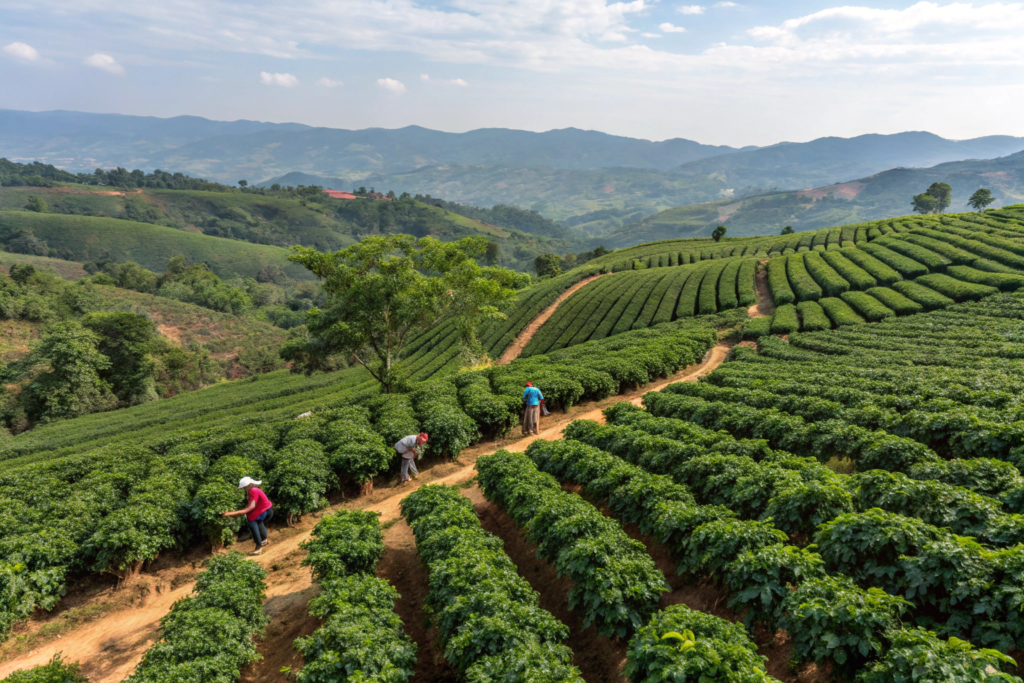
A land-owning exporter has hard assets that cannot vanish overnight. Our 10,000 acres of coffee plantations in Baoshan are a permanent, appreciating asset base. At BeanofCoffee, this land equity acts as a buffer against market downturns. A trader with no land owns nothing but a margin that can disappear with one bad trade.
Land is a guarantee that the company will exist tomorrow. It cannot be wired offshore in a panic.
How Does Plantation Ownership Protect Your Deposit and Contract?
Your deposit is a loan to the supplier. You want collateral. A trader's collateral is the coffee they intend to buy with your money. If the market spikes, they might decide not to buy it. They might default and return your deposit, leaving you unbought in a rising market. Or worse, they might just delay, hoping you cancel. A land-owning exporter has different collateral. We have the land itself, the trees, the wet mill, the dry mill. These assets have value independent of any single contract. If a crisis hits, a bank will lend against these assets. We can weather the storm and fulfill your contract. Our equity is your security. When you visit our farm, you can walk the acreage. You can touch the mill. You can see the trucks. You cannot visit a trader's "relationships." They are invisible. Invisible collateral is no collateral.
What Is the Difference Between Trader Cash Flow and Farmer Cash Flow?
A trader's cash flow is transactional. They buy a lot, they sell a lot. The margin is a thin slice. Their income stops the moment they stop trading. A farmer's cash flow is operational and diverse. We sell green coffee for export. We sell lower-grade beans to the local market. We might sell parchment to other mills. We might receive agricultural subsidies from the government for sustainable practices. This diversified revenue stream makes our cash flow more resilient. If the export market slows for a month, we still have local sales. The farm still produces. The trees do not stop growing cherries. This operational cash flow is a slower, deeper river compared to the fast, shallow stream of a trading book. For a buyer, a deep river is a safer water supply.
How Do Banking Relationships and Credit Facilities Indicate Stability?
A company's bank is its most scrutinizing partner. A bank does not lend money on a good story. It lends on audited financials, asset valuations, and cash flow history. The quality of the exporter's banking relationship is a public signal of their financial health.
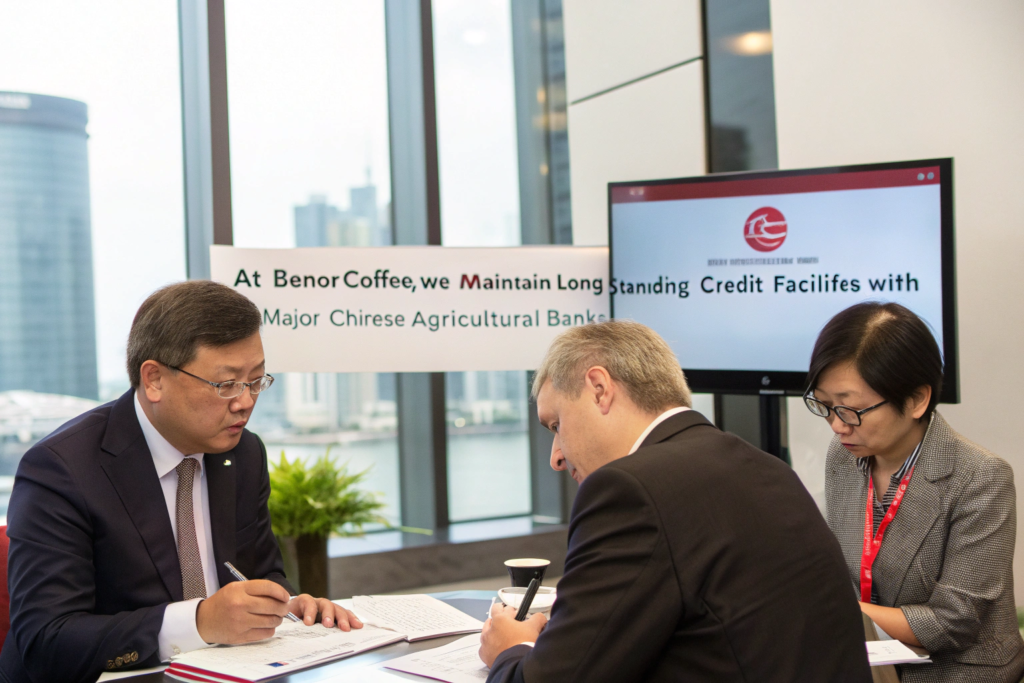
A strong banking relationship means the exporter has passed rigorous credit checks and has access to working capital lines. At BeanofCoffee, we maintain long-standing credit facilities with major Chinese agricultural banks. This external validation is something you can ask about. A supplier who cannot name their bank or who operates purely on cash deposits is a red flag.
A bank's stamp of approval is a free credit report for you.
Why Is a Working Capital Line of Credit Critical for Exporters?
Coffee exporting is a working capital-intensive business. We pay farmers and pickers in cash, often daily, during the harvest. We then wait 30, 60, or 90 days to get paid by our international buyers. This gap between cash outflow and cash inflow is the "working capital gap." A stable exporter bridges this gap with a revolving line of credit from a bank. This means they are not using your deposit to pay for the previous buyer's coffee. That is a Ponzi-like structure that collapses under stress. Our credit line from the bank pays for the harvest. Your deposit sits in a separate account, allocated to your contract. This segregation of funds is the hallmark of a professionally financed operation. Ask your supplier, "Do you have a bank credit line for working capital?" If they hesitate or give a vague answer, be very careful. They might be running a cash-flow triangle that could collapse.
How Can You Verify an Exporter's Banking Credentials?
You do not need to see their full bank statements. That is private. But you can ask for a bank reference letter. This is a standard document in international trade. It is a brief letter from the exporter's bank, on bank letterhead, stating that the company has maintained an account in good standing for a certain number of years and that their relationship is satisfactory. The bank's reputation also matters. A letter from a major, state-owned Chinese agricultural bank carries more weight than a letter from a small, unknown rural credit cooperative. You can also check if the exporter is listed on trade credit platforms or if they can provide references from other buyers. A legitimate operation will have a network of financial relationships. An opaque one will not.
How to Use Trade Credit Insurance to Mitigate Your Risk?
You can do all this homework, and still, a black swan event can hit. A global pandemic. A currency crisis. A sudden government export ban. For ultimate peace of mind, there is a product called trade credit insurance. It protects you specifically against the risk of your supplier failing to deliver after you have paid.
Trade credit insurance covers your deposit and anticipated profits if the exporter defaults. It is a relatively inexpensive policy that turns an unsecured loan into a secured one. At BeanofCoffee, we are happy to provide all the documentation an insurer requires to underwrite a policy on our shipments. A transparent exporter welcomes this scrutiny.
Insurance is the final safety net. Smart buyers use it, especially with new supplier relationships.

What Does a Trade Credit Insurance Policy Cover for Coffee Buyers?
The policy covers non-delivery. You pay a 30% deposit. The supplier goes bankrupt before shipment. The insurer pays you the deposit back. Some policies also cover loss of profits if you had to buy replacement coffee at a higher price. The cost is typically a fraction of a percent of the contract value. The insurer does their own due diligence on the exporter. They check their financial health. They assign a credit limit. If the insurer refuses to cover a particular exporter, that is the clearest possible red flag. The insurer's analysts know more than you do. Use their intelligence. The process is simple. You apply for a policy. Name your supplier. The insurer rates the supplier. You get a yes or no. You pay the premium. You sleep better.
How to Request Financial Transparency Without Offending Your Supplier?
Some buyers feel awkward asking for financial information. They think it signals distrust. Change your framing. It signals professionalism. Say, "We are putting in place a trade credit insurance policy for our key supply chains. Our insurer requires a brief bank reference and a company profile. Can you provide these?" This makes it about the insurance process, not about personal suspicion. A serious exporter will reply immediately with the documents. A fragile one will make excuses. I personally appreciate it when a buyer does this. It tells me they are a well-run business. It tells me they will be around for the long term. The relationship is built on mutual respect for risk management, not on blind faith. Blind faith is for amateurs.
What Public Records Can Reveal About a Supplier's Financial Health?
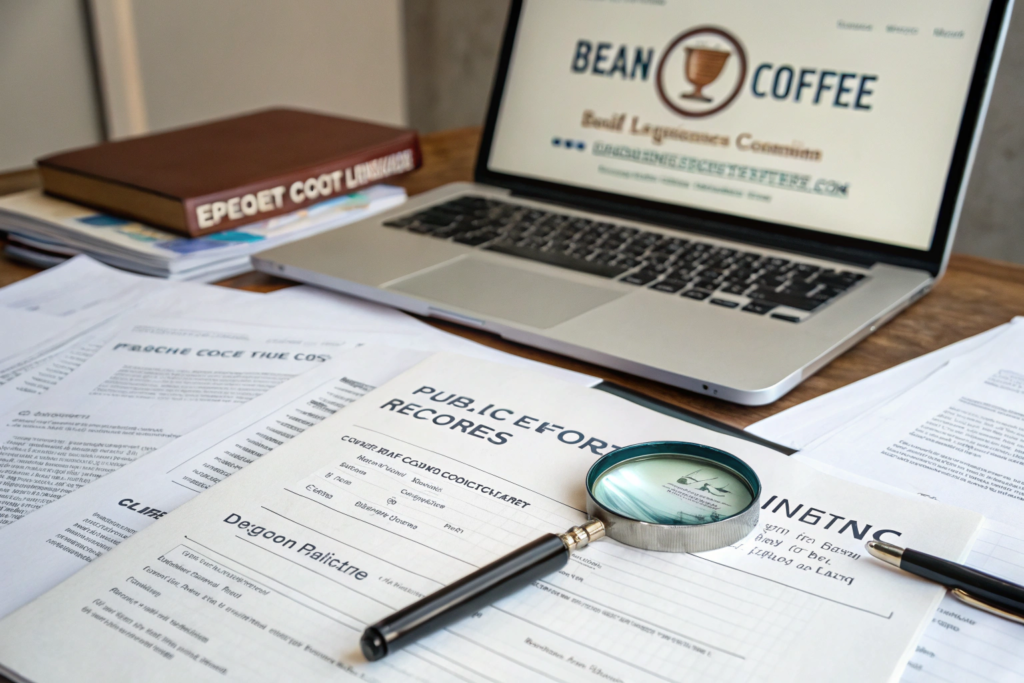
You are a detective now. The internet is your archive. A lot of financial stress leaves a public trail. Court records, trade disputes, sudden changes in company registration. You can find these clues with a few hours of searching.
Public records like export licensing databases, civil court filings, and corporate registration changes are open-source intelligence on a supplier's stability. At BeanofCoffee, our export license and corporate records are clean, current, and transparent. I encourage every buyer to do this background check.
A supplier with a messy public record is a supplier you avoid.
How to Check an Exporter's Chinese Business License and Registration?
Every legal export business in China has a business license with a unified social credit code. You can ask for a copy. Verify the company name, the registered address, and the legal representative. Then, check the company's registration status on a Chinese corporate database like Tianyancha or Qichacha. These are available in English. They show if the company is in good standing, if it has any pending lawsuits, if there are liens on its assets, and who the shareholders are. Look for red flags. A company that was registered only six months ago. A company with multiple ownership changes in a short period. A company with a registered capital that is absurdly low compared to the volume they claim to trade. Our company, BeanofCoffee, has a stable, long-term registration with a capital base that reflects our physical asset base. We exist on paper exactly as we exist in reality.
What Do Export Award Certifications Imply About Financial Track Record?
The Chinese government and industry bodies issue awards and certifications to export enterprises. "Key Export Enterprise." "Quality and Safety Model Unit." These are not just wall decorations. They require a financial audit and a track record of compliant performance. They are only given to companies that have been consistently exporting for a number of years with no major customs violations or quality scandals. They imply a level of operational stability. A company that has held an AEO, or Authorized Economic Operator, certification in China is at the top of the compliance pyramid. It means their financial systems have been vetted by customs. It is a guarantee of trustworthiness. Ask your supplier for these certifications. We display ours proudly.
Conclusion
The financial stability of your coffee exporter is not a side issue. It is the foundation of your supply chain. A great cup score means nothing if the company that promised the coffee disappears with your deposit. You protect yourself by choosing a land-owning producer over a paper trader. Real estate and trees are collateral you can see and touch. You look for strong banking relationships and working capital credit lines, which prove the company has been stress-tested by professional lenders. You use trade credit insurance as a final, low-cost safety net that also leverages the insurer's own intelligence. And you do your own detective work, checking public registrations and certifications for any cracks in the facade. This four-part assessment turns a blind wire transfer into a calculated, secured business transaction.
Do your due diligence on us. I welcome it. Contact me, Cathy Cai, at cathy@beanofcoffee.com. I will provide our bank reference letter, our business license, and our export certifications. I can arrange a video tour of our Baoshan plantations and mills so you can see the physical assets that back your contract. Let's build a supply partnership on a solid, transparent, financial foundation. No surprises. Just secure, stable coffee.