You get the call from your customs broker. "Your container is on hold. FDA wants to take a sample." Your stomach drops. The clock starts ticking. Storage fees accumulate. Your roastery is waiting. You thought green coffee was just an agricultural commodity, exempt from all the strict rules that apply to processed food. That is a dangerous myth. Green coffee is food in the eyes of the US Food and Drug Administration. It is subject to a web of regulations that can seize your container and blacklist your supplier if they are violated.
The key US food safety rules for green coffee are the FSVP rule, the Prior Notice requirement, and the strict limits on contaminants like mycotoxins and pesticide residues. At BeanofCoffee, we have built our entire processing and export protocol around compliance with these FDA standards. Your container clears because we do the work on this side of the ocean.
You cannot afford to be passive about food safety. You must know the rules and verify that your supplier lives by them. Let me decode the regulatory framework so you can import with confidence.
What Is the FSVP Rule and How Does It Apply to Coffee Importers?
FSVP stands for Foreign Supplier Verification Program. It is a massive shift in food safety law that came with the Food Safety Modernization Act, or FSMA. It flips the responsibility. The FDA no longer solely polices foreign suppliers. It makes you, the US importer, legally responsible for verifying that your foreign supplier is producing safe food.
The FSVP rule requires the US importer to conduct a hazard analysis and approve their foreign coffee supplier based on documented food safety practices. At BeanofCoffee, we provide our buyers with a complete FSVP compliance kit, including our food safety plan, third-party audit results, and certificate of analysis templates. We make it easy for you to meet your legal obligation.
If you import coffee and you do not have an FSVP for your supplier, you are out of compliance. The FDA can issue a warning letter or detain your shipments.
What Must Your FSVP for Green Coffee Include?
Your FSVP is a file. It must contain several specific documents. First, a hazard analysis. This identifies the reasonably foreseeable biological, chemical, and physical hazards in green coffee. Biological hazards include salmonella, which can survive on dry beans, and mycotoxin-producing molds. Chemical hazards include pesticide residues and heavy metals. Physical hazards include stones, metal fragments, and glass. Second, you must evaluate the supplier's performance in controlling these hazards. This means reviewing their food safety certifications, their audit history, and their testing data. Third, you must establish written procedures for verifying the supplier on an ongoing basis. This is not a one-time check. You must re-verify annually. Our export team at BeanofCoffee sends our FSVP documentation package to buyers before the first shipment. It is designed to slot directly into your compliance file.
How Does a Third-Party Audit Satisfy FSVP Requirements?
The most robust way to approve a supplier under FSVP is an on-site third-party food safety audit. The audit must be conducted by a qualified auditor using a recognized standard. The GFSI, or Global Food Safety Initiative, benchmarks several standards like SQF, BRC, and FSSC 22000. Our dry mill in Baoshan is audited against a GFSI-benchmarked standard. The auditor reviews our pest control logs, our glass and hard plastic register, our cleaning schedules, our allergen management, and our traceability system. The audit report is a detailed, independent verification of our food safety culture. When you have this report in your FSVP file, you have the strongest possible evidence of supplier verification. If the FDA knocks on your door and asks to see your FSVP, a clean third-party audit report answers most of their questions instantly.
How to Ensure Compliance with FDA Prior Notice Requirements?
The Prior Notice is a separate, distinct requirement from the FSVP. It is an electronic filing that must be submitted to the FDA before any food shipment arrives at a US port. The FDA uses it to know what is coming and to decide whether to inspect it.
The Prior Notice must be filed and confirmed by the FDA before the coffee arrives at the port of entry. The filing requires the identity of the manufacturer, the product code, and the anticipated arrival details. Our logistics team at BeanofCoffee sends the required data to your customs broker well in advance, so the Prior Notice is submitted correctly and on time.
A late or incorrect Prior Notice is one of the most common reasons for a hold. It is a paperwork error, but it has real-world costs.
What Information Is Required for a Complete Prior Notice Filing?
The form asks for very specific information. You need the FDA registration number of the foreign manufacturer. Our mill is registered with the FDA and has a unique facility registration number. You need the product code for green coffee. The FDA uses a product code builder. For unroasted, not decaffeinated coffee, the code is 21 A 99. You need the country of origin, which is China. You need the anticipated port of arrival, the date of arrival, and the carrier and vessel name. You need the identity of the US recipient and the importer of record. All of this must match the other shipping documents exactly. A misspelled company name or a wrong product code triggers a mismatch in the FDA's system. The shipment gets flagged for manual review. Our practice is to send a Prior Notice data sheet to the buyer and broker a full week before the vessel departs. You have time to review and correct.
What Are the Consequences of a Prior Notice Violation?
If the Prior Notice is not filed, or if it is filed with incorrect information, the shipment is subject to refusal of admission. It sits at the port under "FDA hold." The coffee cannot be moved. You pay demurrage charges to the shipping line and storage charges to the port. The FDA may inspect the shipment physically, taking samples and sending them to a lab. This can take weeks. If the violation is deemed serious, the coffee can be refused entry entirely and must be re-exported or destroyed. The cost of destruction is your cost. The "simple" paperwork error can turn a profitable container of coffee into a total financial loss. This is why we sweat the details. This is why we provide the data in a clean, pre-formatted template. You copy and paste. No typos. No delays.
What Are the Acceptable Limits for Mycotoxins and Pesticides in the US?
The FDA does not have a specific regulatory limit for ochratoxin A in green coffee, unlike the European Union which has a strict 5 parts per billion limit. This does not mean the FDA does not care. It means they act under the general adulteration provision. If a food contains a poisonous substance at a level that may render it injurious to health, it is adulterated and illegal.
The FDA enforces pesticide tolerances strictly and can detain any coffee with residues above the allowed limits. For mycotoxins, they use guidance levels and risk-based sampling. At BeanofCoffee, we test every export lot for ochratoxin A and a panel of over 200 pesticides. We ship only coffee that is clean by both US and EU standards, giving you a margin of safety.
Do not assume the FDA is lenient. They are data-driven and their sampling is targeted.
How Does the FDA Monitor Pesticide Residues in Imported Coffee?
The FDA operates a pesticide residue monitoring program. They sample imported foods, including coffee, and test for a list of registered pesticides. If a residue is found above the established tolerance, or if a residue is found for a pesticide not approved for use on coffee, the shipment is in violation. It will be detained. The tolerance for many pesticides is very low, often 0.01 parts per million, which is effectively zero. The issue in origin countries is often misuse or contamination from neighboring crops. Our agronomy team in Baoshan strictly controls which crop protection products are used. We maintain a detailed spray log. We do not use any substance that is not approved for export markets. Our third-party lab testing before shipment is the final verification. We share this lab report with you. It is your shield against an FDA detention.
What Is the Difference Between FDA and EU Standards for Ochratoxin A?
The EU standard for ochratoxin A in roasted coffee is 5 parts per billion. For green coffee, it is also tightly controlled. The FDA has no numerical standard but has issued guidance levels and detains shipments that test high. The practical reality is that any lot that meets the EU standard also meets FDA expectations. We design our quality control around the stricter EU standard. This means our internal limit for ochratoxin A is 3 parts per billion, giving a buffer below the 5 ppb line. We achieve this through rapid drying, which denies the mold time to grow, and through optical sorting, which removes any bean showing UV fluorescence, a marker for potential mold. When you buy from us, you are buying a lot that has been tested to the highest international standard, not just the minimum.
How to Build a Robust Food Safety Documentation Package?
The ultimate defense against a regulatory problem is a thick file of well-organized documents. When the FDA asks a question, you answer with paper. You answer immediately, not next week. A scattered, slow response invites deeper scrutiny.
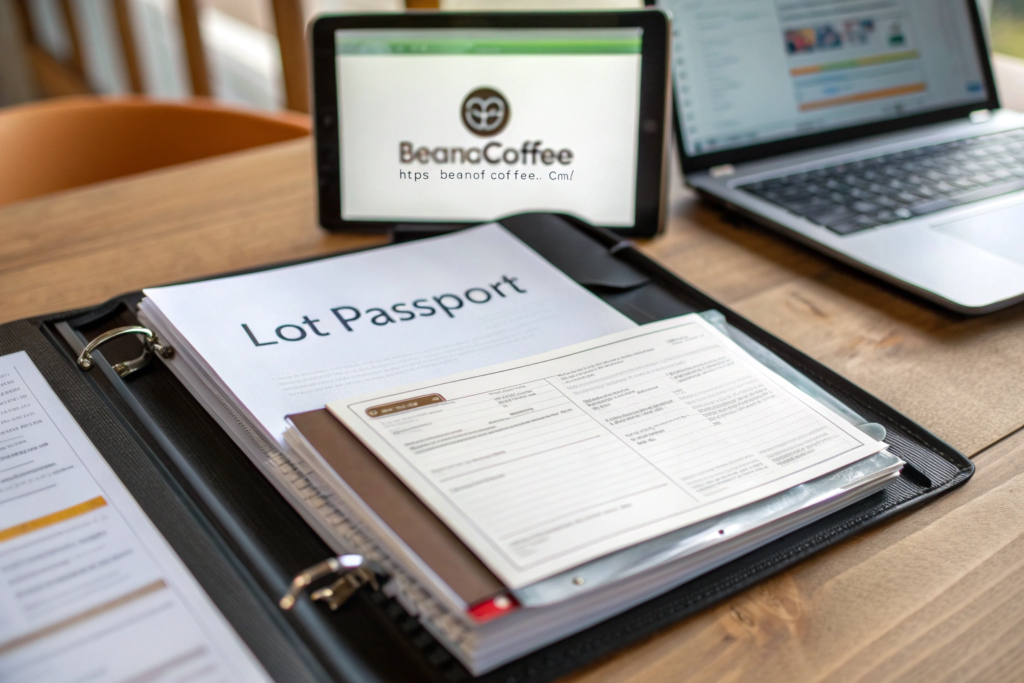
A robust documentation package includes the supplier's food safety plan, third-party audit certificate, certificate of analysis for the specific lot, and full traceability records. At BeanofCoffee, we compile this into a digital "Lot Passport" that is shared with the buyer before the container sails. It is your pre-assembled defense file.
Paperwork is not the enemy. It is your product's legal body armor.
What Certificates Should Accompany Every Green Coffee Shipment?
Every container should be accompanied by a standard set of documents. The commercial invoice and packing list are for customs valuation. The Bill of Lading is the transport contract. But for food safety, you also need the phytosanitary certificate, issued by the Chinese customs authority, certifying the coffee is free from quarantine pests. You need the Certificate of Analysis, or COA, from a third-party lab, showing the results for moisture, water activity, ochratoxin A, and pesticide residues. You need a copy of the supplier's valid food safety certification, such as ISO 22000 or a GFSI-benchmarked certificate. You need a signed letter of guarantee from the supplier, affirming the coffee is fit for human consumption and meets FDA requirements. This package of documents tells a complete, verifiable story of a safe product. Keep it on file for at least two years after you receive the coffee. The FDA can ask for it.
How to Use Digital Traceability for Rapid Recall Readiness?
If a problem is ever found, speed is everything. A recall is a race against public health damage and brand reputation loss. You must be able to trace a specific bag of roasted coffee back to a specific lot of green coffee, back to a specific processing batch at our mill, back to a specific harvest block on our farm. This is full chain traceability. Our digital lot passport system assigns a unique code to every export lot. That code is linked to harvest records, processing logs, drying data, and the final COA. When you scan the QR code on the pallet label, you see the entire history. If a recall ever happens, you can isolate the affected lot in minutes. You do not need to recall your entire inventory. This precision saves your business. It is a level of traceability that the FDA expects from modern, responsible food businesses. We provide the digital infrastructure. You connect it to your own batch logs. The chain is complete.
Conclusion
US food safety compliance is not a barrier to be resented. It is a discipline that separates professional suppliers from risky ones. The FSVP rule makes you legally responsible for your foreign supplier's safety performance, which means you must choose a supplier with auditable, documented systems. The Prior Notice requirement demands accurate, timely data, or your container will sit on hold. The limits on pesticides and mycotoxins, while structured differently from the EU's, are enforced through targeted sampling and can lead to detention and destruction. The only sane response is to build a robust documentation package, anchored by a third-party audit and a digital traceability system, that answers every FDA question with a clean, verifiable data point. This transforms a regulatory threat into a competitive advantage.
Let us make your compliance effortless. Contact me, Cathy Cai, at cathy@beanofcoffee.com. I will send you our complete FSVP compliance kit, including our food safety plan, our GFSI audit certificate, and a sample lot passport for our current Baoshan Arabica shipment. You focus on roasting great coffee. We will handle the regulatory rigor so your container glides through US customs, every single time.