You see the market data. Organic coffee sales are climbing. Your wholesale accounts are asking for it. The shelves in the natural food stores have a dedicated organic section. You want a piece of that margin. So, you type "organic coffee supplier China" into a search bar. A dozen offers pop up. "Organic Yunnan Arabica, best price." But you have heard the stories. Fake certificates. Lax inspections. You wonder if organic certification from China is even real. It is a fair question. I have been farming in Baoshan for years. I have seen the organic transition from the inside. It is difficult. It is expensive. And it is absolutely real when done by a committed producer.
Sourcing genuine organic certified coffee from Yunnan requires verifying a valid certificate from a USDA-accredited certifier, tracing the product back to a specific farm, and auditing the organic system plan. At BeanofCoffee, we hold organic certification on a dedicated portion of our Baoshan estate. We provide full chain of custody documentation so your organic claim is legally defensible and marketable.
You are not just buying a label. You are buying a farming system that has been audited for three years before the first organic bean was even harvested. Let me walk you through the reality of organic certification in Yunnan.
What Certifications Prove a Yunnan Coffee Is Genuinely Organic?
A label on a bag is just ink. A PDF of a certificate can be photoshopped in five minutes. You need to know what a real certificate looks like and which logos carry legal weight in the United States. Not all organic standards are equal, and not all certifiers are legitimate.
The gold standard for the US market is the USDA Organic seal, issued by a certifier accredited by the USDA National Organic Program. For the EU market, it is the EU Organic leaf logo. At BeanofCoffee, our organic lots are certified by a USDA-accredited third-party certifier. The certificate is current, valid, and verifiable on the certifier's public database.
A genuine organic certificate is a public document. You can check it yourself, and you should.
How to Verify a USDA Organic Certificate for a Chinese Farm?
The USDA does not directly inspect farms in China. It accredits independent third-party organizations, called certifying agents, to do the inspections and issue certificates. Some of these certifiers are US-based. Others are based in China or elsewhere but have USDA accreditation. The key is that the certifier must be on the USDA's official list of accredited certifiers. Ask the supplier for a copy of the organic certificate. Look for the name of the certifying agent. Then, go to the USDA Organic Integrity Database online. Search for the certifier's name. Confirm they are accredited. Search for the farm or exporter's name. Confirm the certificate is valid and the scope includes "coffee." Check the expiration date. A certificate is an annual document. It can be suspended for non-compliance. We provide our certificate to buyers proactively. Our certifier is listed. Our farm is in the database. You do not need to take my word for it. The USDA database is the ultimate truth.
What Is the Difference Between USDA, EU, and Chinese Organic Standards?
The three major organic standards have different rules. The USDA standard is the baseline for the US market. The EU organic regulation is broadly similar but has some differences in allowed substances and contamination thresholds. The Chinese organic standard, called the China Organic Product Certification, is also recognized in some markets. However, for a US roaster, the USDA seal is the one that matters. It is the only one that allows you to sell the final roasted coffee as "USDA Organic" in your domestic market. If a Chinese supplier only holds the China organic standard, you cannot use the USDA seal on your bag. You would need to import it and sell it without the organic claim, or apply for your own certification as an importer. That is complex and costly. We pursued dual certification, USDA and EU, precisely to eliminate this problem for our buyers. You receive a coffee with the certificate you need for your target market.
How Are Organic Farms in Yunnan Audited for Compliance?
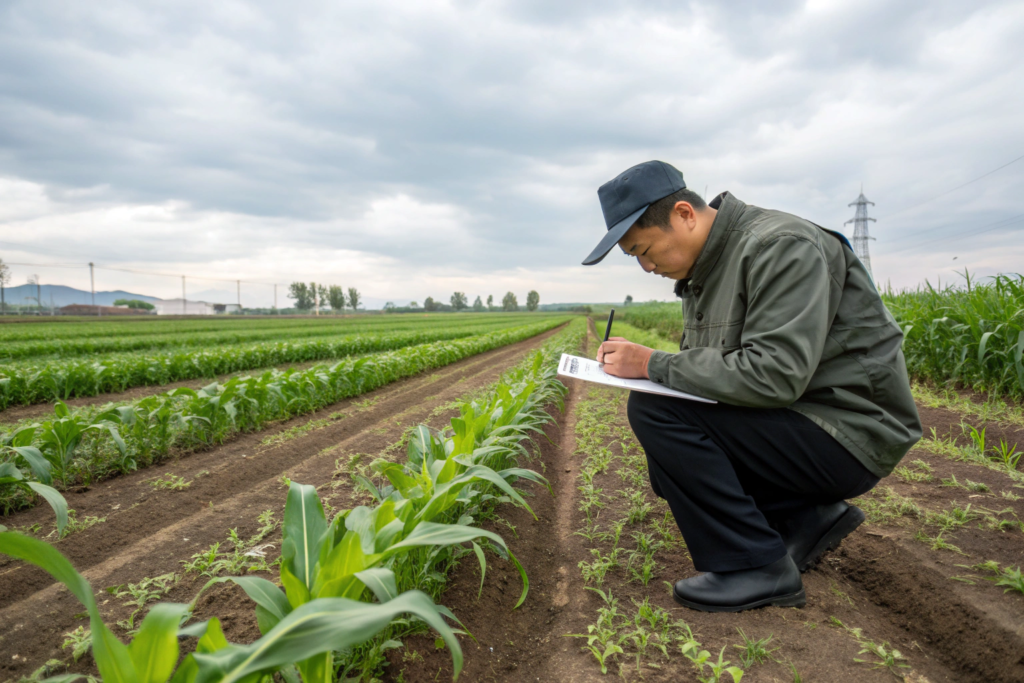
Organic certification is not a paper transaction. It is a physical audit. An inspector visits the farm. They walk the fields. They check the storage sheds. They review purchase records. They take soil and leaf samples. This is an annual ritual, and it is rigorous.
An organic audit covers the entire farming system from seed to export. The inspector verifies that no prohibited synthetic pesticides, herbicides, or fertilizers have been used for at least three years. At BeanofCoffee, our organic blocks are physically separated from our conventional blocks. The audit trail is clean and complete because we have built the system from the ground up.
You cannot cheat an audit that tests the soil. The dirt does not lie.
What Does the Annual On-Site Inspection Cover?
The inspector arrives unannounced, or with short notice. They review our field maps to confirm the organic blocks are correctly identified and isolated. Buffer zones between organic and conventional fields are measured. A buffer zone must be wide enough to prevent spray drift or water runoff contamination. They inspect the compost production area to verify the inputs are organic. They check the pest control logs. They interview workers about their practices. They trace a sample of harvested coffee from the field to the processing mill to the storage warehouse. This is a mass balance audit. The inspector calculates the expected yield based on the number of trees and compares it to the amount of organic coffee sold. A discrepancy suggests non-organic coffee is being mixed in. The inspection takes a full day, sometimes two. It is thorough. It is serious. The report goes to the certifier's review committee. They decide whether to issue the certificate, issue a non-compliance notice, or suspend the certification.
How Is the Integrity of the Organic Supply Chain Maintained?
The organic standard covers not just the farm but the entire chain of custody. The wet mill that processes organic coffee must be certified organic. Our dry mill that hulls, sorts, and bags the coffee must be certified organic. The warehouse where the coffee is stored must be certified organic. At each step, there is a documented organic handling plan. Before we process an organic lot, we must run a "purge" of the equipment with conventional coffee to flush out any non-organic material. The organic coffee is then processed, bagged in clean, labeled organic bags, and stored in a segregated area of the warehouse. Every movement is logged. The organic export lot receives a unique transaction certificate. This certificate accompanies the shipment. It is the document that allows your US customs broker to clear the coffee as organic. Without this transaction certificate, the coffee is just conventional coffee in the eyes of the USDA. We provide this certificate with every organic shipment.
What Are the Practical Challenges of Organic Coffee Production in Yunnan?
I want to be honest with you. Organic farming in Yunnan is hard. The yields are lower. The labor costs are higher. The risk of disease is greater. There is a reason why organic coffee commands a premium price. It is not a marketing markup. It is the real cost of a more difficult production system.
The main challenges are weed control, pest management, and nutrient supply without synthetic chemicals. At BeanofCoffee, our organic program requires a dedicated workforce for manual weeding, a composting operation that turns coffee pulp and shade tree leaves into fertilizer, and a biological pest control program using natural predators.
When you buy organic coffee, you are paying for this human labor and biological complexity.
How Is Pest and Disease Pressure Managed Without Synthetic Chemicals?
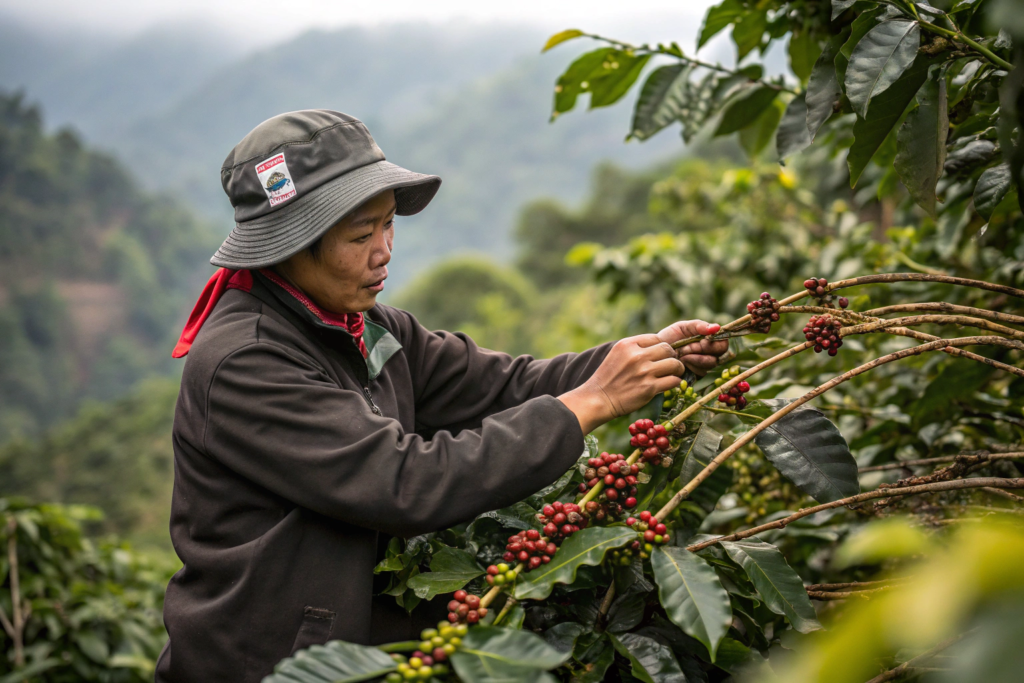
Coffee leaf rust and coffee berry borer are the two great enemies. In a conventional system, a targeted fungicide or insecticide can be applied. In an organic system, those tools are removed. We use a combination of cultural and biological controls. We ensure the organic blocks have good shade cover. The shade reduces the humidity swings that favor rust. We prune the coffee trees to an open architecture that allows air to flow through, drying the leaves naturally. For the berry borer, we use traps baited with an ethanol-methanol lure that attracts and captures the adult beetles. We release the natural enemy, a parasitic wasp called Phymastichus coffea, which lays its eggs inside the borer and kills it. These methods work. But they require constant monitoring. A conventional farmer can spray on a schedule. An organic farmer must walk the farm every day, looking for the first signs of trouble. This is labor-intensive. It is a labor of vigilance.
How Is Soil Fertility Sustained Over Multiple Organic Harvests?
Coffee is a hungry crop. It pulls nitrogen, potassium, and phosphorus from the soil with every harvest. A conventional system replaces these with bagged synthetic fertilizers. An organic system must generate its own fertility. We do this through a large-scale composting program. The pulp from our washed coffee processing is rich in organic matter. We mix it with shade tree leaves, pruned branches, and animal manure from a neighboring organic cattle operation. The compost piles are turned and monitored for temperature. After three months, the compost is ready. It is a dark, rich, earthy material, teeming with microbial life. We apply it to the base of the coffee trees before the rainy season. This compost feeds the soil, not just the plant. It builds soil organic matter, which holds water and releases nutrients slowly. This is a long-term strategy. It takes years to build the soil to a high level of natural fertility. But once built, it is a resilient system that produces a distinctive, complex cup.
How to Integrate an Organic Yunnan Coffee into Your Product Line?
You have sourced a genuine organic lot. Now you need to sell it. The organic claim on your bag is a legal declaration. The USDA regulates how you use the word "organic" on your packaging. Your roastery itself may need to be certified, depending on how you sell the coffee.
To label a bag of roasted coffee as "USDA Organic," your roastery must also be certified organic. However, there are exemptions for very small operations. At BeanofCoffee, we can guide you to the correct certification path and provide all the upstream documentation your certifier will require.
The chain of organic integrity must be unbroken from our farm to your customer's cup.
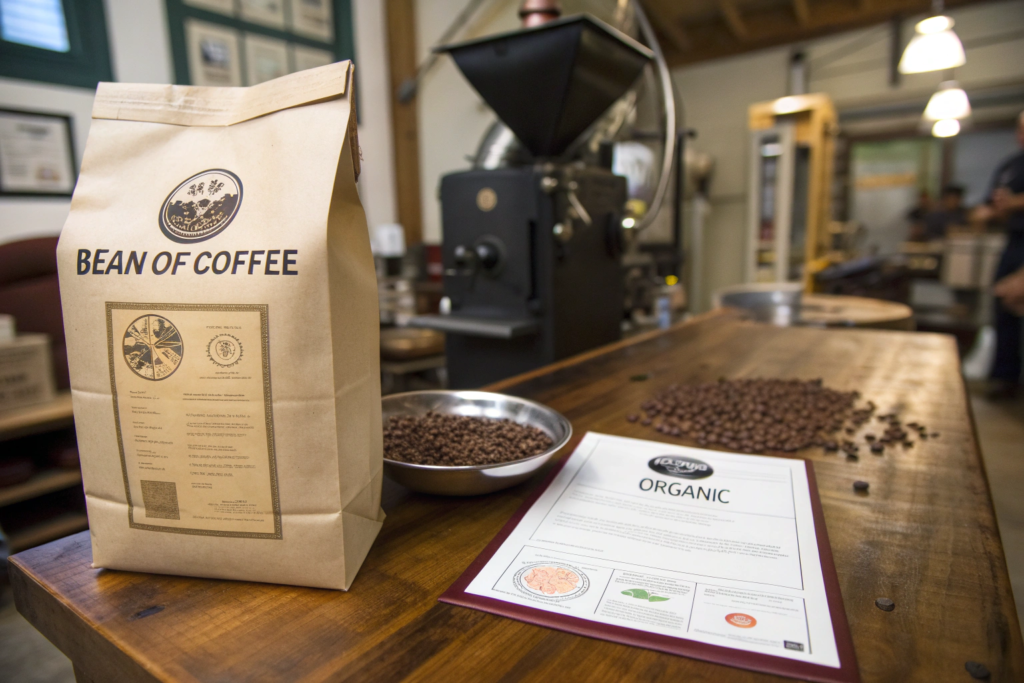
Does Your Roastery Need Organic Certification to Sell Organic Coffee?
Yes, in most cases. The USDA National Organic Program requires any operation that processes, packages, or labels a product as organic to be certified. Roasting is processing. If you buy our organic green coffee, roast it, and sell it with the USDA Organic seal, your roastery must be certified. The certification process involves an application, an organic system plan for your facility, and an on-site inspection. The inspector will check that you have procedures to prevent commingling of organic and conventional beans, that your roasting equipment is properly purged, and that your record-keeping is complete. There is an exemption for operations that sell less than $5,000 of organic products per year. But for any serious brand, certification is the path. We can provide a letter of certification for our farm and our organic transaction certificate. These are the key upstream documents your certifier will need to see.
How to Market the Story of Organic Yunnan Coffee Authentically?
Do not just put "Certified Organic" on the bag and stop. That is a commodity claim. You have a deeper story. Tell the story of the transition. Tell your customers that this coffee comes from a farm in Baoshan that spent three years purging the soil of chemicals before the first organic harvest. Tell them about the compost made from coffee pulp and shade leaves. Tell them about the workers who hand-weed the terraces. This is a story of patience and ecological intelligence. It connects the organic claim to a real place and real people. Our media package for organic buyers includes photos of the compost operation, the insect traps, and the certification audit. You can use these to build an authentic narrative. The consumer who buys organic is hungry for this level of transparency. Give it to them. They will reward you with loyalty.
Conclusion
Sourcing organic certified coffee from Yunnan is entirely feasible, but it requires diligence. You must verify the organic certificate against the USDA database to ensure it is current and issued by an accredited certifier. You must understand that the organic system is audited annually, on-site, by an inspector who checks the soil, the inputs, and the mass balance. You must respect the immense practical challenge of growing coffee without synthetic chemicals, a challenge met by composting, manual weeding, and biological pest control. And you must complete the chain of organic integrity by certifying your own roastery and marketing the authentic story of the farming system behind the bean. This is not a simple transaction. It is a partnership built on a shared commitment to a verified, ecological standard.
Let's bring an organic Yunnan coffee to your customers. Contact me, Cathy Cai, at cathy@beanofcoffee.com. I will send you our current organic certificate, a sample of our organic Baoshan Arabica, and the full organic documentation package. We can schedule a call to discuss the logistics of organic shipment and the steps for your roastery certification. Organic is not just a label. It is a promise. Let's make that promise together.