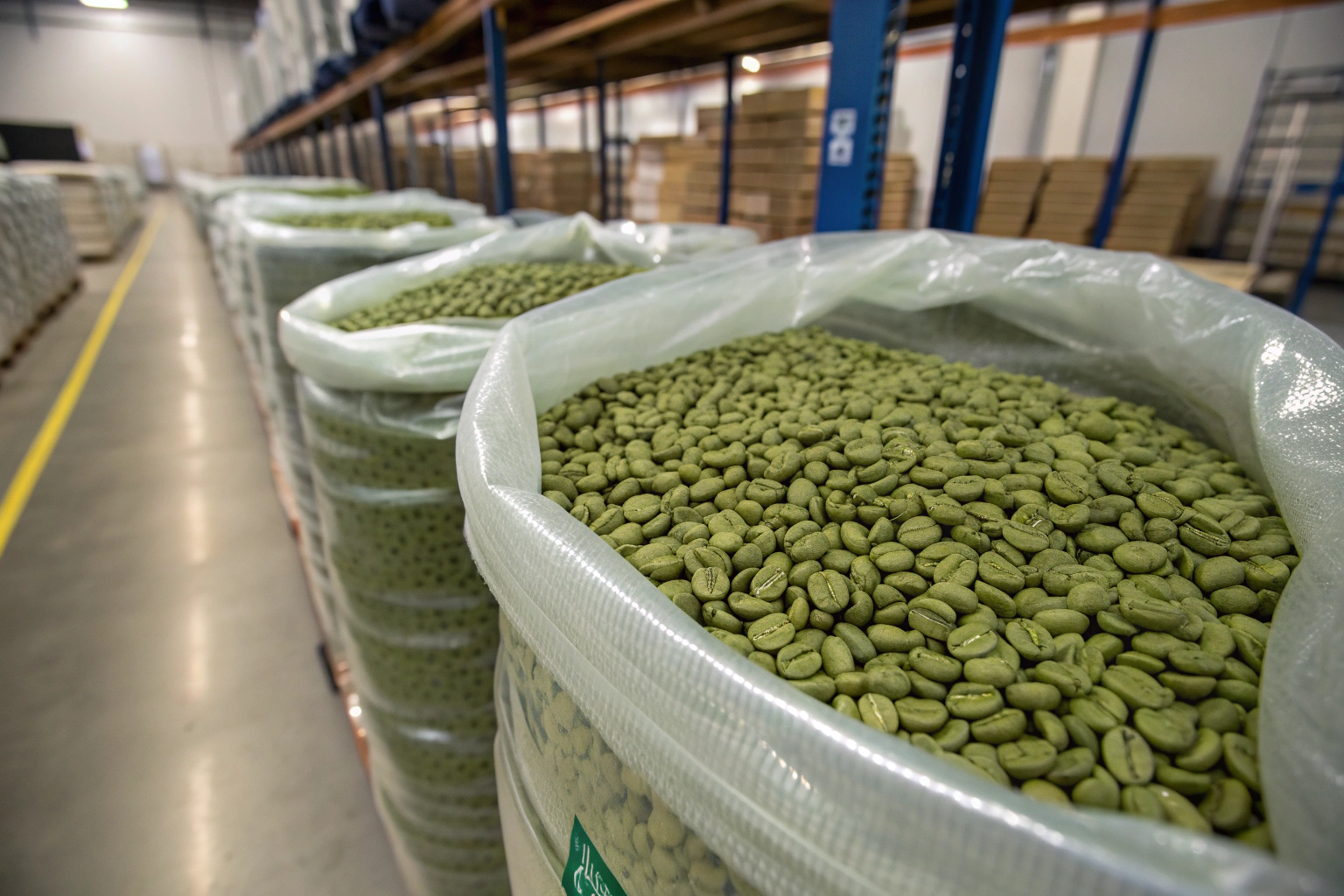
You see the price tag for a refrigerated container. It is double, sometimes triple, the cost of a standard dry container. A worried voice in your head might whisper, "My coffee is precious. It's a specialty product. Shouldn't I protect it with cold chain logistics?" You have read about chocolate and wine being shipped in reefers. You wonder if coffee should be the same. Stop. Take a breath. I have shipped tens of thousands of tons of green coffee from our Baoshan farms to ports all over the world. I can tell you with absolute certainty that cold chain for green coffee is, in almost every case, an unnecessary expense that can actually introduce more risk than it removes.
Green coffee does not need cold chain logistics because it is a shelf-stable, low-moisture seed. A properly dried, well-packaged, and correctly stowed container protects the coffee perfectly. At BeanofCoffee, we use GrainPro liners inside standard dry containers to create a stable microclimate. This delivers your coffee in peak condition at a fraction of the cost of a reefer.
Cold chain is a solution to a problem green coffee does not have. Let me explain the biology, the physics, and the economics of why your coffee travels better without the chill.
What Is the Optimal Moisture Content for Shipping Green Coffee Safely?
The entire argument against cold chain starts with water. Green coffee is not a wet product. It is a dried seed. At the moment it leaves our dry mill, its moisture content is precisely controlled. This is the single most important number for the safety of its journey.
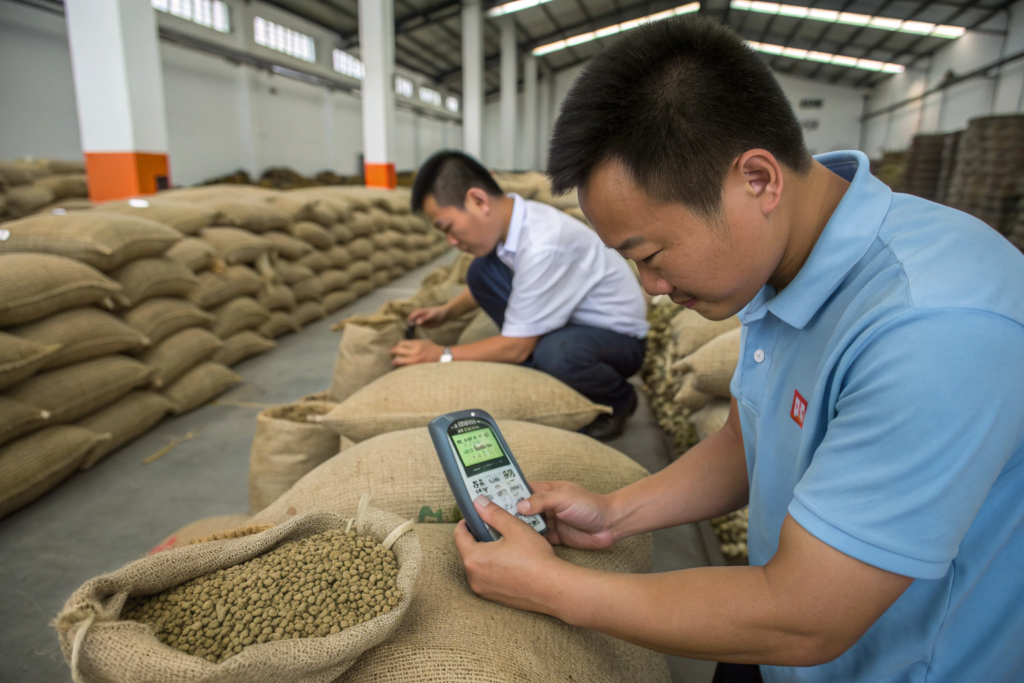
The optimal moisture content for shipping green coffee is between 10.5% and 12%. At this level, the water activity is too low for mold to grow and the bean is not brittle enough to shatter. Our export team at BeanofCoffee measures the moisture of every lot with a calibrated meter before bagging. If the number is within this range, the coffee is biologically stable for months without refrigeration.
Water is the enemy. We have already defeated the enemy before the coffee leaves the mill.
How Does Water Activity Predict Mold Growth Without Refrigeration?
Moisture content tells you how much water is in the bean. Water activity tells you how much of that water is free for microbes to use. It is the more precise measurement. The threshold for mold growth is a water activity of 0.70. Aspergillus, the mold that produces ochratoxin, needs at least 0.78 to really thrive. Our export-grade green coffee consistently tests at a water activity of 0.50 to 0.55. At this level, the water molecules are chemically bound. They are not available for bacteria or fungi to drink. The bean is a desert for microbes. A desert does not need air conditioning. If your coffee arrives with mold, it is not because the container lacked a refrigerator. It is because the coffee was dried improperly at origin. The fault is in the processing, not the logistics. This is why you must trust your supplier's drying protocols.
Why Does Over-Drying Pose a Different Set of Risks?
You might think, "If 11% moisture is safe, then 8% moisture must be even safer." Wrong. Over-dried coffee is physically fragile. The cellulose structure becomes brittle. When the container hits rough seas, the beans vibrate. Over-dried beans crack and shatter. You end up with a bag full of broken pieces and a lot of wasted weight. Also, over-dried coffee loses its aromatic volatile compounds faster. The cup tastes flat and woody, even if it is technically "fresh." The goal is not zero moisture. The goal is equilibrium. A bean at 11% moisture is in harmony with its environment. It is elastic enough to handle physical shocks and biologically inert enough to resist mold. At BeanofCoffee, our drying protocol uses a combination of sun-drying on raised beds and a final pass in a mechanical Guardiola dryer. This gives us the precision to hit the 11% sweet spot consistently.
How Do GrainPro Liners Replace the Need for Temperature Control?
The standard dry container is a metal box. It is not climate-controlled. The temperature inside can swing from 15 degrees Celsius at night to 40 degrees during the day as the ship crosses the tropics. This sounds alarming. But you must think about what is happening inside the bag, not just inside the box.
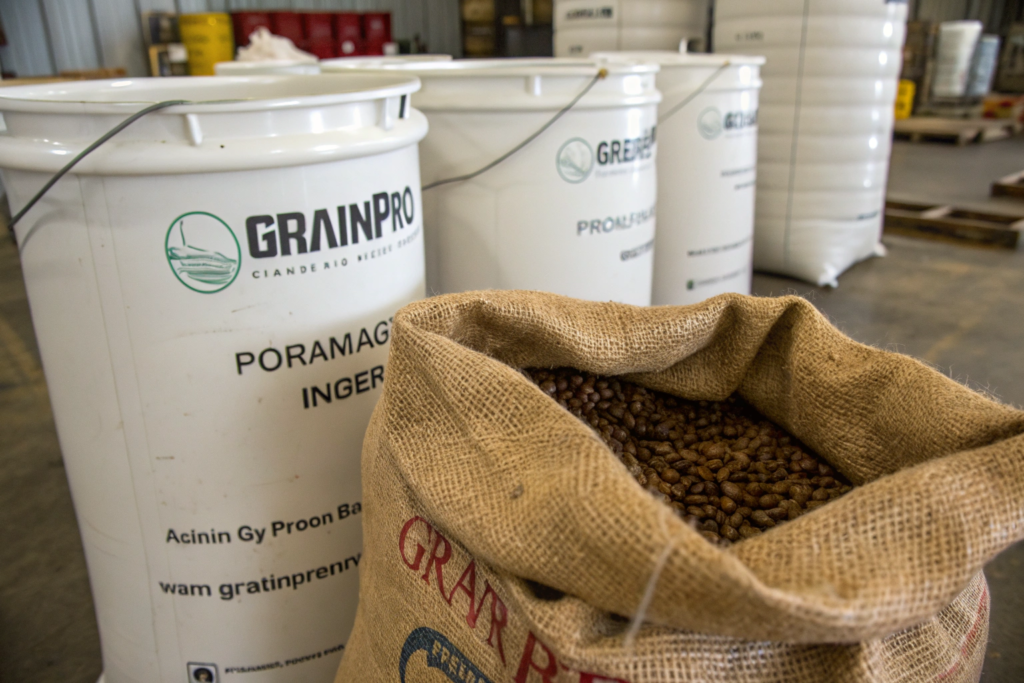
GrainPro liners are hermetically sealed bags placed inside the jute sack. They create an impermeable barrier between the coffee and the container's atmosphere. Once sealed, the internal humidity of the GrainPro bag stays constant, regardless of the temperature swings outside. This technology, which we use on every export lot at BeanofCoffee, makes refrigeration redundant for microbial control.
The liner is a personal climate system for the beans. It costs pennies per bag compared to the thousands of dollars a reefer costs.
What Is the Science Behind Hermetic Sealing for Coffee?
A hermetic seal is a physical barrier. Air does not pass through. When we fill a GrainPro bag with coffee at 11% moisture and seal it, the interior becomes a closed ecosystem. The coffee beans respire at a microscopic level. They consume a tiny amount of oxygen and release a tiny amount of CO2. Within a few days, the oxygen level inside the bag drops. The CO2 level rises. This modified atmosphere naturally inhibits insect eggs from hatching and mold spores from activating. It is a passive preservation system. The temperature outside the bag can fluctuate wildly. The air inside the bag might heat up and cool down, but the dew point inside the bag remains low because there is very little moisture vapor. No condensation forms on the beans. No "container sweat" reaches the seed. The hermetic seal is a more elegant and cheaper solution than trying to air-condition the entire vast, leaky container.
How Do Liners Protect Against the "Container Sweat" Phenomenon?
Container sweat happens when a container loaded in a warm, humid port travels to a colder climate. The warm air inside the container holds moisture. As the container cools, the relative humidity rises. Eventually, the water vapor condenses into liquid water on the coldest surfaces, usually the container ceiling and walls. This "container rain" drips down onto the top layer of cargo. If the coffee is in bare jute bags, those top bags get wet. Mold starts within hours. A GrainPro liner stops this completely. The water drips onto the plastic liner. It pools there or runs down the sides. The coffee inside is untouched. When the container doors open at your warehouse, you might see a small puddle on top of a pallet's plastic wrapping. That is the container sweat. The liner did its job. The coffee is dry and safe. Without the liner, that puddle would be inside the bag, ruining the beans.
What Are the Risks of Using Refrigerated Containers for Dry Coffee?
Refrigeration is not neutral. It is an active, mechanical system that can fail. And when it fails on a load of coffee, the failure mode is often worse than if you had just used a dry container from the start.
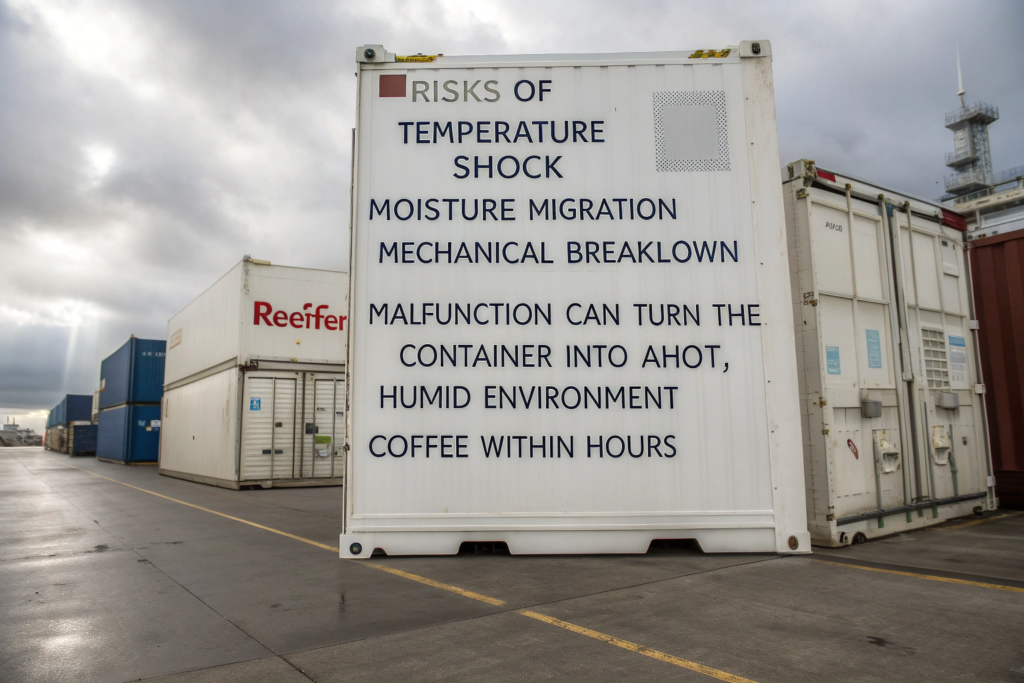
Refrigerated containers introduce risks of temperature shock, moisture migration, and mechanical breakdown. A reefer malfunction can create a sauna inside the box, cooking and molding your coffee in hours. At BeanofCoffee, I advise against reefers because a passive, well-packaged dry container is a more robust and predictable system for the ocean journey.
You are adding a complex machine to a simple, stable product. The machine becomes the weakest link.
What Happens When a Reefer Unit Malfunctions Mid-Voyage?
Reefer units run on electricity. They are powered by the ship's generators or by a genset attached to the chassis. They have compressors, fans, and control boards. They break. When a reefer fails, it often fails in a "heat" mode. The refrigeration stops, but the fans keep blowing. The container is a sealed metal box, often stowed below deck with limited ventilation. The residual heat from the motor and the ambient heat from the engine room can push the internal temperature to 50 or 60 degrees Celsius. Your coffee is now baking in a hot, humid box. The beans sweat internally. The moisture migrates from the center of the bean to the surface. Mold blooms. In a dry container, the coffee simply experiences a warm day. It equalizes and moves on. In a broken reefer, the coffee experiences a catastrophic thermal event. The risk of a total loss is much higher.
How Can Condensation Inside a Reefer Damage the Packaging?
Reefers control temperature, but they also interact with humidity. The cooling coils condense moisture from the air. In a properly designed cold chain for high-moisture produce like grapes or fish, this is managed. But coffee is dry. Its packaging is designed for a dry environment. The cardboard boxes, the jute sacks, the pallet labels. When these sit in a high-humidity, cool environment, they absorb moisture. The cardboard softens. The labels peel off. The jute becomes damp and transfers that dampness to the outer beans. When the container is opened at your warm, humid warehouse, the cold coffee bags attract condensation like a cold soda can on a summer day. Your bags are immediately wet on the outside. This is a handling and quality nightmare. A dry container with liners avoids all of this condensation drama.
How to Ensure Temperature Stability Using Passive Methods?
You want to protect the coffee from extreme heat. That is a valid concern. A container sitting on the top deck of a ship crossing the equator under a blazing sun can get very hot. Long exposure to high heat, even without moisture, can accelerate the aging of the coffee and mute its acidity. But the solution is not a powered fridge. The solution is smarter stowage.
Passive methods like below-deck stowage, thermal blankets, and vented containers provide thermal protection without the risks of mechanical cooling. We instruct our freight forwarders at BeanofCoffee to book our containers for below-deck stowage, using the ship's own structure as a thermal shield. This keeps the coffee in a cooler, more stable environment throughout the voyage.
You work with physics, not against it. Physics is reliable. A compressor is not.
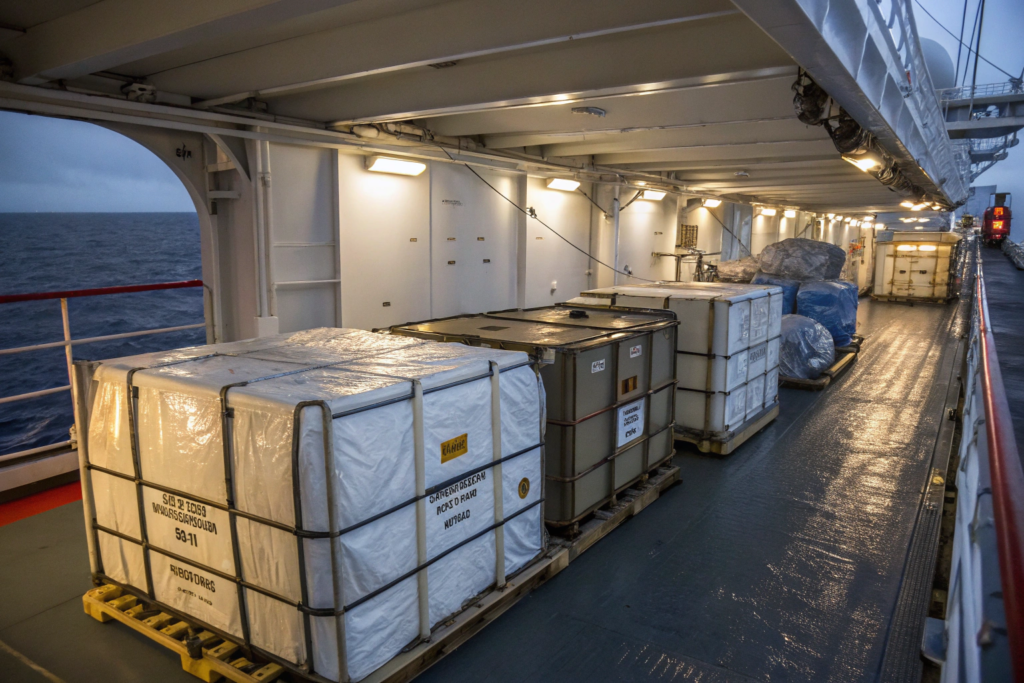
What Is Below-Deck Stowage and Why Is It Critical for Coffee?
The deck of a container ship is a harsh place. Direct sun. Salt spray. Wind. The containers on the top layer can reach internal temperatures of 60 degrees Celsius or more. Below deck, it is a different world. The containers are protected from the sun by the steel decks above them. The ambient temperature is much more stable. It typically stays within 5 to 10 degrees of the sea water temperature. You want your coffee below deck, surrounded by other containers, in the dark, cool belly of the ship. This is a simple booking instruction. It might cost a small premium. It is worth every cent. It prevents thermal aging. Your coffee arrives as fresh as it left the mill. This is a standard request we make for all our specialty Arabica shipments.
How Do Ventilated Containers and Thermal Blankets Help?
A standard dry container has small ventilation holes. These allow some air exchange to prevent the buildup of heat and gas. This natural convection is usually enough. For routes that cross extremely hot zones, we sometimes use thermal container blankets. These are reflective, insulated covers that are attached to the inside ceiling and walls of the container. They reflect radiant heat back out. They can reduce the peak internal temperature by 5 to 8 degrees Celsius. They are passive. They have no moving parts. They cannot break. They add a small cost, far less than a reefer. This is the intelligent, proportionate response to the concern about heat. You layer passive defenses. GrainPro for humidity. Below-deck for ambient temperature. A thermal blanket for radiant heat. The coffee travels in a cocoon of protection, without a single electrical plug.
Conclusion
Green coffee is not ice cream. It is not a fresh fish. It is a dried, stable seed that spent millions of years evolving to survive in a tropical environment. The industry's standard shipping protocol, based on dry containers, GrainPro liners, and passive thermal management, is not a compromise. It is the optimal system. It is built on the biological reality of the bean. A bean at 11% moisture, sealed in a hermetic bag, is a fortress against mold. A dry container stowed below deck is a cool, dark cave. This combination is safer, cheaper, and more reliable than a refrigerated container that can turn into a humid oven if a generator fails. Cold chain logistics solves a problem for high-moisture, high-respiration products. Green coffee is neither.
Protect your beans the smart way, not the expensive way. Let's discuss the stowage plan for your next shipment. Reach out to me, Cathy Cai, at cathy@beanofcoffee.com. I will walk you through our packaging protocol, our moisture testing data, and the specific booking instructions we use to ensure your coffee arrives in perfect condition without wasting a dollar on unnecessary refrigeration. Your coffee deserves a smooth, cool voyage, not a risky ride in a cold box.