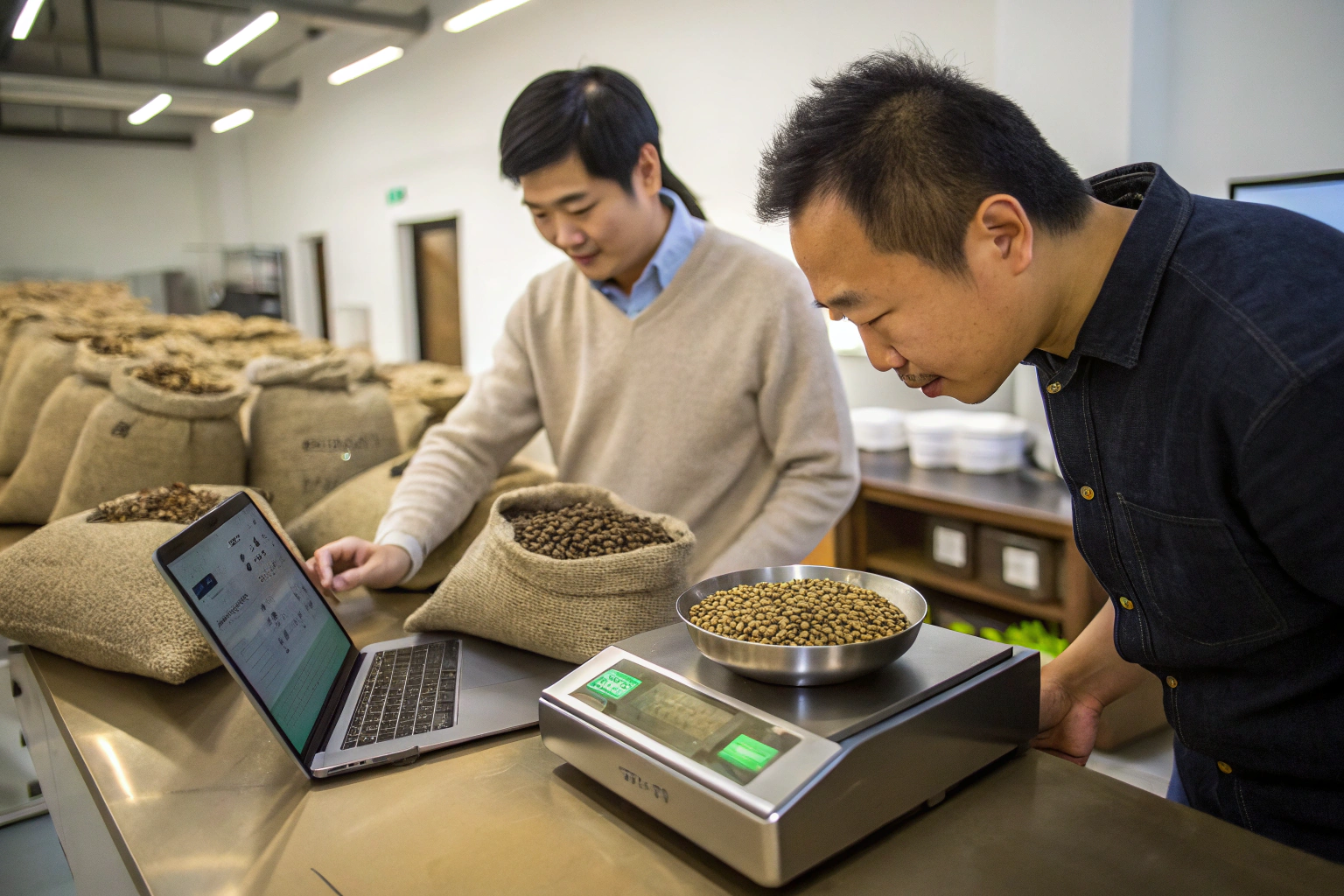
I run BeanofCoffee, a coffee exporter in Yunnan, China. We own more than 10,000 acres in Baoshan City. We sell Catimor, Arabica, and Robusta to North America, Europe, and Australia. Buyers like Ron ask me about price, quality, and shipping all the time. But one number often gets ignored. That number is roasting loss. It looks small. It is not small. If you roast coffee, you lose weight. If you do not measure that loss, you cannot price your coffee correctly. You cannot compare suppliers fairly. You cannot protect your margin.
The roasting loss factor is the percentage of weight a coffee bean loses during roasting. You assess it by weighing green beans before roasting and roasted beans after roasting. Then you divide the weight loss by the green bean weight and multiply by 100. A typical loss ranges from 12% to 20%. The exact number depends on moisture, density, roast level, roast time, and equipment. You need a accurate scale, a clear process, and repeated tests.
So, what does this mean for you? It means you should not guess. You should measure. You should record. You should compare. A coffee that looks cheap at $3.00 per pound may become expensive if it loses 20% in the roaster. A coffee that costs $3.30 per pound may be a better deal if it loses only 14%. Ron cares about price and timeliness. Roasting loss affects both. It affects how many bags you sell. It affects how fast you use your stock. It affects your profit. Let me show you how to assess it step by step.
What Is Roasting Loss Factor in Coffee?
Roasting loss is simple in theory. You put beans in. You take beans out. The beans weigh less. The difference is the loss. But the meaning is deeper. During roasting, water leaves the bean. Organic matter breaks down. Carbon dioxide forms. The bean expands. It becomes lighter and larger. So you sell less weight than you bought. That is the loss. Every roaster faces it. Every buyer should understand it.
The roasting loss factor is the weight difference between green coffee and roasted coffee, shown as a percentage. It matters because roasters buy green coffee by weight and sell roasted coffee by weight. If the loss is high, the roaster needs more green coffee to fill the same bag. That raises the cost per roasted pound. It also changes the blend ratio and the inventory plan.
Another way to look at this is to compare it to cooking. If you cook a steak, it loses water and fat. The steak weighs less after cooking. But you still paid for the raw weight. Coffee works the same way. You pay for green beans. You sell roasted beans. The loss is part of the business. You cannot remove it. But you can measure it. You can control it. You can plan for it.
What Does Roasting Loss Factor Actually Measure?
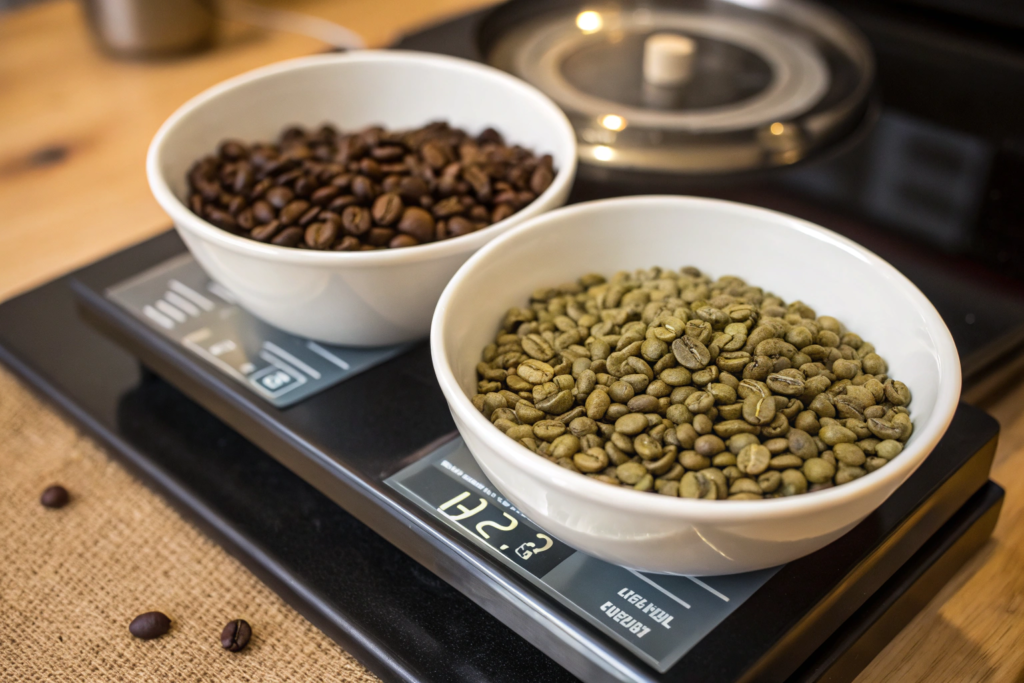
It measures water loss and dry matter loss. Water loss is the bigger part. Dry matter loss comes from chemical changes. The bean loses some oils, sugars, and gases. The Specialty Coffee Association explains coffee quality and roasting standards. The International Coffee Organization tracks global coffee trade and research. These sources help you understand the science. But you do not need a lab coat. You need a scale and a notebook.
I measure loss for every lot we ship. I write down the green weight, the roasted weight, the roast level, and the time. Then I calculate the percentage. If the loss is higher than normal, I check the moisture. If the loss is lower than normal, I check the roast development. This simple habit helps me give buyers a realistic yield estimate. It also helps me compare our Yunnan Arabica with other origins.
Why Does Roast Loss Matter for Coffee Buyers?
It matters because it changes the real cost. Suppose you buy 1,000 kg of green coffee. If the roast loss is 15%, you get about 850 kg of roasted coffee. If the loss is 20%, you get only 800 kg. That is 50 kg less. At $10 per kg roasted, that is $500 lost. Now multiply that by a full year of production. The number becomes large. Perfect Daily Grind and Daily Coffee News often discuss roasting yield and cost. These are good places to learn more.
For buyers, roast loss also affects blend consistency. If your Chinese Arabica loses more weight than your Brazilian Arabica, your blend ratio may shift after roasting. The cup may change. The cost may change. So you should ask your supplier for moisture data. You should test the coffee yourself. You should not assume all beans behave the same. Ron likes this because he wants stable quality and stable price. Roast loss connects both.
How Do You Measure Roasting Loss Accurately?
Measurement sounds easy. But small mistakes create big errors. If your scale is wrong, your loss number is wrong. If you forget to zero the scale, your number is wrong. If you weigh hot beans, your number is wrong. If you use a different roast level each time, your number is wrong. So you need a standard process. You need to repeat it. You need to write it down. That is how you get a real number.
You measure roasting loss accurately by using a calibrated scale, weighing a fixed batch size, roasting to a consistent level, cooling the beans fully, and weighing again. Then you calculate the percentage loss. You should repeat the test at least three times. You should record moisture, density, roast time, and equipment. This gives you a reliable average, not a one-time guess.
So, what does this mean for your roastery? It means you need a simple form. The form should have date, lot number, green weight, roasted weight, moisture, roast level, and loss percentage. Fill it out every time. After ten roasts, you will see a pattern. After fifty roasts, you will know your beans. That knowledge helps you price better. It helps you buy better. It helps you explain your coffee to customers.
How Do You Weigh Beans Before and After Roasting?
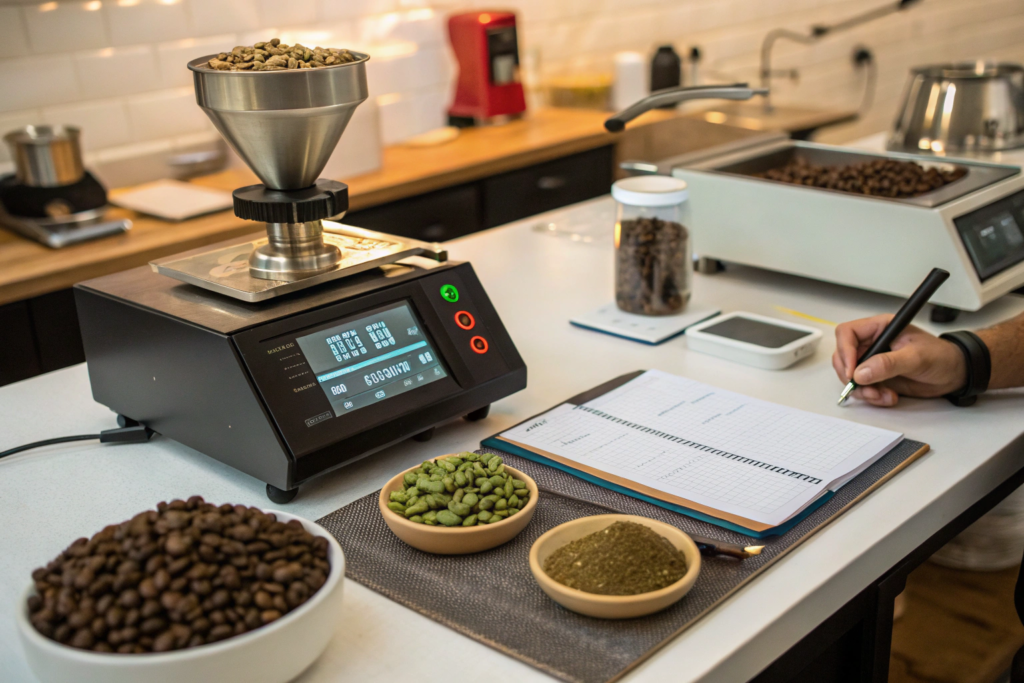
Weigh green beans before roasting. Use a clean container. Zero the scale. Add the beans. Write the weight. Then roast. After roasting, cool the beans completely. Do not weigh hot beans. Heat creates air movement. Air movement changes the scale reading. Wait until the beans are at room temperature. Then weigh them. Subtract the roasted weight from the green weight. Divide by the green weight. Multiply by 100. That is your loss percentage.
Roast Magazine and Barista Hustle share practical roasting and measurement guides. I use similar steps in our own checks. I also keep a sample of each roast. If a buyer asks why the yield changed, I can show the record. That record builds trust. It also helps me fix problems fast. A simple record is a powerful tool.
What Equipment Do You Need for Accurate Roast Loss Testing?
You need a digital scale with good resolution. A scale that reads to 0.1 gram is fine for small samples. For large batches, use a platform scale. You need a cooling tray. You need a moisture meter. You need a roast profile system if possible. You need a notebook or spreadsheet. You do not need expensive equipment to start. You need consistency.
Third-party labs can also help. SGS and Intertek provide coffee testing and inspection. They can check moisture, defects, and quality. I use their methods as a reference. But I still do my own tests. A lab test is a snapshot. A daily record is a movie. You want the movie. It shows trends. It shows changes. It shows the truth.
What Factors Change Roast Loss Percentage?
Many things change roast loss. Some are in your control. Some are not. The bean itself matters. The moisture matters. The density matters. The roast profile matters. The equipment matters. The batch size matters. Even the weather in the roastery can matter. So you cannot use one number for all coffee. You need a range. You need to test each lot. That is the honest way.
Roast loss changes with moisture content, bean density, roast level, roast time, airflow, batch size, and equipment. High-moisture beans usually lose more water. Light roasts usually lose less weight than dark roasts. Longer roasts usually lose more weight. Larger batches may behave differently from small samples. So you should test the same coffee at different profiles and compare the results.
Another way to look at this is to treat roast loss as a fingerprint. Every lot has one. Yunnan Arabica from Baoshan may lose 14% to 17% at a medium roast. A Brazilian natural may lose 15% to 18%. A high-moisture lot may lose 20%. You cannot know until you test. So test. Then build your plan around the real number.
How Does Moisture Content Change Roast Loss?
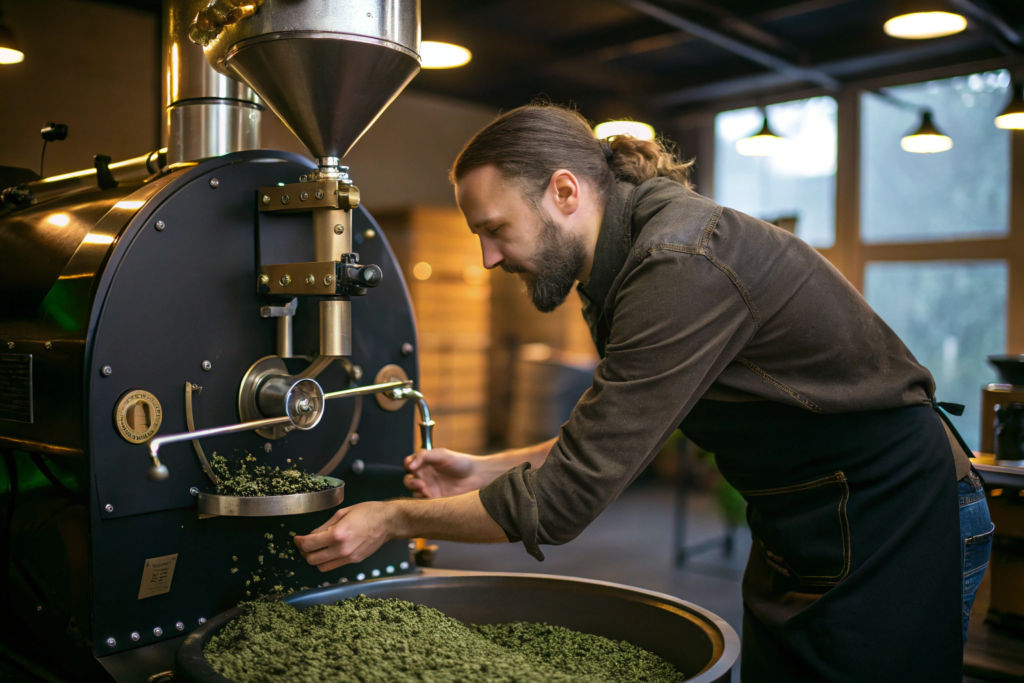
Higher moisture usually means higher roast loss. Water is heavy. When water leaves the bean, the weight drops. If green coffee has 12% moisture, it has more water to lose than coffee with 9% moisture. That extra water adds to the loss. But very dry beans can also behave strangely. They may roast faster. They may lose dry matter. So moisture is not the only factor.
The USDA AMS provides agricultural standards and data. The FDA prior notice page explains U.S. food import rules. These are useful for buyers who import green coffee. I check moisture before we ship. I tell buyers the number. If the moisture is high, I warn them. That warning helps them plan the roast. It also helps them avoid surprises. A surprise in the roaster is expensive.
Does Roast Profile Change Roast Loss Percentage?
Yes, it does. A light roast usually loses less weight. A dark roast usually loses more weight. A long roast at low heat may lose more water over time. A fast roast at high heat may lose less water but more dry matter. Airflow also matters. More airflow removes moisture faster. Less airflow keeps moisture in the drum. So the profile changes the loss. You should test your standard profile. Then test a second profile. Compare the numbers. Pick the profile that gives the flavor you want and the yield you need.
The Coffee Institute and NCA share coffee education and industry news. These can help you understand roasting science. I use a simple rule. I do not chase the lowest loss. I chase the best cup. A low-loss roast that tastes bad is not a win. A slightly higher-loss roast that tastes great can sell for more. So balance flavor and yield. Do not sacrifice one for the other.
How Can Roasters Control Roast Loss and Cost?
You cannot eliminate roast loss. But you can control it. You can buy beans with stable moisture. You can store them well. You can roast to a consistent profile. You can measure every batch. You can adjust your blend. You can price with the real yield in mind. These steps protect your margin. They also protect your customers. A roaster who knows the loss can promise a better delivery date. A roaster who guesses will miss deadlines.
You control roast loss by buying consistent green coffee, storing it at stable moisture, roasting to a clear profile, measuring every batch, and using the data in pricing. You can also adjust blend ratios when one origin loses more weight. You can buy slightly more green coffee to cover the loss. You can train your team. Control comes from data, not from hope.
So, what should you do first? Start a log. Weigh every batch. Record the loss. After one month, review the numbers. You will see which lots lose more. You will see which profiles lose less. Then make small changes. Do not change everything at once. One change at a time. That is how you improve. That is how you protect your business.
How Do You Reduce Roast Loss Without Hurting Flavor?
You reduce roast loss by controlling moisture, avoiding over-roasting, and improving airflow. Buy green coffee with stable moisture. Store it in a dry place. Do not roast wet beans. Do not roast too dark unless your market wants it. Use a profile that develops sweetness without burning the bean. Check your airflow. Too much airflow can dry the bean too fast. Too little airflow can trap moisture. Find the balance.
Fairtrade and Rainforest Alliance explain sustainable coffee sourcing and certification. These programs can help you buy better green coffee. I also tell buyers to test small batches first. A small test costs little. It tells you how the bean behaves. Then you can scale up. Do not learn on a full production batch. Learn on a sample. Then apply the lesson.
How Should You Use Roast Loss Data in Pricing?
Use roast loss data to calculate your true cost per roasted pound. Take the green coffee price. Add shipping, tariffs, and storage. Then divide by the roasted yield. For example, if green coffee costs $3.00 per pound and the roast loss is 15%, your roasted coffee costs about $3.53 per pound before other costs. If the loss is 20%, it costs about $3.75 per pound. That difference matters. Trade.gov offers export and import guidance. CBP explains U.S. customs entry rules. These help you build a full landed cost.
I use this math when I quote buyers. I do not hide the loss. I explain it. A smart buyer respects that. Ron likes clear numbers. He wants to know why the price is what it is. When I show the yield, he can plan his own pricing. That makes the deal stronger. It also makes the relationship longer.
Conclusion
Assessing the roasting loss factor is not hard, but it must be done with care. You weigh green beans. You roast. You weigh roasted beans. You calculate the percentage. You record the data. You repeat the test. You study the factors that change the number. Then you use that number in your pricing and blending. A roaster who measures roast loss is a roaster who controls cost. A buyer who understands roast loss is a buyer who avoids bad deals. That is the value of this small percentage.
At BeanofCoffee, we know roast loss matters to our buyers. We own more than 10,000 acres in Baoshan City, Yunnan. We export Catimor, Arabica, and Robusta. We work with large buyers, brand owners, distributors, and trading companies. We can share moisture data, test reports, and samples. We can help you compare Chinese Arabica with other origins. If you want to assess roast loss for your beans, please contact Cathy Cai at cathy@beanofcoffee.com. She will help you with samples, pricing, specifications, and shipping plans. You can also visit BeanofCoffee to learn more. Let us help you roast smarter and buy better.