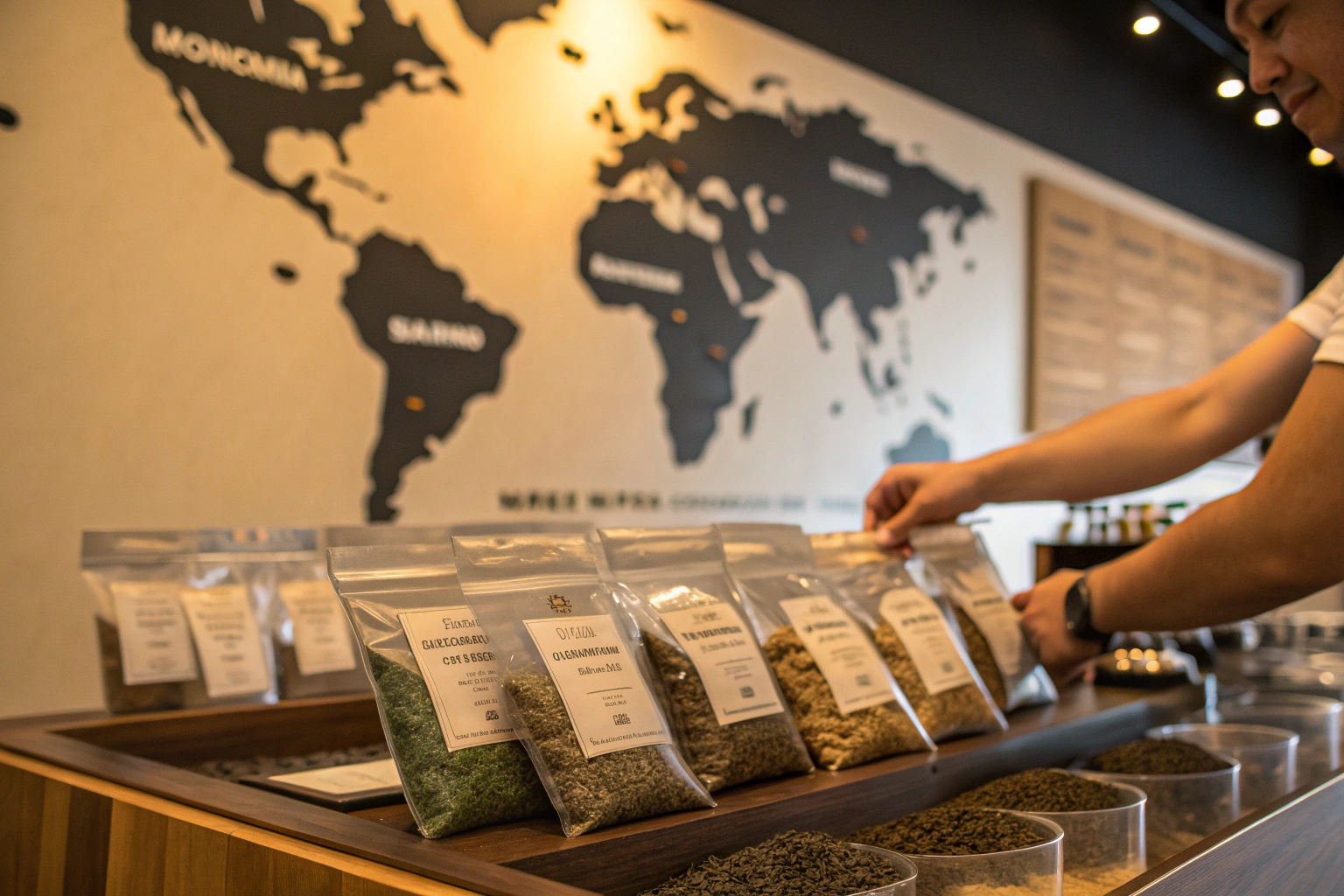
I almost lost my business in 2019. Not because of bad coffee. Not because of a bad customer. Because of a drought in Brazil. At the time, I had nearly 40% of my import volume concentrated in a single Brazilian supplier. When the crop came in short and prices spiked, I had no backup. I paid premium prices for six months, burned through my cash reserves, and promised myself I would never be that exposed again. That year taught me what resilience actually means. It's not about finding the cheapest price. It's about building a portfolio that can survive the thing you didn't see coming.
A resilient multi-origin coffee portfolio is a deliberate, diversified sourcing strategy that spreads risk across origins, varietals, quality tiers, and contract types. It treats coffee sourcing like an investment portfolio, not a shopping list. The goal is not just a range of flavors for the cupping table. It is a structure that maintains supply continuity, cost predictability, and quality consistency when a single origin fails due to weather, politics, or market volatility.
I source from China, but I also buy from other origins for my own blending and resale operations. I've seen what works and what fails. Here's how to think about building a portfolio that protects your business.
Why Is Single-Origin Dependency a Business Risk?
Loving an origin is not the same as depending on it. A roaster might build their brand around a specific single-origin espresso. Their customers love it. Their wholesale accounts depend on it. Then that origin has a bad harvest, and suddenly the centerpiece of the business is unavailable or unaffordable. The love affair becomes a liability.
Single-origin dependency exposes a coffee business to concentrated risk. Weather events, crop disease, political instability, export bans, and currency spikes can all disable a single origin without warning. A business that relies too heavily on one source for volume, quality, or brand identity has no buffer when that source is disrupted. Diversification is not disloyalty to an origin. It is insurance against forces no one controls.
What Happens When a Key Origin Faces a Crop Failure?
Crop failure is not a hypothetical. It happens regularly. Brazil had a historic drought in 2021. Colombia has battled excessive rains and leaf rust. Vietnam's Robusta crop has been hit by both drought and typhoons in recent years. Each of these events removed millions of bags from the global supply.
For a roaster dependent on that origin, the impact is immediate and brutal. The available volume shrinks. The price spikes. The quality often degrades as producers rush to fulfill contracts with whatever beans they can find. The roaster faces a terrible choice: pay dramatically more for lower quality, or break commitments to their own customers.
I watched a roaster in the UK lose a supermarket contract because their single-origin Colombian espresso became both too expensive and too inconsistent. They had no backup blend, no alternative origin ready to slot in. The buyer at the supermarket didn't care about the drought in Colombia. They cared about the shelf. The roaster lost the shelf. The lesson is harsh but clear: if your business continuity depends on one origin's weather, you don't have a business continuity plan.
How Does Political Risk Affect Coffee Sourcing?
Weather is not the only unpredictable variable. Coffee grows in some of the most politically volatile regions on earth. Civil unrest, export bans, currency devaluations, sanctions—these are all part of the modern coffee trade landscape.
I source from Yunnan, China. The political environment is stable, and the export infrastructure is reliable. But I also watch what happens in other origins. Ethiopia's civil conflict disrupted coffee logistics for over a year. Nicaragua's political crisis affected the specialty supply chain. Colombia's national strikes have blocked ports and highways. In each case, buyers who were over-concentrated in the affected origin scrambled.
Political risk is harder to hedge than weather risk because it's harder to predict. The hedge is diversification itself. If 20% of your volume comes from a politically volatile origin, a disruption affects 20% of your business—painful but survivable. If 80% comes from that origin, a disruption is existential. The portfolio structure is the protection.
How Do You Evaluate New Origins for Portfolio Diversification?
Adding a new origin is not like picking a new coffee to feature. It's a strategic decision that affects supply chain stability, cost structure, and brand positioning. A new origin has to earn its place in the portfolio. It has to contribute something the current origins don't, and it has to be reliable enough to justify the investment of time and money required to develop a supplier relationship.
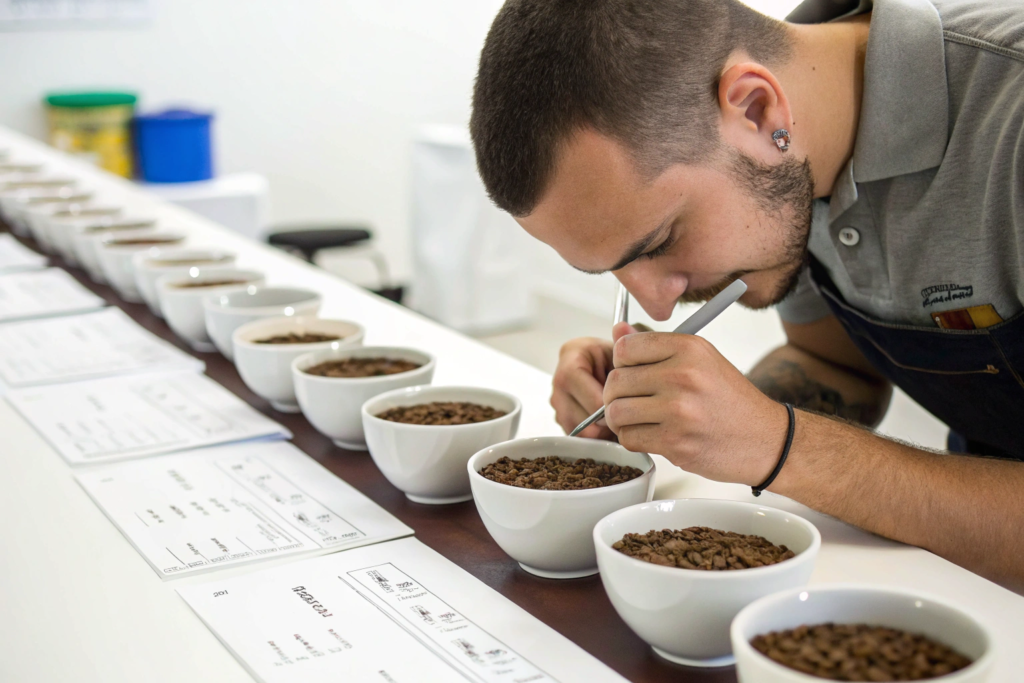
Evaluating a new origin for portfolio diversification requires assessing the origin's supply reliability, quality consistency, price-value ratio, and logistical accessibility. It also requires cupping the coffee against the existing portfolio to understand what gap it fills—whether that's a price gap, a flavor profile gap, or a harvest timing gap that smooths seasonal supply. A new origin should reduce the portfolio's overall vulnerability, not just add another option.
What Criteria Should You Use to Assess a New Origin's Reliability?
Reliability is not a spec on an offer sheet. It's a judgment built from multiple data points over time. When I evaluate a new origin, I look at several factors before I even taste the coffee.
First, the infrastructure. Does the origin have a functioning export system? Are the ports efficient? Is the internal transport network reliable enough to get coffee from farm to port during the rainy season? These things matter as much as cup quality. A beautiful coffee that can't get to the port on time is a sourcing problem, not a sourcing solution.
Second, the production history. Is the origin's output relatively stable year over year, or does it fluctuate wildly? Wild fluctuations indicate a fragile production system, often dependent on a single varietal or vulnerable to disease. Stable output indicates a mature, diversified production base.
Third, the political and economic environment. Is the currency stable enough for predictable contracting? Are export regulations clear and consistently enforced? I'm not looking for zero risk—that doesn't exist. I'm looking for risks I can understand and plan around, rather than risks that are opaque and unpredictable. A reliable origin is one where the risks are visible and manageable.
How Does Harvest Timing Create a Natural Seasonal Portfolio?
One of the most overlooked dimensions of portfolio diversification is seasonality. Coffee origins have different harvest calendars. By selecting origins with complementary harvest periods, a roaster can ensure a steady flow of fresh-crop coffee throughout the year.
Colombia, with its two harvests, delivers fresh coffee in the spring and autumn. Brazil's main harvest arrives in the summer. Ethiopian coffee becomes available in the winter. Yunnan's main harvest, for our Arabica and Catimor, runs from late October through January, with fresh lots ready for shipment by March.
A portfolio built with seasonal complementarity is not just about constant supply. It's about constant freshness. The roaster is not buying large volumes of a single origin and storing it for ten months. They are buying fresh lots throughout the year, rotating the menu as new crops arrive. This improves quality, reduces storage costs, and gives the marketing team a continuous stream of stories to tell. Seasonality is a portfolio strategy hiding in plain sight.
What Role Does Yunnan Arabica Play in a Balanced Portfolio?
Yunnan is not yet a traditional origin in most roasters' portfolios. It's still new to many buyers. But that newness is part of its value. Yunnan coffee, grown at high altitude with careful processing, offers a combination of attributes that fills specific portfolio gaps. It is not a replacement for Colombian or Ethiopian coffee. It is a complement.
Yunnan Arabica adds unique value to a multi-origin portfolio through its distinctive flavor profile, its off-season harvest timing relative to Latin American origins, its competitive price-to-quality ratio, and its logistical reliability. For roasters seeking to reduce dependency on traditional origins without sacrificing quality, Yunnan offers a credible, scalable alternative with a supply chain that has proven resilient through global disruptions.
How Does Yunnan's Flavor Profile Complement Traditional Origins?
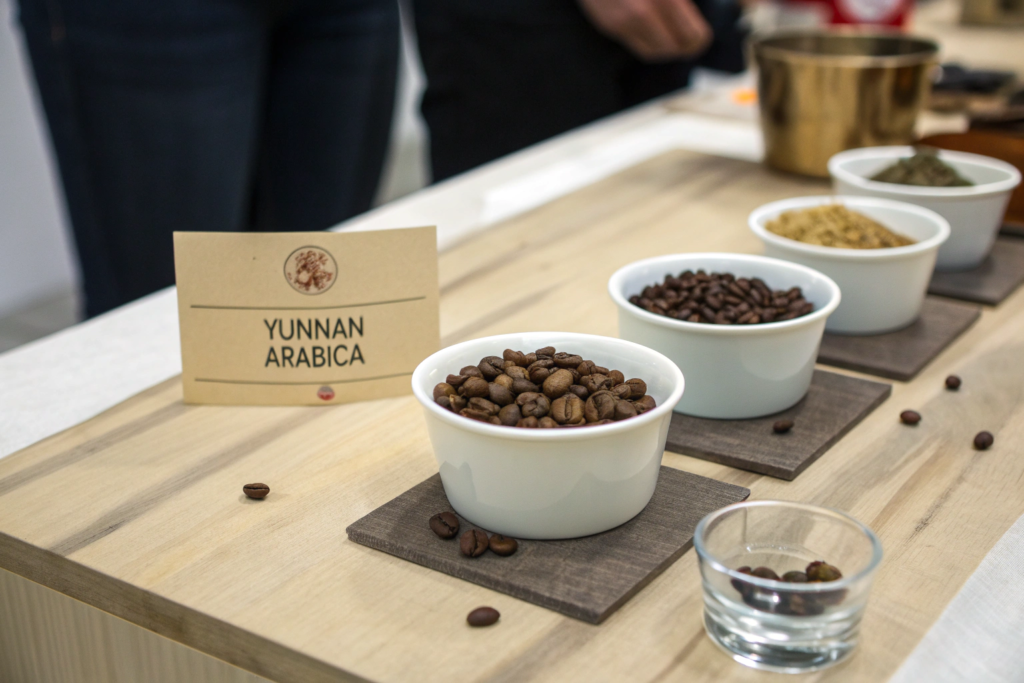
Yunnan Arabica is not trying to taste like something it's not. It doesn't mimic a washed Ethiopian with bright citrus and floral notes. It doesn't mimic a Colombian with caramel and nuts. It has its own character. Our Baoshan Arabica tends to express red apple, brown sugar, black tea, and a clean, balanced finish. It's approachable without being boring. It has enough acidity to be interesting and enough body to anchor a blend.
This profile fills a valuable niche in a portfolio. It's the coffee that a roaster can offer to customers who find a bright Ethiopian too sour and a heavy Sumatran too earthy. It's a middle path—complex enough for specialty consumers, accessible enough for a broader audience. As a component in a blend, it adds sweetness and balance without dominating the cup. It plays well with others.
For a roaster currently sourcing Colombian and Brazilian as their base, adding a Yunnan component introduces a new flavor dimension. It allows the roaster to create a proprietary blend that doesn't taste like every other roaster's Colombian-Brazilian blend. Differentiation is hard in a crowded market. Yunnan offers a path to it.
Why Is Yunnan's Supply Chain a Stability Asset?
This is the part of the Yunnan value proposition that doesn't show up in a cupping score. China's export infrastructure is among the most reliable in the world. The ports are modern, the shipping lanes are well-established, and the regulatory environment is stable and predictable. During the COVID-19 pandemic, when many origins struggled with port closures and logistics chaos, Chinese ports remained operational.
For a portfolio manager, this reliability is a structural advantage. The coffee you contract from Yunnan is very likely to arrive when the schedule says it will. The documentation will be correct. The container will be sealed and clean. These are basic things, but they are not universal in the coffee trade. A portfolio that includes a stable-origin component has a logistical anchor—a source that can be counted on when other origins are disrupted.
I'm not neutral on this point. I'm a Yunnan producer. But I've also bought coffee from many other origins, and I know how the logistics compare. Yunnan is not the cheapest origin. It is one of the most reliable. In a portfolio context, reliability is worth a modest premium.
How Do You Manage Risk Across Multiple Contracts and Origins?
Building the portfolio is step one. Managing it is step two, and it's the step where most roasters struggle. A diversified portfolio is not a set-it-and-forget-it asset. It requires active monitoring, rebalancing, and contingency planning. The origins that looked smart six months ago might look risky today. The contract that was competitive at signing might be underwater after a market move. Active management is the difference between a portfolio that diversifies risk and a portfolio that accumulates hidden exposures.
Managing a multi-origin portfolio requires tracking harvest calendars, monitoring political and economic indicators in each origin, maintaining a rolling forecast of green coffee needs, and building flexible contract structures that allow volume adjustments within defined ranges. The goal is to maintain the portfolio's strategic balance while adapting to the constant churn of market and origin-specific developments.

What Should a Green Coffee Inventory Dashboard Track?
You can't manage what you don't measure. A simple dashboard, maintained weekly, keeps the portfolio visible and manageable. I track a handful of metrics for each origin in my book.
Current inventory in days of roast. This is the buffer. If the Colombian stock runs out in 18 days and the next container is 30 days out, there's a 12-day gap. The dashboard flags it before it becomes an emergency. Contracted volume not yet shipped. This is the pipeline. I want to see the vessel names, the ETAs, the port of entry. If a vessel is delayed, the dashboard shows which origin's buffer is being eaten into faster than planned.
Current market price versus contract price. This is the mark-to-market. If an origin has a contract at $3.20 and the spot market is at $2.80, I'm holding an over-market position. That's not necessarily wrong—maybe it was hedged, maybe it's a quality premium lot. But I need to know about it. Hidden over-market positions accumulate and erode margins silently. The dashboard makes them visible.
Next six-month outlook for each origin. This is the forward-looking component. What's the weather report? Any political developments? Harvest forecast up or down? This section is qualitative, not quantitative, but it informs rebalancing decisions. If the Brazilian harvest forecast drops, I might increase my Yunnan allocation before the market adjusts.
How Can Flexible Contracting Improve Portfolio Agility?
A rigid contract is a brittle contract. It might look secure at signing, but if conditions change, it becomes a trap. Flexible contracting builds adjustment mechanisms into the agreement, so the partnership can adapt without breaking.
Volume flexibility is the most valuable flexibility. A contract might specify a base volume of 300 bags, with a plus-or-minus 20% option at the buyer's discretion, with 60 days' notice. If the roaster's demand exceeds forecast, they can take the extra volume. If demand falls short, they reduce. This prevents the worst outcome: paying for coffee you don't need or scrambling for coffee you do.
Timing flexibility matters too. A shipment originally scheduled for April might need to move to May or June if the roaster's inventory is moving slower than expected. A reasonable supplier accommodates timing shifts within a defined window, especially if the request comes early. The key is communication. A flexible contract with a partner you talk to weekly is a portfolio tool. A rigid contract with a partner you email once a quarter is a portfolio risk.
Conclusion
A resilient multi-origin coffee portfolio is not a collection of favorite coffees. It's a deliberate structure designed to survive shocks—weather shocks, price shocks, logistics shocks, political shocks. It spreads volume across complementary origins. It balances flavor profiles across the cupping table. It staggers harvest calendars for year-round freshness. And it's actively managed, with a dashboard that makes exposures visible and contracts that flex rather than break.
Yunnan coffee, from a stable supply chain with a distinctive and versatile flavor profile, deserves consideration in that portfolio. Not as a replacement for the origins you love. As an addition that makes the whole structure stronger. If you're reviewing your portfolio and want to explore what our Baoshan Arabica, Catimor, or Robusta can contribute, reach out to Cathy Cai at cathy@beanofcoffee.com. She can provide samples, harvest calendars, and the supply reliability data you need to evaluate Yunnan as a portfolio component. A resilient business is built one deliberate sourcing decision at a time. This could be one of them.