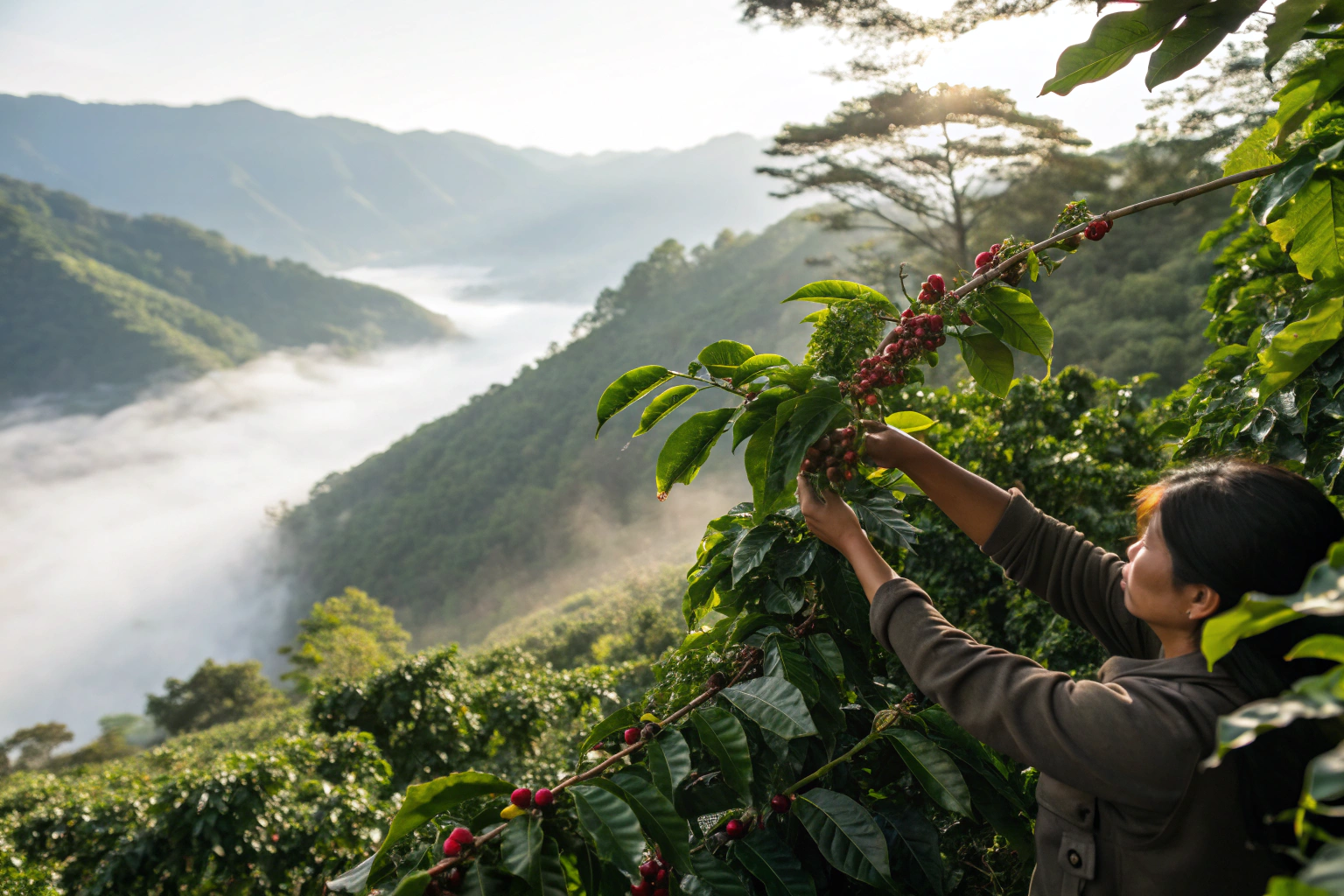
My grandfather drank coffee every morning of his adult life. He lived to 91. He wasn't thinking about chlorogenic acid or antioxidant density when he poured his cup. He just knew that the coffee from the high farms in the mountains tasted better and made him feel good. Decades later, food scientists started publishing papers that explained what my grandfather knew intuitively. The altitude where coffee grows doesn't just change the flavor. It changes the bean's chemical composition. And that chemistry has real effects on the human body.
High-altitude Arabica coffee offers distinct health benefits compared to lower-altitude coffee, primarily due to its higher concentration of chlorogenic acids, greater antioxidant activity, and lower caffeine content. The slow maturation of cherries in the cooler, oxygen-thin mountain environment causes the bean to accumulate more protective polyphenols and complex sugars, while producing less caffeine. These compounds contribute to reduced oxidative stress, improved glucose metabolism, and a gentler, more sustained energy release compared to lower-grown Robusta or lowland Arabica.
I grow Arabica at 1,400 to 1,600 meters in Baoshan. I'm not a doctor or a nutritionist. But I have spent years learning how the environment I farm in shapes the bean I sell. Here is what the science says, and what I've observed, about why high-altitude Arabica is different for your body.
How Does High-Altitude Growth Change the Chemical Makeup of Arabica Beans?
The coffee plant is a survivor. At high altitude, it faces stress—colder nights, intense UV radiation, lower oxygen levels. It can't move to a more comfortable spot. Instead, it arms itself chemically. The compounds it produces to protect its own cells become the compounds that benefit human health when we consume the bean. This is not mystical. It's plant biochemistry.
High-altitude growth triggers stress responses in the Arabica plant that elevate its production of chlorogenic acids, polyphenols, and complex polysaccharides. These compounds serve as the plant's defense against UV damage, temperature extremes, and pathogens. When consumed, they function as potent antioxidants in the human body. Simultaneously, the slower cherry maturation reduces the bean's caffeine content, creating a coffee with a higher ratio of protective compounds to stimulants.
Why Does Slow Cherry Maturation Concentrate Antioxidants?
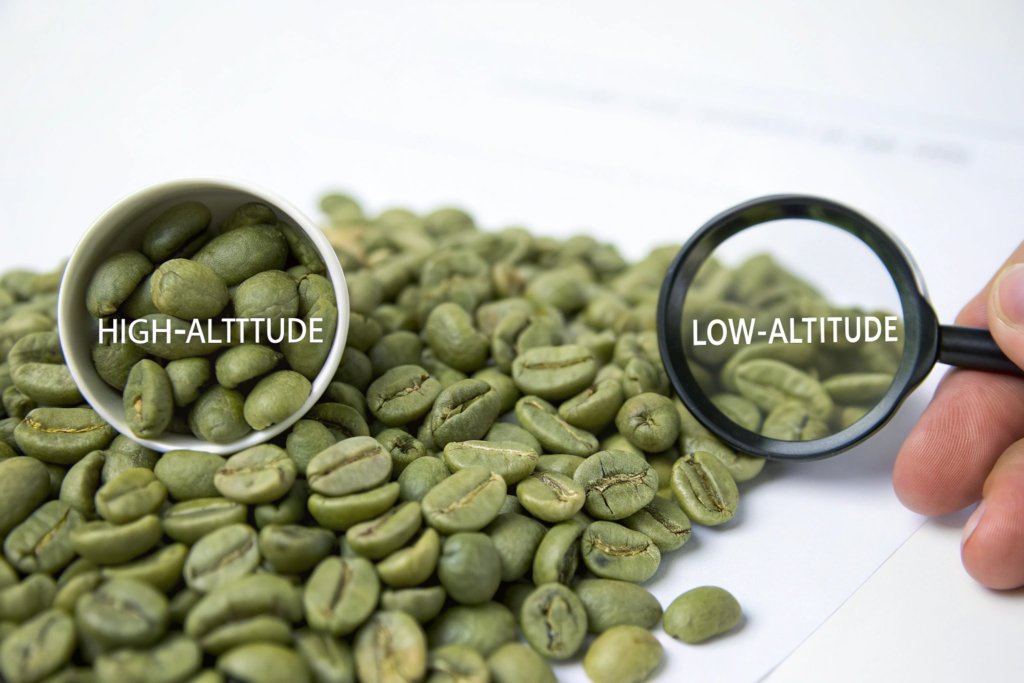
A coffee cherry at sea level might ripen in five or six months. At 1,500 meters, on our Baoshan farms, the same varietal takes seven to nine months. That extra time on the branch is not wasted. The cherry is accumulating sugars and secondary metabolites—the chemical compounds that protect the plant and, later, the coffee drinker.
Chlorogenic acids are the most important of these. They are a group of antioxidant compounds that coffee plants produce in response to environmental stress. Studies have shown that Arabica grown at higher altitudes contains significantly higher levels of chlorogenic acids than the same varietals grown at lower elevations. The colder temperatures, particularly at night, slow the metabolic breakdown of these compounds, leading to net accumulation in the mature bean.
Why does this matter for health? Chlorogenic acids are some of the most potent dietary antioxidants available. They scavenge free radicals—unstable molecules that can damage cellular structures over time. This oxidative damage is implicated in aging, inflammation, and a range of chronic diseases. A cup of high-altitude Arabica delivers a larger dose of these protective compounds than a cup of lowland coffee. It is a functional food, not just a beverage.
How Does Altitude Affect the Caffeine Content of Arabica?
Caffeine is an insecticide. The coffee plant produces it to defend its leaves and cherries from pests. At lower altitudes, insect pressure is higher—more warmth, more bugs, more need for chemical defense. The plant responds by producing more caffeine. At higher altitudes, insect pressure is lower. The plant can afford to invest less energy in caffeine production and more in other protective compounds, like those chlorogenic acids.
The result is measurable. High-altitude Arabica typically contains 10% to 20% less caffeine by weight than the same varietal grown at low altitude. This is not a small difference. For a consumer who drinks three or four cups a day, switching from a low-grown coffee to a high-altitude Arabica can meaningfully reduce total daily caffeine intake without reducing coffee consumption.
This lower caffeine content, combined with the higher antioxidant load, creates a different physiological experience. The energy from high-altitude coffee tends to be described as smoother, more sustained, less jittery. This is partly subjective, but it has a chemical basis. Caffeine hits fast and clears fast. The polyphenols and complex sugars in high-grown coffee slow the absorption of caffeine in the digestive system, resulting in a more gradual rise in blood caffeine levels. You get the alertness without the spike and crash.
What Are the Specific Antioxidant Compounds Found in High-Grown Arabica?
Antioxidant is a broad term. It covers hundreds of different compounds. In coffee, the dominant antioxidants are chlorogenic acids and their derivatives. But coffee also contains other significant antioxidant compounds. The specific profile of these compounds changes with altitude, and the changes are relevant to health outcomes.
High-altitude Arabica is particularly rich in 5-caffeoylquinic acid, the most bioavailable chlorogenic acid isomer, as well as caffeic acid, ferulic acid, and various melanoidins formed during roasting. These compounds work synergistically to neutralize reactive oxygen species, chelate pro-oxidant metals, and modulate inflammatory pathways in the human body. The cumulative antioxidant capacity of high-grown Arabica consistently tests higher in ORAC and FRAP assays than comparable low-grown samples.

How Do Chlorogenic Acids Support Metabolic Health?
Chlorogenic acids have been studied extensively for their effects on glucose metabolism. The mechanism is relatively well understood. Chlorogenic acids inhibit the enzyme glucose-6-phosphatase in the liver. This enzyme is responsible for releasing stored glucose into the bloodstream. By partially inhibiting it, chlorogenic acids help moderate blood sugar spikes after meals.
For a healthy person, this effect is subtle but beneficial. It contributes to more stable energy levels throughout the day and reduces the insulin demand placed on the pancreas. For individuals at risk of type 2 diabetes or metabolic syndrome, the effect is more significant. Epidemiological studies have consistently found an association between regular coffee consumption and reduced risk of developing type 2 diabetes. The effect is dose-dependent and is attributed in large part to chlorogenic acids.
The implication for coffee sourcing is straightforward. If chlorogenic acids are a primary driver of coffee's metabolic health benefits, and high-altitude Arabica contains more chlorogenic acids, then high-altitude Arabica is a more potent delivery system for those benefits. A buyer supplying health-conscious consumers has a genuine product differentiator in high-grown coffee.
What Role Do Melanoidins Play in Coffee's Health Profile?
Melanoidins are not present in green coffee. They are formed during roasting, through the Maillard reaction between amino acids and reducing sugars. High-altitude Arabica, with its higher sugar content developed during slow cherry maturation, produces a richer and more complex set of melanoidins during roasting.
These melanoidins are not just flavor compounds, though they contribute significantly to the body and sweetness of the cup. They are also high-molecular-weight polymers with demonstrated antioxidant and anti-inflammatory activity. In the digestive system, melanoidins act as dietary fiber, escaping digestion in the small intestine and reaching the colon, where they are fermented by gut bacteria. This prebiotic effect supports a healthy gut microbiome.
The connection to altitude is indirect but real. High-altitude beans have more precursor sugars. More precursors mean more melanoidin formation at a given roast level. A medium-roast high-altitude Arabica delivers more of these beneficial melanoidins than the same roast applied to a low-altitude bean. The health benefit is baked in—literally—by the conditions the plant endured on the mountain.
How Does Lower Caffeine in High-Altitude Arabica Affect the Body Differently?
Caffeine is the reason most people drink coffee. It's also the reason some people can't drink as much as they'd like. Jitters, anxiety, sleep disruption, acid reflux—these are largely dose-dependent caffeine side effects. High-altitude Arabica, with its naturally moderated caffeine content, offers a way to enjoy coffee's ritual and sensory pleasures with a reduced side-effect burden.
The lower caffeine content of high-altitude Arabica creates a gentler stimulant profile that is better tolerated by individuals sensitive to caffeine. The combination of lower caffeine and higher antioxidant content also reduces the oxidative stress that high doses of isolated caffeine can induce. This makes high-grown Arabica a more suitable choice for older consumers, pregnant individuals advised to moderate caffeine, and anyone seeking the focus benefits of coffee without the physical discomfort.

Why Is High-Altitude Arabica Easier on the Digestive System?
Coffee's reputation for causing stomach discomfort is partly unfair and partly accurate. The compounds responsible include caffeine, which stimulates gastric acid secretion, and certain acids and oils that can irritate the stomach lining. Not all coffees are equal in this regard.
High-altitude Arabica is generally lower in the specific chlorogenic acid isomers most associated with acid reflux and stomach irritation. The slower roast development that high-density, high-altitude beans require also tends to produce a more digestible final product. The bean's cellular structure, denser from slow growth, roasts more evenly, reducing the presence of under-developed, overly acidic compounds.
Anecdotally, I hear this from customers regularly. Someone who can't drink grocery-store coffee on an empty stomach discovers they can enjoy a cup of our Baoshan Arabica first thing in the morning without discomfort. This is not a clinical trial. It's just consistent feedback. The lower caffeine content, the specific acid profile, and the clean processing methods all contribute. For a consumer who loves coffee but struggles with digestion, the origin and altitude of the bean matter as much as the roast level.
Can Lower Caffeine Improve Sleep Quality Without Quitting Coffee?
Sleep and coffee have a complicated relationship. Caffeine has a half-life of about five hours in the average adult, meaning a cup at 2 PM leaves significant caffeine in the bloodstream at 10 PM. For sensitive individuals, even morning coffee can affect sleep quality if the total daily dose is high.
Switching to a lower-caffeine coffee is a harm-reduction strategy. The consumer doesn't give up the morning ritual. They don't give up the taste. They reduce their total daily caffeine load without changing their behavior. If their previous coffee contained 120 mg of caffeine per cup and their high-altitude Arabica contains 90 mg, and they drink three cups a day, that's a 90 mg reduction. That is the equivalent of removing almost an entire cup of coffee from their daily intake.
Over time, this reduction can improve sleep onset, sleep depth, and next-day alertness. The consumer may not consciously notice the difference. They just notice they're sleeping a little better, feeling a little less edgy in the afternoon. For a roaster marketing to health-conscious demographics, this is a compelling narrative. It's not about giving anything up. It's about choosing a coffee that works with the body, not against it.
What Does the Evidence Say About Coffee, Longevity, and Disease Prevention?
The big picture on coffee and health has shifted dramatically in the last two decades. Coffee was once viewed with suspicion. Now, the weight of epidemiological evidence places it firmly in the health-promoting category. The associations are not small. They are large, consistent, and dose-dependent. And while most studies don't differentiate by altitude, the chemistry strongly suggests that not all coffee is created equal.
Large-scale epidemiological studies have consistently associated regular coffee consumption with reduced all-cause mortality, lower risk of cardiovascular disease, reduced incidence of type 2 diabetes, and lower rates of neurodegenerative diseases including Parkinson's and Alzheimer's. These effects are attributed to the complex mixture of polyphenols, chlorogenic acids, and other bioactive compounds in coffee, not to caffeine alone. High-altitude Arabica, with its enhanced phytochemical profile, represents a particularly rich source of the compounds driving these benefits.
What Do the Major Cohort Studies Say About Coffee and Heart Health?
The turning point in coffee's health reputation came with large prospective cohort studies that controlled for confounding factors like smoking and sedentary lifestyle. Once those confounders were stripped out, coffee's true signal emerged—and it was protective.
A landmark study published in the New England Journal of Medicine followed over 400,000 participants for more than a decade. The finding: coffee drinkers had a lower risk of death from all causes, including cardiovascular disease. The protective effect peaked at three to four cups per day and was attributed to the polyphenol content, not the caffeine.
For heart health specifically, the chlorogenic acids in coffee have been shown to improve endothelial function—the ability of blood vessels to dilate and contract properly. They also reduce the oxidation of LDL cholesterol, a key step in the development of atherosclerosis. High-altitude Arabica, with its elevated chlorogenic acid content, delivers more of these cardioprotective compounds per cup.
Is There a Link Between High-Polyphenol Coffee and Cognitive Health?
The brain is highly sensitive to oxidative stress. Over a lifetime, accumulated oxidative damage contributes to cognitive decline. Dietary antioxidants, including those in coffee, appear to slow this process.
Studies have found that habitual coffee drinkers have a significantly lower risk of developing Parkinson's disease. The protective effect is substantial—some studies suggest a 30% to 60% risk reduction for high consumers. For Alzheimer's disease, the data is less definitive but trend in the same protective direction. The mechanism is believed to involve both the antioxidant polyphenols and the ability of caffeine to block adenosine receptors in the brain, reducing neuroinflammation.
The implication for high-altitude Arabica is logical but not yet proven in altitude-specific trials. If polyphenol content drives neuroprotection, and altitude drives polyphenol content, then high-altitude coffee is a more neuroprotective beverage. This is an inference, not a proven fact. But it is a reasonable inference based on consistent biochemical and epidemiological data.
Conclusion
The health benefits of high-altitude Arabica are not a marketing invention. They are grounded in plant biochemistry, verified by laboratory analysis, and consistent with large-scale epidemiological findings. The stress of altitude forces the coffee plant to produce more of the compounds that protect human cells—chlorogenic acids, polyphenols, and complex sugars. The slower maturation reduces caffeine while increasing antioxidant density. The result is a coffee that is gentler on the stomach, easier on sleep, and richer in the protective phytochemicals associated with longer, healthier lives.
For a buyer, this is more than a nice story. It's a product differentiator with scientific backing. At BeanofCoffee, our Arabica grows between 1,400 and 1,600 meters in the mountains of Baoshan. We can't claim to sell medicine. Coffee is food, not a drug. But we can say, with evidence, that the altitude where our coffee is grown changes its chemistry in ways that benefit the people who drink it. If you're sourcing for a health-conscious market and want to explore the data behind our high-altitude lots, reach out to Cathy Cai at cathy@beanofcoffee.com. She can share the specifics of our growing elevations, our processing methods, and the quality certifications that back up what's in the cup. Your customers deserve coffee that makes them feel good. That starts on the mountain.