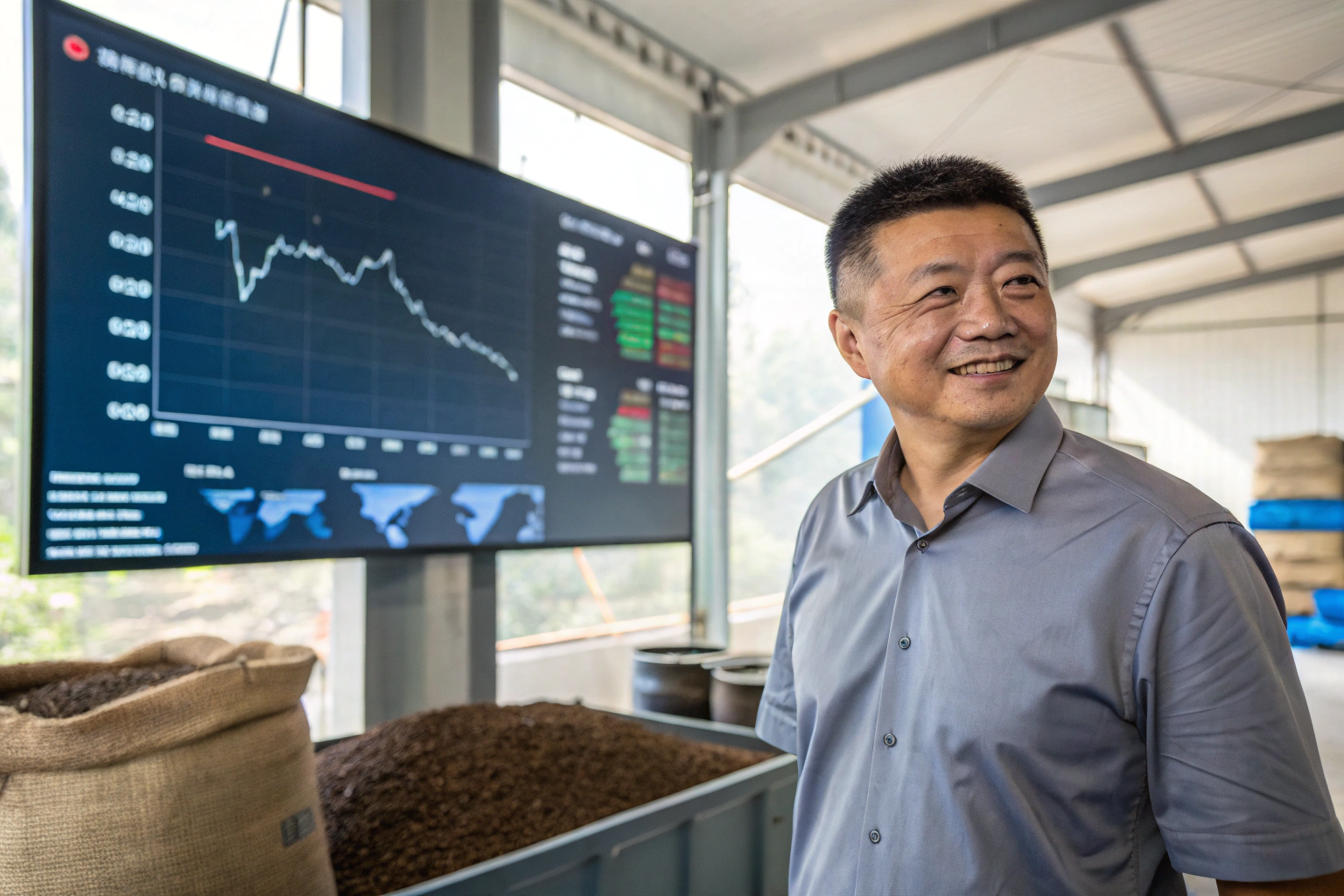
When I first started exporting green coffee beans from our farm in Baoshan to the United States, I kept making the same expensive mistake. I would celebrate a signed contract, calculate a quick dollar amount in my head based on the container size, and mentally move on to the next deal. Then, two months later, I’d look at the final bank statement and the number was always… less. Sometimes a lot less. The price of ocean freight had spiked. A customs broker added a fee I hadn't expected. The exchange rate shifted just enough to shave off a few hundred dollars. You know that sinking feeling? That’s the gap between a hopeful price and a real profit margin whispering a hard truth.
Calculating your true profit margin on imported coffee starts with a simple formula: Gross Profit = (Final Selling Price Per Pound – Landed Cost Per Pound) x Total Pounds. Your net margin comes after you subtract all your internal business overhead from that gross profit. The real challenge isn’t the math, it’s the honesty you need when you build the "Landed Cost" number. Most first-time buyers, and honestly, some very experienced ones too, underestimate this number because they leave out invisible costs. They see the FOB price on our quote sheet from Yunnan and they stop there. That’s not a margin calculation; that’s just the beginning.
What I want to walk you through isn't just a formula. I want to show you the real-world cost structure I've seen from the supplier's side for over a decade. Because if we’re going to build a supply chain that lasts longer than one cheap container, we both need to see the same math. For a buyer like Ron, who values price and timeliness above everything else, skipping these details means late containers eating your profit and no backup plan when tariffs shift. Let me break down how to look at a price offer—like a bag of our Yunnan Catimor—and turn it into a real, bankable number. Let’s start with the part that usually causes the most trouble: getting the coffee from our drying patio onto a ship.
What Are the Hidden Costs of Shipping Coffee From China to the U.S.?
Honestly, the ocean freight rate is the easy part. You can get that quote in five minutes online. The danger is everything else that gets added to that freight invoice between the port of Shanghai and your warehouse door in Los Angeles. I've seen a $3,000 shipping quote quietly balloon into a $6,000 bill because a buyer didn't plan for the congestion charges at the destination terminal. Ron, you mentioned tariff costs and security are key concerns. That’s smart. It’s those blind spots that can turn a good 20-cent per pound deal into a very bad one.
The biggest hidden cost right now is the mix of U.S. tariff charges and unpredictable logistics surcharges on goods originating from China. While the base ocean freight might look stable, the final landed cost often jumps by 15% to 30% because of the Section 301 tariffs specifically applied to certain processed or raw agricultural goods from China, combined with last-mile trucking shortages. If you don't look closely at the Harmonized System (HS) code classification—like the difference between green beans and roasted beans—you might get hit with a tariff rate you didn’t budget for. Another big one is demurrage. That’s a storage charge when the container sits at the port too long because your paperwork wasn’t perfect or the trucker was late.
Let’s look at how these costs stack up. When I ship a standard 20-foot container of Arabica green beans from Yunnan to the U.S. West Coast, here’s a realistic breakdown of the charges beyond the bean price itself. These are the things I can’t control, but I can definitely help you forecast.
How Do Port Fees and Demurrage Eat Into Coffee Margins?
It’s a quiet profit killer. Terminal handling charges at the destination port are non-negotiable. But the real pain is the demurrage clock. It starts ticking the second the container is off the vessel. I recall a shipment to an East Coast buyer where a two-day delay in filing the Importer Security Filing caused a $1,500 extra bill. The containers just sat there, racking up daily charges. You can calculate your base freight all day, but if your customs broker isn’t fast, you’re bleeding money.
Here is a rough guide to those destination charges on a single container:
| Charge Type | Estimated Cost Range | Note |
|---|---|---|
| Terminal Handling Charge (THC) | $350 - $500 | Paid directly to the terminal. |
| Customs Bond (Single Entry) | $50 - $150 | Required for formal entries over $2,500. |
| Demurrage (per day after free time) | $120 - $250 | Free time is usually 4-5 working days. |
| U.S. Customs Exam (if flagged) | $500 - $1,500+ | Random inspections. A big unknown variable. |
| Warehouse Delivery (last mile) | $300 - $800 | Depends heavily on distance from the port. |
Another way to look at this is the security you need. We always recommend working with a freight forwarder who handles customs clearance under a continuous bond. If you’re just starting, a single-entry bond works, but it’s one more deadline to manage. You also want to verify the actual free time agreement on your bill of lading before the coffee ships. Relying on a generic 48-hour rule without checking the contract is a common reason I see importers arguing over invoices weeks after delivery.
What Is the Real Tariff Impact on Chinese Arabica Coffee?
This is a question that makes every buyer from the U.S. pause. The tariff code matters. If you import green coffee beans from China under HS code 0901.11, the standard duty rate might be free under normal trade relations for many countries, but goods from China often face an additional Section 301 tariff. You have to check the current rate because it changes with U.S. trade policy. Roasted coffee is a different code entirely and usually faces a different, sometimes higher, rate.
So, what does this mean for your cost sheet? It means you can’t just guess 10%. If your shipment’s declared value is $40,000, and the effective tariff rate is actually 7.5%, that’s a sudden $3,000 hit. We always provide a clear, detailed commercial invoice with the correct HS code to help your broker minimize the risk of a misclassification penalty. For up-to-date tariff information, your broker should check the official Harmonized Tariff Schedule before the coffee sails. I also tell clients to look closely at the FDA prior notice requirements for food imports, because a hold at the border for missing documentation costs far more than any tariff.
Once the container is out of the port and heading to your roastery, the next set of costs starts to take shape. But those costs depend on a decision you made months ago: how much coffee to buy at once. That trade-off between volume and cost is something I discuss with nearly every new buyer, especially those focused on a low price per pound.
How Much Coffee Should You Import to Maximize Volume Discounts?
A lower price per pound doesn't always mean a higher profit. I learned this the hard way with a small roaster from Australia a few years ago. He wanted just half a pallet of our premium Catimor to "test the market." The sample shipment was great. The coffee was perfect. But when we priced out the freight for such a small volume, the shipping cost per pound was actually higher than the cost of the coffee itself. He got his beans, but he couldn’t build a sustainable margin. He was just paying the shipping line a lot of money.
The sweet spot for maximizing volume discounts on FOB green coffee imports from Yunnan is usually one full 20-foot container load, which holds roughly 19 to 21 metric tons. This is the tipping point where the ocean freight cost per kilogram drops to its lowest level. Anything less than a full container, known as LCL (Less than Container Load), introduces a "consolidation fee" and exposes your coffee to more handling risks and higher per-unit freight rates. When you share a container, you’re not just paying for space; you’re paying for the labor to separate and re-stack your pallets at a warehouse, often on both ends of the journey.
The volume decision isn't just about the container. It changes our entire pricing structure on the farm side. A distributor buying a full container every quarter gets a completely different cost structure than a single-café owner buying a few bags. Let's dig into the real numbers behind the FOB price breaks.
What Is the FOB Price Breakpoint for a Full Container of Green Beans?
I always tell my clients to ask for the FOB price at two specific volumes: the 5-ton trial and the full 20-ton container. The jump between those two numbers tells you the real cost of our logistics and packaging efficiency. Packing 300 bags takes nearly the same amount of administrative work—export licenses, phytosanitary certificates, booking fees—as packing 10 bags. Those fixed costs get diluted massively across a larger volume.
Here is a realistic FOB price comparison for our Yunnan Arabica, grade 1, screen 18:
| Volume | Quantity (Approx. Bags) | Price Per KG (FOB) | Freight Cost Per KG (Est.) | Total Landed Cost Per KG |
|---|---|---|---|---|
| Small Pallet (LCL) | 10-15 (60kg bags) | $4.80 | $1.20 | $6.00 |
| Half Container | ~140-160 (60kg bags) | $4.40 | $0.45 | $4.85 |
| Full Container (FCL) | ~320-350 (60kg bags) | $4.05 | $0.20 | $4.25 |
Look at the full container line. The freight cost per kilo drops by over 80% compared to the small pallet. That's where your margin gets room to breathe. We negotiate these ocean contracts based on our total annual volume, and we pass that stability down. You also want to check the real-time container freight index on a platform like Freightos Baltic Index to make sure the offered freight rate is fair for the current market.
How Does Off-Season Buying Affect Green Coffee Inventory Costs?
This is something most price guides ignore. Buying a full container is smart, but owning that container while it sits in your warehouse for six months costs money. I call this the "carrying cost." You have to pay for storage, insurance, and the fact that your cash is tied up in green beans and not in something else. That’s a real cost. However, there’s a flip side. If you buy from our harvest in late December and take delivery in February, you’re holding fresh-crop coffee. As the year goes on and stocks in China deplete, the next FOB price from Yunnan usually goes up.
So, what does this mean? It means timing your purchase for the harvest season locks in the lowest price, but you need to calculate if your savings offset the storage costs. If you have the warehouse space and the capital, buying a container load during our main Arabica harvest season and holding it is often a better long-term margin play than buying smaller, more expensive shipments every month. This ties into a bigger need: being able to predict exactly when that coffee will arrive. Because a great price doesn't matter if the container shows up in the middle of your summer cold brew rush, four weeks late.
Can Chinese Coffee Suppliers Guarantee a Stable Delivery Schedule?
I hear the doubt in a buyer’s voice more often than I’d like. There's a lingering hesitation about delivery stability from China, a sense that a container might get rolled or delayed and no one will give you a straight answer. I understand it. A previous client once told me he stopped sourcing from another Yunnan farm because he missed an entire retail season waiting for a "two-week delay" that turned into two months. Trust is built on the water, as we say. When I promise a ship date, I'm not just looking at a calendar; I'm looking at port congestion data in Shanghai and truck availability from my drying mill to the terminal.
A reliable Chinese coffee supplier guarantees a stable delivery schedule by combining transparent booking confirmations with buffer days planned for inevitable seasonal logistics snags. We guarantee a schedule not by promising the impossible, but by planning for the predictable disruptions. For example, we know that the slot availability for the U.S. West Coast tightens up drastically two weeks before the Chinese Spring Festival. So, we don't book cargo for that week. We build a hard stop into our shipping calendar and inform the buyer in December that all January shipments need to move by a specific cut-off date. It’s that simple communication that prevents a crisis.
Stability doesn’t mean perfection. It means your supplier has a system, not just a hope. And part of that system involves the paperwork that lets customs release the coffee the moment the ship hits the dock.
Why Do Pre-Shipment Samples and Certifications Prevent Delays?
An overlooked detail in logistics speed is the stuff we do months before the boat leaves. We don't just send a contract and load coffee. We ship a pre-shipment sample for your approval. This takes time, but it saves massive delays later. I once had a buyer who wanted to waive the sample step to save four days. I refused. Why? Because if that coffee landed in Oakland and the cupping score was off by two points, we’d be in a dispute with a container sitting in a costly demurrage zone.
Sending that physical sample via air freight and getting your written confirmation is the green light. It’s your quality control, but it’s also the start of the real shipping clock. Along with the sample, we prepare the certificate of origin and the phytosanitary certificate. If you have a specific Organic or Rainforest Alliance certification requirement, we send those verification documents with the sample. This ensures that when the U.S. FDA reviews your import, everything matches up perfectly. A mismatch between a sample certificate and the actual shipment is the fastest way to get a hold placed on your coffee.
Can You Rely on a Letter of Credit for Safer Shipping Timelines?
Let’s talk about payment. A Letter of Credit (LC) isn't just a payment method, it’s a timeline enforcement tool. When you open an LC, it’s a contract with a final expiry date for shipping. If I miss that date, I don't get paid. It’s a powerful motivator for a supplier to meet the booking deadline. For a large company owner, this removes the risk of paying a deposit and then having the supplier go silent for three weeks.
I prefer LC at sight for first-time transactions. It’s safer for both sides. Here’s the catch: the LC must be simple and clean. I’ve seen trading companies demand documents that are impossible to get, like a "consular invoice" in a country that doesn’t issue one. That’s a big problem. We work with a small set of standard export documents required by the ICC’s UCP 600 rules. A clean LC structure means no discrepancies at the bank, which means no payment delays, which ultimately keeps the next container moving on time. A smooth payment flow is often the invisible engine that drives a consistent shipping schedule.
And honestly, the security of that payment flow is what makes a long-term partnership possible. We're not just moving one container; we're building a pipeline. That pipeline needs to be protected not just from delays, but from the risk of quality failure or a financial surprise on your end.
How to Verify the Quality and Safety of Bulk Coffee Before Shipment?
You’re 7,000 miles away from my farm. That’s the fundamental problem. You’re buying a product you can’t touch or taste until it’s already paid for and on a ship. This is where the fear of a bait-and-switch comes from. I know this fear well. Early in our export journey, a buyer told me he had been burned by a supplier who sent a great sample but shipped a container of old, baggy beans. His business never recovered from the bad reviews. That story stuck with me. It’s why I built our quality assurance process to be invasive and transparent, so you never have to rely on blind faith.
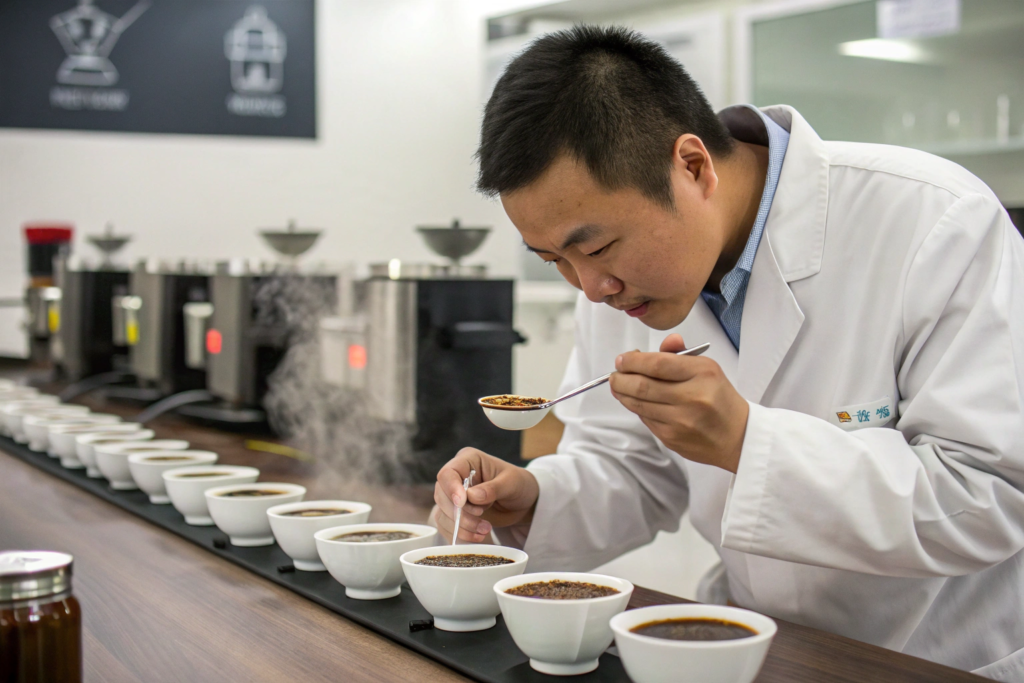
The only way to reliably verify the quality and safety of a bulk coffee shipment before it leaves the origin country is through a multi-layered, data-driven process that combines independent lab analysis, sealed pre-shipment samples, and live video cupping sessions. You cannot rely on a single "Grade 1" stamp on a contract. You need a physical paper trail and a digital one. We start by pulling a composite sample directly from the bulk pile destined for your container, not just a little bag we prepared a month ago. This sample is then split three ways: one for you, one for an independent lab, and one kept as a sealed reference in our warehouse.
This process isn't just about the taste. It’s about food safety. Let’s look at the physical metrics that matter more than the flavor notes at this stage.
What Are the Key Physical Defect Counts in a Green Bean Analysis?
Before we ever think about cupping the coffee, we run it through a grader and a hands-on sorting table. The Specialty Coffee Association has strict rules on this, and we try to beat those targets, not just meet them. The defect count tells you the truth about the picking and processing at the farm level. It reveals how careful our workers were with the cherries.
Here are the critical physical defect categories I check on every 350-gram sample before shipping to a new client like you, Ron:
| Defect Category | SCA Specialty Allowance | What It Actually Means for You |
|---|---|---|
| Primary Defects (e.g., Full Black) | 0 | Zero tolerance. These ruin a roast. |
| Secondary Defects (e.g., Broken/Chipped) | Max 5 | A few are normal, but too many cause uneven roasts. |
| Moisture Content | 10-12% | Above 12% risks mold; below 10% can taste "flat." |
| Screen Size Uniformity | 90%+ on specified screen | Inconsistent sizes mean some beans will burn while others are under-roasted. |
We use a specialized moisture meter to get this data and cross-reference it with a physical count on a light table. This raw data is included in your pre-shipment pack. For the safety side, we also contract an independent lab to run a full mycotoxin analysis. This is crucial because a cheap price with a high Ochratoxin A level isn't a bargain—it’s a liability. We send these samples for testing to comply with the strict European and U.S. food safety regulations on imported agricultural products.
How Can Live Video Cupping Confirm Your Shipment's Taste Profile?
The physical analysis is the science. The cupping is the soul. But how do you do that from another continent? We set up a live video cupping session. I know, it sounds a bit awkward, but it’s the single most effective trust-building tool we have. We schedule a time that works for your U.S. time zone. You watch me, or our Q grader, weigh the sample from the sealed, triple-labeled bag that matches your lot number. We grind it in front of the camera, brew it to the SCA cupping protocol, and break the crust together.
I narrate what I’m tasting, and you can ask questions in real time. "Is that a slight ferment note?" "How does the acidity feel on the tongue in the second cooling phase?" This shared experience replaces a fancy marketing report. It’s a genuine check on the profile. If I’m describing a bright, citric acidity and you’re not seeing that in your own sample later, the video is your record. We also encourage you to check our official cupping protocol alignment before the call so we speak the same language. This level of openness is the only answer I have to the fear of a bait-and-switch.
This openness extends to the numbers that make a long-term supply relationship work. Because a perfect coffee that bankrupts you isn't a good deal. A profitable one is.
How to Build a Long-Term Profit Model With a Single Chinese Farm?
The coffee industry loves a good story. But a story doesn't pay your warehouse staff. A stable supply chain does. The first container from a new origin is always exciting. The tenth container is where the real value hides. When you stop negotiating against each other on every single shipment and start planning for a full calendar year together, the entire cost model changes. I've seen this with a brand buyer in Texas. The first two shipments were filled with detailed checks and nervous emails. By shipment number six, he was sending me his three-month demand forecasts, and I was securing warehouse space just for him during the peak logistics rush.
A sustainable long-term profit model built on a single Chinese farm relies on three pillars: a fixed-season price contract to control costs, a shared demand forecast to guarantee supply, and exclusive lot designation to build your brand's unique product identity. It’s a model that moves from being a buyer to being a partner. For a confident business owner like Ron, this means shifting the conversation away from "how much per pound this week" and toward "how do we lock in a competitive advantage for the next two years."
This kind of partnership looks very different from the transactional hunt for the absolute rock-bottom price. It requires a different kind of conversation and a different kind of trust.
How Does a Fixed Contract Price Protect You From Market Volatility?
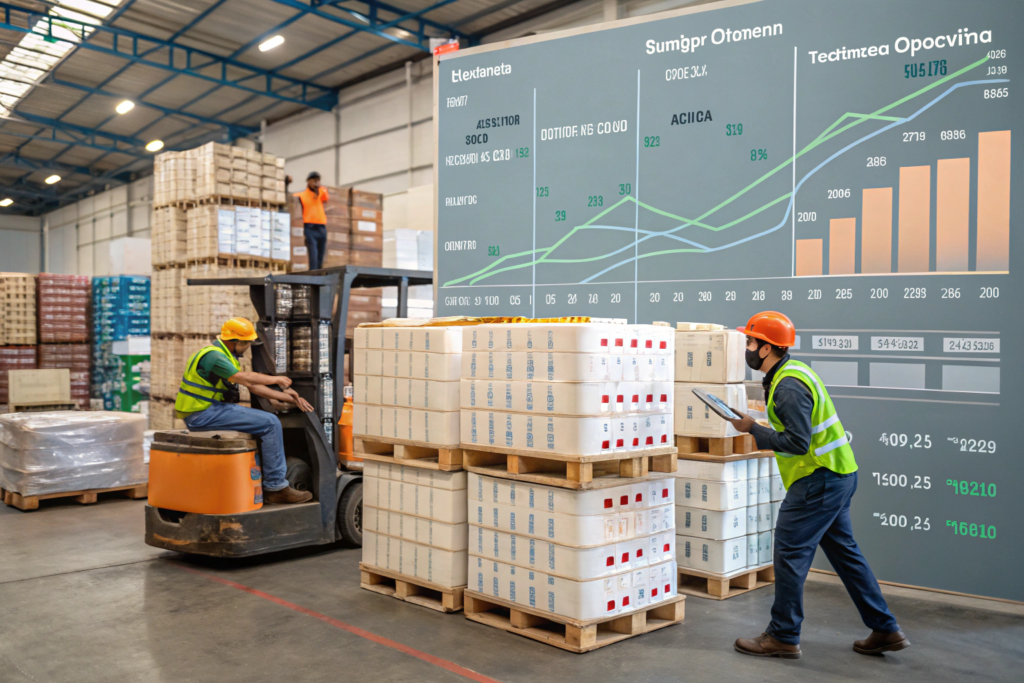
The C-market price for Arabica is a roller coaster. If you're buying a specialty coffee from Yunnan based on that fluctuating New York price plus a differential, your cost of goods sold is a guessing game. You can’t confidently print a menu or set a wholesale price for your roasts if the green cost might swing by 15% next month. This is where a direct fixed-season contract flips the script.
We offer twelve-month fixed-price contracts for buyers who commit to a specific volume. We look at our real cost of production—fertilizer, labor, milling—and we add a fair margin. That’s the price. It’s not attached to the C-market. If the C-market spikes due to a drought in Brazil, your price stays flat. This allows you to build a stable retail price for your customers. There’s a trade-off: if the market crashes, you might be temporarily above spot price. But the budget certainty? It’s usually worth it. You can use forward contracts as a legitimate hedging tool for your core menu items, as explained by standard commodity risk management guides. This financial predictability is what allows a small to medium enterprise to confidently compete with bigger roasters.
What Is the Value of Single-Farm Traceability for Your Coffee Brand?
An often-overlooked detail in the margin discussion is the value added by a story you can sell. When you buy a blended container from a trading company, your coffee’s origin story is a country name. That’s it. When you work directly with our farm, you get a specific lot from a specific altitude in Baoshan City. This is what allows you to put a name on the bag, not just a region.
That translates directly to a higher selling price. You can charge a premium for single-origin, single-farm coffee. Your customers aren't just buying a caffeine hit; they're buying a direct connection. We support this with photos, harvest data, and a yearly transparency report that you can share on your social media. This isn’t just about feeling good; it’s a distinct competitive moat. Platforms like Alibaba.com are great for finding countless suppliers, but a direct relationship with a single farm creates a product that’s impossible for your local competitors to copy. When your customer loves that Yunnan Catimor, they have to come back to you to get it.
That kind of security, the financial stability from a fixed contract and the brand strength from traceability, is the end goal. It’s what turns a series of risky transactions into a predictable, profitable operation.
Conclusion
Calculating the profit margin on imported coffee is never just about subtracting the FOB price from your wholesale price. It’s about honestly facing the hidden demurrage charges that wait at the port and the tariff codes that can change your cost base overnight. It’s about finding the courage to order a full container to break that high per-unit freight cost, and knowing how to check the physical defect count so that your sample matches the coffee you actually receive. For a buyer who values price and timeliness above all else, the real margin doesn’t come from finding the cheapest offer on a screen. It comes from the expensive decision to pick a supplier who gives you the tools, the data, and the communication to calculate a landed cost that actually stays the same when the coffee arrives at your door.
If you're tired of recalculating a new "real cost" every time a container docks, let's fix that. At BeanofCoffee, we don't just sell you green beans from our Yunnan plantation; we give you the entire margin calculation with the real freight and tariff numbers before you sign. For a direct discussion on your container volume and a fixed delivery schedule that respects your bottom line, reach out to my export partner, Cathy Cai. She can give you a transparent quote that includes everything from the FOB price to the exact customs classification. Write to her at cathy@beanofcoffee.com and let’s see if a direct partnership can finally make your import costs predictable.