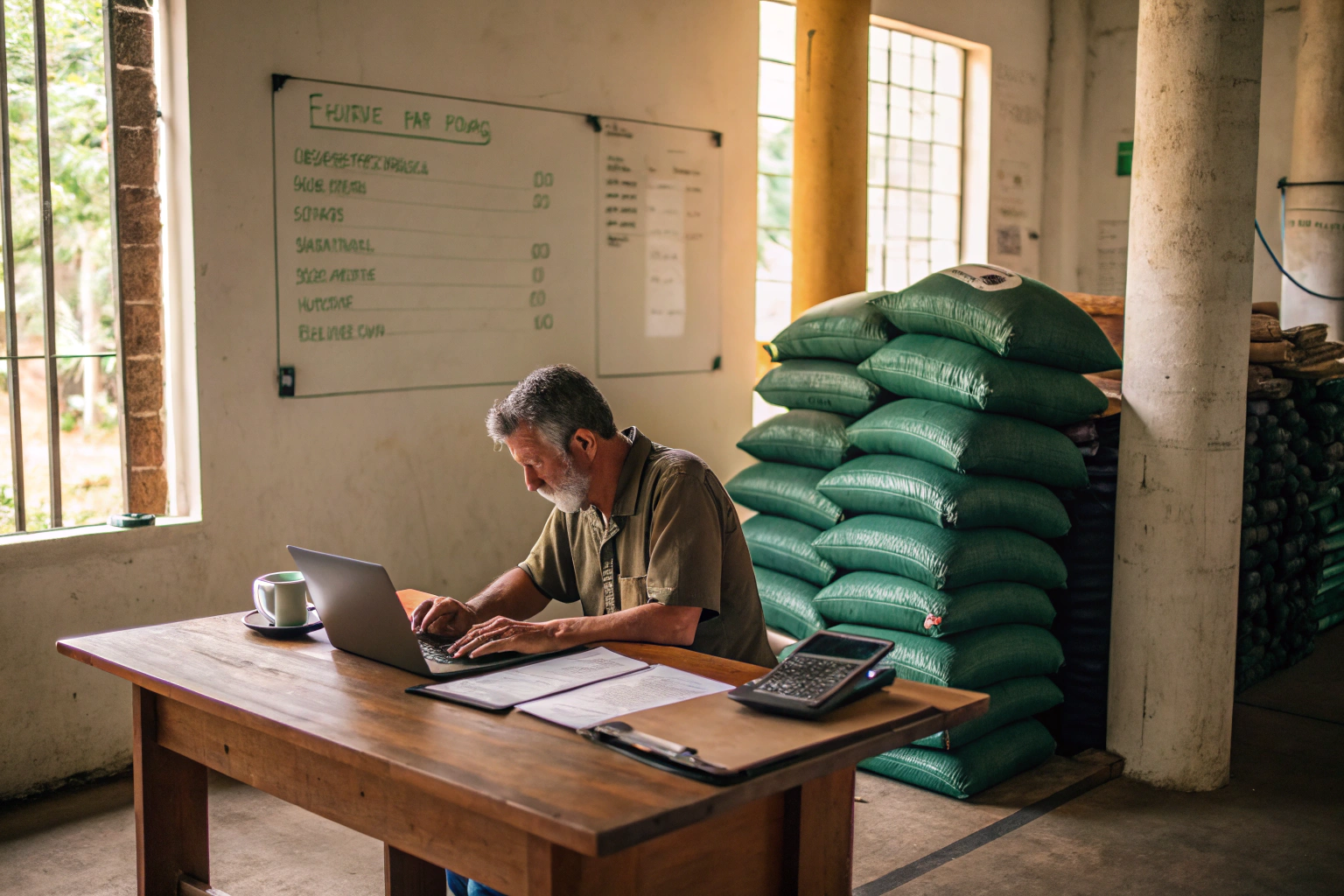
Two years ago, a roaster in Portland called me in a panic. He had cash for two months of green coffee, but his bank account said otherwise. He was buying beans faster than he was selling them. Nobody taught him how to measure this. He just kept ordering because his shelves looked empty. That mistake almost closed his shop. I have seen this happen to small roasters and big ones. So today I want to talk about burn rate. It is a simple number. But it controls your cash, your storage, and your sanity. At BeanofCoffee, we watch this number for our own planning, and we help buyers understand it too.
So let me break this down step by step. No finance degree needed. Just simple math and a little discipline.
What Is Green Coffee Burn Rate?
Green coffee burn rate is the speed at which your roastery uses green beans. It is usually measured in pounds or kilograms per week or per month. Think of it like fuel in a car. If you know how fast you burn fuel, you know when to refill. If you do not know, you run out on the highway. For a roastery, running out means you cannot roast. You cannot sell. You lose customers. So burn rate is not just a number. It is a survival tool. It also helps you plan orders, manage storage, and negotiate better prices with exporters like us. You know, most roasters track their roast profiles closely. But many ignore this simple supply number. That is a mistake.
Why does burn rate matter for cash flow?
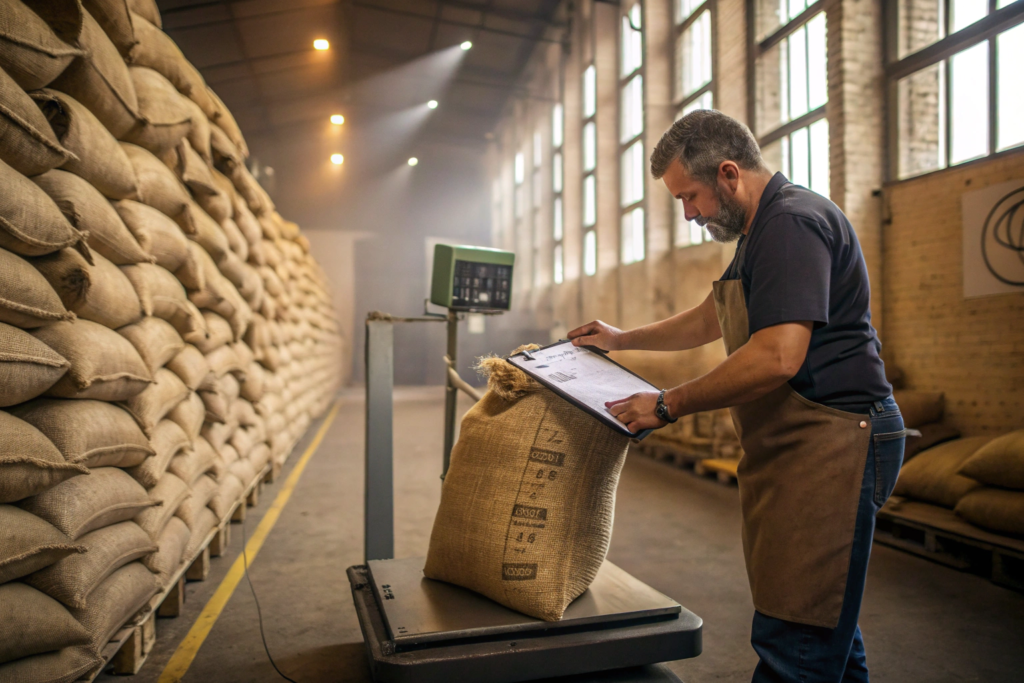
Burn rate matters because green coffee ties up cash. Every bag on your shelf is money you already spent. If you buy too much, your cash sits in the warehouse. If you buy too little, you miss sales. So the goal is balance. A good burn rate tells you how many weeks of stock you hold. Most roasters want four to eight weeks of green coffee on hand. Less than that is risky. More than that is wasteful. I once visited a roastery with six months of stock. The owner was proud. I was worried. That is a lot of cash doing nothing. And green beans can age. So too much stock is not always safe.
How is burn rate different from sales rate?
Burn rate and sales rate are related, but they are not the same. Sales rate is what you sell to customers. Burn rate is what you use in the roaster. They differ because of roast loss. Green beans lose weight during roasting. Most roasters lose 12 to 20 percent. So if you roast 100 pounds of green coffee, you may get 85 pounds of roasted coffee. That gap matters. If you only track sales, you will under-order green coffee. Then you run out. So track both numbers. Burn rate is the input. Sales rate is the output. You need both to plan well.
How Do You Measure Green Coffee Usage?
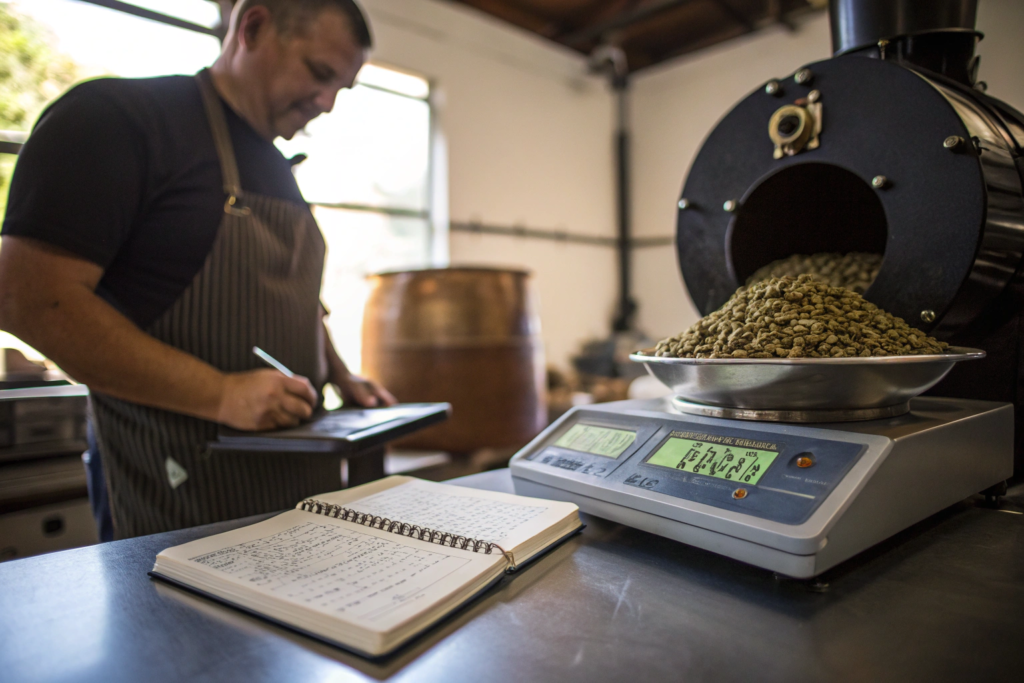
Measuring usage is simple. But you have to be consistent. Pick a time period. A week works well. Then count your starting inventory. Add any new bags you received. Subtract your ending inventory. The result is your usage for that period. Do this every week. Write it down. After a month, you will see a pattern. Some weeks are busy. Some are slow. That is normal. The pattern is what matters. You can also measure per roast batch. Weigh the green beans before and after. Track the loss. This gives you a precise burn rate for each coffee. Do this for your top sellers first. That is where the money is.
What numbers do you need to track?
You need five basic numbers. First, starting inventory. Second, new deliveries. Third, ending inventory. Fourth, roast loss percentage. Fifth, sales volume. With these five, you can calculate almost everything. You can find your weekly burn rate. You can find your weeks of cover. You can find your reorder point. You can also spot waste. If your roast loss jumps from 15 percent to 20 percent, something changed. Maybe the bean moisture is different. Maybe your roast profile needs work. Either way, the number tells you to look. Simple records beat fancy software. A notebook works fine.
How often should you recalculate?
You should recalculate every week. Monthly is too slow. A lot can change in four weeks. A new wholesale client can double your usage. A lost account can cut it in half. If you only check monthly, you react too late. Weekly checks keep you close to reality. I also suggest a full review every quarter. Look at trends. Are you growing? Are you shrinking? Do you hold too much of one origin? This bigger view helps you plan contracts with exporters. It also helps you negotiate. When you know your numbers, you have power.
What Formula Should You Use?
The basic formula is easy. Burn rate equals starting inventory plus purchases minus ending inventory. Then divide by the number of weeks. That gives you weekly burn rate. For example, say you start with 2,000 pounds. You buy 1,000 pounds. You end with 1,500 pounds. Your usage is 1,500 pounds. If that took three weeks, your burn rate is 500 pounds per week. That is it. No complicated math. You can also calculate months of cover. Divide your current inventory by your weekly burn rate. If you have 3,000 pounds and burn 500 pounds a week, you have six weeks of cover. That is a healthy number for most roasteries.

Can you show a simple example?
Sure. Let me use a real example from a buyer I know. He runs a small roastery in Ohio. He starts January with 1,200 pounds of green coffee. During January, he receives 800 pounds. He ends January with 1,000 pounds. So his usage is 1,200 plus 800 minus 1,000. That equals 1,000 pounds for the month. Divide by four weeks. His burn rate is 250 pounds per week. At that rate, his 1,000 pounds of ending stock gives him four weeks of cover. That is a bit tight. So he orders more in early February. This simple math saved him from running out during a busy Valentine's season. You know, numbers do not lie. They just wait for you to read them.
What is a healthy weeks-of-cover number?
A healthy weeks-of-cover number depends on your supply chain. If you buy locally, two to three weeks may be fine. If you import from overseas, you need more. Shipping from China to the U.S. can take four to six weeks. Add customs and inland transport. So smart importers hold six to ten weeks of cover. That protects them from delays. It also protects them from price jumps. But do not go overboard. Twelve weeks is usually the top end. Beyond that, you tie up too much cash. And green coffee does not improve forever. It ages. So balance is key. Find your comfort zone. Then stick to it.
How Do You Use Burn Rate to Plan Orders?
Burn rate is a planning tool. Once you know it, you can set a reorder point. That is the inventory level that triggers a new order. The formula is simple. Reorder point equals weekly burn rate times lead time in weeks, plus a safety buffer. Say your burn rate is 300 pounds a week. Your lead time is six weeks. Your safety buffer is two weeks. So your reorder point is 300 times eight, which is 2,400 pounds. When your stock hits 2,400 pounds, you order. This keeps you from running out. It also keeps you from over-ordering. It is a simple system. But it works.

How do you set a reorder point?
Setting a reorder point takes three steps. First, know your weekly burn rate. Second, know your lead time from the exporter. Third, choose a safety buffer. Add them together. That is your reorder point. Be honest about lead time. Many buyers use the best-case number. Then they get burned when a ship is late. Use the realistic number. Add a week for customs. Add a week for inland trucking. It is better to order early than to run out. We always share shipping schedules with our buyers. That helps them plan. Good information makes good decisions.
How do you avoid over-ordering?
You avoid over-ordering by watching two things. First, your weeks of cover. If it goes above twelve, slow down. Second, your cash flow. If a big order will hurt your monthly cash, split it. You can also mix origins. Buy a smaller amount of a new coffee. Test it. Then buy more if it sells. This lowers risk. Another trick is to track aging. Write the arrival date on every bag. Use older bags first. This is called FIFO, or first in, first out. It keeps your stock fresh. It also shows you which coffees sit too long. You know, a full warehouse feels safe. But a smart warehouse feels better.
Conclusion
Green coffee burn rate is not a fancy concept. It is basic math. You count what comes in. You count what goes out. You divide by time. That gives you a number. That number tells you when to order and how much to hold. It protects your cash. It protects your customers. It protects your business. I wish someone had taught this to that roaster in Portland. He learned it the hard way. You do not have to. Start with one week of counting. Then repeat. The pattern will show up fast. If you need help planning your green coffee supply, we are here. We work with roasters every day and we understand lead times, shipping, and quality. Please contact Cathy Cai at cathy@beanofcoffee.com to discuss your order with BeanofCoffee. We will help you build a supply plan that fits your roast and your cash flow.