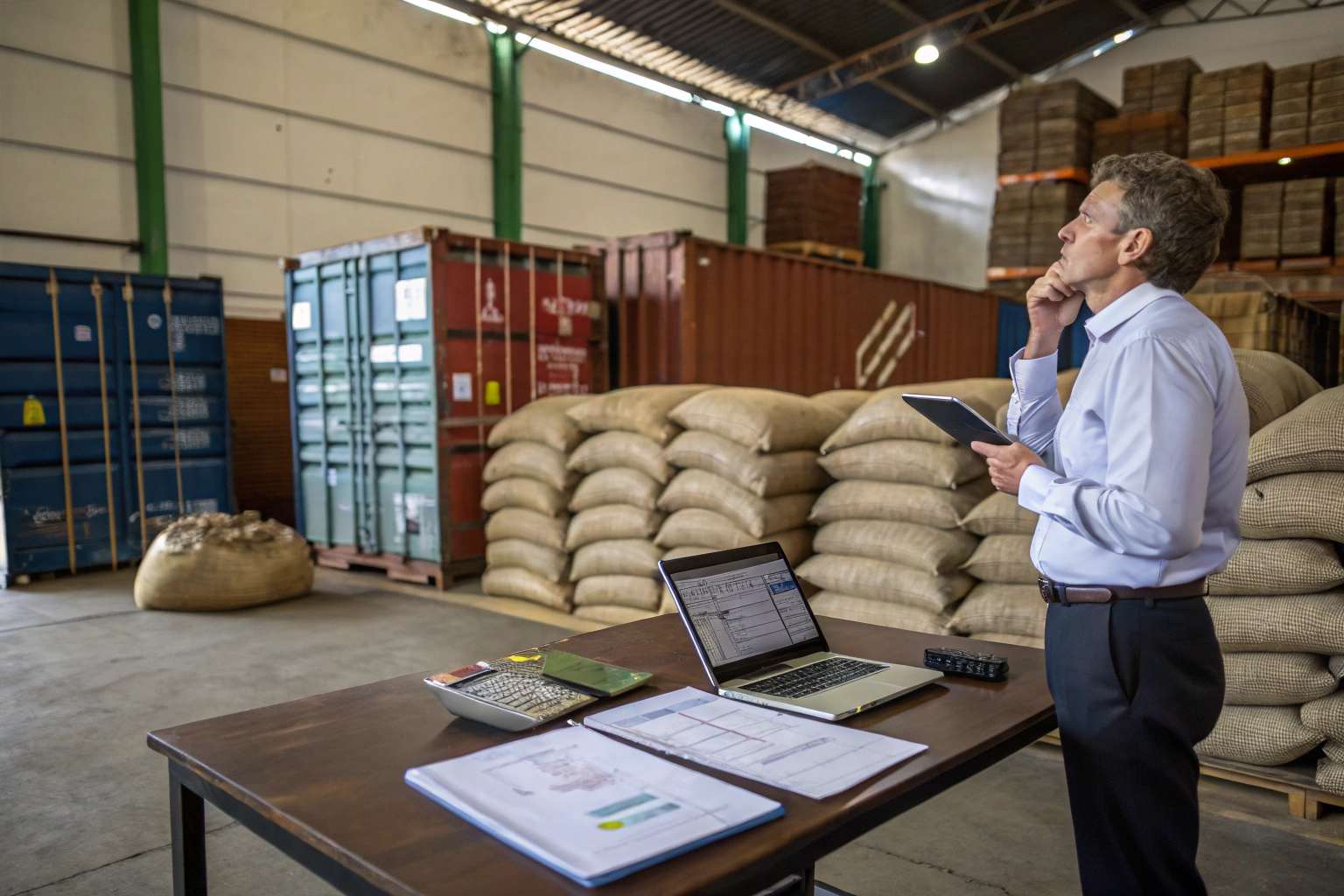
I still remember the exact moment I made the worst freight decision of my career. A small roaster in Melbourne was about to launch a limited-edition single-origin Yunnan Catimor. The launch event was set. The local food journalists were invited. Two weeks before the date, he realized his sea freight container was stuck in Singapore, delayed by a typhoon. He called me, desperate. I crunched the numbers and suggested a pallet via air freight. It cost him an extra $4,800. The coffee arrived in three days. The launch was saved. But the profit on that entire lot? Gone. Absorbed by the air freight bill. Was it the right call? Absolutely. Was it a profitable call? No. That day taught me a lesson I now share with every buyer: the choice between air and sea freight isn't about speed versus cost. It's about matching the freight mode to the specific type of margin crisis you're facing.
Choosing between air freight and sea freight for green coffee comes down to a simple equation: calculate the cost of not having the coffee—the lost sales, the contract penalties, the brand damage—and compare it to the freight premium. If the "cost of emptiness" is higher than the air freight surcharge, you fly the coffee. If your inventory buffer can absorb a 4-to-6-week ocean transit, you ship by sea. The real skill isn't picking a mode. It's accurately calculating the true cost of a stock-out. For a buyer like Ron, who cares about price and timeliness in equal measure, this isn't a binary choice between cheap and expensive. It's a strategic tool. You need to know exactly when a $500 sea freight bill is the smartest investment you'll ever make, and when a $5,000 air freight bill is the only thing standing between you and a retail shelf with your name on it.
I want to walk you through this decision from the perspective of the person shipping the beans. I've been on the phone during these crises. I've done the math alongside a panicking roaster. The choice isn't just about the numbers on a freight quote. It's about the physical reality of what a long ocean journey does to a delicate green bean, the cash-flow trap that sea freight creates for a small business, and the hybrid strategies that the smartest buyers use to get the benefits of both modes. Let's start with the most tempting, most dangerous, and most misunderstood option in our industry: putting coffee on a plane.
When Should You Ship Green Coffee by Air Freight?
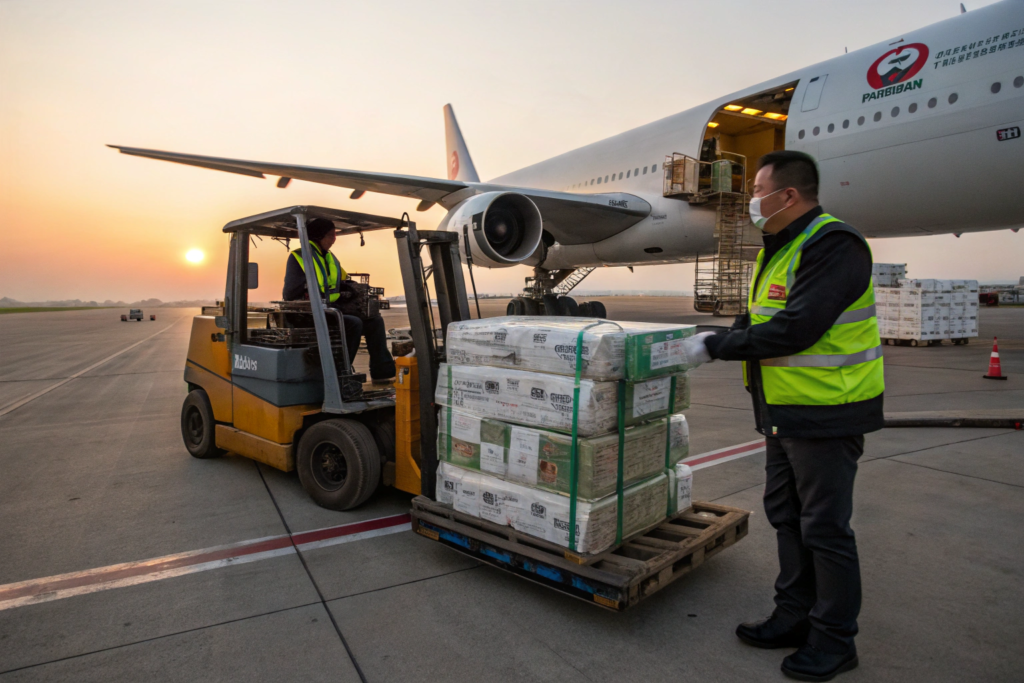
Air freight is not a shipping method. It's an emergency rescue tool. I tell my buyers this all the time. If you're building air freight into your regular profit margin calculation, you're building a business model that's bleeding from the start. The math simply doesn't work for a commodity like green coffee. A standard 60-kilo bag of our Yunnan Arabica might cost you $250 to buy. Shipping that single bag by air could cost $180. You're nearly doubling the landed cost. The only scenario where this insanity makes financial sense is when the alternative cost—the cost of having no coffee—is astronomically higher than the freight bill. That happens. But not as often as people think.
You should ship green coffee by air freight only when a supply chain disruption creates an imminent stock-out that will trigger a catastrophic business loss, such as a major retail contract penalty, a complete halt to your roasting production for more than five days, or the failure of a high-profile brand launch where the reputational damage outweighs the freight premium by a wide margin. Air freight is a tourniquet. You apply it to stop a fatal bleed, not to heal a scratch. A confident buyer like Ron, who values timeliness, needs a clear, hard trigger for pulling the air freight lever. That trigger is a specific, quantifiable financial disaster. Not a mild inconvenience. Not a "we might run a bit low." An actual disaster.
Let's look at the specific numbers. When does a stock-out cross the line from annoying to financially fatal? And what does air freight actually buy you beyond just raw speed?
What Is the True Cost Per Pound of Air Freighting a Coffee Emergency?
Let's put real numbers on this so you can see the stark math. Imagine you're completely out of our Yunnan Catimor, and you need 500 kilos to keep your roastery running for a week while the delayed container arrives. Here's the comparison:
| Cost Element | Sea Freight (per kilo) | Air Freight (per kilo) |
|---|---|---|
| FOB Coffee Price | $4.50 | $4.50 |
| Main Freight Cost | $0.30 | $3.80 |
| Customs Brokerage & Handling | $0.25 | $0.45 |
| Destination Trucking | $0.20 | $0.35 |
| Total Landed Cost | $5.25 | $9.10 |
Look at the total landed cost difference. $5.25 per kilo versus $9.10. That's a 73% increase. For 500 kilos, you're paying an extra $1,925. Now, here's the question you must answer honestly: Is not having these 500 kilos of coffee for one week going to cost your business more than $1,925? If your weekly wholesale revenue is $15,000, and those clients will leave you permanently over a missed delivery, then yes, $1,925 is a bargain. If you're just topping up your retail shelf and customers can buy a different blend for a week, it's a terrible financial decision. You can check real-time air cargo rate trends to see how volatile these numbers can be during peak seasons.
How Does Air Freight Preserve Roasting Schedules and Brand Launches?
The speed of air freight isn't just about days. It's about predictability. When you put coffee on a plane, the transit time from our farm in Yunnan to your roastery door is often 4 to 7 days, door to door. The window is tiny. You can schedule your roast day with near certainty. This is the real value for a brand launch. You've printed the bags. You've sent the press release. The event is locked. Sea freight, with its 30 to 45-day window, is a gamble on a specific date. A two-week port delay is normal and expected. Air freight essentially eliminates that variance. This certainty is the only reason to pay the premium. A reliable partner will track that air shipment with the same rigor as a sea container, using cargo tracking systems to give you real-time updates. The goal is to buy back your production schedule, not just your coffee.
But what about the coffee itself? You've just paid a fortune to fly it. But the journey itself, the sealed metal tube at 35,000 feet, does something to the beans that most buyers don't consider. The physical pressure changes can cause the hermetic bags to puff up and, in rare cases, fail if they're not properly sealed. This is why we always double-bag and vacuum-seal air freight shipments. The green coffee packaging standards for air freight are different and more stringent than sea freight precisely to combat these pressure shifts and protect your expensive emergency lot.
That emergency lot is saved. Your launch is secure. But this victory came at a massive cost. You can't run a sustainable business on air freight. The long-term engine of your coffee company, the slow, steady heartbeat, is that container on the water. And the economics of that mode, the standard 20-foot box, is where your profit margin actually lives or dies.
What Are the Hidden Risks of Sea Freight for Coffee Importers?
Sea freight is the backbone of the coffee trade. Over 99% of our beans move this way. It's cheap, it's efficient, and it's the only way to move the 20-ton containers that make the math work. But calling it "cheap" is a lie. It's just a different cost structure, one with risks that hide inside a 40-day journey. I've seen a perfect container of specialty Arabica leave our farm and arrive as a sweaty, musty, un-sellable mess because of something called "container sweat." The buyer paid a low freight rate, but he received zero usable coffee. The cheapest shipping quote became the most expensive loss he ever took.
The hidden risks of sea freight for coffee importers are primarily quality degradation from moisture condensation inside the container during temperature swings, financial losses from demurrage charges when containers are stuck at congested ports, and the cash-flow strain of having large amounts of capital tied up in transit for 40 to 60 days. These aren't rare, freak accidents. They are predictable, physical realities of putting organic material in a steel box and sailing it across the equator. A buyer focused on security, like Ron, needs to understand these risks not to avoid sea freight—you can't avoid it—but to choose a supplier who has systems to neutralize them before the container is even sealed.
Let's get into the most insidious of these risks, the one that can silently destroy a container of perfectly graded coffee without any visible external damage to the bag.
How Does Container Condensation Destroy Green Coffee Quality?
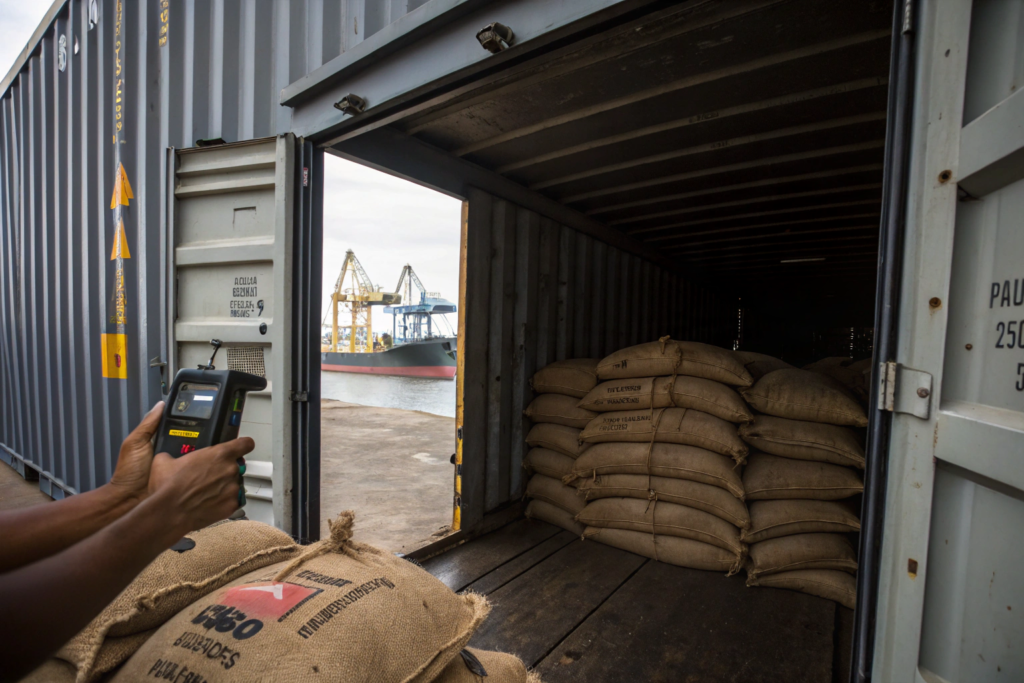
This is the "container rain" phenomenon. Here's how it works. Our coffee is loaded in Yunnan, maybe on a cool, dry morning at 15 degrees Celsius. The container is sealed. The ship sails south, through the tropics, where the deck temperature can hit 40 degrees. The air inside the container heats up and expands, and the beans, which are organic material, release a small amount of residual moisture. Then, the ship hits a cold current, or it docks at a chilly port. The steel walls of the container cool rapidly. The warm, slightly humid air inside hits the cold steel roof and condenses. Water drips down onto the top layer of coffee bags. This isn't a small amount of dampness. It can saturate the top bags, causing mold, ochratoxin development, and complete spoilage.
This is a physical, predictable risk. We combat it with two tools. First, we use hermetic GrainPro bags inside the jute. These act as a one-way barrier, letting CO2 out but not letting moisture in. Second, we line the container ceiling with corrugated paper or a specialized moisture-absorbing blanket that catches the drips before they hit the coffee. We also ensure the beans are at a stable safe moisture content of 10.5% to 11.5% before bagging. A cheap supplier who skips these steps is sending you a ticking time bomb, not a reliable product. The science of this is well documented in container shipping guides for sensitive cargo.
Why Do Demurrage and Detention Fees Spiral Out of Control?
Condensation is a quality risk. Demurrage is a pure, unnecessary financial hemorrhage. It happens when your container arrives at the destination port, but you can't pick it up. The clock starts. The terminal gives you a few "free days," usually four or five working days. After that, you pay a daily storage fee to the port. This is demurrage. If you also keep the shipping line's container too long because your warehouse is full, you pay detention. I've seen a buyer rack up a $3,000 demurrage bill on a single container because his customs broker filed a document one day late, triggering an exam, and the whole process stretched to ten days.
The core problem is that once the free time expires, the daily rates are brutal. A fee that starts at $120 per day can quickly jump to $300 per day after a week. You lose all the savings from the cheap ocean freight. The only defense is a highly competent customs broker and a drayage trucker who can pick up the container the moment it's released. You can check your port's specific terminal demurrage tariff to see the exact daily rates. A reliable supplier on our side helps by ensuring the shipping documents are flawless and transmitted electronically the moment the vessel sails, giving your broker maximum time to clear the cargo.
These risks—the moisture, the fees—all hit harder when a single container represents a massive chunk of your annual cash. That's the final hidden cost of sea freight: the financial drag of having your money floating on the ocean, untouchable, for two months. And that drag directly impacts whether you should even be filling a whole container in the first place, or if a smarter, mixed strategy is the real path to margin control.
Should You Use LCL Sea Freight or Full Container Loads for Coffee?
When your business is growing, the container math gets awkward. You're too big for a few pallets, but you can't quite swallow a full 20-ton container. The volume of green coffee is sitting right in the dead zone. This is when the freight forwarder offers you LCL—Less than Container Load. "Just pay for the space you use!" It sounds so sensible, so efficient. And I'll tell you, for very specific situations, it is. But for a quality-focused coffee roaster, LCL is a game of Russian roulette with your bean quality. You lose control over what your coffee sits next to, how it's handled, and how long it sits in a consolidation warehouse waiting for the container to fill up.
You should use LCL sea freight for green coffee only when you are shipping a very small trial volume of 1 to 5 pallets and you accept the increased risks of physical damage, moisture exposure, and longer transit times that come with sharing container space with unknown cargo from other shippers. Full Container Load is the standard for a reason. It's your sealed, dedicated space. The container is locked at our warehouse in Yunnan and not opened again until it reaches your warehouse or a bonded examination site. LCL means your pallets get unloaded, staged in a warehouse, and then reloaded into a shared container with other goods. Every extra touch is an extra risk. Every hour in that open warehouse is an hour of exposure to moisture and pests.
For a buyer like Ron, who prioritizes quality and security, LCL is almost always a false economy. The per-kilo freight rate looks competitive, but the hidden costs of quality loss and the lack of a tamper-proof chain of custody usually erase the small savings. Let's break down exactly what happens to your coffee during that consolidation process.
How Does LCL Consolidation Expose Your Beans to Physical Damage?
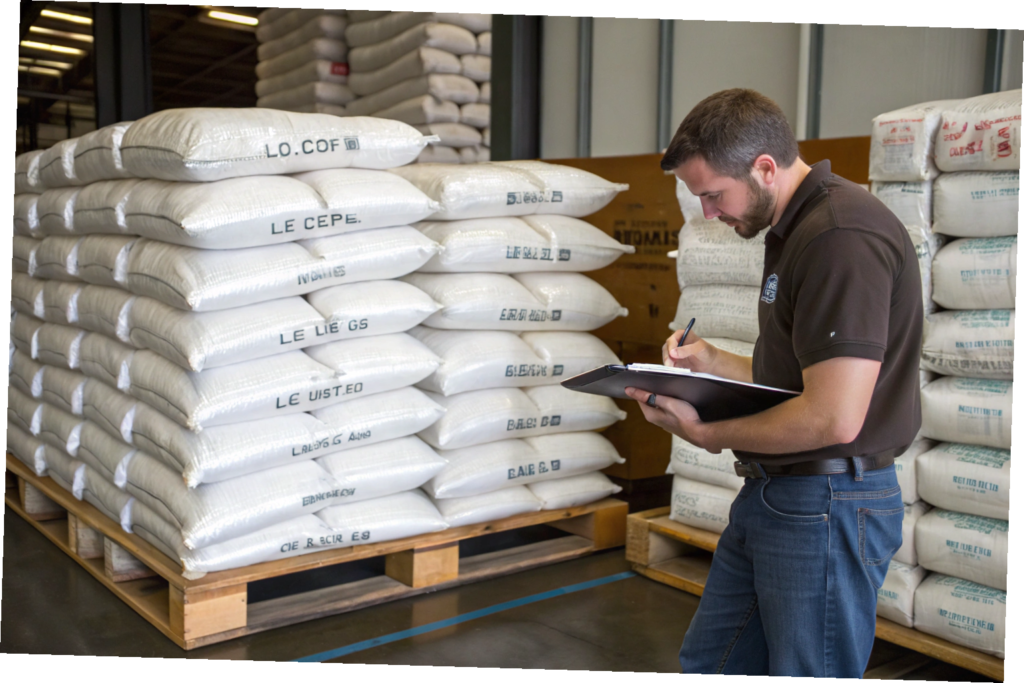
Imagine your perfectly stacked, shrink-wrapped pallet of Yunnan Arabica. It leaves our truck. It arrives at a massive freight consolidation warehouse in Shanghai. A forklift driver, who handles hundreds of pallets a day, picks it up. Maybe he nudges it against a steel rack. Maybe the shrink-wrap tears. Your pallet is then placed next to someone else's cargo—a pallet of industrial cleaning supplies, or rubber mats, or garlic powder. Yes, garlic. Coffee is a sponge. It absorbs odors through the jute bag. I've heard stories of entire pallets of specialty coffee ruined because they were stowed next to strong-smelling chemicals in an LCL container. The coffee arrived tasting faintly of detergent. The insurance claim was a nightmare and didn't cover the "off-taste" as physical damage.
This physical handling and odor risk is simply absent in a Full Container Load. Your container is loaded once, sealed with a tamper-proof seal, and the seal number is recorded on the bill of lading. You check that seal when the container arrives. If it's broken, you know there's been unauthorized access. This chain of custody is critical for certified coffee like Organic or Rainforest Alliance. The integrity of an FCL shipment is a guarantee. The detailed container loading protocols for FCL ensure your cargo isn't mixed with incompatible goods, a basic right you lose in an LCL consolidation.
What Is the Volume Tipping Point for a Profitable Full Container?
So, when do you make the jump? The financial tipping point isn't just about filling the physical space. It's about the freight cost per kilo crossing a threshold where the waste of LCL surcharges outweighs the benefit of not committing to a full 20 tons. Let's look at a comparison from a recent shipment.
| Cost Factor | LCL (5 Pallets / 3,000 kg) | FCL (20ft / 19,500 kg) |
|---|---|---|
| Ocean Freight Rate | $180 per CBM | $3,200 flat rate |
| Consolidation Fee | $250 | $0 |
| Destination Handling | $350 | $450 |
| Total Freight Cost | ~$2,400 | $3,650 |
| Cost Per KG | $0.80 | $0.19 |
Look at the cost per kilo. $0.80 versus $0.19. That is the sound of your margin evaporating on an LCL shipment. The break-even point, in my experience, is usually around 8 to 10 pallets. Below that, the absolute cash outlay for LCL is lower, even if the per-unit cost is high. Above that volume, you're literally burning money by not filling a full container. The transit time is also faster for FCL. LCL containers wait in the origin warehouse until they're completely full before the forwarder ships them, adding 5 to 10 extra days. For practical volume planning, you can analyze the cost using a standard freight rate calculator to see the real-time difference between these two modes for your specific route. And if you're still in that awkward in-between phase, the phase where you're too big for LCL but too small for a container, there's a strategic path forward that doesn't involve gambling on shared cargo space.
What Is a Hybrid Freight Strategy for Growing Coffee Importers?
A growing coffee business rarely fits neatly into one box. Your demand is climbing, but it's not perfectly smooth. You have a core, year-round espresso blend that sells like clockwork. And then you have a seasonal single-origin, like our Yunnan Catimor, that spikes for three months and then disappears. If you only use sea freight, you're stuck holding a huge inventory of that seasonal coffee, risking it going stale. If you use only air freight, your core blend has no profit margin left. The answer is not to choose one mode. The answer is to run both, strategically, as a single synchronized system.
A hybrid freight strategy for growing coffee importers combines a steady, predictable Full Container Load sea freight pipeline for base volume with a small, pre-planned air freight reserve for new market launches, seasonal peak demand, and as a deliberate shock absorber for supply chain disruptions. This isn't about reacting to emergencies with expensive air freight. It's about budgeting for a small, calculated air freight expense as a normal part of your annual logistics plan. This approach decouples speed from cost. Your sea freight gives you the low unit cost. Your air freight reserve gives you market agility and a safety net that no sea freight schedule can match.
For a buyer like Ron, this strategy directly addresses the tension between his need for a low price and his demand for reliability. It's how you stop gambling and start planning. Let's see how a growing brand can use this hybrid model to confidently enter a new market without betting the farm on a single sea container.
How Can a Small Air Freight Reserve De-Risk a New Market Launch?
You're launching your coffee in a new city. You've pitched to a major grocery chain. They say yes. But the first order is small—a test run of just 200 kilos for 20 stores. If you ship this test by sea, you wait six weeks. The buyer's enthusiasm cools. Competitors fill the shelf. And you're stuck with a full container of coffee if the test fails. This is a perfect use case for a hybrid strategy.
You pre-budget for a 200-kilo air freight shipment specifically for this market test. The cost per kilo is high, yes, but the total financial exposure is low. You're risking a $1,200 freight bill, not a $35,000 container commitment. You get the coffee on the shelf fast. You get real sales data. You prove the concept. Only then do you commit to the full sea freight pipeline. This turns market entry from a high-stakes gamble into a calculated experiment. This approach aligns well with lean supply chain risk management principles by minimizing sunk costs until demand is validated.
Why Combine Bulk Sea Freight With a Pre-Planned Emergency Air Budget?
This is the final evolution of a smart hybrid strategy: building the emergency into the annual plan. You don't wait for a ship to get stuck in Panama to price out air freight in a panic. You already have a negotiated rate with an air freight forwarder and a $5,000 line item in your annual logistics budget labeled "Supply Chain Disruption Reserve." If nothing goes wrong all year, you have a $5,000 bonus. If something does go wrong, you just execute a pre-planned protocol. You don't need to panic. You just make one phone call.
This reserve fund is an insurance policy you pay to yourself. It guarantees that a logistical disaster never forces you to compromise on your quality or your customer commitments. A BeanofCoffee partnership supports this by helping you forecast the exact sea freight timelines, so you know precisely when the air freight trigger should be pulled. This model stabilizes your cash flow. It means your core coffee is always profitable on the water, and your emergency fix is already paid for before the crisis even hits.
Conclusion
Choosing between air and sea freight is a choice between two very different business philosophies. One is a slow, massive, cost-efficient river of coffee that requires patience and strong inventory management. The other is a surgical, lightning-fast strike that rescues a schedule but decimates a profit margin. The skill isn't in picking one and sticking to it forever; it's in knowing the exact financial trigger where the costly speed of an airplane becomes cheaper than the damage of an empty roastery. It's understanding that the hidden risks of sea freight—condensation, demurrage, and dead capital—are managed not by the shipping line, but by the diligence of your supplier and your own customs broker. And for the growing business stuck in the awkward middle, the real edge is a hybrid strategy that uses the low cost of the sea for your steady base and the speed of air for your calculated bets and safety nets.
At BeanofCoffee, we've guided buyers through all three modes: the emergency air pallet, the standard FCL container with condensation-proof packing, and the carefully timed LCL trial. Our goal is to match the freight mode to your specific margin equation, not just sell you a bag of beans. If you're weighing the trade-offs for an upcoming order and need a transparent breakdown of sea versus air lead times and real costs from Yunnan to your door, my export partner Cathy Cai can provide a side-by-side comparison. Reach out to her directly at cathy@beanofcoffee.com. Let's build a freight strategy that protects both your price point and your delivery promise.