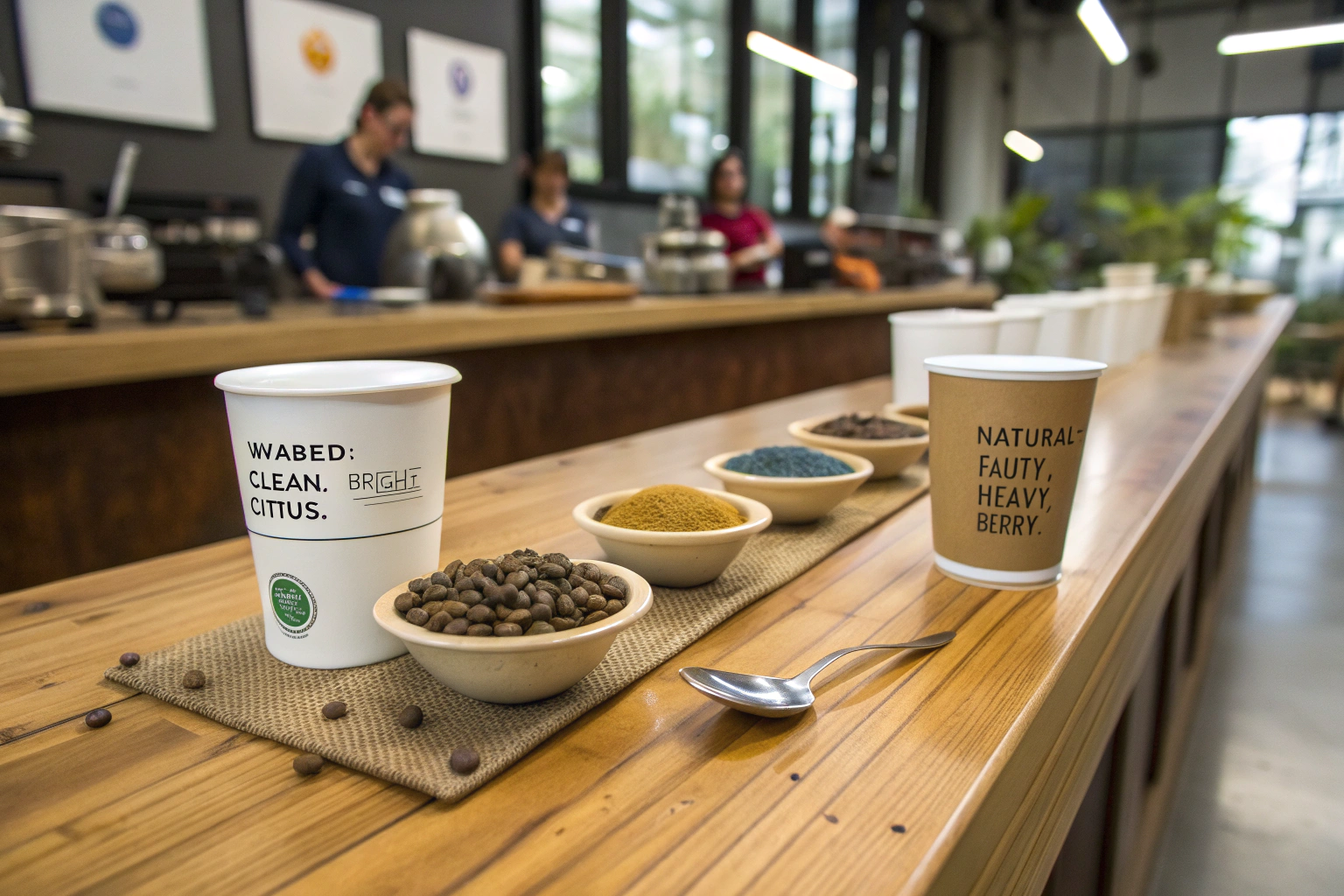
A roaster in Manchester sent me an urgent message last month. He was staring at my offer sheet, confused. I had sent him two samples of the same Catimor variety from the same harvest. One was washed. One was natural. The prices were similar. The cupping scores were both 84. He had no idea which one to buy for his espresso blend. He asked me to explain the difference in one sentence. I told him: "The washed coffee lets the bean speak. The natural coffee lets the fruit speak."
Choosing between washed and natural Arabica beans comes down to three factors: the flavor profile your customers expect, the brewing method you are optimizing for, and the consistency and shelf-life requirements of your roasting program. Washed coffees deliver clean, bright, and predictable cups. Naturals deliver heavy, fruity, and often unpredictable cups that can be spectacular or wildly inconsistent.
There is no universally correct choice. There is only the right choice for your specific roastery, your specific customers, and your specific product lineup. Understanding the differences at the bean level, the processing level, and the roasting level will help you make that choice with confidence.
What Are the Fundamental Processing Differences Between Washed and Natural?
The difference between washed and natural coffee begins at the moment the cherry leaves the tree. In washed processing, the fruit is removed almost immediately. In natural processing, the fruit stays with the bean for the entire drying period. This single decision changes everything about the final cup.
The fundamental processing difference is that washed coffee removes the cherry skin and mucilage before drying, leaving only the clean parchment-covered bean, while natural coffee dries the entire cherry intact, allowing the bean to absorb sugars and flavor compounds from the fruit over several weeks of slow drying.
This difference is not subtle. It is the difference between a controlled, predictable fermentation in a water tank and a wild, unpredictable fermentation inside the cherry skin. The washed process is about subtraction and clarity. The natural process is about addition and intensity. A washed coffee tastes like the bean and the soil. A natural coffee tastes like the bean, the soil, and the fruit. That extra fruit dimension can be glorious or problematic.
How Does Fermentation Differ in Washed vs. Natural Processing?
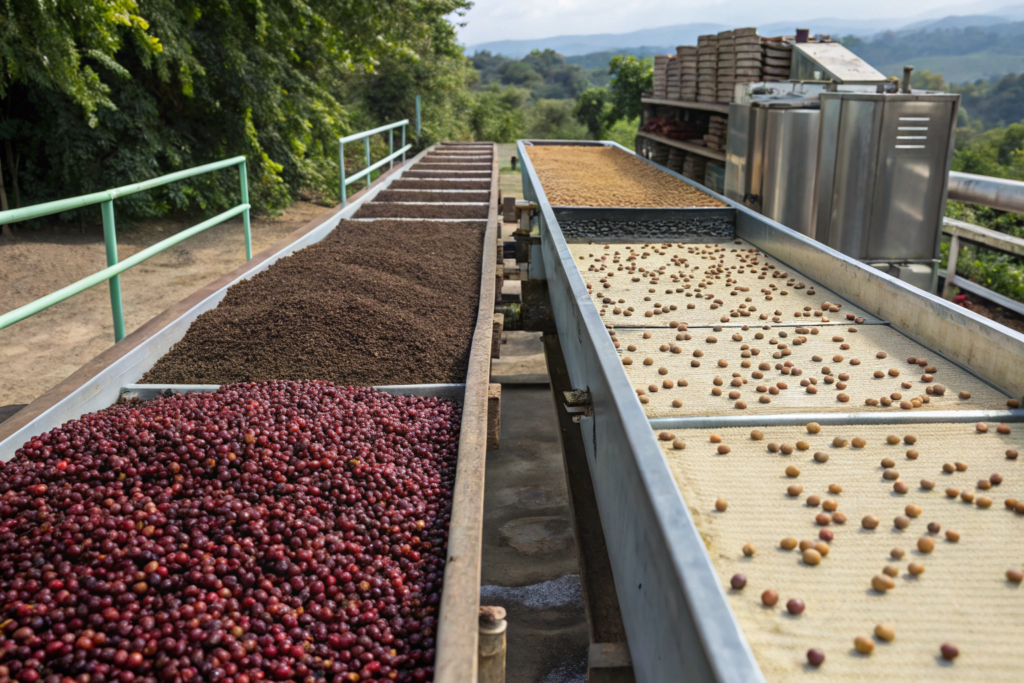
Fermentation is the stage where microorganisms break down sugars and produce flavor compounds. In washed processing, fermentation happens in a controlled environment, usually a tank of clean water. The mucilage layer, the sticky fruit pulp clinging to the parchment, is eaten away by bacteria and yeasts over 12 to 36 hours. The process is monitored. The temperature is managed. The endpoint is when the mucilage washes off cleanly with a splash of water.
In natural processing, fermentation happens inside the intact cherry. The cherry is spread on drying beds under the sun. The skin traps moisture. Wild yeasts and bacteria from the air colonize the fruit. The fermentation is slower, less uniform, and influenced by the ambient weather. A cloudy day slows it. A hot afternoon accelerates it. The cherry becomes a tiny fermentation vessel. The bean inside absorbs not just sugars, but also the byproducts of this wild fermentation—esters, alcohols, and organic acids. These compounds create the intense fruity and sometimes boozy notes associated with natural coffees. The risk is that uncontrolled fermentation produces off-flavors: overripe banana, vinegar, or medicinal notes. A well-managed natural requires constant attention.
Why Do Natural Beans Often Have a More Uneven Appearance?
Look at a sample of washed green beans next to a sample of natural green beans from the same farm. The washed beans are uniform in color, a consistent blue-green or olive. The natural beans are a mosaic. Some are pale green. Some are amber. Some have a brownish tint. This uneven appearance is not a defect. It is a direct result of the natural processing method.
During natural drying, the cherries on the top of the bed receive more direct sun and dry faster. The cherries in the middle of the pile, or those turned less frequently, dry slower. Each cherry's individual moisture history affects the final color of the bean inside. Also, the fruit sugars that penetrate the bean during drying caramelize slightly during the later stages of drying and during storage. This creates color variation. A roaster who is used to the visual uniformity of washed coffee might reject a natural lot on appearance alone. That is a mistake. The uneven color is normal. The cup is the judge, not the eye.
How Do Washed and Natural Arabica Beans Differ in Flavor Profile?
Flavor is where the processing choice becomes tangible. The washed cup and the natural cup can taste like completely different coffees, even if they come from identical trees. The processing method is a flavor sculptor.
Washed Arabica typically presents a clean, transparent cup with bright acidity, delicate floral or citrus notes, and a light to medium body. Natural Arabica typically presents an intense, complex cup with pronounced berry, tropical fruit, or wine-like notes, a heavy syrupy body, and a finish that can range from sweet to slightly fermented.
Think of washed coffee as a watercolor painting. The flavors are distinct but subtle. You taste the specific citrus note. You identify the jasmine. The acidity is crisp and well-defined. The finish is clean and short. Think of natural coffee as an oil painting. The flavors are thick and layered. The blueberry note is not a whisper. It is a declaration. The body coats the tongue. The finish lingers. Neither is better. They are different aesthetic experiences.

Which Processing Method Is Better for Espresso Blends?
Espresso is a demanding brew method. It amplifies both the strengths and the weaknesses of a coffee. The intense pressure and short extraction time concentrate flavor. A washed Arabica used as an espresso base produces a clean, bright shot with defined acidity. But it can sometimes lack body and sweetness, coming across as thin or sour.
Natural Arabica excels in espresso. The heavy body of a natural coffee creates the thick, syrupy mouthfeel that espresso drinkers associate with quality. The intense fruit and chocolate notes cut through milk beautifully. A natural Catimor from Baoshan can anchor an espresso blend, providing the bass note that washed coffees alone cannot deliver. Many roasters use a blend strategy: a washed coffee for brightness and definition, and a natural coffee for body and fruit sweetness. The ratio depends on the target flavor profile. A classic Italian-style espresso might be 70% washed, 30% natural. A modern fruit-forward espresso might be 50/50 or even 100% natural.
Which Processing Method Suits Filter and Pour-Over Brewing?
Filter brewing is an analytical tool. The paper filter removes oils and sediment. The resulting cup is clean and transparent. Every flavor note stands alone. Defects are impossible to hide.
Washed coffees shine in filter brewing. Their clean, defined acidity and delicate floral notes are perfectly suited to the clarity of a pour-over. A washed Yunnan Arabica brewed through a V60 can taste like jasmine tea with a lemon zest finish. The transparency of the brewing method matches the transparency of the processing. Natural coffees can also work in filter, but the experience is different. The fruit notes are intense. The body is heavier than a typical filter coffee. Some filter enthusiasts love the punch of a natural. Others find it too muddy or overwhelming. It is a matter of preference. For a roaster offering a single-origin filter menu, washed is the safer default, and natural is the adventurous alternative.
What Are the Shelf Life and Storage Differences Between Washed and Natural?
Green coffee is not immortal. It ages. The volatile aromatics fade. The acidity softens. The freshness clock ticks from the moment the bean is dried. The processing method influences the speed of that clock.
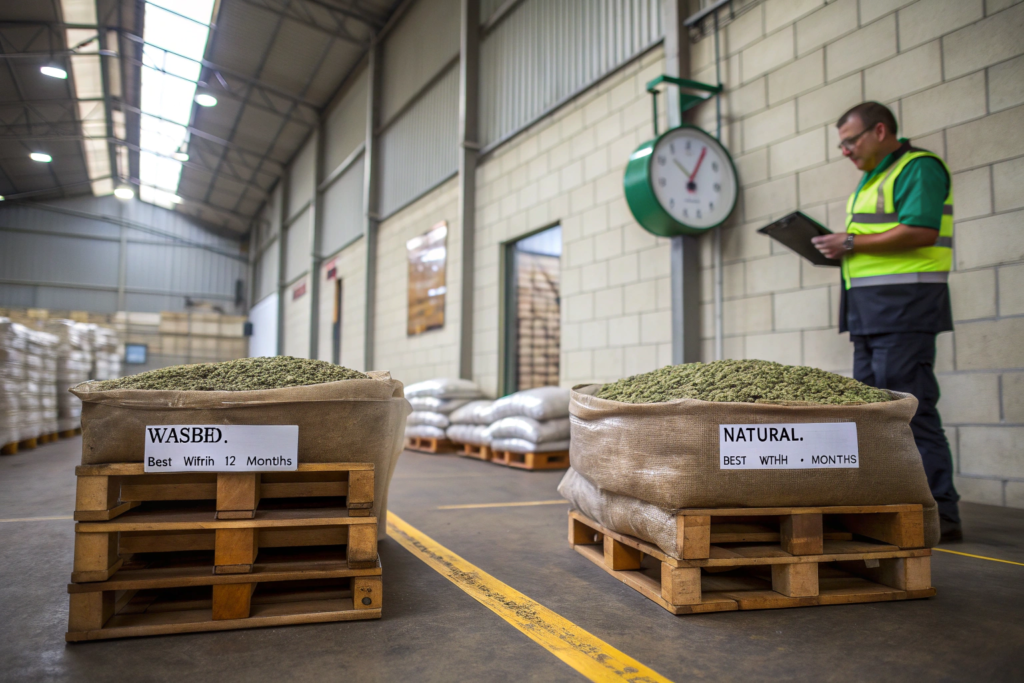
Washed Arabica generally has a longer shelf life and more stable storage profile because the clean processing removes the fruit material that can degrade and produce off-flavors. Natural Arabica, with its residual fruit sugars and complex microbial load, tends to fade faster and is more vulnerable to developing fermented or baggy notes over time.
A washed coffee stored in hermetic bags at stable temperature can hold its peak character for 10 to 12 months. A natural coffee from the same harvest, stored identically, might start showing faded fruit notes and a slightly flat body after 8 to 10 months. The fruit-forward intensity that made the natural exciting when fresh becomes a liability as it ages. The berry notes turn from fresh to dried to dusty. The wine-like character turns vinegary.
Do Natural Coffees Age Faster Than Washed Coffees?
Yes, and the reason is chemistry. The natural process leaves more organic material—sugars, fruit acids, microbial metabolites—on and in the bean. These compounds are chemically active. They continue to react during storage.
The residual sugars in a natural coffee can undergo Maillard-like browning reactions slowly over time, even at room temperature. The fruit acids can oxidize. The volatile esters that create the blueberry and strawberry notes are fragile. They break down. A natural coffee at nine months may still cup clean, but the explosive fruit character that justified the premium price will have faded to a generic sweetness. A washed coffee, by contrast, has fewer of these reactive compounds. Its flavor depends more on stable organic acids and the structural integrity of the bean. It fades more slowly and gracefully. For a roaster with slow inventory turnover, washed coffee is the lower-risk choice.
How Should Roasters Adjust Inventory Rotation for Naturals?
Inventory management is critical for natural coffees. The "first in, first out" rule applies doubly. A roaster who buys a pallet of natural Arabica should plan to use it within six to nine months of the harvest date, not the arrival date.
If a natural lot sits in the roastery for a year after arrival, it may already be 15 to 18 months from harvest. The quality drop can be significant. The solution is to buy natural coffees in smaller, more frequent shipments rather than large, infrequent ones. A roaster who uses one pallet of natural coffee per quarter should order one pallet per quarter, not four pallets at once. The storage savings from bulk buying are erased if the last two pallets fade before they can be used. Some roasters also designate natural coffees for their fastest-turning products—the espresso blend that sells out every month—ensuring that the inventory cycles quickly.
How Do Pricing and Availability Compare Between Washed and Natural?
The market for washed and natural coffee operates on different supply-and-demand dynamics. Washed coffee is the industry standard. It is produced in large volumes. Natural coffee is a specialty niche. It is produced in smaller lots, often as an experimental or premium product.
Natural Arabica typically commands a higher FOB price than washed Arabica of the same cup score because the processing is more labor-intensive, the risk of defect is higher, and the volume available is much smaller. Washed coffee offers more predictable pricing and year-round availability, while natural coffee is often seasonal and allocated to committed buyers before the spot market even sees it.
A roaster building a core blend should base it on washed coffee. The supply is reliable. The price is stable. The quality is consistent. A roaster seeking a seasonal single-origin showpiece can explore naturals. But they should be prepared for limited availability and the need to secure the lot early, often before harvest.

Why Do Naturals Often Cost More Despite Less Processing Equipment?
It sounds counterintuitive. Washed processing requires a pulping machine, fermentation tanks, washing channels, and sometimes mechanical dryers. Natural processing requires only sun and drying beds. Why, then, is natural coffee often more expensive?
The answer is labor, risk, and time. Natural processing requires more labor for cherry selection. Every cherry must be perfectly ripe because a single underripe or overripe cherry can spoil the lot. The drying period is longer, 15 to 30 days versus 7 to 10 for washed parchment. During those weeks, the cherries must be turned regularly by hand to prevent mold and ensure even drying. The risk of loss to mold, over-fermentation, or pest damage is higher. Not every natural lot succeeds. The producer prices the successful lots to cover the cost of the failed ones. The price premium is not for the equipment. It is for the attention and the risk.
Is There a Seasonal Advantage to Choosing One Process Over the Other?
The harvest season determines what processing methods are viable. In a climate with a dry harvest season, like Yunnan from November to February, both washed and natural processing are possible. The dry weather enables the long, slow drying that naturals require.
In a climate with a rainy harvest season, natural processing is a gamble. The cherries may mold before they dry. Washed processing, which removes the wet fruit and leaves only the faster-drying parchment, is the safer choice. A buyer sourcing from an origin with a wet harvest should expect predominantly washed coffees. A buyer sourcing from Yunnan has the luxury of choosing either method because the dry harvest window makes both reliable. This is a structural advantage of our origin that is not available everywhere.
Conclusion
Choosing between washed and natural Arabica is not about which is better. It is about which fits your roastery's identity and your customers' expectations. The washed coffee is the disciplined classic. It delivers clarity, brightness, and consistency. It is the safe harbor for your core blends and your everyday single origins. The natural coffee is the wild artist. It delivers intensity, fruit, and body. It is the limited release, the conversation starter, the bag that customers remember.
Most successful roasters use both. They anchor their program on washed coffees for reliability and add natural coffees for excitement and seasonal variety. The ratio depends on their market. A roaster serving third-wave filter enthusiasts might run 70% washed, 30% natural. A roaster serving espresso-focused cafes might lean 60% natural, 40% washed.
If you want to explore the washed versus natural difference from a single origin, we can help. We produce both processes from the same blocks on our Baoshan farm. You can taste the same variety, same altitude, same harvest, processed two ways. That direct comparison reveals more about your own preferences than any article can. Contact Cathy Cai at cathy@beanofcoffee.com. Ask for the Washed/Natural Comparison Sample Kit. She will send you the two lots with full cupping notes, and you can decide which one belongs in your lineup.