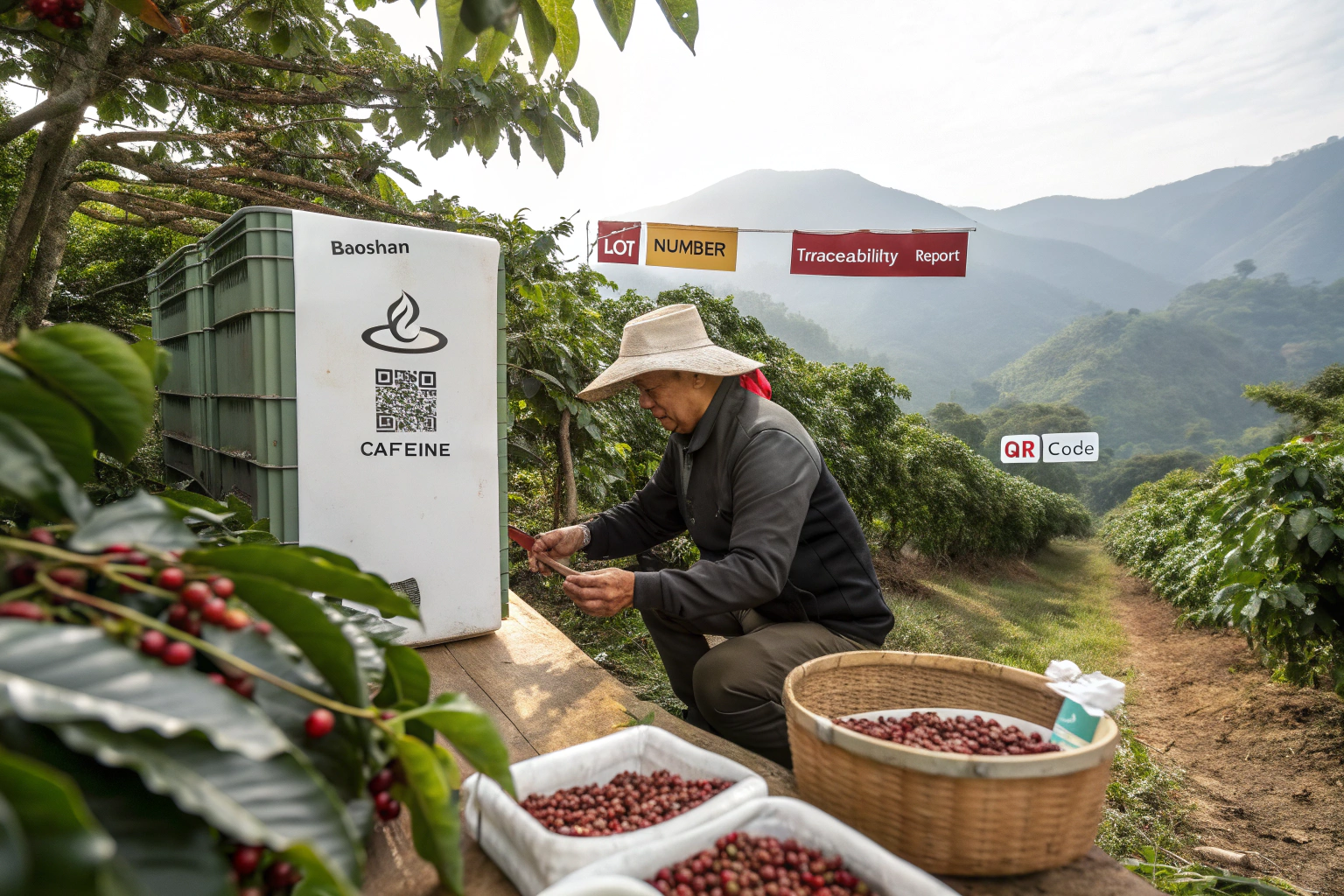
A cafe owner in Copenhagen emailed me two years ago. One of his customers had scanned a QR code on a bag of our Baoshan washed Arabica. She saw the farm's GPS coordinates, the harvest date, and my name. Then she wrote to the cafe. Then the cafe wrote to me. She said, "I just drank a coffee from a specific mountain in China. For the first time, coffee felt like food, not a commodity." That email sits framed on my office wall. It reminds me every day that traceability is not about paperwork. It is about connecting a farmer in Yunnan to a drinker in Denmark.
Traceability is important in the coffee supply chain because it verifies the authenticity of origin claims, ensures food safety by enabling rapid recall of contaminated lots, rewards quality-focused farmers with price premiums tied to their specific product, and empowers roasters and consumers with the transparent story that modern specialty coffee demands.
The coffee trade has a long history of opacity. Beans from dozens of farms get mixed into anonymous containers. A roaster buys "Colombian Excelso" and never learns which mountain it came from. A consumer drinks a cup and never knows who grew it. Traceability replaces that fog with daylight. It turns a commodity into a product with a name and a history.
What Does Traceability Mean in the Specialty Coffee Industry?
"Farm to cup" is an easy phrase to throw around. But real traceability is more than a slogan. It is a chain of documented evidence. It links a specific bag of green coffee to a specific plot of land on a specific harvest date. If a link in that chain is broken, traceability is lost.
In the specialty coffee industry, traceability means the ability to verify, through documented records, the origin of a coffee lot down to the farm or cooperative, the harvest period, the processing method, and the handling chain that moved the coffee from the producer to the roaster. This verification is the foundation of quality assurance and ethical sourcing claims.
There is a technical definition and a practical test. The technical definition involves lot numbers, inventory logs, and audit trails. The practical test is simpler: can the roaster pick up the phone and call the person who grew the coffee? Can they visit the farm and walk the exact rows where the cherries were picked? If yes, traceability is real. If no, the roaster is buying a story that cannot be checked.
How Does Lot-Level Traceability Differ from Regional Sourcing?
Regional sourcing is the traditional model. A roaster orders "Yunnan Arabica" or "Huila Excelso." The exporter sources beans from many farms across the region, blends them to a standard specification, and ships the blend. The roaster knows the province. The specific farm is unknown.
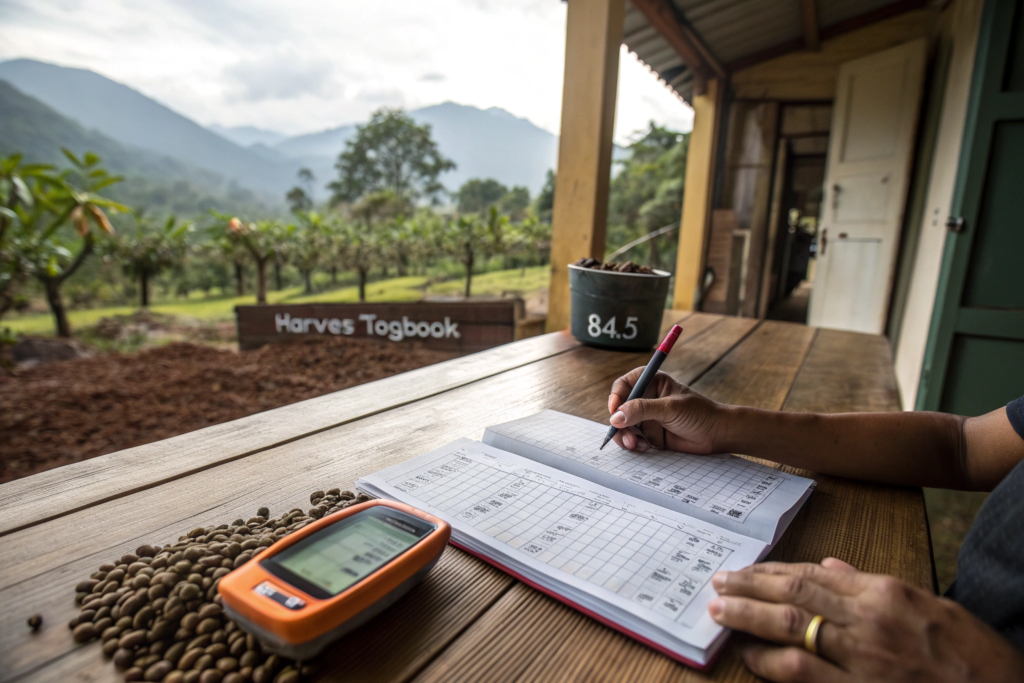
Lot-level traceability is the alternative. The roaster orders "Lot #42, Block 7 North Slope, Baoshan, 1,550 meters, Harvest November 2025." This lot is kept physically separate from all other lots. It is milled alone. It is bagged alone. It may share a container with other traceable lots, but each lot keeps its identity. The roaster does not just receive beans. They receive a data package. GPS coordinates. Picking dates. Drying curves. The cupping score from the farm's Q-grader. The difference is like buying "wine from France" versus buying "wine from a single vineyard in Burgundy." One is a category. The other is a specific product with a specific origin.
What Information Should a Complete Traceability Record Include?
A complete traceability record is a biography of the bean. It should answer every reasonable question a roaster or consumer might ask. Gaps in the record mean gaps in traceability.
The record starts with farm identity: farm name, legal owner, GPS coordinates of the specific block, and altitude. It includes agricultural data: coffee variety, flowering date, harvest date, and any certifications held. It covers processing: the method, fermentation time, drying method, drying duration, and final moisture content. It tracks milling and export: dry mill date, screen size, defect count from the grading report, bagging date, and container stuffing date. It ends with quality data: cupping score, cupping notes, and any third-party lab results for mycotoxins or pesticide residues. This is not excessive detail. It is the minimum required for a buyer to truly know what they are purchasing. At BeanofCoffee, we compile this dossier for every export lot as standard practice.
How Does Traceability Protect Coffee Buyers from Fraud?
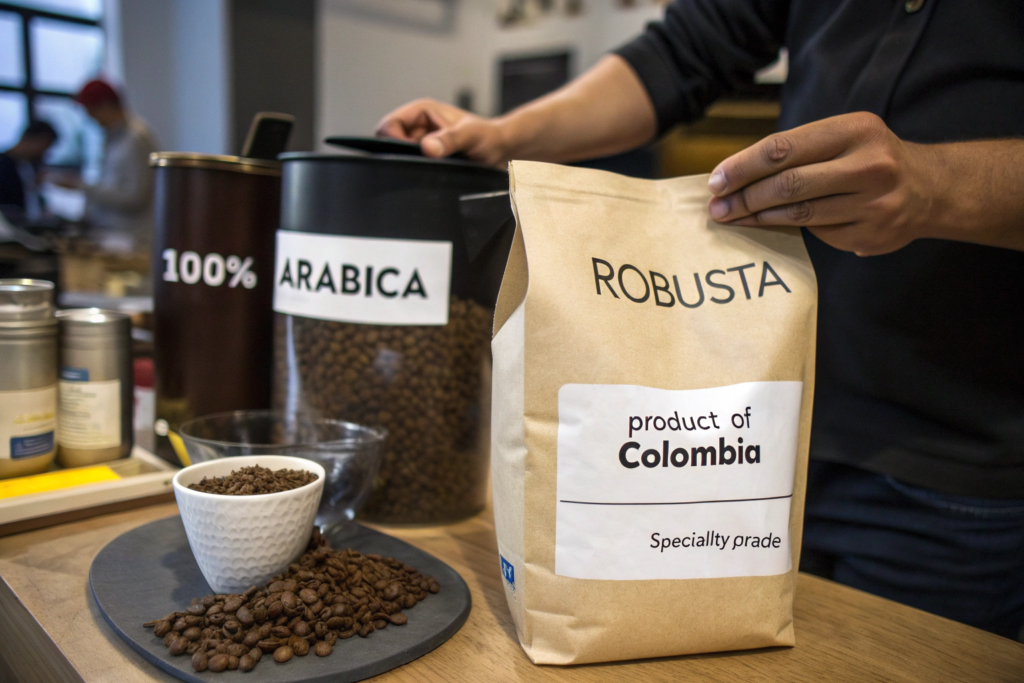
Coffee fraud is a daily reality. A bag of cheap commercial Robusta gets labeled "100% Arabica." A container of Vietnamese coffee is repackaged with "Product of Colombia" to grab a higher price. A broker sells a "specialty grade" lot that is secretly a blend of specialty and commercial beans. The buyer pays for quality that never arrives.
Traceability protects coffee buyers from fraud by creating an unbroken chain of custody documentation that is difficult to falsify. When a buyer can independently verify that a lot came from a specific farm through GPS data, third-party inspection reports, and direct producer communication, the opportunity for fraudulent substitution or adulteration is dramatically reduced.
Fraud thrives in the dark. When coffee is anonymous, a dishonest trader can swap origins, mix grades, or invent a backstory. Traceability removes the anonymity. The coffee carries a name and a face. The farmer knows the buyer. The buyer knows the farmer. If a trader tries to insert a fraudulent lot between them, the farmer immediately says, "I never grew that coffee." The lie collapses.
What Is "Origin Laundering" and How Does Traceability Prevent It?
Origin laundering is a specific type of fraud. Coffee is shipped from a low-cost origin to an intermediate country. It is relabeled there and re-exported with a higher-value origin claim. The goal is to evade tariffs or capture the price premium of a famous region.
For example, coffee is shipped from Country A to Country B, which has a favorable trade agreement with the target market. The bags are restamped with Country B as the origin. The buyer pays a premium for Country B's coffee but drinks Country A's beans. Traceability stops this by requiring documentation that traces back to the actual farm, not just the last port of export. A GPS coordinate in Country A cannot be changed to look like a coordinate in Country B. A buyer who demands farm-level GPS data and cross-checks it with satellite imagery is immune to origin laundering.
How Can Buyers Verify That a Lot Has Not Been Adulterated?
Adulteration is the mixing of lower-quality or different-origin beans into a specialty lot to stretch the volume. A 10% addition of cheap commercial beans to an 85-point lot might drop the overall score to 83. Still technically specialty. But the buyer paid for 85.
Verification needs both documents and physical checks. The document check confirms that the lot size the farmer declared matches the lot size shipped. If a smallholder with one hectare claims 3,000 kilos of specialty coffee, that yield is suspiciously high and warrants investigation. The physical check means cupping multiple samples pulled from different bags in the lot. If some cups show off-flavors absent from others, adulteration is a possible cause. A third-party inspector like SGS can pull random bag samples at the warehouse before stuffing the container. The inspector cups them against the approved pre-shipment sample. A mismatch triggers rejection. This independent check protects the buyer from paying for quality they are not receiving.
Why Do Roasters Need Traceability for Their Brand Story?
A coffee bag carries a lot of information. Roaster logo. Origin name. Tasting notes. Roast date. Net weight. Among all this, the traceability data is the most powerful marketing asset on the bag. It is not just dry information. It is an invitation into a relationship.
Roasters need traceability for their brand story because modern consumers demand authenticity and transparency. A traceable single-origin coffee allows the roaster to market a specific farm, a specific farmer, and a specific terroir, which differentiates their product in a saturated market and commands a higher retail price than anonymous commodity coffee.
When a consumer scans a QR code and sees the farm, the farmer's face, and the harvest month, they are not just buying coffee. They are buying a connection. They are buying a story to tell their friends. "This coffee is from a family farm in the Gaoligong Mountains." That sentence moves more bags than a dozen flavor descriptors. The roaster who can truthfully make that statement holds an advantage over competitors selling anonymous bulk lots.
How Does Farm Transparency Build Consumer Trust?
Trust is the hardest thing to earn and the easiest thing to lose in the food business. Consumers have been burned too many times by empty labels. "Natural." "Artisan." "Sustainable." These words are so overused they barely register anymore. Transparency rebuilds trust by swapping claims for evidence.
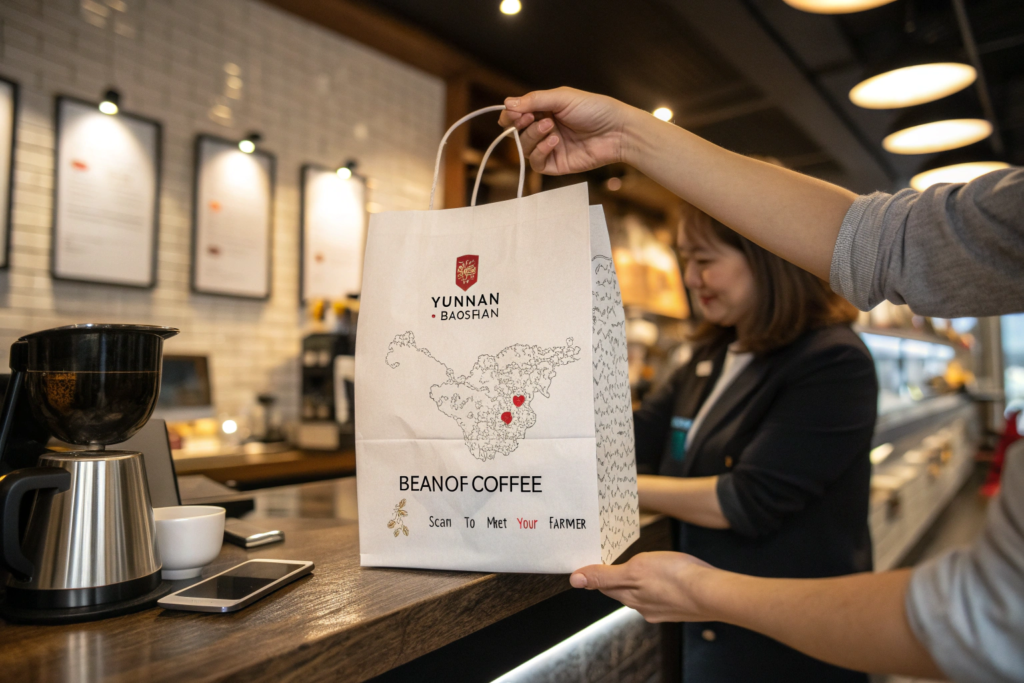
When a roaster prints a farm's GPS coordinates on a bag, they make a testable promise. The consumer can open Google Earth, type in the numbers, and see the actual farm. They can read the farmer's story on the roaster's website. They might even watch a video of the harvest. This openness sends a clear signal. It says, "We know exactly where this came from. You can know too." That signal is hard for a mass-market brand to replicate. Their scale forces them to blend from many sources. Their bags say "100% Arabica" and nothing more. The traceable bag wins the trust battle every time. A consumer who trusts a roaster sticks around. They do not chase discounts from competitors. The transparency is the moat.
Can Traceability Help a Small Roaster Compete with Big Brands?
Big coffee brands have war chests. They buy Super Bowl ads. They sponsor major events. A small independent roaster cannot win a spending war. But they can win an authenticity war. Traceability is their weapon.
A big brand's blend is often opaque. The origin is a continent, not a farm. The story is generic. A small roaster's bag tells a hyper-specific story: "Single Origin, Baoshan, Yunnan. Grown by the Yang Family at 1,550 meters." That story is compelling precisely because it is small. The big brand cannot tell it. Their volume requirements are too large for any single farm to supply. They must blend, and blending erases specific stories. The small roaster's modest scale becomes an advantage. They can source a single lot, from a single family, and tell that family's story on the bag. Traceability makes smallness a feature, not a bug.
What Role Does Technology Play in Coffee Traceability Systems?
Paper records built the foundation of traceability. But paper has limits. It is slow. It can get lost. It can be altered. Digital technology takes the same principles and makes them faster, more secure, and more accessible to the consumer at the end of the chain.
Technology enhances coffee traceability through QR codes on retail bags that link to digital farm profiles, blockchain platforms that create immutable records of custody transfers, and satellite monitoring that independently verifies deforestation-free claims and farm boundaries. These tools make traceability scalable and fraud-resistant.
The technology does not replace the human relationships at the core of traceability. It amplifies them. The farmer still picks the cherries. The exporter still mills the parchment. The roaster still cups the sample. But now, every step generates a digital fingerprint. The buyer can verify the chain without flying to the farm. The consumer can access the farm's story by scanning a code on their phone while standing in a supermarket aisle.
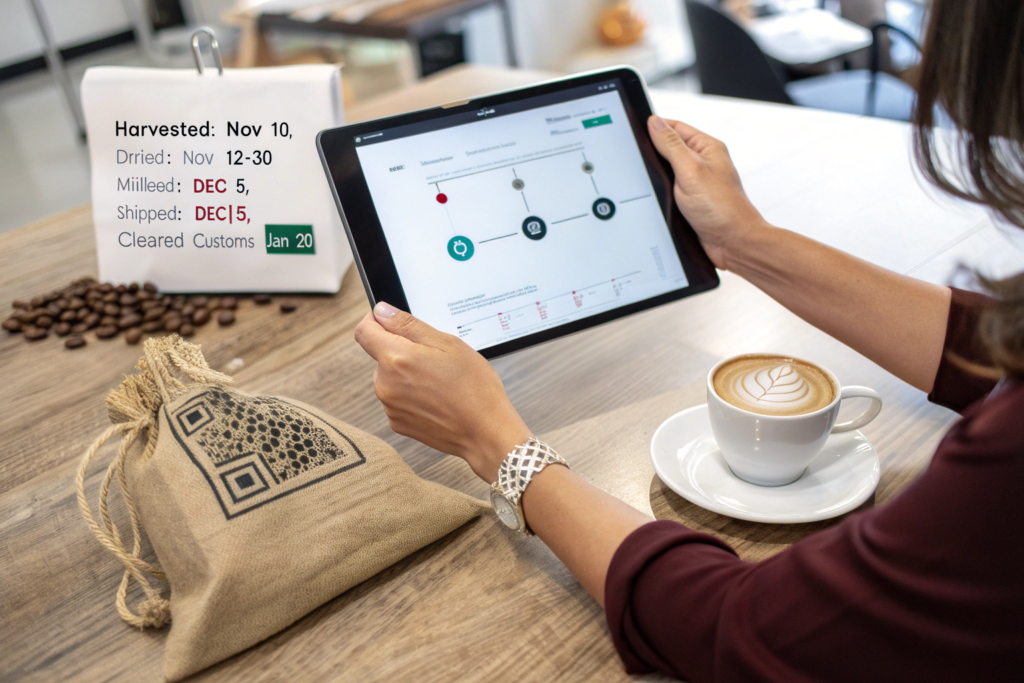
How Do QR Codes on Coffee Bags Enhance the Consumer Experience?
The QR code is a small square that opens a big door. A consumer grabs a bag of coffee. They scan the code. Their phone loads a page or a video showing the exact farm where the beans were grown.
This moment changes the transaction into an experience. The coffee stops being a generic grocery item. It becomes a link to a real place and real people. Some roasters embed a video message from the farmer. Others include an interactive map with photos from the harvest. Others show the cupping score and the roaster's own tasting notes alongside the farmer's story. The QR code turns the bag into a portal. A consumer who walks through that portal is more likely to buy the coffee again and tell someone else about it. The technology costs pennies per bag. The loyalty it generates is worth far more.
Can Blockchain Make the Coffee Supply Chain Truly Transparent?
Blockchain is a shared digital ledger. Each custody transfer or processing step gets recorded as a data block. The blocks link together cryptographically. Once written, a block cannot be changed without breaking the entire chain.
In principle, blockchain can make the coffee chain transparent and tamper-proof. A farmer logs the harvest. A processor logs the milling. A shipper logs the container loading. A roaster logs the receipt. Every participant sees every step. If a trader tries to insert a fake lot, the record shows a gap. In practice, blockchain has one hard limit. It records data, but it cannot verify truth. If a farmer enters fake GPS coordinates, the blockchain permanently records those fake coordinates. The technology must pair with physical verification. Third-party inspectors. Satellite checks. Direct buyer visits. Blockchain secures the data trail, but human verification remains the anchor of real traceability.
Conclusion
Traceability is not a marketing trend. It is the structural backbone of specialty coffee. Without it, quality claims float on air. Ethical sourcing claims are just words. Brand stories are fiction. With it, coffee becomes what it should be. A product with a name, a birthplace, and a history that anyone can check.
For the farmer, traceability brings recognition and a fair price for hard work. For the roaster, it delivers supply chain security, fraud protection, and a brand story that actually means something. For the consumer, it builds trust and connection. The thread tying all three together is data. The more traceable the coffee, the stronger that thread pulls.
If you are looking for a supply partner who treats traceability as a core practice, not an add-on, we are ready to show you what full transparency looks like. Every lot we export includes a complete traceability dossier. GPS coordinates. Harvest dates. Processing details. Cupping scores. Lab test results. You can print a QR code on your bag that links straight to our farm. You can video call us and walk the rows yourself. Contact Cathy Cai at cathy@beanofcoffee.com to request a sample lot and its traceability record. Taste the coffee first. Then trace it back to the mountain. We think you will find the journey as satisfying as the cup.