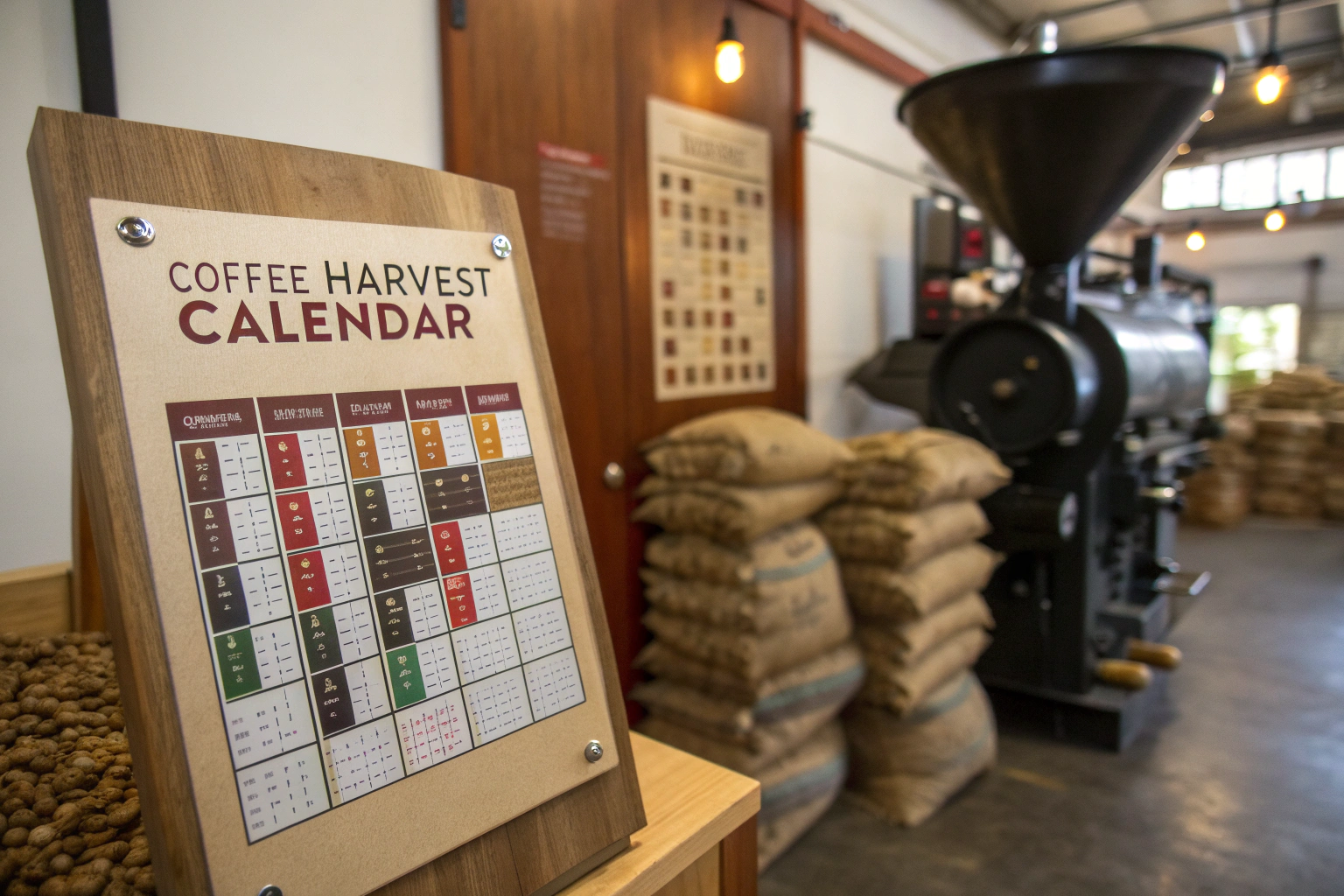
A buyer I respect once told me he divides his year into two seasons. Not summer and winter. Buying season and waiting season. He buys coffee only during harvest in each origin. The rest of the year, he cups samples, plans inventory, and waits. He told me this discipline saved his business during the price spikes of 2024. While competitors scrambled for spot containers at peak prices, his warehouse was already full of fresh crop bought at harvest prices. The man sleeps well at night.
The best season to buy green coffee beans is during or immediately after the harvest period in the origin country, when fresh crop availability is highest, farmer cash flow needs create price flexibility, and the coffee has not yet accumulated the storage and transit aging that erodes cup quality in later months.
Every coffee origin has a harvest calendar. The calendar dictates when the freshest beans hit the market, when prices are most negotiable, and when the selection is widest. A roaster who aligns their buying with these calendars gains advantages in quality, price, and relationship building. A roaster who ignores the calendar buys whatever is available whenever they run low. That is reactive buying. Reactive buyers pay more and get less.
What Are the Harvest Seasons for the World's Major Coffee Origins?
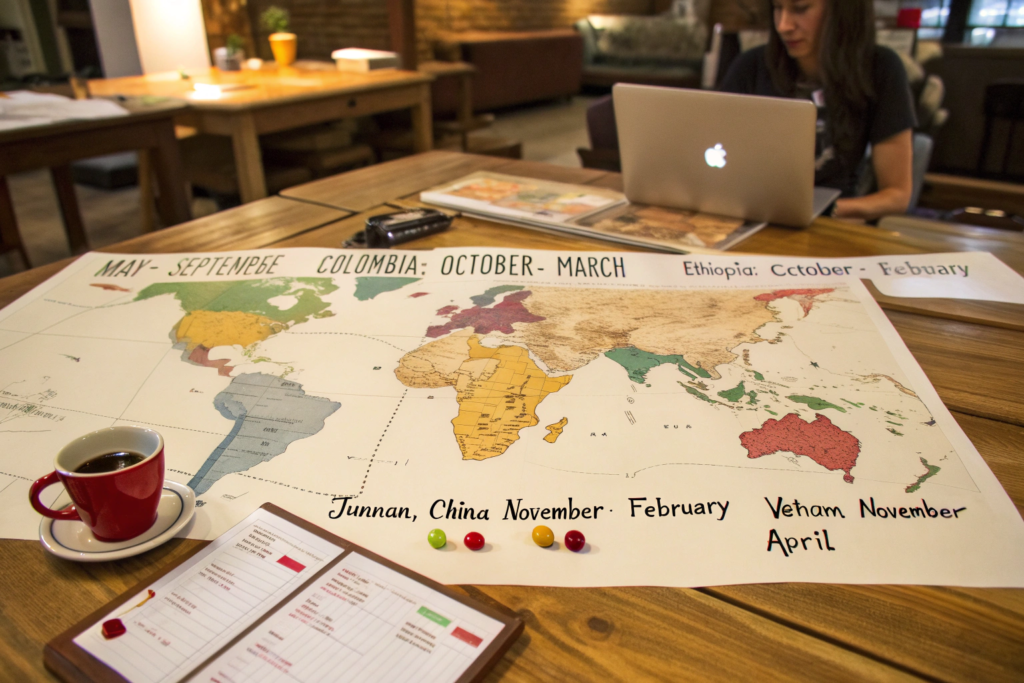
The coffee world has two hemispheres, and the harvest seasons flip accordingly. The Northern Hemisphere origins, like Yunnan and Ethiopia, harvest in the winter months. The Southern Hemisphere origins, like Brazil, harvest in the summer months. A buyer who sources from both hemispheres can access fresh coffee year-round.
The major harvest seasons are: Brazil from May to September, Colombia from October to March with a secondary fly crop, Ethiopia from October to February, Yunnan China from November to February, and Vietnam from November to April. Understanding these overlapping windows allows a roaster to maintain a continuous supply of fresh crop coffee.
Brazil is the giant. Its harvest sets the tone for global pricing. When the Brazilian crop hits the market in June and July, the supply surge often puts downward pressure on C-market prices. Colombia, with its equatorial location, has a more spread-out harvest and sometimes two crops. Yunnan has a concentrated harvest during the dry winter months, which is a structural advantage because the dry weather makes processing clean and predictable.
Why Is the Yunnan Harvest Season Ideal for Quality and Price?
Our harvest in Baoshan runs from November through February. The cherries ripen slowly during the cool, dry winter. The dry weather means we can sun-dry parchment and naturals without rushing. The cold nights concentrate sugars in the bean. The harvest window is a gift of climate.
For a buyer, January is the sweet spot. The harvest is at its peak. The picking labor costs are paid, and cash flow pressure is high. We have fresh parchment on the drying beds and fresh green coffee in the warehouse. A buyer who contacts us in January with a clear order gets the best selection and the most flexible pricing. By March, the harvest is winding down. The best lots may already be allocated to contracted buyers. By August, the coffee is still good, stored properly in GrainPro, but the fresh crop sparkle has started to fade. The price may also be firmer because the immediate cash pressure is gone.
How Does the Brazilian Harvest Influence Global Pricing Cycles?
Brazil produces about a third of the world's coffee. Its harvest is a macroeconomic event. When the Brazilian crop is large and lands in the market from June onward, global supply swells. Prices often soften. When the Brazilian crop is small, damaged by frost or drought, prices spike and stay high.
A savvy buyer watches Brazil's weather like a trader. The flowering reports in October. The crop forecasts in January. The harvest progress in June. All of this information feeds into the pricing environment for every other origin. Even if you do not buy Brazilian coffee, the Brazilian harvest influences the C-market price that underpins differentials everywhere. Buying from a non-Brazilian origin during the Brazilian harvest months can be strategic. The global supply narrative is positive, and sellers in other origins may adjust expectations downward to compete. The BeanofCoffee contract pricing model, which uses fixed farm-gate calculations rather than C-market differentials, insulates our buyers from some of this volatility, but the macro mood still matters.
How Does Seasonal Cash Flow Affect Coffee Prices?
Farming is a business with one payday. We spend money all year on fertilizer, pruning, weeding, and equipment. Then harvest hits, and the spending explodes. Pickers want wages. The mill needs fuel. The bag supplier wants payment. All of this money flows out before a single bean is sold.
The harvest season is the period of maximum cash flow pressure for coffee farmers. This pressure creates a pricing window where buyers offering prompt payment can negotiate more favorable terms. A buyer who understands and aligns with the seller's financial calendar is a partner, not just a counterparty.
After the harvest bills are paid, the pressure eases. The coffee is in the warehouse. The farmer can wait for the right price. A buyer who shows up in August asking for a harvest-season discount is six months too late. The farmer has already paid the bills. The urgency is gone. The price reflects that.
When Are Farmers Most Motivated to Negotiate on Price?
The motivation peaks right in the middle of harvest. For us in Yunnan, that is January. The picking is at full volume. The cash outflows are at their maximum. The income from the crop is still uncertain.
A buyer who approaches us in January with a clear purchase commitment and a fast payment schedule is offering something extremely valuable. They are offering cash flow certainty. I am more willing to sharpen my pencil on the price in January because the certainty of a quick payment offsets a slightly lower margin. By March, the harvest bills are paid. The coffee is resting in the warehouse. I know what I have. I know the quality. I am less motivated to discount because the financial pressure is gone. The seasonal price swing between a January spot purchase and an August spot purchase of the same lot can be 3% to 5%. That is real money over a container load.
How Do Forward Contracts Help Both Buyers and Farmers?
A forward contract is an agreement signed before or during harvest, locking in price and volume for delivery later in the year. It removes timing risk for both sides. The farmer knows the coffee is sold. The buyer knows the coffee is secured.
We sign forward contracts with our core buyers as early as November, right as the harvest begins. The buyer gets a price that reflects harvest economics, not off-season holding costs. We get a guaranteed sale that funds the harvest operations. The contract usually specifies delivery a few months later, after the coffee has rested, been milled, and passed final quality checks. The buyer pays a deposit, which helps our cash flow. The balance is due against shipping documents. This is a seasonal partnership, not a transactional purchase. The buyer who commits to forward contracts year after year becomes a priority client.
How Does Bean Freshness Vary Throughout the Year?
Green coffee is a perishable product. It does not improve with age. The clock starts ticking the moment the bean finishes drying. A coffee cupped at three months from harvest tastes brighter, sweeter, and more aromatic than the same coffee cupped at twelve months. This degradation is gradual but real.
Bean freshness follows a predictable curve: peak vibrancy from one to four months after harvest, a stable plateau from four to eight months, and a gradual decline after eight to twelve months. Buying seasonally close to harvest maximizes the time a roaster can hold the coffee before it shows past-crop characteristics.
The processing method affects the curve. Washed coffees tend to hold their brightness longer because the clean processing leaves fewer reactive compounds. Natural coffees, with their fruit-derived sugars and esters, fade faster. A washed Yunnan Arabica at ten months may still cup well. A natural Yunnan Arabica at ten months has usually lost its explosive fruit character.
What Is the Shelf Life of Green Coffee After Harvest?
With proper storage in hermetic bags at stable temperature and humidity, a high-quality washed Arabica can hold specialty-grade cup scores for 10 to 12 months from harvest. Some dense, high-altitude lots hold even longer.
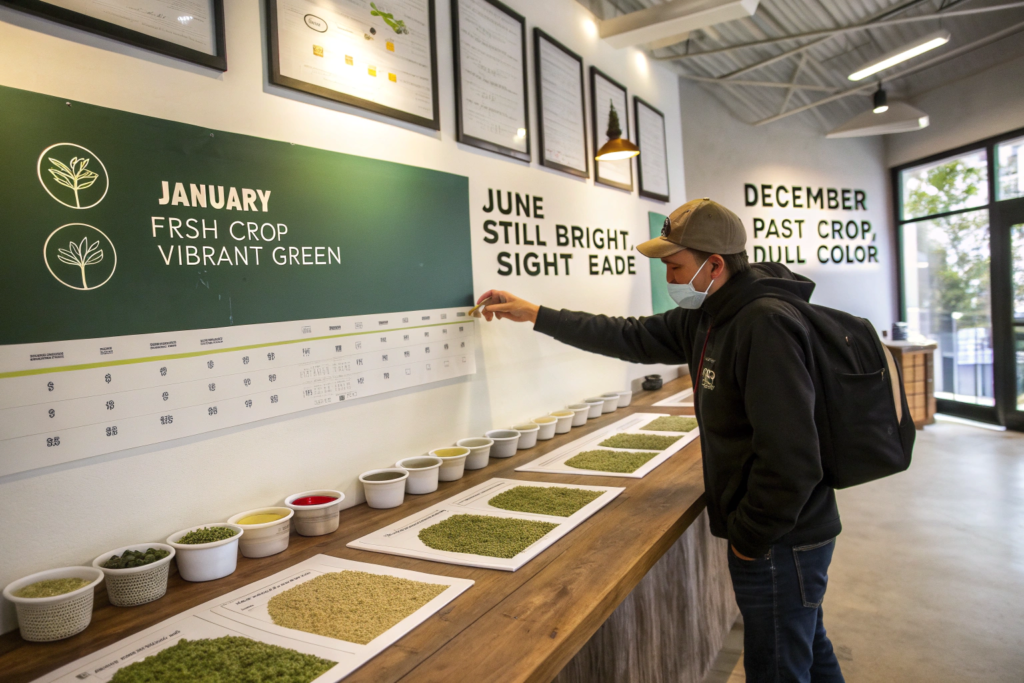
After 12 months, the coffee enters "past crop" territory. The acidity softens. The aromatic complexity fades. A papery or woody note may appear. The coffee is not spoiled. It is just faded. Some roasters use past-crop coffee intentionally for dark roast espresso blends, where the roast character dominates. But for a light roast single-origin, past crop is death. The delicate florals and bright acids that justified the premium price are the first to go. A buyer who purchases coffee in January for delivery in March has nine months of peak freshness ahead. A buyer who purchases the same coffee in October for delivery in December has maybe two months before the fade begins.
How Should Roasters Rotate Inventory Based on Harvest Cycles?
Inventory rotation should mirror the harvest calendar. The oldest coffee gets used first. The freshest coffee gets held for products where freshness is most critical.
A smart roaster designates their incoming fresh crop for single-origin filter offerings and light roasts. These products depend on origin character and benefit most from fresh beans. As the coffee ages past six months, it gets rotated into espresso blends or darker roast profiles where the origin subtleties matter less. This is not a compromise. It is matching the coffee's current strength to the right product. The January fresh crop lot that wowed as a pour-over in March becomes the backbone of a balanced espresso blend in September. Nothing is wasted. Quality is maintained. The customer never tastes a faded coffee because the faded coffee was never put in a product where the fade would be noticed.
What Are the Risks of Buying Coffee Outside the Harvest Window?
Buying outside the harvest window is not a mistake. Sometimes it is necessary. A roaster runs low on inventory unexpectedly. A new cafe contract demands more volume. The spot market is always there. But buying off-cycle carries specific risks that a roaster should price into their decision.
The risks of buying coffee outside the harvest window include receiving older stock that has already lost peak freshness, paying higher prices because the seller no longer faces harvest cash flow pressure, and finding that the best lots have already been allocated to contract buyers, leaving only the remaining, potentially lower-quality inventory.
The coffee available in September from an origin that harvested in January has been sitting in a warehouse for eight months. It may have been stored perfectly. It may not have. The buyer did not see it fresh. They cannot compare the current sample to what it was. They only see what it is now.
Can Old Crop Coffee Still Be a Good Value Purchase?
Yes, sometimes. Old crop coffee, meaning coffee from the previous harvest year, is sold at a discount. The seller knows the clock is ticking. The buyer knows the clock is ticking. The price reflects this.
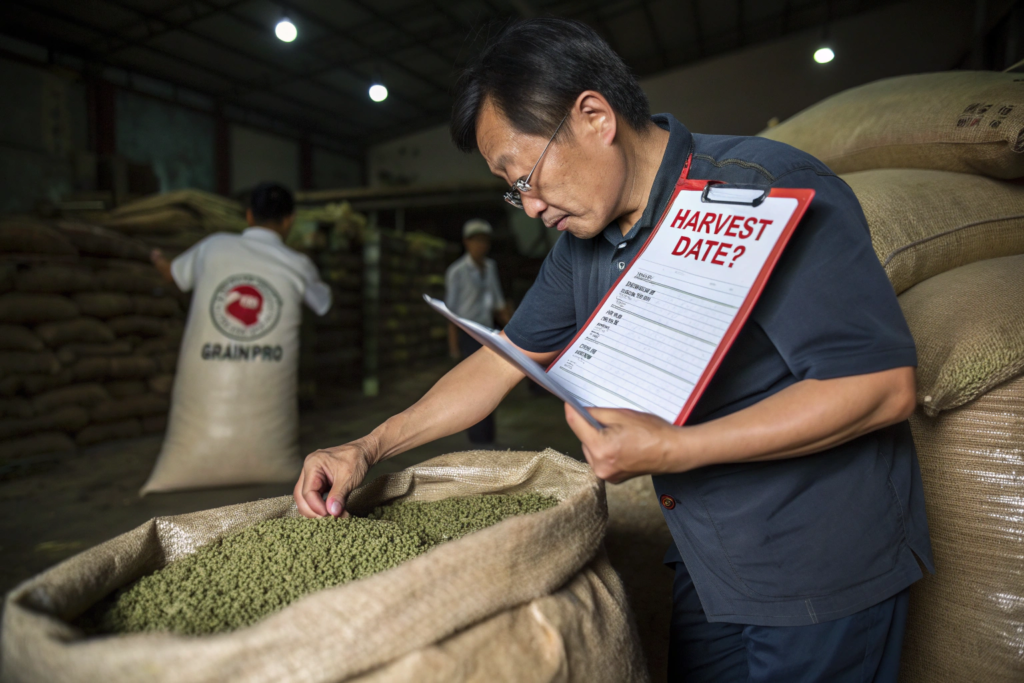
For a roaster who needs a base component for a dark roast blend, old crop washed Arabica can be a perfectly acceptable and cost-effective choice. The roast character will dominate the cup anyway. The fade in acidity and aroma that makes old crop unsuitable for light roast is masked by the darker development. The key is transparency. An honest seller will disclose the harvest date and price accordingly. A dishonest seller will present old crop as fresh crop and hope the buyer does not ask. Always ask for the harvest date. If the seller hesitates, walk away. The discount on old crop is only a good value if the roaster uses it intentionally in the right product.
How Can You Tell If a Supplier Is Selling Stale Inventory?
The first clue is the color. Fresh green coffee has a vibrant hue, blue-green for washed, slightly amber for natural. Stale green coffee looks dull, faded, sometimes yellowish or brownish. The color loss is a sign of lipid oxidation and moisture migration.
The second clue is the smell. Open the bag and inhale. Fresh green coffee smells sweet, grassy, and clean. Stale green coffee smells flat, papery, or baggy. A musty note suggests mold. A chemical note suggests contamination. The third clue is the cup. Stale coffee cups hollow. The acidity is flat. The aftertaste is short or papery. If a sample shows any of these signs, ask for the harvest date. If the supplier cannot provide it, the lot is probably old and being sold without disclosure. The seasonal buyer avoids this problem by buying close to harvest and building relationships with suppliers who are transparent about lot age.
Conclusion
The best season to buy green coffee beans is harvest season. It is the season of freshness, of negotiation, of selection. The buyer who aligns their purchasing calendar with the agricultural calendar becomes a partner to the farmer, not a last-minute shopper. They get the best lots at the best prices with the longest shelf life ahead of them.
The buyer who ignores the seasons pays a premium for the privilege of buying whatever is left. That premium shows up in the invoice price, in the faded cup quality, and in the stress of scrambling for inventory. The seasonal strategy requires planning. It requires forecasting volume needs months in advance. It requires committing to forward contracts before the coffee is even milled. But the rewards, in cost savings and quality consistency, are worth the effort.
If you want to align your buying with the Yunnan harvest calendar, we can help. Our harvest runs from November to February. The best time to reserve your lots is during that window. Contact Cathy Cai at cathy@beanofcoffee.com before the season begins. She will send you pre-harvest samples, update you on crop quality, and help you structure a forward contract that locks in fresh crop at harvest pricing. Plan ahead. Your customers will taste the difference.