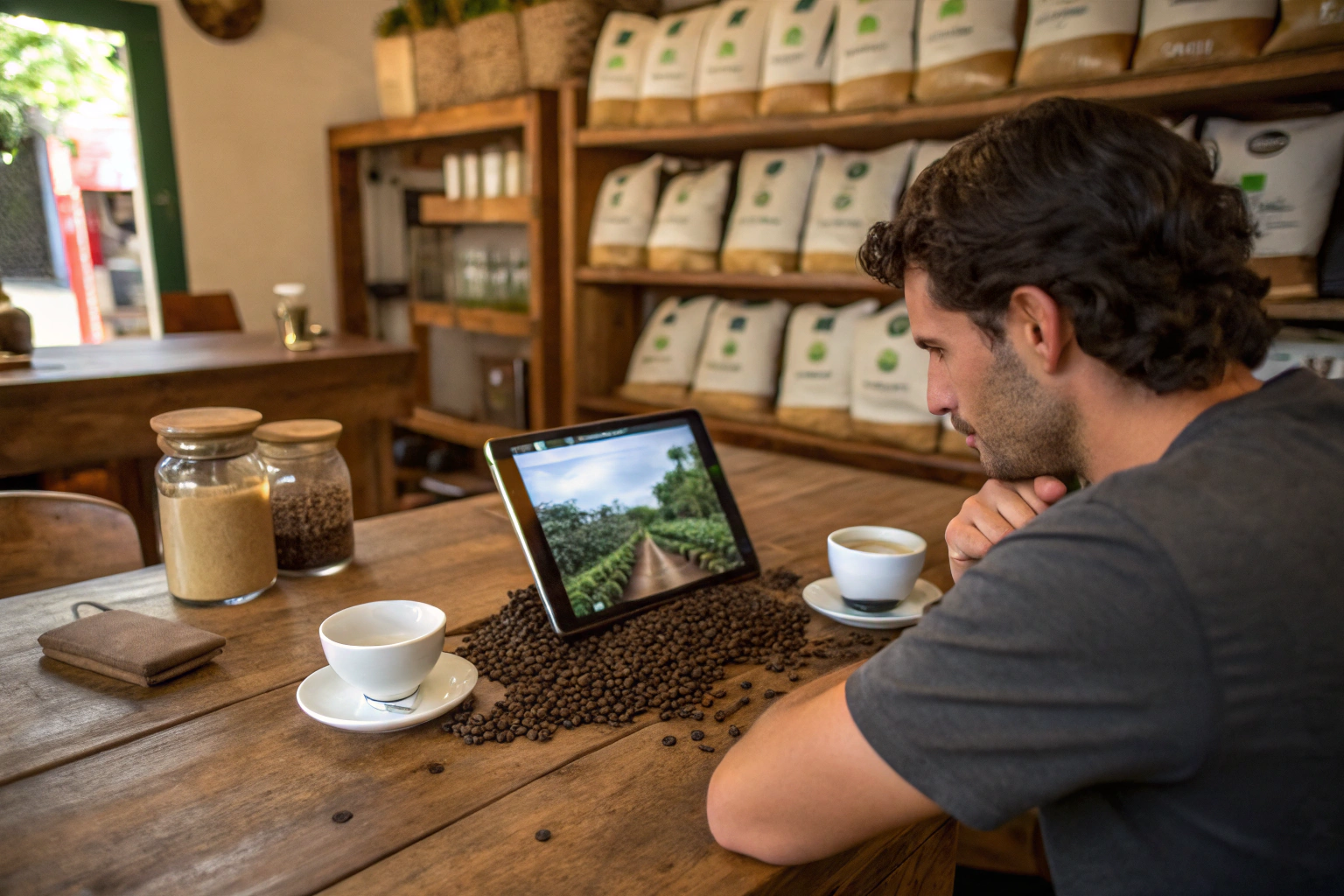
I used to think a real partnership required a handshake. A physical one. Someone flying 7,000 miles, walking my fields, and cupping the coffee at my table. I turned down several serious buyers in 2018 and 2019 because they couldn't make the trip. "Come back when you can visit," I told them. What a costly mistake. One of those buyers, a small but growing roaster from Manchester, ended up sourcing from a farm in Colombia instead, simply because they offered him a detailed video walkthrough of their wet mill. He built his entire single-origin line around their farm, and I never got a second chance. That stung. But it also taught me that a virtual tour, done right, isn't a downgraded version of a physical visit. It's a completely different tool, one that can actually be more revealing and more efficient when you design it properly.
Conducting an effective virtual tour of a coffee plantation requires replacing passive, scripted video content with a live, interactive, question-driven walkthrough that uses a smartphone and a stable video call app to give the buyer real-time control over what they inspect, from the soil in the nursery to the seal on the shipping container. It's not a marketing video. It's a remote audit. The buyer directs the camera. The buyer asks the questions in real-time. The buyer sees the unedited, unpolished reality of the farm. For a confident buyer like Ron, who cares about quality verification and security but can't always travel, a virtual tour is the most powerful trust-building tool short of a plane ticket. It replaces a static photo gallery with a live, honest, and transparent window into the exact block where his next container of Yunnan Arabica is growing right now.
I want to show you how we've evolved our virtual tours from awkward, shaky phone calls into a structured process that has actually closed deals. The goal isn't to show off the farm. The goal is to let you audit the specific variables that determine the quality in your cup. Let's start with the most critical pre-tour step, the one that separates a genuine transparency effort from a staged performance.
What Equipment Do You Need for a High-Quality Farm Video Walkthrough?
I learned the hard way that a great virtual tour can be destroyed by bad audio and a shaky camera. The first tour I ever did, I just held up my phone on a WhatsApp call. The buyer in Dublin heard more wind noise than my voice. The picture jerked around so much he couldn't focus on the fermentation tanks. After five minutes, he politely ended the call with a vague "Let's follow up later." He never did. The problem wasn't the farm. The problem was the production quality. A virtual tour is a professional meeting, and it deserves professional-grade equipment, even if that equipment is surprisingly simple and affordable.
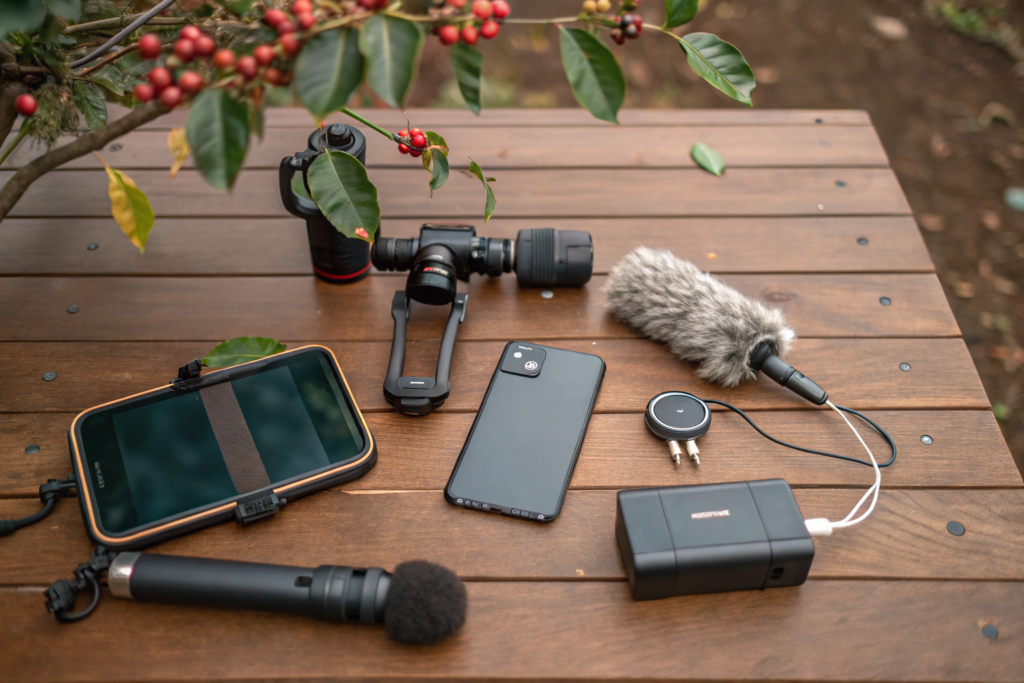
The essential equipment for a high-quality farm video walkthrough is a single smartphone with a high-resolution camera, a handheld gimbal stabilizer to eliminate shaky footage, a wireless clip-on lapel microphone for clear audio even in windy conditions, and a fully charged power bank to prevent the call from dying mid-tour. That's it. You don't need a film crew. You don't need a drone. You need a stable image and crystal-clear sound. The gimbal is non-negotiable. Walking through a drying patio while holding an unstabilized phone produces nauseating, unusable footage. A smooth, floating camera movement instantly communicates professionalism and respect for the buyer's time. The wireless microphone is equally critical because a farm is noisy. Processing machinery, wind, birds—all of it drowns out your voice. A cheap lapel mic plugged into your phone makes your narration as clear as a podcast.
This equipment setup costs a few hundred dollars and fits in a small backpack. It's the single best investment we made in our remote sales process. Let's look at why the audio, specifically, is the hidden deal-breaker in most failed virtual tours.
Why Is a Wireless Microphone Critical for Windy Outdoor Processing Areas?
Sound is the first thing a buyer will complain about, even if they don't say it directly. If they have to strain to understand you, they disengage. Their brain works too hard just to decode the words, leaving no mental energy to evaluate the coffee. A processing area is an acoustic nightmare. The pulping machine is rumbling. The wind is hitting the phone's built-in microphone. You're shouting, and the buyer hears a distorted, clipped, unintelligible roar.
A wireless lapel microphone, clipped to your collar, solves this completely. It captures your voice directly from inches away, isolating it from the background chaos. The buyer hears you calmly explaining the fermentation process, while the ambient noise of the wet mill becomes a soft, atmospheric background texture, not an overwhelming distraction. This simple tool transforms the viewing experience from a chaotic struggle into a guided, professional consultation. Even simple setups using standard wireless microphone technology can dramatically improve the perceived professionalism of your tour. The buyer feels they're getting a private, focused walkthrough, not just a noisy phone call.
How Does a Gimbal Stabilizer Build a Professional Brand Image?
A shaky video screams amateur. It subconsciously tells the buyer that you don't do this very often, that you're unprepared, that the details don't matter to you. A smooth, gliding camera movement, in contrast, communicates control and care. It says, "We invest in doing things properly, down to the smallest tool." This is a direct reflection on your brand and, by extension, the quality of your coffee.
When you walk down a row of drying beds with a gimbal, the camera floats. The buyer can clearly see the evenness of the parchment layer, the cleanliness of the concrete, the labels on each lot. When you enter the dry warehouse, a smooth pan across the neatly stacked bags with their lot-number tags gives a powerful, silent message: this is an organized, professional operation. The gimbal turns a simple walk into a cinematic experience that respects the buyer's eyes. The smooth motion ensures that the entire scene, from the coffee drying beds to the warehouse, is presented with the visual clarity it deserves.
With the equipment sorted, the next challenge isn't technical. It's personal. The buyer is on the call, watching. This is not the time for a generic, rehearsed speech about your farm's history. A virtual tour must be an interactive dialogue, not a monologue. The buyer needs to pull the thread, not just listen to a presentation.
How Can a Live Video Call Replace an In-Person Farm Audit?
The biggest barrier to direct sourcing from a new origin isn't price. It's trust. A buyer like Ron needs to verify that the quality claims on the spec sheet are real. An in-person audit is the gold standard, but a well-structured live video call can achieve 90% of the verification value at a fraction of the cost and time. The key difference between a passive video and a true remote audit is control. In a real audit, the inspector walks where they want. They stop where they want. They ask an unexpected question and watch the farmer's reaction. A live video call can replicate this exact dynamic, if you structure it correctly.
A live video call replaces an in-person farm audit by giving the buyer real-time directional control over the camera, allowing them to request impromptu close-ups of specific lot tags, fermentation tank interiors, and worker safety equipment, thereby replicating the spontaneous inspection power of a physical visit. It's not about showing a polished, planned route. It's about handing the buyer the steering wheel. "Zoom in on that bag's tag. Now pan to the left. What's that liquid on the floor?" These unscripted moments are what build real confidence. A farm that can handle a live, unedited interrogation is a farm that has nothing to hide. For a buyer who values security and quality control, this is the next best thing to being here in Baoshan.
This level of transparency requires the buyer to know what to ask for. You can't just say, "Show me around." You need a mental checklist of the specific, revealing details that separate a well-managed farm from a disorganized one. Let's look at the key visual evidence you can demand on a live call.
What Should You Ask to Inspect During a Live Nursery Walkthrough?
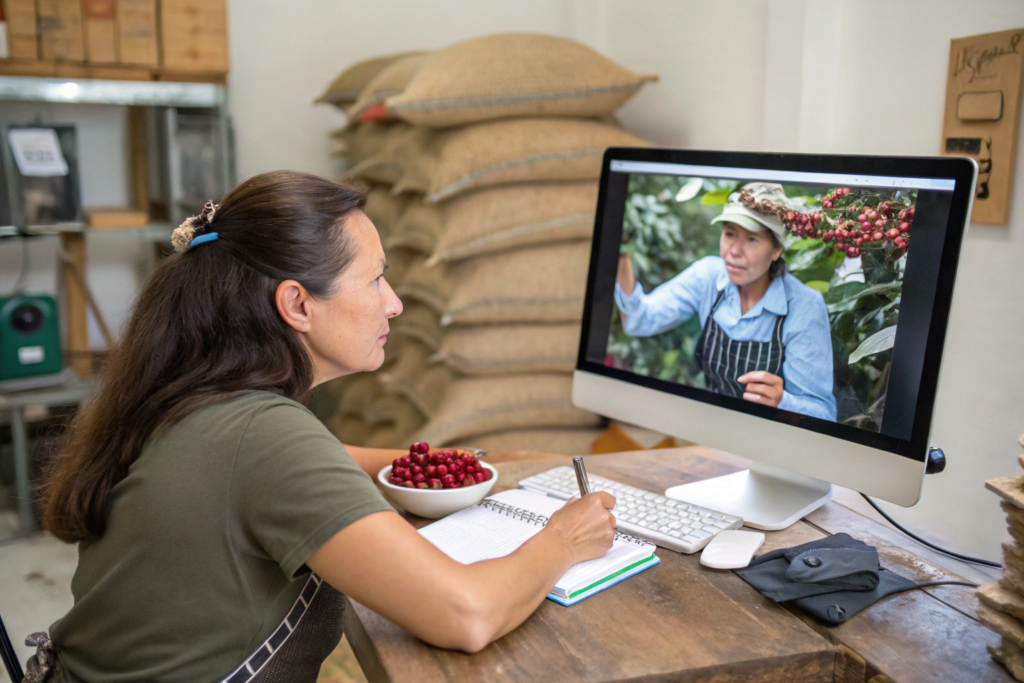
The nursery is the farm's engine room. It reveals the future, not just the present. A slick processing station can be cleaned up for a visit. But the nursery shows the long-term investment. On a live call, ask to see the root structure. Ask the farmer to gently pull a single seedling from its bag and hold the root ball close to the camera. You're looking for a dense, white, healthy root system, not a brown, spiraling, root-bound mess. A healthy root ball means the tree will establish quickly and produce high-quality cherries. A root-bound seedling will struggle for years.
Ask to see the shade netting structure. Is it made of quality, UV-stabilized material, or is it cheap, torn plastic sheeting? Ask to see the irrigation system for the seedlings. Is it a consistent, gentle misting system, or is someone haphazardly spraying a hose? These small, seemingly boring details tell you the truth about the farm's daily discipline. The health of the nursery stock is a direct predictor of future cup quality, a principle well understood in coffee nursery management. A farmer who is meticulous here, where the payoff is years away, is meticulous everywhere.
How to Use a Live Call to Audit a Wet Mill's Cleanliness Standards?
The wet mill is where a coffee's flavor is either protected or destroyed. Fermentation tanks can harbor nasty bacteria if they're not scrubbed daily. Ask the farmer to walk the camera right up to the edge of an empty fermentation tank. Look at the walls. Are they stained with old, black, dried mucilage, or are they clean, bare stainless steel or smooth tile? Smell isn't transmitted over video, but visual evidence is. Old residue is a breeding ground for defects.
Ask to see the water source. Where is the water for the washing channels coming from? Ask them to pan the camera across the channels. Is the water clean and clear, or is it murky and stagnant? Ask to see the pulping machine. Is it clean and dry if it's not in use? A machine caked in dried cherry skin from yesterday's shift is a red flag. This direct visual inspection of the coffee wet mill processing equipment replaces a lot of assumptions with cold, hard, live evidence. The camera doesn't lie, and a farmer who confidently shows you a spotless mill is a farmer who understands that cleanliness is the foundation of quality.
A live audit verifies the current reality. But a single live call is a snapshot in time. The deeper value of a virtual connection is seeing the farm across multiple seasons, watching the same trees at different stages, and building a cumulative understanding that a one-time physical visit can't match. The real power of the virtual tour is in its repeatability and its ability to document a full harvest cycle.
Can a Pre-Recorded Virtual Tour Build Long-Term Buyer Confidence?
A live tour is a high-intensity event. It requires scheduling across time zones. It requires the buyer to be fully present and mentally sharp for an hour. But a long-term partnership is built on a steady drip of evidence, not a single peak moment. This is where a library of pre-recorded, honestly captured videos becomes an incredibly powerful sales tool. I'm not talking about a glossy, drone-shot marketing film with a scripted voiceover and inspirational music. Buyers are allergic to that. They can smell inauthenticity. I'm talking about a specific type of pre-recorded content: short, specific, timestamped, and unglamorous. A three-minute video showing the exact moment a lot is sealed and the tamper-proof tag is attached.
A pre-recorded virtual tour builds long-term buyer confidence when it is structured as a growing library of timestamped, specific operational videos—not a single polished film—that allows a buyer to asynchronously audit key moments like flowering, harvesting, lot sealing, and container loading at their own pace and convenience. This library becomes a reference archive. When a buyer asks in December, "How did the flowering look last March?", you don't describe it. You send them a link to the March flowering video. They watch it. They see the healthy, abundant blossoms with their own eyes. This builds a cumulative, undeniable body of evidence that a static certification or a one-time sample can never match.
This asynchronous model respects the buyer's time and gives them a deeper, more granular view of the farm's operation. Let's look at two specific, critical moments that are perfect for pre-recorded verification.
Why Film the Harvesting and Lot Segregation Process Step-by-Step?
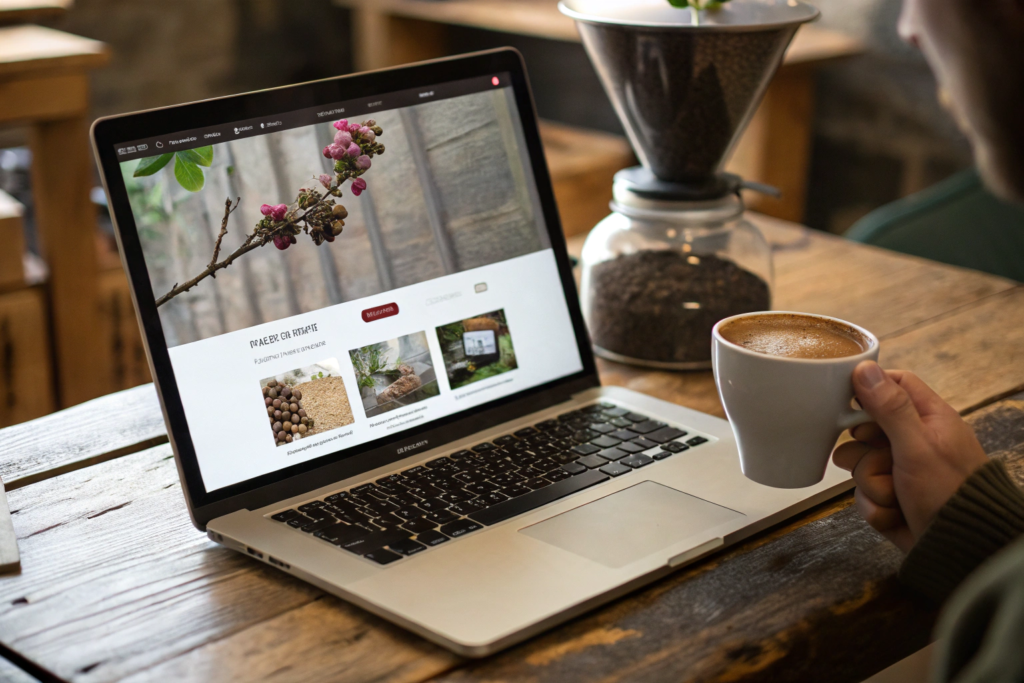
The moment of harvest is the moment of truth. A farm can have perfect soil and a beautiful nursery, but if the pickers are stripping branches of unripe cherries in a rush to fill their baskets, the entire year's quality is lost. You can't always schedule a live call for the exact three-week harvest window. But you can pre-record a detailed, unedited walkthrough of a picking team at work on a specific micro-lot.
Film the pickers' baskets after an hour of picking. Zoom in on the contents. A high percentage of uniform, deep-red, ripe cherries with no green ones mixed in is the visual proof of selective picking discipline. Then, film the cherry flotation sorting at the wet mill. Show the floaters—the low-density, defective cherries—being skimmed off. Then, film the clearly labeled, separate lot tag being placed on the fermentation tank. This step-by-step video sequence is a verifiable chain-of-custody document. It proves that the specific lot the buyer has purchased was harvested and processed with meticulous care, from the tree to the tank. This level of detail in coffee harvesting best practices is what turns a generic quality claim into a proven, documented fact.
How Does a Timestamped Container Loading Video Ensure Shipment Integrity?
This is a video we now make for every single container that leaves our warehouse. It's not fancy. It's a fixed camera on a tripod, or a smooth gimbal walk, showing the container's interior before loading. The video starts with a close-up of the container number. Then it pans to the empty, clean interior. Then it films the specific lot-number tags on the GrainPro bags as they are loaded, bag by pallet, into the container. Finally, it shows the container door closing and the bolt seal being applied, with a tight close-up on the unique seal number.
This video, timestamped and sent to the buyer via a shared cloud link, is a powerful document. It proves that the exact bags with the exact lot numbers from the cupping session are the bags that went into that specific sealed container. It eliminates the fear of a bait-and-switch. The buyer can cross-reference the seal number on the video with the seal number on the bill of lading when the container arrives at their door. This simple, low-cost practice provides a level of security that was previously only available through expensive, third-party loading supervision. It's a critical component of a robust supply chain security protocol, built with nothing more than a smartphone and a commitment to transparency.
This library of timestamped videos creates a digital trail that protects both the buyer and the seller. But even with all this asynchronous evidence, there remains a unique, irreplaceable value in the shared, simultaneous experience of a live virtual cupping. The final measure of a coffee isn't its appearance on a screen; it's its taste in the cup.
What Is the Value of a Virtual Cupping Session With a Chinese Farm?
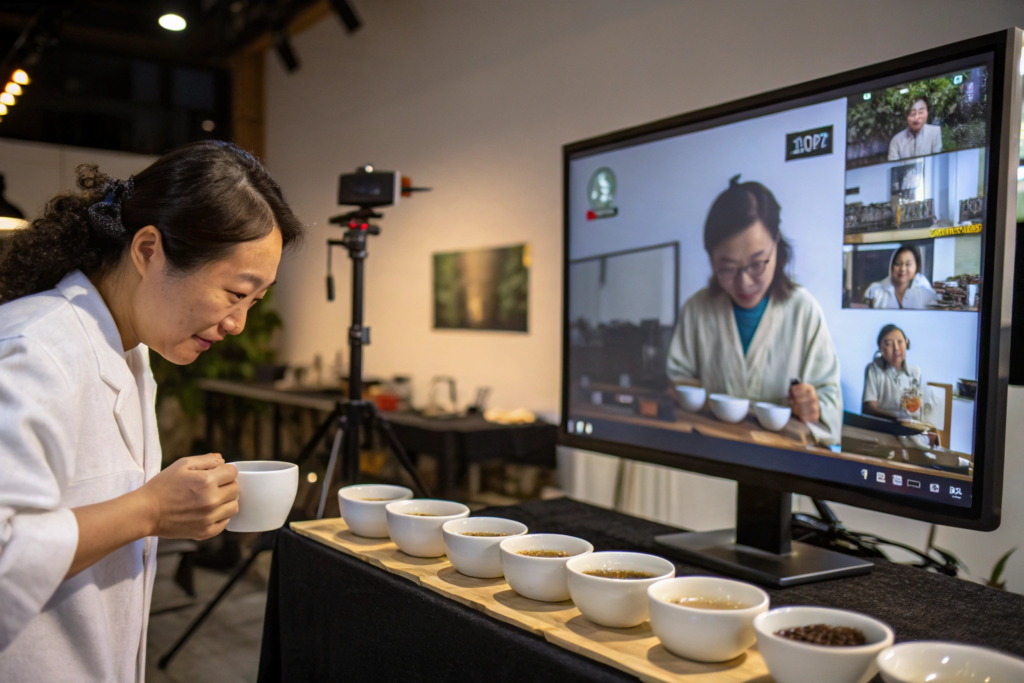
A photo of a cupping score is information. A live, shared cupping experience, even across an ocean, is a conversation. It's the final, most intimate stage of a virtual sourcing relationship. We ship identical, coded samples of the exact lots under consideration to the buyer, weeks in advance. Then, we schedule a time. We both brew the coffees simultaneously, following the same SCA cupping protocol, with the video call running. I break the crust on sample A. The buyer breaks the crust on sample A. We both lean in, sniff, and then, the most important part, we talk. I describe what I'm smelling. "Brown sugar, a hint of red apple, a clean nuttiness." The buyer listens, then responds. "I'm getting the brown sugar, but also a slight herbal note in the finish. Is that the Catimor coming through?"
The value of a virtual cupping session is that it synchronizes the sensory evaluation, allowing buyer and farmer to calibrate their palates in real-time, discuss subtle flavor notes using a shared vocabulary, and build a mutual understanding of the lot's profile that no written report can convey. It's not just about the scores. It's about the dialogue. It's about the buyer saying, "I want this exact profile for my espresso blend," and the farmer saying, "I can pull this specific lot aside for you." The conversation aligns expectations and taste preferences in a way that a PDF score sheet never can. For a buyer who values quality control, this is the ultimate remote verification tool.
This shared tasting builds a shared language, a sensory bridge between the farm and the roastery. Let's look at the practical logistics that make it work, and the specific terms that ensure we're talking about the same thing.
How to Ship Identical Green Samples for a Synchronized Remote Tasting?
The integrity of a virtual cupping depends entirely on both parties having the exact same coffee in front of them. We ship a 350-gram sample of each candidate lot, vacuum-sealed in a coded, opaque bag. The buyer doesn't know which lot is which. We both work blind. The codes are simple: Lot X, Lot Y, Lot Z. The samples are shipped via express air courier, so they arrive at least one week before the scheduled cupping session. This gives the beans time to rest and degas from the air pressure changes during the flight.
Both sides then roast the samples to the same standardized profile, ideally using a sample roaster calibrated to a consistent Agtron reading. We communicate the precise roast degree target, usually a light-medium roast around Agtron 65, to ensure the roast itself doesn't introduce a variable. This meticulous preparation, following the strict SCA cupping protocol, ensures that any flavor difference detected is a difference in the bean, not a difference in the roast or the shipping method. The shared, blind tasting can then proceed with scientific rigor.
How Does a Shared Flavor Vocabulary Bridge the Grower-Roaster Gap?
One of the biggest communication barriers in direct trade is language, not just English versus Chinese, but the language of taste. A farmer might describe a coffee as "clean and sweet." A specialty roaster needs more precision. Is it "stone fruit sweetness" or "caramel sweetness"? A virtual cupping forces us to build a shared vocabulary in real-time, using the coffee in the cup as the reference point.
When the buyer says, "I'm getting a distinct black tea note," I can taste the same coffee, focus on that specific channel, and say, "Yes, I can feel it now. It's a malted, slightly astringent finish. Is that acceptable for your blend, or is it a defect for you?" This conversation is incredibly valuable. It helps me understand the buyer's specific quality threshold. What I might consider an acceptable, complex note, they might consider a deal-breaking defect. This calibration is only possible through a live, shared sensory experience. It's a practical application of the coffee flavor wheel as a living, conversational tool, not just a static poster. We're not just tasting coffee; we're aligning our definitions of quality.
Conclusion
The old way of building a coffee sourcing relationship was expensive, slow, and exclusive. You flew to the farm. You spent a week. You shook hands. That model still has immense power, but it's no longer the only path to a genuine, verified, and deeply trusting partnership. A well-executed virtual tour strategy—combining a live, buyer-directed audit with a library of timestamped operational videos and a synchronized, remote cupping session—can build 90% of the trust at 10% of the cost. It's a model that respects the buyer's time, demands genuine on-the-ground transparency, and creates a continuous, year-round window into the farm, not just a single, curated snapshot during a visit.
At BeanofCoffee, we've invested in the gimbals, the microphones, the structured tour checklists, and the shipping protocols to make our 10,000 acres in Baoshan fully accessible from your office in Chicago, London, or Sydney. We don't wait for you to come to us; we bring the farm to your screen, live and unedited. If you're curious about a specific lot and want to see it on the drying bed before you commit to a sample, let's schedule a tour. My export partner, Cathy Cai, can coordinate the time zones, ship the pre-tour samples, and set up the video call. Reach out to her directly at cathy@beanofcoffee.com. Let's walk the farm together, even if we're 7,000 miles apart.