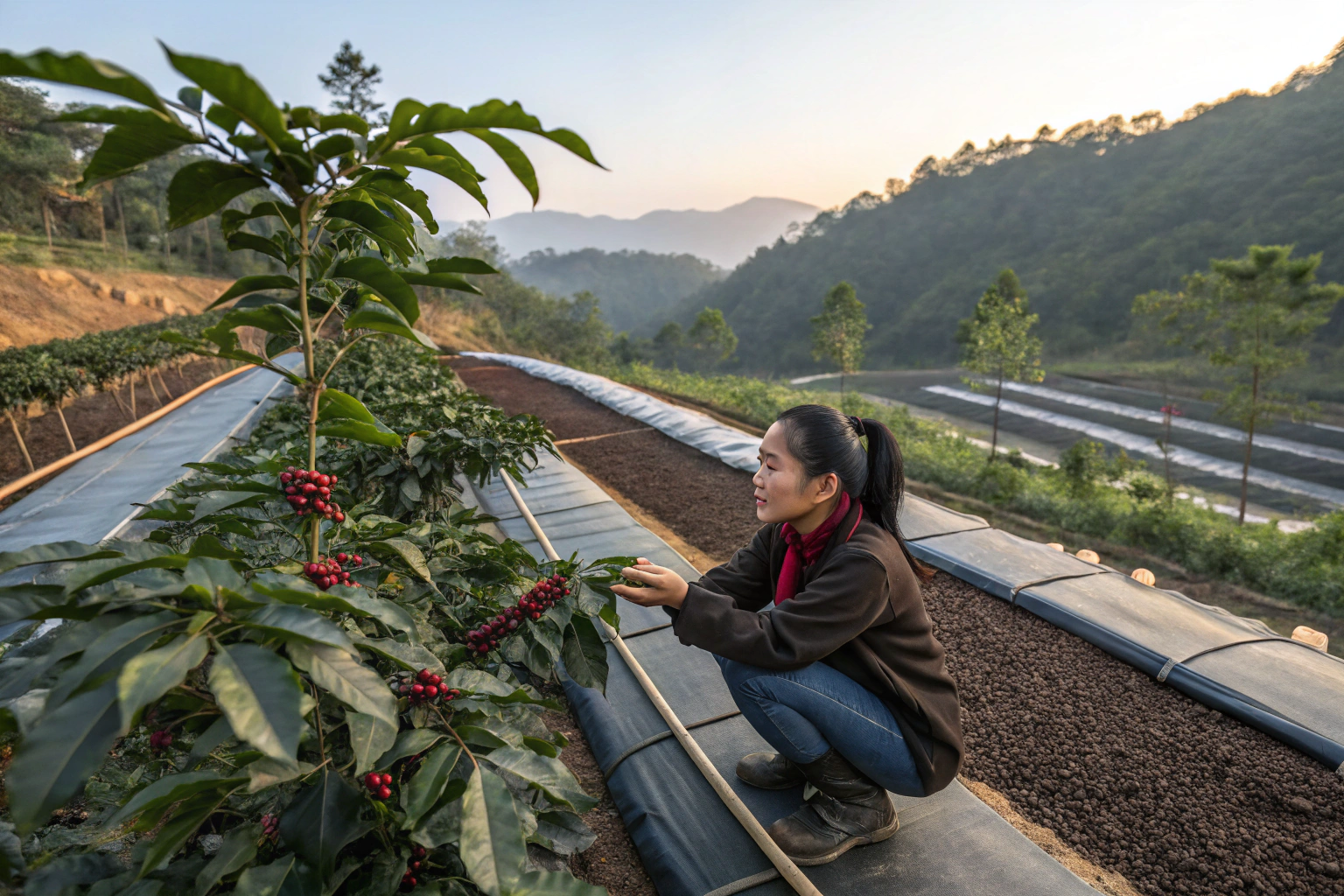
Fifteen years ago, if you told a European specialty coffee buyer that a Chinese coffee would one day score 87 points on an SCA cupping form and sell for a premium in Berlin, they would have smiled politely and changed the subject. I know, because I was on the receiving end of those smiles. I'd stand at trade shows with samples of our Baoshan Arabica, and the question was always the same: "Is it good for instant?" That was the global assumption. Yunnan was a volume origin. A filler. A cheap, neutral base for commercial blends. Nobody looked at our mountains and saw a future specialty powerhouse. But we did. And we quietly got to work.
Yunnan's role in the global specialty coffee growth story is that of a disruptive new origin, rapidly moving from anonymous commodity production to high-scoring, traceable specialty lots by leveraging high-altitude microclimates, massive investment in processing infrastructure, and a unique varietal evolution that is producing cup profiles the specialty market has never tasted before. This isn't just about China entering the market. It's about a fundamental shift in the geography of quality. For a buyer like Ron, who sources from multiple origins, ignoring Yunnan right now is like ignoring Costa Rica in the early 2000s. The early adopters are already securing the best lots, building the direct relationships, and locking in prices before the broader market catches up.
I want to tell you the real story of this transformation, not the marketing version. The story of how we moved from Catimor to a cup that genuinely surprises people. The story of the specific mountains and the processing investments that made it possible. And the honest story of the challenges that still remain, because a smart buyer doesn't just want the hype. They want the unvarnished truth about an origin's potential and its growing pains. Let's start with the plant itself, the varietal that was both our biggest burden and, unexpectedly, the foundation of our breakthrough.
How Did Yunnan Move From Commercial Catimor to Specialty-Grade Lots?
The Catimor variety was a curse and a blessing. It was brought to Yunnan decades ago by the government and international development programs because it's resistant to coffee leaf rust. It's a tough, hardy, high-yielding plant. That was the blessing. The curse was the flavor. Traditional, poorly processed Catimor has a distinct earthy, sometimes harsh, woody character. It lacked the delicate florals and bright acidity that specialty buyers chase. For years, we fought this reputation. We blamed the variety. But the variety wasn't the only problem. We were. Our post-harvest handling was destroying whatever potential the bean had.
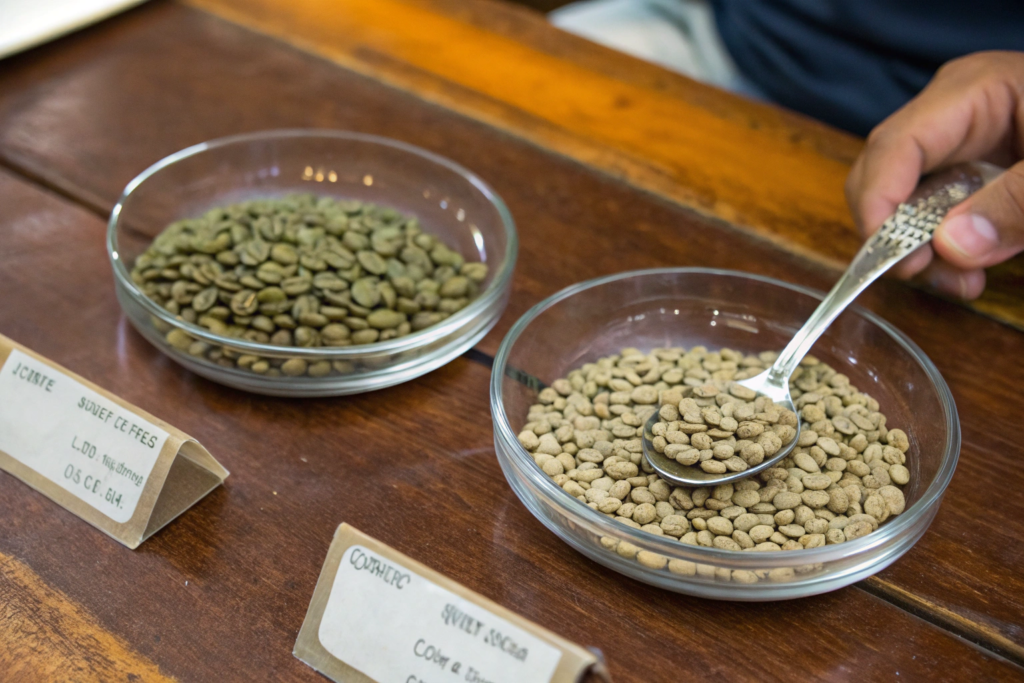
Yunnan's movement from commercial Catimor to specialty-grade lots was achieved not by replacing the Catimor variety entirely, but by systematically upgrading post-harvest processing methods, implementing strict cherry selection protocols, and introducing controlled fermentation techniques that suppressed the variety's negative earthy notes while amplifying its hidden strengths of heavy body and brown sugar sweetness. The coffee itself taught us this. About eight years ago, we ran a simple experiment. Same Catimor trees. Same farm block. Half the cherries were processed the old way: rough pulp, a quick wash, uneven drying on a dirty patio. The other half were processed with extreme care: hand-sorted ripe cherries only, a clean, temperature-controlled 24-hour fermentation, and slow drying on raised African beds under shade netting. The difference in the cup was not subtle. It was a different coffee. The "earthy" note was gone. In its place was a clean, malty sweetness and a surprisingly pleasant black tea-like body. That was the moment we realized the potential was in our hands all along.
This shift wasn't just about one farm. It was a deliberate, province-wide upgrade driven by a new generation of coffee professionals. Let's look at the physical infrastructure that turned this experiment into a repeatable, scalable reality.
What Post-Harvest Processing Upgrades Transformed the Cup Profile?
The old Yunnan processing station was rudimentary. Cherries were pulped with old, poorly calibrated machines that often damaged the beans. The fermentation happened in whatever concrete tank was available, with no temperature control. The washing was inconsistent. The drying happened on bare concrete patios, where the beans would overheat during the day and absorb moisture at night. Every single step was introducing defects.
The transformation came with investment. We imported modern, calibrated mechanical depulpers that remove the skin without nicking the parchment. We built new fermentation tanks from stainless steel, allowing us to control the temperature and precisely manage the development of flavor precursors. We installed parabolic drying beds covered with UV-stabilized shade netting, which slows the drying process to a gentle, even 10 to 14 days, protecting the bean's cellular structure. These are not cheap upgrades. But they are the non-negotiable foundation of a specialty-quality cup. This systematic upgrade of the coffee wet mill processing is the true, unglamorous engine behind the new Yunnan flavor profile.
How Did the Introduction of New Varietals Diversify Yunnan's Flavor Range?
While we were learning to process Catimor better, we were also looking beyond it. On our farm and others across the province, forward-thinking producers began planting entirely new varietals. Geisha, Typica, Bourbon, Pacamara, SL28. These are the famous names of the specialty coffee world. Planting them in Yunnan was a gamble. Different soil, different rainfall patterns, different altitude dynamics. Nobody knew how they would express themselves.
The early results are incredibly exciting. A Geisha planted at 1,500 meters in our western Yunnan block produced a cup with the classic, delicate jasmine florals, but with a slightly more pronounced stone-fruit sweetness than its Panamanian counterpart. A Pacamara lot showed an intense, almost tropical fruit punch, layered over a creamy body. These new varieties are not yet large in volume, but they are creating Yunnan's first true "microlots" that can compete on a global stage. The work of organizations like World Coffee Research has been instrumental in providing access to these pure-line varietals and the agronomic knowledge to grow them successfully, expanding the genetic palette of our region.
These new flavors are exciting, but a cup profile is only half the story. The physical environment that creates that flavor—the invisible architecture of the land itself—is what makes Yunnan genuinely unique among the world's coffee origins. The altitude, the latitude, and the weather patterns create a set of conditions that simply don't exist anywhere else in the coffee belt.
What Microclimates in Baoshan Produce the Highest Scoring Arabica?
A coffee origin is not a single place. It's a mosaic of microclimates. Two farms, twenty kilometers apart, at different altitudes, facing different directions, can produce coffees with entirely different personalities. This is the secret that took us years to truly understand. Early on, we treated our 10,000 acres as one big farm, blending everything together into a single, average product. The quality was average. The flavor was average. The price was average. The breakthrough came when we started treating our own land as a collection of distinct, identifiable terroirs. We began mapping every hillside's altitude, its sun exposure, its wind patterns, its soil composition, and then we kept the coffee from each block separate throughout the entire harvest and processing cycle.
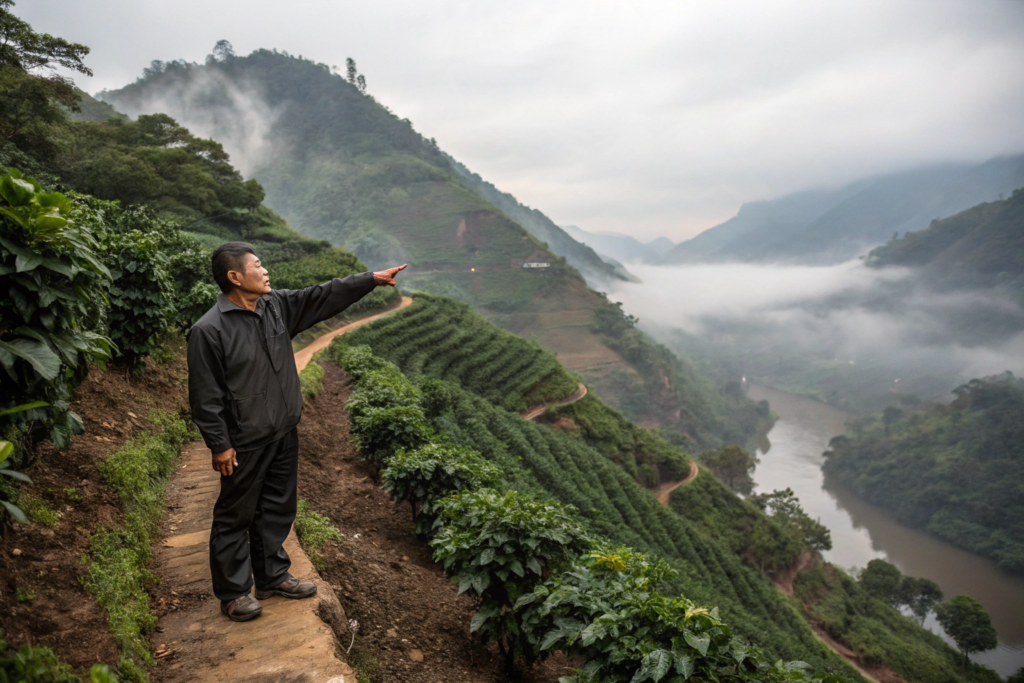
The highest scoring Arabica lots in Baoshan consistently come from the Gaoligong Mountain range microclimate, specifically from plots situated between 1,300 and 1,600 meters above sea level, where the combination of intense daytime sunlight, dramatic nighttime temperature drops, and well-drained volcanic soils forces the coffee cherry to mature slowly, concentrating sugars and developing a brighter, more complex acidity. This is Yunnan's specialty sweet spot. Below 1,200 meters, the coffee matures too fast. The body is heavy, but the acidity is flat, and the cup lacks complexity. Above 1,600 meters, the risk of frost damage becomes too high, and the yield drops to uneconomical levels. But that 1,300 to 1,600 meter band, particularly on the eastern slopes of the Gaoligong Mountains, is our magic zone.
This isn't just a theory. It's a measurable, repeatable result that we see in our cupping data, year after year. Let's break down the specific geographical and seasonal factors that drive this quality.
Why Does the Gaoligong Mountain Range's Altitude Matter for Bean Density?
Altitude is shorthand for a cooler, more stable temperature. The Gaoligong range, which runs north-south along the western edge of our growing area, creates a perfect ramp of gradually increasing altitude. At 1,400 meters, the average daytime temperature during cherry development is a mild 18 to 22 degrees Celsius. At night, it drops by 10 to 12 degrees. This thermal shock is critical. The coffee plant's metabolism slows down at night. The cherry takes longer to mature. Instead of rushing to ripeness in six months, it takes eight or nine. That extended maturation period allows the bean to pack in more sugars and more complex organic acids.
The physical result is a denser, harder bean. You feel it when you bite into a green bean. A high-altitude bean cracks with a hard snap. A low-altitude bean feels softer, almost mealy. That density is a direct predictor of flavor potential. The dense cellular structure holds more volatile aromatic compounds, which are released during roasting. This correlation between high altitude, slow maturation, and a denser, higher-quality bean is a well-established principle in coffee growing science. Our internal data shows that lots from our 1,500-meter blocks consistently have a screen size of 17/18 and a bulk density significantly above the specialty threshold.
How Does the Dry-Wet Season Cycle in Yunnan Affect Flowering and Harvest?
Yunnan's climate is monsoonal. We have a distinct, heavy rainy season from June to September, and a dry, cool, sunny season from October to May. This pattern is a huge natural advantage. The heavy rains coincide with the cherry development phase, providing the water the tree needs to fill out the beans. Then, just as the cherries begin their final ripening stage, the rains stop. The dry, sunny weather concentrates the sugars in the fruit and, critically, provides perfect conditions for even, controlled drying on our patios and raised beds.
The dry harvest season is a gift that many other origins don't have. In countries with year-round rainfall, harvest happens between rains, and drying is a constant battle against humidity and mold. In Yunnan, we can harvest and dry our coffee under a predictable, clear, blue sky. The consistent flowering trigger, often linked to the first substantial rains after the dry season, also leads to a more uniform cherry maturation. This seasonal rhythm, typical of a monsoon climate agriculture, is a core part of Yunnan's quality advantage.
That climatic advantage is the raw material. But raw potential, a good variety at a good altitude, means nothing without the human systems to capture it. The real engine of Yunnan's specialty growth isn't just the land. It's the deliberate, expensive, and ambitious investment in infrastructure that connects the remote farm to the global market.
How Has Investment in Processing Stations Changed Yunnan's Coffee Quality?
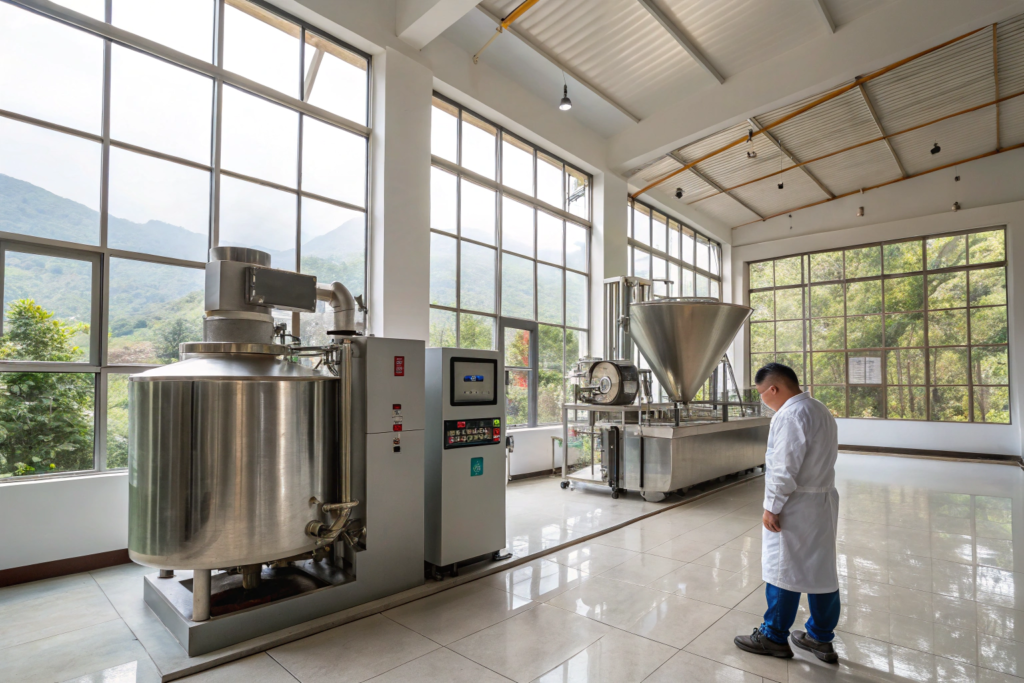
A beautiful mountain and a good variety are a promise. A processing station is the fulfillment of that promise. For decades, the bottleneck in Yunnan's quality was the lack of modern infrastructure between the farm and the export container. We had the cherries. We had the altitude. What we didn't have was the ability to control the biochemical transformation of the cherry into a stable, exportable, high-quality green bean. The investment that has poured into processing stations across Yunnan in the last decade—from government programs, private equity, and forward-thinking farm owners—is the single most important story behind our quality leap.
Massive investment in centralized, technologically advanced processing stations has revolutionized Yunnan's coffee quality by replacing inconsistent, small-scale, manual processing with precise, data-driven systems that control fermentation temperature, washing water quality, and drying curves, eliminating the post-harvest defects that previously defined the origin. It shifted the paradigm. Instead of hundreds of smallholders each doing their own crude processing, many now deliver their fresh cherries to a central station where the processing is handled with scientific precision. This guarantees a consistent, clean, defect-free green bean at a scale that was previously impossible.
This isn't just about buying a new machine. It's about a complete philosophy change. It's about treating the processing stage not as a logistical step, but as a creative, flavor-defining stage. Let's look at one specific piece of technology that has completely changed what we can offer a specialty buyer.
How Do Mechanical Dryers and Optical Sorters Create a Defect-Free Lot?
Sun drying on patios is traditional and, when done perfectly, produces beautiful results. But it's dependent on weather. A single unexpected rain shower during the drying phase can ruin a batch or introduce mold. This is where mechanical dryers come in. We still prefer the initial phase of sun drying, but we now have the backup of precisely controlled mechanical dryers that use warm, dehumidified air. These dryers allow us to gently finish the drying process to the exact target moisture level, regardless of the weather, eliminating the "rewetting" defect that plagued older Yunnan lots.
Then, there's the optical sorter. This machine is the ultimate quality gate. After milling, the green beans pass through a high-speed camera system. Each bean is photographed in milliseconds. If a bean is the wrong color—a black bean, a sour bean, a white stinker—a puff of compressed air shoots it out of the stream. It sorts by color at a speed and accuracy that human hands can't match. The coffee that comes out the other end is incredibly uniform. This technology, once found only in the most advanced global mills, is now operating in Baoshan. It's a powerful tool for achieving the zero-defect tolerance required for a premium specialty contract, reflecting the highest standards of green coffee grading and sorting.
Why Is Water Recycling in the Wet Mill a Sustainability and Quality Win?
An often-overlooked detail is water. A traditional wet mill uses vast amounts of water for pulping and washing, and the resulting wastewater is acidic and heavily polluted with organic mucilage. Discharging this untreated water directly into rivers is an environmental disaster and a reputational risk for any buyer. Our investment in the new processing station included a closed-loop water recycling system. The wastewater is captured, pumped through settling tanks, and then passed through a series of bio-digesters where specific microorganisms break down the organic waste. The cleaned water is then recirculated back into the mill.
This system delivers a double win. For sustainability, it dramatically reduces our water consumption and eliminates a source of environmental pollution. For quality, it means the water we use to wash your coffee is always clean and free of contaminants that could impart off-flavors. This commitment to advanced sustainable coffee processing technology is a tangible, operational proof point that a roaster can proudly share with their customers. It's not a marketing slogan; it's a physical reality of how the coffee was made.
This infrastructure is in place. The quality is real. But the narrative that a buyer like Ron needs to build a successful brand around Yunnan coffee isn't just about specs and scores. It's about the story. And the most compelling story in coffee right now is the one about an origin transforming itself. The final, and perhaps most powerful, driver of Yunnan's specialty growth is the quiet, patient, and very deliberate work of reshaping how the world sees Chinese coffee.
Can Yunnan Coffee Build a Strong Enough Brand Story for Western Markets?
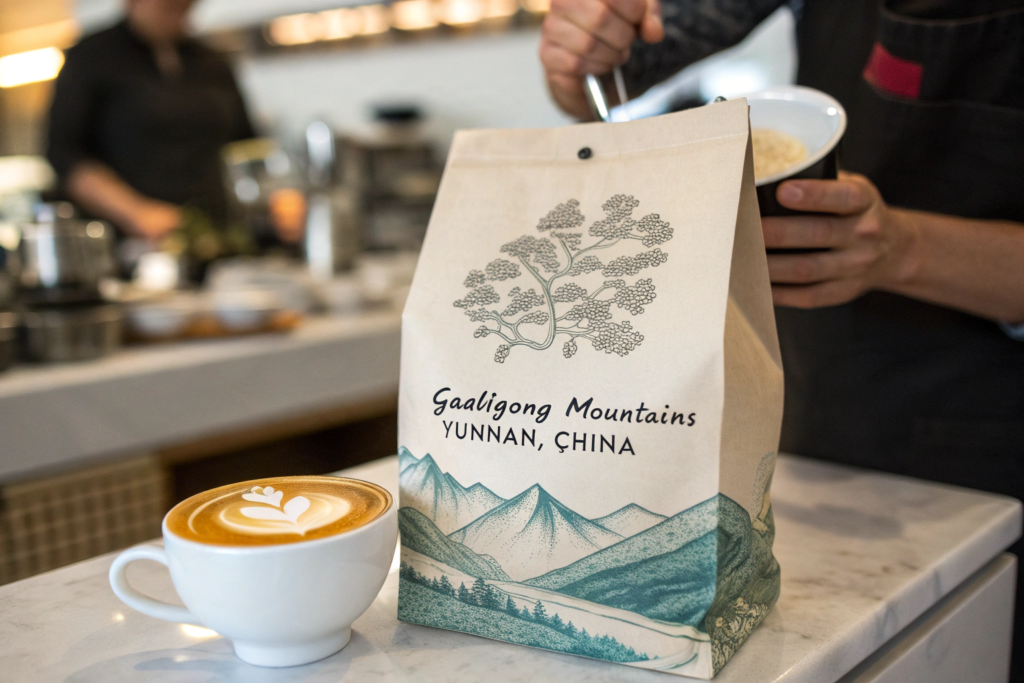
A great coffee with no story is a commodity. A decent coffee with a compelling, true story is a premium brand. For years, the Yunnan story in the West was non-existent, or worse, it was negative. "Cheap," "bulk," "communist coffee" were the unspoken biases. Overcoming that perception is the final, hardest challenge. We can't just present a cupping score. We have to give a Western roaster a narrative they can proudly print on their bag and tell their customers. A story that justifies the premium price and makes the coffee memorable.
Yunnan can build a strong brand story for Western markets, but only by deliberately pivoting the narrative away from "cheap Chinese production" and toward a premium story of high-altitude terroir, varietal innovation, generational farmer dedication, and a dramatic, documented quality transformation that aligns perfectly with the specialty consumer's desire for unique origins and authentic progress. The story isn't "We're finally good." The story is "This specific mountain, on this specific farm, under this specific farmer's care, produced this unique, 87-point lot." It's a story of specific people and specific places, not a country. A Western roaster isn't buying a "China" coffee; they're buying a "BeanofCoffee Baoshan Geisha" micro-lot. The narrative must be granular.
This story, to be credible, needs to be carried by real people and verified by real data. Let's look at the human face of the story and the external validations that make it defensible.
What Narrative Highlights the Generational Shift in Yunnan's Coffee Farming?
The most powerful, and most authentic, story in Yunnan right now is the generational shift. The older generation, my father's generation, farmed for volume. They sold cherries to the government factory. The concept of "cupping score" was foreign to them. Then, a new generation—young men and women, often educated in agricultural universities abroad—came back to the family farm. They brought cupping protocols, social media, and a direct understanding of the Western specialty market. They are the ones who planted the first Geisha trees and bought the first gimbal for virtual tours.
This is a human, relatable story of young people choosing to return to the land, bridging tradition and innovation. It's a universal narrative that resonates with specialty coffee consumers in any country. A roaster can feature a photo of a young Yunnan farmer, my own niece who now runs our quality lab, and tell the story of her bringing sensory science to a mountain farm. This personal, direct trade relationship story is the ultimate differentiator from an anonymous, faceless commodity.
How Do Cup of Excellence Awards Validate the Yunnan Quality Story?
Telling a story is one thing. Having it validated by an objective, blind, international competition is another. The Coffee Excellence Competitions held in the region, following the Cup of Excellence model, have been a turning point for Yunnan's credibility. When an international jury, consisting of respected Q Graders and roasters from Europe, the U.S., and Japan, blind-cups a Yunnan coffee and scores it 88 points, it's not a Chinese farmer bragging. It's a global authority stating a fact.
These competition results provide the external, defensible proof that a roaster needs to justify putting "Yunnan" on a high-priced bag. It transforms a subjective marketing claim into an objective, competitive achievement. The visibility from these events has directly led to new sourcing relationships for our farm and others. The growing recognition of specialty coffee in China through these platforms has given the entire origin a new, credible narrative hook.
Conclusion
Yunnan's role in specialty coffee is no longer a question of potential. It's a reality that is reshaping sourcing maps and challenging old assumptions about where great coffee can come from. We've walked through the four pillars of this transformation. The painstaking processing revolution that unlocked the sweetness hidden inside the hardy Catimor variety. The discovery and mapping of the Gaoligong Mountain microclimates, where a perfect temperature swing and a reliable dry harvest season conspire to create dense, complex beans. The massive, transformative investment in modern processing stations that now deliver a mechanically and digitally sorted, defect-free product at export scale. And the emerging, credible brand story, carried by a new generation of farmers and validated by international competitions, that gives a Western roaster a narrative worthy of a premium shelf.
At BeanofCoffee, we've been on the front line of this transformation, turning our 10,000 acres in Baoshan into a living laboratory for quality. The journey from a rejected commercial lot to a cupping table in Copenhagen has been long, expensive, and deeply rewarding. If you're a buyer who likes to discover an origin before it becomes crowded and expensive, Yunnan is your opportunity right now. We have the specific lot separation, the processing data, and the harvest samples to start a real conversation. Contact my export partner, Cathy Cai, at cathy@beanofcoffee.com. Let's talk about the specific block and the specific lot that could define your next single-origin release. The Yunnan chapter of specialty coffee is just beginning, and the best pages are still being written.