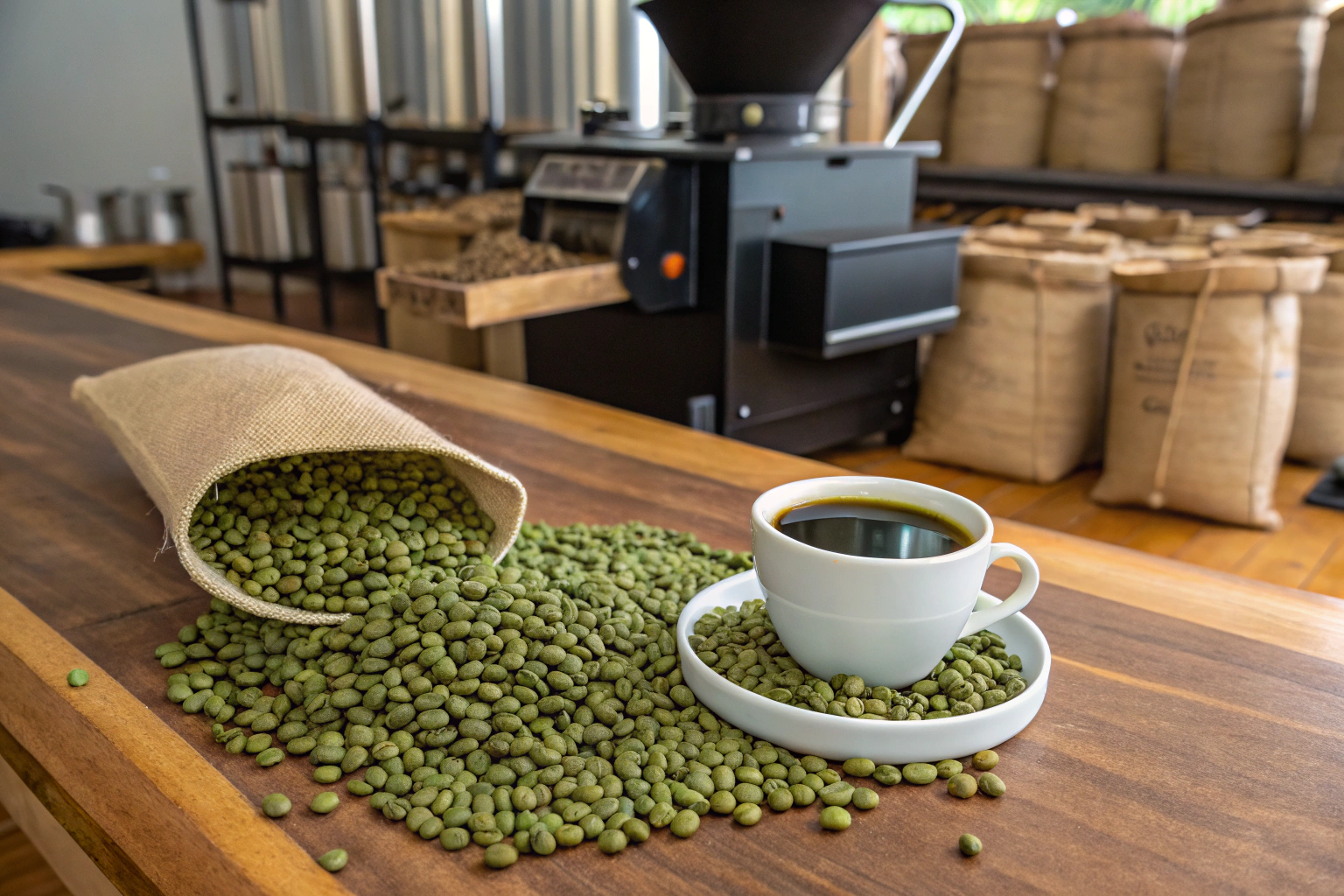
You've just opened a new shipment of green beans. They look fine—good size, uniform color. But when you roast and brew them, a harsh, medicinal, chemical taste ruins the cup. It's not just bad; it's undrinkable. You've likely encountered one of the coffee industry's most insidious and costly defects: the phenolic defect. As an exporter, finding even a hint of this in our lots is an immediate red flag for rejection. Detecting it early can save you from enormous financial loss and brand damage.
Detecting phenolic defect in green coffee beans requires a combination of targeted olfactory screening and confirmatory roasting and cupping. The primary method is the "bag sniff" test: vigorously shaking warm green beans in a sealed container and checking for a distinct, off-putting chemical smell reminiscent of iodine, medicine, band-aids, or phenol disinfectant. This defect cannot be reliably seen; it must be smelled in the green state and confirmed by taste after roasting.
That's the essential process. But phenolic taint is sneaky. It can be present in just a fraction of beans in a 60kg bag, yet contaminate an entire roast. Let's dive into the specific steps and science to equip you as a frontline defender of your coffee's quality.
What Exactly is the Phenolic Defect and What Causes It?
First, understanding the enemy is key. This isn't a flavor variation; it's a serious contamination.
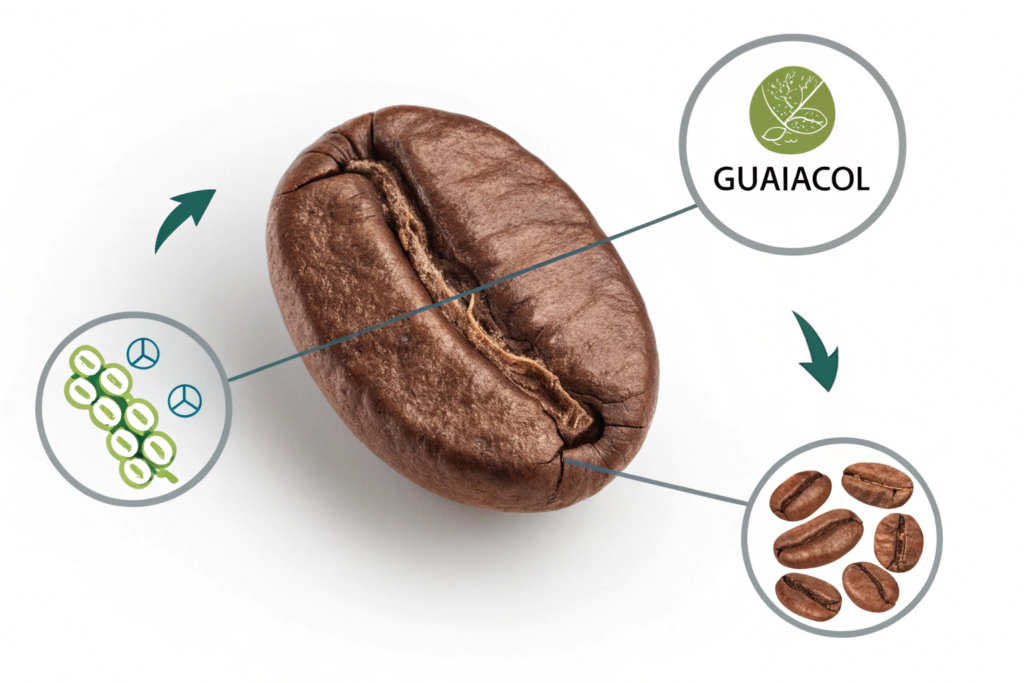
The phenolic defect (often called "phenolic taint" or "Rio-y" flavor) is characterized by strong, undesirable notes of iodine, medicine, chemical, band-aid, or tar. It is caused by the contamination of coffee beans with specific volatile phenolic compounds, most notably guaiacol and 4-ethylguaiacol. These compounds are not naturally present in sound coffee at detectable levels.
The primary causes are microbial spoilage:
- During Fermentation: If coffee is over-fermented or fermented under unsanitary, anaerobic (oxygen-less) conditions, certain bacteria and fungi can thrive and produce these phenolic compounds as metabolic byproducts.
- During Drying: If drying is too slow or interrupted, allowing beans to remain moist for too long, the same spoilage microbes can develop.
- During Storage: Storing high-moisture beans (>12%) or beans with high water activity (Aw >0.65) can lead to microbial growth even after processing.
Crucially, it only takes a few contaminated beans to spoil a batch. The compounds are potent and volatile, easily spreading during roasting.
Is the Phenolic Defect the Same as "Rio" or "Medicinal" Flavor?
Yes, these terms are often used interchangeably, though "Rio" specifically refers to an intense iodine-like flavor historically associated with some Brazilian coffees due to specific processing conditions. "Phenolic" is the broader, more precise technical term for the family of chemical compounds causing these flavors. "Medicinal" is a common sensory descriptor. They all point to the same fundamental problem: microbial spoilage producing guaiacol.
Can It Be Caused by Something Other Than Processing?
Rarely, but yes. In extremely rare cases, contamination from external sources can occur, such as:
- Contaminated Water: Using unclean water for washing or fermentation.
- Storage Contamination: Storing beans near chemicals, pesticides, or in improperly cleaned containers or jute bags that previously held contaminated produce.
However, over 95% of cases originate from faulty on-farm processing—specifically, poor control over fermentation and drying. This is why working with a supplier with rigorous quality control protocols at the mill is non-negotiable.
How to Perform the "Bag Sniff" Test on Green Beans?
This is your first and most critical line of defense. The human nose is remarkably sensitive to guaiacol, often able to detect it at levels below what machines can measure.
Step-by-Step Guide:
- Take a Representative Sample: Don't just sample from the top. Use a trier to pull beans from deep within several bags. Combine at least 200-300 grams.
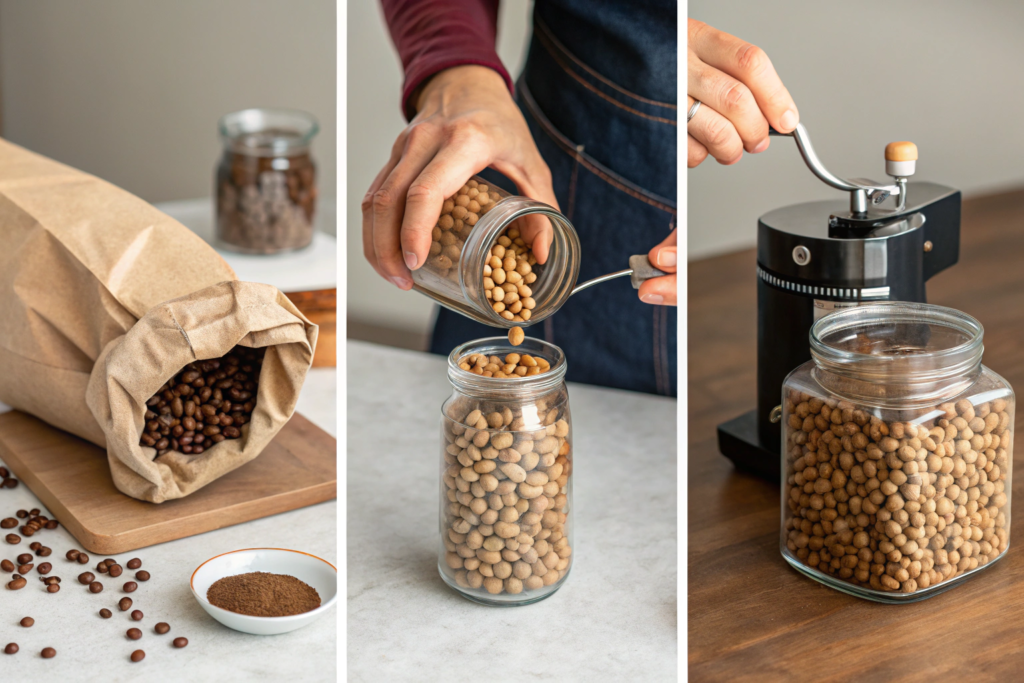
- Warm the Beans: The volatile phenolic compounds are released more readily when warm. Place the sample in a clean, dry glass jar or stainless-steel container. Seal it.
- Create Heat: Hold the sealed container in your hands for 2-3 minutes, or place it in a warm (not hot) spot (around 40-50°C / 104-122°F). A gentle warmth is enough.
- Shake Vigorously: Agitate the container for 30 seconds. This friction and warmth drive the aromatics into the headspace of the container.
- The Critical Sniff: Immediately open the container and take a sharp, short sniff directly over the opening. Warning: Do not inhale deeply on the first sniff, as the odor can be very strong.
What You're Smelling For:
- Positive (Defect): A sharp, penetrating smell of iodine, hospital antiseptic, band-aids, tar, or creosote. It is unmistakably chemical and unpleasant.
- Negative (Clean): The normal, pleasant aroma of green coffee: grassy, hay-like, nutty, or slightly earthy.
Why is Warming the Beans So Important?
Phenolic compounds like guaiacol have a low volatility at room temperature. Warming the beans increases their kinetic energy, causing more molecules to evaporate into the air inside the container. This concentrates the aroma, making even a subtle taint detectable. Skipping this step could mean missing a low-level contamination that will still ruin your roast.
What if the Smell is Faint or Unclear?
If you suspect a faint phenolic note but aren't sure:
- Let the beans rest in the closed container for 10 more minutes and sniff again. The aroma may concentrate.
- Grind a small sub-sample of the warm beans. Grinding dramatically increases surface area, releasing more aromatics. Smell the grounds immediately.
- Proceed to a confirmatory "roast and cup" test. A faint smell in green often translates to a clear, defective taste after roasting.
What is the Confirmatory Roast and Cupping Protocol?
The bag sniff test is a screen; the palate is the judge. You must confirm any suspicion by roasting and tasting.
The Confirmation Roast:
- Roast a Small Batch: Roast 150-200g of the suspect sample. Use a profile you know well.
- Observe During Roast: Sometimes, a phenolic lot may produce unusually bluish smoke or have a distinct chemical smell during roasting, but this is not always reliable.
- Grind Immediately After Cooling: Grind the roasted beans. Smell the grounds again—the phenolic character will often be more pronounced.
The Diagnostic Cupping:
- Cup the coffee following standard protocol.
- Pay particular attention to the first impressions after breaking the crust and the flavor in the mouth.
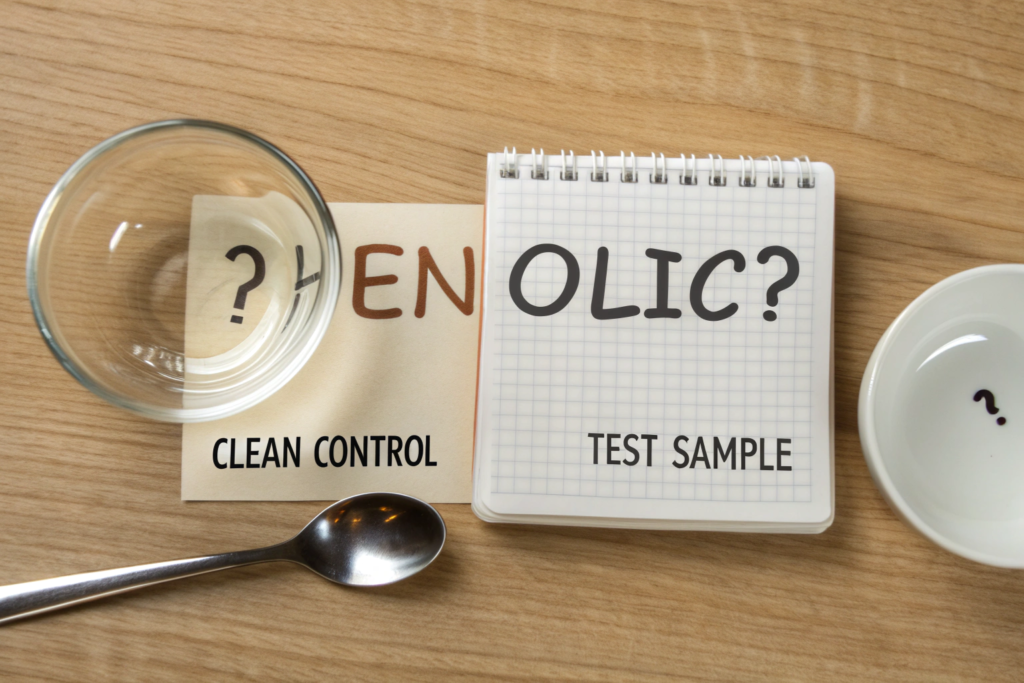
- The Defective Taste: It will hit as a sharp, lingering chemical/medicinal flavor on the mid-palate and aftertaste. It often overpowers any positive origin characteristics. The coffee may also taste "hollow" or ashy, as the defect masks sweetness and acidity.
This cupping isn't for scoring; it's for a binary decision: Accept or Reject.
Can a "Light Roast" Hide or Expose the Defect?
A light roast tends to expose the defect more clearly. Darker roasts can sometimes mask phenolic notes with heavy roast flavors (bitterness, carbon), but the underlying chemical taint usually persists in the aftertaste. For diagnostic purposes, a medium-light roast is ideal as it preserves the bean's inherent flavors while providing enough development to release aromatics.
What Should You Do If You Detect It in a Sample from a Potential Supplier?
This is a serious quality failure. You must:
- Document It: Note the exact sample ID and your process.
- Communicate Immediately: Inform the supplier, providing your observations. A professional supplier will be alarmed and want to investigate their own batch.
- Request a Replacement Sample: Ask them to send a new sample from a different lot or harvest time.
- Re-evaluate the Supplier: A single incident might be a fluke, but if it happens repeatedly, it indicates systemic problems in their processing quality control. It calls their reliability into question.
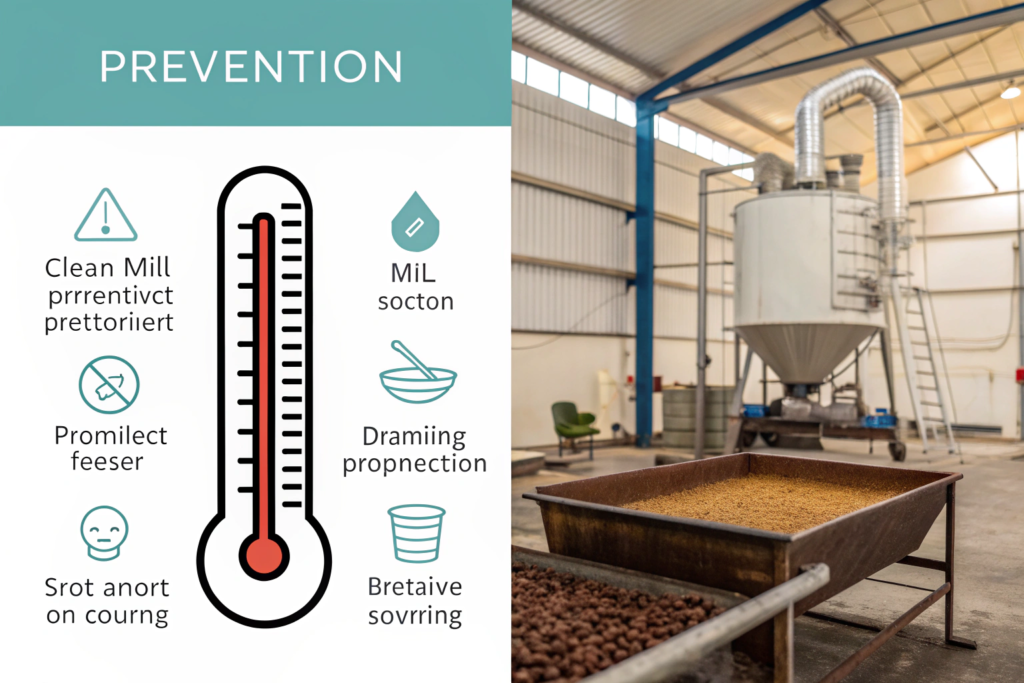
How Can You Prevent It in Your Supply Chain?
As a buyer, your power lies in choosing suppliers whose processes prevent this defect from occurring in the first place.
Key Questions to Ask Your Supplier:
- "What is your controlled fermentation process?" Look for answers about monitoring time, temperature, and water quality. Avoid suppliers who use vague terms like "traditional fermentation."
- "How do you dry your coffee, and what is your target moisture content?" The answer should involve raised beds, parabolic dryers, or mechanical dryers with controlled airflow, targeting 10-12% moisture.
- "Do you test for water activity (Aw)?" A "yes" is a very good sign. It shows they understand and measure microbial stability.
- "Can you provide processing records or QC data for this lot?"
The Role of Water Activity (Aw):
This is the most scientific preventive metric. If the green coffee's Aw is below 0.60, microbial growth (and thus phenolic development) is impossible. Demand this data. At Shanghai Fumao, Aw testing is a standard checkpoint before any coffee is bagged for export. It is a more reliable indicator of safety and stability than moisture content alone.
Should You Use Laboratory Chemical Analysis?
For high-value contracts or dispute resolution, yes. Laboratories can use Gas Chromatography-Mass Spectrometry (GC-MS) to quantitatively measure the levels of guaiacol and 4-ethylguaiacol in green or roasted coffee. This provides irrefutable, scientific evidence. However, it is costly and slow. For routine screening, the trained human nose and palate, backed by Aw data, are highly effective and practical tools.
How Does This Impact Your Contractual Terms?
Your purchase contract should include defect specifications. Beyond just counting black/sour beans, you can specify: "Coffee shall be free from any phenolic or medicinal taint as determined by standard industry sampling and cupping methods." Furthermore, you can specify a maximum water activity (Aw) level (e.g., Aw ≤ 0.60) as a condition of acceptance. This gives you clear, objective grounds for rejection if the defect is found upon arrival.
Conclusion
Detecting the phenolic defect is a vital skill that protects your product quality and your business. It hinges on a simple but powerful practice: the warmed, sealed container sniff test, followed by confirmatory cupping. While detection is crucial, prevention is paramount. This is achieved by partnering with exporters who implement scientific processing controls, particularly managing fermentation and drying to ensure a safe, low water activity (Aw) in the final green bean.
At BeanofCoffee, our commitment to preventing this defect is embedded in our processing protocols and verified by our routine Aw testing. We understand that your trust depends on the absolute integrity of every bean we ship.
If you are evaluating suppliers and want to understand their specific protocols for preventing phenolic and other microbial defects, we are transparent about our processes.
To discuss our quality control measures, request Aw reports for our current lots, or learn more about our washed and natural processing protocols, please contact our Head of Sales, Cathy Cai, at cathy@beanofcoffee.com. Let's ensure the coffee you source is clean, from the seed to the cup.