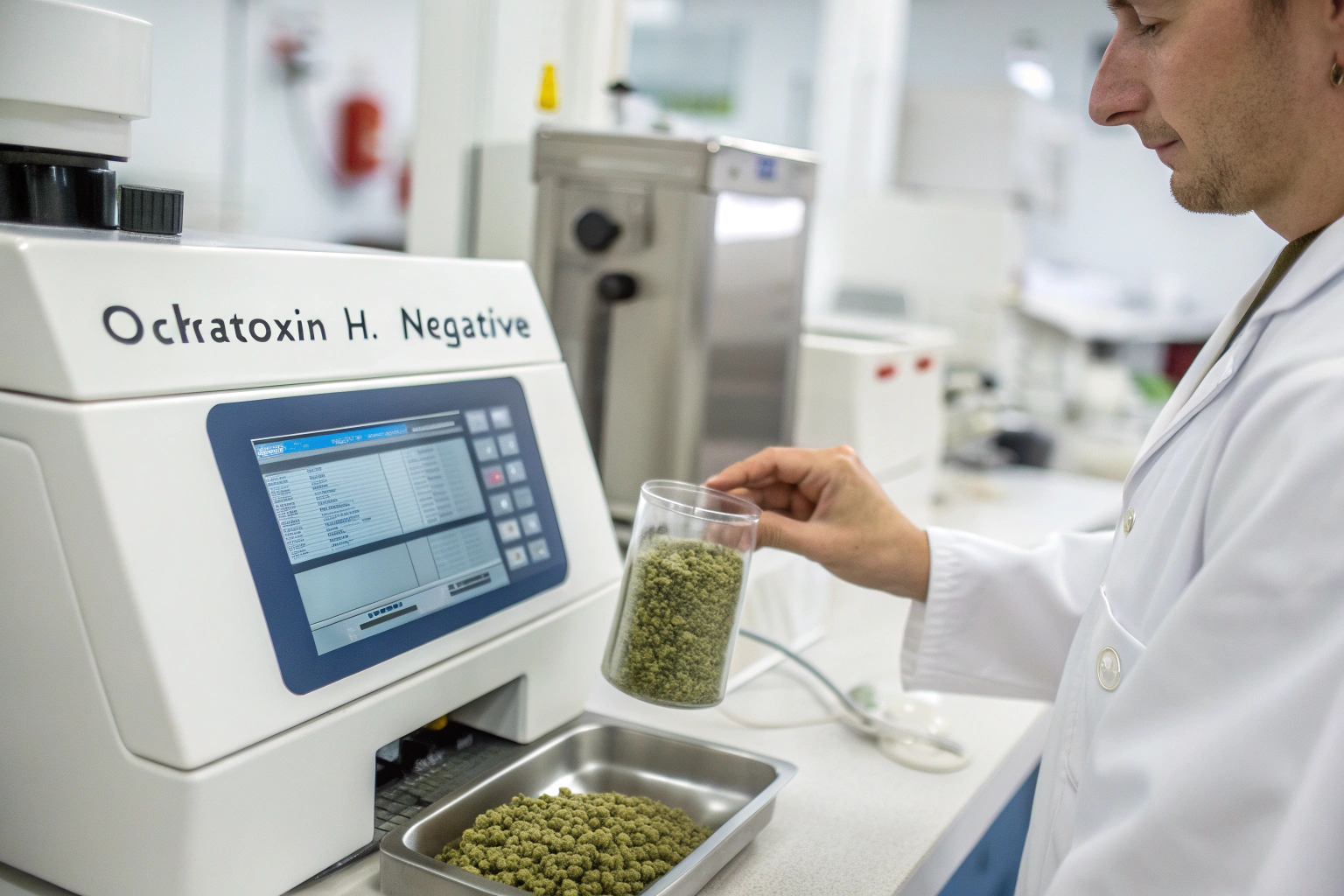
I received an email last month that made my stomach drop. A potential buyer—someone like you, Ron—wrote me a single line: "I've heard Chinese coffee is full of mold. Prove it's safe." It was blunt. It was direct. And it was fair. In this business, your reputation is only as good as your last lab test. The fear of mycotoxins—ochratoxin A, aflatoxin—is real. It is not just about a bad cup of coffee. It is about legal liability. It is about your customers' health. If a roaster sells a bag of beans that makes someone sick, or if a shipment gets flagged by the FDA for contamination, that roaster is out of business. The pain here is existential.
Yes, premium Yunnan coffee beans from reputable exporters like Shanghai Fumao are rigorously tested for mycotoxins, specifically Ochratoxin A (OTA) and Aflatoxin B1, using third-party laboratories like SGS or Eurofins to ensure compliance with both Chinese export standards and strict EU and U.S. FDA import limits, which are typically set at 5 parts per billion (ppb) for OTA and 20 ppb for total aflatoxins.
This is not a "maybe." It is a requirement for doing business in the Western market. No test, no entry. It is that simple. But you need to understand what those tests mean, who does them, and how to verify the results. Let me walk you through the science and the paperwork from my perspective as the guy who signs the checks for the lab fees.
What Mycotoxins Are Most Commonly Screened in Green Coffee Exports?
When we talk about "mold in coffee," we are not talking about the fuzzy stuff you see on old bread. We are talking about invisible chemical compounds produced by certain fungi. These compounds are toxic to the human liver and kidneys if consumed in high amounts over a long period. The coffee industry is hyper-aware of this. It is one of the most regulated aspects of our export business.
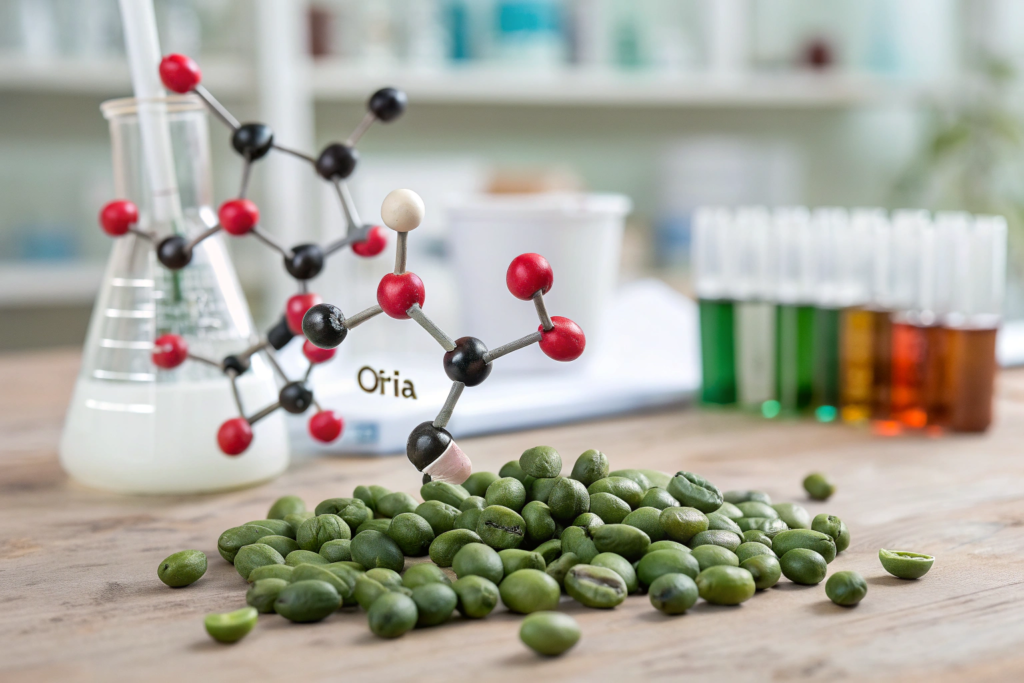
The mycotoxins most commonly screened in green coffee exports are Ochratoxin A (OTA) and Aflatoxins (B1, B2, G1, G2), with OTA being the primary concern in coffee due to the Aspergillus and Penicillium species that can grow on improperly dried or stored beans. Knowing the names of these toxins is the first step to understanding the safety of your supply chain.
Why Is Ochratoxin A the Primary Concern for Coffee Importers?
Ochratoxin A, or OTA, is the bogeyman of the coffee world. It is produced by Aspergillus ochraceus and Penicillium verrucosum. These fungi love warm, humid environments. They attack the coffee bean during drying if the beans are left in thick piles on the ground and not turned often enough. They also attack during ocean transit if the container gets moisture inside or if the beans are not properly dried to begin with.
Here is the crucial detail. OTA is heat stable. It does not cook out. You can roast those beans to a dark French roast, and the OTA molecule will still be there. This is why testing green coffee is so important. By the time you roast it, the damage is done.
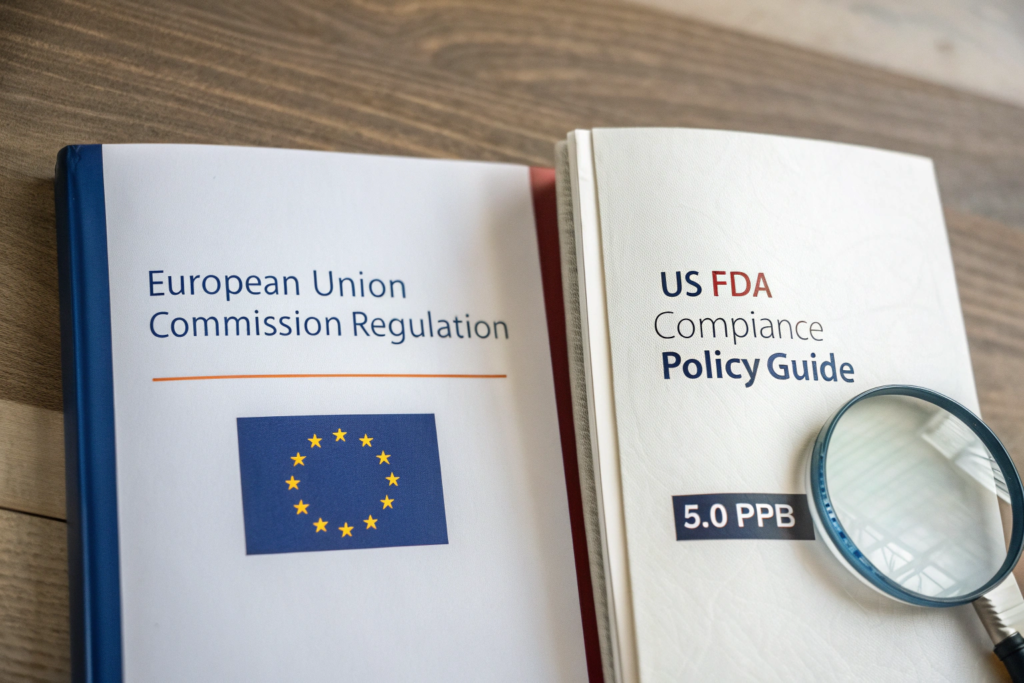
The European Union has the strictest limits in the world for OTA in green coffee: 5.0 parts per billion (ppb) . The U.S. FDA does not have a specific regulatory limit for OTA in coffee, but they have guidance levels and they will detain shipments that test positive at high levels. More importantly, most commercial contracts between buyers and sellers in the U.S. now specify a 5 ppb limit because the EU market demands it. We test to the strictest standard. That way, the coffee can go anywhere. You can read the official EU regulations on contaminants in food through the European Commission website.
What About Aflatoxin Risks in Yunnan's Processing Environment?
Aflatoxin is less common in coffee than in peanuts or corn. But it is not impossible. Aflatoxin is produced by Aspergillus flavus. It requires very specific conditions—high heat and high humidity. In Yunnan, the harvest season is the dry season. November through March is cool and arid in the mountains of Baoshan. This is a natural defense against aflatoxin.
Furthermore, the processing method matters. At Shanghai Fumao, we primarily use the washed process. The cherry is pulped, fermented in clean water tanks, and then washed again. This washing step physically removes surface molds and spores. Then the parchment is dried on raised African beds in thin layers under the sun. The air circulation is excellent. The coffee dries evenly down to 11% moisture within 10 to 14 days.
The risk of aflatoxin in well-processed, high-altitude Yunnan Arabica is extremely low. We still test for it. We test for Aflatoxin B1, B2, G1, and G2 total. We do it because you, the buyer, need to see "Not Detected" on the lab report. It is not enough for me to know the coffee is safe. I have to prove it. You can learn more about mycotoxin risks in coffee from scientific resources like the American Chemical Society publications on food safety.
How Are Yunnan Coffee Samples Collected and Tested for Mycotoxins?
A lab result is only as good as the sample that went into the machine. You can have the fanciest testing equipment in the world. If you tested a handful of beans you picked out of a perfect spot, the result means nothing. The sampling method is where fraud and error creep in. This is why we follow a strict protocol.
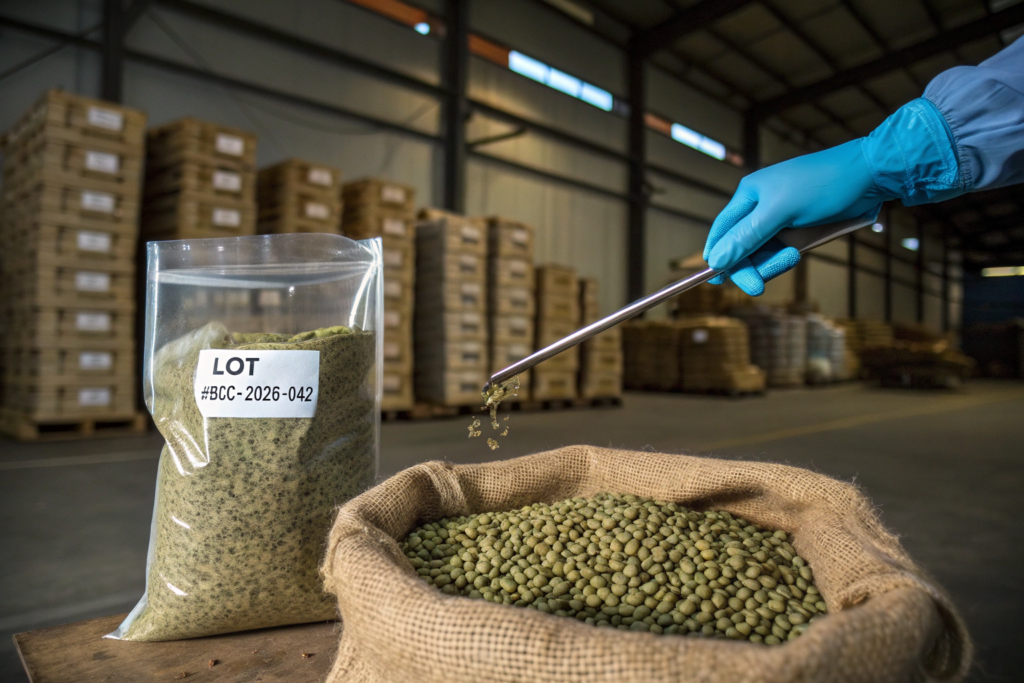
Yunnan coffee samples for mycotoxin testing are collected according to internationally recognized protocols, typically involving a composite sample drawn from at least 10% of the bags in a lot using a sterile trier, which is then homogenized, quartered, and sealed in tamper-proof bags before being sent to an ISO 17025 accredited laboratory.
This is not me scooping beans into a Ziploc bag. This is a documented procedure.
What Is the Standard Protocol for Drawing a Representative Sample for OTA Analysis?
There are specific guidelines for this. The GAFTA (Grain and Feed Trade Association) and the European Coffee Federation have rules. We follow the same logic.
- Lot Definition: The lot must be homogeneous. We do not test a container that has beans from three different farms mixed together. We test individual lots from specific processing dates.
- Number of Probes: For a 320-bag container, we probe at least 32 bags. We use a sterile, stainless steel trier that reaches the center of the bag.
- Composite Mixing: All the core samples are poured into a clean, food-grade bucket. They are mixed thoroughly.
- Quartering: The pile of beans is divided into four equal quarters. Two opposite quarters are discarded. The remaining two are mixed again. This is repeated until we have a final sample of about 1 kilogram.
- Sealing: The 1kg sample is split into three parts. One goes to the lab. One stays in our locked retention room. One can be sent to you as a reference sample.
This process ensures that the 50 grams the lab actually grinds up for analysis represents the entire 19 metric tons in that container. It is statistically valid. If a supplier cannot describe their sampling protocol in this level of detail, their test results are questionable. For official sampling standards, the ISO 2859 series provides the statistical basis for acceptance sampling.
How Do Third-Party Labs Like SGS and Eurofins Validate the Results?
We do not test our own coffee. That would be like grading your own homework. We use independent, third-party laboratories that are accredited to ISO 17025. This is the international standard for testing and calibration laboratories. It means their equipment is calibrated. Their technicians are certified. Their results hold up in a court of law or a customs dispute.
Here is what happens when the sample arrives at SGS or Eurofins:
- Chain of Custody: The lab logs the sample with a unique ID and the tamper-proof seal number. They verify the seal is intact.
- Sample Prep: The lab grinds the green coffee to a specific particle size under controlled conditions.
- Analysis: They use HPLC (High-Performance Liquid Chromatography) with fluorescence detection. This is the gold standard for mycotoxin testing. It separates the chemical compounds and measures them with parts-per-billion accuracy. Some rapid test kits exist (ELISA tests), but we only trust HPLC for final export certification.
- Quality Control: The lab runs a known "spiked" sample alongside our sample to make sure the machine is working correctly. They also run a blank sample to check for contamination.
The final report is a PDF with the lab's logo, the accreditation stamp, and the numbers. At Shanghai Fumao, we provide this report to every buyer for every shipment. No exceptions. If the report shows >5 ppb OTA, the coffee does not ship. We either recondition it (sort it again, dry it further) or sell it domestically where the limits are different. It is a financial hit. But it protects the integrity of our export brand.
What Are the Acceptable Mycotoxin Limits for US and EU Coffee Imports?
You need to know the numbers. When I send you a lab report that says "OTA: 2.4 ppb," you need to know if that is good, bad, or indifferent. The regulatory landscape is a patchwork. The EU is strict. The U.S. is more relaxed but getting tighter. Japan and South Korea have their own limits.
The acceptable mycotoxin limit for Ochratoxin A in green coffee imported into the EU is strictly 5.0 ppb, while the U.S. FDA has no specific regulatory limit but generally defers to the 5.0 ppb standard as a best practice for enforcement discretion, with Japan and South Korea maintaining limits between 5.0 and 10.0 ppb.
If you want to sell to a major roaster who exports to Europe, you need that sub-5 ppb number. Period.
How Does the FDA's Enforcement Discretion on OTA Compare to EU Law?
The U.S. Food and Drug Administration (FDA) does not have a specific action level for OTA in green coffee written into the Code of Federal Regulations. However, that does not mean they ignore it. The FDA operates under "enforcement discretion." They can detain a shipment if they deem it "adulterated" under the Food, Drug, and Cosmetic Act.
In practice, FDA inspectors use the EU limit of 5 ppb as a benchmark. If they test a shipment and it comes back at 50 ppb, they will absolutely stop it. They will also flag that importer for increased surveillance in the future. Getting on an FDA "Red List" is a nightmare. Every container gets held for lab testing. Demurrage fees pile up for weeks. It can kill a small importer.
This is why, even for U.S.-bound coffee, I ensure the OTA level is well below 5 ppb. Usually, our coffee tests at "< 1.0 ppb" or "Not Detected" at the limit of quantification. This is because of the clean processing and high-altitude drying. You can check the FDA's guidance documents and import alerts on the FDA Import Program website.
What Happens If a Shipment Tests Above the Limit at the Destination Port?
This is the nightmare scenario. The boat arrives in Oakland. Customs pulls a sample. It tests at 6.2 ppb OTA. Now what?
- Notice of Detention: The FDA or USDA issues a notice. The coffee is held at the bonded warehouse. You cannot touch it.
- Reconditioning Request: You, the importer, can request to "recondition" the coffee. This usually means sending it to an approved facility for re-sorting or steam sterilization. This is expensive. It costs thousands of dollars just to move the container, plus the processing fee. And it ruins the coffee's flavor.
- Re-export or Destruction: If reconditioning is not approved or fails, you have two choices. Ship the coffee back to China (losing all the freight money) or destroy it under supervision (losing everything).
This is why I am paranoid about pre-shipment testing. I would rather find the problem in Shanghai than in Oakland. If we find an issue at origin, we fix it here. The costs are lower. The stakes are lower. It is just good business hygiene. For a deeper understanding of the import detention process, the U.S. Customs and Border Protection website outlines the procedures.
How Can Roasters Request and Verify Mycotoxin Test Reports From Chinese Suppliers?
You have the right to see the test. You have the obligation to see the test. Do not be shy about this. A legitimate supplier will have the PDF ready before you even ask. A shady supplier will stall, make excuses, or send you a blurry scan of a document from three years ago.
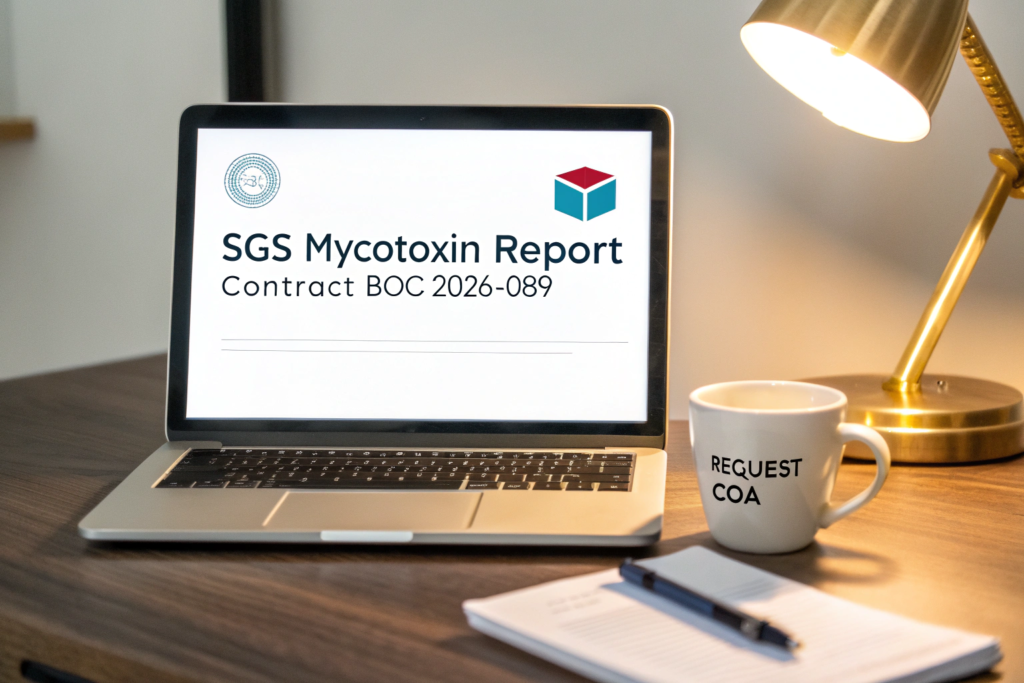
Roasters can request and verify mycotoxin test reports by asking for a full Certificate of Analysis (CoA) from an ISO 17025 accredited lab that is dated within the last six months and corresponds to the specific lot number being purchased, and by cross-referencing the lot number on the CoA with the lot number on the shipping documents and the pre-shipment sample bag. This is about matching the paper to the product.
What Specific Information Should a Valid Certificate of Analysis Include?
Do not accept a one-line email that says "Tested OK." You need a formal Certificate of Analysis (CoA) . Here is the checklist of what that document must contain:
- Laboratory Name and Logo: SGS, Eurofins, Bureau Veritas, etc.
- ISO 17025 Accreditation Number: This proves the lab is legitimate.
- Report Number and Date: Unique identifier for that test.
- Client Name: Should be the exporter's name (e.g., Shanghai Fumao).
- Sample Description: "Green Coffee Beans, Arabica, Origin: Yunnan Baoshan, Crop 2026."
- Lot Number: This is the most critical link. The lot number on the CoA must match the lot number on the bag and the invoice.
- Test Parameter: "Ochratoxin A by HPLC."
- Result: "< 1.0 ppb" or "2.3 ppb."
- Limit of Quantification (LOQ): The lowest amount the machine can reliably detect (usually 0.5 or 1.0 ppb).
- Authorized Signature: Digital or ink.
If any of these items are missing, the document is incomplete. Ask for a revised version. At Shanghai Fumao, Cathy keeps these reports filed by lot number. When you book a container, she attaches the relevant CoA to the final document package automatically. It is part of the service.
Can I Send a Green Sample to an Independent Lab Myself?
Yes. And for a first-time large order, I encourage it. This is the ultimate verification. You are not taking my word for it. You are not taking my lab's word for it. You are taking your lab's word for it.
The process is simple:
- Request a Pre-Shipment Sample (PSS) be sent directly to you.
- When you receive it, do not just cup it. Split it in half.
- Send half to a U.S.-based ISO 17025 lab. There are several that specialize in food and spice testing. A full OTA panel costs about $100 to $150.
- Wait for the results. Compare them to the CoA I sent you.
If the numbers match within a reasonable margin of error, you have just built an unshakeable foundation of trust with your supplier. If the numbers are wildly different, you have just saved yourself a $40,000 mistake. It is the best $150 insurance policy in the coffee business.
I have had buyers do this. I actually appreciate it. It shows they are serious. It shows they have a quality control system. Those are the buyers I want to work with long-term. You can find a directory of accredited labs in the U.S. through the ANAB (ANSI National Accreditation Board) website.
Conclusion
The question of mycotoxins in Yunnan coffee is a question about professionalism. The old reputation of Chinese agriculture as unregulated and opaque is dying. It is being replaced by a new reality: one of SGS lab reports, ISO certifications, and strict export protocols. We know that our access to the U.S. and European markets depends entirely on our ability to prove safety.
Are Yunnan coffee beans tested for mycotoxins? The answer from any exporter worth your time is a definitive "Yes." The real question you should be asking is "Can I see the report?" And the answer to that question should always be "Here it is."
At Shanghai Fumao, we do not just test because we have to. We test because it is the only way to guarantee the quality and safety of the coffee we put our name on. We want you to cup the coffee and taste the clean, sweet profile of the Baoshan mountains. We do not want you to taste doubt.
If you want to see a sample Certificate of Analysis for our current crop, or if you want to discuss arranging your own independent testing of a pre-shipment sample, let's get the process started. Email Cathy Cai. She has the lab reports ready to go. She can send you the documentation for any lot we have in stock. Contact Cathy at: cathy@beanofcoffee.com.