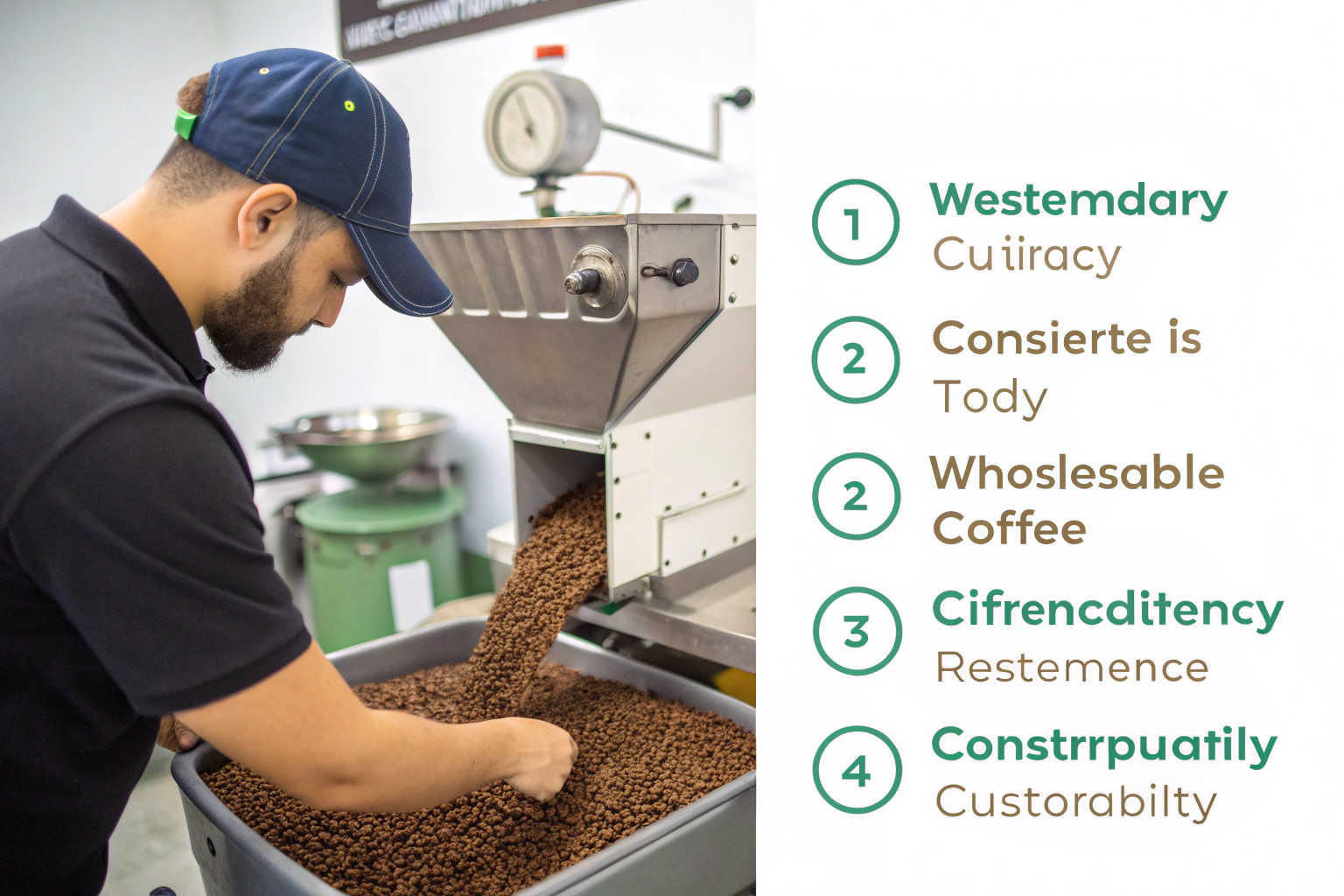
You run a roasting business. Your flagship blend is what built your reputation. This month, it tastes perfect—balanced, sweet, and complex. Next month, using beans from the same supplier and the same roast profile, it tastes flat, sour, or just... different. Your customers notice. Your baristas are confused. Your brand equity starts to leak away with every inconsistent bag. This isn't just an annoyance; it's an existential threat. As a supplier to wholesale buyers, we see our role not as selling coffee, but as providing the reliable, stable foundation upon which your business is built.
Consistency is critical for wholesale coffee buyers because it is the direct driver of brand integrity, operational efficiency, and customer retention. It ensures that the coffee product a roaster or cafe sells today is identical in quality and taste to the product sold yesterday and will be sold tomorrow. This predictability protects the roaster's reputation, simplifies production, reduces waste, and builds unshakable trust with end consumers. For a wholesaler, inconsistent coffee is not a variation—it's a product failure.
That statement captures the high stakes. But let's break down exactly how inconsistency attacks every part of a coffee business and why our obsession with consistency at origin is your first and most important line of defense.
How Does Inconsistency Destroy Brand Trust and Customer Loyalty?
A coffee brand is a promise. That promise isn't just about "good coffee"; it's about a specific, reliable experience. Think of your favorite chocolate bar or soft drink—you expect the exact same taste every single time.
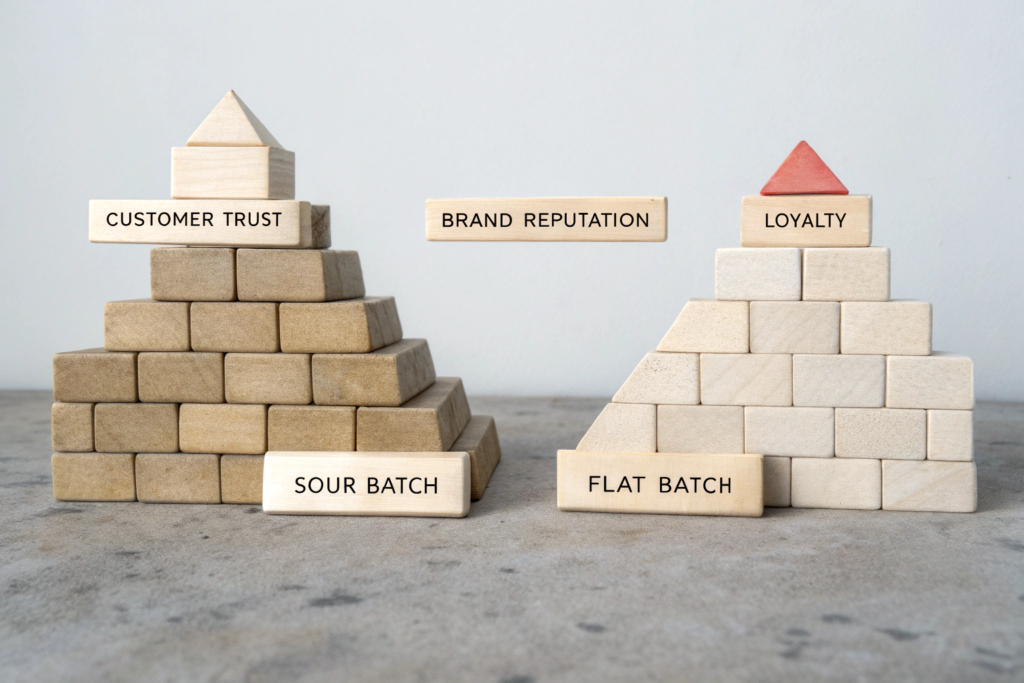
- The Broken Promise: When a customer's usual latte suddenly tastes acidic or thin, they don't think, "The green coffee lot must have had a lower density this month." They think, "This cafe has gone downhill," or "They've changed their recipe to save money." You've broken the fundamental promise of your brand.
- Erosion of Trust: For specialty cafes and roasters, customers are often enthusiasts. They develop a palate for your specific profile. Inconsistency tells them you are not in control of your craft. They lose confidence and take their business to a competitor who can deliver the expected experience, every time.
- Loss of Wholesale Accounts: If you supply cafes or grocery stores, their business depends on your consistency. A cafe manager cannot retrain baristas or reprint menus every month because your espresso blend changed. They will find a supplier who provides a stable product.
Consistency, therefore, isn't a quality metric; it's the bedrock of your brand's identity and market position. When we, as your green coffee supplier, guarantee lot-to-lot consistency in screen size, density, and moisture, we are directly protecting that brand identity for you.
What is the Real Cost of Losing a Single Customer?
The cost is multiplicative. Studies show it costs 5-25 times more to acquire a new customer than to retain an existing one. Losing one loyal customer over a bad bag of coffee means losing their lifetime value and incurring high marketing costs to replace them. Furthermore, dissatisfied customers are vocal. One negative review online or word-of-mouth complaint can deter dozens of potential new customers. Inconsistency doesn't just lose sales; it actively incurs debt in future marketing spend and reputation repair.
Can You Market "Seasonal Variation" Instead?
For single-origin offerings, yes—if managed correctly. You can market a "new harvest" or "new lot" with a clear story. However, even then, there is an expectation of a consistent quality standard. The new lot should be as clean, sweet, and defect-free as the last, even if the flavor notes shift from tangerine to peach. For core blends and flagship products, however, "seasonal variation" is a euphemism for failure. Your house blend must be a fixed point on the map.
How Does Inconsistency Wreck Operational Efficiency and Profitability?
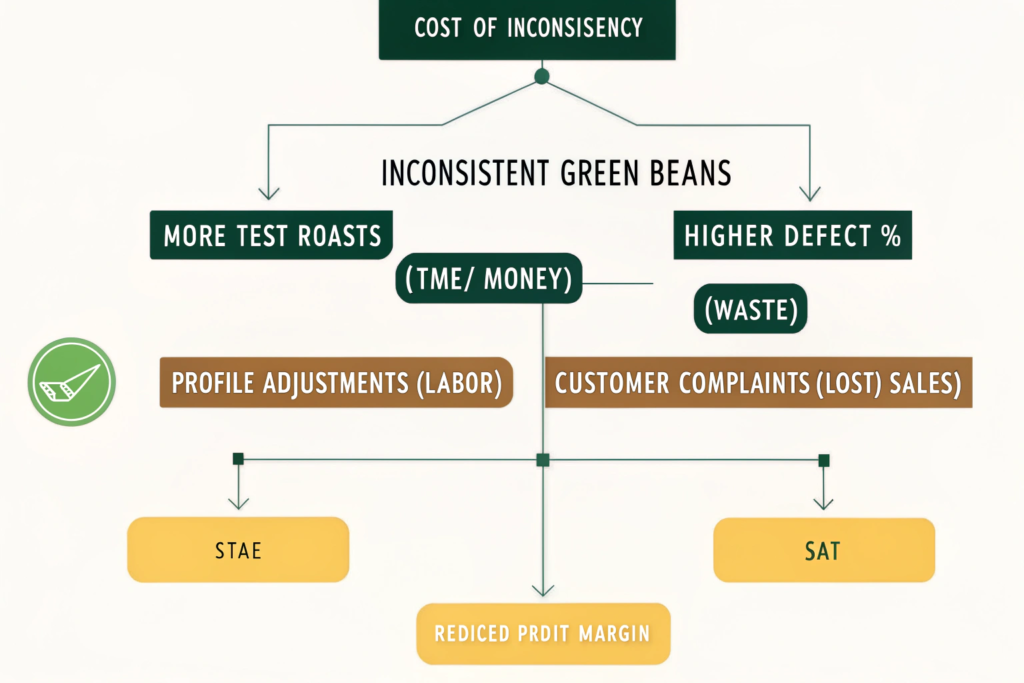
The impact goes far beyond the tasting room. It hits your production floor, your inventory, and your bottom line with direct, measurable costs.
-
Roasting Inefficiency & Waste: Inconsistent green beans (mixed screen size, variable density, uneven moisture) roast unevenly. This leads to:
- Increased Sampling Roasts: More test batches are needed to find a new profile.
- Higher Defect Rate: More baked, sour, or tipped beans that must be discarded.
- Longer Roast Times: Roasters must run slower to avoid scorching less dense beans, reducing machine throughput.
- Energy Waste: Inefficient heat application due to unpredictable bean behavior.
-
Labor Costs: Inconsistent coffee requires more labor for QC sorting, additional cupping sessions, and constant profile adjustments. It turns your skilled roaster into a troubleshooter instead of a precision craftsperson.
-
Inventory Chaos: If a new lot performs differently, you may be stuck with unusable green coffee or be forced to blend away a problem, potentially compromising other products. This disrupts cash flow and planning.
How Does Bean Density Variability Directly Impact Roasting?
This is a prime example. Imagine a roast batch containing both low-density (soft) and high-density (hard) beans.
- Low-Density Beans: Heat up quickly, enter first crack early, and become overdeveloped (baked, ashy) by the time the batch is dropped.
- High-Density Beans: Heat up slowly, may not fully develop, tasting grassy or sour.
The resulting cup is a muddled, simultaneously bitter and sour mess. No roast profile can fix this. The only solution is to source beans with uniform density from the start—a specification we rigorously control through our screening and grading process.
What is the "Yield Kill" from Inconsistent Moisture?
Moisture content inconsistency is a silent profit killer. Green coffee is sold by weight. If one bag is at 10% moisture and another at 12%, the wetter beans have less dry mass (i.e., less actual coffee solids). During roasting, that extra moisture evaporates, leading to a lower yield of roasted coffee per kilogram of green purchased. You paid for water. Consistent moisture (targeted at 10-12%) ensures you get the yield you paid for, protecting your cost of goods sold (COGS).
Why is Consistent Supply as Important as Consistent Quality?
For a wholesale buyer, consistency has two faces: qualitative (it tastes the same) and quantitative (it's available when you need it). A supply disruption can halt your production just as effectively as a bad tasting sample.
- Production Stoppage: Running out of a key blend component means you cannot fulfill orders. You risk losing accounts to competitors who can deliver.
- Emergency Re-Sourcing: Finding a last-minute replacement often means paying a premium and gambling on an untested coffee that will likely change your product.
- Long-Term Planning: You can't confidently plan marketing campaigns, negotiate large contracts, or forecast growth if you're unsure of your supply pipeline.
This is why our model at Shanghai Fumao is built on stability. Owning over 10,000 acres allows us to plan harvests years in advance and guarantee volume. We don't just sell you coffee; we become a reliable pillar of your business planning.
How Do Long-Term Contracts with Suppliers Mitigate Risk?
A long-term contract with a trustworthy supplier locks in three things:
- Price Stability: Protection from market volatility.
- Quality Commitment: Agreement on exact specifications (screen, density, moisture, cup score range).
- Supply Guarantee: Reserved volume delivered on a set schedule.
This transforms a volatile commodity purchase into a predictable manufacturing input. It allows you to focus on roasting and selling, not on frantic sourcing.
What Logistics Factors Threaten Consistency?
Even perfect green coffee can be compromised by poor logistics. This includes:
- Slow or Variable Shipping Times: Prolonged transit in uncontrolled containers can affect moisture and age the coffee.
- Temperature/Humidity Swings in Transit: Can lead to condensation, moisture migration, and bag mold.
We manage this by using professional freight partners, considering container placement, and providing CIF terms that hold us responsible for the coffee's condition until it reaches your port.
How Can Wholesale Buyers Vet Suppliers for Consistency?
Your due diligence process must be designed to filter for consistency above all else.
Key Actions & Questions:
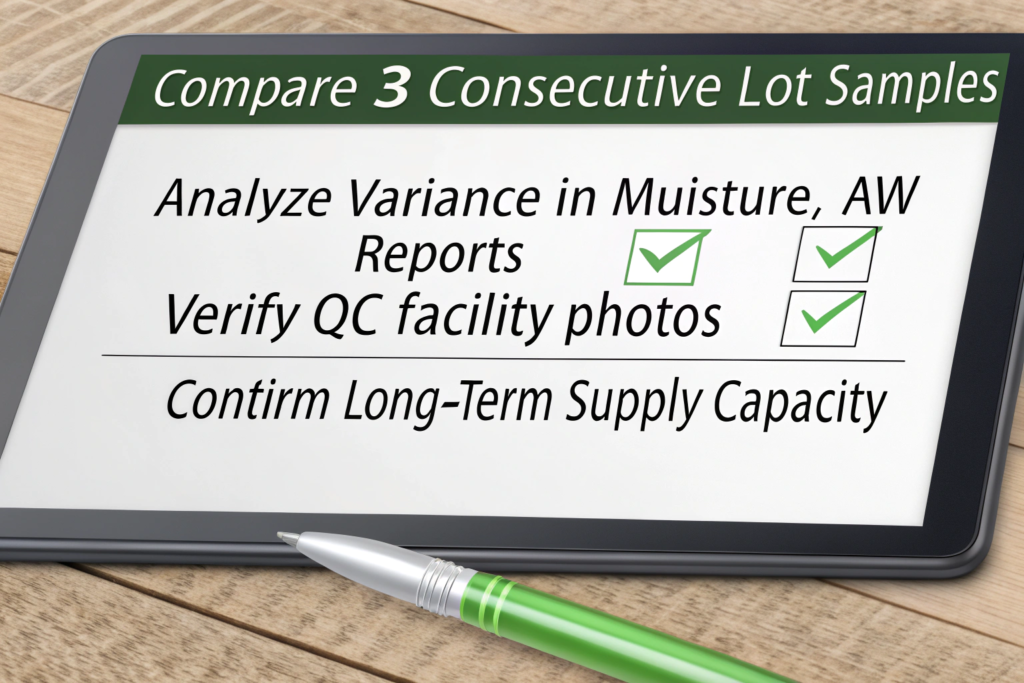
- Request Consecutive Lot Samples: Don't just cup one great sample. Ask for samples from the last three shipments or harvests of the same product. Cup them blind side-by-side. Are they strikingly similar?
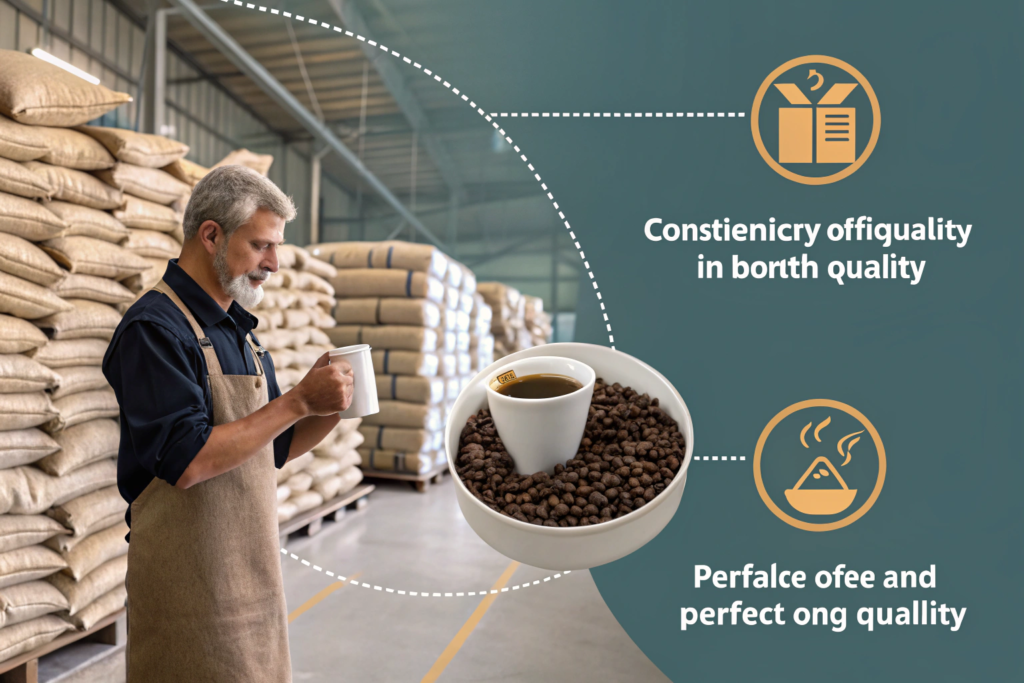
- Demand Detailed Spec Sheets: A professional supplier will provide a report for each lot with hard data: moisture %, water activity (Aw), screen size distribution, density, and defect count. Compare these across lots. Low variance in these numbers indicates high process control.
- Ask About Blending for Consistency: For large-volume core products, does the supplier create consistency by skillfully blending multiple microlots? This is a sign of sophistication, not deception, as long as the cup profile is stable.
- Check Infrastructure: Do they have climate-controlled storage? Mechanical dryers to overcome rainy weather? Color sorters and density sorters? This hardware is what makes consistent output possible.
- Investigate Their QC Process: How many times is the coffee cupped before export? Do they have Q Graders on staff? What is their internal tolerance for rejecting a lot?
What is the Role of Water Activity (Aw) Testing in Guaranteeing Consistency?
Water Activity (Aw) is the best predictor of a coffee's stability over time. A coffee shipped at Aw 0.55 will age and behave very similarly month-to-month. A coffee shipped at Aw 0.65 will degrade unpredictably. By requiring your supplier to provide Aw data and insisting on a narrow range (e.g., 0.50-0.60), you are using science to lock in shelf-life consistency. This is a non-negotiable test in our quality protocol.
Should You Prioritize Single-Estate or Blended Offerings for Consistency?
For absolute, year-round consistency, a well-designed blend from a professional supplier is often more reliable. A single estate's harvest can vary with annual weather. A skilled exporter can blend beans from different plots or even sub-regions to create a "house profile" that is remarkably stable across seasons. The key is transparency—you should know the components and the logic. We offer both: stunning single-estate microlots for seasonal excitement, and our meticulously crafted Shanghai Fumao core blends for bulletproof year-round consistency.
Conclusion
For wholesale coffee buyers, consistency is not a luxury or a mere preference; it is the core operating principle of a viable business. It is the thread that connects agricultural excellence to brand strength, operational smoothness, and financial health. An inconsistent supply chain introduces risk, cost, and chaos at every turn, while a consistent one provides the stability required for growth, innovation, and customer devotion.
Therefore, choosing a green coffee supplier is fundamentally a choice about risk management. You are selecting a partner whose commitment to consistency—through agronomic control, scientific processing, rigorous QC, and reliable logistics—becomes your competitive advantage.
If your goal is to build a brand that stands the test of time, let's discuss how our focus on measurable, lot-to-lot consistency can provide the foundation you need.
To receive samples and full analytical data reports from three consecutive lots of our core Yunnan Arabica or to discuss a long-term supply agreement, please contact our Head of Sales, Cathy Cai, at cathy@beanofcoffee.com. Let's build something stable, together.