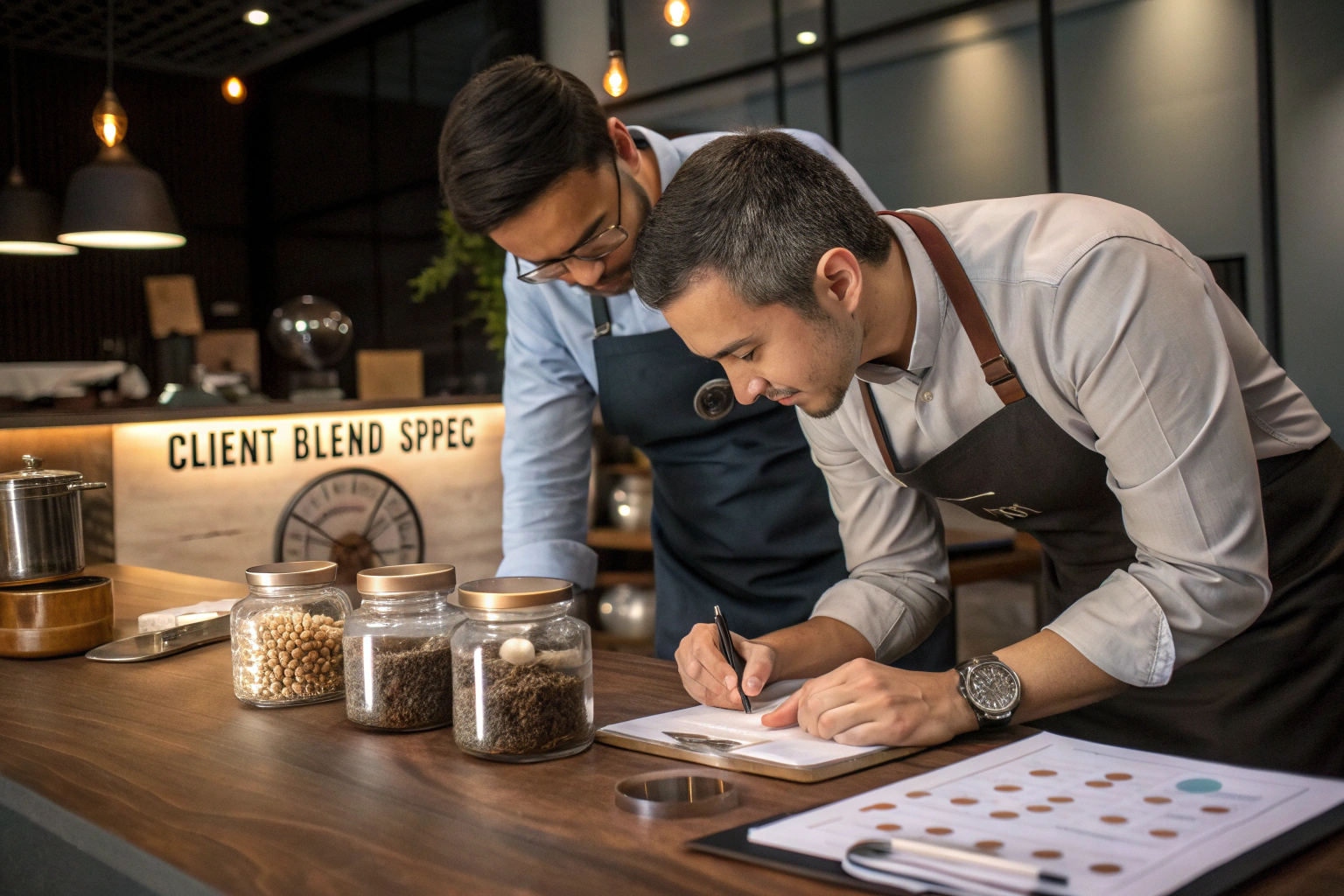
I had a client once—a big hotel chain in Australia. They loved our Yunnan Arabica. But they had a problem. Their signature breakfast blend needed a specific flavor profile that our single-origin bean just could not hit alone. It needed more chocolate. It needed a tiny spark of acidity at the finish. They asked me if I could build a custom blend for them at origin and ship it pre-mixed. My first thought was: "That is a logistical headache." My second thought was: "That is a massive opportunity to lock in a long-term partnership." We figured it out. And now that blend is exclusive to them, shipped directly from our warehouse in Baoshan to their roastery in Melbourne.
Yes, customized coffee blending is possible with a B2B manufacturer like Shanghai Fumao, and it involves working with our in-house Q-Grader to develop a target flavor profile using our estate-grown Arabica, Catimor, and Robusta components, which are then blended at the green stage according to precise, repeatable ratios before export, ensuring consistency across multiple containers and harvest seasons.
This is not just for huge corporations. We do this for mid-sized roasters too. It is about giving you a product that is uniquely yours, without the headache of buying five different origins and blending them yourself in small batches. Let me explain how the process works from concept to container.
What Does Custom Coffee Blending Entail at the Green Bean Level?
When most roasters think of "blending," they think of blending after roasting. They roast a batch of Brazil, a batch of Sumatra, and a batch of Yunnan. Then they mix the roasted beans together. That is post-roast blending. It works. It is flexible. But it is also labor-intensive and it creates inventory complexity. You have to manage multiple green coffee inventories.
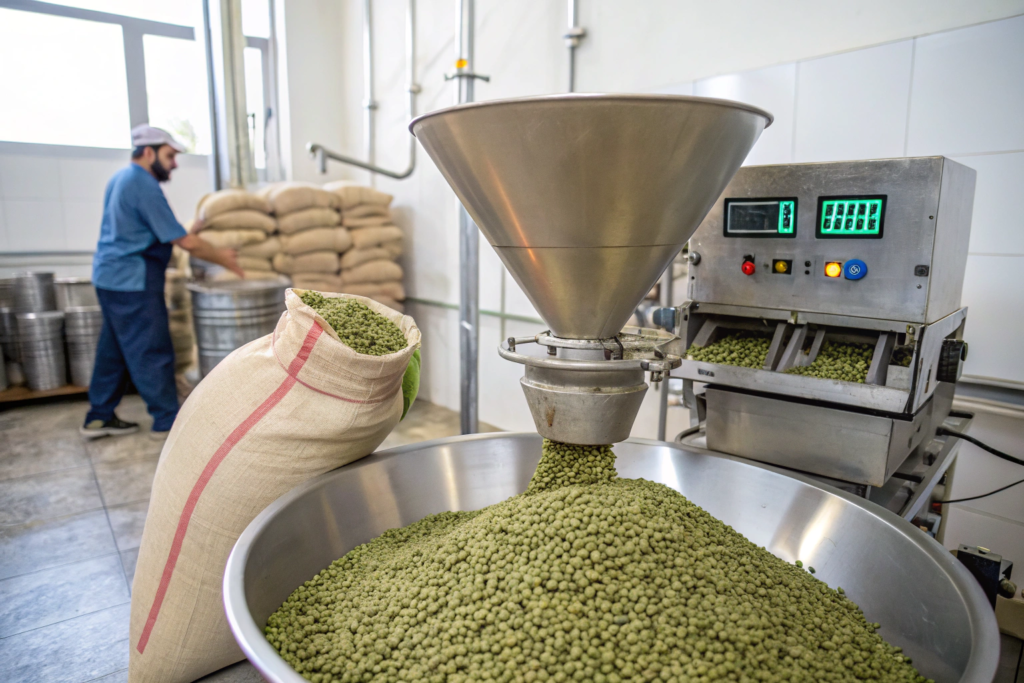
Custom coffee blending at the green bean level entails the precise, homogeneous mixing of different varietals, grades, or processing methods of raw coffee at the origin mill according to a proprietary recipe, which simplifies the roaster's workflow by delivering a single, ready-to-roast product that behaves uniformly in the roaster.
This is what we offer at Shanghai Fumao. We do the mixing for you. You receive one bag. One lot number. One product to manage.
What Is the Difference Between a Pre-Blended Green Mix and a Single Origin Lot?
This is the core question you need to answer for your business. Do you want to be a blender, or do you want to be a roaster?
| Feature | Single Origin Lot | Pre-Blended Green Mix |
|---|---|---|
| Inventory Management | High complexity. 3-5 different coffees in stock. | Low complexity. 1 SKU to manage. |
| Roasting | Challenging. May need different profiles for each component. | Easier. The blend is designed to roast as a single unit. |
| Flavor Consistency | Dependent on your blending accuracy. | Guaranteed by the manufacturer's mixing process. |
| Flexibility | Maximum. You can tweak the blend daily. | Low. The blend is fixed in the contract. |
| Cost | Higher labor cost, more shrink. | Lower labor cost, less shrink. |
A pre-blended green mix is a tool for efficiency and consistency. If you are a high-volume roaster supplying grocery stores or hotel chains, consistency is your religion. You cannot afford for the flavor to drift because your assistant roaster was tired on Tuesday and mixed the ratios wrong. A pre-blended green mix removes that variable. It locks in the flavor at the source. For more on blending theory, the Specialty Coffee Association education modules offer excellent deep dives.
How Does Homogeneity in a Green Blend Affect Roast Consistency?
This goes back to our conversation about density sorting. If you mix a high-density bean with a low-density bean in the roaster, you have a problem. They roast at different speeds.
When we design a custom green blend at our mill, we take this into account. We are not just throwing random beans into a mixer. We are selecting components that have compatible roast kinetics. We look at:
- Density Match: We try to blend beans with similar density profiles. For example, we might blend our high-density washed Arabica with a high-density natural Arabica. They will roast at a similar pace.
- Screen Size Match: We ensure the beans are of a similar size range so heat transfer is even.
After blending, the mix goes into a large industrial mixer. This is a gentle ribbon blender, not a harsh auger that breaks the beans. The goal is a homogeneous distribution. This means every single bag you receive has the exact same percentage of Component A and Component B.
We test this. We take samples from the top, middle, and bottom of the supersack. We roast them. We cup them. If the cups are identical, the blend is homogenous. This is the science of blending at scale. It is what allows you to set one roast profile and run it for 100 batches without touching the dials.
How Does BeanofCoffee Develop a Custom Blend Profile for a Roaster's Needs?
This is the fun part. This is where the art meets the science. You come to us with a problem. "My espresso blend is too sour." Or "My breakfast blend needs more body." Or "I need a unique private label coffee that no one else has." We use our library of Yunnan components to solve that problem.
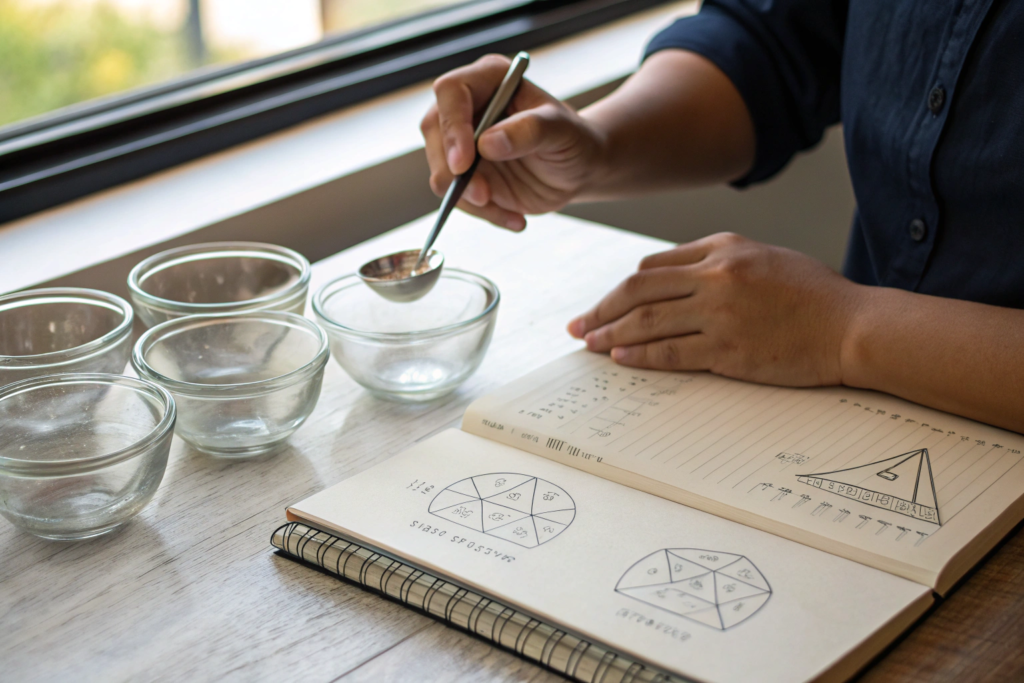
BeanofCoffee develops a custom blend profile by starting with the roaster's target flavor description and cost parameters, then using iterative cupping trials with different ratios of our washed Arabica (for cleanliness), natural Arabica (for fruit), Catimor (for body), and Robusta (for crema and caffeine) until the precise cup profile is achieved and documented.
Can I Specify the Exact Ratio of Yunnan Arabica to Catimor in My Blend?
Yes. This is the whole point of custom blending. You have complete control over the component percentages, subject to a minimum volume per component.
Let's say you want a blend that is 70% washed Yunnan Arabica and 30% natural processed Yunnan Catimor. That is a great, balanced espresso profile. The Arabica provides the clean, sweet base. The natural Catimor provides the heavy body and a hint of berry fruit.
We can do that. We can do 80/20. We can do 60/40. We can even do a three-part blend. We have a client who uses a blend of 50% washed Arabica, 30% natural Arabica, and 20% high-grade washed Robusta. The Robusta gives the espresso a massive crema boost and a caffeine kick. It is a classic Italian profile, but made entirely with Yunnan beans.
The only limitation is the minimum order quantity for the smaller component. If you only want 2% of a specific micro-lot in a 20-ton container, that becomes difficult to manage logistically. We typically require that the smallest component makes up at least 10-15% of the blend, or a minimum of 5 bags, so we can accurately measure and mix it. At Shanghai Fumao, we are transparent about these minimums.
What Is the Role of a Q-Grader in Approving the Final Blend Sample?
The Q-Grader is the gatekeeper of quality. A Q-Grader is a person certified by the Coffee Quality Institute to taste and score coffee to a rigorous, internationally recognized standard. It is the coffee equivalent of a Master Sommelier.
Here is the process:
- Recipe Development: Based on your request, our Q-Grader creates 3 or 4 different trial blends. They roast them on our sample roaster to the agreed-upon profile (e.g., Agtron 55/65).
- In-House Cupping: The Q-Grader cups the trials blind. They score them. They write detailed notes. They select the best one or two options.
- Client Approval Sample: We ship those selected roast samples to you. You cup them in your lab, with your water, using your protocols.
- Calibration: You call us. "I like Trial B, but can we get a touch more chocolate?" We go back to the cupping table. We tweak the ratio. Maybe we add 5% more of a longer-fermentation natural. We ship a revised sample.
- Sign-Off: When you are happy, you sign off on the blend profile. We create a Master Blend Sheet. This document specifies the exact components, the percentages, the target roast color, and the approved cupping notes.
This Master Blend Sheet becomes the legal specification for your contract. Every shipment we send will be cupped against this master sample. If it does not match, it does not ship. You can find a directory of certified Q-Graders and learn more about the certification on the Coffee Quality Institute website.
What Are the Minimum Order Quantities for a Custom Coffee Blend from China?
This is the question that separates the dreamers from the doers. Custom blending is possible. But it is not free. And it requires a commitment. We cannot set up the production line for 100 pounds of a custom blend. The setup time, the cleaning of the mixer, the documentation—it all costs money.
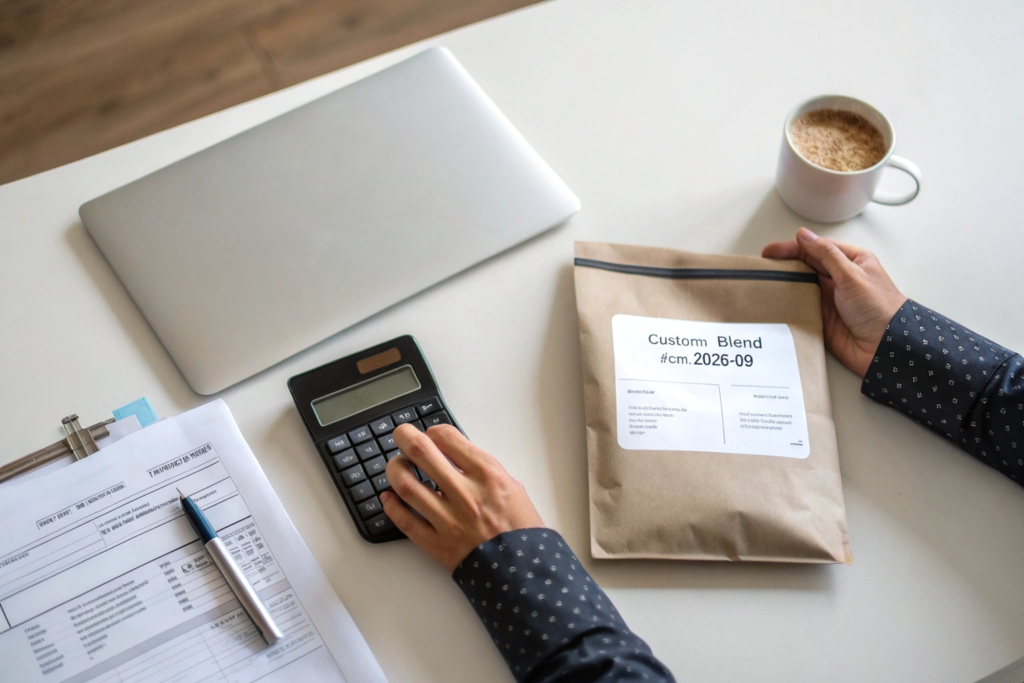
The minimum order quantity for a custom green coffee blend from BeanofCoffee is typically one full 20-foot container (approximately 19 metric tons, or 320 bags of 60kg), although we can sometimes accommodate smaller trial runs of 1-2 pallets (10-20 bags) for an additional blending fee to cover setup and cleaning costs.
Is Blending Economical for a Full Container vs. a Single Pallet?
Here is the math from my side of the table.
| Scenario | Volume | Blending Feasibility | Cost Implication |
|---|---|---|---|
| Full Container (320 bags) | 19,200 kg | Ideal. The blending cost is absorbed by the volume. The cost per pound increase is negligible (maybe 2-3 cents). | Most economical. |
| Half Container (160 bags) | 9,600 kg | Possible. We can do it, but the fixed setup cost is spread over fewer bags. | Moderate premium (5-10 cents/lb). |
| Single Pallet (10-20 bags) | 600-1200 kg | Challenging. We can do a "hand blend" or small-batch mix, but it is labor-intensive. | Significant blending fee applies ($50-$100 flat fee). |
| Sample Size | 5 kg | Not possible as a production blend. We can send you the components separately to blend yourself. | N/A |
The reason a full container is ideal is because of the mixer cleaning protocol. If we run a custom blend, we have to clean the entire ribbon blender before and after to prevent cross-contamination with other lots. That takes time. That costs labor. If we are doing it for 320 bags, that labor cost per bag is tiny. If we are doing it for 10 bags, that labor cost per bag is huge.
My advice to new clients is usually this: Start with a full container of our standard Grade 1 Arabica. See how it performs. See how it sells. Then, when you are ready to scale and want exclusivity, we design the custom blend for the next container. This is a smart, low-risk way to enter the custom blend program. You can learn more about shipping economics and container logistics from industry resources like the Journal of Commerce.
How Does BeanofCoffee Ensure Consistency Across Multiple Harvest Years?
This is the elephant in the room. Coffee is agricultural. It changes year to year. A custom blend you sign off on in 2026 might taste slightly different using the 2027 crop. So how do we maintain consistency?
We use a strategy called Blend Component Management.
- Component Banking: We do not just blend the new crop and ship it. We taste the new crop. We compare it to the previous crop. If the new crop Arabica is slightly brighter, we might need to adjust the blend ratio. Maybe we use 72% Arabica instead of 70%. Or maybe we add a touch of a lower-altitude, more chocolatey lot to balance it out.
- Target Profile, Not Fixed Recipe: Your Master Blend Sheet is based on a flavor target, not just a rigid ratio. The ratio is the starting point. The cup profile is the law. If the cup profile matches the master sample, the blend is approved, even if the ratio shifted by 2%.
- Client Calibration: Before we ship the first container of the new crop year, we send you a new approval sample. We say, "This is the 2027 version of your blend. Please cup it against the 2026 reference." You have the final say.
This requires trust and communication. But that is the business we are in. We are not selling a commodity widget. We are selling a sensory experience that we have to recreate every year. At Shanghai Fumao, we keep extensive sample libraries of past crops so we have a physical reference for what "chocolate" and "bright" meant three years ago.
What Are the Cost and Logistical Advantages of Buying a Pre-Blended Container?
We have talked about the romance of blending. Now let's talk about the hard-nosed business advantages. For a growing roastery, managing multiple green coffee inventories is a hidden cost that eats away at your margin.
The cost and logistical advantages of buying a pre-blended container include reduced warehouse labor for blending and weighing, lower risk of human error in blend ratios, decreased inventory shrinkage from open bags, and simplified production scheduling because the green coffee is always ready to roast as soon as it is dumped into the hopper.
It is about taking the complexity out of your back room and putting it on our loading dock in Baoshan.
How Does Pre-Blending Reduce Labor and Shrinkage in the Roastery?
Let's do a time-and-motion study. Imagine you are roasting 500 pounds of your signature blend.
Scenario A: In-House Blending
- Warehouse guy wheels out 4 different pallets.
- He opens 4 different GrainPro bags.
- He weighs out 200 lbs of Brazil, 150 lbs of Yunnan, 100 lbs of Sumatra, 50 lbs of Robusta.
- He combines them in a bucket.
- He carries the bucket to the roaster.
- Time: 15-20 minutes per batch.
- Shrinkage: You have 4 open bags. Beans spill. Moisture gets in. You lose track of inventory.
Scenario B: Pre-Blended Container
- Warehouse guy wheels out 1 pallet.
- He scoops 500 lbs from the single bag.
- He carries the bucket to the roaster.
- Time: 5 minutes per batch.
- Shrinkage: You open 1 bag. You use it faster. Less waste.
Over a week of production, that labor saving is huge. You are paying your staff to move beans around, not to add value to the coffee. Pre-blending frees up that labor for more important tasks, like packaging or quality control. It also reduces the "Oh no, we ran out of Sumatra" panic on a Friday afternoon. You have one SKU to track. When the pallet is getting low, you reorder one SKU.
Does a Pre-Blended Mix Simplify Organic or Fair Trade Certification Audits?
Yes. Massively. If you are a certified organic roaster, your annual audit is a paperwork nightmare. The auditor wants to see the organic transaction certificate for every single component of every single blend you produced that year. They want to trace the organic coffee from the bag back to the farm.
If you are blending four different certified coffees in-house, you have four sets of paperwork to manage. You have to prove you did not commingle organic and conventional beans in your scoop or your bucket. It is a lot of work.
If you buy a pre-blended, certified organic mix from us, you have one set of paperwork. The blend itself is certified organic. The transaction certificate from Shanghai Fumao covers the entire blended lot. You hand the auditor one piece of paper. They trace it back to our single organic certificate. The audit takes half the time. The headache is gone.
This is a real, tangible benefit that can save you thousands of dollars in audit preparation costs and reduce the risk of losing your organic certification. You can learn more about the organic certification process for handlers from the USDA Organic Integrity Database.
Conclusion
Customized coffee blending with a B2B manufacturer is not only possible, it is a strategic advantage for roasters who are serious about scaling their business. It shifts the complexity of blending from your busy roastery floor to our specialized mill in Yunnan. It locks in flavor consistency. It simplifies your inventory. It reduces your labor costs. And it creates a product that is uniquely yours, making it harder for your customers to shop around based on price alone.
We are not just a farm. We are a development partner. We want to help you build a coffee program that is efficient, profitable, and delicious. Whether you need a simple two-bean blend or a complex multi-origin mix using only Yunnan components, we have the infrastructure and the expertise to make it happen.
If you have a blend in mind, or if you just want to explore what is possible with our range of Yunnan Arabica, Catimor, and Robusta, let's start a conversation. We can send you samples of our blending components so you can start playing with ratios in your own lab.
Email Cathy Cai. Tell her what you are looking for in a blend. She can get the samples moving and set up a call with our Q-Grader to discuss the details. Contact Cathy at: cathy@beanofcoffee.com.