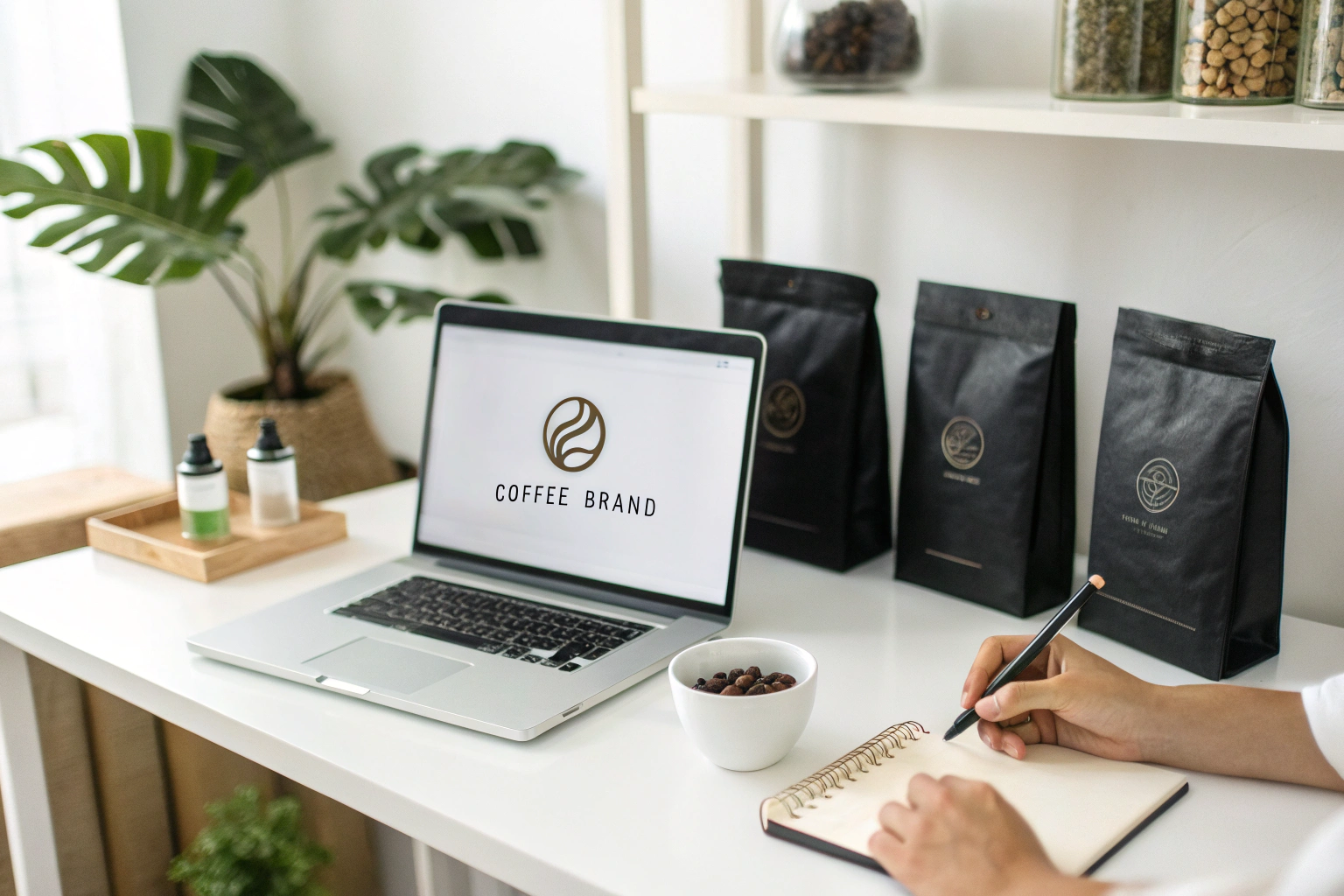
I get this email at least once a week. "I want to start a coffee brand. I don't have a farm. I don't have a roastery. I don't have a million dollars. Can I still do it?" My answer is always the same: absolutely. In fact, not having a farm is an advantage when you're starting out. You're not tied to one origin, one varietal, one flavor profile. You're not carrying the crushing overhead of land, labor, and machinery. You're free. Free to curate. Free to tell a story. Free to build a brand that is bigger than the beans.
You develop your own coffee brand without a farm by mastering three things: curation, storytelling, and partnership. You curate exceptional green coffee from producers like us, leveraging our expertise and infrastructure instead of building your own. You craft a compelling brand story that connects consumers to the origin, the process, or a lifestyle they aspire to. And you partner with a reliable co-packer or private label supplier who can roast, package, and sometimes even ship the coffee under your brand name. The modern coffee brand is not about owning the means of production. It's about owning the relationship with the customer.
I've watched dozens of brands launch from nothing. Some from a laptop in a studio apartment. Some from a cafe counter. Some from a farmer's market stand. The ones that succeed are not the ones with the deepest pockets. They're the ones with the clearest vision and the smartest partnerships. Let me walk you through how to build your brand from scratch, the way I've seen it done successfully, from the other side of the supply chain.
What Is the Minimum Viable Product for a New Coffee Brand?
The biggest mistake new brand owners make is trying to launch with too much. Too many SKUs. Too much inventory. Too many commitments before they know what sells. The smart play is to start with the absolute minimum viable product—the smallest, simplest version of your brand that a customer will pay for—and then iterate from there.
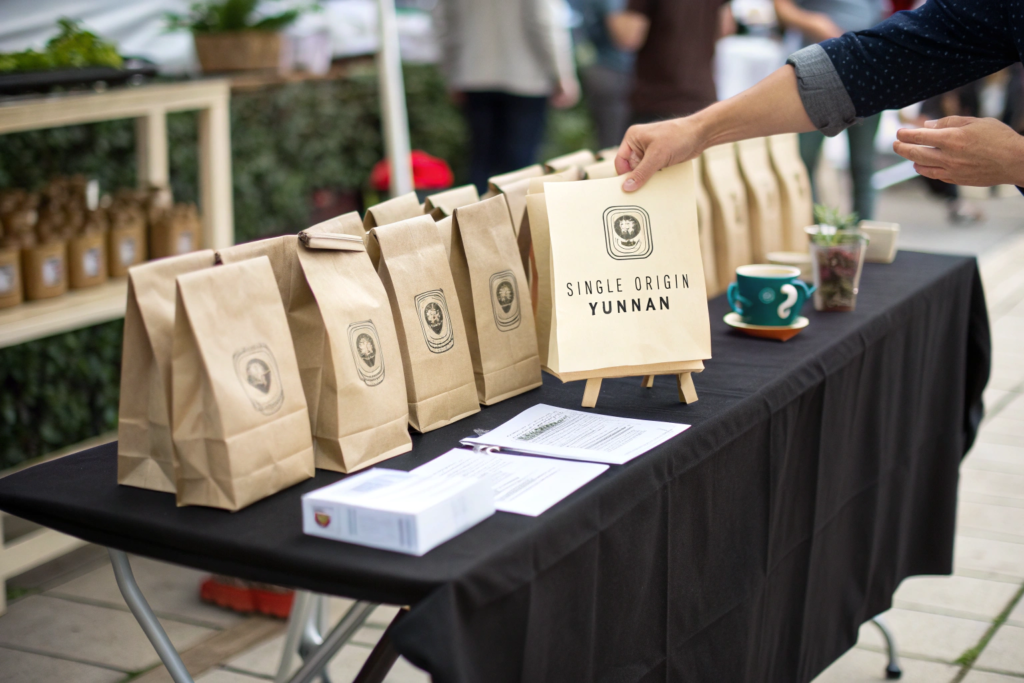
The minimum viable product for a new coffee brand is one exceptional coffee, in one bag size, with one clear, compelling story, sold through one primary channel. This could be a single-origin Yunnan Arabica, roasted medium, in a 12-ounce matte black bag with a simple label. The story is the brand: the origin, the farmer, the processing method, the tasting notes. The channel could be a farmers market, a simple Shopify website, or a wholesale pitch to three local cafes. The goal is not to build a complete product line. The goal is to sell 50 bags, get feedback, and prove that someone, somewhere, will pay for your coffee.
How Do You Choose Your First Coffee?
Your first coffee is your brand's first impression. It must be memorable. It doesn't have to be the most expensive, rarest micro-lot in the world. But it has to have a clear, distinct personality that can be described in a sentence.
I suggest choosing a coffee that has a story you're excited to tell. A single-origin coffee from a specific farm, a specific altitude, a specific processing method. Not a blend. Blends are for later, when you need consistency. Your launch coffee needs to be specific enough to be interesting.
Taste it. Cup it. Know it inside out. You should be able to describe it to a customer in three words. "Chocolate. Caramel. Smooth." Or "Blueberry. Jasmine. Bright." If you can't describe it simply, you don't know it well enough to sell it. At BeanofCoffee, we work with brand startups to select a single lot that fits their target flavor profile and story.
What Bag Size and Format Works Best?
For a premium, specialty brand launching direct-to-consumer or at retail, 12 ounces is the standard. It communicates specialty quality. It's large enough to feel like a good value, small enough to be consumed while fresh.
For a wholesale brand selling to cafes and offices, 5-pound bulk bags might be more appropriate. Know your channel before you order your bags.
The bag itself is your primary marketing asset. It must look good in a flat-lay Instagram photo. Matte black with a white label is the classic startup look for a reason. It's affordable, it's elegant, and it makes the coffee the hero. Don't over-design. Don't under-design. Aim for clean, modern, and legible from three feet away.
How Do You Find and Partner with a Reliable Supplier?
You don't have a farm. That means you need a farmer. Or, more practically, a coffee supplier who can act as your farm partner. This is the most critical relationship in your business. Choose wrong, and you'll spend all your time fighting quality issues and missed shipments. Choose right, and you'll have a reliable, consistent source of excellent coffee and a partner who is invested in your success.
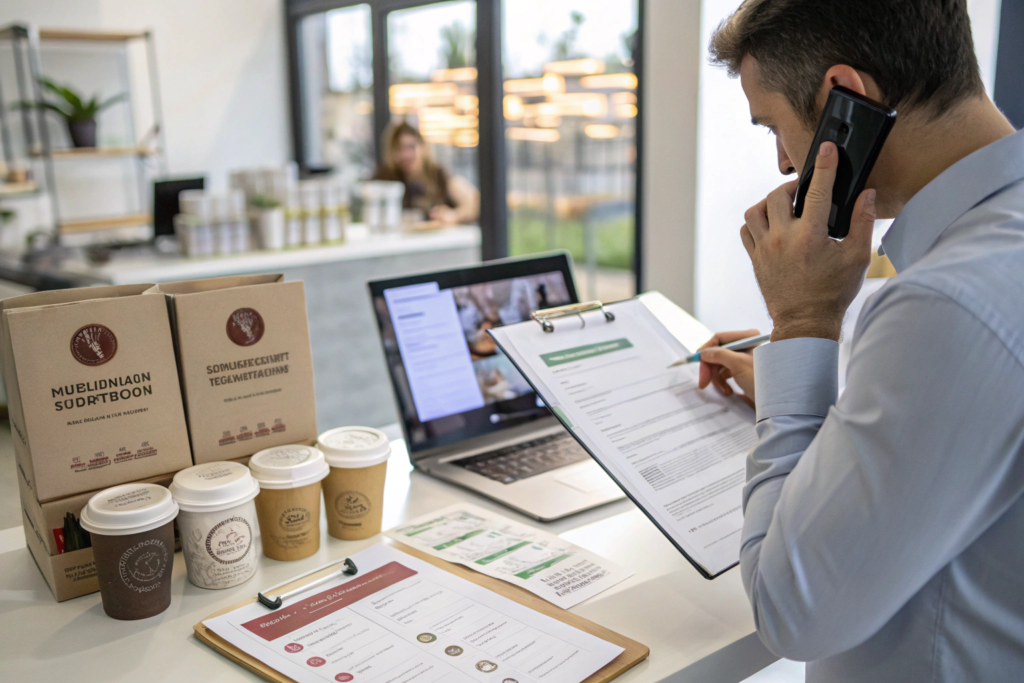
Finding a reliable supplier starts with clarity about what you need: a specific flavor profile, a consistent quality level, a minimum order quantity you can afford, and a supplier who is willing to do small-batch private label work. Then, you conduct due diligence: request samples, cup them blindly, ask for the supplier's certifications and references, and schedule a live video call to see their operation. The right supplier will treat your small brand with the same seriousness as a large buyer. They will provide traceability data, be transparent about pricing, and communicate proactively.
What Questions Should You Ask a Potential Supplier?
Before you send a deposit, send a list of questions. A good supplier will answer them thoroughly and without hesitation.
Ask: What is your minimum order quantity for private label? Can you provide a sample of the exact lot I would be buying? What certifications do you hold, and can you provide the certificate numbers? Who would be my main point of contact, and how quickly do they typically respond? Can you provide references from other small brands you've worked with?
Also ask the uncomfortable questions. What happens if I'm unhappy with the pre-shipment sample? What is your policy on quality disputes? Can you share a copy of your standard contract? The answers to these questions will tell you more about the supplier than any sales pitch.
Why Is a Private Label Partnership Better Than Spot Buying?
Spot buying means purchasing coffee that's already available, one order at a time. It's flexible, but it's also risky. The coffee you built your brand on might not be available next month. The quality might vary. The price might spike.
A private label partnership is a deeper relationship. You work with the supplier to identify a specific coffee, or a specific quality tier, that will be available consistently. The supplier reserves that coffee for your brand. They roast and package it to your specifications, on your schedule.
This consistency is essential for building a brand. Your customers need to trust that the bag they buy in March will taste like the bag they loved in January. A private label partnership with a reliable origin supplier like BeanofCoffee provides that consistency.
How Do You Build a Compelling Brand Story Around Origin?
Your brand is not the coffee. Your brand is the story you tell about the coffee. In a world where anyone can buy green beans and put a label on a bag, the story is the only thing that makes your brand unique. The story is what customers remember. It's what they tell their friends. It's why they pay a premium.
A compelling coffee brand story connects the consumer to the origin in a way that feels personal, authentic, and specific. It's not "We source the best beans from around the world." That's a slogan, not a story. A real story includes a specific place—"Baoshan, Yunnan"—a specific person—"Cathy, our partner at the farm"—and a specific sensory experience—"notes of dark chocolate and toasted hazelnut." It might include the altitude, the varietal, the processing method. It might include a challenge overcome, like a drought year that produced an unexpectedly concentrated harvest. The story makes the coffee human.
Where Does Authenticity Come From?
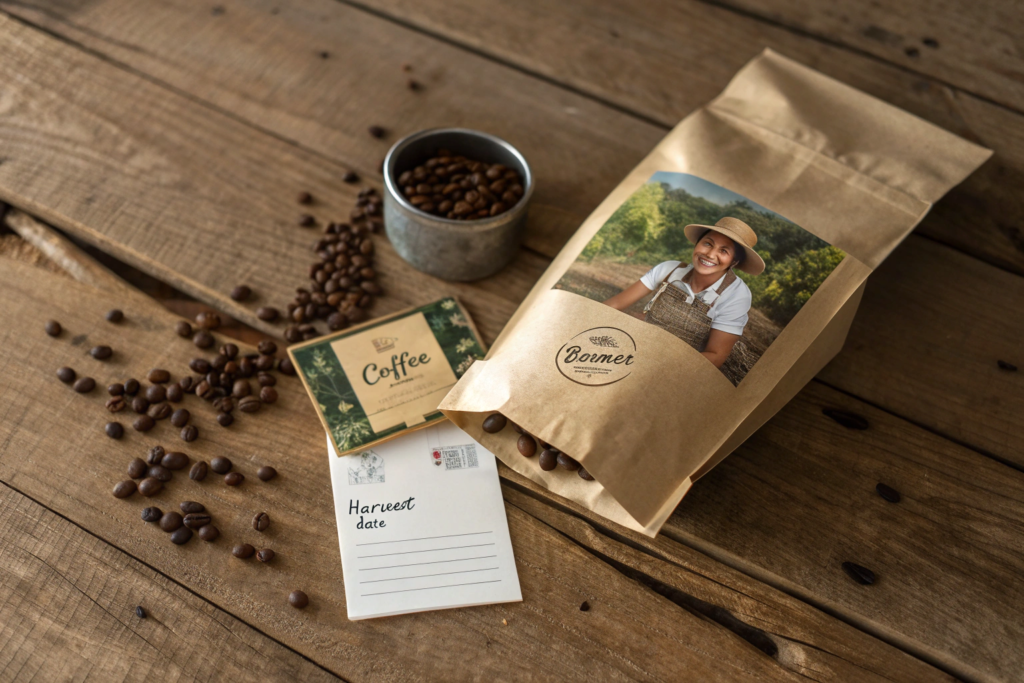
Authenticity cannot be faked. It comes from a genuine connection to the origin.
If you've never been to Yunnan, don't pretend you have. Instead, talk about your relationship with the supplier. Talk about the video calls. Talk about the samples you cupped. Talk about why you chose this particular coffee out of the dozens you tasted.
Authenticity also comes from transparency. Share the data. The GPS coordinates. The farm name. The processing details. Your customers don't need to understand all of it, but they need to see that it exists, that you have it, and that you're willing to share it. A QR code on the bag that links to a "Meet the Farmer" page with photos and details is a powerful tool.
How Do You Translate Origin Data into Marketing Language?
The technical data—1,600 meters, Typica varietal, honey-processed, 84.5 cupping score—is the foundation. But it's not the language most consumers speak.
Your job as a brand builder is to translate. "Grown at 1,600 meters" becomes "Grown in the thin mountain air, where the slow maturation concentrates the sugars in the cherry." "Honey-processed" becomes "Dried with a layer of sweet fruit pulp still clinging to the bean, for a cup with a silky body and notes of caramel."
Don't exaggerate. Don't fabricate. Just translate. The truth, translated into accessible language, is more compelling than any made-up marketing fluff.
What Are the Logistics of Dropshipping or Fulfilling Coffee Orders?
You don't need a warehouse. You don't need a shipping station in your garage. Many successful coffee brands never touch the physical product. The coffee goes from the roaster to the customer, and the brand owner manages the relationship, the marketing, and the website. This model is what makes it possible to start a coffee brand with very little capital.
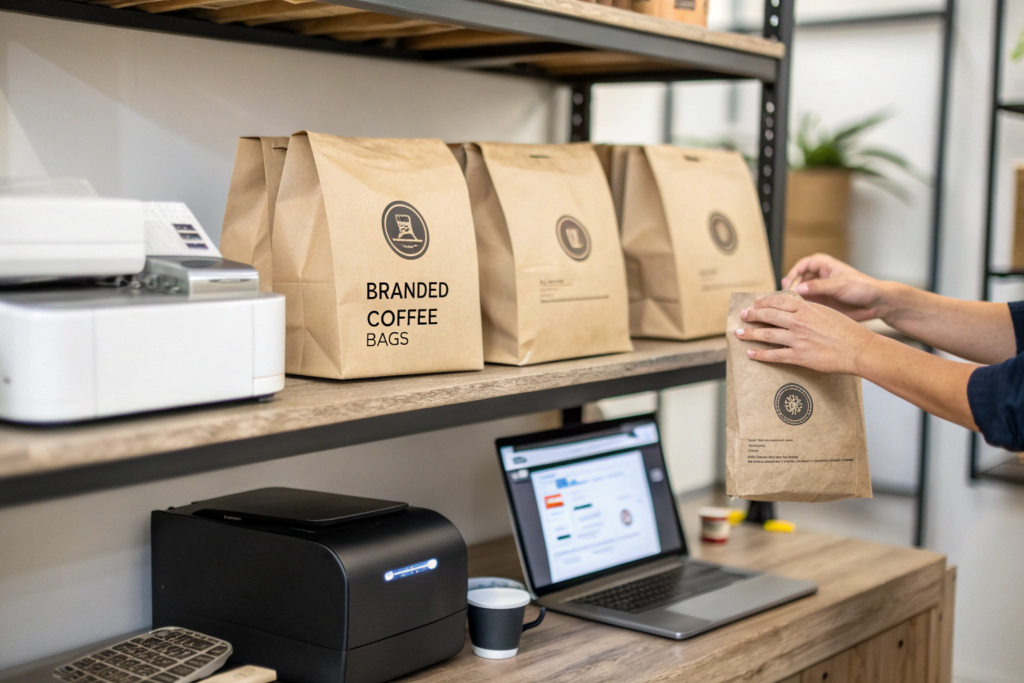
The logistics of fulfilling coffee orders without a warehouse can be handled through two primary models: private label dropshipping or third-party fulfillment. In dropshipping, your supplier roasts, packages, and ships the coffee directly to your customer under your brand name. You never hold inventory. In third-party fulfillment, you buy bulk inventory, ship it to a fulfillment center, and they pick, pack, and ship individual orders as they come in. Dropshipping is the lowest-risk, lowest-capital model to start. It allows you to focus entirely on building the brand and acquiring customers.
How Does Dropshipping Coffee Work?
You set up an online store, usually on Shopify. A customer places an order. The order is automatically forwarded to your supplier. The supplier picks the roasted, packaged coffee from their inventory, puts it in a shipping box with your branded packing materials, and ships it directly to the customer.
You never see the coffee. You never pay for inventory upfront. You only pay the supplier when you make a sale. The margin is lower than buying bulk, but the risk is essentially zero.
The key is finding a supplier who offers dropshipping and can execute reliably. The package must arrive on time, in good condition, with the correct branding. The customer's experience is entirely in the supplier's hands. Choose a supplier who treats your customer with the same care you would. At BeanofCoffee, we offer a private label dropshipping option for brand startups.
What About Building a Wholesale Channel?
Once your brand has traction online, you might want to sell to cafes, restaurants, and retail stores. This requires a different logistics setup.
Wholesale accounts typically order in bulk—5-pound bags or cases of retail bags—on net-30 payment terms. You need to be able to fulfill larger orders, either from your own inventory or directly from your supplier.
You also need a wholesale pricing strategy. Your wholesale price must leave enough margin for the cafe to make a profit while still leaving you a profit. A standard formula is to price wholesale at roughly double your landed cost, and retail at roughly double your wholesale price. This gives everyone in the chain a sustainable margin.
Conclusion
Owning a coffee brand without a farm is not a compromise. It's a modern, capital-efficient business model. It separates the brand—the story, the marketing, the customer relationship—from the commodity—the bean, the roast, the logistics. It allows creative, entrepreneurial people to enter the coffee industry without millions of dollars in land and equipment.
The brands that succeed in this model are the ones that master curation, storytelling, and partnership. They choose exceptional coffee. They tell an authentic, compelling story. And they partner with suppliers who can execute on quality and logistics. They don't try to do everything themselves.
If you're thinking about launching your own coffee brand, the first step is simple: find your coffee. Cup some samples. Find the bean that excites you, the story you can't wait to tell. The rest is partnership.
We've helped several brand startups go from concept to first sale. We can provide samples, discuss private label options, and walk you through the logistics of how we can support your brand from the farm side.
To start the conversation, request some samples, and explore what a partnership could look like, reach out to Cathy Cai.
Email: cathy@beanofcoffee.com. Let's build your brand, from our farm to your customer's cup.