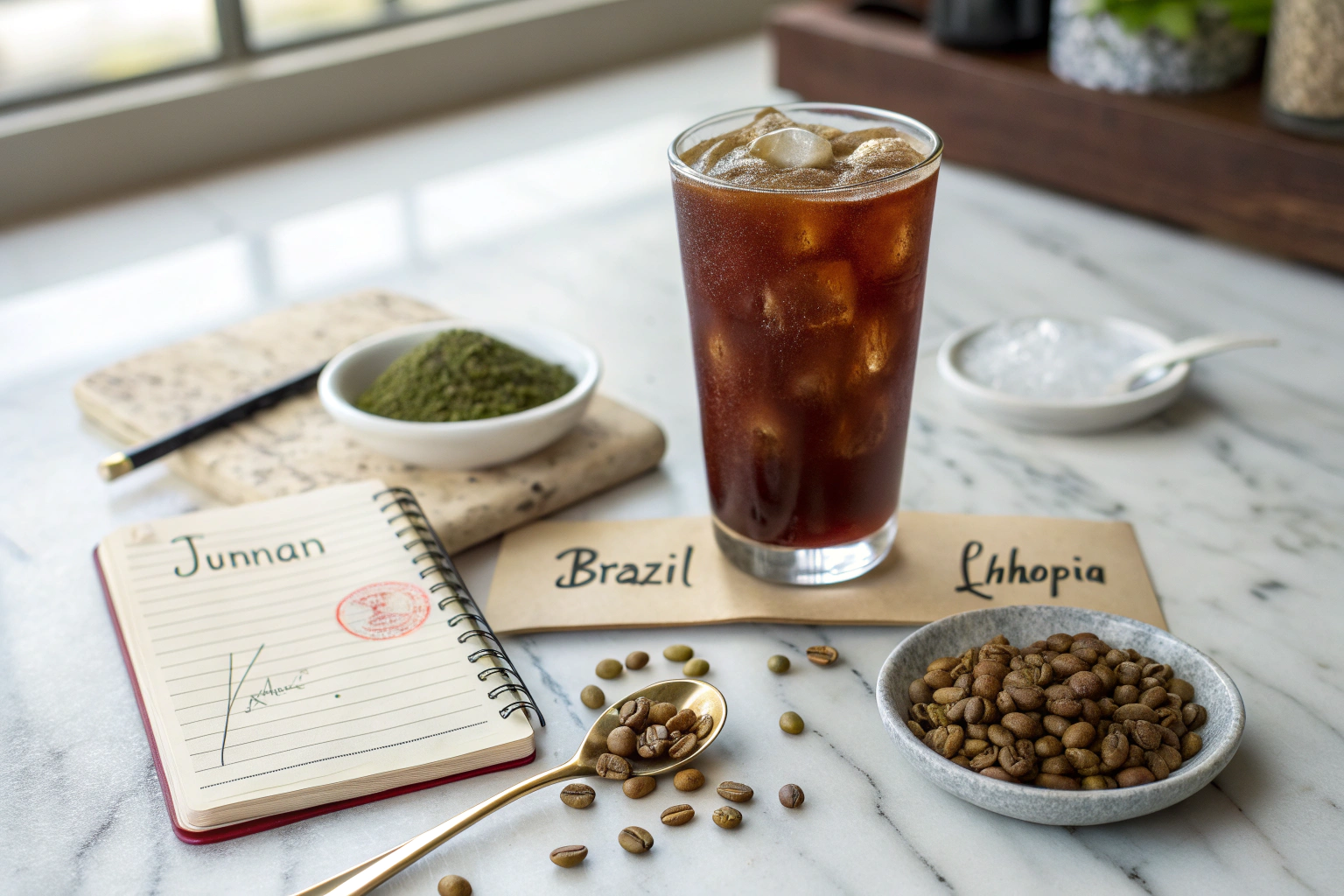
Summer in Baoshan is not cold brew weather. It's hot. Humid. The kind of heat that makes you want to lie down and not move until October. But summer is also when our international buyers start asking for cold brew samples. They're planning their menus for the next year. They want a coffee that will taste smooth and sweet when steeped in cold water for 18 hours. A coffee that won't go bitter, won't taste sour, and won't cost a fortune. About four years ago, a buyer from Austin, Texas, told me something I've never forgotten. He said, "Cold brew is the most honest coffee. You can't hide defects behind heat. The water is cold. The time is long. If the bean is bad, the brew is bad. There's no roast to mask it, no barista to fix it. Just the bean." He was right. And that's why the blend matters so much.
The best Arabica blends for cold brew combine a smooth, chocolatey base note, a low-acid body, and just enough brightness to add complexity without turning sour. A classic and highly effective ratio is 40% low-acid base like a washed Yunnan or Brazilian Arabica, 40% body and sweetness from a honey-processed or natural Central American, and 20% high-note accent from a clean, fruity Ethiopian or Kenyan. The base provides the comforting, familiar cold brew flavor. The body component adds texture and sweetness. The accent provides a subtle top note that makes the blend memorable. The whole is greater than the sum of its parts.
Cold brew is not hot coffee poured over ice. It's a completely different extraction method. The cold water extracts more slowly and selectively. It pulls out fewer of the sharp acids and bitter compounds. It favors sweetness, body, and chocolatey, nutty flavors. A blend that tastes balanced and complex as a hot pour-over might taste thin and sour as a cold brew. The blend must be designed specifically for the method. Let me walk you through the components that make a cold brew blend sing, and why Chinese Arabica is an increasingly popular choice as the base note.
Why Is Low Acidity Essential for Cold Brew Blends?
Acidity in hot coffee can be beautiful. It's the bright, citrusy sparkle in a washed Ethiopian. It's the crisp, apple-like bite in a high-grown Colombian. But in cold brew, acidity behaves differently. It can become harsh. Sour. Almost metallic. The cold extraction doesn't round it out the way heat does. It just extracts it, slowly and completely, and leaves it sitting in the cup.
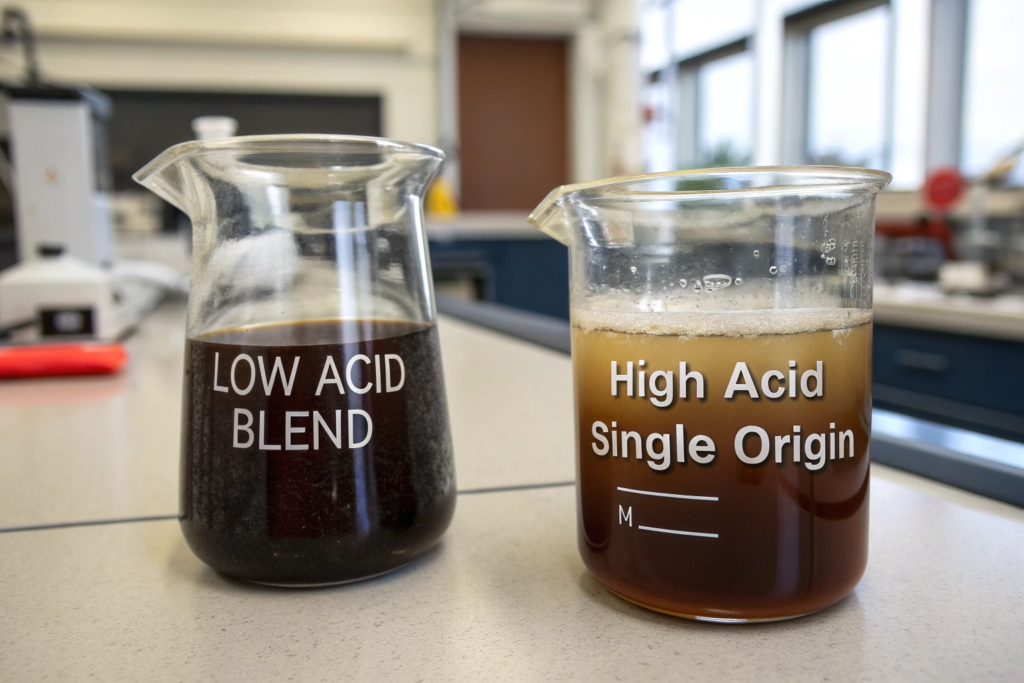
Low acidity is essential for cold brew blends because the cold extraction process amplifies perceived acidity while muting the volatile aromatics that balance it in hot coffee. In a hot extraction, acids are extracted quickly but balanced by sugars and aromatic compounds. In a cold extraction, the sugars extract slowly, often leaving the acids dominant. A blend built for cold brew should start with a low-acid base—coffees with a natural chocolate, nut, and caramel profile rather than a bright, citrusy one. This creates a smooth, easy-drinking cup that doesn't pucker the palate.
What Makes a Coffee "Low Acid"?
Low-acid coffee is not a single varietal. It's a combination of origin, altitude, processing method, and roast level. Certain origins are naturally lower in perceived acidity. Brazil is the classic example. So is washed Yunnan Arabica. These coffees tend to have a mild, smooth, chocolate-forward profile.
Processing method also plays a role. Washed coffees often have a cleaner, brighter acidity. Natural and honey-processed coffees tend to have a heavier body and a more muted, integrated acidity. The extended contact with the fruit mucilage during drying ferments some of the sharper acids into softer, rounder compounds.
Finally, roast level matters. A medium roast tames acidity more than a light roast. For cold brew, many roasters prefer a medium to medium-dark profile, which further smooths the sharp edges.
Why Not Just Use a Single Low-Acid Origin?
Some roasters do. A 100% Brazilian cold brew is a classic product. It's smooth, chocolatey, and inoffensive. It sells. But it can be one-dimensional. Boring. There's no reason to choose it over another brand's 100% Brazilian cold brew.
A blend, even a simple two-origin blend, creates a proprietary flavor profile. It gives the roaster a signature product. The base provides the comfort. The accent provides the distinction.
Imagine a 100% Yunnan cold brew. It would be smooth, nutty, and clean. Very drinkable. But add 20% of a bright, fruity Ethiopian natural, and suddenly the cold brew has a hint of blueberry on the finish. It's still smooth, still chocolatey, but now it has a personality. It's memorable.
How Does Yunnan Arabica Perform as a Cold Brew Base?
I'm biased. I know. But the feedback from roasters using our beans in their cold brew programs is consistent. Yunnan Arabica works. It works as a base. It works as a 100% single-origin cold brew. It's one of the fastest-growing segments of our export business.
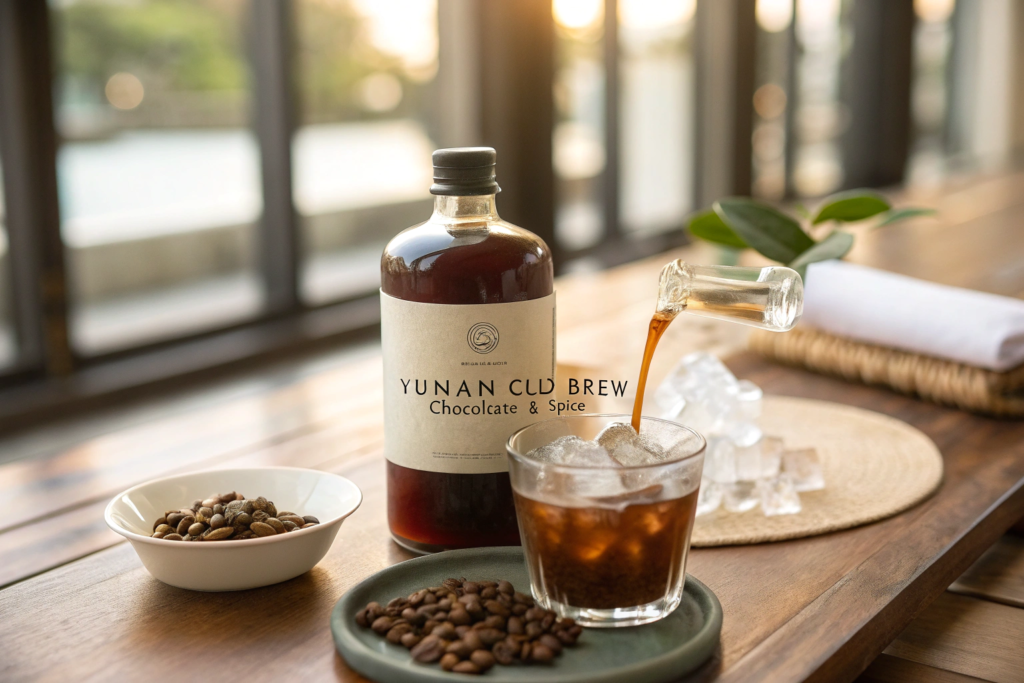
Yunnan Arabica performs exceptionally well as a cold brew base because its inherent flavor profile is almost tailor-made for cold extraction. The cup is naturally clean, low in acidity, and dominated by notes of milk chocolate, toasted grain, and brown sugar. These flavors are the exact notes that cold brew extraction favors. There are no sharp edges to become sour. There are no earthy, fermenty notes to become exaggerated. It is a neutral, sweet, smooth canvas that supports other components beautifully, or stands alone as a very approachable single-origin cold brew.
What Specific Flavor Notes Does Yunnan Contribute?
When cupped as a cold brew, our washed Arabica consistently shows a core of milk chocolate and malt. It reminds me of a malted milkshake, but not as sweet. There's a graham cracker note, a hint of roasted almond, and a very subtle, dried fruit sweetness on the finish—like a raisin, but not as intense.
The body is medium, smooth, and slightly creamy. It doesn't have the heavy, syrupy body of a natural Brazilian, but it's not thin either. It's just right for a refreshing, drinkable cold brew.
These notes are incredibly versatile. They pair well with a fruity Ethiopian accent, adding depth without clashing. They pair well with a heavy-bodied Sumatran, adding cleanliness without muting the earthiness. They are the ultimate team player in a blend.
Is Single-Origin Yunnan Cold Brew a Viable Product?
Absolutely. Several of our roaster clients in the US and Australia are now offering a single-origin Yunnan cold brew, either bottled or on tap.
The key is the processing method. A washed Yunnan Arabica makes a very clean, classic cold brew. A honey-processed Yunnan Arabica makes a richer, sweeter, more decadent cold brew, with enhanced caramel and dried fruit notes.
For a roaster looking to differentiate their cold brew program, a single-origin Yunnan offering is a great story. "Cold brew from China?" It's unexpected. It sparks curiosity. And when the customer tastes it—smooth, chocolatey, and sweet—the story is backed by flavor.
What Are Some Proven Cold Brew Blend Recipes Using Chinese Coffee?
I've asked my roaster partners to share their most successful blend recipes using Yunnan Arabica. These are not theoretical. These are blends that are currently on cafe menus, in bottled products, and in subscription boxes. They work.
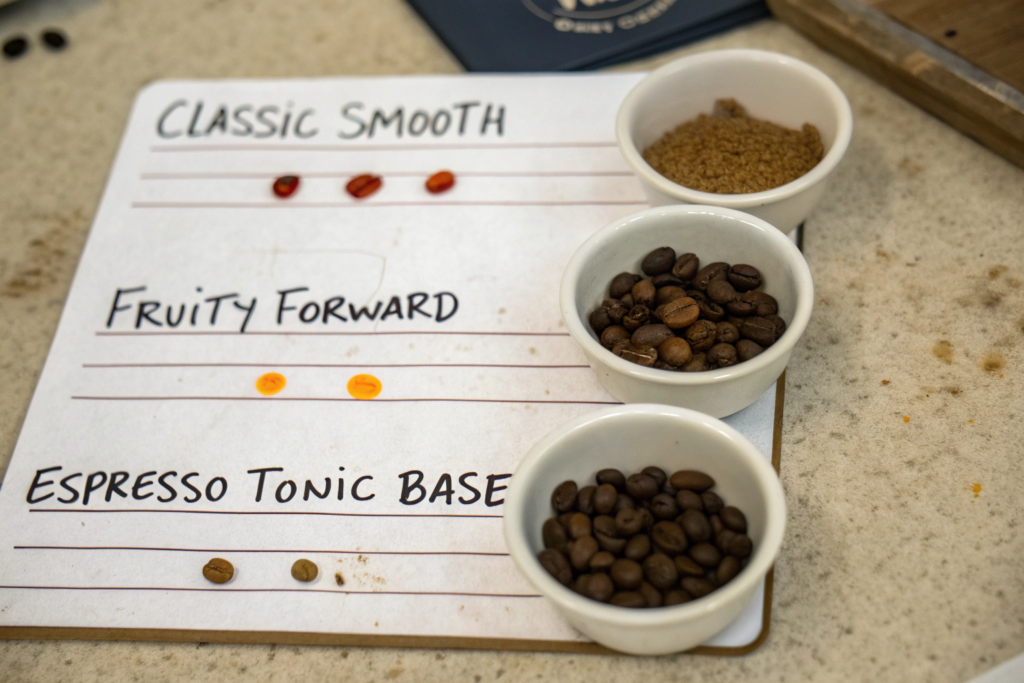
Here are three proven cold brew blend recipes featuring Chinese coffee. The "Classic Chocolate" is 60% washed Yunnan Arabica for a smooth, chocolatey base, and 40% natural Brazilian for added body and nutty sweetness. The "Fruit & Cocoa" is 50% washed Yunnan Arabica, 30% natural Ethiopian for blueberry and bergamot notes, and 20% washed Colombian for structure. The "Winter Spice" is 70% honey-processed Yunnan Catimor for deep caramel sweetness and heavy body, with 30% washed Guatemalan for a hint of baking spice and apple acidity. Each recipe can be adjusted to your specific beans and preferences.
What Is the "Classic Chocolate" Cold Brew Blend?
This is the crowd-pleaser. The safe bet. The one that will sell out.
The base is 60% washed Yunnan Arabica. It brings the milk chocolate, the malt, the smooth, clean finish. It's the foundation. The remaining 40% is a natural processed Brazilian. The Brazil adds a heavier, syrupier body and a deeper nuttiness—think peanut butter and cocoa. It also adds a touch of natural sweetness that rounds out the blend.
The result is a cold brew that tastes like a chocolate milkshake, but not too sweet. It's rich, smooth, and intensely satisfying. It works black. It works with milk. It works with a splash of oat milk. It's bulletproof.
How Do You Build a "Fruit & Cocoa" Cold Brew Blend?
This is for the roaster who wants something a little more interesting, a little more specialty. The base is 50% washed Yunnan Arabica. It provides the chocolatey backbone. But then you add 30% of a clean, high-quality natural Ethiopian. The Ethiopian brings the fruit—blueberry, strawberry, maybe a hint of bergamot. It's the top note. The 20% washed Colombian provides structure and a gentle apple-like acidity that lifts the whole blend.
The key is to use a washed Yunnan, not a honey process. The washed Yunnan is clean enough that it doesn't muddy the Ethiopian's fruit. It supports it. The dark chocolate notes of the Yunnan blend beautifully with the blueberry notes of the Ethiopian. It's a classic flavor pairing, translated into a cold brew.
What Roast Level Works Best for Cold Brew Blends?
The roast level is a dial that dramatically changes the cold brew's flavor. Too light, and the cold brew will be sour, astringent, and thin. Too dark, and it will be bitter, ashy, and one-dimensional. The sweet spot is in the middle, but it's not the same middle as for hot filter coffee.
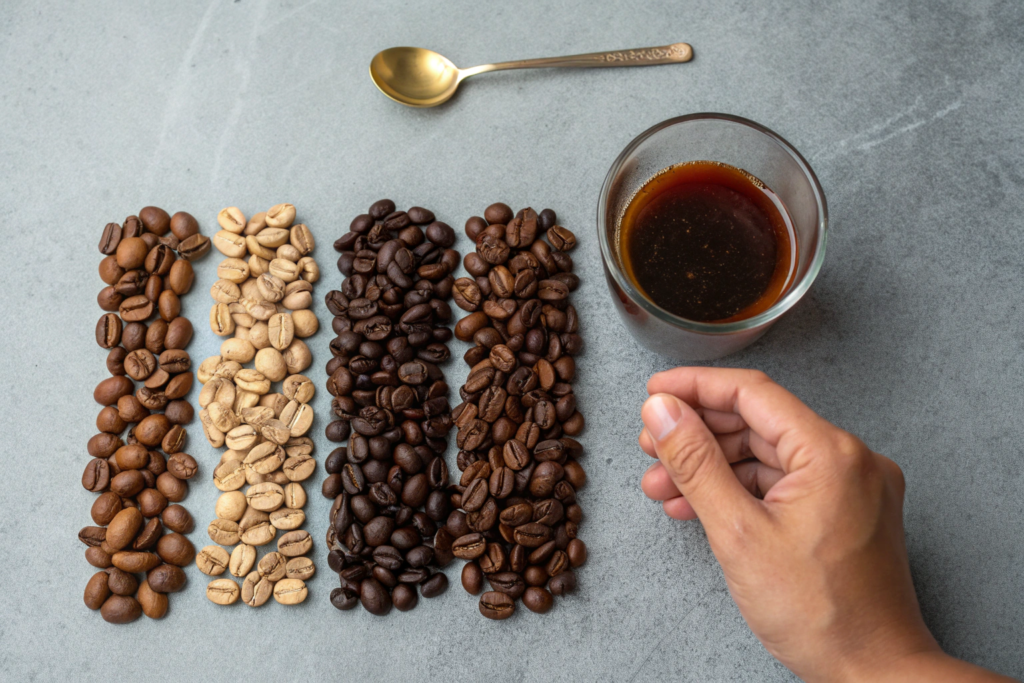
The ideal roast level for a cold brew blend is medium to medium-dark, generally just past the end of first crack and into the early stages of second crack, but stopping well before any oil appears on the bean surface. This roast level maximizes the development of chocolate and caramel notes, smooths out any remaining acidity, and builds the heavy body that cold brew drinkers expect. The components of the blend do not need to be roasted to the same level. Roasting the base component slightly darker and the accent component slightly lighter can create a more layered, complex cold brew.
Should You Blend Before or After Roasting?
This is a debate among roasters. Both approaches have merit.
Blending green and roasting together is simpler. It's one roast. One profile. The beans interact in the drum, and the result is a fused, homogeneous flavor. This works well for blends where all the components have similar density and moisture content.
Blending after roasting, also called "post-roast blending," gives the roaster more control. The dense Yunnan Catimor can be roasted with a high charge temperature and longer development. The softer Brazilian can be roasted with a gentler profile. Each component is optimized individually, then the roasted beans are blended. This often produces a more complex, layered flavor.
I recommend post-roast blending for premium cold brew programs. The extra effort is worth the flavor clarity.
How Does Roast Degree Affect Caffeine Extraction in Cold Brew?
Cold brew is often marketed as "stronger" than hot coffee. This is partly a function of the brew ratio and the roast degree.
Darker roasts are less dense and more porous. The water penetrates them more easily, and the soluble compounds, including caffeine, extract more readily. Lighter roasts are denser and harder to extract fully in cold water.
For a cold brew blend, a medium to medium-dark roast ensures efficient extraction of both flavor and caffeine. The long steep time—12 to 18 hours—will pull a robust, full-flavored concentrate from the roasted beans.
Conclusion
A great cold brew is not an accident. It's not the leftover beans thrown into a bucket of water. It's a deliberately designed product. It starts with the right green coffee. It's built around a low-acid, chocolatey base. It's enhanced by a carefully chosen accent note. It's roasted to the perfect development level. It's blended with intention.
Chinese Arabica, whether washed or honey-processed, whether Typica or Catimor, has found a natural home as the base note in some of the best cold brew blends on the market. Its clean, smooth, chocolatey profile is exactly what the cold extraction process demands. And its story—Single Origin, Yunnan, China—adds a point of difference that resonates with curious consumers.
If you're developing a cold brew program, or refreshing an existing one, I'd encourage you to explore what Yunnan Arabica can bring to your blend. We have washed lots that are clean and chocolatey, and honey lots that are rich and caramelly. Both work beautifully in cold brew.
To request cold brew-specific samples, with cupping notes for cold extraction and suggested blend partner recommendations, reach out to Cathy Cai.
Email: cathy@beanofcoffee.com. Let's build a cold brew that chills the summer heat.